Solar Panels – What You Need To Know
Last Updated: 5th Apr 2024 By Finn Peacock, Chartered Electrical Engineer, Fact Checked By Ronald Brakels
If you’re preparing to get quotes for solar power, this guide delivers detailed and valuable information on the star component of a system installation – the solar panels.
Before jumping in – we need to make sure we are talking about the right product. Let me clear up any confusion right away. The information on this website is focused on photovoltaic solar panels; also known as “solar PV” or “solar electricity” modules.
- Points to consider.
- Solar panel efficiency.
- Panel cost.
- Quality and warranty.
- Manufacturing – country of origin.
- Solar panel specifications.
- Environmental benefit of solar panels
- Aesthetics – how the solar panels look.
- The best solar panels in 2024.
There’s another type of solar panel used for heating water (as opposed to generating electricity). We call this type a ‘solar hot water panel’ or ‘solar thermal collector’, and it’s a completely different beast
Here’s a look at the two different types of panels:
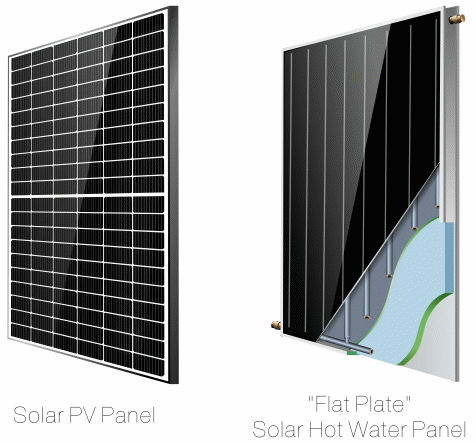
When I refer to solar panels here – I’m talking only about ‘Solar PV Panels’ that make electricity.
If you’re interested in solar hot water, I’ll warn you it’s going out of style. It is now normally cheaper and easier to put solar PV on a roof and use the solar electricity it generates to run either a heat pump hot water system or a conventional electric hot water cylinder.
With that out of the way, let’s jump in and discuss what you need to know about solar panels.
Solar panels are the most critical part of any solar power system installation. Choosing the best panel brand or module type to buy for your circumstances is just as important as hiring a competent accredited installer.
Unfortunately, most salespeople aren’t going to be much help when it comes to choosing the best solar panel brand! Why? Because, despite my best efforts to persuade them otherwise, many salespeople insist that their solar panels are the best quality and claim that everyone else sells crap.
They can’t all be right! So what’s the truth? How do you make a real solar panel comparison and a choice that is best for your circumstances? Let’s find out…
Choosing The Best Solar Panels – Points To Consider
When shopping around to get the best value from your solar panel rebate, one of the points that will set different installers apart is the type and brand of panel they recommend to use in the installation.
So, how do you assess what the best solar panels are for you? Here are some of the factors you should weigh up in making your choice:
1. Solar Panel Efficiency
This is simply the percentage of sunlight energy hitting a panel’s surface that is converted into electrical energy. The higher, the better. Today’s solar panels typically achieve efficiencies from 21% to 23%.
Why is high efficiency good? Well, the higher it is, the more watts of electricity you’ll get per square meter of panel, allowing a system to generate more energy from the same amount of roof space.
So if roof space is at a premium, or you just want super-duper PV technology, look into higher efficiency modules. The good news is that, in 2024, good budget solar panels are as efficient as premium ones.
2. Solar Panel Cost
Back in 2009, when SolarQuotes kicked off, solar panels cost a bomb—about 20 times more than what you’d pay today. This massive price drop means you can pretty much fill your roof with panels without stressing too much about the cost.
You don’t even need to stress about having your panels perfectly angled or facing the ideal direction. They’re such good value now that even if they’re facing south (which is the least ideal direction), they’ll still pay for themselves over time.
But, even though prices have plummeted, solar panel cost still matters. As with most things, you get what you pay for. Skimping on quality for rock-bottom prices is a no-go. Spending a bit more for reliable panels from a trusted brand, especially one that’s solid in Australia, is the smart move.
3. Solar Panel Quality And Warranty
It is not easy to determine the quality of solar panels, inverters and installation service from a quote – salespeople tend to be biased.
The first thing I would do to rate a panel brand is to look at the thousands of solar panel reviews I have collected from Australian customers over the last 12 years. By reading reviews you can get a good idea of how various modules perform in local conditions.
You can also take a look at our solar panel comparison table to view the specifications and pricing of various popular brands and models currently available in Australia side-by-side. There’s also my chart of brands of solar panels I trust for my recommendations from the choice of modules currently available in Australia.
Warranties
The next thing to understand is warranty statements. Pay particular attention to the fine print. Ideally, you’ll want a warranty that states it will replace defective panels and cover labour costs. But the majority of warranties don’t promise this. Avoid any that say the panels have to be sent away to make a claim. Also, consider the history and experience of both the panel manufacturer and the company installing them. Are they likely to still be around in 10 or 20 years if something goes wrong?
As an absolute minimum, insist on at least a 12 year manufacturer’s warranty (also called product warranty) on the solar panels, which covers defects in workmanship and materials.
Be aware this is a different guarantee to the 25 or 30 year “performance guarantee” that every module out there carries. Without getting into details, the performance guarantee is iffy because it may be easy for a company to wriggle out of. The manufacturer’s guarantee is the one you need to look at, and it needs to be at least 10 years.
Finally, ensure the warranty isn’t tied to an expensive service contract. You don’t want to feel compelled to shell out $500 a year for a bloke to hose down your solar panels just to keep your warranty. By the way, this sort of warranty stipulation is likely unenforceable under Australian Consumer Law!
While Australian consumer law is strong and can require companies to provide support they don’t include in their warranties, it’s always good to have a warranty that promises comprehensive support, as you are less likely to have to fight to get it.
4. Manufacturing – Country Of Origin
Some people insist the best solar panels are made in Germany, and all Chinese solar panels are crap. Follow that previous link for a deeper discussion on this, but frankly, I find that talk borderline xenophobic.
You may have reasons for not buying Chinese products, and I won’t get into a debate on the topic. However, as far as quality is concerned, some Chinese brands are just fine, great even. Some are crap, but if you think “Chinese” is synonymous with “low quality”, what do you think about your iPhone, Macbook Pro, or Tesla Model 3? Yep, made in China …and they’re all high-quality, sophisticated devices.
5. Solar Panel Specifications
Like most products, solar panels can have different specifications indicating their technical attributes. This can be a rather confusing area. Most panels these days have very similar tech specs. However, two specifications you may want to pay attention to are:
- The coefficient of temperature. High temperatures reduce panel efficiency. By how much is given by the Temperature Coefficient of Pmax — or just Pmax. This will be around -0.35%/ºC for a typical panel. The smaller this is, the better. For every degree over 25ºC a panel’s output will be reduced by this percentage. The very best Temperature Coefficient of Pmax available at the moment is -0.26%/ºC. Compared to a typical panel, this will result in under a 2% increase in annual output, but every little bit helps.
- The power tolerance. This indicates how close a panel’s actual output is likely to be to its official rating. Most quality panels have positive tolerance that promises the wattage will be at least equal to the given rating, plus an amount that’s typically an extra 0-5 watts. Other panels may have a plus or minus figure, usually +/-3%. Because it’s always better to get at least the official rating and not a 50% chance of receiving a little less, positive tolerance is better. This normally makes little difference over a panel’s lifetime but could be a tiebreaker when deciding between two similar panels.
6. Environmental Benefit Of Solar Panels
Just by generating clean energy from sunlight, solar panels provide a huge environmental benefit over burning fossil fuels. But do some panels provide more benefit than others? The answer is yes. But, provided they are reliable, the difference is very small compared to the drawback of not having solar.
If your goal is to have panels that will result in the lowest greenhouse gas emissions possible, I recommend looking at the following:
- Are the panels reliable and have a long manufacturer’s warranty? The largest waste of solar resources occurs when cheap and shoddy panels have to be replaced after only years of use rather than multiple decades.
- Are the panels high-efficiency? These require less material per watt of panel capacity and so, all else equal, result in lower emissions from manufacturing and transport.
- The manufacturer’s own claims about emission reductions. Some companies are more committed to cuts than others.
Solar panels can also be recycled. While still in its early days in Australia, in Europe panels can be recycled with a 95% material recovery rate. If you want panels that are easier and safer to recycle, you can pay extra for lead-free ones. REC is the only company currently producing these, but other manufacturers may follow.
7. Aesthetics (How The Solar Panels Look)
Some people prefer the look of certain types of solar panels to others — this is just down to personal preference. For standard panels, the main choices are:
- Silver frames.
- Black frames
- All black panels
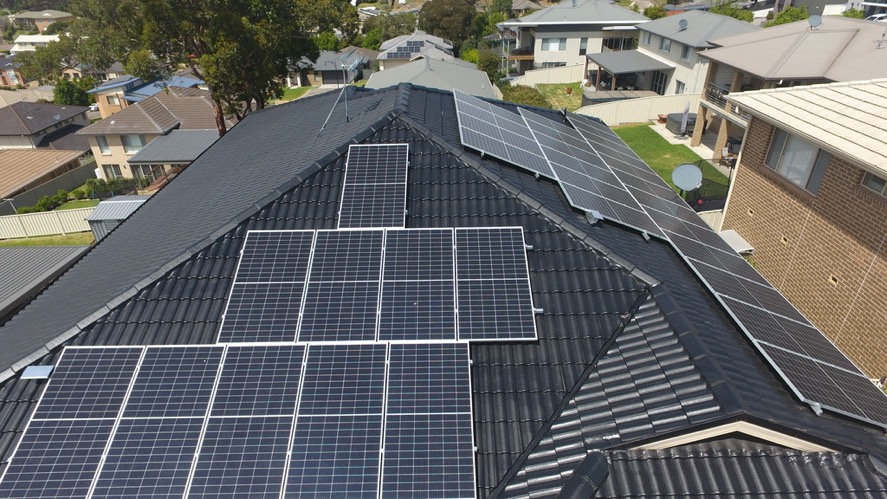
Silver-framed solar panels.
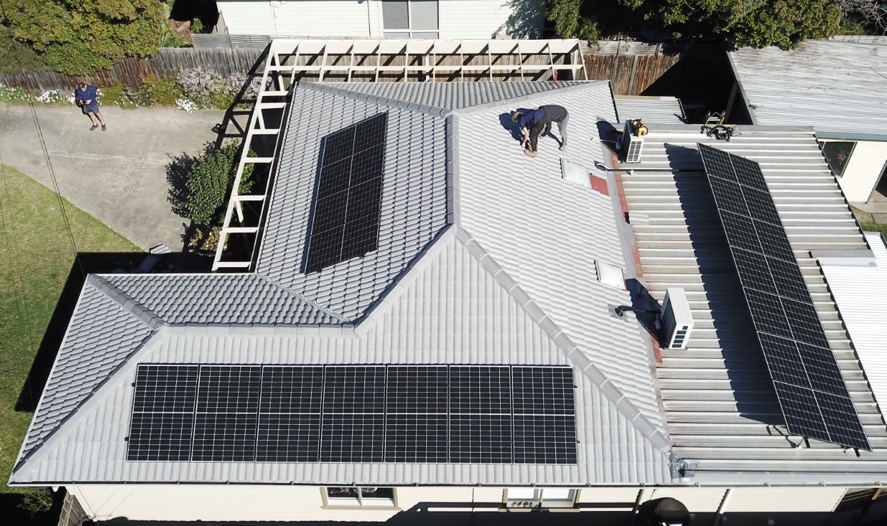
Black-framed solar panels.
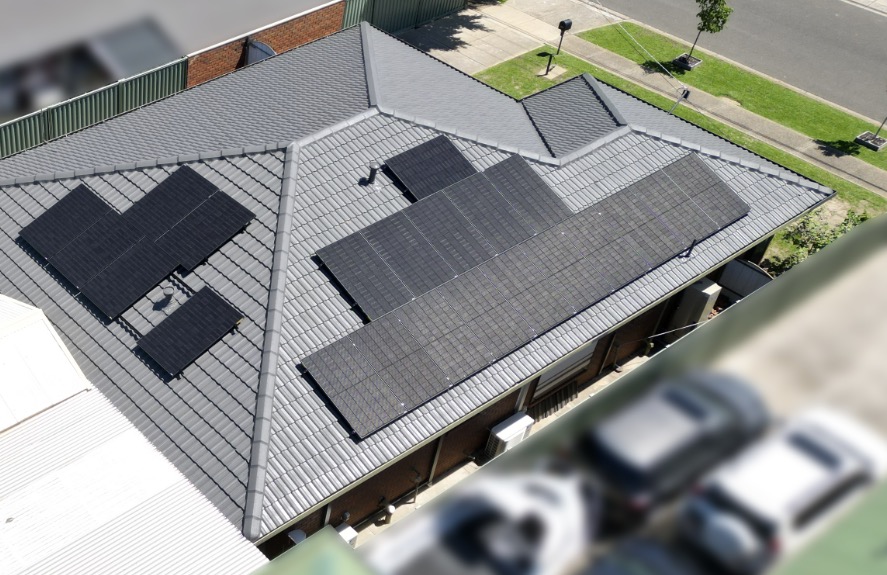
All-black panels.
Because they get a little hotter, all black panels have slightly worse performance than otherwise identical ones. But the difference is very minor.
Some suppliers can integrate the panels into your roof; others can supply solar roof tiles. And if you’ve got a whacky, curved roof, you can even get flexible solar panels! However, the sleek aesthetics of building integrated solar power (BIPV) comes at a price, of course.
Generally, choosing a more “utilitarian” look will be cheaper as super slick integrated systems can cost considerably more. But first, check how visible your solar panels will be from the ground. There’s no point in paying for ones that look good if no one ever sees them.
The Best Solar Panels In 2024
Here are the brands I currently recommend. You can find reviews from Australian owners of all these brands (and others) in my solar panel reviews section.
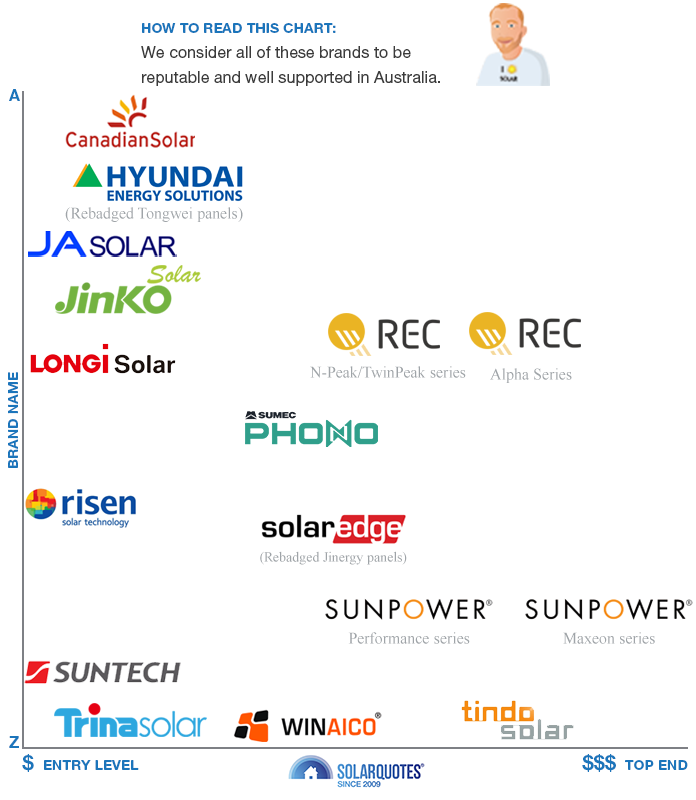
I also asked installers in the SolarQuotes network for their recommendations – what they would install on their own rooftops in terms of both high-end and budget products? Discover what they voted the best solar panels in 2024. You’ll notice all the brands installers voted the best also appear on the chart above.
Next up, I’ll go through the different types of solar panel technology currently available. If you would like a simple answer to the question “how do solar panels work?” before we get into the different technologies, then that link should satisfy your inner geek.
Otherwise, let’s move on – or if you’re ready to get pricing on a system, you can get up to 3 solar quotes via my service from Australian installers I have personally pre-vetted and trust that I will match to your requirements and location.
>> Next: What Types Of Solar PV Panels Are There To Choose From? >>