Ducted Air Conditioning: Worth It for Your Home?
Last Updated: 28th Jan 2026 Fact-checked by Jake Boer from Oasis Air conditioning (Yarra Valley)
1) Is Ducted Air Conditioning Right For My Home?
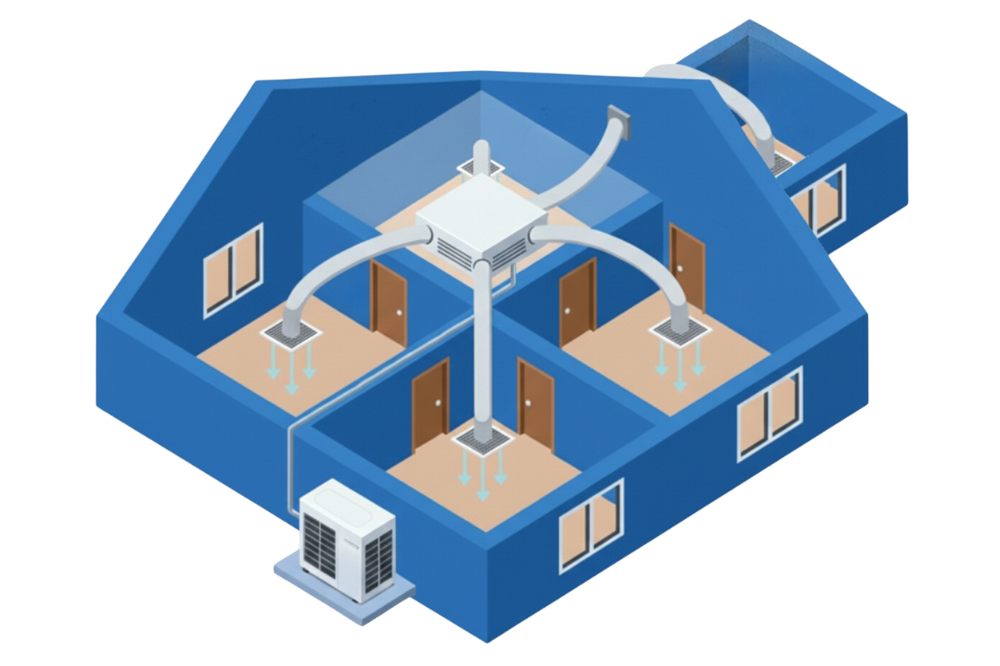
Ducted air conditioning suits some homes brilliantly and others poorly. It generally makes sense for larger houses where multiple rooms need heating or cooling at the same time. If you’ve got a big open-plan living area, several bedrooms, or a big family spread across the house in the evenings, ducted can be convenient and tidy compared to installing multiple split systems.
You’ll also need suitable roof space (or underfloor space if you have at least one metre of clearance underneath) to run ductwork and install the indoor unit. Single-storey homes are usually straightforward. Double-storey homes are doable, but more complex. Apartments and homes with very limited ceiling space often rule ducted out entirely.
It’s also about how you live. If you mostly use one or two rooms, ducted is often overkill. In those cases, one or two split system air conditioners will usually be cheaper to install and cheaper to run. Ducted starts to shine when you genuinely want whole-home comfort and are prepared for the higher upfront cost.
2) How Important Is Brand When Comparing Ducted Air Conditioners?
Brand matters with ducted air conditioning, but it’s not the main event. A good aircon brand gives you reliability, parts and Australian warranty support, but system design and installation quality is what determines comfort, noise and running costs. A premium unit installed badly can be a dud, while a mid-range unit installed properly can be excellent. So treat brand as a qualifier, then focus on choosing an installer who will design the system correctly and do quality ducting and commissioning.
- Is Ducted Air Conditioning Right For My Home?
- How Important Is Brand When Comparing Ducted Air Conditioners?
- How Much Does Ducted Air Conditioning Cost In Australia?
- What Is Ducted Air Conditioning And How Does It Work?
- How Does Ducted Air Conditioning Compare To Split Systems?
- What Is Zoning In Ducted Air Conditioning?
- How Do I Determine What Size Ducted Air Conditioner I Need For My House?
- Are Ducted Air Conditioners Energy Efficient To Run?
- Can Ducted Air Conditioning Run Effectively On Solar Power?
- How Do You Clean And Maintain A Ducted Air Conditioner?
- When Is Ducted Air Conditioning Not A Good Idea?
3) How Much Does Ducted Air Conditioning Cost In Australia?
Ducted air conditioning is one of the more expensive cooling and heating options. Installed prices vary widely depending on system size, house layout, zoning and brand.
As a rough guide, 2- to 3-bedroom homes may land around $12,000, while 4- to 5-bedroom homes often end up in the $17,000-$20,000 range. Large or complex homes with multiple zones and premium systems can even go beyond $20,000.
What Affects The Price Of A Ducted Air Conditioning System?
- Required system capacity: the larger your home and the more areas you want conditioned at once, the bigger the system needs to be. Bigger systems cost more to buy and install, and may also require electrical upgrades.
- Number of zones and outlets: each zone and outlet adds ducting, dampers, sensors and labour. A simple two-zone setup is much cheaper than a house divided into multiple independently controlled zones.
- House layout and access: single-storey homes with good roof access are usually cheaper to work on. Double-storey homes, tight roof spaces, or awkward layouts increase labour time and installation complexity.
- Brand and model tier: premium brands and higher-efficiency models cost more upfront, but can offer better reliability, quieter operation and lower running costs over time. Cheap manufacturers often don’t stock parts much longer than the warranty period. Some manufacturers won’t even give you tech support if the unit isn’t still under warranty.
- Electrical upgrades: larger ducted systems may require three-phase power. If your home only has single-phase supply, upgrading can add thousands to the overall cost and isn’t always included in initial quotes.
- Quality of ducting and insulation: cheap or poorly insulated ducting can undo the efficiency of an expensive system. Better ducting costs more upfront but improves comfort, reduces energy losses and lowers running costs.
“While it is common for installers to provide estimates for a ducted system over the phone with an online floor plan, a good installer will inspect your home and design the system properly before asking you to sign a contract. If someone wants your money without seeing your house in person, that’s a red flag.”
– Jake Boer from Oasis Air Conditioning (servicing Yarra Valley)
4) What Is Ducted Air Conditioning And How Does It Work?
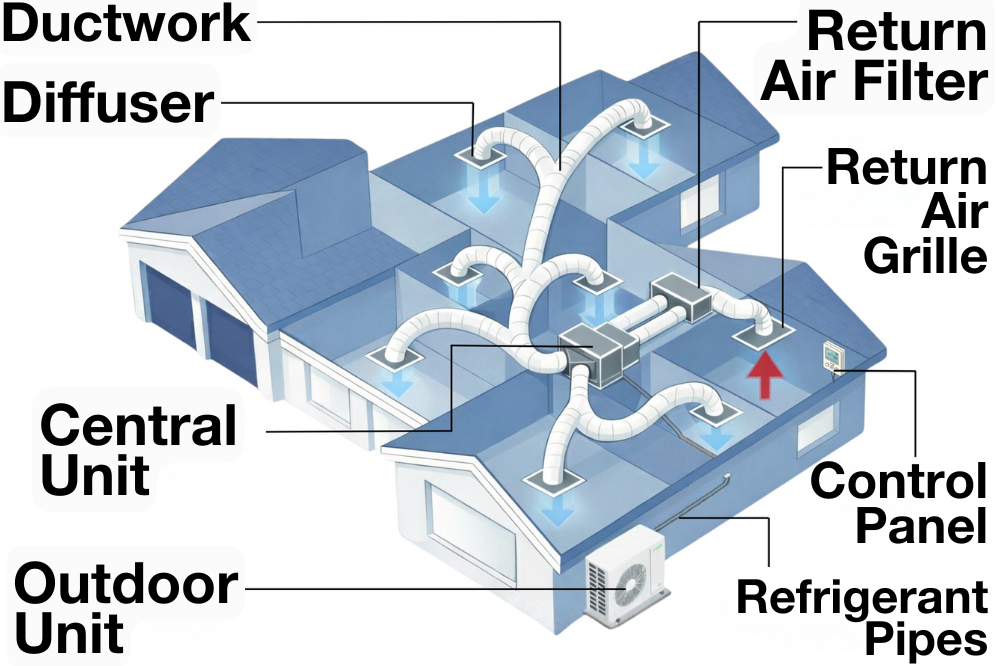
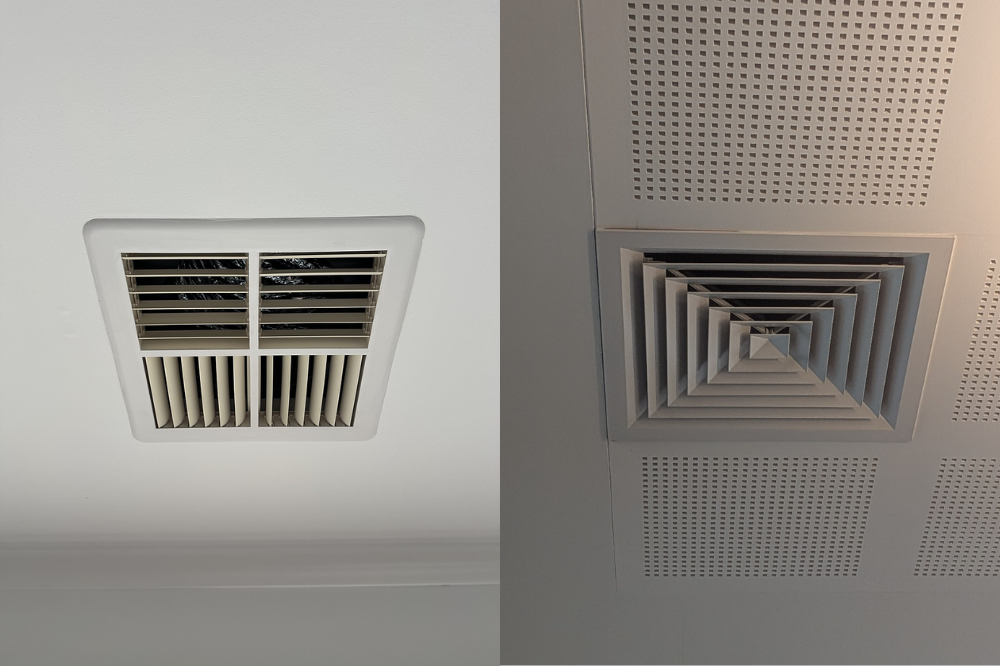
Ducted air conditioning is a “whole-home” cooling and heating system. Instead of having a unit on the wall in each room, a ducted system uses one central indoor unit (usually hidden in your roof space or under the floor) connected to a single outdoor compressor unit. The central fan coil cools or heats the air and pushes it through a network of insulated ducts to vents (diffusers) in each room.
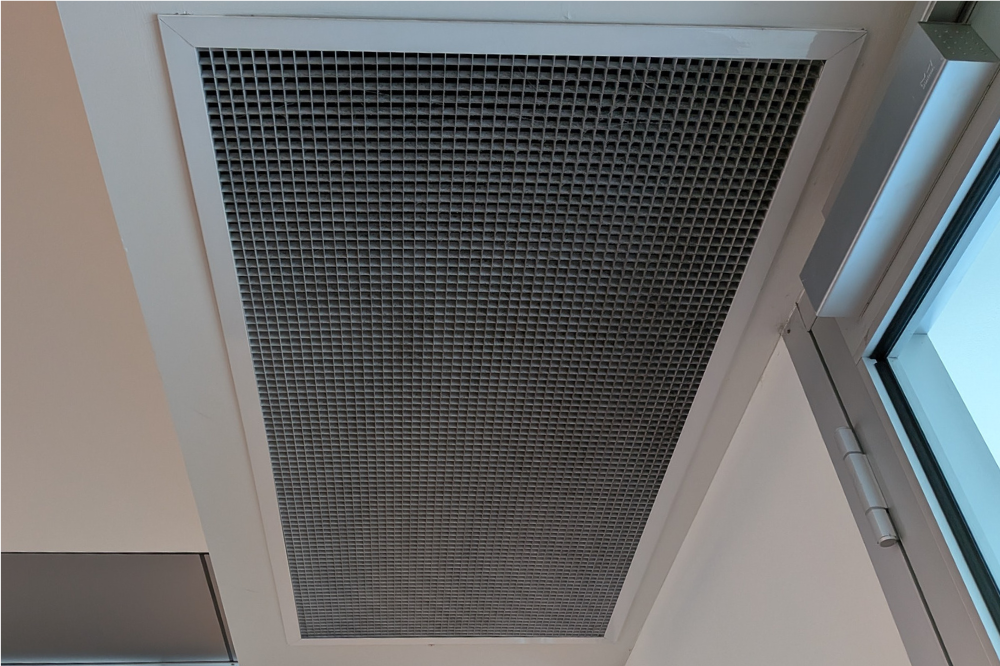
A return-air grille then draws the air through a filter (which will require cleaning) and back to the central unit to be re-conditioned, creating a continuous cycle of climate control.
On a wall near the return air grilles, you will usually find the control panel, which acts as a thermostat and zone controller.
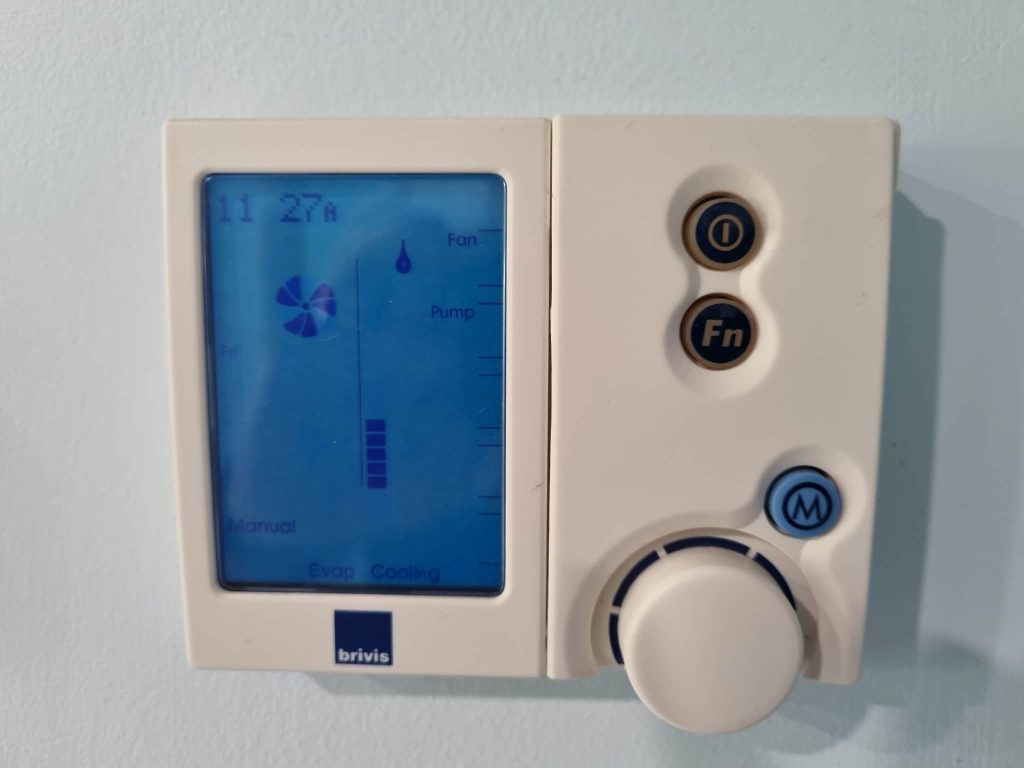
In essence, a ducted system is like a central air conditioner for your entire house, delivering conditioned air via ducts to every corner.
This setup means you only see the slim vents, or diffusers, in each room – no bulky wall units – which many homeowners prefer for aesthetics. Ducted systems are typically reverse-cycle air conditioners, so they provide cooling in summer and heating in winter from the same unit.
Note: There are also ducted evaporative cooling systems, which use water evaporation to cool air through ducts, but those only cool and are best for dry climates. For most Australian homes, reverse-cycle ducted air con is the default choice. Check out our in-depth comparison between reverse-cycle and evaporative cooling.
In short, a ducted air conditioning system gives you central control over your home’s temperature, with the option to add zoning so you’re not cooling rooms you’re not using.
5) How Does Ducted Air Conditioning Compare To Split Systems?
A (single) split system cools or heats a single room. A ducted system conditions multiple rooms from one central unit. That difference drives most of the pros and cons.
Split systems are cheaper to install, simpler, and very efficient for individual rooms. Ducted systems cost more upfront, but offer whole-home comfort, a cleaner look (no wall units), and centralised control.
Split systems are almost always cheaper to run, especially when ductwork suffers losses from running through exceptionally hot roof spaces in summer. For larger homes where many rooms are used at once, ducted can be practical – especially if zoning is used properly. For a deeper comparison, see the split vs ducted section.
6) What Is Zoning In Ducted Air Conditioning?
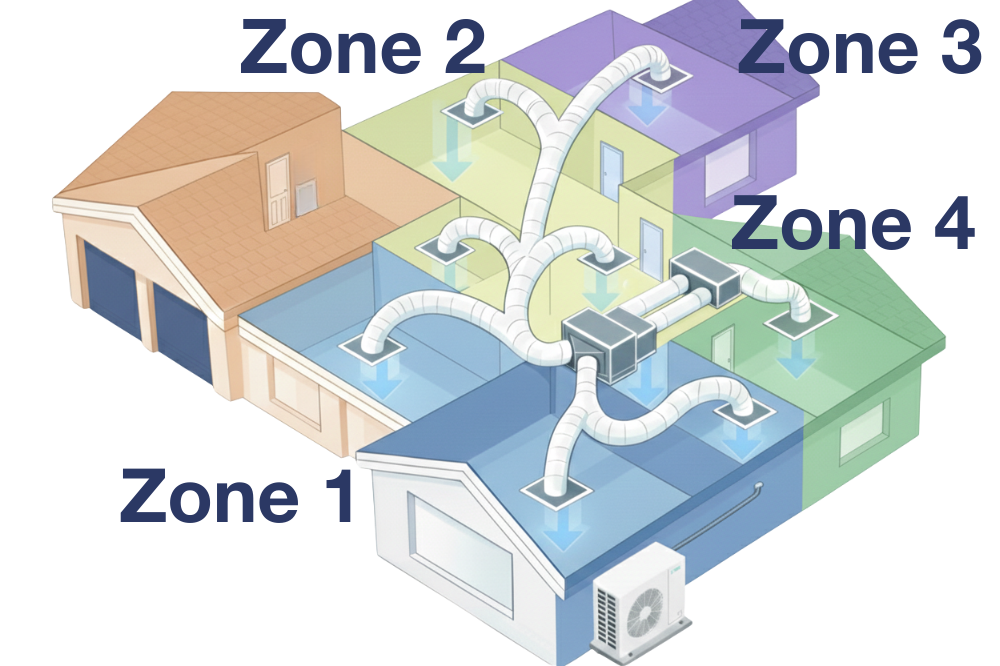
Zoning allows different areas of your home to be heated or cooled independently. Motorised dampers open or close airflow to each zone so you’re not conditioning empty rooms.
A common setup is separating living areas and bedrooms, but larger homes may use more zones for better control and efficiency.
In a basic ducted setup, the system often “listens” to one temperature sensor (usually near the main controller), then heats/cools the whole house based on that single spot. The problem is obvious: the lounge might feel perfect while bedrooms are still warm (or freezing), because the system isn’t measuring what’s happening in each zone. Adding zone temperature sensors fixes this by measuring temperatures where people actually are, so the system can respond to real conditions room-by-room instead of guessing from one location.
With zone sensors, each zone can aim for its own set temperature (where the control system supports it), and the dampers/airflow can be adjusted to better match demand in that area. That usually means more even comfort, fewer “hot/cold spot” arguments, and less wasted conditioning of zones that are already fine.
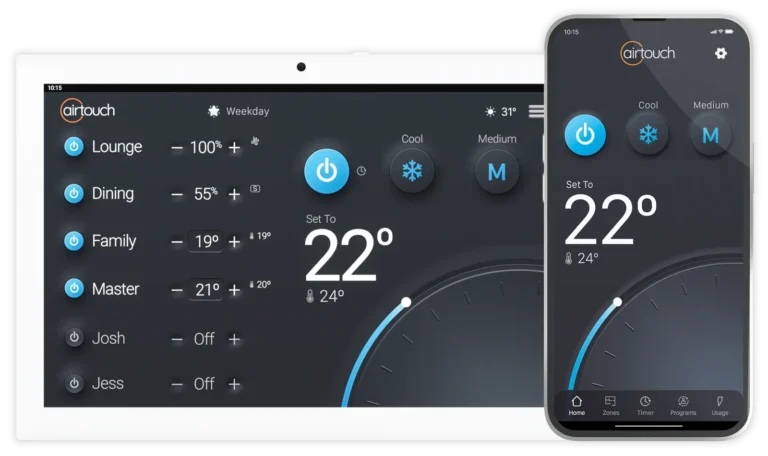
One popular aftermarket option in Australia is AirTouch 5. It’s a ducted aircon zoning controller that can manage multiple zones and supports Intelligent Temperature Sensors so you can set independent temperatures in zones that have a sensor, with app-based control (and features like geofencing depending on setup).
Is Zoning Worth Paying Extra For?
For most homes, yes. Zoning reduces wasted energy, improves comfort and can even allow a slightly smaller system to be installed. It’s one of the most effective ways to keep ducted air conditioning running costs under control.
If you’re comparing quotes, it’s worth asking whether the design relies on one central sensor or includes zone sensors, because it can make a big difference to how the system feels day to day.
7) How Do I Determine What Size Ducted Air Conditioner I Need For My House?
System size depends on far more than the number of bedrooms. Floor area, insulation, ceiling height, window size, orientation and climate all matter.
A proper heat load calculation is essential. Undersized systems struggle on extreme days, while oversized systems cost more than necessary and may cycle inefficiently.
The table below shows typical kilowatt requirements per room, based on room size and use. Find each room on your floor plan, match it to the closest room size in the table, and note the recommended capacity. Add the figures together to get an approximate total system size for your ducted air conditioner.
| Room Type | Room Size | Required Capacity |
|---|---|---|
| Bedroom | 10-20 m² | ~1.6-2.8 kW |
| Small living | 20-30 m² | ~2.8-4 kW |
| Medium living | 30-45 m² | ~4-6 kW |
| Large open-plan | 45-60 m² | ~6-8 kW |
This method is useful for early planning and comparisons, but it’s only a guide. Before you commit to a system size, a licensed installer familiar with the local climate should always confirm the final capacity with a full heat load calculation.
8) Are Ducted Air Conditioners Energy Efficient To Run?
Ducted reverse cycle systems use efficient heat pump technology, but they do have small thermal losses from ductwork and large fans. This means they’re generally less efficient than split systems when cooling or heating small areas.
That said, with good zoning, sensible temperature settings and a reasonably thermally efficient home, ducted air conditioning can still be run economically – especially when paired with solar.
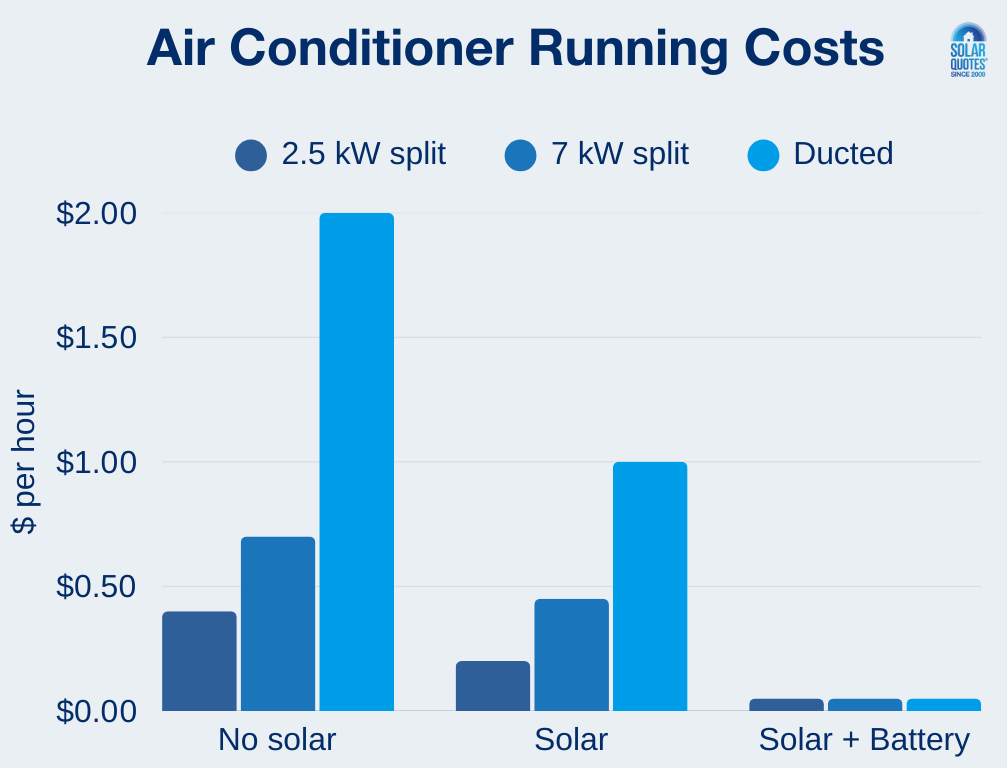
Running costs also vary. Conditioning an entire house will always cost more than running a single split system, but zoning, solar and a battery can significantly reduce those costs.
9) Can Ducted Air Conditioning Run Effectively On Solar Power?
Yes. Ducted air conditioning pairs extremely well with solar. Running the system during the day lets you use your own solar energy instead of buying expensive grid electricity.
Many households “pre-cool” or pre-heat their homes in the afternoon when solar production is highest, reducing the need to run air conditioning in the evening.
10) How Do You Clean And Maintain A Ducted Air Conditioner?
Ducted air conditioning doesn’t need much day-to-day attention, but it does need some basic maintenance to keep it running efficiently and quietly. The good news is that most of what homeowners can (and should) do is simple.
The main thing you’ll need to clean is the air filter. In most ducted systems, the filter sits behind the return-air grille — usually on the ceiling or a high wall in a central part of the house.
To clean it, turn the system off, open the return-air grille, remove the filter, and either vacuum it or rinse it with water. Let it dry fully before putting it back. That’s it.
As a general rule, filters should be checked every few months and cleaned when they look dusty. Homes with pets, kids, or lots of use may need more frequent cleaning. Dirty filters restrict airflow, which makes the system work harder, increases running costs, and can reduce comfort.
What homeowners can’t easily do is the deeper maintenance. Things like checking refrigerant levels, inspecting internal components, cleaning coils, testing airflow and making sure the system is operating within design limits require a qualified technician.
For that reason, most ducted systems benefit from a professional service every couple of years, or sooner if performance drops, the system becomes noisy, or rooms stop heating or cooling evenly.
11) When Is Ducted Air Conditioning Not A Good Idea?
Ducted air conditioning does not suit in the following cases:
- Small homes or apartments
- Homes where only one or two rooms are ever used
- Limited roof or underfloor space
- Very tight budgets
- Poorly insulated or draughty houses
If ducted doesn’t suit your situation, our guide on how to choose your air conditioner outlines other options that may be a better fit.