Putting off getting solar? Here’s what you could be saving.
Last updated: 18 June, 2026.
Solar has never been as affordable as it is now. Meanwhile, your power bill keeps climbing, and the rebate keeps shrinking.
To help visualise the savings you’re missing by not having solar, we’ve put together the following simple calculator – just enter your approx average quarterly bill:
You’ve seen what waiting could cost you. Now here’s how to buy a great system: Avoid these seven mistakes and you’ll end up with a system that keeps your bills low for decades.
The 7 mistakes Aussies make buying solar
1) Confusing the solar rebate with the feed-in tariff
These are two different things and people mix them up constantly. The solar rebate is a point-of-sale discount your installer claims for you, worth roughly $250 per kW, so around $1,650 off a 6.6kW system. The feed-in tariff is what your retailer pays you for the power you export, anywhere from 0 to 12 cents a kWh, so it pays to shop around.
Almost every advertised price already has the rebate baked in. And you can claim the solar rebate more than once, even if you’ve bought a system before.
2) Not getting multiple quotes
This isn’t a plug for our ‘get free quotes’ service, it’s just true. One quote tells you nothing about whether the price or the quality is fair. It’s unfortunately common to see people charged $15,000 for a system worth $5,000. Get three quotes, compare them properly, and any rip-offs become obvious.
3) Not installing enough solar
People ask us daily how many panels to buy. Our answer is always the same: fit as much as your roof and budget reasonably allow. We’ve never met a homeowner who regretted going bigger, but we hear from plenty who wish they’d added more while they had the chance.
Adding panels to an existing system later is fiddly and expensive, and you’ll want the extra once you add a battery and an EV to your home.
4) Wasting your one shot at the battery rebate
The federal battery rebate has finally made batteries stack up for a lot of homes. But unlike the solar rebate, you can only claim it once. So don’t blow it on an ultra-cheap battery with no Australian warranty, and don’t go too small.
Around 16kWh installed should run about $11,000 to $13,000 after the rebate, and a good rule is to size your battery at roughly twice your solar, so 10kW of panels means aiming for about 20kWh of battery.
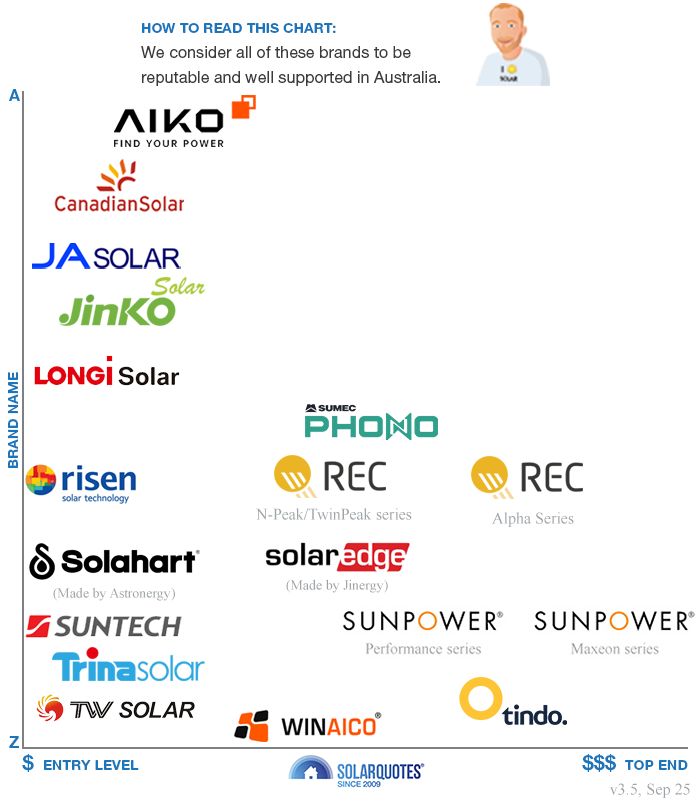
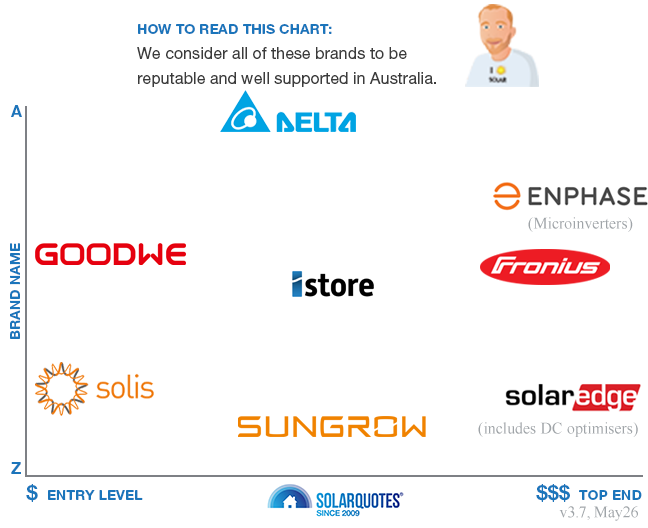
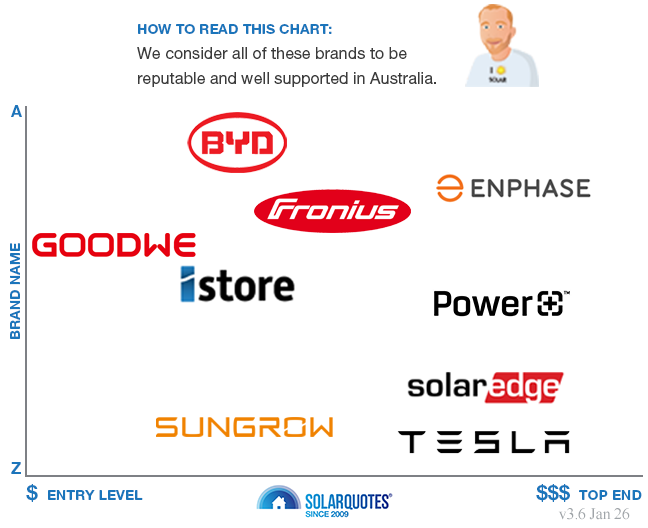
5) Not knowing which brands are worth buying
There are heaps of solar brands out there. How should you know the difference between a good brand and a lemon? That’s why we’ve put together the following charts of brands we’d be happy to recommend to friends:
Panels:
Inverters:
Batteries:
6) Not knowing your rights under Australian Consumer Law
Don’t believe everything a salesperson tells you. You do not need to pay for a service every two years to keep your warranty. A good system needs a service about every five years and a clean once a year. And in terms of warranties, in 2026 a 25-year panel warranty, 10-year inverter warranty, 10-year battery warranty and a 5-year workmanship warranty are all the standard.
If there’s a problem with your system – your installer is your first port of call. Don’t let them fob you off to the manufacturer – it’s the responsibility of the company that sold you the system to handle the warranty process.
7) Writing off solar because your roof doesn’t face north
East or west facing panels only give up about 15 percent of your generation potential compared with north. Depending on when you actually use your power, east or west can even suit you better, catching the morning or the evening sun. In fact, since solar is so cheap these days, even a totally south facing system is completely viable.
Avoid these and you’ll steer around the cowboys and end up with a system that keeps your bills low for decades.
And if you’re looking to get quotes for a system from installers we’ve vetted and trust, just hit the button below, fill in our form, and the SolarQuotes team will do their absolute best to get you up to 3 free, no-obligation quotes: