6 kW & 6.6 kW Solar Systems: Prices and Information
Last Updated: 10th Jun 2026
Installations of solar systems from 6 to 6.66 kilowatts (kW) are common in Australia, with 6.6 kW being very popular. This is because, for a long time, it was a good combination of size and affordability. But these days, we recommend most households install something bigger, provided there’s room on the roof.
How Much Does a 6.6 kW Solar System Cost?
The cost of a 6.6 kW system using quality components that are professionally installed will generally range between $5,500 – $8,000.
The graph below details the median of what 1023 people have reported paying for their 6.6 kW solar system over the last year. This price range takes into account the solar rebate.
Prices vary based on location, panel brand, and size, inverter brand, and quality of the installer.
How Many Solar Panels Will I Need For A 6.6 kW System?
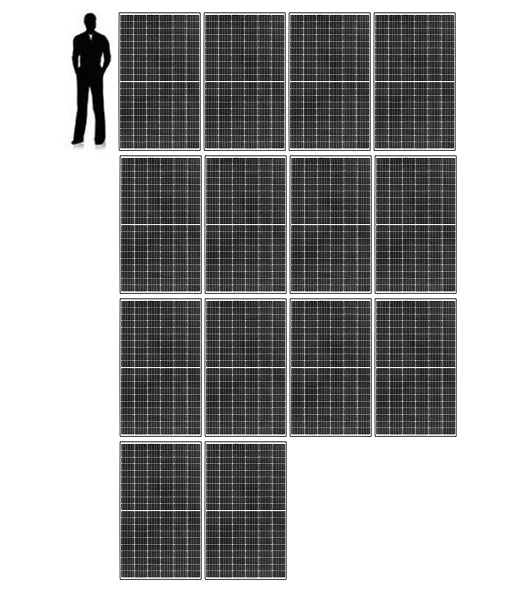
The number of panels required for a 6 to 6.6 kW solar system depends on their size. Large panels can be over 730 Watts (W) each, so only 9 of them would be needed for a 6.6 kW system. But panels used on homes are generally smaller and typically range from 440-490W. If 470W panels are used, 14 will be required for a 6.6 kW system.
How Much Roof Space Is Required For a 6.6 kW Solar System?
Based on panels measuring around 1.8 metres x 1.1 metres, around 28 square metres of suitable roof space will be required for a 6.6 kW solar power system. Here’s a general idea of how much space 6.6 kW occupies, based on 470 Watt panels.
How Much Electricity Generation Can I Expect From a 6.6 kW System?
Factors such as installation location, solar panel orientation and component quality come into play, but generally a 6.6 kW PV system with panels facing more or less north, should generate around 26 kilowatt-hours of electricity a day, which is more than the average Australian household uses daily.
Don’t forget you’ll be receiving feed-in tariff payments for your surplus electricity. Also, it’s large enough to normally eliminate grid electricity consumption on sunny days from before midmorning to beyond midafternoon for typical households. Bear in mind that self-consumption is key to getting the most from a system of this size. To increase self-consumption, an appropriately sized home battery can help.
How Big A Battery Do I Need For A 6.6 kW Solar System?
What’s the best-sized battery for your home will depend on individual circumstances. But a very basic rule of thumb is: have enough battery capacity to supply your typical overnight consumption, plus at least a few kilowatt-hours (kWh) more.
But, for a typical household, a 6.6 kW or smaller solar system often won’t produce enough energy in winter or during periods of bad weather to fully charge a home battery. For this reason, it normally makes sense to use an electricity plan with periods of either cheap or free daytime electricity, and take advantage of them to top up the battery from the grid.
For a more accurate way to size a battery using your actual electricity usage, read our guide to sizing a home battery.
What Is The Payback Period on a 6 kW System?
You should see a simple payback period of around 5-6 years assuming a good installation, you’ve paid a reasonable price and have a significant level solar energy self-consumption. The payback period increases a bit if you add a home battery to the system. However, you can use our solar calculator to get a better sense of the returns of a solar (and battery) system.
You could also be cash flow positive from the get-go if you’re able to secure cheap solar finance, and not have to pay anything (or very little) up-front.
But Wait, Think a Little Bigger – Think 6.6 kW
While 6 kW system installations have grown in popularity, savvy Australians are installing 6.6 kW solar systems – or even larger.
Let me clarify – if your house is on a single-phase electricity supply (and most Australian homes are), then you should get at least a 5kW inverter and 6.6 kW of solar panels.
Why 6.6 kW of Solar Panels?
This may seem like an odd figure and one I’ve pulled out of a hat. Basically, a 6.6 kW configuration gives you great bang for buck in terms of kilowatts for your dollars. And if you’re getting a decent feed-in tariff, a 6.6 kW solar system will help give you a great return on your investment.
What Does It Mean To Oversize Solar Systems?
Installing solar panel capacity greater than inverter capacity is called “oversizing”. It’s quite common these days, totally safe, won’t harm the inverter and I highly recommend it. As Australia’s solar subsidy (still often called the “solar rebate“) is based on panel capacity rather than inverter size, this means you’ll extract the best level of incentive possible.
A 5 kW Inverter? Why Not 6 kW?
Aside from a 5kW inverter possibly being cheaper than 6 kW, solar panels rarely produce as much power as their rated capacity for a number of reasons; a major one being temperature. This is reflected by a solar panel’s temperature coefficient. Most solar panels lose around 10% of their rated power on a 25°C day, and more if it is hotter – and Australia is no stranger to warm days.
Other factors affecting output include dirt and grime on the panels and wiring losses. So, by using a 5kW inverter with 6 kW (or 6.6 kW) of solar panels, you’ll actually be ensuring the inverter is working at its designed performance level for more of the time.
Another very important reason for using a 5kW inverter is that it is the maximum capacity some Network Service Providers allow for connection to the grid.
So Why Not Go Even Larger and Add More Solar Panels?
Aside from rooftop space limitations in some cases, installation guidelines only allow for a maximum 133% oversize of panel capacity vs inverter capacity – and 5kW x 133% = 6.65kW. While you may not be able to get a system exactly 6.65kW, aim for as close to it as possible – but not a single watt over in order to remain within the approved oversizing limit.
Getting Quotes On 6 kW Solar Systems
Even with the subsidy, solar panels are a significant investment and as with any trade, there are good installers and not-so-good.
If you want to go solar and are looking for a price for a 6 kW (or 6.6 kW) system, you’re definitely in the right place. Use our free service to get up to 3 solar quotes from installers servicing your area that I’ve hand-picked and trust to prepare a quote on a system that best suits your needs and circumstances.