The “Dos and Don’ts” Of Buying Batteries
Last Updated: 23rd Jun 2026
By Finn Peacock – Chartered Electrical Engineer, Ex-CSIRO, Founder of SolarQuotes
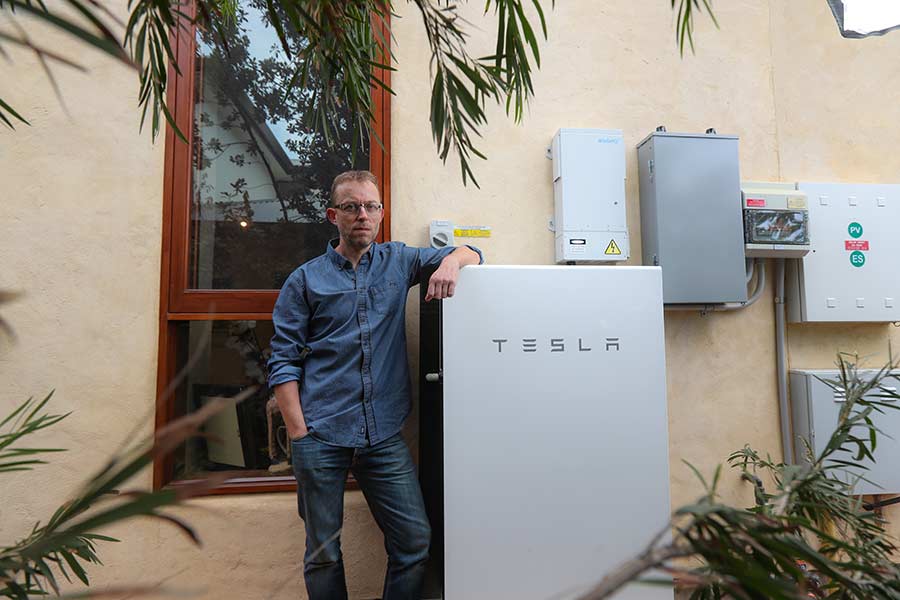
Despite the grimace – I really like this battery…
I’ve been in the solar world for 17 years, have answered literally tens of thousands of customer questions, and provided quotes for solar and batteries to over 980,000 Australians through this website, SolarQuotes.
With all the knowledge I’ve gained over that time, I’ve distilled it all into the following article: My “dos and don’ts” of buying batteries.
Dos
Do put on as much solar as your roof can handle before buying a battery
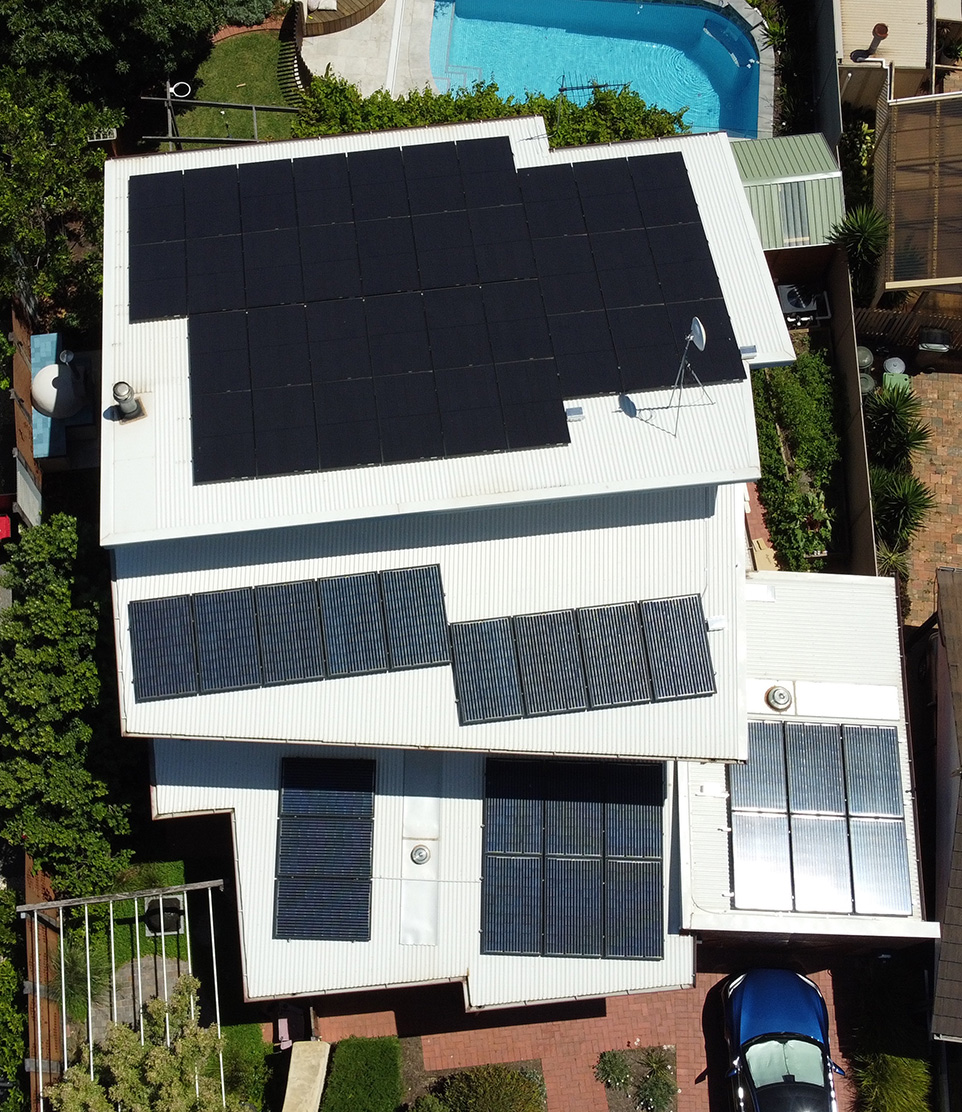
20kW of solar on my house – I practice what I preach!
Your first priority should always be to fill your roof with solar before buying a battery. The more solar you have, the more reliably you can charge your battery even in the depths of winter.
Yes, some electricity retailers now offer plans with free or super-cheap hours of power in the middle of the day, and these can help top up a battery when your solar falls short.
But there’s no guarantee these plans will be around forever. Meanwhile, your solar panels will reliably generate energy day-in and day-out for decades.
Do buy the right size battery for your home
Before the federal battery rebate was a thing, large batteries were expensive, and most people didn’t go larger than 10-15kWh.
Now the rebate has dropped the cost of batteries significantly, larger size systems are far more common.
My rule of thumb is to size your batteries 2x your solar, budget permitting.
For example, if you have 10kW of solar, aim for around 20kWh of batteries.
This gives you enough solar generation to charge your batteries year-round reliably.
Do get at least two, if not three, battery quotes.
If you only get one quote, you’ll have no idea whether the price is market value, a total rip-off, or a ‘too good to be true’ cheap crap system.
By getting multiple quotes, you’ll get a good idea of whether you’re paying a fair price for good quality gear.
Do consider other brands besides Tesla
Tesla makes awesome products. I’ve had a Powerwall 2 on my house since 2017, and it hasn’t missed a beat.
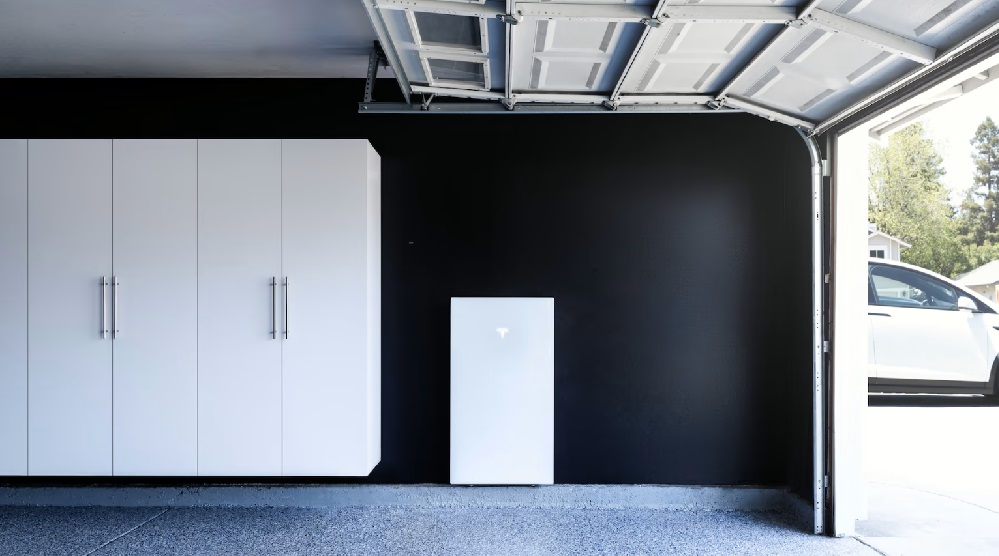
Tesla announced the Powerwall 3 in late 2024, which has an in-built solar inverter.
In my opinion, it’s hard to go wrong with Tesla.
So why would you go for anything else?
Well, they only make single-phase batteries, meaning they can’t provide true three-phase backup.
It’s rare you’d need three-phase backup – but if you want it, Tesla isn’t the brand for you.
Other brands, like Sungrow and Sigenergy, make true three-phase hybrid inverters designed to pair with their batteries.
They’re also cheaper. A 13 kWh Sigenergy stack, for example, is about $2,000 cheaper than a Powerwall 3.
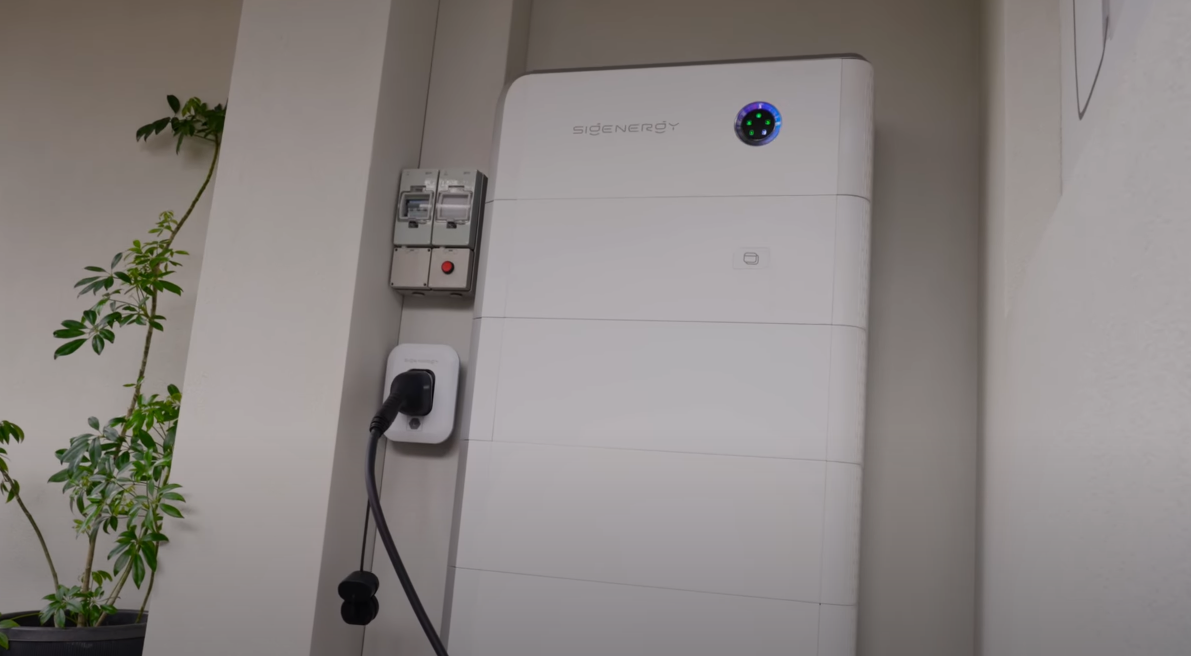
A 32 kWh Sigenergy battery stack – with an in-built DC EV charger.
Do get blackout protection
You might assume blackout protection is standard with batteries – but you’d be wrong.
Talk to your installer about what you want backed up in your home – and get it in writing.
You don’t want a blackout to hit – only to find your battery is an expensive paperweight without the grid.
My advice? Only backup essentials like lights, fridge, internet router, TV, and maybe a small aircon to ride out a blackout in style.
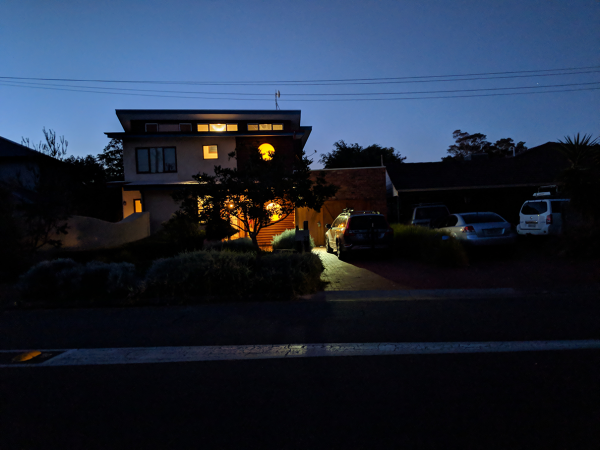
My house was the only one on the street with the lights on in a blackout!
Do consider battery-friendly electricity tariffs and VPPs
Flat-rate electricity tariffs are simply not a good match for homes with batteries.
What you want is a ‘time-of-use’ tariff, which charges different rates depending on the time of day:
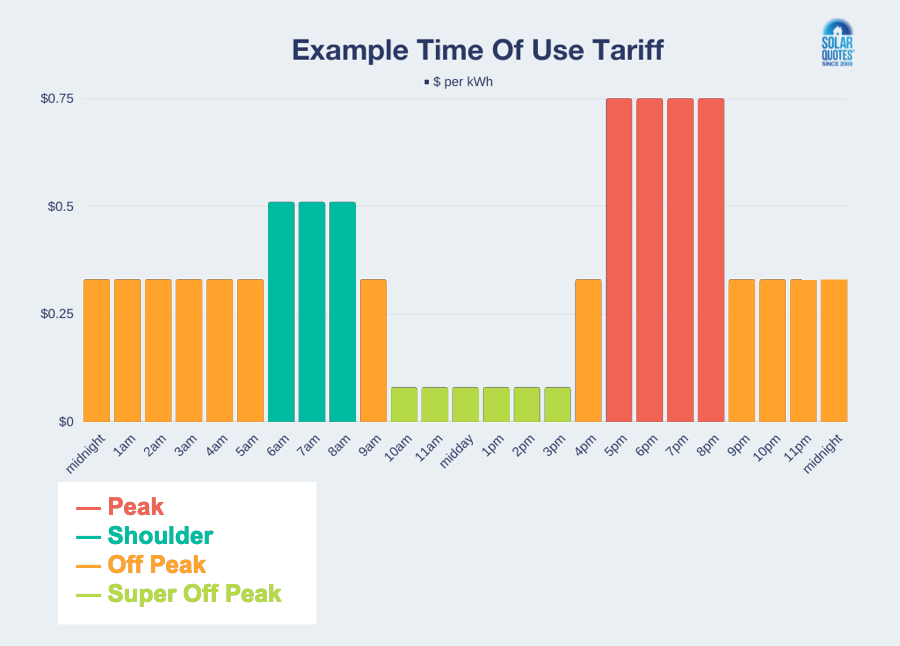
This time-of-use plan has four different rates. Others will have two or three rates.
The idea is – you charge up your battery during the day from ‘free’ solar, and then ride out the expensive peak periods by using your stored energy – saving you heaps.
Inverse ‘solar sponge’ time-of-use tariffs are also becoming common. These tariffs charge off-peak rates during the middle of the day instead of the middle of the night.
My mate Sean put two Powerwalls on his house on one of these solar sponge plans.
The idea is that he charges them up fully (even in the middle of winter when his solar production is weak) from the grid for 8c/kWh, ready to coast through the evening peak pricing period – saving him thousands.
Virtual Power Plants (VPPs) are another way of maximising your savings from batteries.
On a VPP, you let the VPP operator control your battery when the grid is stressed to sell its stored energy for a profit.
They will share a portion of this with you – in the form of a generous solar feed-in tariff ($0.50 or more per kWh).
For advanced players only, there’s Amber Electric, which passes on the wholesale rate of electricity— which can be up to $20/kWh.
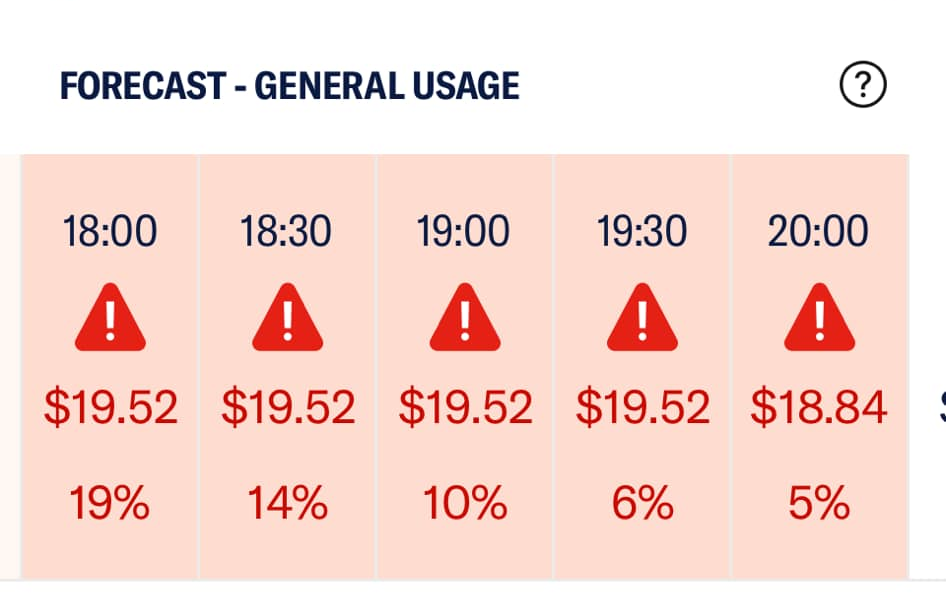
I would advise not blasting your aircon if your Amber app looks like this
As an example, a 13.5 kWh Tesla Powerwall would make ~$256 selling its contents to the grid via Amber with price spikes like the above.
But because you’re also charged these rates for using electricity, being caught out with a flat battery during a price spike means you could be slugged a huge amount if you turn on any power-hungry appliances.
Don’ts
Don’t get duped by blended solar and battery payback predictions
The cold, hard economic fact is that solar is always a better investment for a household than a battery – assuming you have an unshaded roof.
The typical payback of a solar system is 4-6 years, compared to 8-20 years for a battery:
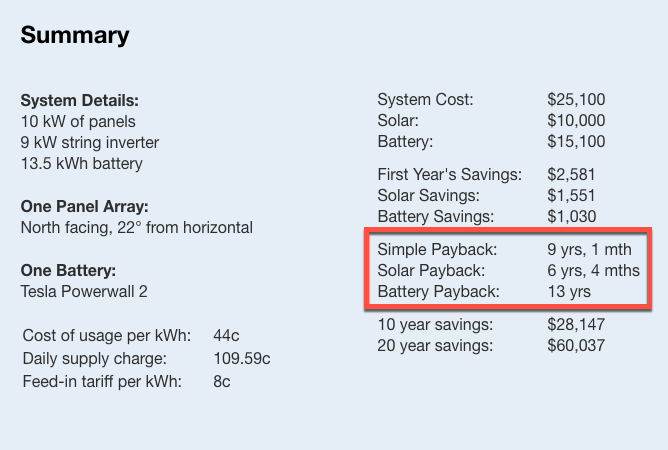
A screenshot from my solar and battery savings calculator
Some installers, on their quotes, will show you a solar + battery system with a good-looking “6 year payback”. What they don’t mention is that they take the great 3-year payback of solar, the pretty bad 14-year payback of a battery, and ‘blend’ them together to get 7 years overall.
My solar and battery calculator calculates the savings for solar and batteries separately and shows you the result.
Don’t buy the cheapest battery
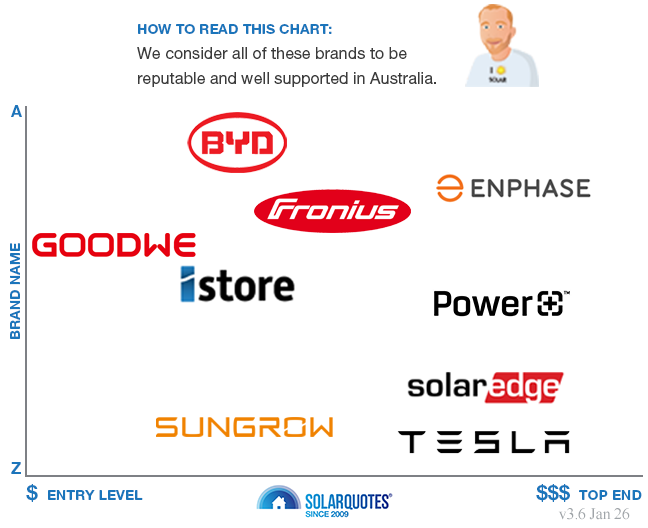
This should be obvious. Not only can a no-name battery be unreliable with no warranty support, but it can also be a serious fire risk. Don’t gamble with your safety to save a few dollars. Go with a well-known brand – like the ones I recommend:
Don’t buy from a door-knocker or a cold-caller without extreme caution (at least get other quotes)
I’ve literally never known someone to get a competitive deal from a doorknocker spruiking solar or batteries. This is for a few reasons:
– Doorknockers are paid on commission and are incentivised to inflate quotes
– Doorknockers push the solution they’re paid to push instead of a product that’s best for your needs
– Standards for hiring doorknockers are extremely low, and they’re commonly hired off the street, given zero training, and sent out to sell.
Don’t use expensive “no interest” finance deals
All finance has a cost. “No-interest” finance deals often advertise themselves in misleading ways, such as “no net cost.”
The bottom line is – ‘no interest’ deals are simply loans paid off in monthly instalments. The total cost of the loan is typically 20-25% more than the cash price for the same system.
Getting a low-interest green loan or putting it on your mortgage will typically get you a far better deal.
Don’t misunderstand the benefits of modular batteries
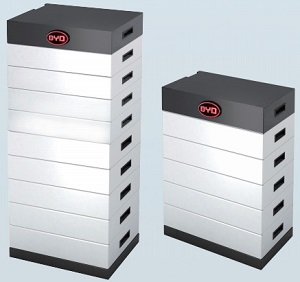
Modular batteries can be expanded by plugging in more modules. Like this BYD B-Box HV.
I read a well-meaning article recently advising consumers to buy modular batteries over monolithic ones like the Tesla Powerwall.
The idea is – you start off with a small battery and then ‘plug and play’ new batteries over the years as your budget allows.
There are a few reasons why this isn’t the best idea:
1) Battery models can become discontinued quickly. The odds of buying extra modules for your battery in 2+ years are slim.
2) From a budget perspective, one drawback of buying a smaller modular battery is that the required electronics make up a large portion of the initial expense. So, if you buy a larger unit, you’ll get more ‘battery for your buck’.
3) The federal battery rebate can only be claimed once. So if you buy a 15kWh stack and plan to add 5kWh later – that extra 5kWh will cost a lot more.
Choose and size your battery carefully at the outset – don’t undersize your system thinking you can simply plug and play extra modules later.
So there you have it! My “dos and don’ts” of buying batteries.
Did you know there are more than 7,200 solar installers in Australia?
Finding a reliable solar and battery installer can be overwhelming. For 17 years, we’ve helped over 980,000 Australians to find the right installer.
Hit the button below to get your free quotes from trusted installers:

About Finn Peacock
I’m a Chartered Electrical Engineer, solar and energy efficiency nut, electric car and e-bike owner, dad, and founder of SolarQuotes.com.au. My last “real job” was working for the CSIRO in their renewable energy division. Since 2009 more than one million Australians have used my site to get quotes for high quality PV systems from pre-vetted solar installers.