Polycrystalline vs Monocrystalline Solar Panels
By Finn Peacock, Chartered Electrical Engineer, Fact Checked By Ronald Brakels
Last Updated: 20th May 2026
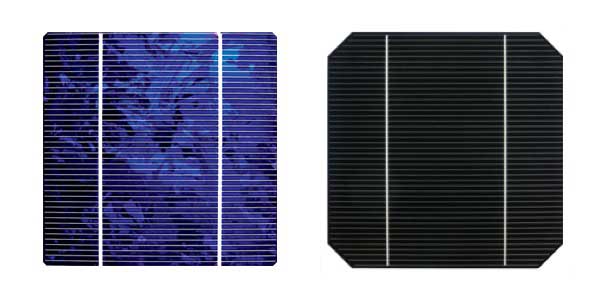
A polycrystalline and a monocrystalline solar cell: used to make poly and mono solar panels respectively.
Polysilicon solar panels have gone the way of the dodo! Back in 2010, around three-quarters of the panels going on Australian roofs were polysilicon, but now they have disappeared, not just from rooftop solar, but solar in general, as barely any are made these days.
The reason leading to this was simply that monocrystalline solar cells were better. It wasn’t a huge difference, but enough for manufacturers to gradually change over, and now the transformation is complete.
Polycrystalline solar cells were made from high purity molten silicon that’s cooled relatively quickly, and so many many crystals form. Hence the name polycrystalline, meaning many crystals. It’s also referred to as polysilicon, or just “poly”.
Back when they were available, polycrystalline panels had a modest price advantage. This meant deciding between the two types was never clear cut and always a matter of weighing the pros and cons of each. But this didn’t stop salespeople from claiming the type they sold was the best, as I explain in this video that I made many years ago, when most panels were still poly:
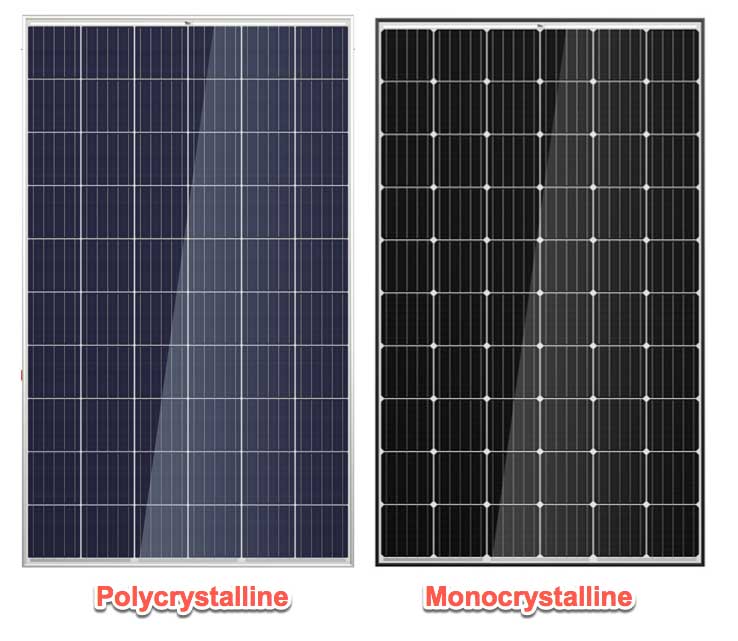
One reason some people had for preferring polysilicon panels was they were bluer, and some people just like that colour. But poly panels could also be much more variable in appearance, so good installers would take care to ensure all the poly panels going on your roof matched each other in appearance.
Here’s what a polycrystalline looked like, along with a typical monocrystalline panel at the time.
While monocrystalline solar cells are more difficult to make, they won over polysilicon for two main reasons:
Efficiency: Mono panels are a little more efficient than poly panels. For a homeowner, the advantage of more efficient solar panels are fewer panels are required to produce the same amount of solar energy, so a larger solar system can fit on a given amount of roof. Despite monocyrstalline solar cells being more expensive to make, they can reduce other manufacturing costs, as less other materials are required per watt of solar panel made. It also lowers transport costs.
Temperature coefficient: Efficient panels cope better with heat, so mono panels lose a little less efficiency than poly when it’s hot.
A third, less direct advantage, is monocrystalline solar cells can be better suited for some high tech methods of further tweaking efficiency.
Now that monocrystalline solar is king and almost the only type of panel going on Australian roofs, will it eventually be deposed from first place in the future? The answer to that is — maybe, but probably not for years to come.
Learn more about how to choose a good solar panel and how much they cost, or check out our solar panel reviews section.
You can also see how a bunch of modules currently available in Australia stack up side by side in terms of specifications and cost using our solar panel comparison table.