What Are The Most Efficient Solar Panels in Australia?
Last Updated: 29th Jul 2026 By Finn Peacock, Chartered Electrical Engineer, fact-checked by Ronald Brakels
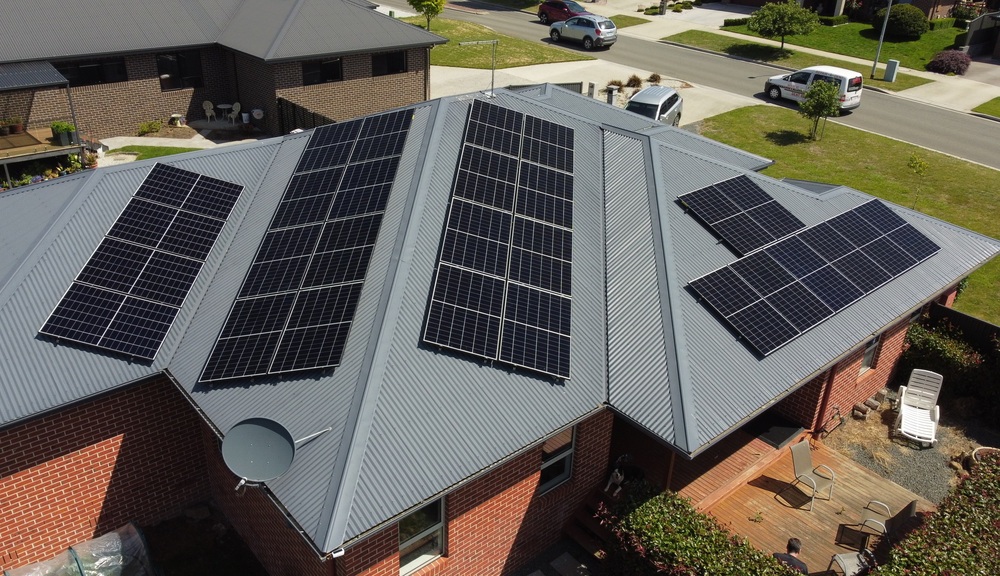
Solar panel efficiency measures how much sunlight a solar panel converts into electricity, expressed as a percentage. For example, a 24% efficient panel converts 24% of the sunlight energy hitting the panel’s surface into electricity.
Higher efficiency means more energy from the same size panel.
Nowadays, good solar panels are 22% to almost 25% efficient. Anything 24% or above would classify as “high efficiency.”
Most Efficient Solar Panels
The table below ranks the panels from our solar panel comparison table from most to least efficient.
| Panel | Manufacturer | Product Name | Efficiency ▼ | Panel Wattage | Approx. Cost per Panel (AUD) |
|---|---|---|---|---|---|
 |
Aiko Neostar 3P | 25.0% | 500W | $220 | |
|
|
Aiko Neostar 3S | 24.5% | 490W | $215 | |
 |
Trina Solar Vertex S+ (475W) | 23.8% | 475W | $150 | |
 |
JA Solar Deep Blue 4.0 Pro | 23.8% | 475W | $155 | |
 |
Jinko Solar Tiger Neo III | 23.77% | 475W | $175 | |
|
|
Aiko Neostar 2P | 23.6% | 470W | $149 | |
 |
TW MNH-48HE | 23.5% | 470W | $120 | |
|
|
Aiko Neostar 2S+ | 23.3% | 465W | $159 | |
 |
Longi Hi-MO X10 Explorer | 23.3% | 475W | $175 | |
 |
Phono Solar Quasar | 23.27% | 475W | $175 | |
 |
Winaico WST-NGX-D3 | 23.0% | 450W | $198 | |
 |
Solahart Silhouette series | 22.8% | 455W | $165 | |
 |
SunPower Maxeon 3 | 22.6% | 400W | $190 | |
 |
Tindo Walara | 22.6% | 440W | $191 | |
 |
Canadian Solar Inc TOPHiKu 6 | 22.5% | 475W | $130 | |
 |
Suntech Ultra V Pro (N-type) 440W | 22.5% | 440W | $130 | |
 |
Risen TOPCon | 22.5% | 440W | $140 | |
|
|
SunPower P7 | 22.4% | 455W | $145 | |
 |
REC Alpha Pure-R | 22.3% | 430W | $255 | |
|
|
REC Alpha Pure-RX | 22.1% | 460W | $280 | |
|
|
Phono Solar Helios Clear | 22.02% | 440W | $200 | |
|
|
Solahart SunCell series | 22.0% | 440W | $140 | |
|
|
TWMNH-48HD | 22.0% | 440W | $100 | |
|
|
SunPower Maxeon 3 (black) | 21.9% | 415W | $200 | |
|
|
Suntech Ultra V Pro (N-type) 415W | 21.3% | 415W | $130 | |
|
|
Suntech Ultra V Pro (P-type) | 21.3% | 415W | $120 | |
 |
SolarEdge Smart Panel | 21.25% | 415W | $207 | |
|
|
Risen Titan S (440W) | 21.2% | 440W | $135 |

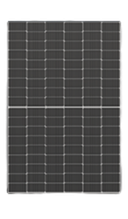
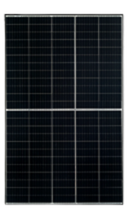
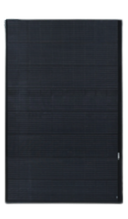
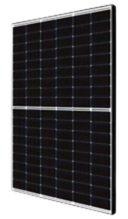
In the table above, you can see the best residential panels are approaching 24% efficiency. This means they convert nearly a quarter of the sunlight energy into electricity. Aiko’s latest panel sits at about 23.6%, ahead of the more expensive Winaico at 23% and the premium-priced SunPower’s Maxeon 6 at 22.8%. Trailing in the high‑22% to 23% club are lower cost brands like Jinko, LONGi, Canadian Solar and others.
Remember: Your solar panel’s efficiency rating will be almost spot on when new but decreases over time. This only happens slowly. All major manufacturers guarantee panels will retain over 90% of original efficiency after 20 years.
Table of Contents
- Most Efficient Solar Panels
- Why Solar Panel Efficiency Matters
- Does Higher Efficiency Always Mean Better?
- How Efficiency Has Improved Over Time
- Breakdown of Solar Cell Technologies
- Is Panel Efficiency the Most Important Factor?
- Our Recommendation
- FAQs About Solar Panel Efficiency
- Related Guides and Resources
Why Solar Panel Efficiency Matters
Solar panel efficiency matters most when your roof space is at a premium. Higher‑efficiency panels provide more watts per square metre, so you can hit your desired system size on a smaller or oddly‑shaped roof. Fewer panels also means a neater look and slightly simpler installation.
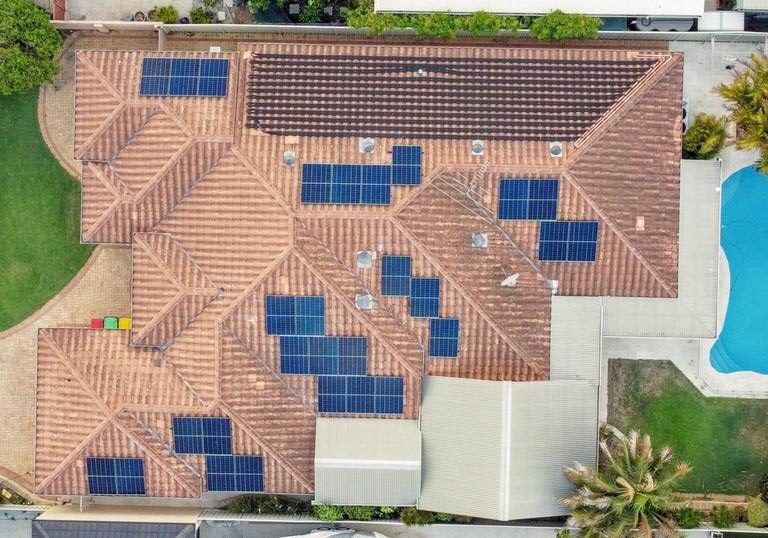
Efficiency often correlates with advanced cell technology and strict quality control, so the highest‑efficiency panels tend to come with long warranties and strong reliability. And if you plan to add batteries or an EV charger later, installing high efficiency panels on part of your roof while leaving room for future expansion is an option. But note it’s usually more cost effective to fill your roof all at once.
Does Higher Efficiency Always Mean Better?
Not necessarily. A 6 kW system of 15% panels and a 6 kW system of 20% panels both produce the same energy; the difference is panel count and roof area. If you have plenty of roof, lower cost and slightly less efficient panels can save money compared to premium high‑efficiency ones.
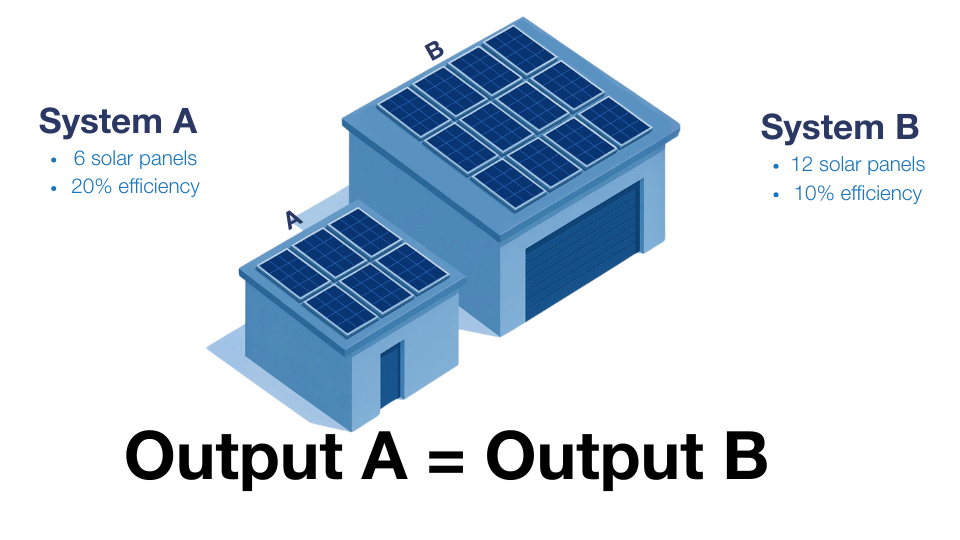
Assuming they’re otherwise equal, only pay extra for a more efficient panel if space is tight. Otherwise, a mid‑range panel in the 20-22% range will serve you just as well. If you want to have your cake and eat it, Aiko currently make the most efficient panel (23.6%), at a similar price to many less efficient ones.
How Efficiency Has Improved Over Time
In the early 2010s, average panel efficiencies hovered at 14–16%. By 2016, 18% was solid. Fast‑forward to today and 23%+ is common, with the best panels around 25%. This climb has been driven by tech leaps (PERC, bifacial, half‑cuts) and more recently by N‑type silicon innovations (TOPCon, HJT, IBC). Over a decade, the typical panel power rating doubled—from ~250 W to ~475 W per panel—thanks to squeezing more watts from the same area.
Breakdown of Solar Cell Technologies
- Monocrystalline vs. Polycrystalline: Old poly panels topped ~17%; modern mono is 18–22%.
- PERC: Mid‑2010s upgrade adding a rear passivation layer—boosted efficiencies into the low 20s.
- N‑Type Silicon: Cleaner, no light‑induced degradation; basis for TOPCon, HJT and IBC.
- TOPCon: Tunnel‑oxide passivated contacts on N‑type wafers, giving ~21–23% in mass production.
- HJT (Heterojunction): Combines crystalline and amorphous silicon; ~22–23% efficiency, excellent high temperature performance.
- IBC (Interdigitated Back Contact): All contacts on the back (no front shading)
Is Panel Efficiency the Most Important Factor?
Efficiency is just one piece of the puzzle. You also need to weigh cost, warranty, brand reputation, degradation rate and installer quality. Two systems of equal kW will generate similar energy, regardless of panel efficiency, so long as the installer and components are solid. A reliable 22% panel from a trusted brand often trumps an alleged 24% panel from a questionable manufacturer.
Our Recommendation
- If you have a small roof, maximise your system’s output and choose top‑tier panels like Aiko or Winaico. You will need to use every bit of roof space you can.
- If you have a big roof, go for the larger manufacturers with lower prices: Jinko, LONGi, Risen, JA Solar, Trina. Depending on your system size, it can turn out cheaper overall to just have a few more panels of a cheaper brand.
FAQs About Solar Panel Efficiency
Anything around 20% or higher is considered good these days. Most panels sold in Australia now sit in the 20–22% range, with premium models pushing into the 23–24% bracket.
Yes. All solar panels slowly degrade—typically by about 0.5% per year. That means after 25 years you’d expect around 80–90% of the original output. Top-tier panels often have even lower degradation rates.
Per square metre, yes—a higher efficiency panel delivers more watts from the same area. But two systems of equal kW (one with more low-efficiency panels, one with fewer high-efficiency panels) will generate the same annual energy. Efficiency mainly affects how many panels you need and how much roof space they occupy.
Only if your roof space is limited or you value the extra warranties and advanced technology they typically bring. If you have ample roof and a tighter budget, a good mid-range panel in the 20-22% efficiency range will perform almost as well for less money.
Yes—panels lose roughly 0.3–0.4% of output per °C above their 25°C reference temperature. On a 40°C day, you might see a 12–16% drop in output. Panels built with HJT or IBC technology usually have slightly better temperature coefficients, so they lose marginally less performance in extreme heat.
Related Guides and Resources
- To compare specifications, prices, warranties and more of solar panel brands available in Australia, use our Solar Panel Comparison Table
- Find out the top 10 best-rated solar panel brands according to Australians.
- Once you have narrowed down the brands you are interested in, you can find reviews on our solar panel reviews page.
- Interested in what Aussie installers think are the best solar panel brands? Read our Best Solar Panels in 2026 blog.