Monocrystalline Solar Panels
By Finn Peacock, Chartered Electrical Engineer, Fact Checked By Ronald Brakels
Last Updated: 20th May 2026
These days, every solar panel going on Australian roofs has monocrystalline solar cells. These are also called monosilicon or sometimes just “mono”. The solar cells can look like this:
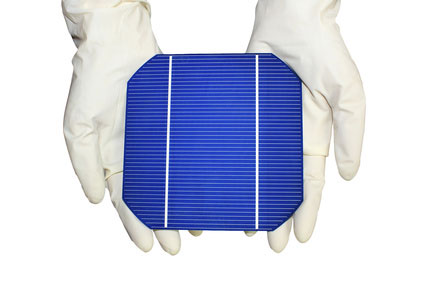
Those two white lines on the cell above are busbars, while the fine lines are fingers. These are wires that collect current from the surface of the cell. However, an increasing number of panels use busbar free back contact cells, that look like this:
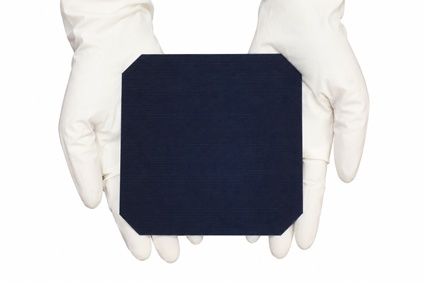
The most obvious characteristic of a monocrystalline solar cell is that it has its corners chopped off! This is done because these solar cells start out as a cylindrical monocrystalline ingot that looks like this:
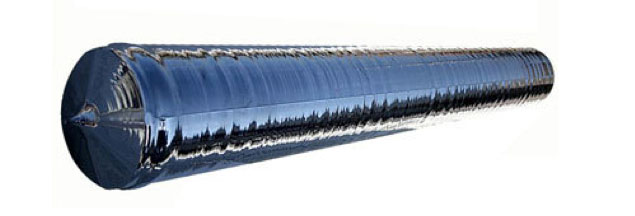
These ingots are “squared” off with wire saws as shown below. If they were to make them completely square they would waste heaps of silicon. Hence the rounded corners. But as time has gone by and monosilicon has fallen in price, the corner clips have grown smaller.
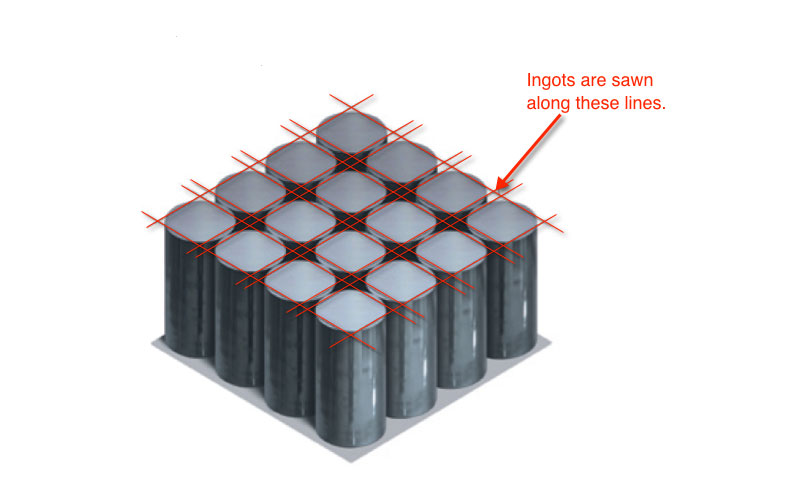
The resulting squared ingot is then sliced like salami to make the wafers. The wafers are still not capable of generating any electricity, though! First, they need some serious processing.
The stages to make a monocrystalline wafer into a monocrystalline solar cell that will generate electricity from light are these:
Texturing: The wafers are etched with all sorts of nasty chemicals to remove a tiny layer of silicon, leaving an irregular pattern of pyramids. This creates a bigger surface area to absorb more light.
Diffusing: The wafer has boron and/or phosphorus diffused into it. This gives the cell a built-in internal electrical field that allows current to flow when exposed to sunlight.
Coating: The cell is coated with silicon nitride or other material, which reduces reflection, ensuring as much light as possible is absorbed.
Printing: Metal conductors are printed onto the wafer to collect the electricity generated.
Laying Up The Monocrystalline Solar Panel
The finished solar cells are soldered together and then laminated onto special anti-reflective, tempered glass. The back of the solar panel may be a large plastic sheet, but more often it will be another sheet of tough glass. The glass assembly is then placed into a frame, a junction box is fitted for electrical connections, and you have your monocrystalline photovoltaic solar panel!
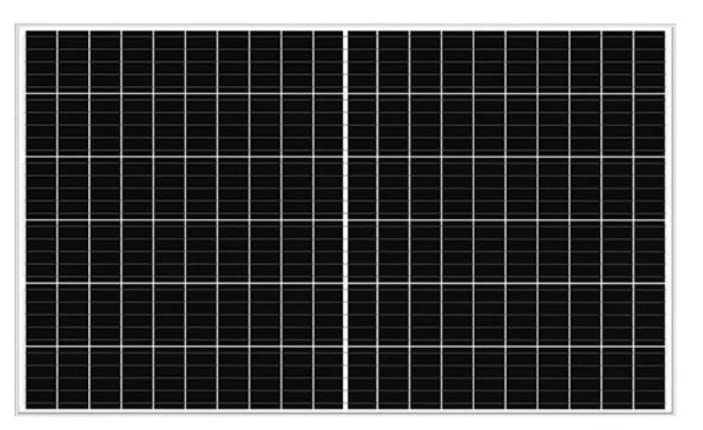
The finished panel will usually have an efficiency of 22-23%, but some are 25% efficient. Provided you haven’t made the mistake of buying from a shoddy manufacturer, you can expect it to last for over 30 years. If you want to see a current selection of monocrystalline solar panels on the Australian market, then you can use my solar panel comparison chart.
If you’re interested in polycrystalline panels that are still on many Australian roofs but no longer installed today, you can check out my article on mono vs. poly solar panels. You can also learn more about polycrystalline panels here.