Polycrystalline Solar Panels
By Finn Peacock, Chartered Electrical Engineer, Fact Checked By Ronald Brakels
Last Updated: 25th May 2026
Polysilicon panels are old hat. They’re no longer installed on Australian roofs, and are barely made anymore. They were beaten by monocrystalline solar panels, as they have an edge in efficiency. But, if you’re interested in solar history, here’s information on polycrystalline panels.
Polycrystalline solar panels were made from polycrystalline solar cells like this one:
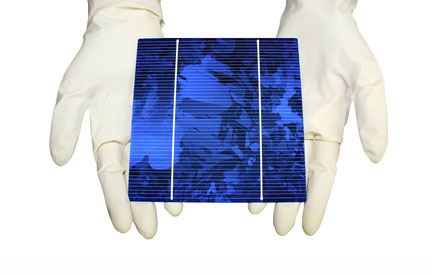
Polycrystalline solar cells were cheaper to make than monocrystalline ones. To make a polycrystalline ingot, you simply melted a load of silicon and then poured the molten liquid into a big box where it solidified, creating an ingot that looked like this:
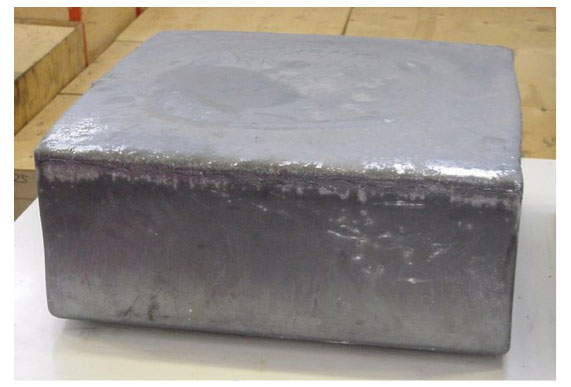
Picture: pveducation.org
This is a lot simpler than producing a monocrystalline ingot, which involves a multi-million dollar crystal growth machine and slowly growing a shiny, cylindrical single crystal of silicon over 4 or 5 days.
The big ugly polycrystalline ingot was cut into square blocks, like these ones being handled by our German lady friend:
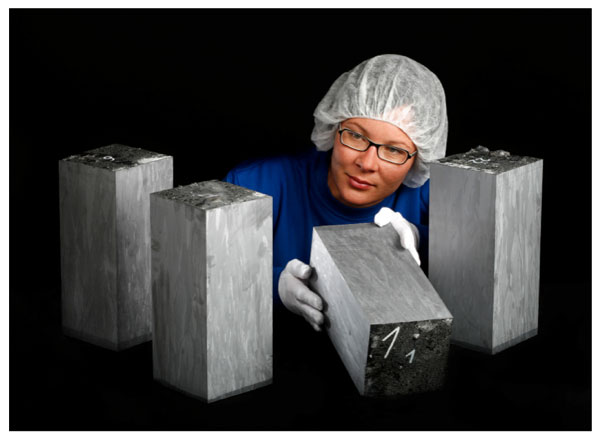
Picture: Schott solar
These blocks were then sliced up into very thin, square wafers like this.
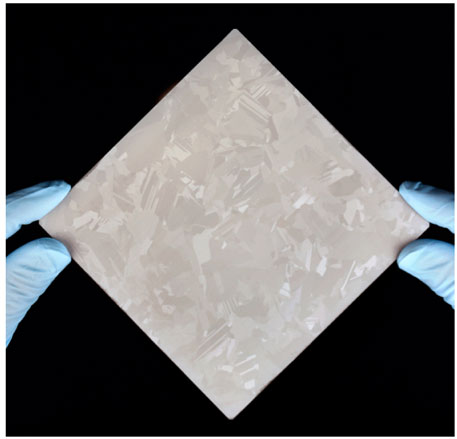
Picture: Schott Solar
To convert this wafer into a solar cell, they had to be processed in almost exactly the same way as monocrystalline wafers, i.e. they were cleaned, textured, diffused and anti-reflection coated before the electrical conductors were printed on.
The only real physical differences between a mono and polycrystalline solar cell were:
1) Polycrystalline solar cells were perfectly square, while monosilicon have their corners clipped because they’re cut from a cylinder.
2) Polycrystalline solar cells have grain boundaries (clearly visible). These slightly reduce solar efficiency by making it a bit harder for the electrons to flow.
While monocrystalline silicon allows for higher efficiency, early on, there was little practical difference. This was because the multicrystalline cells’ square shape meant that when they were placed on in a panel, there was no wasted space, making the efficiency of a typical polycrystalline solar panel almost identical to a typical monocrystalline module.
But, as time went by, monosilicon fell in price, and it became economical to waste a little more silicon by reducing corner clipping. Also, manufacturers developed ways to further improve the efficiency of monocrystalline solar cells.
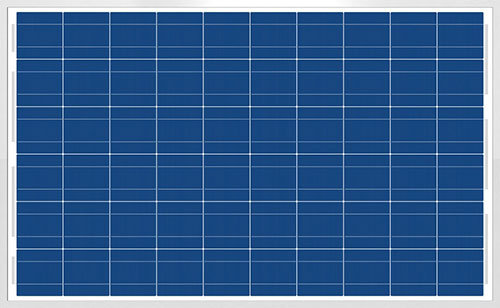
Here’s a finished polycrystalline solar panel:
If you want to see what panels are available on the Australian market today, along with specifications, you can check out my solar panel comparison chart.