8 Mistakes People Make Buying A Home Battery
By Finn Peacock – Chartered Electrical Engineer, Ex-CSIRO, Founder of SolarQuotes.com.au
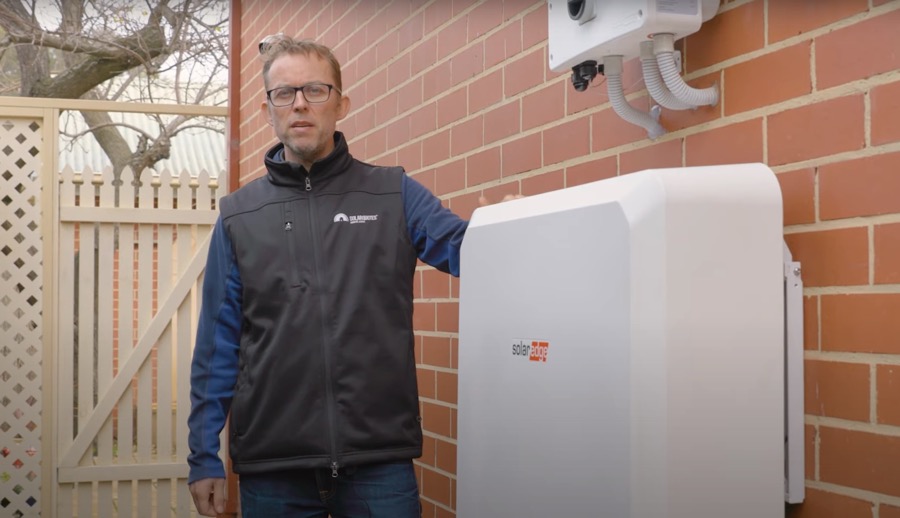
Yours truly with a SolarEdge Home Battery.
Last Updated: 12th Jun 2026
There’s been a frenzy of interest in home batteries since the federal battery rebate was launched in 2025.
And frenzies are when buyers can make expensive mistakes.
A well-installed, properly sized home battery can protect you from both blackouts and your electricity retailer.
If the grid goes down, your battery can automatically kick in, keeping your lights and essential appliances running.
If your electricity retailer tries to charge you more for energy, with a big enough battery and solar you won’t care.
But home batteries are not cheap. At least the good ones aren’t.
So if you are considering investing in a battery for your home, don’t go in blind.
Here are the biggest mistakes I’ve seen people make when buying batteries. Avoid these, and you’ll be well on your way to getting an excellent system that works trouble-free for many years.
Mistake #1 – Not having enough solar
Most people buy batteries mainly to store their excess solar energy. But I see many battery owners with too-small solar systems who don’t have enough spare solar energy to charge their batteries through winter, crippling their battery savings.
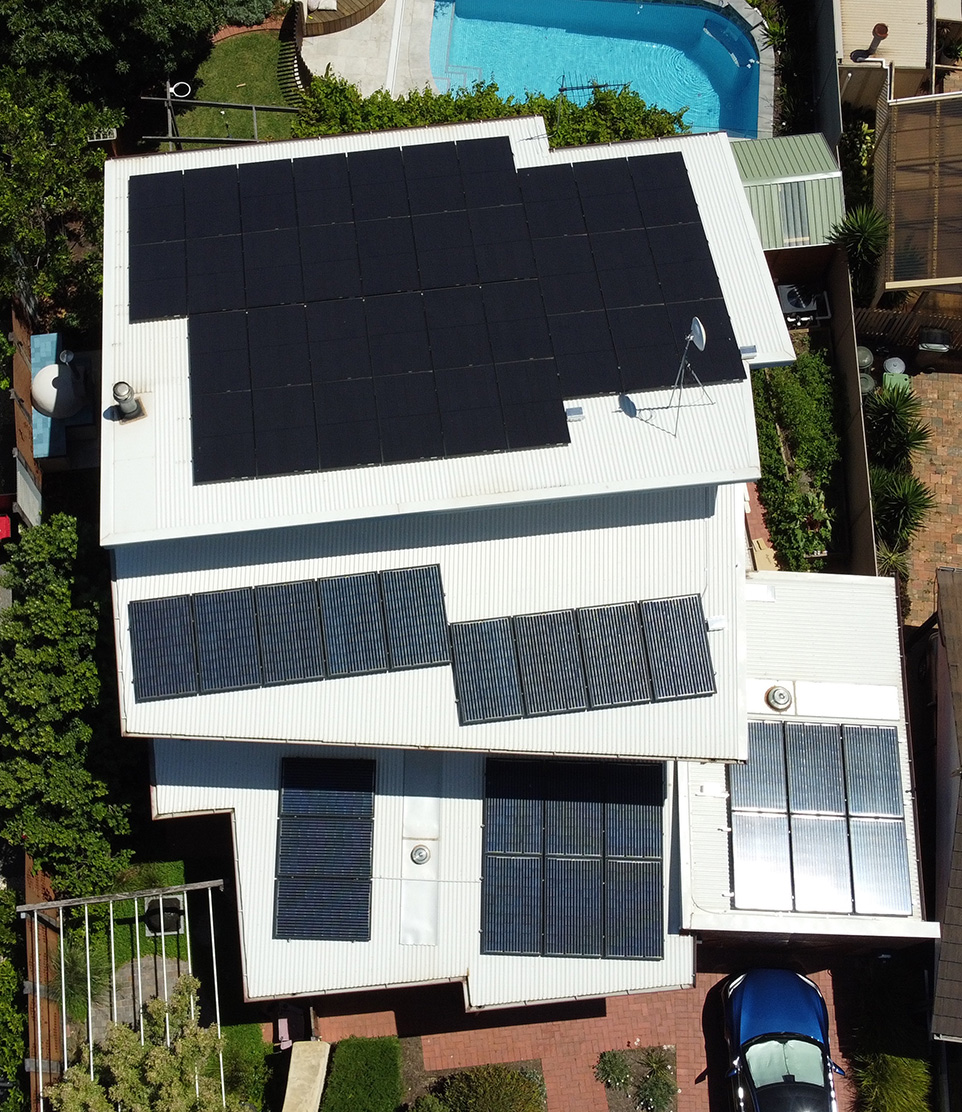
I upgraded from 6kW of solar to 20kW!
Most family homes in Australia will need a pretty big solar system to fully charge a typical home battery throughout the year, including winter and overcast days. I’d recommend 10 kW of solar as a minimum, where possible.
Yes, some electricity retailers now offer plans with free or super-cheap hours of power in the middle of the day, and these can help top up a battery when your solar falls short.
But there’s no guarantee these plans will be around forever. Meanwhile, your solar panels will reliably generate energy day-in and day-out for decades.
Mistake #2 – Buying the cheapest home battery on the internet
It’s not rocket science. Cheap battery quotes = low margins for installers = rushed installations with inferior-quality products and little-to-no after-sales support.
A battery is not a set-and-forget appliance. Over its life, you may need firmware updates, warranty claims, monitoring fixes, or a technician back on site. All of that costs the installer and manufacturer money. If they only made a couple of hundred bucks on your system, guess how keen they’ll be to answer the phone in year three?
I’ve seen the pattern too many times. The bargain installer’s number rings out within a year or two. The no-name manufacturer has no Australian office to honour the warranty. The battery becomes an expensive ornament on your wall, and the replacement comes entirely out of your pocket.
The rebate has made this worse, not better. It has flushed a wave of too-good-to-be-true battery deals into the market, sold by companies chasing volume rather than happy customers.
And while modern batteries from reputable brands are very safe, a cheap battery slapped on the wall by a rushed installer is exactly where you don’t want corners cut.
If you can’t afford a decent battery, properly installed by a company that will still exist in five years, don’t buy one at all.
Mistake #3 – Getting ripped off
The only thing worse than paying too little and getting a crap battery is paying too much and getting a crap battery.
It’s depressing how often people are quoted a crazy-high price for a small, and/or crap, battery.
Typically, these batteries are promoted by door-knocking salesmen or aggressive letterbox-drop campaigns, with arbitrary end-of-month deadlines that pressure you to sign up fast for a ‘great deal’.

Do not open your door to this man!
You’d hope that overpaying will at least protect you against shoddy installations. Sadly, this isn’t the case. In my experience, many companies that charge sky-high prices for batteries don’t care much for quality installations.
It breaks my heart to field calls from concerned pensioners who have spent a small fortune on a tiny battery sold to them by a doorknocking high-pressure salesman and installed by a clown.
The solution here is – get multiple quotes. You’ll quickly figure out the market rate for a well-installed battery that suits your needs.
Mistake #4 – Having your heart set on only one brand
Tesla makes brilliant batteries. I bought a Powerwall 2 almost a decade ago, and I love it.
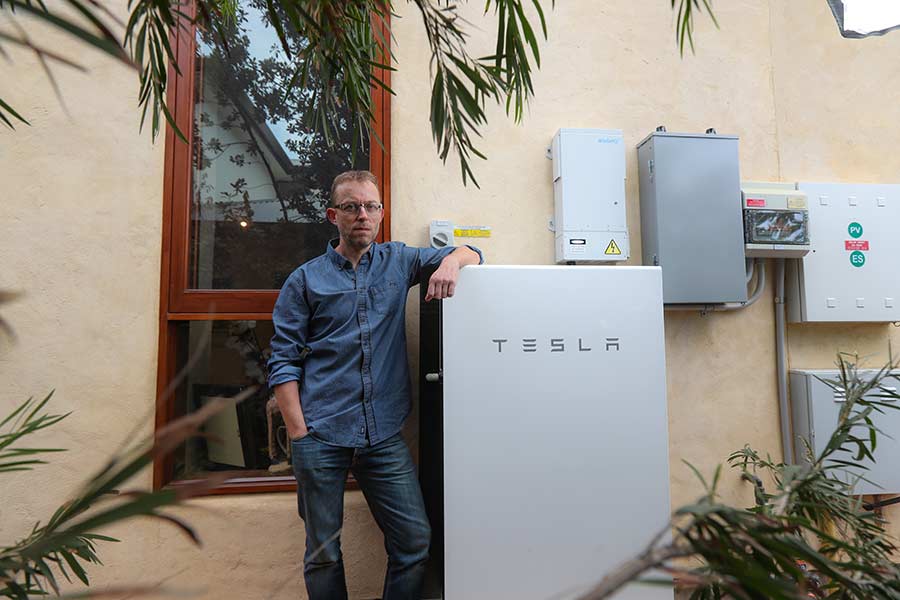
Despite the grimace – I really like this battery…
For many years after its release, the Powerwall was, in my opinion, one of the best batteries on the market for a homeowner. It was competitively priced, ‘just worked’, and looked slick.
It was inevitable that competition would arise for such a dominant product. Now, there are heaps of great alternatives to Tesla.
Here’s all the brands I recommend:
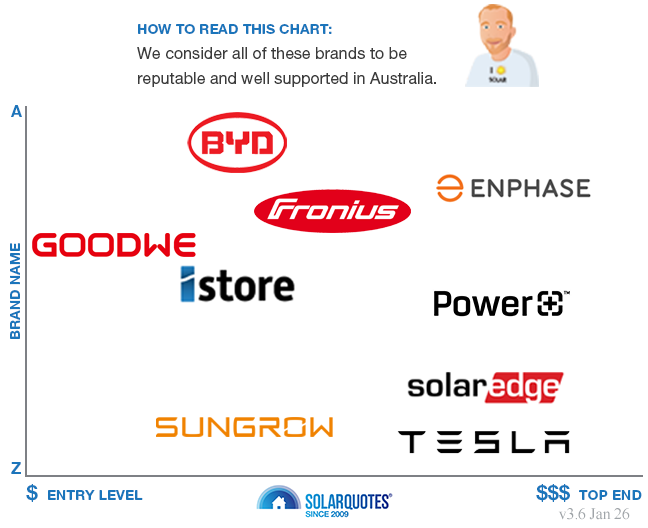
Modular batteries – ones that you can add to in ‘blocks’ like Sungrow and Sigenergy – dominate what I see quoted nationwide.
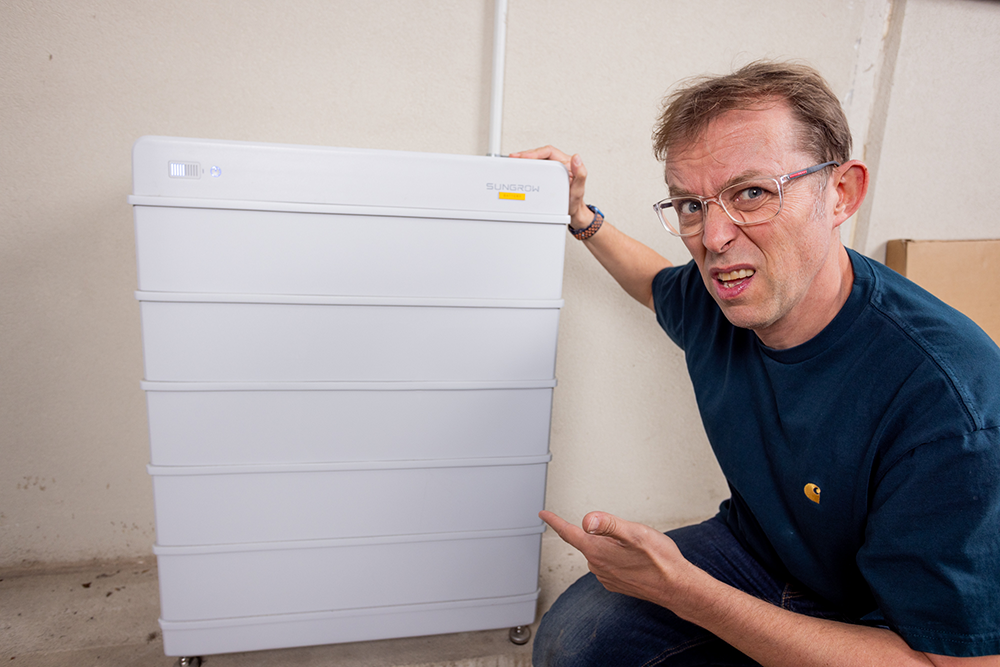
The Sungrow battery I have on my AirBNB. Each block is 3.2 kWh.
We keep our battery comparison table updated, so you can see what’s available in Australia and what they cost.
Mistake #5 – Not understanding your blackout protection
A few years ago, the big trap was buying a battery that couldn’t back up your home at all. These days, most quoted systems include some form of backup. The new trap is assuming it will behave the way you imagine.
“Backup” can mean very different things. It might mean your whole home running close to normal. It might mean a couple of essential circuits keeping the fridge and some lights on.
Or it might mean a battery that powers the house but won’t recharge from your solar panels until the grid comes back, so once it’s empty, you’re in the dark with everyone else.
Discuss in depth with your installer exactly how the battery will perform if the grid fails.
Questions to ask your installer:
- Does it back up the whole home or just selected circuits? Which ones, exactly?
- How many fridges will it start? (Motors in fridges and rainwater pumps etc., will demand around seven times their rated current to get them started.)
- Will the solar charge it up without the grid?
Then make sure they put the answers in writing on the quote, so there are no nasty surprises if the grid goes down.

My battery-backed-up home during a blackout.
Mistake #6 – Not understanding battery-friendly electricity tariffs and VPPs
Time-of-use Tariffs
If you have a smart meter (and once you install a battery, you will), chances are you’re already on a ‘time-of-use’ tariff, or your retailer will move you to one.
Instead of paying one flat rate all day, you pay different rates depending on the time: expensive in the evening peak, cheaper overnight, and often cheapest in the middle of the day when the grid is drowning in solar.
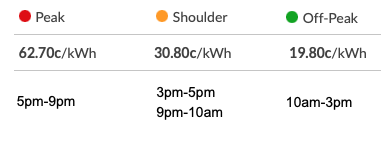
An example Time-Of-Use tariff from South Australia
For a home with solar and a battery, this is an opportunity, not a threat. Charge your battery through the day, then sail through the expensive evening peak on stored energy.
But this only works if your tariff and your battery settings line up. After your battery is installed, compare electricity plans again. The best plan for a battery owner is usually very different from the best plan for a solar-only home.
Virtual Power Plants
A Virtual Power Plant (VPP) is a deal offered by many energy retailers where you hand over some control of your battery. The operator charges and discharges it to support the grid, and compensates you for the privilege.
First, let’s clear up a point that confuses a lot of people: to claim the federal battery rebate, your battery must be VPP-capable.
That does not mean you have to join a VPP. It just means the battery must be technically able to participate. Whether you actually sign up is entirely your choice.
So should you? The upsides:
- You may get an upfront discount on a battery system when you buy one through a VPP.
- Some VPPs pay a fixed monthly credit, or a share of the profits from trading your battery’s energy. Depending on the VPP, this can substantially improve your battery’s economics.
- Some VPPs offer a higher feed-in tariff and/or lower usage rates in return for control of your battery.
But there’s no such thing as a free lunch:
- The more you use a battery, the shorter its lifespan.
- Stored energy is usually most valuable to you in the evening peak. A VPP operator may discharge your battery into the grid shortly after sundown, leaving you with little or nothing to get through the night.
Make sure you weigh the promised savings against the downsides of giving up control of your battery – and read the exit terms before you sign, not after.
Mistake #7 – Buying small, planning to expand later
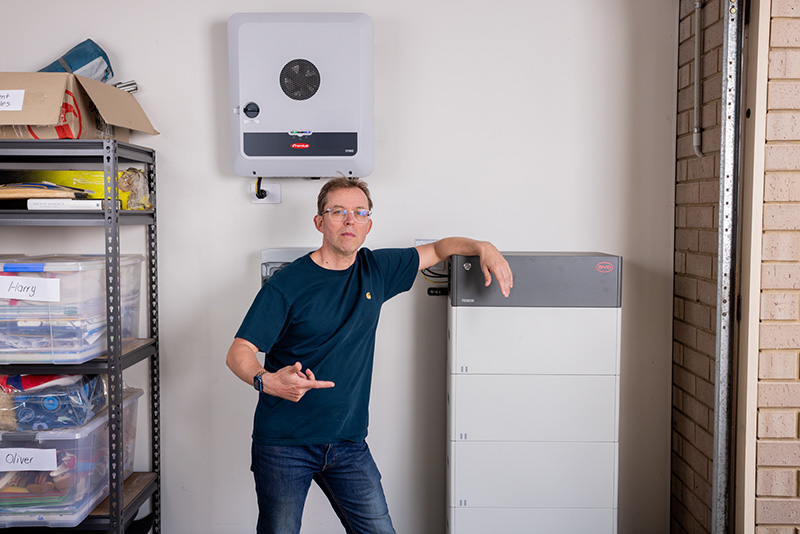
Modular batteries can be expanded by plugging in more modules. Like this BYD B-Box.
Most popular batteries in Australia today are modular: in theory, you can expand your capacity down the track by plugging in extra modules. So you’ll hear well-meaning advice to start small and add modules over the years as your budget allows.
In practice, this is a bad idea, for a few reasons.
Battery models become obsolete. The odds of you being able to buy compatible modules for your exact battery in 2+ years’ time are slim.
And expanding beyond what was specified in the original system design may require other wiring and hardware changes, which means paying an installer to come back.
There’s a budget problem too. A big chunk of a battery system’s cost sits in the electronics, the cabinet and the installation, and those costs don’t shrink much for a smaller battery. Buy bigger up front, and you get far more battery for your buck.
So choose and size your battery carefully at the outset. And as you’re about to read, the federal rebate gives you one very large reason to get the size right the first time…
Mistake #8 – Not realising the battery rebate can only be claimed once
This ties into mistake #7 – and is probably the most important mistake on this list!
The famous federal battery rebate has made batteries way cheaper. On a typical 20kWh battery, installed in 2026, it’s worth around $4,100.
But here’s the catch: you only get one shot at it.
The solar rebate can be claimed every time you buy a new system. The battery rebate is once per household. And it steps down in value every January and July until it disappears entirely in 2030.
This means you’re incentivised go as big as you can reasonably afford. My rule of thumb: aim for a battery around 2x your solar capacity. So if you have 10kW of panels, look at around 20kWh of battery.
Adding more capacity piecemeal down the track means paying the full, unsubsidised price for every extra kWh.
The same logic applies if you’re expanding an existing battery (that was installed pre-rebate): that expansion IS your one claim. Don’t burn it on a token few kWh – make the upgrade count.
And if you get sucked in by a cheap battery deal (like I talked about in mistake #2), the maths gets ugly. When that bargain battery fails and the manufacturer ghosts you, the replacement comes out of your pocket at full price – because you already used up your rebate on the dud.
The next step
So there you have it – the top mistakes I’ve seen people make when buying a battery.
If you’re considering installing solar and batteries for your home or business, SolarQuotes can help you get quotes from high-quality installers quickly and easily:

About Finn Peacock
I’m a Chartered Electrical Engineer, solar and energy efficiency nut, electric car and e-bike owner, dad, and founder of SolarQuotes.com.au. My last “real job” was working for the CSIRO in their renewable energy division. Since 2009 more than one million Australians have used my site to get quotes for high quality PV systems from pre-vetted solar installers.