Air Conditioning: How To Choose The Right System In Australia
Last Updated: 28th Jan 2026 Fact-checked by Jake Boer from Oasis Air and Luke Cove from Lightning Energy
If your air conditioner is chewing through power or you’re looking to upgrade, it pays to think beyond just keeping cool. This guide is all about finding the right air conditioner for your home in a way that’s cost-effective, energy-efficient, and works with your solar. We’ll break down the big choices: reverse cycle vs evaporative, split vs ducted, plus how to size a unit properly so you don’t waste money on something too big or too small.
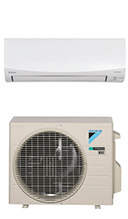
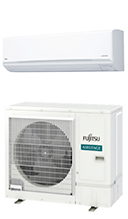
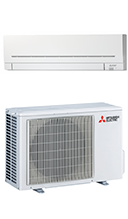
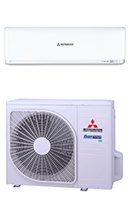
1) Split-System Air Conditioner Comparison Table
Compare specs and pricing side-by-side with our air conditioner comparison table for split systems we recommend.
| Product Name |
Daikin Cora
|
Fujitsu Lifestyle Next
|
Mitsubishi Electric AP Series
|
Mitsubishi Heavy Industries Avanti PLUS
|
Panasonic Z Series
|
|---|---|---|---|---|---|
| Manufacturer Logo |
 |
 |
 |
 |
 |
| Product Image |
 |
 |
 |
 |
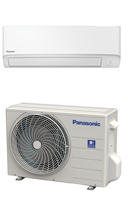 |
| Choose model: | |||||
| Approx price (RRP + GST, excl. installation) | $1,050 | $1,200 | $950 | $1,100 | $1,000 |
| Real power draw (cooling) | 0.4kW | 0.53kW | 0.40kW | 0.31kW | 0.58kW |
| Real power draw (heating) | 0.53kW | 0.66kW | 0.60kW | 0.47kW | 0.65kW |
| Cooling capacity | 2.0kW | 2.50kW | 2.00kW | 2.00kW | 2.50kW |
| Heating capacity | 2.7kW | 3.20kW | 2.50kW | 2.70kW | 3.00kW |
| Cooling Energy Efficiency Ratio (EER) | 5.00 | 4.71 | 5.00 | 6.45 | 4.31 |
| Heating Coefficient of Performance (COP) | 5.09 | 4.84 | 4.17 | 5.74 | 4.62 |
| Energy efficiency star rating (cooling) | 4.5 | 5 | 4 | 6 | 4 |
| Energy efficiency star rating (heating) | 3 | 3 | 3 | 4.5 | 3 |
| Max decibels | 47dB | 46dB | 42dB | 38dB | 40dB |
| Operating temperature range | -10 to 46°C | -10 to 46°C | -10 to 46°C | -15 to 46°C | -10 to 46°C |
| Outdoor compressor dimensions | 550 x 675 x 284 mm | 542 x 799 x 290mm | 550 x 800 x 285mm | 640 x 800 x 290mm | 542 x 780 x 289mm |
| Multi-head compatibility? | Yes | Yes | Yes | No | Yes |
| Warranty | 5 years | 5 years | 5 years | 5 years | 5 years |
| Country of manufacture | Thailand | Thailand | Thailand | Thailand | Malaysia |
| Datasheet Supplied? | Daikin Cora datasheet | Fujtisu Lifestyle Next Datasheet | Mitsubishi Electric AP series datasheet | Mitsubishi Heavy Industries Avanti PLUS datasheet | Panasonic Z series datasheet |
| Warranty Supplied? | Daikin warranty | Fujitsu warranty | Mitsubishi Electric Warranty | Mitsubishi Heavy Industries Warranty | Panasonic aircon warranty |
| More information on brand | Here | Here | Here | Here | Here |
- Air Conditioner Comparison Table
- Should You Choose A Reverse Cycle Air Conditioner Or Evaporative Cooling?
- Split System Or Ducted Air Conditioning: Which Suits Your Home?
- What Size Air Conditioner Do You Need For Your Room Or Home?
- Heating Vs Cooling Efficiency: Which Matters Most For Air Conditioners?
- How Much Do Air Conditioners Cost To Run?
- How Do You Use Solar To Power Your Air Conditioner?
- How Much Does Air Conditioner Installation Cost?
- Which Air Conditioner Brands Can You Trust?
- Air Conditioner Reviews
- Are Portable Air Conditioners Any Good?
- Frequently Asked Questions About Air Conditioners
2) Should You Choose A Reverse-Cycle Air Conditioner Or Evaporative Cooling?
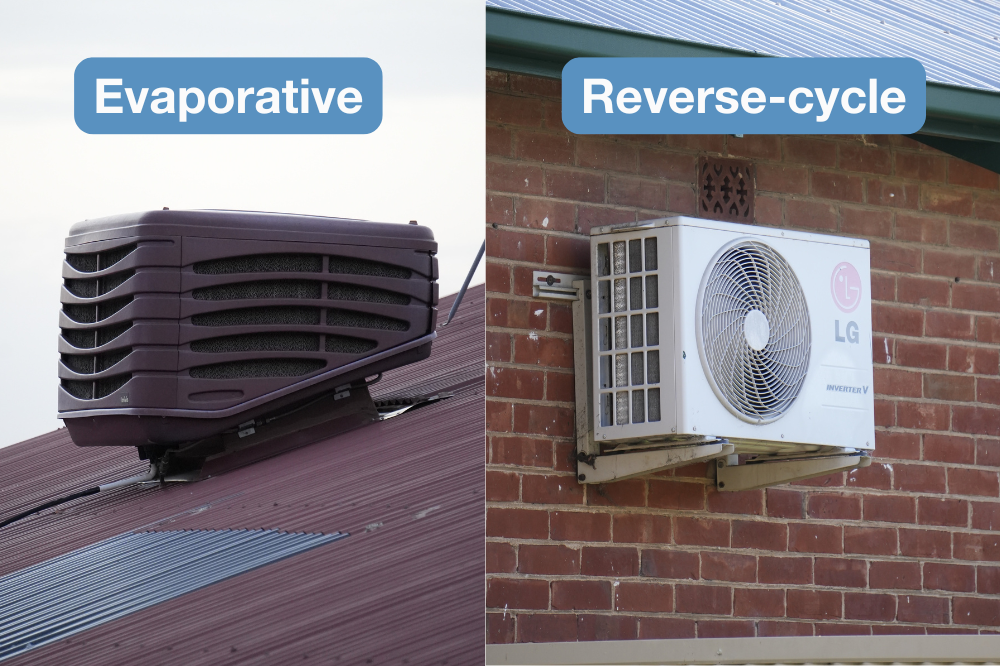
Short answer: For most Australian homes, a reverse cycle air conditioner (RCAC) is the safe default. Evaporative can suit hot, dry inland climates, but it performs poorly in humidity and it does not heat.
If you have solar panels: reverse cycle is the better all-rounder. It works in every climate, provides heating and cooling, and lets you shift most consumption into the daytime solar window.
Evaporative Cooling
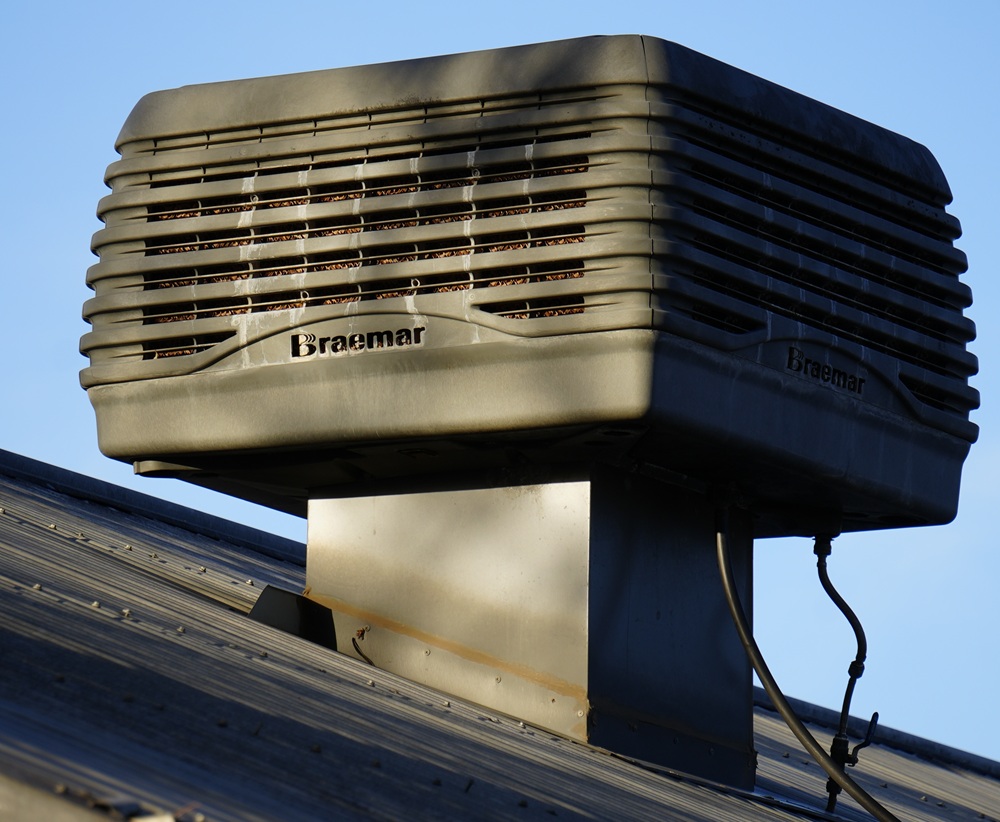
- How it works: Draws outside air across wet pads; evaporation cools the airstream, which is blown indoors and vented out via open windows.
- Pros:
✅Low electricity use
✅continuous fresh air
✅simple hardware
✅lower upfront cost than ducted reverse cycle - Cons:
❌Poor in humidity
❌No heating
❌Limited temperature control
❌Significant water consumption
❌Brings in pollen, outdoor smoke and allergens (terrible during hayfever and bushfire seasons!)
❌In winter, hot air escapes via the ceiling vents (unless you use covers) - Upkeep: Regular pad and sump cleaning – especially in hard water areas. Expect a standard annual service cost similar to splits.
Reverse-Cycle Air Conditioning
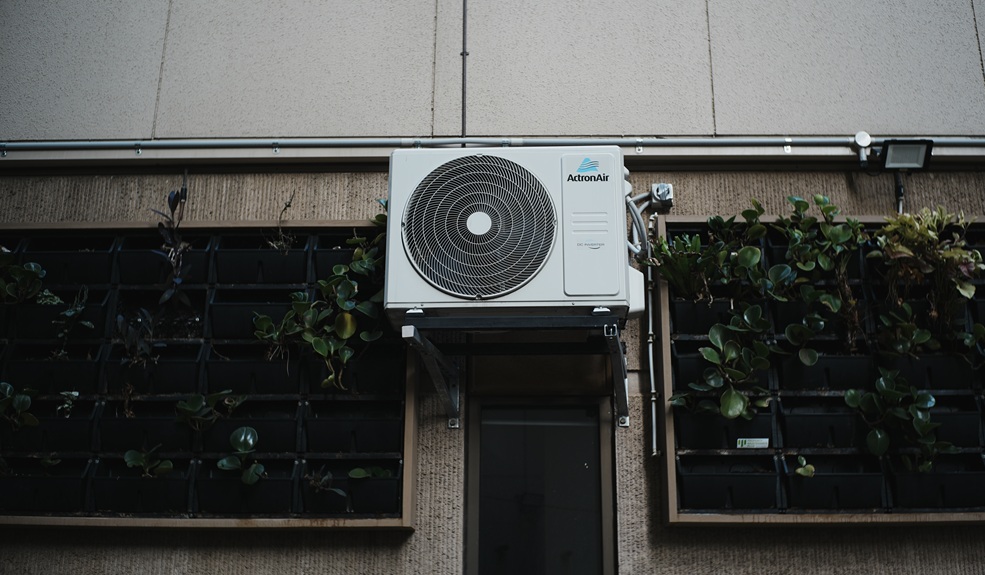
Moves heat in or out using a refrigeration cycle. Available as split, multi-split, or ducted systems. Splits are suitable for one to four rooms, while ducted can cover an entire home when designed and zoned well.
- Pros:
✅Heating and cooling
✅Precise control
✅Dehumidification
✅Filtration
✅Works in every Australian climate. - Cons:
❌Higher electricity use than evaporative
❌Higher upfront cost if you go ducted - Upkeep for splits: vacuum/rinse return filters every 4–8 weeks in heavy use, keep indoor/outdoor coils and surrounds clear of dust/leaves, check the condensate drain isn’t blocked, and book a licensed service every 1–2 years.
- Upkeep for ducted: clean/replace the return filter media regularly, inspect ducts/seals and zone dampers annually, and service the central unit yearly.
Evaporative Vs Reverse Cycle: Side-By-Side
| Evaporative | Reverse Cycle | |
|---|---|---|
| Best for | Warm, dry regions (but under 35 degrees) | All regions |
| Windows & doors | Open to let out moist air | Closed for efficiency |
| Heating & cooling | Cooling only | Heating and cooling |
| Temperature control | Limited, weather-dependent | Precise set point control |
| Humidity & air quality | Adds moisture, brings in outdoor air | Dehumidifies, filtration options |
| Electricity use | Lower (fan + pump) | Higher (compressor) |
| Water use | Typically 15-30 L/h | 0 L/h |
| Indicative installation cost* | 4‑bed home commonly $3,000-$6,000+ | Multi‑split 4‑bed $5,000-$9,000+ • Ducted $12,000-$18,000+ |
| Service | Annual clean; pads as needed | Annual service; filters cleaned |
| Lifespan | ~15 years | ~10-15+ years |
Why Reverse Cycle Usually Wins
It cools and heats efficiently, works in humid and variable climates, dries sticky air, and is easy to zone room-by-room with split-systems. It also plays nicely with solar – pre-cool or pre-heat during the day, then coast into the evening.
When Evaporative Can Still Be Right
Dry inland areas, large single-storey homes, and households that prefer lots of fresh airflow over set-point precision. You’ll run with windows open. In humid weather, expect reduced performance and rely on fan-only for some relief.
For a more detailed comparison between reverse cycle and evaporative, read our dedicated guide.
3) Split System Or Ducted Air Conditioning: Which Suits Your Home?
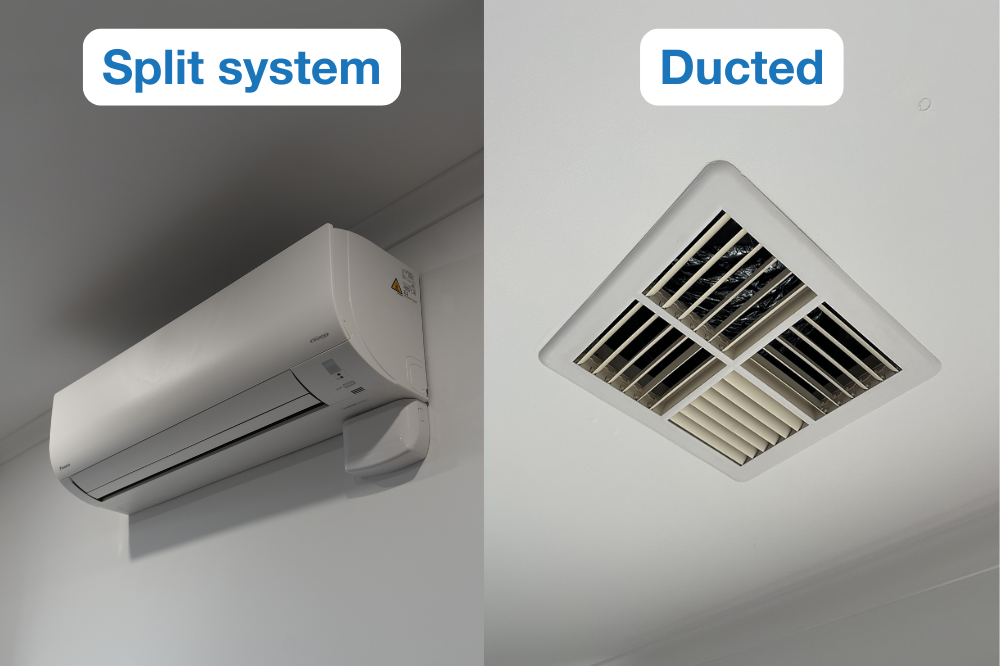
What Does A Split System Look Like?
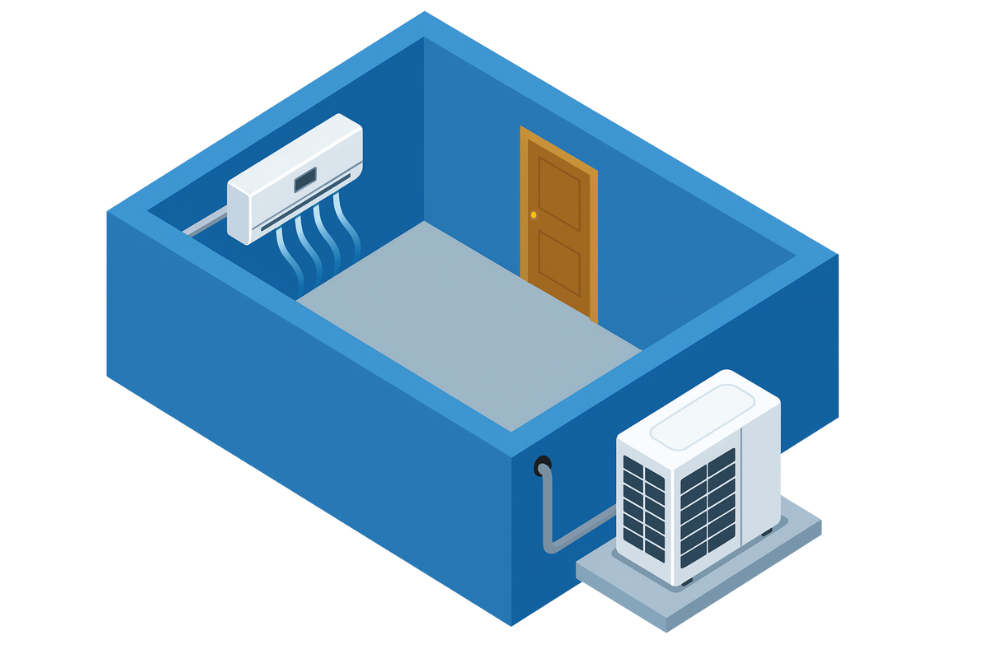
Single Split System
A single split system has one outdoor unit leading to one indoor head.
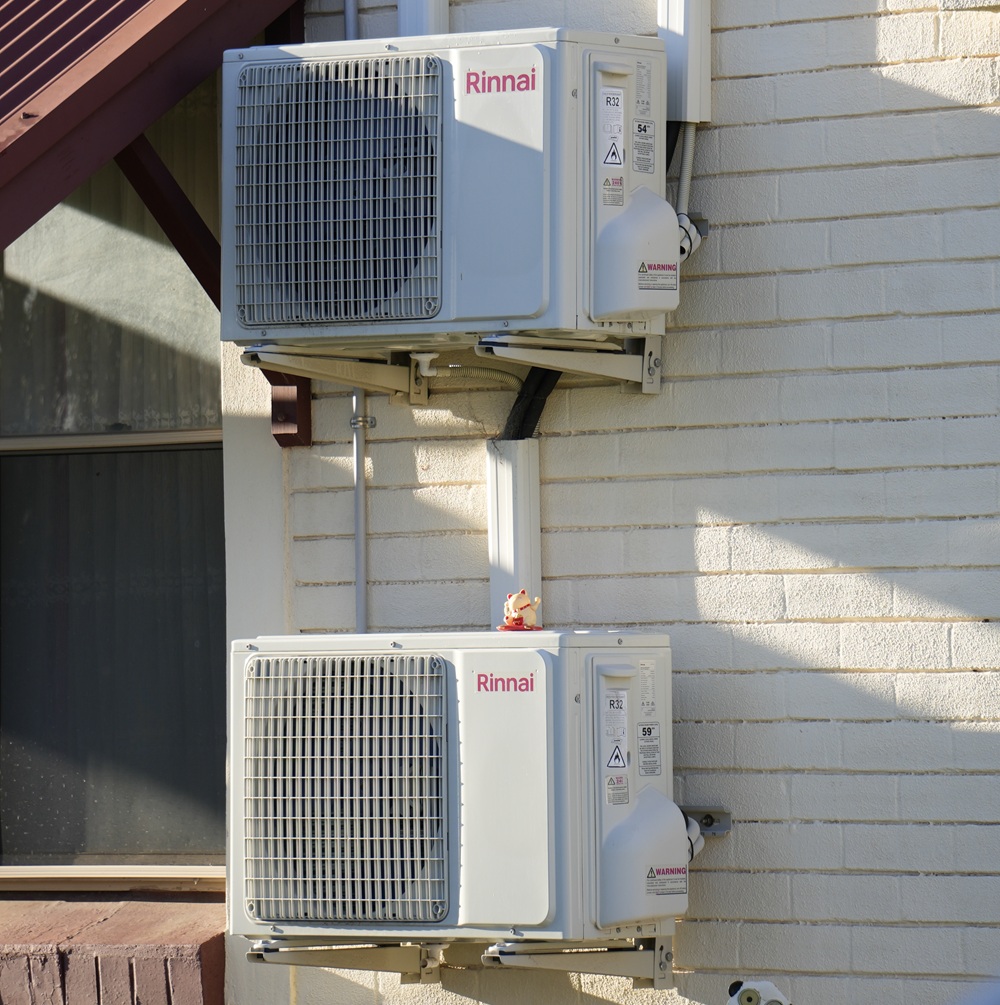
Multi-Split System
A multi-split system has one outdoor unit connected to multiple indoor heads (usually 2-4). Each indoor head (or wall unit) can be controlled independently, but all rely on the same outdoor compressor.

The main benefit of sharing the same outdoor compressor is that you do not need to take up more outdoor space when expanding your split system to other rooms. The downsides are:
- The one compressor can also be a single point of failure, disabling all indoor heads in case of a fault.
- The noise of refrigerant travelling through the pipes is also more noticeable in multi-splits than it is for single splits.
- The maximum capacity of the outdoor compressor limits how big you can size each indoor unit. For example, let’s say your compressor caps out at 10 kW. If you put a 7 kW head in the living room and a 2.5 kW in the bedroom, then you’re already maxed out.
- It needs more piping to reach each indoor head, making it more expensive.
- More piping needs needs more refrigerant.
Note: When there is enough outdoor space, many installers prefer several single split systems for reliability and easier servicing, especially when aesthetics aren’t a priority.
What Does A Ducted System Look Like?
A ducted air conditioning system uses one outdoor unit connected to a central indoor unit, usually located in the roof space. The indoor unit pushes air through ducts to vents in each room, providing even temperature control throughout the home. A return-air grill feeds the stale air from the rooms back to the central unit through a filter. Sometimes there is only one return-air grill, located in the hallway. In that case, open doors help the stale air getting pulled from the entire house.
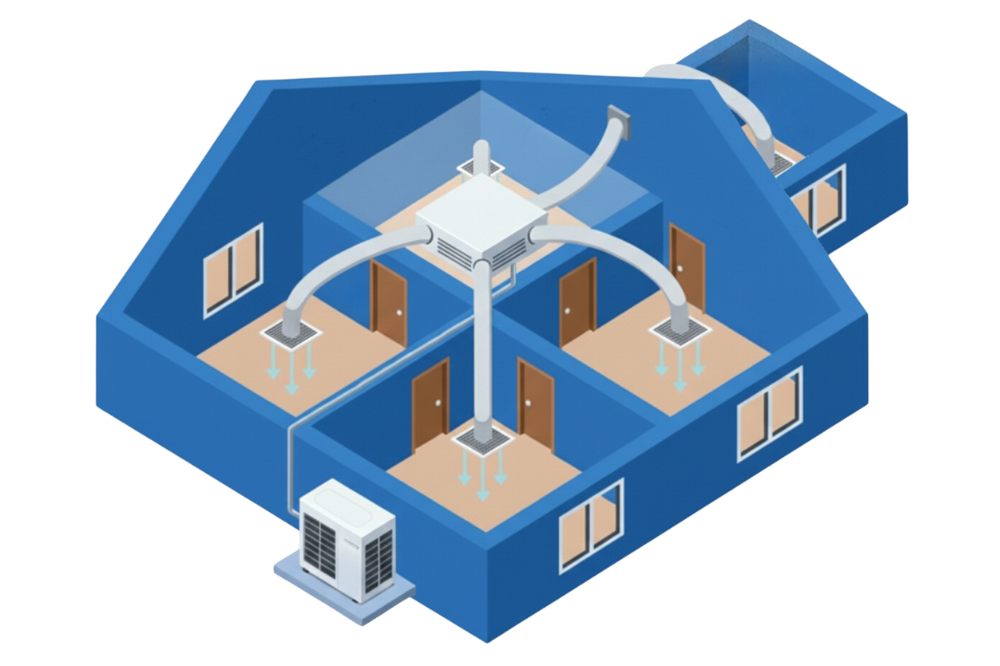
Ducted aircon is typically more expensive to buy and maintain. Just like with multi-splits – if something goes wrong with the central unit, a single point of failure can take out air conditioning for the entire home rather than just one room. They are less efficient than split systems due to issues like heat loss in the ducts.
How Do I Decide Which System I Need?
Decide by room count and layout. One to two rooms usually suits split systems. But if a large home needs four or five heads, the hardware and wall clutter add up, so ducted can make sense.
One room
- Best: One reverse cycle split system.
- Why: Most efficient for the cost; quiet, zoned comfort. Depending on model compatibility, easy to expand to multi-split if a future room needs one.
Two rooms
- Best: a multi-head split system.
- Why: Most efficient for the space, quiet, zoned comfort.
Whole-home (3+ rooms) or large open-plan
- Best: Ducted reverse cycle with zoning and good duct design.
- Why: Even coverage, one outdoor unit, tidy ceiling vents. Higher upfront cost, efficiency depends on duct quality.
Apartments or rentals
Apartments generally don’t have enough rooms to warrant a ducted system. A split system is the way to go. If you have a small balcony with only space for one outdoor unit and want air conditioning in several rooms, a multi-split is most ideal. Strata approval may be required.
Property Value: Real estate agents argue that a split system can devalue your property while a ducted system can add value, as it is seen as a more elegant solution.
4) What Size Air Conditioner Do You Need For Your Room Or Home?
Why Aircon Size Matters
If a reverse cycle air conditioner is too small, it struggles to hit the set point and sits in overdrive, chewing power. Go too big and you pay more upfront and in running costs, and the unit short-cycles so comfort swings hot-cold. A right-sized air conditioner is quieter, cheaper to run and holds a steady temperature.
Room Size, Use & Heat Loads
- Area & height: Measure floor area and note ceiling height. Higher ceilings add load.
- What the room is used for: Kitchens and busy living spaces have extra internal heat from cooking and people.
- Connected rooms: Is there a hallway or other connected rooms that do not have doors?
- Insulation & glazing: Poor insulation, leaky rooms, west-facing glass and sunrooms need more capacity. Often it is more effective in the long-term to improve insulation than oversize the air con. Still, many homeowners take the cheaper short-term path and oversize the air conditioner instead.
- Climate & orientation: Darwin’s muggy heat needs more cooling capacity than a similar room in the Adelaide Hills. North-facing rooms that get winter sun can reduce heating demand.
How To Account For Everything
- Do a quick calculation: use our sizing table below as a first pass, then adjust for ceiling height, insulation and windows.
- Use impartial calculators: try the Australian Institute of Refrigeration, Air Conditioning and Heating’s heating and cooling load tools once you have room measurements and construction details.
- Get a site assessment: a good installer will measure, check orientation, windows and duct runs, then confirm capacity in writing.
Starting Points
| Room Type | Room Size | Required Capacity |
|---|---|---|
| Bedroom | 10-20 m² | ~1.6-2.8 kW |
| Small living | 20-30 m² | ~2.8-4 kW |
| Medium living | 30-45 m² | ~4-6 kW |
| Large open-plan | 45-60 m² | ~6-8 kW |
Examples
- A 12 m² bedroom with decent insulation could need a 1.6 kW split system.
- A 38 m² living room with 2.7 m ceilings and west-facing windows could start at 5-6 kW, or as much as 7 kW in hot, humid areas.
5) Heating Vs Cooling Efficiency: Which Matters Most For Air Conditioners?
For most Australian households, heating efficiency matters more than cooling efficiency. The exception is the far north, where cooling dominates. If you’re south of coastal northern NSW or inland of Brisbane, prioritise a model with strong heating performance, represented by a high Coefficient of Performance (COP), when comparing your shortlists. Northern regions should prioritise the Energy Efficiency Ratio (EER) for cooling.
| Climate zone | Typical annual energy use balance* | What to prioritise |
|---|---|---|
| Hot (NT, far north Qld, tropical coast) | ~10× more cooling than heating | Cooling efficiency (EER), good dehumidification |
| Average (Sydney, Perth, Adelaide, many inland towns) | ~2× more heating than cooling | Heating efficiency (COP), quiet low-fan modes |
| Cold (Melbourne, Canberra, Hobart, high country) | ~8× more heating than cooling | Heating efficiency (COP) and low-temp performance |
How To Read The Zoned Energy Rating Label (ZERL)

The Zoned Energy Rating Label (ZERL) replaced the old single-star label to give a more realistic view of efficiency. It shows how a unit performs in three climate zones, since heating and cooling performance can change dramatically between Darwin, Sydney and Hobart.
- The ZERL shows separate heating and cooling star ratings for three zones: hot, average and cold.
- It also estimates annual kWh for each zone. Use this to compare similar-sized models.
- Within a shortlist, pick the unit with more heating stars / higher COP if you live in average or cold zones. In hot zones, cooling stars / higher EER matter more.
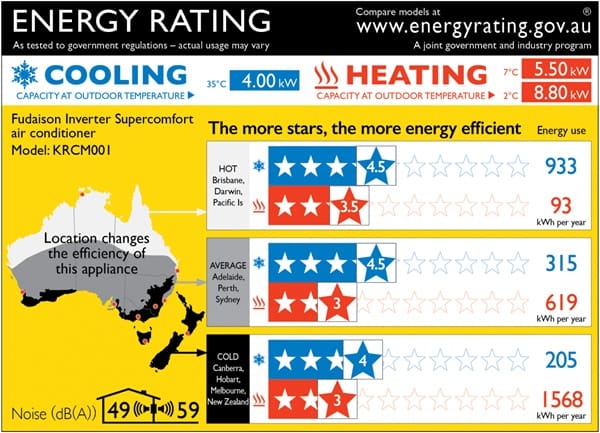
You can look up any model’s detailed star ratings and energy use by zone on the official Energy Rating product database.
Why Cooling Stars Often Look Higher
Glancing at the label above, you’ll often see more blue cooling stars than red heating stars. That doesn’t mean heating is unimportant because:
- The test is tougher for heating: heating usually has to lift indoor temperature further than cooling has to lower it, so fewer stars are awarded for the same underlying efficiency.
- Defrost cycles: below ~5.5 °C, outdoor coils can frost and the unit pauses to defrost, which temporarily lowers heating efficiency. In genuinely cold areas, low-temp performance separates the good models from the average ones.
6) How Much Do Air Conditioners Cost To Run?
Running costs vary by climate, usage habits, and electricity price – but you can use these ballpark figures as a guide:
- 2.5 kW split (bedroom): ~$0.20-0.40/hr
- 7 kW split (living area): ~$0.70-0.90/hr
- Ducted system (whole-home): ~$1.50-$3, depending on zoning and climate.
To get precise figures, use the official Energy Rating Calculator, click “Air conditioners” and enter your postcode. It estimates yearly energy use and cost based on your climate zone:
- Hot: Darwin, Brisbane (humid, high cooling load)
- Average: Adelaide, Perth, Sydney (mixed heating & cooling)
- Cold: Canberra, Melbourne, Hobart (heavy heating load)
Note: The calculator’s default tariffs can be unrealistically high (e.g. 57 ¢ / kWh for Adelaide). Check your electricity rate for a realistic estimate.
Homes with rooftop solar will pay much less. If half your aircon use happens while the sun’s out, your running costs could be half the grid estimate. With a home battery, the marginal cost can drop close to zero – heating and cooling for as little as $10 a year in Adelaide is possible.
7) How Do You Use Solar To Power Your Air Conditioner?
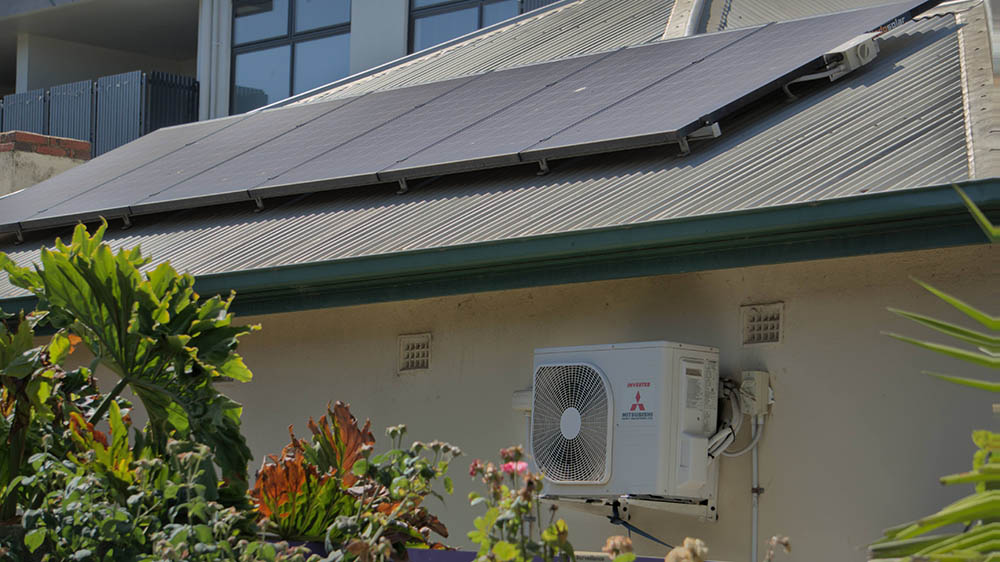
So, how do you actually use your solar panels to power your air conditioner? The short answer: by understanding how your aircon draws power, then timing your heating and cooling to match your solar generation. Once you know what’s really happening under the hood, it’s surprisingly easy to line up your comfort with your rooftop energy and slash grid use in the process.
How Air Conditioners Draw Power
When comparing your solar system size with your air conditioner, it’s easy to get confused by the numbers on the box. A unit might be sold as a “14 kW” air conditioner, but that figure refers to thermal output – the amount of heating or cooling it delivers. The electrical input (what it actually draws from your solar or the grid) is usually much lower thanks to the efficiency of the heat pump.
For example, a 14 kW unit with a COP/EER of 3 only needs about 4.7 kW of electricity to pump out that 14 kW of heating/cooling. A more efficient unit with a COP/EER of 4 would draw just 3.5 kW. So when you’re thinking about whether your solar can “cover” the aircon, always go by the electrical draw, not the marketing number.

Does My Aircon Use A Consistent Amount Of Electricity?
No. Most modern reverse cycle systems use inverter control (i.e. the aircon’s built-in inverter, not to be confused with a solar inverter). Instead of slamming on and off at full power (i.e. “bang-bang” control), the compressor ramps gently up and down to hold a steady temperature. This means smoother power use, quieter operation and less stress on your solar and battery. The best systems use something called PID control – fancy maths that constantly adjusts compressor speed to match the load.
The result: after the first hard push to reach your set temperature, the aircon often cruises at a fraction of its rated draw or even no draw at all for short periods of time. That’s good news for solar households – it means your daytime system has a much easier time keeping up once things stabilise.
Do You Have Enough Solar To Cover Your Aircon’s Max Draw?
Let’s say your air conditioner pulls 7 kW of electricity at full tilt. A 7 kW solar array will only hit that output for a few hours around midday on a clear day, and a bit less once you factor in inverter limits, orientation, and losses. So unless you have an oversized system, there will still be moments when your aircon draws from the grid.
The good news: most systems rarely run flat-out. Once the home reaches your set temperature, the power demand drops sharply – often below 50% of the rated draw, some even at zero for short periods. A decent-sized battery can then fill in short gaps from cloud cover or late-afternoon peaks. Think of solar as the main engine and the battery as the smoothing buffer.
When Should I Run The Aircon?
The golden rule is to use cheap energy while it’s there, whether that’s solar or cheap shoulder rates. Pre-cool or pre-heat your home in the middle of the day so you can coast through the evening with little or no grid draw. Aim to have your home at a comfortable temperature by around 3 pm, then let your battery take over after sunset.
Just keep in mind that most Australian homes have low thermal mass – brick veneer walls, plasterboard, and thin insulation lose temperature quickly. Pre-cooling helps, but it won’t last all night, and the same applies to pre-warming in winter. If you ever build or renovate, consider adding internal brick or denser wall linings to improve insulation.

Talk To Your Installer About Solar + Aircon Sizing
Make sure to discuss the following things with your installer:
- Electrical size of your air conditioner (not the thermal output on the box)
- Your usage profile – when you heat or cool the most
- Seasonal balance: summer cooling is easy to cover; winter heating often needs more solar
- Your comfort habits: Do you run it overnight or just evenings?
- Data: Smart-meter or energy-monitor data helps pinpoint the aircon’s load profile
This information lets the installer size your solar and battery properly – enough daytime capacity to handle peaks, and enough storage to keep you comfortable once the sun goes down.
Can You Automate Air Conditioning?
There are ways to automate your heating and cooling:
- Many splits and ducted systems have Wi-Fi modules or open APIs. Use schedules or solar-aware automation to adjust set points when solar export is high.
- Some systems have demand-response mode (DRM) terminals. These can be wired by an electrician to trigger different modes when solar export changes.
- Smart meters, energy monitors and inverter apps can act as the trigger.
8) How Much Does Air Conditioner Installation Cost?
Air conditioner installation costs vary widely depending on the system type, property size, and installation complexity.
Cost Breakdown By System Type
- Split System: The cost for a split system is generally lower. Around $1,800 to $4,800 for supply and installation, of which $1,000-$1,200 would be just installation cost.
- Multi-Split System: This system connects multiple indoor units to a single outdoor unit and can be more expensive than a basic split system. Averages between $4,200 and $8,000. A top-tier two-head multi-split starts at ~$4,200-$4,500; add ~$1,000-$1,500 per extra head.
- Ducted System: This is a more significant investment due to the complexity of running ducts throughout the house. Approximately $12,000 to $17,000 or more for larger homes. In very large homes or complex retrofits the figure can exceed $20,000.
Factors Influencing The Final Cost
Unit Replacement: Replacing an old unit in the exact same place can be cheaper if it means existing wiring can be reused. Piping usually does need replacing, as the warranty of newer models requires it.
System Type: As shown above, ducted systems are more expensive to install than split systems.
Home Size And Complexity: Larger homes or those with complex layouts (e.g., multiple levels, difficult-to-access areas) require more materials and labour, increasing the cost. Standard split system can be installed in a few hours, whereas multi-split or full ducted may take a full day or more.
Installation Location: Remote locations may incur extra travel fees. Labour rates can also vary by region.
Equipment: The cost of the unit itself varies by brand and features. Some companies may offer a package that includes both the unit and installation, while others may charge for installation only.
Electrical Work: The cost will increase if the installation requires significant electrical work, such as running new cables or installing a new circuit breaker. A new split system often requires its own circuit. Make sure your installer has their license electrical licence alongside their Refrigeration and Air Conditioning licence.
Plumbing Work: If your air con drain needs connecting to your home’s wastewater system, you’ll need a plumber with the right licence to do it by the book. Evaporative systems also need a water supply to run up to the roof unit – another job that requires proper plumbing. So, make sure your installer’s accredited to handle it all.
Additional Needs: Installation costs can go up if the installation requires special equipment, such as a crane for a hard-to-reach outdoor unit.
Commissioning & Warranty Registration: A proper install includes system commissioning and warranty registration. This may be included but ask your installer if it’s part of the quote.
Installer Access & Quote Accuracy: The best installers will ask about insulation, wall/ceiling types, outdoor unit location, site access and wiring before quoting. If they don’t, expect surprises.
Important: Only a licensed refrigeration mechanic can legally handle the refrigerant gas and pressure lines in an air conditioning system. These units run at more than 400 psi and must be installed, evacuated and charged correctly to avoid leaks, poor performance or damage. Always check your installer holds a current Refrigeration and Air Conditioning licence.
9) Which Air Conditioner Brands Can You Trust?
Here are some of the air conditioner brands we recommend:
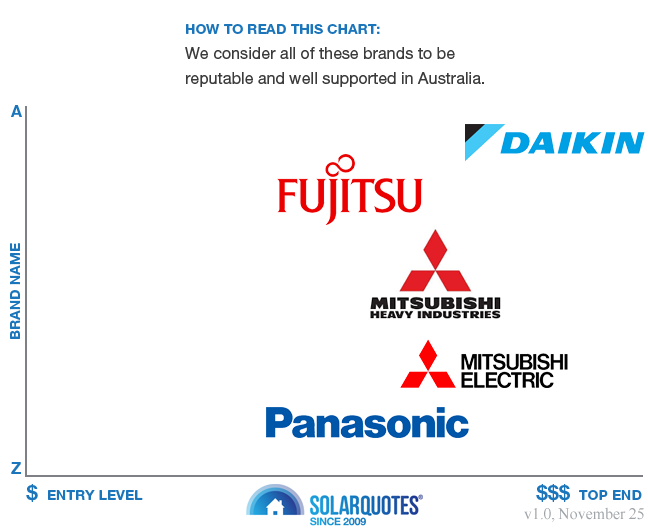
10) Air Conditioner Reviews
What has been your experience with your air conditioner brand? Let us know by leaving a review in our air conditioner review section.
11) Are Portable Air Conditioners Any Good?
Short answer: Don’t buy one unless you have no other option. Portable refrigerative air conditioners are usually a false economy – they’re expensive, inefficient, noisy, and waste the cool air you’ve just paid to create.
Their key design flaw: they take the air you’ve just cooled, then blow it straight out the window.
That exhaust drags hot outside air back in through gaps and vents, so the harder they run, the more they fight themselves. You feel relief only if you sit right in front of the outlet, with the machine droning beside you.

Why They Fail
- Inefficient: far more electricity per kW of cooling than a split system.
- Leaky by design: the exhaust and window kit pull unconditioned air back inside.
- Noisy: fan and compressor in one box.
- Poor comfort: a cold draft in one spot, not even room cooling.
Use One Only If
- You’re in a rental or strata property and installation isn’t possible.
- You need a short-term stopgap for a small room.
- You can vent properly with a well-sealed window kit.
If You Must Buy One
- Check the power input to gauge running cost.
- Check the noise rating – most are loud.
- Ignore big area claims. Expect to cool a small bedroom only.
Bottom line: compared to a proper split system, even the cheapest portable is a compromise. They’re a last resort – useful in very limited situations, but poor value long term.
Conclusion
To summarise our aircon advice: for most Aussies, a reverse-cycle air conditioner is the most cost-effective way to heat and cool a home – especially if you’ve got solar. Keep these points in mind:
- For one or two rooms: go with split systems.
- For whole-home comfort: consider ducted air conditioning.
- Brand matters: stick with our recommended brands to avoid headaches.
- Prioritise heating efficiency over cooling performance (unless you live somewhere warm year-round).
Want more tips on air conditioners and home electrification?
Sign up to our free weekly newsletter for straightforward, practical advice.
Frequently Asked Questions About Air Conditioners
Yes – for individual rooms. Ducted can be efficient with good zoning and quality ducts, but split systems usually win for one or two rooms.
No. High humidity reduces its performance. Reverse cycle is safer.
Most Australian bedrooms need around 1.6-2.8 kW, adjusted for insulation, room size and sun exposure.
Yes – via schedules, solar-aware automation, and in some cases demand-response mode (DRM) inputs wired to a controller.
They make cold air, but the exhaust draws hot air back in. The net effect is underwhelming.
Not at this stage, but if you get quotes through us for solar, batteries, hot water heat pumps and/or home EV chargers, just add a note that you’re also interested in air conditioning, and our installers may be able to help.