Liberal Hammers NSW Govt Over Solar Rebate Backflip

By Rich Bowden

The newly-installed NSW Liberal Government has received widespread criticism for its recent decision to retrospectively reduce the tariff paid to households under the solar bonus agreement.

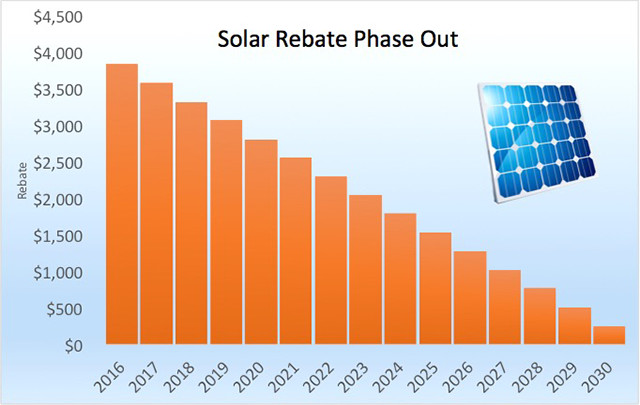
Premier Barry O’Farrell, and his Energy Spokesman Chris Hartcher, last week announced the  reduction of the rebate tariff under the Solar Bonus Scheme from 60 cents per kilowatt hour to 40 for existing customers, saying the move had been made to cut costs ahead of the budget.

However this week the fallout from the decision moved close to home for Mr O’Farrell, with Coalition NSW Upper House MP and former Shadow Environment Minister Catherine Cusack describing the decision in an letter to the premier as a “betrayal”.

The letter from Ms Cusack to Mr O’Farrell, which was copied to all MPs, said the backtrack will anger those NSW customers who entered the solar energy agreement in good faith.

”The affected constituency of fixed and mid-low income homeowners overwhelmingly voted for us and feel betrayed,” she warned Mr O’Farrell in the letter.

”Every electricity bill they receive from 1 July 2011 each quarter until December 2016 will anger them, because it will list the solar bonus rebate at 40 cents and remind them in exact dollar terms of the extent of the betrayal.”

In an extraordinary attack, the former shadow spokesperson for the environment described the retrospective nature of the changes to the agreement as “repugnant” to her party’s principles.

Greens Upper House Environment spokesman Dr John Kaye congratulated Ms Cusack on her criticism of the decision and said the letter highlighted the discontent felt over the treatment of NSW

“By reminding Mr O’Farrell of the long-held Liberal abhorrence of retrospective legislation, Catherine Cusack has added fuel to the mounting solar revolt,” said Dr Kaye in a May 19 media release.

“Barry O’Farrell and his Energy Minister Chris Hartcher’s treatment of solar households and the 5,400 people who work in the industry is unconscionable and thoroughly deserves condemnation,” he added.

However Mr O’ Farrell defended the cuts, saying to reporters in Sydney that his Government had been elected to make difficult financial decisions.

“The fact is that if we allow this to happen it will add $170 to the bills of families and other energy users across this state, that is unacceptable, that’s why we’ve taken the action we have, an action that seek to limit the rebates but still allows a fair rate of return, but seeks to avoid the extra cost to taxpayers,” The Australian reported.

“We were elected ultimately to make hard decisions to clean up the state, to fix its finances, to improve the outlook and the cost of living for people across this state,” he added.

How to build a giant Solar Powered Oven

Does your house feell like a forced fan convection oven in summer?

Here’s how to build a highly efficient, giant solar powered oven.

Eight steps to making sure your oven gets as hot as possible in summer: powered by nothing other than the sun!

1. Erect a wooden frame about the size of an average house.

2. Build bricks around the outside of the frame. Bricks have a good thermal mass, which means that as the sun shines on them in the day, the bricks will store the heat and radiate it back into the oven long after the sun has gone down.

3. Fix a very low thermal mass material (like plasterboard) to the inside of the timber frame so that if any cool air gets in the oven (heaven forbid), the coolness won’t be stored in the inner walls.

4. Put lots of glass in the walls (avoid double glazing at all costs), especially the north facing one. Make sure these windows have minimal awnings.

5. Put black colorbond (ideally) or dark tiles on the top of the timber frame to maximize the heat absorbed by the ‘roof’ of the oven.

6. Add a fan that blows air down from the top of the oven. This way, as the hot air inside the oven rises, you can blow it back down to floor level to makes sure that anything on ground level gets suitably cooked through. To keep things simple, we’ll refer to this ventilation system as the ‘Ducted Air System’

7. If you are worried about cool air getting into the Ducted Air System, then simply add an insulated ceiling to create a roof space.  Ensure all the ducted air system’s pipes are kept inside this ferociously hot roofspace.  This will  minimize the chance of any air in the pipes actually getting cold.

8. If the meat in the oven needs a little more grilling, then add dozens of high powered halogen heaters liberally recessed into the ceiling. As well as producing enormous amounts of heat these little halogen bulbs will produce a small amount of light as an added bonus.

If your house was built like this and resembles an oven in summer,  the two most cost effective things you can probably do are:

a)   Fit mains or solar powered fans into the roof to remove the hot air from the roofspace. These will remove 7-10 times as much air as a passive ‘whirlybird’.

b)   Fit external awnings on all N, E and W facing windows.

If you do those and your cooling bills don’t halve, I’ll eat my cancer-council approved wide brimmed hat.

Solar Panel Scheme : terminated and to cost taxpayers $440 million

Since 2000, the the Solar Homes and Communities Plan started out as the Photovoltaic Rebate Program offering $4,000. The program was changed in 2007 and was receiving by then an average 153 applications per week.

As part of the Rudd Government’s election commitments, the program was allocated $150 million to provide increased rebates of up to $8,000 to 15,000 homes over five years.

The number of applications for the rebate grew from 420 per week in May 2008 to approximately 6,043 per week in May 2009. [Read more...]

Massive Solar Power Plant For Australia

According to the Reuters News Service, “Australia is going to build the world’s largest solar energy plant.”The solar energy plant will cost about 1.4 billion dollars to complete and the project should be in its earliest stages by 2010.

[Read more...]