

Ads for cheap(ish) so-called “air conditioners” that look a little like small reverse cycle split system head units have been popping up all over the web. Save your money and your time — they won’t work as advertised for a very simple reason, and may pose fire safety risks.
We had our first 40-degree+ day in Adelaide for the summer this past week. Our home’s air-conditioner and solar power system not only made things more comfortable, but cost comparatively little to run. I always think back to living in Canberra as a kid, when air-con was a luxury that we couldn’t afford and have never taken what we have now for granted.
Not everyone is so lucky. There are many Australians who will swelter through summer; particularly renters whose landlords’ glorified tents they live in are impossible to keep cool economically.
So, when what appears to be a cheap solution to keeping cool during summer presents, it can be tempting.
What Do These Portable Air-Con Devices Claim?
Leading into the warmer months, there has been an explosion of ads promoting cheap air conditioning devices that look along the lines of this:
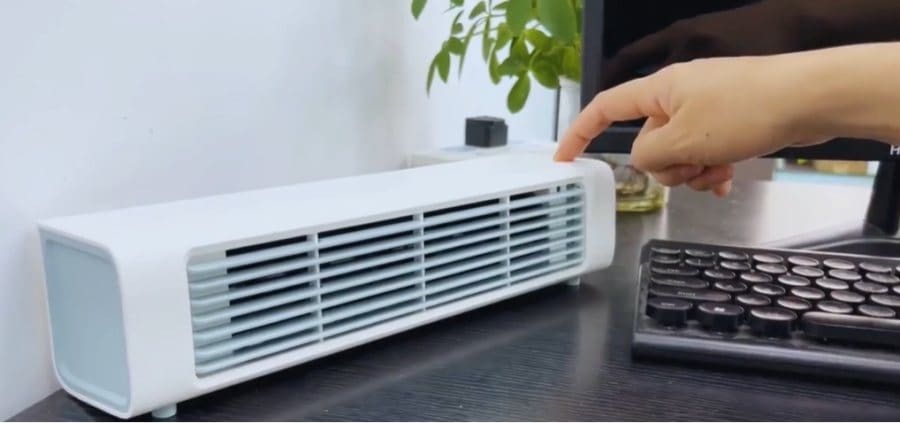
The idea is you place it wherever or hang it on a wall, plug it in and you’re all set to (in this example) cool a room up to 30 square metres in under 3 minutes through its “special technology”; which of course was developed by an independent inventor inspired by NASA space innovations.
The vendors of this particular model claim it will help cut your electricity bills up to 80% during the summer.
That’s not going to happen.
Why Won’t These Air-Conditioners Perform As Advertised?
Aside from its puny size and very limited power, what else can you notice?
Unlike a real split air-conditioning system, or even a proper portable one, any heat it does drag out of the air has nowhere else to go. It is circulated back into the room. Proper non-evaporative air-conditioning systems pump the transferred heat from the room to outside.
Just to be clear, the devices I’m focusing on don’t use evaporative technology either. Evaporative cooling works by pulling hot, dry air through water-soaked pads. As the water evaporates, it absorbs heat from the air, cooling it down. A fan then pushes the cooler, now more humid air created into a room. A room still requires ventilation (open window or door) otherwise conditions become pretty sticky quite quickly.
I had a very small “swampy” unit for my outback property and it worked well if I was sitting in front of it. That’s how it was designed to work; as a personal, not a space, cooler.
The scam devices are sold under different brand names including:
And no doubt new brands will pop up as summer drags on, to be replaced with tiny ineffective (and some, dangerous) blow heaters come the winter that I’ll write about at another point.
Impossible Energy Star Rating
It looks like the vendor of this device has awarded themselves a 10-star energy rating for their air-conditioner. The good folks at the Australian Government’s EnergyRating website certainly didn’t.
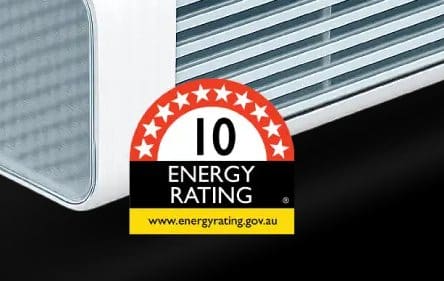
A fake Energy Star rating for an air conditioner represents a serious breach of the Australian Consumer Law (ACL) and the Greenhouse and Energy Minimum Standards (GEMS) Act. Fines can be hefty.
But no doubt this mob is not based in Australia and will just disappear if confronted, change the name of the device and start a new website.
We saw the same sort of deal with cheap, nasty (and some downright unsafe) scam “power saver” devices promising to slash electricity bills by “up to 90%”. Unfortunately, many people bought them. Thankfully, the ads seem to have largely disappeared; but these scams run in cycles and no doubt we’ll see them again because the scam works.
Mains Power Concerns
Most of these devices use battery power, or an AC adapter to run them off mains. Given the general dodginess of the products, I’d also be concerned the power adapter isn’t cleared for use here. Mains power adapters sold in Australia must legally display the Regulatory Compliance Mark (RCM).

RCM indicates the product meets all applicable Australian electrical safety, EMC (electromagnetic compatibility), and telecommunications regulations. If you plug something in that needs to comply and it doesn’t, if there’s a fire your insurance company could potentially deny the claim. Even if an adapter does have the mark, again given the general marketing approach, I’d have concerns it was fake.
Energy Company Bogeyman
These scam air conditioners supposedly aren’t for sale in physical stores, but I have spotted similar items on eBay. To create an added sense of urgency to part with your cash, the reason you can’t buy this one in bricks and mortar stores according to the company is:
“Once the big energy companies learned about its existence, they quickly moved to keep it off retail shelves. The manufacturer is doing everything possible to keep it available online.”
Thousands Of “Happy Users”? Doubt It.
The promo pages of course have glowing 5-star customer reviews, the authenticity of which are highly debatable. To see reviews on an independent third-party reviews site from Australians who have had the misfortune of purchasing one, here’s dozens of Trustpilot reviews of the Breezamax device, averaging 1.4 stars at the time of publishing.
An example review:
“According to the advertising, this is supposed to reduce ambient air temperatur [sic] up to 30 degrees. I ran the unit for two hours with a thermometer in front of it and the temperature stayed exactly the same the entire time. Now I’m trying to get a refund and the company is silent. No one to answer the phones or emails. Believe the reviews and pass on this scam.”
Trustpilot’s summary of all the reviews:
“Most reviewers were let down by their experience overall. Customers express concerns about the product itself, indicating ambiguity in its functionality. People are generally dissatisfied with the quality, price, and marketing of the product. Consumers also report negative experiences related to refunds.”
It looks like a good way to waste $129.
While on the topic of air-conditioning, SolarQuotes has just launched an air conditioner reviews hub; weighing in on big brands such Mitsubishi Electric and Daikin — and where you can also provide your own review. Accompanying this is a new, comprehensive guide on choosing the right air-conditioning system for your home.
 About Michael Bloch
 RSS - Posts





How do these people sleep at night?
And why are the political parties not recruiting them? They would make perfect politicians…
One day, in the Afterlife, they will go to a very warm place, with nothing but one of these machines to keep cool.
Now that is funny!!
I can support Michael 100% as I stupidly bought one of these ice cold air units for our sons smallish room,the first one was delivered and never worked,I protested and had another sent that did turn on but I wouldn’t say it worked,it blew and made a lot of noise expelling useless air,forget these money taker’s and go to your local retail store for a cheap rotating fan.
I can just see / ikmagine these ads on FB, the scams are prolific.
As a careful shopper, I have even been caught out (twice), the products look great, and sometimes are no doubt due to simplicity, the ads stress Aussie company, even Aussie made, have Aussie promoters using Aussie mannerisms, but . . .
Do a reveiw search on google. Always. The product name, seller name, etc, then reviews, see wwht comes up.
Many times, the pricing is assumed to be in AU$, but at the very end, the very last line in the checkout, there will be US in faint small text, with the price bold to the right of that in larger text, very easy to get caught with that and pay around 50% more in AU$, AND get a foriegn currency fee charge from you bank too !!
The product invariably ships from China, can take 2 weeks or more, many never receive their goods, and delays can push past chargback time limits, so watch that.
Deliveries are often by Chinese courier companies out of Sydney, and very poor service, missing goods.
Any high school student of physics should be able to point out the fallacy behind this scam! The First Law of Thermodynamics: Energy cannot be created or destroyed, but it can be transformed from one form to another. As pointed out in the article, where does the heat supposedly extracted from the warm air go?
Mine has water seeping through a filter before blowing into a room and yeah with a thermometer found NO difference in temperature on or off !!
Scammed !!
Too good to be true? The raft of ads seems to have diminished in the past week, maybe the independent reviews have them looking for a new market. Or Google rumbled them?
The ads had common themes:
Aussie/NASA/AC engineers with plausible names. Reverse engineering. Images unrelated to the product being spruiked. Elderly relation. Hot summer days/nights. Impossible thermodynamic achievements. Big business conspiracy. Limited supply…
Like the ads were generated by AI.
I do hope ACCC gets to reveal the operators and beneficiaries of these schemes of enshittification.
Its surprising people do buy these as there is pretty clearly no way that they could cool rooms, besides perhaps some expensive ‘fan’ type mechanism which do not actually cool, just make you feel cooler.
The lack of regulatory action against people selling these is part of a disturbing regulatory trend where the risks of being caught are way less than the profits that people can make. Even Courts seem to overlook that not imposing maximum fines (which are often inadequate) simply means that despite being caught and prosecuted companies often come out ahead.
What is more damning is the willingness of social media companies to accept adds from mobs selling things that are obvious crap, that will only rip off their own clientele.
Never mind requiring them to lock kids out of having social media accounts, lets require them to have some sort of due diligence in the advertising they accept!
Hi Andrew,
Did you read the techbros have riled up one of their pet congressmen in the YS to try and call Australia’s E-Safety Commissioner to account?
They’re upset about the U16 social media ban being “a threat to US freedom of speech”
ie They’re petrified of regulation and pissed that somebody is trying it.
Fun fact. US privacy law hasn’t been updated since VHS video tapes were a thing and publishing a list of which ones a US congressman had hired was potentially embarrassing.
I agree completely. I have lost count the number of times that I have reported these ads as scams to YouTube. They still come up. Sometimes the inventer gets a new name or a new company they were an engineer at. Sometimes it’s their elderly parents and sometimes it’s their young baby apparently suffering. Always AI voiceover stock footage with presumably product shots interleaved. Either no one is monitoring the scam report page at YouTube or they just don’t care.
There’s another model being advertised heavily on YouBoob at present. Several brands and sellers. Smaller, almost cubic in form. Has magic powers. Looks like the innards are similar in size to a PC’s water-cooled microprocessor heatsink but capable of cooling a decent sized room in minutes!
Sometimes I sorta think anyone dumb enough to fall for this junk deserves to lose their money.
Hi Clive,
I suspect it’s like the financial scammers and their Nigerian Prince who’s giving away a million dollars.
They don’t want people who are smart enough to chase after losses or alert the ACCC.
Rather they filter for victims who aren’t bright enough to cause them legal problems, by inserting some typographical errors that anyone who passed middle school physics will spot.
These dodgy facebook ads are obvious to anyone with a brain. Or a quarter of it.
Rather than stopping those under 16 using social.media why dont we make arsehats like meta accountable under Australian Consumer Law to not support or host any offending ads? Karl Stefanovic does not recommend weight loss pills so those fake ads should all have mandatory user reporting that triggers a block. The Australian Communication and Media Authority could then impose massive fines…..Millions. On meta merely for showing the ads its third party scam artists push
Hi Paul,
The only problem would be getting ACMA to do anything besides write a sternly worded email, a year late.
Sadly the Zuckerberg empire has become so ubiquitous.
Cambridge Analytica should have been the wake up call but it shows we’ll need nothing short of a revolution to bring them to heel.
Happily we don’t have the problems the US has with super PACs funding disinformation.
If we could start with truth in political advertising that would be good.
Then maybe the ACCC could pursue the socials companies for truth in advertising too.
I complained once a couple of years ago to Dick Smith’s online advertising about those “power saver” devices that claim to saved $’000s on electricity bill. I said to them it is physically impossible for those devices that plug into a wall powerpoint that was rated at 8000-30000W (8kW to 30kW), a standard Australian powerpoint (GPO) can only handle 2.4kW. The device was no bigger than a cup. I called it out as a scam. Dick Smith promptly removed the item from their catalogue for fear of selling items that don’t do as they claim and having to deal with returns and/or the ACCC.
Blumeheat is another scammed device, a small heater supposedly to heat a room up in minutes and cost chicken feed to run. What a load of crock that one is. Laws of physics says otherwise, thermodynamics. It’s amazing that people who buy them don’t remember their high school physics to see what these devices are snake oil products.
Ah, Graham, you’re assuming these buyers went to high school?
Unbelievable, Dick Smith is now selling a different power saver device, this one is rated at 28kW and plugs into a wall socket!!!
Link for the product
https://www.dicksmith.com.au/da/buy/yuenzmall-household-power-saver-portable-high-efficiency-home-energy-saver-au-plug-r54177ra2111gxuc/
Lodged another complaint to Dick Smith to have it removed and it not, will be reported to NSW Dept of Fair Trading / ACCC
Incredibly, people are giving it 4+ stars…. fake reviews obviously.
Nothing that can conduct 28 KW costs $15. That device is what we call a “night-light” in Canada.
Looks like it saves energy by covering up outlets?
These clowns are everywhere, the best remedy is a good education in how things work.
Got a reply from Dick Smith and they said they will remove the product listing from their catalogue… be another story if they actually do.
You have to love the Chinglish:
“Our electronic saving boxes can be used in a family with many electric appliances and loading carry, providing stable voltage and balancing the current, preventing voltage instability, let electricity stable equilibrium and achieving the power-saving effect.”
Perhaps this is AI meets Chinglish?
Or a sign that it’s a fake/scam product, the description is very ambiguous ….
Let’s break it down…..
Electronic saving boxes…. ??? are the boxes saving electronics?
Be used in a family …. ??? huh? what, plug into someone’s orifice?
loading carry…. ??? what does this even mean?
let electricity stable equilibrium … huh? what does this even mean… redundant words used ….. stable and equilibrium are the same thing in a sense. What equilibrium is the device trying to achieve? AC voltage is never stable, it is always fluctuating (in the AC sense and grid inertia).
achieving the power-saving effect….. what power saving effect?
Here’s my ridiculous response from Dick Smith helpdesk and the market seller, further broken Chinglish…. definitely lost in translation.
Dear friend, We apologize for the inconvenience caused. We have removed the product you mentioned. You can check it here. Thank you for your understanding.
– Yuenzmall
I replied, no, you are not my friend, so don’t call me friend. I also said that the apology is irrelevant as what was the inconvenience caused since I did not buy the product as I know it is a scam product to steal people’s money. And no, there’s no understanding to be thanked for. I don’t understand why scam products continue to be sold. I can’t check it here because there was no link to check. So, what’s the point?
Far out…. this is a joke….. and yet people still fall for these scams…..
There is the Dimplex “moveable” air cooler (no heat option), which works really well provided you have a window or panel to the outside for the hot air to be discharged.
In our situation it’s a useful addition to the ducted evaporative air conditioner, when the humidity is high,
Ah…. the problem with those Dimplex portable air cons (and other brands) is that they create a negative pressure system. Sure, the hot air goes outside, but what’s replacing that displaced air from inside the house that went outside? Outside air coming back in…… so, kind of defeats the purpose as the unit has to now deal with the outside return air flow but I guess it is better than an portable evaporative unit and someone didn’t want to go through the expense of a split system (e.g., renters). Trick is to ensure that the outside air is not overly hot when it returns inside the house. Otherwise, if that didn’t happen, a vacuum is created which is not possible in a house that is not 100% sealed under atmospheric pressure.
Which is why split systems were developed. There is no actual air exchange taking place between the outside and inside, just heat transfer via heat exchangers. Just like how fridges work.
I should add to my comments it is the single hose (air exhaust) portable air cons that have the problem of negative pressure.
Rarely, you can buy dual hose portable A/Cs, so that they can expel and take in outside air via two hoses without having to mix it with the inside air. However, these are expensive and up in the range of getting a properly installed split system A/C. Harvey Norman sells them for around $2200. Only advantage is that you can take it with you when moving houses but they’re ugly looking things. Sometimes you’ll see them in shops when their installed A/C breaks down as a temporary measure.
I can’t seem to find any dual hose units at Harvey Norman.
I assumed that all these devices were at least evaporative units and although very limited in cooling power that they would still work a bit standing directly in front of it (which is why some are now being advertised as “personal coolers” and yes I know how both evaporative and refrigeration coolers work) but the article above says they are not even evaporative. So what do they have inside them. Just a fan?
I’m a little surprised to see comments about negative pressure from exhaust pipes on mobile air conditioners leading to increased temp indoors. I bought a 1975 brick and tile house in 1996; when it was 40 degrees outside, the temp inside was pretty much the same. Over the years; fibreglass batts in the ceiling, painted the roof tiles with reflective paint, added a patio to the western side of the house holding two rainwater tanks, a solar powered roof extractor fan, and double glazing all round, with two back doors featuring holes to plug exhaust pipes into. With both air cons running the solar panels more than cover the load and mirabile dictu, last week the outside temperature reached 38 degrees in the shade and inside was 26 degrees. Seems to work for me.
Hi Joe,
A portable air con that only has a single exhaust hose is about as useful as leaving your fridge door open.
They suck up air you’ve paid to cool, then just blow that money outside, causing hot air to be drawn back into the house.
We have a whole article dedicated to them coming soon, but if I were king they’d be banned.
This video covers pretty much everything, I’d suggest, and on balance, given that my entire house is the size of some larger living rooms, (really a granny flat 2 bedroom duplex) using a dual hose system would not be functional on the grounds of (a) purchase cost (b) complexity of installation and (c) too large for the purpose. As mentioned, I’ve got solar panels and batteries sufficient to match the smaller system’s requirements, so running cost would not be a factor. It would be a matter of horses for courses I’d say. I hope your article mentions size of area to be covered when choosing between single and double hoses.
https://www.youtube.com/watch?v=VgvPPAjj8QY&t=60s
I’ve tried one, it cooled the upstairs bedroom and the negative pressure drew ground level cool air from the shade side of the house on through a basement window.
It was only a 35 C daytime high, but Canadian houses are designed to retain heat, and it was comfortable enough for sleeping.
It was more effective at cooling a room than a box fan duct taped into an upstairs window. Yes, a whole home aircon system is far better. And a ground source heat pump system with our 4 degree C soil temperatures is just unstoppable.
But this time of year we get pretty excited by the weather when the snow actually melts off the panels.
Oh dear. The link to the video didn’t translate. It’s called “Single vs Dual Hose Portable AC – Which Cools Better?”. Sorry about that.
https://youtu.be/VgvPPAjj8QY
New aircon scam “review” site from the same people linked from youtube ads on my work PC (this is why I use adblock on home PC)
https://toptested.review/review/best-mini-ac-au/?gad_source=2&gad_campaignid=23307868264&gclid=Cj0KCQiA-YvMBhDtARIsAHZuUzJYMYx6x6xrJA2TldgfoAtW7dmzRQEEDuoN28U6lly3zbDQeBYjsx4aAkNREALw_wcB
ACMA can’t do much since they are not Australian registered businesses – just issue a ‘stern warning’ after the fact –
Even in the US these scams can’t be held to account – even this scam website is worded with disclaimer at bottom as ‘a free information site’,
– ever since US MSM ‘news’ was caught in blatant falsehood, but made successful court defence that they are presenting ‘opinion’ and are protected under 1st amendment.