
The gas death spiral is accelerating so fast that the dwindling number of Australians still tethered to gas must be feeling dizzy (or perhaps that’s just the methane seeping in from those leaky cooktops). The number of households on gas continues to decline, with new costs set to be foisted on those who remain connected.
Why Are Australians Quitting Gas?
The number of homes connected to gas fell for a second consecutive quarter in the three months to September 2025, according to the Australian Energy Regulator, as Australians move to slash their bills by electrifying their home.
It’s not just the number of houses connected, but also the quantity of gas being consumed by homes that has dropped, SolarQuotes factchecker Ronald Brakels says.
“In the NEM (National Electricity Market), domestic gas use has fallen for around three and a half years. Mostly because it’s expensive, but that’s not the only reason. When I was growing up, many people liked gas because it let them cook and have a warm shower during blackouts. But these days the grid is more reliable, and with solar and battery, you can be certain of always having electricity. So reliability is no longer the issue it used to be,” Ronald says.
“On top of that, most homes now have reverse cycle air conditioners, which are a far cheaper way to heat homes than gas. We’re also no longer cooking with gas, we’re cooking with induction cookers. Or we should be, as those things are way better.”
Although the NEM doesn’t include Western Australia, Ronald says that “while gas connections have risen in WA, actual domestic gas consumption over the past three and a half years has fallen by around 9% per capita.”
Rewiring Australia analysis indicated more than 11,000 homes disconnected from gas over the past two quarters, while electricity connections increased by 62,000.
The trend is only set to continue as authorities ban new connections in a growing number of areas, while regulators move to shift the true costs of maintaining gas networks onto the shoulders of a declining number of users, accelerating the gas death spiral.
Cost Of New Gas Connections Going Up …
The Australian Energy Market Commission (AEMC) has ruled that the charge for a new gas connection needs to be reflective of the real cost, starting from October 2026.
The rule will apply to new retail customers connecting to the main gas distribution networks in NSW, SA, the ACT and South East Queensland.
AEMC reasoned that as demand from residential customers declines, a clear price signal for the true cost of maintaining the network would discourage people from locking themselves into ever-rising costs.
“As demand from residential and small commercial customers declines, and these customers leave gas distribution networks, the costs of operating and maintaining the network will be shared among a declining customer base … declining demand will have significant impacts on the prices payable by remaining customers. This may, in turn, further accelerate the decline in demand as customers who can electrify opt to do so sooner than they previously would. Continuing to add new connection costs to the capital base that must then be recovered from customers would exacerbate the risk of increasing prices faced by remaining customers who may face barriers to leave the network,” AEMC’s final determination read.
Rewiring Australia estimates the changes will see the cost of connection to gas jump to $3,000.
… But So Could The Cost Of Abolishing Gas (For Most States)
AEMC is however also close to finalising a proposal to pass the real cost of gas abolishment onto customers from 2027, meaning those left stuck on the network could find it more expensive to leave permanently.
The regulatory body has also proposed new information provision requirements to make options available to consumers clearer – including on the much cheaper option of disconnecting from gas rather than full abolishment.
The rules are expected to be finalised on the 26th of February, but the changes won’t kick in until next year.
SolarQuotes analysis in 2025 found that even before these proposed AEMC reforms, the cost of abolishment routinely exceeded $1,000 (except in price-capped Victoria), compared to under $20 typically for a disconnection.
However, the difference isn’t nearly so big in Victoria, where the cost of abolishment is capped at $242. NSW is following suit with a capped abolishment price of $250 from July this year.
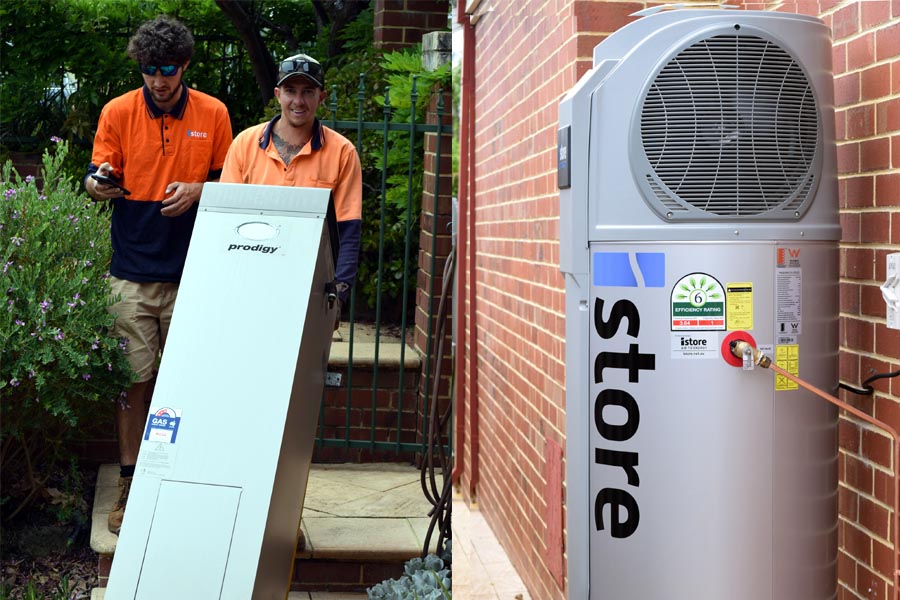
Thousands of Australians are replacing their gas hot water with electric alternatives like a hot water heat pump in a bid to cut bills.
Growing Number Of Regions Banning New Gas Connections
Regardless of the cost, it might not even be possible to get a new gas connection, depending on where in Australia you live.
In recent years Victoria and the ACT banned new gas connections for new homes, and the City of Sydney followed suit at the start of this year.
As more and more areas of Australia ban gas, the costs of maintaining the network will fall on fewer and fewer gas consumers.
“It’s become a no-brainer for consumers and we’re seeing households respond accordingly, backed up by Rewiring Australia’s own research which found the average Australian home saves $4,100 per year by opting for electric appliances and cars,” Rewiring Australia CEO Francis Vierboom said recently.
By switching from gas to electric appliances, households are able to save themselves not only the cost of gas usage, but the daily connection fee. Solar homes in particular get additional savings, by replacing the cost of gas with the minimal expense of running electric appliances off solar and batteries.
However, AEMC is also mulling an increase to the cost of the daily connection charge for electricity – a potential move that has triggered a strong backlash.
For more, read our explainer from last year on how getting off gas will save you money.
 About Max Opray
 RSS - Posts






I can’t have a gas connection in regional NSW so I am on gas bottles which have more than doubled in refill cost since I moved here about five years ago. My gas usage for hot water and stovetop cooking is modest as I have good solar and often use an induction hotplate or airfryer for benchtop cooking. I also heat with an airconditioner. It is my instant gas water heater that consumes most of the gas. I haven’t been able to afford the capital cost of replacement up to now.
This year the funds to switch will become available. So I plan to increase my solar and add a battery. At the same time I will remove gas completely except for my BBQ. Not only will this result in cost savings over time but should, according to the evidence, improve the air quality in my home. The latter is apparently well identified as a potential health hazard from gas use but there seems to be little attention given to this.
Hi Patrick,
Sounds like to have a good plan. Have you noticed all the gas adds focused on food? The sponsorship of cooking shows? The food influencers? Why is the gas industry madly advertising cooking when it’s only 2% of their business?
They want you to make an emotional decision about food, not a rational decision about cost.
There’s zero mention of indoor air quality, gas will poison you with NOx, Benzine & CO.
https://www.solarquotes.com.au/hot-water/heat-pump/
Check the links in this article
https://reneweconomy.com.au/gas-industry-knew-about-air-pollution-problems-from-stoves-in-early-1970s/
Thanks Anthony. Yes I have noticed those ads including on Youtube. I am notmuch of a social media user but I would bet they are on those sites too, not to mention planted good news stories and favourable posts. These are not only on food related areas they also do those ads about how “gas powers industry, exports etc” showing happy engineers and mining types in “building this country and its people” themes. I also notice the mix of women, indigenous and people of other racial backgrounds in these ads are well beyond the level I have seen at those sites when visiting.
Quite typical ad industry approaches for their clients, particularly when there is some kind of potential threat in the wind. Remember the mining industry when there was discussion about Resource Rent Tax and increasing royalties? They spent big in efforts to counter that.
And thanks for those links re the health risks of gas. I think I saw that article in Reneweconomy.
My gas cook top uses less than two nine kilo bottles of gas a year.
Hard to justify throwing away a perfectly good cooktop, buy an electric one and pay an electrician to run a new circuit for it when I can buy gas for twenty years for that sort of money.
I’ll think about it when it’s time to replace the cooktop.
Brian, I’m getting forgetful in my old age, and even when I can remember, the advantage of a induction stovetop with a timer and very easy to set temperatures are just a dream, so I can go off and enjoy other crafts while my slave electric will do my dinner just right and switch off. ….. And who wants to sit and wait for a kettle to boil or run to its whistle, when the electric jug is such a master of perfection. But keep the gas bottle for the BBQ and backup purposes and put in enough solar panels to always charge the battery even in winter, and skip buying an expensive auto start generator, you wallet will stay fat from your forethought
Tim don’t assume that because you crave new technology that others do. Many allow lifestyle changes that aren’t for the better.
We have an electric kettle and a slow cooker if we want food to cook in our absence, don’t like the on off cycling of induction heating and if we’re cooking on the stove we like to be there and cook.
We have solar and currently get a small credit each month so we’re ahead of most people who raced out to buy batteries.
There is nothing on the market that can produce the heat range of gas, produce it constantly and where you can immediately see the results of your adjustments.
And you want us to spend $2000 plus and ditch a perfectly good cooktop to go backwards.
Other comments on this thread suggest our thoughts about ditching gas are common.
Sorry, but in your zeal to sell us features you think we want you’ve missed the point.
Thanks for the hint about the bbq we’d never have thought of that.
Hi Brian,
Do you remember kerosene heaters? You can still buy them new and some people have fond memories of the smell of one at grandma’s house.
Fact is they’re filthy, just like smoking.
However it doesn’t stop the gas industry using that same nostalgia to create an emotional connecting to gas cooking.
They want you to make an irrational economic & heath decision despite knowing since the early 70s gas is terrible for indoor air quality.
Gas is thankfully going the way of oil heaters & coke stoves.
https://www.reddit.com/r/carbonsteel/comments/13lchvp/induction_wok_cooking/
https://www.rewardhospitality.com.au/equipment/commercial-kitchen-equipment/woks/induction-wok-table-2-zone-esw-2c-1200x750x1300mm
Brian: – “There is nothing on the market that can produce the heat range of gas, produce it constantly and where you can immediately see the results of your adjustments.”
Evidence/data?
Induction cooktops direct the energy to the cookware base instantly, transferring with approximately 85% energy efficiency to cook the food. Comparatively, the gas flame needs to transfer the heat through the cookware base first before the heat transfers into the food within, with approximately 32% energy efficiency cooking the food, while most of the gas energy is wasted heating the room instead of the food.
Gas cooktops contribute significantly to poor respiratory health.
https://www.choice.com.au/home-and-living/kitchen/cooktops/articles/switching-from-gas-to-induction
Brian: – “And you want us to spend $2000 plus and ditch a perfectly good cooktop to go backwards.”
>$50 for 1-zone
https://www.ikea.com/au/en/p/tillreda-portable-induction-hob-1-zone-white-40493509/
In Alberta our houses are as airtight as possible, and range hoods must be used on gas cooktops or stoves.
Also, the towns and cities were the first to get electricity, so there’s a bias against gas cooking as something from the past that only an old, un-renovated house would have.
Today, 95% of Alberta homes have electric stoves, but 95% have gas heat, and something less than a third have air conditioning. It’s an economic decision here, the earlier decision was in switching from coal or wood cooking inside, or charcoal cooking outside, to gas.
Per MW-h of heat, natural gas is far cheaper, but due to the high cost of maintaining the piping, the monthly fee for being connected at all is around $70.
The only situation where cutting and capping the gas line makes sense, is where we don’t need a lot of heat energy or where it’s not that cold, or where electricity is cheap at night, in winter. So build a Passivhaus, live in southwestern B.C., or live near a hydro dam.
Patrick, you said stovetop cooking . . . if your gas use is so low, consider changing to a suitable HWS (storage or heat pump, with solar it’s really not important), and returning the large hire cylinder(s), which are basically like a connection fee, and not cheap, from memory $75 a year.
Use as big a LPG cylinder as you can buy / own legally to refill at whatever outlets.
We have a fairly new stove when updating the kitchen about 6 or so years ago.
It is electric oven / and seperate grill, and a 4 burner gas stove cooktop.
We originally hired a 45kg single cyliner to run that.
After 4 years and not having to refill, I returned that and use 9kg (or are they 8.5kg now) LPG cylinders we have spare here.
I just put a second refill on, after the first one emptied after 11 months !
Refill cost $25.
We use the stovetop quite a bit.
We’ll keep using this along with the excellent range hood extraction for a while yet, perhaps updating to all electric induction stove in the next 4 years or so.
“Have you noticed all the gas adds focused on food? The sponsorship of cooking shows? The food influencers? Why is the gas industry madly advertising cooking when it’s only 2% of their business?
They want you to make an emotional decision about food, not a rational decision about cost.”
An interesting aspect to cooking with gas, is this; for years, I preferred cooking with gas, because it could provide more heat than electricity, which was good for frying and other wok cooking, but, having bought a 50AUD K-Mart single element plug in benchtop induction cooktop, I found that to cook extremely fast, probably faster than a gas wok burner, so, the only advantage that gas would have, in that regard, would be when curved base woks are used, and, for household cooking, I have found flat bottom woks to be adequate.
After our gas stove got condemned, I switched to a plug in dual solid hotplate and a plug in benchtop oven, and, both are adequate.
The kitchen gas line is capped, and leaks .
I recommend everyone with gas give a low cost, plug in, induction cooker a go. Even those with conventional electric stoves should try it. If you’re an impatient person, induction cookers are brilliant.
And Ronald, remind everyone of the benefits of temperature and timer simplicity
We’ve tried both induction and gas and my wife refuses to go induction. She hates the way the stove turns itself off and on during the cooking process. She wants consistent heat at all settings while cooking which is provided by gas hobs, plus she only uses curved woks which work better than, in her words,“Eurowoks”. Flat base woks just don’t impart the Wok Hei required for traditional Asian cuisine as the food ends up stewing at the bottom of a flat wok. I can assure you asian restaurants are not converting to electric cooking anytime soon.
Looks like there’s a market for plug-in woks. A bit like the plug-in frypans of the 1970s. If the heating element is built in to the wok itself, what can go wrong?
Couldn’t agree more, My Wife couldn’t have a lower opinion of induction cookers if she tried.
It would be nice top go all electric, I have ample solar to be able to do so , but then you get the other shoe dropping, where electrical retailers are crying crocodile tears that they aren’t covering costs and want to increase fixed costs to be able to pay their shareholders dividends. Gas may go up for us fossils that insist on keeping it, but the writings on the wall once they have market control, we the consumer are going to be a cash cow for them.
This is the concern many will have with the AEMC reveiw now happening on electricity charges.
It will stifle the change to solar / solar and battereis quite a bit, if a move to devaluing the whole renewables for residences and small industrial / commercial is taken.
Many might think this is designed to shift benefits to larger corporate large scale solar / wind.
In Alberta, Canada the gas and electricity utilities were deregulated back in the 1990s.
We get an itemized bill showing the actual cost of transmission, distribution, carbon tax, billing admin cost, and actual usage of energy.
The usage of electricity or gas is generally about one fifth to one third of the total bill. We pay $70 a month EACH for the maintenance of the supply system for gas, and for electricity.
But the amount of gas we use through winter is over 100 GJ, equivalent to about 30,000 KW-h, and switching to electricity would cost an additional $2,000 to $3,000 per year, so it’s cheapest to just pay the fee.
This isn’t the utilities being especially evil, it’s the ratepaying customer being exposed to the economic reality. If you only need small amounts of heat, and can actually collect some during the day using solar PV, you’re laughing. We’d cut that pipe in a heartbeat if we could.
With the gas storage water heater that we have, being the now only appliance burning gas in this household, I would probably replace that with an electric storage water heater, if the dangerous restrictions on warm water (safe hot water is no longer legal) would not have been inflicted.
Also, whilst heat pump water heaters are much promoted, they do not, by way of the heat pump technology, heat water to above 60 degrees centigrade, and, I have yet to find one that can accept water input from the outlet of a solar water heater (although, new and replacement solar water heaters are now effectively banned (“Thou shalt not have any water heated to above 45 degrees centigrade from any new water heater”) ).
So, efficiency and safety in water heating, using clean energy, are banned.
Hi Bret,
You’re fundamentally wrong. CO² heat pumps can attain 90ºC, and they need to in order to be useful for ring main systems in commercial buildings.
“Hot” water cannot be delivered to bathrooms because the scalds it can inflict, especially on the elderly & the young are very serious injuries.
However the moderate temperature allowed by law is delivered by a tempering valve. Water must be heated over 60ºC to kill legionella and then mixed with cool water for bathroom taps.
Kitchens and laundries need not have tempered water, but most houses don’t have separate feeds, so the whole home gets tempered supply.
According to my father, a retired plumber in Tas, the hot water feed from the heater in Tassie homes is split, A simple T junction. One feed goes to a tempering valve and then to the bathroom, the other feed goes directly to the kitchen and laundry, no tempering valve so full temperature. He was surprised we (NSW) didn’t do that.
It seems a good idea and I don’t know why we don’t do that
This is a worry for those of us stuck with gas for the foreseeable future. My apartment building was built with instant gas hot water systems for each apartment. I’ve changed my cooking to mainly use a portable induction hotplate rather than the gas cooktop, but currently there’s no viable alternative for the gas hot water.
We spend very little on gas for our stovetop and instantaneous hot water (about $60/quarter) that converting to a full electric home isn’t worth it. The payback period would be excessive even though we have solar and a 26kWh battery.
Sorry to hear the daily electric connection charge is also being considered for an increase. In VIC, on my a/c it is used as a variable figure to affect the total charge. It is law here for the biller to state on the gas and electric bill if a more advantageous rate is available so when notified I rang them up and changed to a cheaper rate.
The odd thing was, although the total is cheaper, my daily supply charge has gone up but the capped usage charge has gone down.
In my opinion the fixed supply charge should be fixed for all with usage the only variable.
It is almost impossible to compare rates under the present rules with two variables.
So the gas supply charge is going to follow the electricity supply charge? That’s gas pipe directly to the house rather than from bottles right?
There’s plenty of people who still rely on cylinders to power their stoves and I doubt they’d want to go to all the expense, and hassle, of converting to electricity. Plus too gas works when the grid goes down! : – D
The gas network death spiral needs to be seriously managed or the most vulnerable are going to face spiralling bills that they can do little about.
My colleagues and I at Victoria Energy Future Network (www.vefn.au) have been working on this. Here’s a link to our submission to the AEMC laying out a coherent framework for the transition.
https://drive.google.com/file/d/1eY-nf3cbFpEZqAHlIADZPHDDkVRvCW6z/view
Comments welcome!
Tim and Anthony. It pays to compare apples with apples. A kerosene heater is not comparable with a gas cooktop. A home with gas cooking has CO levels between 5 and 15ppm. A home wiithout gas stoves up to 5ppm. Not a great difference . 30ppm is the industrial standard: https://www.safework.nsw.gov.au/resource-library/hazardous-chemicals/carbon-monoxide-technical-fact-sheet
Are you’re suggesting a single plate induction hob will replace a four burner gas cooktop? To fit in with our other whitegoods this is more like it: Miele KM7220FL at $1999.
The efficiency of energy transfer through induction is impressive compared gas. It doesn’t change the economics of changing to electricity tho’ so is irrelevant to this debate.
Evidence for the gas claims: https://rockgas.co.nz/why-do-chefs-love-cooking-with-gas/ . I think you’ll see all the reasons why gas is better to cook on than electricity supported by this article. Biased but better than the extravagant comparisons you’ve put up.
Gas appliances tend to have a longer life span that electrical appliances. This in not just my experience or biassed opinion but called the “longevity gap” and is aparently well known in the appliance industry.
The cost of $1999 for a stove top induction hop (which is really a transmitter – don’t tell the mums who had the localy proposed mobile tower near the kindy canned) sounds very high, I guess I am out of touch with the pricing since we last bought our gas top hob more than 26 years ago, zero faults so far.
Hi Peter,
My Nanna developed a fault in later life, she lost her sense of smell to a TIA (mini stroke)
So she was lucky not to asphyxiate in the kitchen when she bumped the gas stove back on after making a cup of tea.
The faults your has stove has are ones the gas industry doesn’t want you to know about.
Check the links in this article
https://reneweconomy.com.au/gas-industry-knew-about-air-pollution-problems-from-stoves-in-early-1970s/
Thanks Anthony, The problem with all this is that methane is a natural gas created by our own bodies and expelled by them along with many other gasses! We cannot get rid of all methane, not possible it is part of the carbon cycle and is also a very viable renewable alernative energy source.
Not everyone should be using naked gas burners, I agree, for example children or seniors with medial conditions that make it dangerous. Many retirement villages don’t have gas. Just remember you can smell gas but not electricity. There are countless situations that are dangerous to some people, this is just plain common sense. But to want to ban everything that could be dangerous to the person using it will not give a good outcome in my opinion.
Hi Brian,
Seems a lot of people have Stockholm syndrome and will only give up gas when we pry it from their cold dead hands.
It might be a low probability but sadly this can be arranged spectacularly.

https://newrepublic.com/article/170794/proof-gas-stoves-overrated-induction
$836million Sydney Fish Market cooking school uses induction.
https://www.smh.com.au/goodfood/sydney-eating-out/celebrity-chefs-waterfront-dining-first-look-at-sydney-fish-market-s-new-cooking-school-20251114-p5nfjx.html
Check the links in this article, please.
https://reneweconomy.com.au/gas-industry-knew-about-air-pollution-problems-from-stoves-in-early-1970s/
There is nothing you’ve put forward (including your random link to Stockholm syndrome) that refutes the stupidity of changing to electricity for cooking in my case. The change might be justified in some other cases.
The numbers speak for themselves. Spend $50 per year cooking on a cooktop that is already in my kitchen or spend over $2000 to convert to something that won’t perform as well and that consumes electricity at peak rates during it’s most common time of use. At 30 minutes per day cooking drawing 1000W (conservative) at 66.4c / kWh it’s costing $121.18 per year for electricity. More than double the $50/year for gas. No economic advantage to the conversion there.
Research (links supplied) suggests that there is no health risk to my family from my clean burning well ventilated gas cooktop.
Not quite sure how this relates to Stockholm syndrome.
Could it be that your rejection of gas under any circumstances relates to the ownership of solar quotes by origin energy?
Hi Brian,
We try to offer help & build community knowledge.
I’m glad you realise you’re parroting industry marketing re “why chefs love gas” but induction is in fact safer, cleaner, more precise, efficent & easier to maintain.
To reiterate:
“But the study also highlighted a more surprising outcome, given all the propaganda around the superiority of gas: Participants all loved their new induction stoves. At the end of the study, they got to choose whether to keep the induction stove; not a single person wanted their gas stove back.”
https://newrepublic.com/article/170794/proof-gas-stoves-overrated-induction
If gas were as benign & harmless as the “clean burning” oxymoron implies, we’d not need laws on house ventilation nor would it be illegal to use gas cylinders inside.
All electric houses are cheaper, safer, cleaner & healthier.
That people rail against the reality just proves the power of 70 years of “clean burning” propaganda.
Hi Brian, I and most people understand you’re not arguing the health benefits. You are pointing out the economic benefits of conversion don’t make sense for you and many others. Anthony clearly has bundles of cash to splash out on expensive stove tops and top of the line batteries and panels, but most people have to watch their hip pockets.
Robert. You’ve nailed it.
It’s not like I can’t afford it it’s a matter of throwing out something that’s working perfectly well (consumerism) and replacing it with something that might work as well but will cost more to run and a lot to install.
I’m not concerned about health risks as the cooktop is under a 6m ceiling with a powerful range hood that vents to the outside.
Reliable evidence suggests that if it is burning efficiently CO levels will be less than half those considered dangerous in industry (30ppm). After working in laboratories, where air quality is tested regularly, for 35 years I have a fairly good idea whether a flame is burning cleanly.
And yes I’m concerned about atmospheric CO2 levels but my 18kg of gas burnt each year produces less CO2 than driving your SUV for 15 minutes. Hard to feel guilty about that.
This blog is great because the authors usually write well about developments in solar but unfortunately their fanaticism shows sometimes.
Robert
The economic cost of changing from gas to electricity for me is clear and you’ll note that no-one has refuted the maths.
The environmental cost is insignificant when you compare me burning less than 18 Kg of bottled gas a year with the ridiculous output of CO2 due to our love of unnecessarily driving massive 4wds everywhere.
I have presented a supported argument that there is no health cost in cooking on a gas cooktop compared to an electric hob in most cases. The slightly elevated levels of CO in kitchens with gas cooktops are still less than half what the EPA considers dangerous on work sites and not much greater than the CO levels in kitchens where they cook with electricity. My kitchen has 6m ceilings, an exhaust fan that vents to the outside and after spending 35 year working in labs I can tell that all burners are working efficiently.
There is no advantage to anyone if my household makes the change to electricity from gas.
Origin has a long history with the gas industry in Australia, both at the upstream end (exploration and production) and at the downstream end (retail to customers).
If anything, this point supports the independent viewpoint of the SQ staff commenters!
(me: solar enthusiast with an employment history in upstream gas, non SQ staff, unprovoked post)
Brian: – “There is nothing you’ve put forward (including your random link to Stockholm syndrome) that refutes the stupidity of changing to electricity for cooking in my case. The change might be justified in some other cases.”
What makes you think gas supplies will remain abundant and affordable? The Australian east coast gas 2P reserves-to-production is less than 17 years – see the AEMO’s Gas Statement of Opportunities – March 2025, Figure 27. Gas will only get scarcer and more expensive.
Extracting and burning more carbon-based substances is civilisation suicide. See my presentation slides and speaker’s notes delivered to the Independent Planning Commission NSW (IPCN) at a public hearing on 19 Feb 2026, re the Chain Valley Colliery Consolidation Project (SSD-17017460).
https://www.ipcn.nsw.gov.au/sites/default/files/2026-02/Geoff_Miell-PresentationSlides-ChainValleyCollieryConsolidationProject%28SSD-17017460%29-20260216.pdf
Hi Geoff, a lot of info in that presentation, but also lacking vital information.
Australia has NEGATIVE CO2 emissions. This is defined by the total CO2 emitted minus total CO2 absorbed (oxygen emitted) not by some irrelevant ratio.
It should be obvious something is not right when total emissions 1.1% divided by our surface area 5% is too small. Arid land does actually absorb CO2.
The orbiting NASA satellite proves this, I don’t see any CO2 emissions from Australia only green daily flashes of oxygen emission. At least until the CO2 from Asia decends upon us. Compare to Joburg in South Africa. The source from NASA :
https://svs.gsfc.nasa.gov/5110#section_credits
Also the data footpint network at
https://data.footprintnetwork.org/#/
verifies Australia has an ecological reserve of 68% very good.
The extreme heat we get in summer is mostly caused by perihelion not global warming.
All the renewables really really need to be in the norther hemisphere causing this, not here.
Hi Peter,
Australians are world champion polluters. Per head of population there are few who outperform us.
Trying to mask that with the vast size of the Australian continent is just poppycock.

85% of us live within an hour of the coast, in both cities with similar density to any other, but also sprawling suburbs, with novelty oversized houses.
We are blessed with renewable resources that other nations would kill for, so it’s encumbant on us to install them where they’ll do their best work & then show the developing world how it’s done.
The northern hemisphere could make the same argument. Canada is 1.5% of CO2 emissions and 7% of the land. A lot of trees, mountains, and lakes but some cold desert and tundra too.
Canada hasn’t got the solar resource because all of Canada is farther from the Equator, than any of Australia. We do have a lot of hydro and CANDU nuclear power so 80% non emitting electricity.
Solar systems do work here, right up to Tuktoyaktuk, but wind power works in the dark and hydro works every day.
Randy Wester: – “Canada is 1.5% of CO2 emissions…”
…only if one counts Canada’s domestic emissions & ignores the substantially more exported emissions. Canada exports most of its crude oil & just under half of its fossil gas. When these exported fossil fuels are burned, 939 MT of CO₂ are emitted (estimate from 2022). That’s 1.3 times more than the total GHGs emitted at home.
https://davidsuzuki.org/expert-article/with-only-2-per-cent-of-global-emissions-why-does-canadas-climate-action-matter/
This gif animation shows as the planet continues to warm further, then more locations are likely to be exposed to a Mean Annual Temperature (or MAT) >29 °C, as indicated by the expanding purple areas. That’s too hot for humans.
https://images.squarespace-cdn.com/content/v1/5bc6826490f904980a50659a/0105c0ea-c715-4925-97e3-c484b9e04380/HCN-FullSequence_c.gif?format=1500w
Yes, and like Australia, Canada also produces grain and oilseed for export, yet we don’t add all those calories when discussing the average Canadian’s calorie inrake, do we? Because that wouldn’t make any sense, would it?
Australia has opportunities in domestic renewable solar that match up with local energy demand. In Canada, solar power is more of a 3 season thing, but still a worthwhile fuel savings.
Canada also exports low carbon energy as excess hydro and wind electricity, hydro power smelted aluminium, and in unenriched uranium, and as 3.5 million tonnes of wood pellet biomass fuel.
Canada’s oil and gas exports historically go to the U.S., which owns most of the Canadian oil industry. So no, whether it’s coal for Chinese steel or gas that ultimately heats a home in Germany, those are not Canadian emissions.
Randy Wester: – “Yes, and like Australia, Canada also produces grain and oilseed for export, yet we don’t add all those calories when discussing the average Canadian’s calorie inrake, do we? Because that wouldn’t make any sense, would it?”
Whether carbon-based substances are burned in Australia, Canada, or elsewhere, the consequent greenhouse gas emissions all end up in the one atmosphere we all share on planet Earth.
Burning more carbon-based substances is civilisation suicide!
Australia (4.5% global share including exports) & Canada (similarly ~3.4%) are significant contributors to global GHG emissions.
Every country that emits less than 2% GHGs domestically, collectively add up to 36% of global share, larger than China does.
Collectively, they are all substantial & ongoing contributors towards civilisation collapse!
Unlike GHG emissions, domestic food calorie intake doesn’t dissipate globally, so I’d suggest your calorie analogy is a false equivalence.
Peter: – “Australia has NEGATIVE CO2 emissions”
https://climateanalytics.org/press-releases/australias-massive-global-carbon-footprint-set-to-continue-with-fossil-fuel-exports
Whether carbon-based substances are burnt in Australia, or elsewhere, it all ends up in the one atmosphere we all share.
Ongoing rising global atmospheric CO₂ concentrations (Slide #4) are a primary influence on increasing EEI (Slide #9). Rising temperatures have consequences (Slides #10-20).
Peter: – “The extreme heat we get in summer is mostly caused by perihelion not global warming.”
https://berkeley-earth-wp-offload.storage.googleapis.com/wp-content/uploads/2026/01/13155737/ForcingFactorsSchematic2025-1024×576.png
You state that our fossil fuel exports are responsible for large amounts of CO2. So if renewables reduce CO2 emissions does that not mean China needs much, much more renewables since it is emitted on their teritory? Similar to treating the patient with the cancer it their body and not in someone cancer free?
We need to stop importing all renewables from China. That would allow more power generation from more renewables in China and then they will reduce coal imports.
So why is Australia with negative teritorial emissions still importing renewables from China and depriving them of the very means to reduce their much larger teritorial emissions?
The NASA CO2 observation satellite is the gold standard and the very latest of CO2 data collection. It clearly showns Australia has a net teritorial absorption of CO2 – this is an undeniable fact. I refused to side with Trump in the denial of the facts this satellite is revealing.
https://svs.gsfc.nasa.gov/5110#section_credits
Hi Peter,
China makes 90% of the world’s solar. Significant amounts of wind turbines & has installed more than the rest of the world combined last year.
75% of the new coal burners they’re building are owned by coal miners, however the share of coal generated electricity is falling every year.
In 2024, the world installed 7+ gigawatts (GW) of new nuclear power, a huge uptick of 33% compared to 2023. Total global installed nuclear capacity is now 420GW in early 2025.
In 2024 China alone added 435GW of Solar PV which even considering 95% vs 25% capacity factor will deliver 10,000GW more yield than the afore mentioned nukes.
TWELVE MONTHS it took them.
(It took 60 years for the world to install it’s first Tearrawatt of solar and less than two years to install the second Terrawatt)
https://climateenergyfinance.org/wp-content/uploads/2025/02/MONTHLY-CHINA-ENERGY-UPDATE-Feb-2025.pdf
https://taiyangnews.info/markets/china-solar-installations-4m-2025
Peter: – “You state that our fossil fuel exports are responsible for large amounts of CO2.”
Climate Analytics does: https://climateanalytics.org/press-releases/australias-massive-global-carbon-footprint-set-to-continue-with-fossil-fuel-exports
IEEFA states:
https://ieefa.org/resources/australias-coal-export-market-shifting-trade-dynamics-asia
Whether fossil fuels are burned here in Australia, or elsewhere, it all ends up in the one atmosphere we all share.
Global atmospheric CO₂ concentration has exceeded 426 ppm.
https://www.esrl.noaa.gov/gmd/webdata/ccgg/trends/global_trend.png
Per the instrumental record, as of Jan 2026, the 3-year running mean for the rate of atmospheric CO₂ growth reached a record high of 8.06 ppm per 3 years.
https://bsky.app/profile/climatecasino.net/post/3me5g2tjt622o
EVERYONE must do their bit.
Replying in order:
1. This does not use the standard “territorial emission” accounting, so basically wrong. No mention of the the CO2 absorption so biassed, unbalanced and illogical, also a case of “Maslow’s Hammer” – if you only look for CO2 emission that is all you will get.
If the environmental results of exports are counted against the exporting country then that must apply to our imported renewables they get any credits and Ewaste and our environmental damage – I don’t think so.
2-4. All show renewables up, coal exports down but global CO2 emissions Up quite a bit – renewables not working
So with increased renewables, CO2 still goes UP, they aren’t working are they? “Jevons paradox”?
When will they go down?
“Insanity is doing the same thing over and over again and expecting different results.”
The real problem is caused by “Tragedy of the commons”, renewables will not fix this.
The truth :
https://svs.gsfc.nasa.gov/5110#
Hi Peter,
Are you arguing Australia shouldn’t be doing anything?

When did shirking become a proud Australian tradition?
Hi Anthony, about your poster:
In WWII a large number of Australian troops were sent to europe
The Japanese, slowly working their way down to Australia
Churchill refused to return our troops to defend Australia – not enough troops in Australia for defence, serious trouble.
The US placed oil embargoes on their exports to Japan and they bombed Pearl in response
The US entered the war and effectively help save Australia
We have a tiny population density 4p/sqkm we are isolated and need everything here to defend Australia.
We are already doing more than most countries at 4p/sqkm, but other things to do also.
The very best a person can do for the environment is not to have children!
This is a case of overpopulation and not just about CO2. Maximum sustainable world population estimated to be about 1 to 2 billion.
Check out the correlation with CO2 emission:
https://ourworldindata.org/grapher/population-density
Hi Peter,
You maybe right about overpopulation, but miss the point about the poster.
The question was; Do you think we should be doing nothing?
We can make ambit claims about 40% of Antarctica too, but it doesn’t change the fact we live opulent first world lives soaking up more of the worlds resources and creating more of the worlds waste than almost any others per head of population.
It’s not just CO² but 12,000,000 tonnes of flyash, every year, from burning coal. Add tyres, fast fashion textiles, soft plastics and e-waste to that.
And if you’re paying attention, you’ll know our defence and ability to feed ourselves currently rests on transport fuels, over 90% of which we import.
Renewables for onshore power and electrification of everything will not only save us from burning billions upon billions of dollars in fossils every year, it’ll make us more secure and offer less sponsorship to extremist middle eastern theocracies.
Hi Anthony,
Flyash is valuable!
In order:
1 Mitigation of risks of climate events eg flooding and fires.
2 Double down on coal and gas like they are doing now. If we are as bad as you say, in for a penny in for a pound.
Now for the heavy lifting and “doing our” bit for the world – ban all new renewables, ie stop stealing them from overseas so they can go 100% renewable and they won’t need our coal and gas, this should knock off the big 3.7% by your reconing of our emissions in one hit. Our net emissions will then be negative as per the NASA CO2 orbital observatory.
3 You are 100% correct about our fuel vulnerability this is a worry. Large reserves need to be stored locally. Coal-to-liquid probably not price viable yet unless subsidised, nuclear won’t help with transport either, unless it is a sub or ship – unlikely.
What do you think we should be doing about our exports of coal, gas you claim are counted against us, the larger component 3.7% of our 4.8% ?
Hi Peter,
Either you’re trolling or you have even less vision than the catastrophically short sighted John Howard.
He spent 10x more R&D money on the falacy of “clean coal” than he did renewables.
They’ve tried coal to liquid since WW2, it’s a perpetual failure.
Coal is the reason the mud crabs in Lake Macquarie are full of heavy metals, too toxic to eat.
Coal caused PtAugusta to have double the national rate of lung cancer.
40% of all the world’s shipping is just moving fossils to be burnt elsewhere. Everyone is moving away from them.
We should cease importing liquid fossils, electricity is cheaper.
We should stop exporting gaseous & solid fossils, because the markets will evaporate anyway leaving us with stranded assets & unpremeditated holes in the ground.
Peter: – “Flyash is valuable!”
Apparently not valuable enough! Coal ash is a huge & long-lasting environmental problem, often overlooked/downplayed.
Leachate from the Mount Piper ash emplacement area & the nearby Kerosene Vale Ash Dam (KVAD) has been identified as a contamination risk to groundwater aquifers & nearby water sources.
A 2020 report by the Hunter Community Environment Centre (HCEC), presented to a NSW Parliament Upper House Inquiry, indicated that the Mount Piper Power Station’s ash disposal, in conjunction with the nearby Wallerawang site, contributes approximately 16 tonnes of heavy metals annually to the Upper Cox’s River catchment. The report warned that 206 tonnes of heavy metals could leach from the site by 2049 if management is not improved, with water sampling showing elevated levels of boron, manganese, nickel, cadmium, copper, and zinc.
The Cox’s River is part of the Sydney Water catchment area, supplying water to over 5 million people.
Peter: – “We are already doing more than most countries at 4p/sqkm…”
Nope. It seems to me you continue to ignore the fact that Australia is a significant contributor of GHG emissions.
https://climateanalytics.org/publications/australias-global-fossil-fuel-carbon-footprint
Yes, Australia’s population is small, so that makes for a small denominator in the fraction.
Doing what Justin Trudeau tried in Canada – importing a half million or more a year – turns out to not really reduce the per capita number. Because it’s still a large country with a harsh climate.
The simple division of two numbers isn’t informative on what would make a difference. Canada has about the population of California and an area larger than the U S.A. but California burns 20% more gasoline, despite a lot of EVs.
Australia will end up largely solar powered because that’ll be cheapest. But just because it’s a lot per person, doesn’t mean that it’ll matter. Canada had drinking straw ban, but more plastic is dumped in the ocean from China in one day, than from Canada in 17 years. Let’s all do what we can, but not expect it to make any global difference.
Hi Randy,
The advantage we have here is our buying power. Hence Fronius pack their inverters in cardboard, not plastic, because the customer who demands better outcomes is often the one who can afford them.
If we demand better outcomes from our elected representatives, we can get bans on plastic, improvements in planning and public transport, structural things that work even better.
However we need to remind ourselves that a “carbon footprint” is a marketing tool designed by BP to try and shift the responsibility for corporate pollution to us as individuals.
Peter: – “This does not use the standard “territorial emission” accounting, so basically wrong.”
So-called “territorial emission” accounting is a trick. GHG emissions do not respect geopolitical boundaries. Whether fossil fuels are burned here in Australia, or exported & burned elsewhere, it all ends up in the one atmosphere we all share.
Peter: – “…if you only look for CO2 emission that is all you will get.”
Global atmospheric CO₂ concentration is still increasing, & accelerating. Natural sequestration of CO₂ is in decline; climate change will accelerate.
https://rmets.onlinelibrary.wiley.com/doi/10.1002/wea.7668
Other indicators include:
* GMSAT increasing at an accelerating rate
* SSTs increasing – https://bsky.app/profile/climatecasino.net/post/3mfjzj4wbjk27
* EEI increasing
* ASR increasing – https://bsky.app/profile/did:plc:lb7jeizjwxjcn3bvkohqxkba
* GMSLR increasing at an accelerating rate
What’s REQUIRED to avoid collapse? See my Slide #21
“So-called “territorial emission” accounting is a trick”
Does it not make sense to you,to do the accounting for pollution, warming emissions, energy, food consumption, land use change, etc based on which nation they’re consumed in?
I can follow your reasoning, but I think it’s simple but wrong.
It would make more sense to look at the actual territorial emissions, and adjust that according to imports and exports of goods. I.e. if Australia imports cars from China, the consumption of coal for steel, etc in China is Australia’s CO2 emission.
Likewise, when China imports a ton of coal from Australia, the mining machinery emissions go with the coal, and become China’s.
Randy Wester: – “I can follow your reasoning, but I think it’s simple but wrong.”
Humanity needs to stop burning carbon-based substances ASAP; otherwise we won’t have a planet compatible for our civilisation, likely within the next 50 years on the current rate of planetary warming.
EVERYONE must do their bit; no ifs; no buts; no excuses; or we ALL collectively reap the consequences!
https://images.squarespace-cdn.com/content/v1/5bc6826490f904980a50659a/0105c0ea-c715-4925-97e3-c484b9e04380/HCN-FullSequence_c.gif?format=1500w
Randy Wester, will you still be alive in 2040? If so, I’d suggest you would likely then be encountering a warming planet Earth never before experienced by modern humans (aka Homo sapiens) during the entire species existence (i.e. circa 250-300 thousand years, per the fossil record).
https://www.solarquotes.com.au/blog/new-vehicle-emissions-data-ev-shift-means-for-solar/#comment-1732771