
 The federal government has announced a huge boost to the federal battery rebate, while reviewing a much more modest EV tax break. Here’s why the government should be ramping up its support for EVs rather than cutting it.
Can The Battery Rebate Apply To EVs?
The federal battery rebate is going gangbusters, with the budget expanded from $2.3bn up to $7.2bn. Right now there are phenomenal numbers of home batteries being installed. The Cheaper Home Batteries Program (CHBP) means we’re likely to have four gigawatt hours of installed storage by the end of 2025 and that’s a great news story.
At the same time however, the federal government has committed to review the Fringe Benefits Tax (FBT) for high-end EVs, with predictable calls from some corners to end the exemption.
The reality however is the federal government’s support for EVs isn’t too generous – it isn’t near generous enough. We should be expanding the battery rebate to cover EVs – if anything Australia would get more benefit from this than from support of home batteries, by weaning us off expensive imported petrol.
Using an EV can easily cut your transport fuel bill by 75%, or even more with rooftop solar.
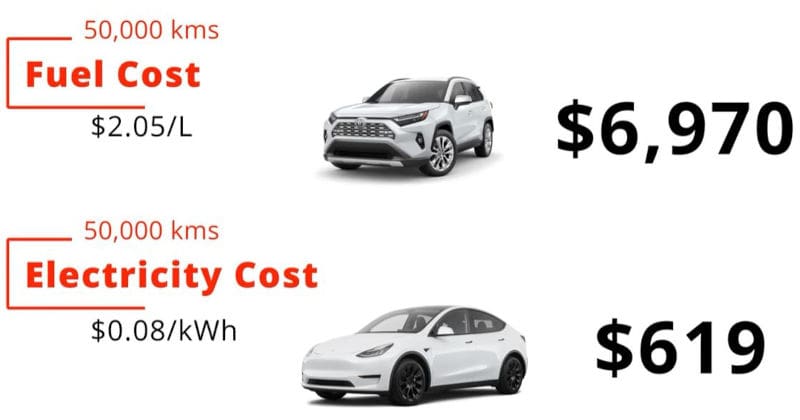
The electricity to charge an EV costs a fraction of the fuel needed for a petrol car.
Billions And Billions Of Dollars Are Going Overseas
While Australia is the world’s biggest lithium miner, 90% of the world’s lithium processing and thus battery cells come from one country – China.
Fun Fact : BYD are a battery company that now builds cars. Their research and development branch has something like 9000 people with a doctorate qualification in chemistry, engineering, etc.
To put it into context, BYD have more PhDs in China than Ford Motor Co has employees worldwide.
Some people decry this battery buy up as a massive subsidy paid straight to China. We may have collectively spent $3 or $4bn on batteries in the last 6 months, but they’re warranted to last 10 years.
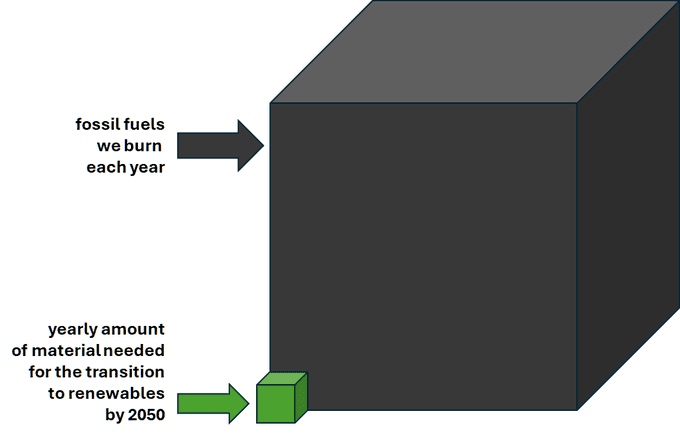
However few people seem to grasp that Australia spends approximately $50-$60 billion every year importing liquid transport fuels.
With EVs, we could instead be relying on our own sunshine, and charging our cars with abundant solar energy.
Repeatedly Setting Fire To Our Money
When headlines screech about the current accounts and national deficit, they conveniently ignore the money we spend importing oil simply to burn it.
That’s not just for petrol cars, but the trucks, trains and planes that move most of our freight.
You’ve seen the bumper stickers “Without Trucks, Australia Stops”. Well, think of the impact of electrifying 124,000 heavy vehicles. Without the diesel they currently run on, the country would grind to a halt, which is a security risk in addition to a financial expense.
Trains, heavy trucks, light deliveries, farms, fire appliances, ambulances, emergency generators, all currently rely on diesel.
We only have 2 oil refineries left onshore. They produce roughly 20% of our fuel but 86% of the oil they refine is also imported.
This means we import over 90% of the fuel we use to get around this huge continent and even when you count the oil on ships in our coastal waters, there isn’t even a month’s coverage in the system.
If there’s a naval blockade, stopping the boats will take on a whole new meaning as Australians go hungry, because transport logistics and our food system falls apart.
Utes Are Popular Because They’re Subsidised
Dual-cab utes qualify as “eligible vehicles” (load of one tonne+ or not primarily designed to carry passengers), so, they’re exempt from FBT for “minor, infrequent & irregular” private use.
If the same family-friendly ute is used extensively for private purposes (school runs, weekend trips), FBT exemption shouldn’t apply in law, but in practice it is often treated leniently or willfully misunderstood.
Businesses can claim instant asset write-off / temporary full expensing when in force, for work utes without being constrained by the lower “passenger car” depreciation cap, because they’re classed as commercial vehicles.
We should remove the subsidy for these grocery getting “trucks” and instead expand the incentive to all EVs not just basic models, then we’ll see improvements in passenger safety, pedestrian safety, productivity, fuel prices, current account deficit, air quality, road conditions/maintenance plus improve efficiency in the electrical grid and social outcomes.
So Why Don’t We Encourage All Batteries?
Going further than an expanded FBT exemption would be even better. As part of the renewable energy target, the CHBP mandates you must have solar installed, so it can’t be opened to cars. However supporting EV batteries on a similar kilowatt hour basis would be a game changer.
Take a BYD Atto 3 as an average sized example, at 50kWh and $40,000 – applying a subsidy of $300/kWh would chop $15,000 off the ticket price. With the existing federal rebate ceiling in place that discount would apply to most EVs.
The outright cheapest Atto 1 at 30kWh and $24,000 would garner you $9000 off, a new car for just $15,000 out of pocket, cheaper even than my modest 10 year old EV.
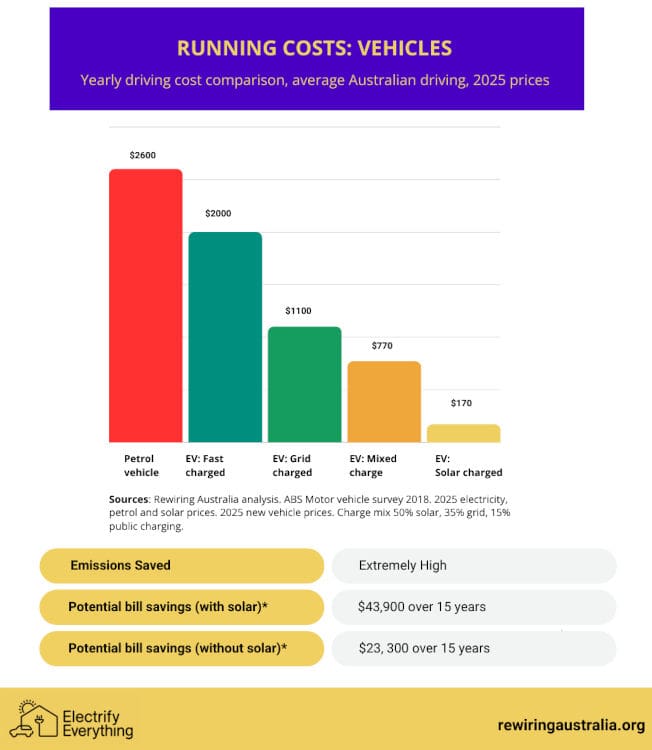
According to Rewiring Australia, the average Aussie household spends up to $2700 every year at the petrol pump. That money is lost to you and largely lost to Australia. It ends up with tax dodging multinationals, foreign flagged shipping, overseas refineries and at worst sponsors some extremist theocracies & warmongers.
Getting off Gasoline
Cars put out 16% of Australia’s domestic emissions and represent 60% of a household’s energy costs. Electrifying our vehicles is the single biggest impact a household can make.
So if you’re going all-electric, and getting off gas, it makes more sense to get off gasoline1 too.
With vehicle-to-grid technology coming, these EV batteries can be used to prop up your mains electricity connection and reduce your bill, just like a stationary battery, but with fewer rules to make installation difficult.
For more on the benefits of EV charging off solar, read our detailed guide.
Footnotes
- I hate the yanks and their “gas” but that pun was too good to ignore ↩
 About Anthony Bennett
 RSS - Posts






We have a EV, the economics undeniably are great for city driving but why do we need subsidies when the the economics are already working in its favour?
Unfortunately any EV subsidy and the BESS subsidy are unfairly aimed at benefiting upper middle class & upper class households. Lower socio economic households simply cannot afford a House battery and / or an EV regardless.
I think the economics are already working in their favour, the money is better spent on the grid and grid level storage innovation.
Unless we want to properly re work out tax system, start taxing wealth and not income then I would be all aboard and and all subsidies once the tax system can properly pay for it.
YES. Times a million. It’s how the Norwegians did such a rapid transition to EVs, they cut all taxes and other charges on EVs, and left them on combustion vehicles. $50-$60 billion of Australian wealth going offshore every year, as you say, is just crazy with our renewables resources.
We need an (Energy) Made in Australia campaign.
A rebate applied to a car to reduce the price and then enabling them to use it as a battery absolutely isn’t about rich people only
It should be the standard
Another excellent article thanks Anthony although I thought you left the most salient point until right at the end. If we’re going to subsidise home batteries then it makes even more sense to subsidise car batteries that can also be used as home batteries.
The only reason I’m not driving an EV yet is because there are so few models that offer V2H/V2G and the bidirectional charging equipment is so expensive. A decent government subsidy would solve both of those issues; a) by alleviating some of the cost and b) encouraging a lot more EV makers to offer models that can do V2H/V2G.
Personally, if I was running the show, I would ONLY offer subsidies for EV’s that can do V2G and V2H… but that’s just me.
Hi Andy,
If I was king it would be illegal to sell an EV that didn’t have V2L and support V2G.
Being able to plug things into the car supports resilience in natural disasters.
V2G just makes economic sense, much like seat belts, they save the broader society a massive costs.
In any case you can get decent performance right now with a Kia offering 3.6kW of V2L and a HOEM device to run partial home backup.
Say rather if you were Dictator Of Australia – King Charles III has no power to dictate EV sales.
I was under the impression that KIA was mostly small cars, but their website suggests SUV EVs.
WLTP range for current offerings is 400 km (EV5 Air 2W SR) to 604 km (EV3 Air 2WD LR), substantially up on my impression, but still shorter than I want.
Hi John,
The question is wether what you want is a rational desire over the actual need. Many Australians think they’re rugged individuals in the mould of Ned Kelly, when really they’re about as adventurous as Ned Flanders. They want the range to go bush ranging, but in reality they commute less than 20km per day.
Anyway the Kia EV 9 is as big as a BlandCruiser with a longer wheelbase I think, and the AWD/dual motor models have 2.5tonne towing, which is great for the war on the weekends.
https://thedriven.io/2024/02/29/family-to-set-off-on-9-month-trek-towing-a-caravan-in-an-electric-ev9/
I’d call it a rational desire. I don’t need 4WD capability, just decent range for semi-regular travel.
Sure, latte sipping sandal wearing Greens voting …, might drive 20 km or less a day, but for plenty of others that’s not even to the supermarket – one way!
Me? Anything less than the Lucid Air Grand Touring (MY25-26) or Mercedes-Benz EQS 450+ simply doesn’t offer sufficient range to avoid rational anxiety, and those are headed for the sell your house to afford it price range.
Obviously YMMV
Me too I agree 👍
“Trains, heavy trucks, light deliveries, farms, fire appliances, ambulances, emergency generators, all currently rely on diesel.”
Of this list the quickest ‘bang for buck’ converting to solar power would be trains. No city in it’s right mind would have diesel-powered suburban trains. And yet we still haven’t electrified Victoria’s Geelong line. Also crying out to be all electric are the Ballarat and Bendigo lines.
Victoria is still building diesel-powered V/Locity rail cars like there’s no tomorrow. Sure, high speed rail transport is still better than single-occupant private vehicles driving the adjoining highways.
Obvioulsy I livein Victoria. I’m sure my local examples have parallels in most other States.
It’s about time the electric revolution spilt over to Australia’s railways.
Hi Clive,
You’ll need to have a word with my editor about the trains part of the article. We might dust it off for the next one 😉
Yes please. Happy to provide input if needed. Thanks Clive W.
Anthony did indeed touch on trains – here’s what he had to say if you’re interested Clive: “Seeing as Sydney–Melbourne is consistently one of the busiest and single most profitable airline route globally, perhaps we should invest in electrified high speed rail to reduce our dependence on expensive imported fuel. Aurizon has already been doing the numbers on battery hybrid trains. Full electrification is possible even when the lines are partially electrified, because batteries offer regenerative braking while avoiding the expense of overhead wiring in difficult terrain or tunnels.”
Ah yes, the Sydney – Melbourne corridor. What a political nightmare.
I recall the fuss DECADES ago, and I don’t think anything’s changed since then.
To attract passengers a new route is required, far more direct between the two most populous cities in Oz. This could easily accommodate high speed trains similar to those in Europe, circa 300kmh for most of the way. Very competitive time-wise with air travel if you include city-centre to city-centre.
HOWEVER many of the politicians who have to vote in favour of such a mammoth project live in either of the above cities and want to commute to Canberra to attend parliament. So they will only approve a route via that city. Great for them, too long and out of the way for the majority of passengers.
Hence when the bean counters do the feasibility study the passenger demand for the Canberra route doesn’t justify the taxpayer-subsidised investment.
Hi Clive,
It only ever gets a run in an election year…
I gather adding a Canberra to a Sydney–Melbourne high-speed rail link would increase the total A$100–120 billion (in 2025 dollars) by an estimated A$20–40 billion compared to a direct route.
The extra cost comes from 250–300 km more than a direct route, stations at Canberra, and more complex terrain in the Southern Tablelands and Monaro regions.
We should do it anyway, just so that you could collar a politician and bend their ear when you’re travelling.
This project was proposed and calculated by the CSIRO in the 1980s.
Melbourne – Albury – Canberra – Sydney or
via Gippsland.
All electric, speeds up to 600km/h to go Over the mountains, not around (Physics – the energy needed to lift over the hills is the square of the speed. The energy to overcome air-resistance is the cube of the speed, so the trains will have no problems climbing the hills. In fact they would need to be gentle hills due to the gravity effects.)
BHP said they could make the special track for the project. At the time, the traction engines woild be imported from France, controls and carriages made here.
Approx 3 hrs Spencer St to Circular Key. You can barely do that by plane.
Scrapped by Sir Peter Ables, the then chair of Ansett, in the ear of the government because airlines could not compete !!!
Clive W.: – “To attract passengers a new route is required, far more direct between the two most populous cities in Oz.”
HSR (i.e. 250+ km/h) requires dedicated track (with curvature design limits in both the horizontal & vertical planes to limit g-forces to be gentle enough to avoid derailment & passenger discomfort at operating speeds) for at least the vast majority of the network route.
The 2014 BZE HSR report details:
* min. track curve radius of 10 km for a max. operating speed of 450 km/h in regional areas;
* in select areas curve radii reduced to allow more design flexibility while permitting operating speeds ≤ 350 km/h;
* in urban areas a radius of 2.5 km has been targeted, allowing for speeds up to 250 km/h.
Trains are already available for operational speeds of 350-380 km/h from leading technology providers including Alstom, Siemens & Bombardier.
See also:
https://www.solarquotes.com.au/blog/we-backed-home-batteries-now-do-evs/#comment-1730726
My impression was the economics of it were completely non-viable. Am I misremembering?
Melbourne to Sydney direct is about 700 km, and about 870 km by road. California’s High-Speed Rail’s San Francisco to Los Angeles is a similar length (840 km), a complete boondoggle, and I believe the federal government has pulled funding from a project that seems both never ending, and never actually starting.
FWIW LA County has a population of about 9.7 million in an area roughly 80% of Sydney’s 5.5 million. San Francisco itself has a population of 827,000 in a 121.5 km^2 area, while the 9 counties of the San Francisco Bay Area have a population of 7.8 million in an area over 7x the size of Melbourne which has 5.3 million living in it.
I have used HSR overseas before – think Hobart to Launceston, just with Sydney and Melbourne’s populations added to Hobart, and Brisbane and Adelaide’s populations added to Launceston. Intercity buses were cheaper, more convenient, and far far more popular.
When they say “Diesel trains” they mean Diesel-Electric trains.
They do not use ICE engines for driving wheels. They use them to drive generators which in turn power the electric motors for the trains.
This is far more efficient than diesel ICE motors for trucks, and is also used in this configuration for some remote EV chargers.
Adding batteries to these trains and using regenerative braking as well would cut consumption and emissions.
As a side, no large train could use a clutch to transfer power to the wheels!
Melbourne trams (pure electric) use regenerative braking and the surplus is fed back into the tram grid (600VDC) meaning the whole tram grid acts like a huge battery.
Clive W.: – “Victoria is still building diesel-powered V/Locity rail cars like there’s no tomorrow.”
The NSW Government is replacing the current NSW regional rail fleet of XPT, XPLORER and Endeavour trains with 29 safe, comfortable & more accessible trains for customers travelling across NSW & between Sydney, Canberra, Melbourne & Brisbane. The new NSW Regional Rail fleet will operate with an Australian first – bi-mode technology – which enables the train to run using either diesel engines or electric power from the 1500 V DC overhead wire when operating on the NSW electrified train network.
https://www.transport.nsw.gov.au/projects/current-projects/regional-rail
Clive W.: – “Sure, high speed rail transport is still better than single-occupant private vehicles driving the adjoining highways.”
HSR (i.e. 250+ km/h) often outcompetes road & air travel for point-to-point trips within the 1000 km range, or under 4 hours door-to-door journey time.
Yes, the EV battery must be subsidised, but only if it is actually used via V2G to support the grid. That is now the difficult task to somehow verify this connection with ACTIVE grid charging when we need it most in the evening. Any good ideas how this technically be done without building an admin monster?
Hi William,
We already have some coordination available through OCPP to prevent car charging during peak times. Economics of free daytime solar will help with the rest in terms of soaking up daytime energy.
I think V2G will have to be a market where enthusiasts make sure they have the car plugged in, or retailers make it an imperative as part of a VPP or subscription scheme.
In some instances, like a school bus for instance, the vehicle will almost always be plugged in at the right times.
I don’t understand this para – ‘We should remove the subsidy for these grocery getting “trucks” and instead expand the exemption to all EVs not just luxury models.’ Isn’t there currently an fbt exemption for all EVs that are priced below the luxury car tax threshold? I have an atto3 on a novated lease that is fbt exempt.
I am curious what the cost to the Govt is in lost tax per EV that is exempt from FBT, and how this compares to the CHBP rebate per battery.
Hi Ren,
I think you’re right, we’ve made an error. I could use a Kia EV9, but the middle and top spec models are over the luxury car tax threshold, and so you can’t buy one that offers 2.5tonne towing capacity and get the FBT exemption.
Silly thing is that even when you buy one used, the original sticker price still excludes it from the FBT incentive.
One of the goals of subsidising home batteries is to support the grid by reducing solar exports during the day and reducing reliance on the grid during peak times in the evening.
Could this be achieved by subsidising EVs when there is no control over when EVs are charged? It could possibly have a negative effect on the grid if EVs are charged during peak times.
Hi Tommy,
Proper EVSE units (ie your 7kW wall charger) must have OCPP integration or you can’t connect them in South Australia. It’s optional in Queensland and other jurisdictions will soon follow as this allows car charging to be orchestrated.
You can also very easily have retailers build a tarriff regime that in the first instance would encourage early adopters and secondly lead to more widespread adoption
1) OCCP chargers only – get free charging for the 3 hours during the day (11am -2PM) but also get a credit to be offset against peak drawdown
2) If the car is called upon during peak to provide power back to the grid – the credit earned during the day can then be converted into real money terms – $1/credit earnt etc – which can initially be offset against the bill etc
More nuanced versions could tie into the same concept as Globird have now with their ZeroHero and elevated FITs during certain hours.
Craig
We’re a two EV household (Atto 3 and Model 3) so mostly in agreement with this article but this statement seems overly optimistic.
“With vehicle-to-grid technology coming, these EV batteries can be used to prop up your mains electricity connection and reduce your bill, just like a stationary battery, but with fewer rules to make installation difficult.”
Two problems – it appears to have been “coming” now for 10 years and you think there is going to be less regulation? I think regulation will be the problem with ever getting this simple tech implemented.
Hi John,
The only real problem will be network connection rules, like the default 10kW/phase limit for inverter capacity. SAPN are leading the way with OCPP mandated for car chargers, but they’ll need to up the connection capacity when people have already got a 10kW hybrid inverter and want to add a 7kW bi-directional EVSE.
The hardware is available, the car makers need to be brought to heel in denying warranty though.
In terms of installation rules, parking the car in the garage isn’t as onerous as the bollards and other requirements for house batteries.
With your Atto I think you can already have a limited V2G capacity right now, with no rules to impede you.
10 kW/phase limit? Isn’t it a 5kW/phase limit in some areas, or states?
Generally speaking 10kW/phase is the limit, 20 at most, with a 30kVa site limit in any case but there’s 17 different network companies.
Wait, are you talking technical capacity or official policy?
I remember the 5 kW/phase limit coming up here in a discussion for … one of the QLD entities I think?
Hi John,
Some SWER line connections were limited to 5kW however SAPN have solved the issue allowing 10kW/phase with flexible export limits (rather than just a 5kW hard limit)
Everyone else will follow suit, Queensland already offers optional flexible connections, Endeavour is going to copy SAPN.
For those who are serious, the SWER becomes the backup generator for an independent 3ph supply.
https://www.powerplus-energy.com.au/solving-unstable-grid-challenges-for-dairy-farmer-nigel/
Can only concur – with bells on. Even an interest free BEV car loan would allow the ~$3k p.a. fuel saving to make an Atto1 *free* in 8 years. (My MG4 has cost *zero* to fuel these 2 years) Loan to own, not to burn!!
There are Melbourne households running 5 ICE future eaters – save them to save your children. Even 2 or 3 commuters are a start. Do more as petrol supply falters.
The $70M federal subsidy to Volvo, to bootstrap local BEV heavy truck assembly, is a small step forward, but supporting 2 MW truck charger rollout at regional freight hubs would do much more good, I suspect. After all, WIndrose et al will eat western makers’ lunch, supplying cheaper trucks faster – from their booming home market volume rollout. (18k in June)
My new electric 1.2T excavator cost 50% more than ICE & has 1/3 the power – a bigger electric Volvo or Bobcat is beyond budget. Slower is OK. Two 100% solar charges so far – zero emissions. Good work done. It’s a long haul to global zero, though.
Hi Eric,
We need details on this electric digger please 😉
Tim Thompson’s YT review is probably the quickest for that:
https://www.youtube.com/watch?v=WILriEdGVCA
The 1.2 tonne UME 12VE is only 4 kW, with 17.7 kWh of 80V LFP battery, but I find the workrate is as fast as I can operate the controls, and the bucket force is equal to higher power diesel units at 0.9T.
It levelled a 3x4x1m mound to a broad 0.5m high pad in my first 1.5 hours, learning the controls, dug a 1×0.7x6m ditch in a couple of hours, and dug up 35 small trees, 3 to 12cm thick, going down 0.5m in hard clay for the taproot on one near my new walnut tree. But it walks very slowly, so onto the tandem trailer for the 1.5 km trip to the front fence. (Ample ramps from Bunnings)
Next is to use the auger to speed up digging of 45x45cm 70cm deep shed footings, too narrow & deep for any bucket. Then I have 1.7 km of fenceline to clear of bushes, with the heavy 40cm wide (root) rake, yet untested. There are 4 different buckets & a ripper of a ripper I’m dying to find a target for.
This clip, of the old model, shows the utility & power of the included ripper:
https://www.youtube.com/watch?v=cW0w2LSraic
The new one has bigger battery & needs a 15A GPO for the faster charger – handy here as I can simultaneously charge the BEV & excavator. I’ve charged it after 4hrs of furious work, with 30% left. (Battery, not me!)
It is not a 5T beast, just 1.2T, so big jobs take longer. But it fits in a tandem trailer, and the budget. Diesel model is cheaper, but I won’t have that. I need more skill before using the 80cm wide mudbucket to smoothe the dirt pad, as the very low ground clearance made for boggy going on top of 0.6m deep dust, levelling with the dozer blade. (It’s dry here.)
I have yet to use the (semi) quick-hitch for attachment swaps – the 40 cm bucket has done everything so far. The 20 cm trenching bucket would have been faster for the tree roots, but I’d just finished the big tench, spied the invading trees, and charged. And there’s a tank pad to do – easy.
Have to disagree almost completely. Transport after energy is the highest emitter of CO2. Moving most of our cars and mega-utes wont make a great deal of difference to overall emissions. We must transition to electrified rail. Subsidising EVs will only encourage people to drive more (As an EV owner I have found that I have sometimes driven rather than taken the train or walked because the energy cost for me is so low). We have to shift people out of private transport onto rail. There are a range of positive externalities to consider too. The percentage of short journeys (up to 2kms) taken by car is quite high. Look at the first chart on this site for example. https://chartingtransport.com/2025/04/09/who-drives-to-work-in-australias-cbds/
See also https://theconversation.com/we-compared-land-transport-options-for-getting-to-net-zero-hands-down-electric-rail-is-the-best-234092
Haven’t mentioned congestion, health, environment and other relevant issues as I’m sure others will raise them.
I’m sorry this doesn’t stack up to me in Australia for a few reasons.
1) Building a reliable grid that’s capable of connecting to new renewable developments and is capable of handling the vast complexities in a weather dependant system combined with multiple different storage technologies will require way more investment and is the biggest challenge in the electrify everything stage therefore it’s the most important piece of the puzzle therefore the most government support.
2) Australian Culture
Love it or hate it Australia has exceptionally low population density and cars are an ingrained way of life and freedom for most Australians. Yes public transport in the inner cities is a sensible approach but you are not going to replace private ownership of cars ever in Australia. The freedom for us to drive between towns or those that live outside of cities will always dictate private vehicle ownership.
3) Heavy Transport – Larger emitter worthy of subsidies more so.
Let’s not let the perfect be the enemy of the good.
re 1. Can you provide some evidence for this view?
re 2. Yes strongly ingrained beliefs are the biggest challenge. BTW I did not suggest “replace” but mode shift. Rich sparsely populated countries can do electric rail well (Noway, Finland eg.). We can do it if we want to. Provide a higher level of service of anything and people will use it. In NSW where I live there was(is?) a proposal to have faster rail north, west and south of Sydney. Government here refuses too release a report on it so it was probably going to be embarrassing for them. The McNaughton Report for those interested. A bit of stick is needed too: eg. stop fuel subsidies for business and tax the mega-utes out of existence.
re 3. You’re joking surely.
I didn’t mention safety earlier.
https://www.theguardian.com/australia-news/2025/mar/13/australian-suv-huge-ute-obsession-roads-more-dangerous
1) Building a grid capable interconnecting the various sources of new generation. And storage will need to be built before anything can 100% electrify with renewables. The grid is by far the greatest expense when it comes to electrification far outweighing generation and storage projects once that is built the electrification will follow so it’s the egg that leads to the chicken. Priority should be on that.
2) Norway is a terrible comparison. The largest distance between any 2 major Norwegian cities is Trondheim to Oslo which is 495km.
Yes Trains may be viable between the east coast cities, all in support of looking into it as a means of replacing air travel between Brisbane, Sydney, Melbourne. But in no way are we replacing our cars by doing that we are replacing air travel. Australia will always be ruled by the car, it defines our way of life in many ways to access and experience the greatest assert we have, our nature. It’s a way off but can’t wait to we get to 1000wh/kg.
Hi Luke,
One of my now retired solar installer mates will happily tell you that as a pensioner he can get a ticket from Wodonga to Melbourne for $10. The round trip costs less than parking in the city does, he can read on the train and it’s not only safer, but faster than the car journey with zero mileage on his tyres.
Car enthusiasts and trucking companies should be the best and most fervent supporters of trains, they get people off the roads.
Chris O’Rourke: – “Rich sparsely populated countries can do electric rail well (Noway, Finland eg.). We can do it if we want to.”
I think it’s a case of we will be forced to electrify. Petroleum fuels are only going to get scarcer and less affordable. And relying on primarily (~93%) petroleum imports could become an energy security nightmare if a geopolitical emergency emerges disrupting Australia’s petroleum supply chains.
https://www.abc.net.au/news/2025-07-05/fuel-security-electric-vehicle-uptake-solution/105481348
Chris O’Rourke: – “The McNaughton Report for those interested.”
It seems the McNaughton Fast Rail report will never be publicly released. I’m intrigued to know why.
https://www.parliament.nsw.gov.au/la/papers/Pages/qanda-tracking-details.aspx?pk=96350
BZE published a High Speed Rail proposal in Apr 2014. 60% of the Australian population is within 50 km of a HSR station on proposed network.
https://www.bze.org.au/research/all-reports
Sydney, Melbourne & Brisbane comprise ~47% of Australia’s population so that “60% of Australia’s population will be within 50 km of an HSR station” is grossly misleading.
Petroleum supply chains are at risk in the event of a (relevant) geopolitical emergency, but is that worse than relying on CCP China’s benevolence to keep electricity flowing & cars moving?
Finland’s pop. density is 18.4/km2, with 30% of the population in their capital region, & another 30%+ in the rest of the southern quarter of the country. Total population is roughly that of QLD.
Norway has a pop. density of 14.5/km2, 20% of the population is in their capital, & another 50%+ is in the southern part of the country not counting the capital. Total population is again roughly that of QLD.
Australia? Population density of 3.7/km2. And Finland and Norway combined are roughly only 73% the size of South Australia!
Namibia and Mongolia are better comparisons with Australia for density. Even Russia is far far denser!
Hi John,
I think the point is that 60% of Australians would live within 50km of each other, via HSR.
In other words you can have a 1750km link to bridge the tyranny of distance for the majority of people. An efficient service that cuts travel times and means you can read a book or do productive work without wasting hours at security screening & expensive airport terminals or other transport links.
John Alba, try these comparisons. Go to https://www.rome2rio.com/map/Helsinki/Joensuu
And
https://www.rome2rio.com/map/Trondheim/Oslo
And see the results. With regard to population densities, a better comparison might be the eastern halves of Qld (include Toowoomba, stop at Pt Douglas) and NSW, given that government provides virtually no services outside those areas.
John Alba: – “Sydney, Melbourne & Brisbane comprise ~47% of Australia’s population so that “60% of Australia’s population will be within 50 km of an HSR station” is grossly misleading.”
John, did you bother to look at & attempt to understand the 2014 BZE HSR report? No? That would take effort on your part. It may perhaps surprise you that more than a few Australians do live along the Sydney, Melbourne, Canberra and/or Brisbane transport corridors.
John Alba: – “Petroleum supply chains are at risk in the event of a (relevant) geopolitical emergency…”
Global crude oil + condensate production is circa 85 million barrels per day (Mb/d).
40 Mb/d are available for international exports, of which 17 Mb/d pass through the Strait of Hormuz (SoH).
https://youtu.be/lJ3DauFIMXU?t=230
The SoH ship lanes are only 3 km wide each for inbound & outbound.
80% of oil thru SoH goes to Asia.
IMO, many people don’t understand the worsening liquid fuel security risks.
Geoff, from memory the site I looked at didn’t offer an online copy or even a free file download so I was limited to the obvious.
47% of Australians is more than a few and 3 stations covers that. My point is that the 60% is thus misleading. Add Canberra, Newcastle, and the Gold Coast and you add another 6%+ to the 47%. Add Geelong, Wollongong, and the Sunshine Coast and you get another ~4%. Your first 3 station comprise over three-quarters of the 60% claim, the next 3 stations comprise a tenth or more, and the next three contain maybe a fifteenth. It’s rapidly shrinking value.
Regarding oil, how much of that could either immediately be redirected to the Red Sea, ports in Oman, or ports in Israel, or piped within reasonable time? Or would these be multi-year megaprojects?
Say rather there’s some lack of knowledge, some conflicting information e.g. increasing non-Arab oil production, and increasing concerns regarding CCP batteries and energy systems.
John Alba: – “Geoff, from memory the site I looked at didn’t offer an online copy or even a free file download so I was limited to the obvious.”
The link I provided allows one to access the 2014 BZE HSR report for free, provided an email address is given. But if one doesn’t want to do that, there are other ways, e.g.: https://elib.dlr.de/89305/1/high-speed-rail-bze-report-2014.pdf
But it seems you’d much rather assume than get the inconvenient facts.
John Alba: – “My point is that the 60% is thus misleading.”
You admit you haven’t bothered to read the report, so your point is based on false assumptions. Figure 31 shows the proposed 21 HSR network stations. Figure 35 shows the proposed operating schedule, and Table 15 provides proposed service frequencies.
John Alba: – “Regarding oil, how much of that could either immediately be redirected…”
Websearch: S&P Global: Persian Gulf oil producers face hard choices if Strait of Hormuz is closed
Luke,
Our heavy road transport is beginning, in boardrooms, to go electric now.
400 km & 600 km range heavy haulers are on sale in NZ, and appearing here. China sold 18,000 BEV heavy trucks domestically in June this year. That’d replace Australia’s entire fleet in 7 months – if we had the chargers & surplus grid energy.
It may be electricity consumers who enable the rollout, as cheaper electric propulsion kills diesel stone cold dead. Fuel equivalence allows truckers to outbid draughty house heaters for kWh. Prosumers are better protected.
If 670 km range, hauling 49T, exceeds your needs, there’s cheaper, but still:
https://www.youtube.com/watch?v=Tnmuu9aXH3g
is aimed at logistics companies. They’ll eat slow learners by 2030, due to very tight freight margins.
Only our meagre grid can slow the death of diesel, now. Nothing will save it.
Look at what’s Car of The Year in a bunch of categories, including the top:
https://www.youtube.com/watch?v=vqiDdwX4lFE
And I’m with Anthony – don’t tow a stupid great box to Uluru – take the train and fly. My recent interstate trip was: train to Melbourne, plane to Sydney, then car. The train trip, over 200 km each way, was $14 return.
The savings on a caravan and diesel tractor pay for a bunch of more comfortable accommodation. Skip the hassle.
Increasingly obsolete ICE offerings can now only fall out the bottom of Car of The Year ratings. The fossils have had their day.
Lol, thats optimistic. We are SO far away from electrifying our heavy transport. Heavy Haul Transport trucks would easily travel >1000kms in a single outing. Time is Money. That level of infrastructure for the fairly low density of areas is staggeringly high level of investment. We are not densely populated like China and we unfortuntely have a whole lot of regulations and processes and added costs that the Chinese dont have to worry about. They just set a 5 year plan and go get underway, no NIMBYS or elections or budgets to worry about.
Heavy Transport is a long way of being implemented electrically. I hope it can but remain doubtful over the next 10 years.
Hi Luke,
Sounds like you should have a look at Janus. They’re getting on with it by all accounts. Accountants and the price of diesel will make it happen.
Not letting me reply to Anthony. This is aimed at Anthony.
Anthony Janus has literally converted 25 trucks. 25. This is so far into the future it’s not funny. I am pro renewable energy and pro electrification of as much as you possibly can but this fanboy attitude in the comments that’s it’s all perfect is not really helping anyone. It’s a major major challenge that is not technologically solved yet on how to electrify heavy transport in Australia. The infrastructure around remote areas of Australia isn’t feasible. MW upon MW of charging capability every 300-400km in rural australia is not feasible or cost competitive with fossils. I fear some molecule based solution not an electron solution will be needed for this particular area of decarbonization.
For trucks it really only works for inner city trucking. Interregional and interstate trucking is a long way from being solved.
Hi Luke,
First step in tackling the problems is realising they’re not insurmountable, and taking aim is what we need to do with those dispensing FUD. If we’re on the same side we need to act like it and turn our attention to the low information types who vote on how they feel, not on the basis of fact.
“In Australia, 80% of trucks run within 400 km of a capital city. The plan is to electrify from Cairns to Adelaide with battery swap stations. Australia uses 32 billion litres of diesel per year. One quarter of that goes into trucking. 100% is imported. Electrifying trucks will aid energy security. Not only that, but large battery swap stations can fill during the middle of the day and then use any excess energy to help stabilize the grid.”
https://cleantechnica.com/2023/04/20/triple-electric-road-train-trial/
Yes because ev batteries are bigger financial support of v2g should help solve the duck curve even quicker hence cheaper electricity overall for everyone!!
Or subsidize chargers at workplaces, for use during the day. No additional demand from EVs in the evening or at night means that new grid storage is not just feeding new EV demand.
Cheers Randy,
We’ve been banging on about this before 😉
https://www.solarquotes.com.au/blog/daycharging-turns-evs-into-super-storage/
Businesses can still access the 20K instant asset write off – easy for a warehouse type business to put $20K of solar on their roof, then $20K of batteries and have a sparky put in 20 x 15amp power points for staff to bring their own granny chargers in for the day.
The business gets the write offs straight away and gets a heap of happy staff who charge for free at work.
Craig
Anthony Bennett: – “You’ve seen the bumper stickers “Without Trucks, Australia Stops”. Well, think of the impact of electrifying 124,000 heavy vehicles. Without the diesel they currently run on, the country would grind to a halt, which is a security risk in addition to a financial expense.”
Australia is reliant on about 93% petroleum-derived imports.
https://www.solarquotes.com.au/blog/battery-rebate-to-deliver-a-coal-plant-of-power-in-18-months/#comment-1728336
The Australian Government is paying subsidies to keep the 2 remaining refineries operational until at least mid-2027. These refineries will need continued government support to keep them operational.
https://www.abc.net.au/news/2025-12-03/australias-oil-refineries-need-government-support-to-compete/106095796
Concerns have again been raised about how long the nation’s liquid fuel supplies would last in an emergency: https://www.youtube.com/watch?v=JNBqkjpjNAw
Australia stops without diesel fuel.
Interesting points in your ABC article. Australia is too small scale to compete, and its labour costs are too high.
Basically refineries are another part of the manufacturing sector so can’t compete without some form of protectionism – either direct subsidies, or tariffs on imports.
While Australia stops without fuel, the same holds true if the power goes off and there’s no fossil fuel generators to provide backup power.
Except, only a bit of the grid goes down at any time. The more interconnects and distributed generators of any type, the more resilient the grid becomes.
However in linear grids an interruption can be catastrophic
As it is now, if a couple of suburbs go off-line, other areas continue to get supply and if an EV battery is used for a house in V2H or V2G or even simple V2L configurations, when the car battery gets low, just drive to another area that still has power, charge the car, go home again and reconnect for another couple of days supply.
Here is a map of eastern Australia energy grid. It shows what I mean:
https://www.aer.gov.au/system/files/Figure%2003.01%20Electricity%20Networks%20regulated%20by%20the%20AER.jpg
Hi Lee,
We should all remember this image whenever the trolls, regressives and the National party utter the words “reliable coal”
There were 750+ sunrises that followed after this thing became the biggest unplanned outage in NEM history.
John Alba: – “While Australia stops without fuel, the same holds true if the power goes off and there’s no fossil fuel generators to provide backup power.”
No diesel fuel means no transport of coal from mines to coal-fired generators (with a few exceptions, like for example Springvale coal mine, due to cease production by 31 Dec 2028, transported via conveyor directly to Mt Piper Power Station).
https://reneweconomy.com.au/persistent-clustered-breakdowns-coal-clunkers-fail-the-grid-with-119-outages/
AEMO has warned of potential gas shortages in NSW & Victoria by 2028 due to declining production from fields like the Gippsland Basin, which threatens gas-powered electricity.
https://www.aemo.com.au/energy-systems/gas/gas-forecasting-and-planning/gas-statement-of-opportunities-gsoo
Hi John,
Are you saying sunrise is unreliable?
If you honestly look into reliability, as more renewables are deployed the grid reliability only goes up.
It’s so obvious even the regressives who tried to stop the transition are claiming credit for it.
https://reneweconomy.com.au/five-years-after-blackout-south-australia-now-only-state-with-no-supply-shortfalls/
https://www.electranet.com.au/strength-reliability-boost-to-south-australias-electricity-network/
Anthony,
Renewables reliability has just moved into second gear. Eavor’s world’s first commercial geology-agnostic fracking-free no-aquifer-needed Geothermal power plant at Geretsried began feeding power into the German grid a fortnight ago. OK, 32 km of bores through solid rock took about 3 years instead of 2, but learning on this first one has already improved speed and economy:
https://eavor.com/press-releases/eavor-technologies-achieves-first-electricity-production-at-geretsried-site/
They have high thermal energy production, more medium electrical. That makes them ideal for weather-immune regional firming – 24/7. It reduces need for solar/wind *and* batteries – in one package. It also offers local grid support during major grid outages, which must multiply as windspeeds hit new storm categories due to escalating steam-powered storm energies.
There’s zero case for nuclear now. Distributed is much more resilient, available, and reliable.
I wasn’t, but in the context of power, yes it is. I distinctly recall seeing several days of near zero sun. If I’d been relying solely on a battery it would have been flat and I’ve have been blacked out. Thankfully there was still reliable energy flowing through the grid.
John,
The “If” and “would be” are mere speculation, unless you know your individual PV and battery to be inadequate. That’s a (questionable) personal choice.
I’m off-grid here, so made adequate provision. Generation trumps storage in your fimbulwinter scenario. My 65 panels, nominally 27 kW, provide as little as 1 kW in awful overcast – but 5 or 6 kWh production can cover consumption with the HWS & RCAC off, woodheater heat-exchanger giving hot water.
“Blackout” is pure make-believe, as an auto-start generator is not expensive, and fuel keeps fairly well. But it’s double bunkum here. My 46 kWh of batteries mean the generator hasn’t kicked in in the two years since installation. The longest run of deep overcast has been 5 days – the battery didn’t go below 70% SoC.
My system dashboard reports at this instant: “Remaining: 7 days 9 hours”
That’s when it needs the sun to shine – a bit.
OK, earlier is better, for charging the BEV and electric excavator, but grid – whatever for?
Erik, I’ve a larger than average solar system and am an extremely high exporter most days. But I distinctly recall a 3 day period some time ago where the solar generation was something like 1 kWh, 7 kWh, then 15 kWh.
Near zero generation the first day meant a regular size battery system would have been flat by the second day. The second day’s single digit generation meant there was not enough to cover that day, let alone the overnight draw. And the third day was enough to cover the day, but not the night too if starting from a flat battery. Barring something like a 60 kWh system, or a reliable fossil fuel generator to recharge …
FWIW I recently saw a site claiming 16 kWh/day is high exports, and I averaged more than twice that last year despite generation being down, and AC use being up.
I barely fit my current system on, and that’s facing 3 ways. A 27 kW, 65 panel system would require me to requisition a neighbour’s roof, or get new panels?
China’s domestic sales of 18k BEV heavy trucks in June, still growing, would be enough to replace Australia’s 124,000 trucks in less than 7 months. Our bottleneck is 2MW chargers, big regional gridscale batteries to supply them, and quite a few more solar farms, both strategically located to minimise transmission requirements. Slow as we are, it could take an entire decade to replace all diesel heavy road transport. But the economics of BEV heavy transport will bankrupt those stuck with diesel. Already by 2030, operators will be clawing for chargers & power, to compete. It won’t be pretty.
Not every operator needs the 600 km BEV semis; for many runs, the cheaper 400 km unit suffices.
Midday grid “free hours” will be temporary, as batteries for transport drop into place. The economics of price-comparable BEV heavy trucks kills diesel transport stone cold dead. History.
But kWh = fuel equivalence won’t help domestic power prices; demand pushes prices. Prosumers will do better.
Would be enough is very different to will replace in 7 months. I’m skeptical it would happen even within 7 years!
As for regional gridscale batteries, solar farms, and transmission towers, you’re assuming the regions want this, and that city voter demands country suck it up and given them what they want, won’t be met with a … hostile response.
Slow replacement assumes intentional replacement, say end of life then EV, but is that likely?
No not every truck needs 600 km of range, some need well over 1,000 km. If battery powered trucks can’t do that, then either diesel is essential, or ‘refuelling’ options are required.
John,
I’m sure BEV heavy truck 2 MW fast chargers are needed not only for 1,000 km runs, but even for 250 km. Consider Melbourne – Bairnsdale – there’s a constant stream of semis out and back every weekday. But both ways is 560 km. A 670 km range BEV semi is about $550k, 400 km is half that. So ample chargers at the terminus is logistics 101, I reckon. Even a 20 – 30% boost over a meal break can be enough to allow the cheaper truck to eat the competition’s lunch.
The economics of photon-powered transport cannot fail to eliminate diesel, as freight margins are so tight. It’s just economic gravity – ineluctable.
Then the grid collapses, if generation and storage fail to keep up. More energy transition walk, less talk, is now imperative. Simples.
The required mix of stick and carrot will come out in the wash. I’m out in the country, and have invited a battery farm for this purpose. But there appear to be better spots, for now at least. Maybe later, as options diminish.
The economics are predicated on battery powered trucks being cheaper to buy, operate, and maintain than trucks using diesel, or other fuel. The maths is far from clear, and the future is even more opaque!
Just because electricity is currently cheap(ish) in most states, doesn’t mean it will stay that way. As demand rises, costs will rise. And if electricity becomes a monopoly replacing diesel, expect costs to soar. Then too if copper cables etc become thief targets, then costs for replacements, and\or security will cause things to spike further.
My community recently fought off a battery farm, but local councils tend to be limited as courts often rule for ‘foreign’ businesses and against locals. If state government change the rules to favour locals …
I don’t have stats, but while American style pickups seem increasingly popular in my region, EVs and\or PHEVs, seem rare to the point of almost non-existent, though a RAM owning neighbour did recently get one for the wife.
If we want better uptake of EVs for all driving situations then let us tackle the elephant in the room: Access to reliable chargers for when away from home.
1) Stop putting chargers at the side of the road, where the only way to find them is an app.
Mandate new servos and existing servos being refurbished or upgraded must also install chargers on site.
2) Stop making them app-only. I should be able to swipe my card/phone or go inside and pay by cash or card.
Put the charge price on the board with fuel price.
Servo chargers are far less likely to be vandalised and managers can get a faulty one serviced quickly, just like they do with liquid fuel bowsers.
Because charging can take a little bit longer the driver and passengers are more likely to go inside, use a toilet, have a coffee or get food.
I have spoken to women and many are not happy to use an isolated charger at the side of the road on a dark night.
Without these changes, as EVs take over, the servos will go out of business.
Very good points Lee,
Ones this writer hasn’t considered much as being a pale stale male I don’t readily see the risks that others do.
However the other bonus will be that the drongos who steal copper might not have a chop when there are attendants on site.
Does that apply to long range trucking relying on battery swaps, or some form of recharging, out bush? I was actually just discussing this recently with a relative and how prohibitively expensive it would be to try to operate such a system
Agree completely Lee, we have recently had to revert our 2 EV household back to 1 EV and now a PHEV. My wife felt she was trapped with the EV from going on longer trips by herself, due to both the charger reliability/availability/app issues, but mainly the often out of the way locations of chargers eg. dark/isolated carparks away from busier areas where she felt unsafe spending the time required to charge.
Having more of them located at regular servos with prices displayed would go a long way to helping her state of mind. Would also be good to have TOU pricing to encourage more daytime charging and would help advertise the price savings to the adjacent fuel users.
Don’t forget the initial cost to upgrade the amps to feed multiple heavy duty chargers to accommodate
multiple trucks and cars especially out in the bush where adequate amps may require long cable and transformer provision
I don’t think I’m following the argument. The home batteries achieve a number of desired outcomes simultaneously
– reduce solar exports in the middle of the day as people will self consume and when combined with Amber turn off your panels when the rates go negative
– remove households from the grid during peak times
– assuming a VPP or amber, boosting supply during peak times.
– all the above benefits geographically disbursed reducing transmission costs
EVs can potentially add midday load but currently them being able to do vtg is rare and expensive. Even if they can vtg, there’s no guarantee that they won’t be driving at the time you would love to use some of that charge to support the grid.
If we have all this money to throw around I’d be more interested in better incentives for VPP participation, so taxpayers get better value for their subsidy.
I’d say that subsidising EVs is a great idea but that doing it via battery size is flawed. The best democratised approach to subsidies would be with small EVs; with lower embodied energy, from the steel to, very importantly, the battery packs. For a household’s second car, young people, poorer people, all those who look at new cars as being for the deeper-pocketed and shop used for the cheapest thing they can get. I reckon we most need Dolphins, Insters, MG4s, Oras and the like replacing Corollas, Swifts, Jimnys, Picantos etc.
Those now locked out of the home battery revolution are mostly those for whom it is simply not yet possible. Renters, apartment dwellers, poorer people, those with the wrong roofs (because no roof = no battery rebate). There are millions, with an undoubted overlap with the above, on the cusp of the EV market simply on price. I am among them and exactly where I was a year ago on a home battery – a tantalisingly close price point away.
OB,
Yes, it’s a numbers game – not battery kWh, but bums behind BEV wheels. Get’m ICEs off the roads to save the skies. (And the next generations.)
When my Ford ute conked out roadside (after 25 years), I swapped to an MG4, cheapest good’n at the time. It’s a ripper – a delight to drive, not least at zero fuel cost. But a bit like the revised battery subsidy, taxpayers could fund a full interest free loan for an Atto1 ($24k), and if you buy a $34k BEV instead, it’s the same enabling loan, the rest on you. That saves taxpayers, and is ample for shopping or going to work. (Repayments at a rate which the fuel savings can pay off, with zero net burden on a driver doing just 10,000 km p.a., for example.)
But not a cracker for HEVs. (P or not to P is not the question.)
But let’s not forget, rapid BEV adoption will require speedy gridscale battery rollout – or we’ll all need big house batteries!
Hi OB,
Thanks for making some great points. You don’t have to arge with me about the virtues of modest motoring.
Paying registration on the weight of a car would be a good way to go as the “number of cylinders” drops to zero.
And ks travelled for road wear and tear !!
OB, which of those ‘small EVs’ have the range and reliability, boot space etc, of the likes of Corollas? Price is certainly one reason to not buy an EV, but it’s not the only one.
Worse, with roughly 64% of Australia’s population living in 1 of 5 cities, the needs of the majority are vastly different to the needs of the rest of Australia. Opting for subsidies for models that are only suitable for inner city voters for instance would be dangerously divisive.
First up, you’ve straw-manned my point and I’m not saying what you say I am. But also, you’ve been to the country, right? Or try a country town with Google Streetview. Plenty of small cars, plenty of cheap cars, solar on homes. For every other ute there’s probably a second family car that could easily be a low end EV. No need to trot out the (ironically divisive) “inner city” trope.
Not a strawman, but we may interpret you argument very differently – the whole message sent =/= message received communication argument.
As it happens I do have some familiarity with non-city life.
Small cars are Corollas, or small cars as Yaris hatchbacks? The latter are next to non-existent, the former are increasingly rare. SUVs, 4WDs, and increasingly American pickups dominate. Depend on your small car definition I’d suggest golf carts and farm buggies could be more common outside the cities!
Yes solar systems are plentiful, my own area is something like twice the Australian average.
Utes are actually not something you see very often these days, unless you consider American pickups to be utes?
Derisive more than divisive surely?
There’s no denying that inner city living v suburban living v rural living v outback living differs significantly! If government excessively panders to city dwellers – roughly 64% of the population lives in 5 cities, the rest suffer.
Hi John,
Comparing small cars (≈65k units) to all 4×4 utes (≈203k units), utes are roughly three times as common in new vehicle sales.
We should not be subsidising them.
Using 1400 kg as a representative small‑car kerb mass and 2100 kg for a typical dual‑cab 4×4, the ute is about 50–60% heavier. That means each dual‑cab ute carries an extra 0.6–0.8 tonnes around compared with a sub‑$40k hatch or sedan in the same traffic.
No matter where they are driven, these light trucks are heavier & do more damage in accidents and to the road.
Australian averages indicate EVs are just 3–20% heavier (68–400 kg)
Nearly 90% of Australians live in towns over 1000 residents, 95% live on sealed roads, pandering to those who don’t is to slavishly follow car company marketing. It’s as ludicrous as it is stupid.
The Plug Priming Initiative involves the construction of a network of EV charging parks of 20 by 50kW type 3 chargers throughout the populated areas of Australia such that EVs would not have to drive more than 100 km between charges. Copilot estimates this would require between 100 and 150 parks and the chargers at $25K each would cost between $50 and $75 million. This estimate excludes land acquisition, grid upgrades, maintenance, and operational costs. If grid infrastructure needs significant reinforcement or solar + battery storage is added, costs could increase substantially. Allowing three times the cost of the chargers for ancillary costs would produce a figure of between $200 million and $300 million.
The network would remove the last argument against EVs, that of range anxiety. This would accelerate the goal of 50% EV penetration which would result (according to CoPilot) in foreign exchange savings of $18 billion per year, increase national energy security and avoid CO2.