
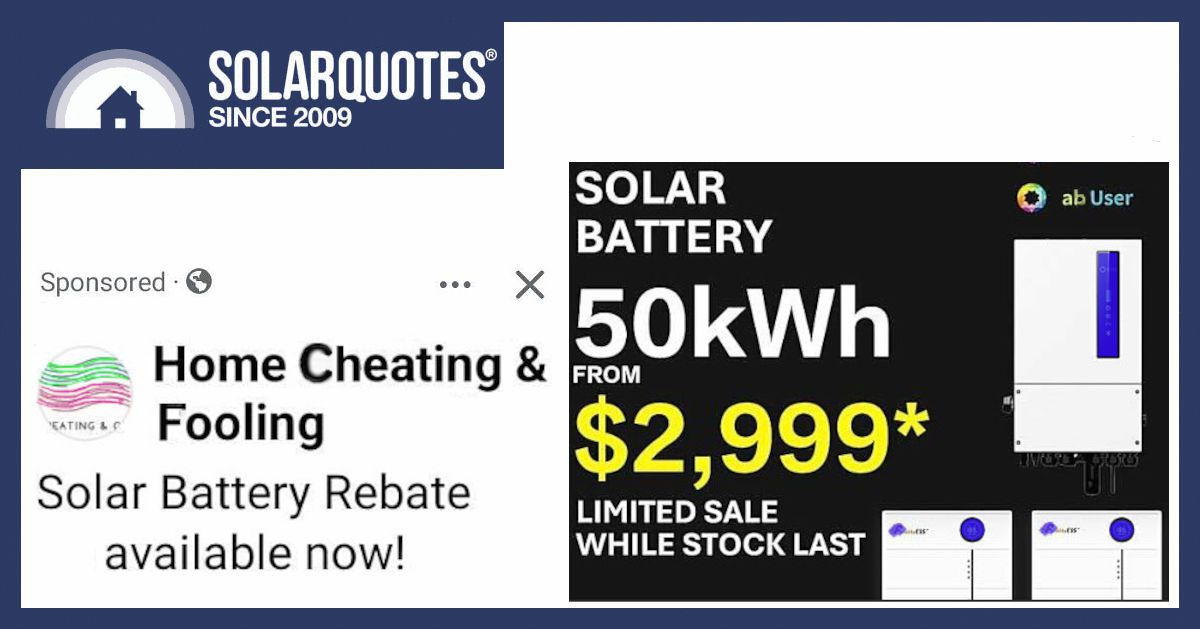
After 17+ years experiencing the ebb and flow of the solar industry, the sheer number of new battery brands available right now is mind boggling.
To me the only thing more confusing is this; why do people peg their expectations so low when they see a rock bottom price?
If you’re happy to buy a top quality Toyota, because it’s established, reputable, reliable and has better resale value, you’d probably sneer at a “Calcutta Cruiser” as being a poor substitute, even if it had a great warranty.
So when it comes to your house, why on earth would you screw down the cheapest cladding or slap the tackiest paint onto your most expensive asset? Saving a few bucks up front on some brand nobody’s heard of, installed by a pop up sales company, with potential for damage and roof leaks thrown in; it just seems crazy.

OH? What a Feeling.
Especially while fretting about the return on investment, which never enters the conversation when buying a car, couch or companion animal.
Keeping Up With The Joneses
While I’ve never really understood the desire for haute couture handbags, fashionable shoes or designer dogs, I’ve seen first hand the big tough tradies surveying their mates on social media, to get advice on buying a dual cab ute. The major decision seems to be balancing budget against whether they’ll be laughed at on site.
Basically it was all about making sure your choice of vehicle didn’t open you up to jokes about oppressed minorities, loosing footy teams or hairdressers.
So why then are people proud to skimp on their energy infrastructure? I’ve even seen a non-solar electrician bragging about diddling a sales company. His significant other photoshopped an advert and presented it as proof to a retailer, who matched the bogus price. They’re all getting what they deserve, I guess.
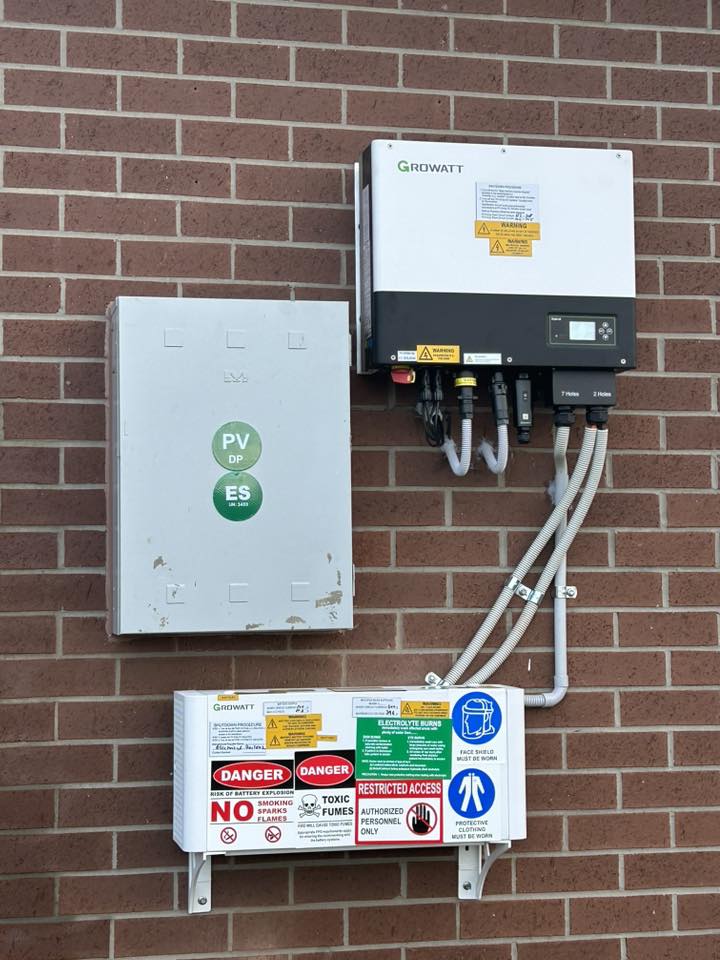
Cheap junk covered in irrelevant labels and bad conduit work. I’d hate to see what it’s like behind the covers.
Do You Have $15 Grand Down The Back Of The Couch?
Before you blow thousands of my tax dollars on a novelty oversized battery, you must ask yourself a pretty simple question.
Can you afford an additional $30,000 from your own pocket to replace it?
Remember this is a one off incentive, you don’t get a second chance. Think about what happens if the no name hardware stops working, the seller stops answering the phone and the importer no longer exists. There’s $20,000 down the drain.
You’ll need more money to replace it, plus having close to half a tonne of liability on your hands. At $7/kilo to dispose of that’s an eye watering $3300 for a 50kWh/ battery.
And all of us will be poorer as billions of dollars worth of government-subsidised gear suddenly becomes scrap.
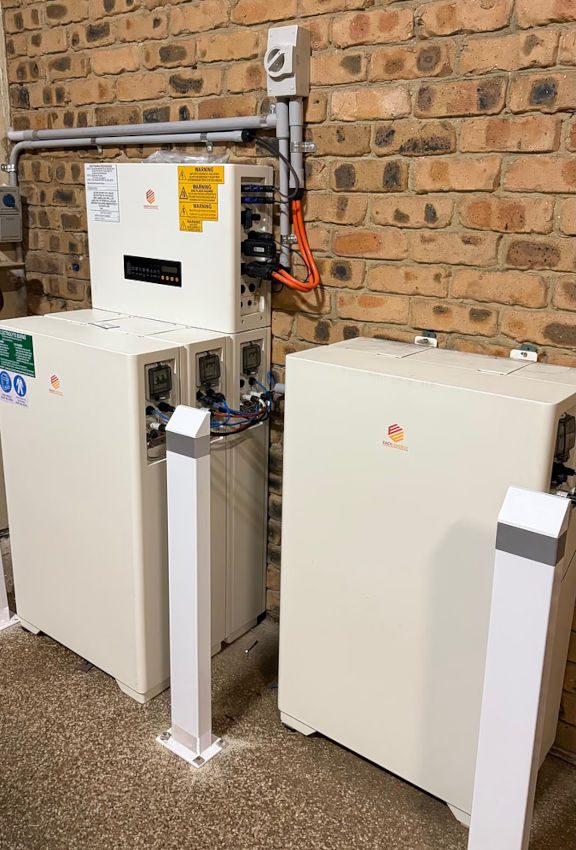
This Aussie Solar Junk was recently submitted to us as an example of “best quality work”. With incorrect labels, pointless bollards and non-compliant wiring, this is an example of the installers we reject at SolarQuotes.
What’s a Reasonable Price Then?
If you’d have asked me early last year what is a reasonable price to pay for solar and energy storage I would have said I don’t know, I’m just a semi-retired installer. Though I’m not much good for carrying panels aloft these days, it means I’m lucky to enough stretch my own beer budget to champagne equipment.
For a ballpark, the general advice on solar was this; out of pocket cost is a dollar per watt.
In other words, you want to pay $1000 per kilowatt of capacity on your roof, installed by a reputable company with track history, a little more or less could vary on the difficulty or equipment chosen.
Fifty cents per watt spent with a used sports star on TV would likely buy you nothing but pain.
This advice stood for a few years straight, as the annual reduction in the STC incentives roughly tracked the declining price of solar panels. Effectively the glass on your roof was “free” because the rebate still covered the cost, it was the inverter, framing and balance of system you were buying.
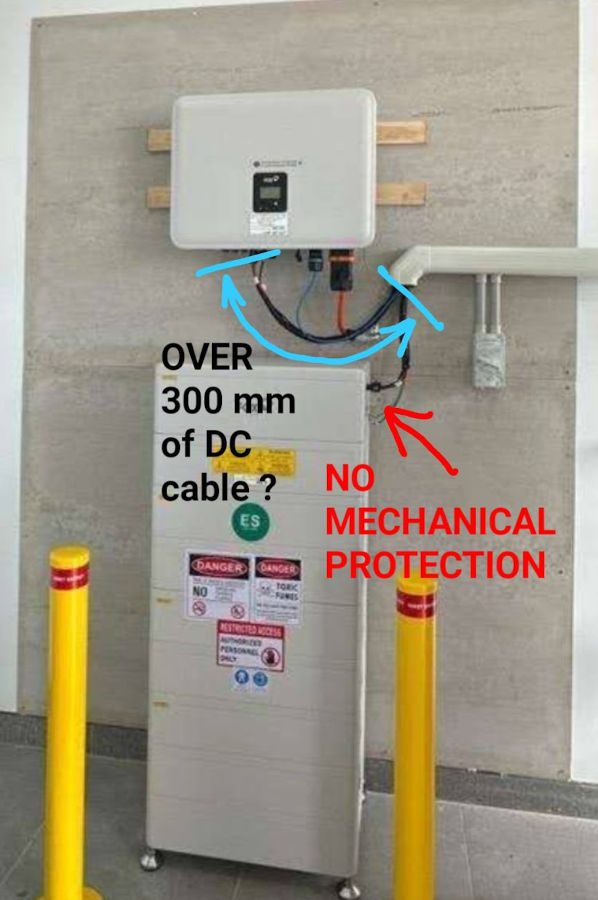
More junk submitted as “best workmanship”. If I can find three basic defects from this distance, what chance is there the rest is complaint?
Batteries Were Just As Expensive
While the arguments raged about remote area power using lead or lithium, storing electricity was always a bit expensive. However the rule of thumb held true, a compliant battery with an inverter installed on your wall was about $1000 per kilowatt hour.
However the Cheaper Home Battery Program has arrived. Initially offering around $350/kWh, there’s a reason the scheme aims to make batteries 30% cheaper.
Cheaper Home Batteries must not be confused with CHEAPEST system, which is poorly designed & badly installed.
Of course this is the solar coaster and nobody saw what was coming. Competition brought more competitors and drove prices lower in short order. Thankfully the CHBP was designed to ramp down like the STC scheme for solar and further curtailment has been announced this year.
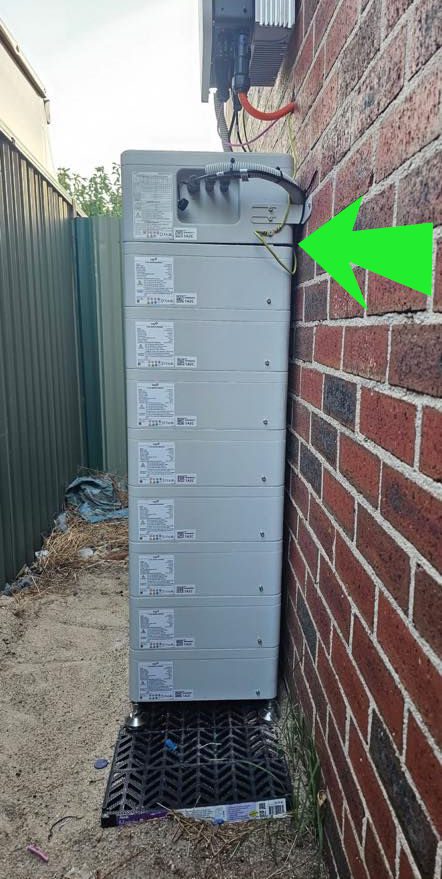
Here we see a cheap battery which is sitting on an even cheaper plastic base. 370kg is settling into the sand, opening up a gap (arrowed) which lets moisture in and separates the internal connections of the stackable battery.
Of Course You Would Say That!
I’m a little tired of the anonymous posters who tell me the whole solar industry is just gouging customers. I recently had a punter tell me:
“Top notch LFP cells come to below $150 per kWh. Yes, that’s cells only and we need BMS, housing, inverter. If a system retails for $400/kWh that’s about where they should be. The $1000+ / kWh retail prices of 2024 were a major rip off, doesn’t matter what brand. And the subsidy was based on that. What was designed as a 30% subsidy on rip-off prices now turns into 70% or more subsidy for fair prices.”
It all sounds so simple when you say it quick. Build a battery, write the software, do the testing, get it through laboratory assessment; and then spend months paying the CEC to give you the tick of approval.
Now offer a ten year warranty.
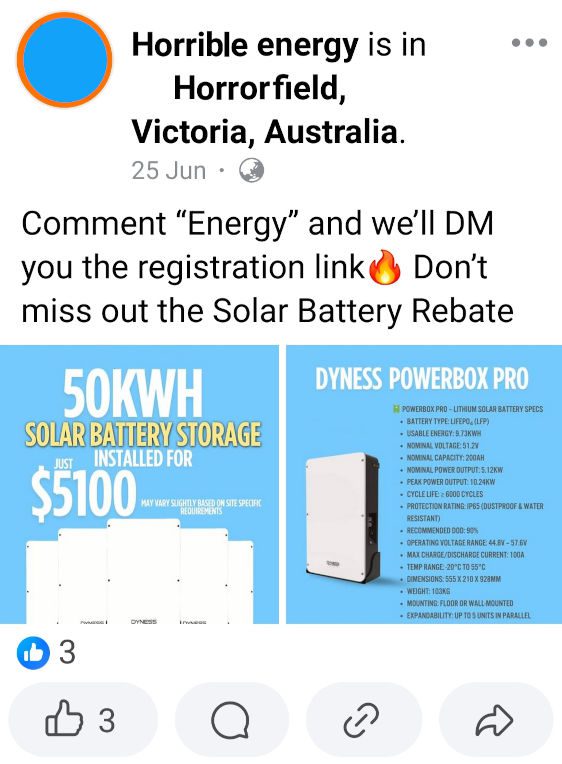
Freshly minted ABN – check. Inexperienced sales- check. Subcontract installer – check. Tiny company that can’t even front enough cash to buy stock – check. So will they be able to honour or even aware of their Australian Consumer Law Warranty obligations as an importer?
And lastly, you’ll need to staff the support lines for a demanding customer base, who need guidance on the best use of their asset, and want the router reconnected when they change telco. All of a sudden it’s not so cheap, especially when even a company the size of Tesla or LG make mistakes that require a formal recall.
The price of raw latex has basically nothing to do with the tyres on your car, and everything to do with the design, delivery, compliance, installation & consumer law obligations.
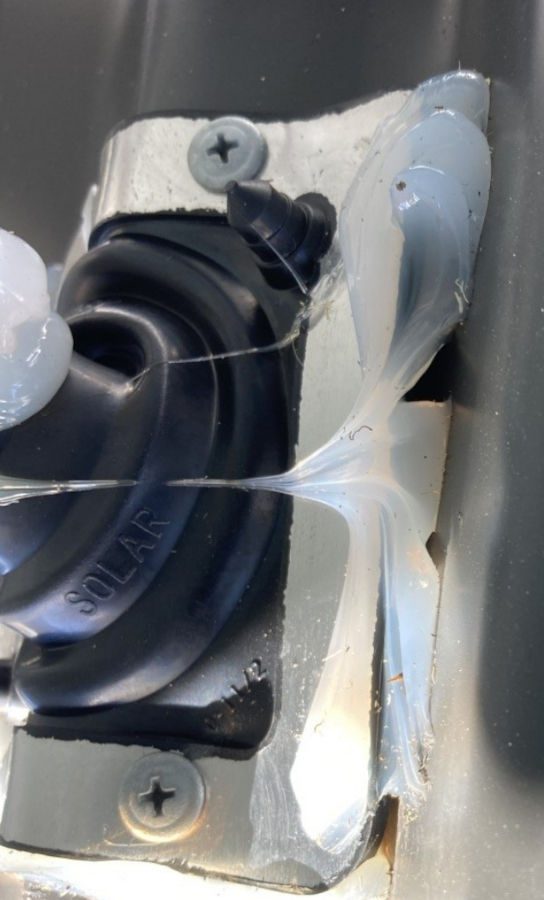
Well they’ve applied sealant to this flashing but it’s not actually doing anything when the water can just go around it. Roof leaks created by poor wiing penetrations is something that can make your ceiling collapse.
Good Installers Offer Support
When I’ve spoken to well regarded installers in my area, they’re telling me that perhaps 20% of their trained workforce are tied up with mostly unchargeable hours.
To maintain good customer service and meet consumer law, good companies pour a lot of petrol and perspiration into site visits that can’t be charged to the customer, and may only attract miserly payments for warranty failures.
A business that has 5 vehicles, with an electrician and apprentice in each, will generally have one van dedicated to repairs, warranty, commissioning and problem solving, like setting up WiFi or programming schedules to charge batteries.
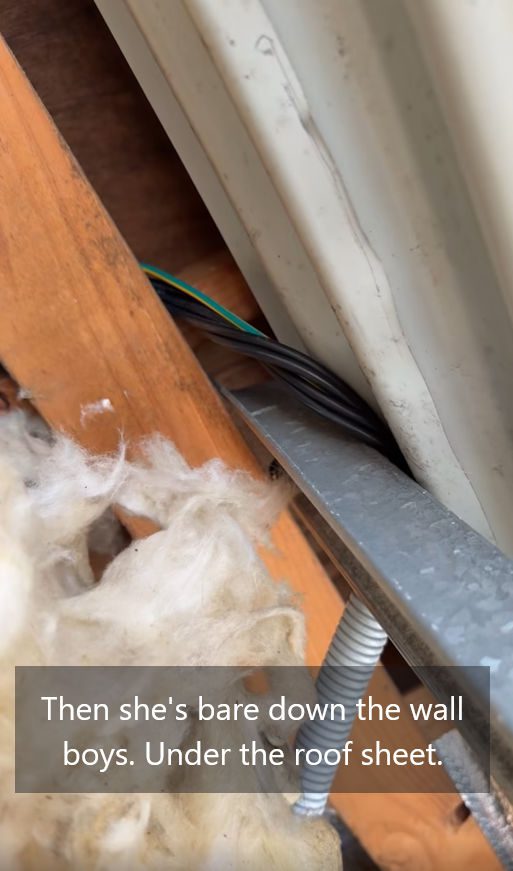
Here we see black DC cables, with potential 1000 volts DC available, draped over a roof purlin ready to have a screw driven through them. The conduit is incomplete, it should go under the timber and all the way to the inverter, but -any- wiring placed straight under the roof cladding is a basic AS3000 wiring defect. It’s dangerous and illegal.
The Upshot Is This
Put simply, if the federal government incentives are paying for more than half of your solar and battery system, you’re buying crap, from shonks, who won’t be there to cover the warranty.
There are tell tale signs, a serviced office is often a red flag to begin with. Phone consultations and zero site visits saves on their sales costs, but risks install day delays and disasters for you.
They’ll be trying to shirk responsibility for legally required switchboard upgrades. Or stiff the subcontractors with fixed rates on installation and then fail to offer proper handover documentation.
Remember you will get what you pay for, but if you’re in any doubt, click here and filter for the one star reviews. The buyers remorse would be funny if it weren’t so sad.
 About Anthony Bennett
 RSS - Posts






Some of your points are not valid.
I’ve seen expensive “reputable” brand name kit installed like a dogs breakfast and other “cheap” brands installed like a work of art that performs equally if not better than the brand names.
I’ve been an early adopter of solar as I had two PV installations 15 years ago, both were reputable brands and companies sourced from local council group buy and both disappeared within a few years.
Hi Sam,
We’ve written about good gear installed badly.
And as the article says, you can sometimes get a good job for cheap.
As you’ve pointed out, there are a lot of orphaned systems already.
Low price retailers are obviously the ones most likely to offer poor service.
Many ‘cheap’ brands are only cheap for marketing reasons in order to break into a new market. A good example is Foxess, new to the Australian market but well established and trusted in far bigger markets such as the UK.
So while I understand the scepticism that not all new players can survive in a small market, perhaps a bit more nuanced reporting rather saying stick to the big expensive players who may or may not have inferior products but have relied on slick marketing and support from compliant media.
My two cents:
1. Good LFP cells are less than 100AUD per kWh delivered to SA. I just got a little bit over 100kWh for slightly less than 10K for my new project. Too bad I cannot get tax-funded subsidy. I hope you appreciate my self-reliance.
2. I love photos in the article. I’m sure all these jobs were done by licenced installers. So, what is your point? Are you saying: “If you want a thing done well, do it yourself”? Paying more does not guarantee anything, the job might be equally dodgy.
My gut feeling, with absolutely no evidence to support my statement, is that 50% of all batteries installed since the beginning of the battery rebate will fail within 5 years of installation.
My example (before the rebate) is the LG Resu 10 and an SMA Sunny Island, recalled in less than 5 years but when recalled SMA and LG decided that they didn’t like each other anymore and hence the replacement LG battery no longer was approved to work with the Sunny Island. This fails to mention the absolutely tardy recall call process of LG which required the battery be switched off immediately but took a further 3 months to complete the recall process.
Im finding more and more SQ is acting as the propaganda mouthpiece for a large band of installers often pushing tesla or a few fanboi very high priced systems. My quotes incl origin more than double. And with a ear bashing of fear While disparaging anything chinese. Chicken little.
There isnt even any balance. Well i wil provide some. Yes i had one of the cheaper chinese systems. Fox ESS. 42kwh with 3 ph 15kw smart inverter. 30 jinko panels. Soon after instal noted a frequent trip issue. The installer wanted photos of the meterbox. No drama. He detected his mistake. Came a few days later to change a slow switch to something faster. apologised and its been fine. How is the fox ess? Brilliant. The software has been updated remotely and twice for the app. Its maintained and supported as i was told. Flawless
How was the ‘cheap’ install? It cost us $12000 after rebate etc. Passed perfectly when audited.
I have real concern SQ is the mouth piece for a scam industry. Clean up your act
I agree totally with you Paul! I have a FOX ESS EQ4800 42 kwh system, working perfectly! They have hundreds of thousands installed in the UK! SQ must have a hidden agenda!!!!
Hi Steve,
The agenda isnt hidden.
SolarQuotes uses a very simple ethic when deciding what or who to recommend.
Would we be happy to see that equipment or workmanship on our own Grandmother’s house?
Fox may well be a reasonable unit, but they simply have not been on the market long.
GroWatt & Solax have been on the market far longer, I still wouldn’t recommend them.
Saying anything is big in the UK also ignores the English tendency to install them inside roof spaces, where unlike Australia they dont have to derate wiring because it doesn’t reach 70°C.
They’re not working under the same conditions.
With the likes of Sigenergy running a clownshow of a recall, after positioning themselves as a premium product, I think everyone could use a quick sanity check before dropping this much faith onto unproven companies.
I would be scared if there is a recall and the company doesn’t even respond or doesn’t respond fast enough. Imagine living everyday thinking that the battery would catch fire. It is tempting to buy Fox ESS 42 Kwh at 12000 but i haven’t bit the bullet for this very reason. How are they when something goes wrong? That is the real measure of a vendor. Having said that they have become a big player so maybe they would be alright. It’s a big maybe as they need to have the money to do it after selling the batteries so cheap.
While I generally appreciate the independence that Solar Quotes (SQ) brings to its assessments of products and companies, I can’t but help feel something of a double standard when it comes to the requirements that SQ sets for some companies compared to others for giving them positive assessments.
For example, FranklinWH received a glowing review on the SQ blog recently, despite being in business for the same amount of time (6 years) as Fox ESS which has much higher ratings and far more installs by SQ customers and Australian customers more generally. Is it just because FranklinWH is a US company and Fox ESS is a Chinese company and so it’s easier for SQ staff to interact with them?
FYI – I’m not affiliated with Fox ESS or any other company. I just had a Fox ESS 3 phase battery installed recently, via AC coupling to our Enphase solar system, and so far it is working very well.
Mark from MC Electrical just gave a review on Fox Ess. As we all know he is a Fronius fan boy but he still managed to say Fox is a “Decent product” and “quality installers need to be installing Fox” (25m 36s)
https://www.youtube.com/watch?v=fnnrVa97rLM
Consider yourself one of the lucky ones.
One good install doesn’t mean all of them are perfect.
SQ do a fantastic job of informing people about important issues.
They’re not the ABC funded by the government.
They are independent intelligent people with experienced points of view.
You’re completely out of order with senseless attack.
😎
Thanks Peter,
The support is much appreciated.
Peter, there has to be a middle ground. Not everyone can afford to drive around in a Mercedes. Budget cars exist for a reason.
It’s perfectly fine for SQ to say “We don’t understand enough about xyz brand to offer our support yet”, as long as they are genuinely making good faith efforts to understand that manufacturer.
But branding everything that isn’t Mercedes as “cheap rubbish” is transparently biased with an agenda. Australians have been taken to the cleaners by battery manufacturers for a decade now, and installers have done nothing because of the monumental margins they make installing these hugely overpriced products. That is a fact that cannot be argued. It takes a few moments to see how our battery prices compared to markets in Europe, the UK and the US. For the *same products*.
From my own experience, including my own recent install, in most cases it’s not the manufacturers but the installers that cause many of the issues. Myabe that’s where SQ should be more focused.
Hi LP,
We’d love to see the numbers if you have them to hand.
And possibly a breakdown of the regulatory burden too.
Last I checked solar in the US was horrendously expensive compared to ours and they’re looking to Australia for ideas on how to lower costs.
https://www.volts.wtf/p/how-to-make-rooftop-solar-power-as
Haha, you are definitely right.
Hi Scofield,
I’m glad we have some manufacturer presence here but would prefer you tell people you’re from VoltX.
While we have you though, could you explain how Zeus Appollo fits into the story of NeoVolt?
I’ve seen these units sold very cheap & initially they gave some to Solar Training Center.
Perhaps they were imported by OG Trade Services (Say Yes Solar) at first?
Apparently Zeus went broke & no longer offer support, yet they’re still on the ByteWatt dealer network?
I’ve opened many tabs & spoken to a few people but perhaps you could clarify.
ByteWatt makes Neovolt, VoltX imports them. Are the units imported before 2024 under your warranty obligations, or are they orphans?
And why does VoltX offer zero support to Solar Training Center now?
Cheers
SolarQuotes (SQ) is like that: they recommend whoever pays them. They used to hype up Sigen Energy like it was amazing, and then there was a fire incident. Customers aren’t stupid—this is the internet era.
Nice conspiracy theory. One problem, Sigenergy has never paid SQ one cent, because SQ does not take money from manufacturers: https://support.solarquotes.com.au/hc/en-us/articles/115000931934-How-does-SolarQuotes-make-money-Will-I-pay-more-for-my-system-by-using-SolarQuotes
Finn, you may not take money directly, but when you allow people like Anthony to write your articles, who is so transparently and vehemently biased towards the gravy train of criminally overpriced batteries that makes them so much money, you’re losing all credibility.
I had been a fan of SQ since you first founded it, but I’ll never use it again for finding quotes because of the overwhelming bias Anothy demonstrates every time you publish on of his “articles”. That’s bias is also demonstrated by your own clear bias towards the most overpriced batteries in Australia and constant trashing of better priced options without any clear evidence to back up your claims.
It’s all horribly disappointing to myself and so many other fans.
Finn recently recommended Goodwe, one of the most price competitive brands on the market. As for Anthony, he was the one who revealed the Sigenergy issue you cited – a honest assessment about a premium, expensive battery that is dominating the Australian market. We’ll continue to call things as we see it.
You absolutely deserve an Oscar for literature — that was written brilliantly.
Yeah, they talk about untested Chinese brands when talking about FoxESS, which have been around Europe for 15 years but seem to support Sigenergy which is a relatively new and untested brand.
Hi Jesse,
Fox was established in 2019.
It’s parent Tsingshan started with car door & window manufacturing c1988, then shifted to stainless steel & nickel production by the 90s.
Up to 2017 they did metallurgy like RKEF production lines, nickel mining in Indonesia (2009), and ferrochrome projects.
REPT Co. Ltd, a new energy battery project for EV and storage, marked its initial foray into battery production in 2018.
Electronics manufacturing (e.g., inverters like Fox ESS) came later via subsidiaries post-2019, leveraging nickel supply for batteries rather than prior electronics expertise.
Happy to stand corrected but best of my knowledge is that Fox offers 10 year warranty on batteries they’ve only been making for 8 years at best.
Rather than propaganda i would suggest a few articles that consider cheaper systems and compare features. I fear thats too hard to show bias where a old outdated system obviously has proven capability, right? The debacle of powerwall 2 bricks, warranty delays that cant be fulfilled because pw2 is out of production and the failings of pw3 and features like real 3 phase etc and cost per kwh…and a slow inverter make interesting consumer reading
But perhaps it won’t help sales of the gold plated systems. Its like some companies have educated installers on a sales pitch to rip off consumers. When i got 5 quotes 3 were like $38000+. Yet two others were $11500- $12000. For comparable specs. But two of the top end also couldnt offer what i wanted. Backup.power + 15kw inverter and real 3 phase. One was also single phase incapable of our ducted being supported at all. !! Not without $3500 of additional gear and work. Elons product
The fact that you want the aircon to be supported by your battery systems tells us all we need to know, that you are a misinformed consumer
Thats part of a wider issue of our industry
Premium installers selling premium products with decades of experience would tell you this, but instead you will probably end up with a system that doesnt meet your needs because “rebate”
If a product doesn’t meet the requirements to belong in Australia, it shouldn’t be here – so who is keeping bad products out? Most of the examples in the article are installer issues. So how do installers go from zero knowledge to enough knowledge to be deemed worthy to be a licensed installer? Do they do an actual apprenticeship, or do they carry the beer and sweep up the dust for those meant to be teaching them skills? Many (too many) tradies make it through without actually knowing or caring enough to do a good job. We have regulators that are meant to be overseeing ALL of this so we as consumers don’t have to read an opinion piece that we’re doing it all wrong by not having extravagant amounts of cash to bolt to our houses. Regulators should regulate, shonky installers should be removed, and bad products kept out. Sounds not all that hard.
Yeah, my father had a cheap battery installed from a local mob a few months ago, he had to have them back 2 times before he got an acceptable result, first time, the house back just plain wasn’t done, luckily they had the usual grid failure in a storm within a week of the install and everything went black, so got them back to fix that. (just as well it wasn’t a winter install, it might have been 6 months before he found out the backup wasnt done) The second time things just stopped, no solar, no battery, grid power use only. It also took forever each time he called them to get someone on site, the second time they had to replace parts, that took another 6 weeks.
Mind you he could have been unlucky enough to have gone with Sigenergy, he would probably still be waiting for his inverter to be fixed…
Took me a bit to work out how to filter those reviews, but 90 odd people who have all said that mob are a bunch of bottom feeding scum bags, many of whom have taken legal action.
You would think in such a highly regulated industry the watchdogs would be dealing with these shonks long before the numbers got into double digit’s!
Anthony,
On this topic… We had an existing Sungrow inverter and small battery installed. We live in Queensland, & have people who have the medical need for air cond, so in summer we spend a huge amount cooling the house.
We needed a larger battery than others might have needed, so we opted for a Fox Ess system upgrade.
So far the quality of the hardware itself seems excellent. The software (website /apps) so far also seem to be of excellent quality.
But, what we appear to have is an issue with the installer. After showing some pictures of our install to some friends, they said it looks to be non-compliant due to how close the inverter is mounted to the top of the battery. It’s far outside Fox’s specs.
So far I’ve been unable to get our installer to even comment on the situation, let alone fix the issue.
If you have any thoughts or suggestions, I’d really appreciate it. Pics attached.
https://i.ibb.co/6RGGv6QQ/20260202-155752.jpg
https://i.ibb.co/wZHmWq5z/20260202-155742.jpg
Thats a very poor installation. The plugs are far too close and tg plugs and wires are all forced to position. Something could short, burn or break. The inverter should be moved
I would put to them your concerns in writing. Go back to who you paid
Love the stupid stickers. 2 x “battery” just in case you were confused. Nothing to say “inverter”
Hi LP,
Your install looks compliant but cheap. At least they haven’t used the irrelevant green electrolyte label for the battery, but it has some issues.
Looks like the LHS AC isolator has a 20mm conduit shoved into 25mm without proper adaptor?
“Fed from UPS” label isn’t correct wording to my knowledge. AC isolators are confusingly labeled
As noted, they can’t operate a tape measure so the inverter is mounted too low.
If the area isn’t prone to weeds or flooding I would be tempted to just have them lower the battery. Knock it down and dig the slab down a couple inches perhaps. Would save a deal of potential heartache with wiring and wall damage?
In our vetting process for solar quotes installers, a job like this would be knocked back.
Thank you Anthony for your insights.
The important subjects though, which I wrote about and posted in global forums in 2021, and have been copied and pasted in part, by many commentators since, have deservedly found new relevance courtesy of AI interrogation.
I am OK with that because the hypotheses I put forward then are more relevant than ever today, having withstood a barrage of fantasy counter views being promoted in general forums.
AI has given the subject resounding acceptance as authoritative and visible to all who are genuinely interested in facts rather than fiction.
Prove this yourself by asking your AI partner of choice, to evaluate this simple phrase (including the inverted commas) which explains where we must get to moving forward.
“global energy generation imperative”
Four words when combined, that encapsulates the entire subject at the pointy end.
Lawrence Coomber
The article above reminds me of the hoax that was the Goodwe launch of the 10kW/48kWh single phase ESA system, about eleven months ago.
Still not publicly available in WA.
A hoax.
A bit like a certifiable sighting of a unicorn.
I must say I totally agree with other comments about this website turning into a propaganda tool for expensive installers. Time and time again I see people complaining about installs and they paid a fortune. Cheap doesn’t mean crappy. OMG more than 300mm of cable that isn’t run in conduit – it’ll absolutely blow up! OMG they have run too much flexi conduit instead of using the laser level to run solid conduit and align all the screws so they are lined up! This article is very biased and unfortunately where the articles on this site seem to be going. I used to recommend people go here for balanced advice, but not any more…
Not every cheap installer or battery is poor quality – we recently added Goodwe to our recommended brands list – but it is not exactly controversial to suggest a relationship between price and quality. We recommend installers that meet our stringent vetting standards – the fact the best installers often tend to charge more is not at all surprising. They’re experienced, they’re in demand, and they don’t cut corners.
Hi Marc,
I’ve wired entire systems, 18+kW, 5 strings, 850VDC each with the only DC conduit installed to get out of the roof into the isolators.
It hasn’t blown up but in 2013 that was common practice.
300mm is actually written in the standards now. It’s a rule. A legal minimum requirement.
The point is that they’ve ignored one of the simplest and most visible rules.
What other corners have they cut?
There is so much rubbish product being dumped and then approved, there will be heartache when these “Fly By Nighters” exit the industry suddenly. The Government and the regulators need to immediately step up and impose a mandatory bond to cover shoddy product and overnight exit from the industry. This means quality product, less rubbish, less customer angst and a cleaner industry. Consumers need to be aware of their consumer rights and report dangerous poorly installed systems to ESV ,as I did and weed out the poor installers from the Solar industry. Visually the job is ugly but passes specs for electrical safety, but the installer broke many regulations prior to inspection, which took 6 weeks, however, system switched on, on day of install because of a previous failed solar system with a configured meter.
Yeah righto… good to finally see people here actually push back on what SQ’s turned into. It’s basically just a megaphone for the rip-off solar and battery mob we’ve had here in Aus.
Calling everything that doesn’t make their mates top dollar “cheap rubbish” without any justification is such a crock.
Instead of firing off cranky replies at everyone, maybe SQ should have a proper look at how many long-time supporters have bailed because they’re sick of it.
The article you are commenting on is packed with specific examples of problems based on installer issues we screen out through our vetting process – pushing for high standards is the whole point of our existence. As for losing our supporters, readership is at record levels so not sure that’s quite right, but you are of course perfectly welcome to stop reading.
I agree with Anthony – you do get what you pay for, and going with cheaper installers is a risk.
I’ve used a reccommended installer from SQ for our first job in 2022 and it was stress free. Recently I did use a cheaper installer for a battery system BUT i did have to do a lot of work to make sure the installation was going to be ok.
I had to:
– pour a slab for the battery (despite the salesperson just saying to get some pavers from Bunnings)
– put a structural backing board onto the fibre cement cladding so the anti -tip brackets could be appropriately secured – studs wouldnt match the battery bracket position.
– source pre instal an appropriate inverter cover for mechanical protection.
– give explicit directions about where the inverter was to go (ofset and height)
Having said that – the guys who turned up on the day seemed pretty decent, they did check everything was working before they left. I got a good install because I did the prep work, BUT i did worry a lot about it.
Sounds like a good approach Tim.
Ideally you shouldn’t have to project manage the whole thing but I’ve always maintained that cheap crowds can deliver good jobs, but it’s the exception not the rule.
You need to be lucky enough to get an ethical installer.
Either a man in a van with little overhead, or a subcontractor who’s just filling a spare day by taking on a cheap sales company job.
Either way you’ll want to be proactive about monitoring and may need to take warranty issues up yourself if the installer business goes missing.
Glad you’ve had a good experience. If you’ve got some photos I’d love to write it up.
Cheers
Hi Anthony,
Happy to send some photos through later this week when back from work – I’m not claiming it is top-notch installation just that some of the risk can be mitigated by owners taking a more proactive approach if an installer is not visiting the site. Providing a level and stable surface is an easy one for most home owners to do – and that awful photo with the separation of the battery could’ve been solved by this.
The long term risk is real though – will the installer still be there in 12 months? I’m not certain they will be and this is something i have to manage. I hope I don’t need to. But I think FOMO is real at the moment, particularly for people like me who just dont have the money.
We spent about $14K on our 10kW solar system in 2023, and now $8K on a battery system. Our site, due to heavy winter shading, is actually perfect for a battery only system with the free power window. If we hadn’t put a solar system in 2023 we could have afforded $22k on a battery system.
Thanks Tim.
Anthony there is so much morphing ahead for everybody involved with batteries over the next five years that will look nothing like the overall current view port and it won’t be favorable for users over utilities.
The balance will dramatically (but incrementally) shift against 1: the user and 2: the current non-sustainable concepts.
It’s an inevitable consequence of years of largely ill conceived decisions by inexperienced players across the board.
Lawrence Coomber