
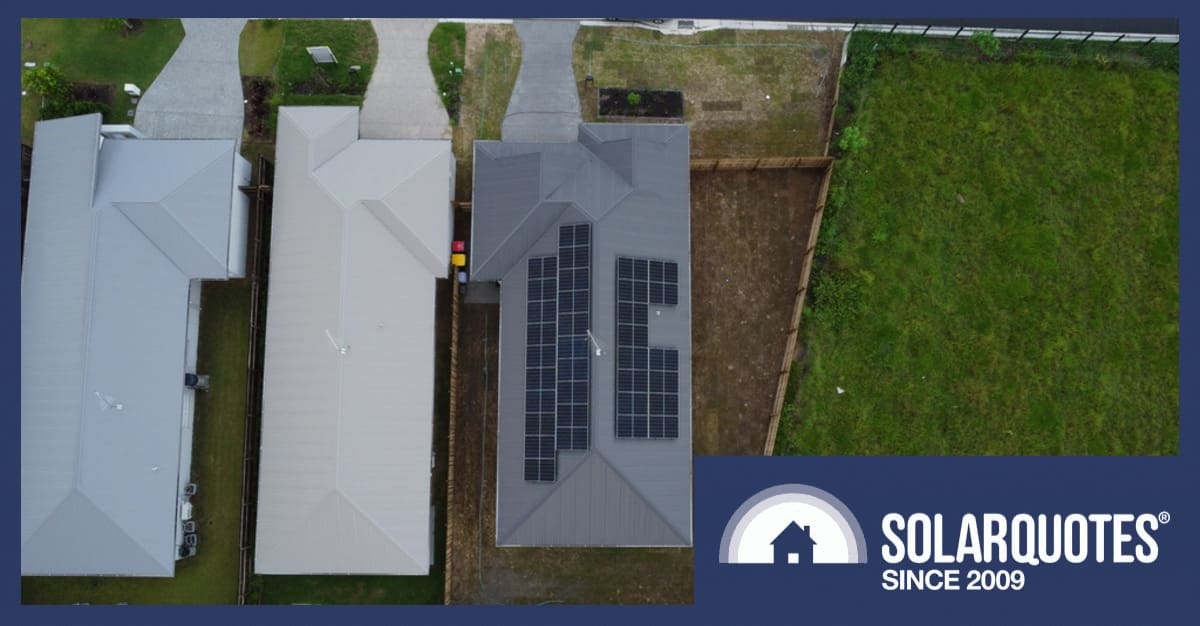
The federal government is set to downgrade its plan to mandate three hours of free daytime electricity with the imposition of a reasonable use cap, but there’s a simple way to ensure you rarely if ever hit the limit: getting solar panels.
What Is The Proposed Solar Sharer Offer Limit?
The Albanese government in December announced it would mandate that all electricity retailers offer an opt-in Solar Sharer Offer providing free electricity to households for at least three hours a day.
That pitch has since been downgraded in a recent consultation outcome paper with the addition of a reasonable use cap that limits the amount of electricity available for free.
The cap would initially be set at at 24 kWh per day, which federal authorities say is equivalent to an average five person plus household shifting its total daily electricity use into the free power period.
The cap is one of six recommendations for the offer in the outcome paper, with the others being that it:
- Looks to deliver bill savings for households;
- Considers key market factors and system efficiency;
- Is flexible and aligns to local conditions;
- Considers retailer viability;
- Is adaptable.
The offer will initially be implemented in New South Wales, South Australia and South East Queensland from 1 July 2026, with other areas of the country to follow after that, potentially in 2027.
Solar Households Don’t Need To Worry
The limit is sufficiently high that homes with their own rooftop solar will be so rarely affected that”it’s not worth worrying about”, SolarQuotes resident fact checker Ronald Brakels says.
Ronald qualified that there would need to be a combination of factors at play for a solar home to breach the three free hours cap. One factor is the season, with a cloudy day in winter potentially pushing heavy electricity users past the limit.
“If your electricity consumption is unusually high because you have a big battery or EVs to charge, then you may find yourself hitting the free electricity period cap. This is most likely to happen on cloudy winter days when solar output is low. The smaller your solar system, the more likely it is to happen, so it’s still a good idea to have a large solar system,” he says.
SolarQuotes founder Finn Peacock has previously expressed concern that the government’s original uncapped plan would create a perception that solar isn’t worth getting, despite Australia needing to further boost solar capacity to meet future energy needs as ageing coal plants wind down.
The introduction of a cap further enhances the continued case for getting rooftop solar, even for households that sign up to get three free hours of power a day.
Heavy Energy Users Without Solar Likely To Breach Cap
Households without solar panels that have high electricity consumption through heavy charging of home batteries and EVs face the prospect of regularly exceeding the cap, Ronald says.
“On cloudy winter days, any home with electric heating and a drained battery that needs charging could easily hit the cap. This is a problem for the grid, because we want people to charge their batteries during the day when it’s cold and cloudy, so they’ll draw less grid electricity at night when it’s even harder to provide electricity due to greater heating demand and zero solar generation. Fortunately, this will probably only be a minor issue. Most people will simply pay for extra electricity during the day when they exceed the cap and not worry about it. Also, no matter what homes have to pay when they exceed the cap, it will certainly be less than what they’ll pay in the evening, so they’ll still have an incentive to charge their battery, even if they’re over the cap,” he said.
“Anyway, if you have a battery, you almost certainly have solar. If you have solar then, provided it’s not a puny system, you’re only likely to exceed the cap during rare periods of lousy weather, so it’s not worth worrying about.”
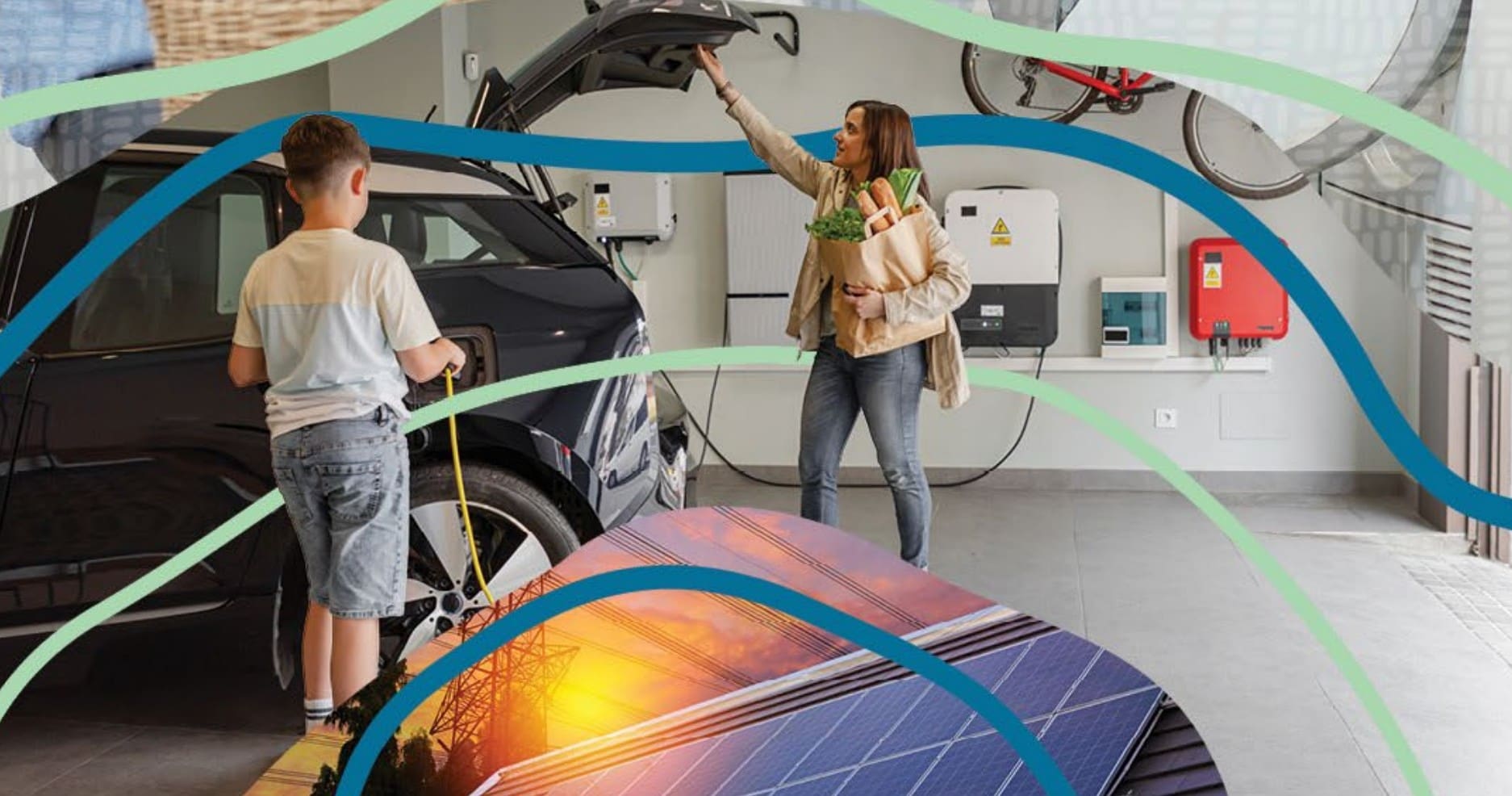
A promotional image for Solar Sharer, which the federal government sees as a means to encourage people to shift high energy demand activities like charging EVs to the middle of the day when solar energy is abundant.
A Cap Is A Sensible Move
There was potential for an unconditional offer for free electricity to present issues during the day however, so the proposal of a cap does limit the potential for problems.
The issues around the federal battery rebate burning through its initial budget too quickly by incentivising overly large batteries serve as an example of how things could have gone wrong.
“It’s a little annoying how the government got people all excited by saying ‘free electricity’ but then they go, ‘well, actually, there’s a cap we didn’t mention…’ If the cap was 40kWh or even just 30kWh we could laugh and say hardly anyone will be affected, but 24kWh is low enough for some to exceed it. But fortunately, it won’t be many. And most of them will only be rarely go over it,” Ronald says.
“That said, the plan had lots of potential to go pear shaped in winter, especially in NSW where it gets colder than SE QLD and there’s less solar generation per person. Some sort of safety mechanism, such as a cap, was pretty much necessary. We saw how the government failed to plan ahead adequately with the Federal Battery Rebate and had to rejigger the subsidy while it was in motion. So there’s plenty of room for their predictions about the Solar Sharer offer’s effects to go off the rails.”
Seasonal Limits Would Have Been Less Annoying
A plan that had different caps for different seasons would have been even better, Ronald suggests.
“If the cap was 24kWh in winter and 48kWh the rest of the time, then that would get the idea across that the grid has it harder in winter and give people an incentive to change their behaviour and use less electricity then. It would have a double benefit of making people feel less annoyed by the cap and it would be more likely to get them to change their behaviour when it matters more. Higher caps on weekends is also an option, as electricity demand is lower. This would be useful for anyone who has trouble charging their EV during the week because it’s parked at work,” he says.
Next Steps
The Australian Energy Regulator will now consider the consultation recommendations as part of its 2026-27 Default Market Offer (DMO) determination process.
For more on the Solar Sharer plan, read Ronald’s analysis on how it will save everyone money – including renters.
 About Max Opray
 RSS - Posts




Yes, my beef is not with the deal, but with politicians yet again making a promise and then breaking it. Some actual thought before making an announcement would do a lot to rebuild the lost trust that stems from this sort of continued backpedalling.
However, even capped, this will certainly will make getting a battery when you cant (or dont want to) have solar panels a very viable option.
Even with the 24kWh limit, putting 24kWh into a battery for free will take a large bite out of the power bill for most families. Those who dont have EV’s or need to heat or cool their house would almost have a zero power bill most days.
Battery longevity when getting hit with a 8kW charge rate for 3 hours as a daily charging cycle should be fine, no more than the charge rate from a decent solar array and inverter.
And even if Na+ batteries may be no(t much) cheaper than LFP now, their projected 10,000 cycle life and up to 5C charge rate eliminate any lifetime concerns, even at 1C charge, which few households would manage. (My nominally 27 kW arrays, throttled by 15 kW charging throughput, would take three hours for a 100% battery charge – an ideal charge rate for LFP.)
The ten times I consumed over 50 kWh (max 57.1 kWh), off-grid, last year, were all BEV charging days. A few minutes ago, the battery supplied 2.5 kW of the 7.2 kW BEV charge rate, as a cloud passed. That charges the car faster than “solar only” smarts, and the house battery can catch up while I’m out shopping or carting away garden flammables. When the house battery size compares well with the BEV, the “power the house from the car” bizzo is recognisable as similar to “fuel the car from the lawnmower” – a relic of the days of very expensive batteries, about to be left behind. (The electric excavator won’t do that.)
Some retailers were already doing the free for three (or four) thing, without restrictions . . . why can’t govco let markets do their thing with competition without meddling . . . batteries installed now have gone up significantly since the rebate intro . . . most things will, BER, child care, almost any ‘help’ you can think of.
Small retailers were / are leading the way with plans to suit a variety of people.
These plans already have higher ‘non free’ time tariffs, and higher daily supply charges, so suit only those that can use the power then, and are willing to pay more for everything else.
States that are independent of the NEM all well and good, offer such plans and let people in or out of NEM choose, many will think this is a great offer, and find they are paying more with all the different charges.
If there is a glut on the NEM, there is a glut, why not let people charge their batteries to ensure no grid stress at peak evening ?
It will just be curtailed otherwise, wasted. Oh $.
Ovo … But read the conditions. Its a appalling overall deal just for three hours free
. . . and their parent company AGL now too.
I thought I read something with another offering 4 hours, but can’t find anything.
Mind you, you have many ptions for very cheap power with some, both through the day and with an EV early morning, 8c is nothing to ignore.
Amber too, solar soak often has many locations with negative FIT, and pays you to charge a battery or charge an EV, use for anything like that high usage.
And they have no limitations.
I saw an analysis last week, by AEMO I think, that said household solar will plateau in the near future, that those who want solar but haven’t yet installed it is a rapidly shrinking list?
I can’t help but feel so much of what’s happening in the grid, for households at least, is an ongoing correction to the earlier decision to privatise it. The enormous demand for solar and now batteries I think reflects a pretty defensible perception in the wider community that without them retailers will continue to screw them.
All avoidable with better public policy. Greater decentralisation does provide resilience to the grid, but I’m not sure the real economies of scale are being looked at in the way Australia is doing this.
What software/app is the best way to tell my Powerwall 2 batteries to charge from the grid in that 3 hour free window?
I know the Tesla app has time of use settings but I dont find they work particularly well – Tesla could improve the app a lot in that sense.
I am sure there is better 3rd party software out there – happy to pay a one off fee if its good but not a subscription.
Try https://www.netzero.energy (yes, that’s the web link as is).
You can program it with automations to set grid charging, set reserve levels, etc.
I used it last year to charge the Tesla PW (really handy in winter) and I’m with OVO which offered the 3hr free window along with 8c (12am-6am for EV Charging).
Netzero has a subscription for $70/year to access the automation features plus others. It was free but eventually had to be paywalled due to costs of maintaining the platform. You can get it for free as Netzero basic with limited features.
https://www.netzero.energy/pricing
I find TOU works fine, it will always target the 3 free hours for charging.
But you can also use the Netzero app to do a whole range of Powerwall automations, there is a small monthly fee now.
Why does the government, retailers, regulators etc think that the future path should be making electricity as complicated as possible? The data now shows that a significant number of consumers find their electricity bill beyond their ability to understand, let alone take action that will minimise their cost. A simple easy to understand tariff, with consumer protections that stop consumers from getting ripped off would be much more beneficial to the majority. By all means let consumers who want to treat electricity like an optimisation exercise do so. They will probably save a bit of money if they work hard enough at it. However most customers dont want to do that, dont have the skills and enthusiasm to do that and frankly will resist that additional complication in their lives. They also already have low trust in their retailer who is effectively the friction point of the energy transition. We need as much psychology as we do engineering (and I’m an engineer and data nerd…)
Direct outcome of privatising electricity, and no appetite to reverse that decision politically. Turning a basic like energy into a competitive market leads to the confusion you mention, just as happened with telecommunications (the ridiculous labyrinth of retail plans). it’s driven prices up for years.
The oceans are rising too slowly for the frog to notice, but as the near_+50°C days tip over to over_+50°C scorchers, a few folk belatedly wake up to the fact that politicisation of incidental grid energy accounting doesn’t fix the existential problem: whether to burrow underground like wombats to escape the fires here, and the killing northern hemisphere winters as the failing polar vortex shunts frigidity south. When the AMOC stalls, Europe turns into Alaska. But that’s not scary until late next decade, so we’ll ignore it.
Three days ago, VicGov warned of grid outages due to heat and fires. Regional firming can then save your house if you have ample tank water and electric pumps for ember defence, but solar & batteries are even better.
Murmurs of grid undergrounding whisper now. Realisation grows only slowly, but atmospheric energy grows as the cube of windspeed increases. Pylon losses can only increase.
It is a courageous (eyes-closed) global experiment. We’ll all pay.
Erik, others simply reject the extreme narrow parameters of what’s considered optimal conditions.
Per a recent paper (https://www.sciencedirect.com/science/article/abs/pii/S0921818125003479), the climate change resulting from the Little Ice Age was responsible for poor harvests and famines, higher food prices, malnutrition, and contributed to the rebellions and revolutions throughout this period e.g. French Revolution, Fall of the Ming dynasty. Considering this was also the time of colonisation, perhaps some of the blame placed for the collapse of pre-colonial societies is misplaced?
While climate change largely arose this century, and global warming dates back a couple more decades, the Little Ice Age is well outside this period!!!
As regards pylon losses, if that proves to be an issue then interconnected transmission grids like NEM may cease to be viable. What are the implications if every city needs its own energy generation instead of relying on rural imports?
“During the Little Ice Age (approx. 1300–1850), the
Atlantic Meridional Overturning Circulation (AMOC) weakened significantly, with studies suggesting a 10% reduction in strength between 1200 and 1850.”
[I expect it was more, based on the effects.]
Good of you to remind us it’s happened before, and by inference, what’ll happen again – Europe likely to resemble Alaska before the end of the century. But the southern ocean absorbs 40% of global heating, and without northward export by the AMOC, it’ll warm up down here. (Adaptation is advised.)
The global population is peaking anyway, but it may be a bit more abrupt than expected. Reading up on what happens when the AMOC stalls, can be illuminating.
Yep, $15B for undergrounding a train merry-go-round is OK, but similar amounts for grid resilience work will doubtless chafe. (We’ll adapt, or go without, though.)
I’m doubtful about your inclusion of famine within optimal conditions?
It’s interesting you mention telecommunications. One thing I’ve noticed with internet plans is that the base rate has skyrocketed, but faster speed costs very little.
Basic internet for instance costs about $75 per month, but costs only $10 more to quadruple your speed, and another $10 to increase it almost 13x! So you pay through the nose for the connection, and very little for the levels of service. What did it cost back in 2000, $20 for a basic connection? Probably not unlimited of course, if all you need is a basic connection …
Imagine if electricity moved to a similar model – $2+ a day for a grid connection, but next to nothing for actual power use. Might that change the solar or no, on-grid or off-grid paradigms?
We’re seeing increases in both retail prices for electricity, and the network charges (that go to distributors for the grid infrastructure). In both cases I think costs of grid upgrade are being passed on to consumers, for essential services. There was a time government just paid for a large proportion of this, recognising it as essential public infrastructure.
Also seeing it with toll roads and other public-private partnerships. Decades of fairy tale nonsense about the private sector being more efficient. It can never be cheaper and more efficient to provide a service if you also need returns to shareholders from that service.
The UK is much worse again, essential infrastructure in a state of collapse, with exorbitant user charges. The privatised companies used the infrastructure as a cash cow, neglecting the most basic maintenance and investment.
Yes bare minimum upgrades so more money for shareholders, it’s a problem !!
Anything that the governments pays for is of course really paid for by the taxpayers (ie you and me). I’m also not sure its just the cost of upgrading the network, but the way consumers are using it. Network costs are mostly fixed so whether you use them or not doesnt matter much. Historically a portion of those would have come from our usage charges and a portion from the daily access charge. However with 30% on solar and increasingly more on batteries they have a lot less consumption – the reduced usage would mean that they arent paying for the fixed costs in the way they used to. Many houses would probably be actually be unprofitable under those circumstances. While none of us have much love for the pond scum retailers they still need to be able to run a profitable business or else we will all suffer
Governments don’t need taxes to fund projects, government money isn’t sourced from taxpayers.
We don’t pay usage charges for defence or most healthcare, and until recent privatisations mostly not for roads either. We are not customers of government, government is us. There’s no need at all to have retailers for energy. we didn’t in the past pre-privatisation. Energy was just generated and distributed, by government authorities.
Sorry Nick but government either spends tax money to fund projects, or it borrows money with future taxpayers bearing the cost of interest and repayment. There’s no such thing as free money.
We don’t pay usage charges per se, no, but taxes fund defence, and these days much of health, though that is a recent invention. Historically healthcare has been primarily private!
Actually the relationship between government and its people has varied a lot throughout history – customers, those served by government, those owned by government etc.
I dont want the free electricity except on days its needed. Is already curtailed export to grid so i dont pay for somone else to benefit. I hope amber also game this and curtail free import to the maximum when i need it (rare).. I pay them to give the best deal so its possible
Its already gone from free to a 24kw cap who knows what’ll it be next and it’ll depend on what the daily charge does they’re sure to get at us some way to keep their shareholders happy !!
Reminds me when banks offered free online accounts. Once people changed fees crept in. The more of your own power you use, the better off you are. That hasn’t changed
More complexity upon complexity . I can’t keep up. I give up trying to understand what’s best for me, the community, the country, the environment, I’m just going to assume we are all being screwed over
Absurd to limit the free period, one size absolutely does not fit all. The “average” house might use that much in a day but a far more responsible house, using an electric appliances, heating, and an EV or two weeks easily use double that on a moderately hot or cold day.
Utter nonsense. There is no way this insane limit makes sense or should have happened.
I don’t know anyone with an average size house using 24kw/day. It’s more like 65kw/day. My house uses 1kw/h as a baseline when everythings off.
Lexi,
If that 65 kWh per day is self-generated, then there’s no issue. It’s free.
If you’re paying for it, and burning fossils, then you’d benefit from engaging an energy consultant, I’d suggest.
Here, with two fridges, etc, idle consumption is often down at 180W. Your 1 kW minimum seems atypical, as is 65 kWh/day. With 6 star insulation here, consumption can be below 5 kWh/day with HWS off, because of clouds. Two-year peak is 57 kWh, charging two BEVs, plus HWS, etc.
Insulation can (more cheaply) avoid a solid chunk of battery cost, while increasing comfort. Double glazing helps too, but not so cheaply.
1. Electricity plans should have unique names. (none of this crap where if I switch from my “energy saver” plan to the “energy saver” plan, I’ll save $100/year.)
2. Grid charger should be passed on to the retail bill directly. (not the current variable that hides retailer profit mark-up). This grid charge should be fixed, not a variable depending on the plan.
3. Incentives for even just a GPO for where people Park their EV for the day (at work…) . 8 hours of 2.4kW is over 19kwh (which could cover over 100km typical EV range efficiency). Even with a controlled load/off peak 10am – 4pm (14kwh is about 100 km in a EV). (tax advantages for businesses ?)
4. Incentives for plug in power stations to run the fridge during outages or peak power demands/prices. These are smaller than a home battery that requires a professional installation.
5. A free tool to compare actual NEM TOU data with retail plan options.
SA has the highest proportion of cheap renewable energy but the highest prices!