
It took its sweet time, but Queensland’s Crisafulli Government has made good on its election commitment to provide eligible landlords in the state with rebates to install solar power systems on their rental properties.
How Does Supercharged Solar For Renters Work?
The $26.3 million program will assist landlords with rebates of up to $3,500 to install solar panels on their rental homes that have existing tenancy agreements. It’s envisioned approximately 6,500 renting households will benefit from the scheme, who are expected to save around $700 per year on their electricity bills.
While landlords can only receive on rebate per rental property, they can apply separately for rebates for up to 3 properties.
Rental property requirements
- Situated in Queensland.
- A house, duplex, or townhouse (Class 1a) or a secondary dwelling on the same site; for example a granny flat.
- Rented for $1,000 or less per week.
- Have its own electricity meter.
- Building electricity supply not through an an embedded network1.
- Not already have solar panels installed — whether working or not.
The Queensland Government says eligibility criteria for the program are intended to provide solar savings without changing other rental conditions.
Solar power system requirements
Systems installed under the scheme must:
- Be supplied by a New Energy Tech Approved Seller.
- Use solar panels and inverters that are listed on the Clean Energy Council (CEC) approved products list at the time of installation.
- Be designed/installed by holders of relevant SAA accreditation, Queensland electrical contractor and worker licencing.
- Be of at least 3 kilowatts (kW) capacity.
- Have a generation signalling device (GSD) installed.
What’s a Generation Signalling Device?
Just on the GSD, these are devices that enable Energy Queensland to switch off a solar power system remotely if the need arises. A Generation Signalling Device receives signals over the power lines via Audio Frequency Load Control (AFLC) and switches the solar system either on or off.
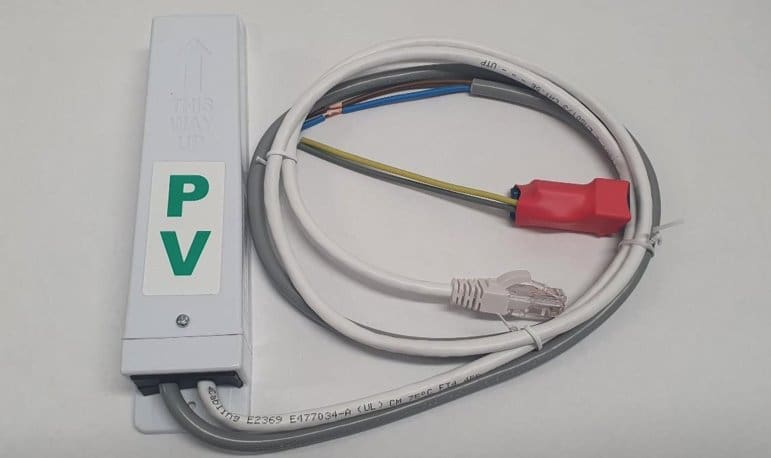
When it comes to emergency solar management, a GSD is considered a “dumb” device. There are more elegant options already in use elsewhere in Australia — such as flexible solar exports.
Rebate levels
The amount of rebate is tied to system capacity.
- At least 3kW but less than 4 kW: $2,500.
- At least 4kW but less than 5 kW: $3,000.
- 5kW or more: $3,500.
Further information on how to apply for the Supercharged Solar for Renters rebate can be found here.
Commenting on the launch of the scheme, Queensland Treasurer, Minister for Energy and Minister for Home Ownership David Janetzki said:
“It’s a win-win-win, easing costs for renters, enhancing property values for landlords, all while supporting renewable energy adoption in Queensland.”
The $26.3 million in total funding for 6,500 systems works out at an average subsidy cost of just north of $4,000 per system, including costs of administering the program.
Not QLD’s First Solar For Renters Rodeo
This isn’t the first time such a program supporting renters has been launched in Queensland. A solar for renters trial was run in 2019-20 by the then-Labor Government, but its continuation/expansion didn’t eventuate for reasons unknown.
It was intended up to 1,000 landlords would receive rebates of up to $3,500 under that trial; but only 670 systems were installed in various localities. The average system size was 6 kW and participating households were reportedly $600 a year better off on average. More findings from the trial can be found here.
As for the LNP getting on board with a new program, the Supercharged Solar for Renters rebate was first announced in March last year as an LNP election commitment. However, news of the scheme went quiet post-election until the Queensland Conservation Council early this year prodded the powers-that-be to make good on their promise, and funds were allocated in June this year.
Landlords — learn more about why installing solar on your investment property can make as much sense as putting it on your own home.
Footnotes
- An embedded network is a private, on-site power system reselling electricity to site residents. Apartment buildings, shopping centers, and caravan parks may be part of an embedded network. ↩
 About Michael Bloch
 RSS - Posts




Seriously? A GSD is compulsory regardless of system size?