
 About twelve years ago, there was a quiet wave of solar company bankruptcies in Australia. They were not caused by dodgy panels, bad installs, or disappearing warranties. They were caused by tax.
Hundreds of solar businesses that were otherwise healthy suddenly received letters from the ATO demanding payment of GST they did not realise they owed. Some of the bills were eye-watering: hundreds of thousands of dollars. A few were well over half a million. Many companies simply could not pay. They closed their doors.
A Simple Tax Mistake
The root of the problem was simple, but deadly if you misunderstood it. Solar companies were charging GST only on the amount the customer paid after the solar rebate was applied. If a system retailed for $11,000, installers assumed the GST component was $1,000, and that was what they paid to the ATO. But that is not how GST works when a government rebate is involved.
The tax is calculated on the gross price before the rebate is applied. If that same system received a $5,500 rebate, the taxable price was actually $16,500. Which meant the correct GST bill was $1,500, not $1,000.
On one job, the difference might be only $500. Easy to miss. Easy to rationalise away. But companies that had installed a thousand systems suddenly discovered they owed the ATO hundreds of thousands of dollars they had never collected from customers. By the time they realised the mistake, the money was long gone. The tax office still wanted it.
Game over.
A Familiar Trend Returns
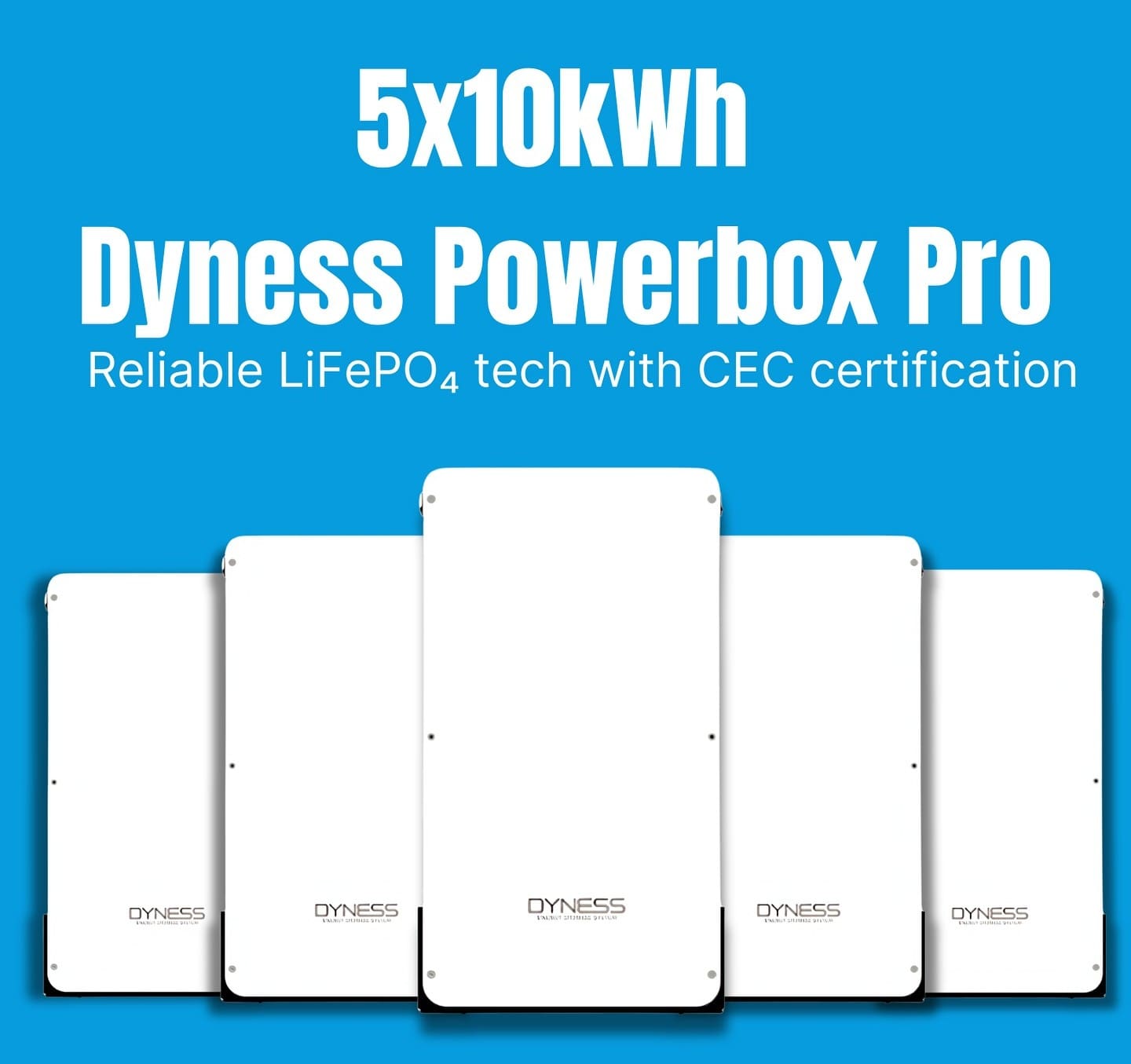
Some of the deals for 50 kWh battery systems out there might look good value, but the maths doesn’t always add up.
Fast forward to today, and battery rebates are beginning to reshape the market in much the same way solar rebates once did. The advertising has already started to look familiar – and not just because of misleading claims that the rebate is ending. I am seeing 50 kWh batteries promoted for as low as $6,000 installed. On paper that sounds extraordinary value, especially when you consider that the current maximum rebate on a battery that size is about $16,800.
Now watch the maths some consumers are doing.
They assume the installer only pays GST on the $6,000 retail price. So they subtract roughly $545 for GST and assume the installer has $5,450 from the customer, plus the $16,800 rebate. In their mind, that leaves $22,250 to cover the battery hardware and the installation. Then they search online and see some low-cost 50 kWh battery stacks advertised for around $20,000 and conclude there must be roughly $2,250 left over for labour. In their mind, a few hours’ work, a couple of electricians, done by lunchtime. Anyone charging more must be gouging. Right?
You can see how the accusations start.
But the maths is wrong, because the GST assumption is wrong. GST is payable on the gross system value before the rebate is applied, not the net price the customer pays. In the example above, the system value is not $6,000. It is $6,000 paid by the customer plus the $16,800 rebate, which means the taxable price is $22,800. GST on that amount is $2,073. Once the installer pays the ATO, the remaining amount to buy and install the battery is about $20,727.
Not $22,250.
Which means if the battery hardware costs $20,000, the installer is left with $727 to supply the inverter, mounting gear, wiring, protection equipment, labour, transport, insurance, compliance paperwork, warranty risk, and a margin that keeps the business alive.
No one can install a battery for $727.
Will History Repeat?
So when you see prices like this, something has to give. Either the installer has misunderstood the GST rules, the battery hardware is frighteningly cheap, or corners are being cut so aggressively that the system will come back to bite someone later, or the company is chasing volume today and planning to deal with the tax consequences tomorrow. None of those outcomes ends well.
Because the ATO eventually notices. And when they do, they do not ask how the misunderstanding happened or whether the rebate scheme created confusing optics. They simply issue a bill for the GST that should have been paid.
History suggests the result will be familiar: naive new installers collapsing, customers left with unsupported systems. We saw it once already during the solar boom.
There is a real chance we are about to see it again.
Phase Shift is a weekly opinion column by SolarQuotes founder Finn Peacock. Subscribe to SolarQuotes’ free newsletter to get it emailed to your inbox each week along with our other home electrification coverage.
 About Finn Peacock
 RSS - Posts





Speak Your Mind