

Battery Electric Vehicle (BEV) uptake is continuing to rise in New South Wales, comprising 8.6 per cent of new light vehicle sales this year to the end of Q3 2025; helped along by the increase in public charging infrastructure. It’s a big jump up from just 0.7 per cent in 2020.
How Many EVs Are Registered In NSW?
According to the New South Wales government, the state has reached more than 100,000 electric vehicles overall on the road. The Minns Government says this is helping slash transport related emissions; with an estimated 121 million litres of petrol saved every year — equal to nearly 145,000 tonnes of CO2 emissions.
“EVs are helping drive down the cost of living in NSW with households saving approximately $1,500 a year when using electricity rather than petrol,” states the announcement. “Every EV on the road helps NSW reach our net zero emission targets.”
NSW Charging Ahead With Infrastructure Support
The Minns Government says it has delivered $96 million worth of EV charging infrastructure grants since April 2023. Part of that tally was a recently announced $5.9 million boost to infrastructure in regional areas of the state involving 159 new chargers powered by 100% renewable energy to be installed at 48 locations over the next year.
Overall and to date, funding has been provided for close to 3,300 new chargers at more than 1,200 sites; including servos, visitor centres, supermarkets, tourism destinations and residential streets.
“NSW drivers are embracing EVs in record numbers, and we are proud to be leading the way in making clean transport accessible, affordable and convenient for everyone,” said NSW Minister for Climate Change and Energy Penny Sharpe. “From local kerbside charging to fast chargers along our highways, we’re making it easier than ever for NSW drivers to go electric.”
To find spots to top up while on the road in NSW or anywhere else in Australia, check out SolarQuotes’ public EV charging station map, powered by Plugshare. Plugshare is also offered as a free mobile app for iOS and Android.
Charging Begins At Home
The increase in public infrastructure is helping to alleviate range anxiety when travelling, and some EV owners who cannot charge at home for whatever reason depend on it. But most EV owners who can choose to charge at home where possible to maximise savings and convenience. Home charging combined with a residential rooftop solar system is particularly attractive – it’s simply the cheapest way to drive.
Level 1 Chargers
Many electric vehicles come with a charger (aka level 1, brick, granny or trickle charger) that can be plugged into a standard 10A home power outlet. This provides 1.8 to 2.4 kW for around 10 – 12 kilometres of range an hour. There are also 15A options (3 – 3.4 kW), which add about 18 km – 20 km of range per hour, but a 15A power outlet is needed.
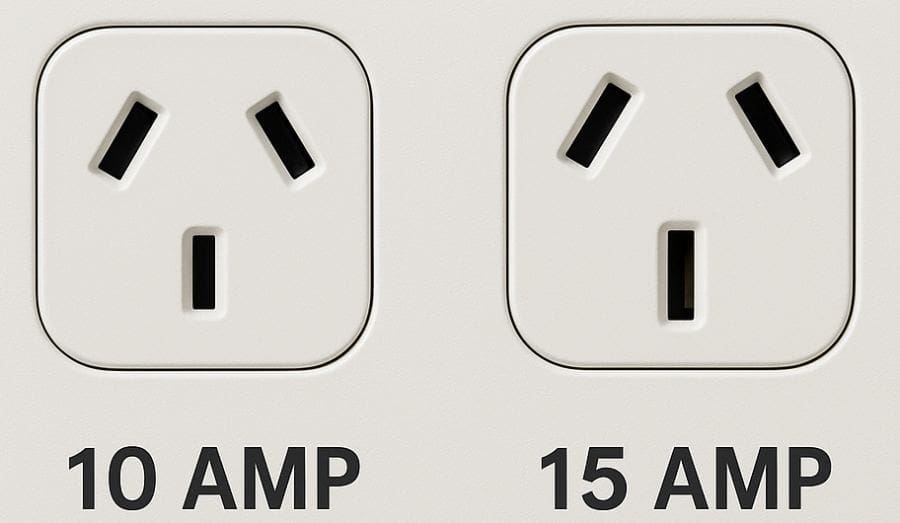
While Level 1 is enough for some, it can be too slow for others. And if you have a decent size solar system, these chargers may not make the best use of it.
Level 2 Chargers
The next step up is a hard-wired Level 2 charger, which depending on the EV and device can provide approximately 40 km of range per hour on a single-phase connection; or up to 130 km of range per hour on three-phase. Level 2 is the perfect companion for home solar, particularly devices with smart features such as charging from surplus solar energy only or a mix of solar and mains grid supply when solar power output is low.
But there is a significant difference in price and a Level 2 charger must be installed by an electrician. Expect to pay $1,100-$2,000+ for supply of a good device and installation.
The value of a dedicated hard-wired EV charger comes down to individual circumstances. To help determine if one may be right for you, try this handy solar smart charger calculator.
Also read our comprehensive home EV charging guide — compare brands and models side-by-side, understand installation costs, and learn how to integrate with solar panels and home batteries. And if you’re looking for trusted sources for supply and installation, SolarQuotes can help there too.
 About Michael Bloch
 RSS - Posts






Now if only NSW would dump its ridiculous restrictions on provisional drivers driving EVs with power-to-weight ratios above a certain number, where that EV has parental controls built in, as Teslas do. That makes them a much safer option than any combustion vehicle, which provisional drivers can flog to any sort of crazy speed under the current rules.
What would be interesting, is if there was any way to tell just how many of these are fleet business and government purchases.
I see more and more Govco auctions now coming up of BEVs and other forms of battery vehicles (PHEVs, hybrids).
They are often very low km, being sold within 1-2 years.
Govco might even make money on them (when / if they sell) with the low fleet purchase prices negotiated, and no gst to consider, even when the depreciation is shocking.
Though I’m seeing more and more pass in, or ‘refer to seller’ of late.
Not govcos money I guess, or business have used the lease business expense as a write off.
These 2nd hand EV auctions by govco are certainly depreciating the value of the private fleet a heck of a lot.
I see in a similar ‘The Driven’ article https://thedriven.io/2025/10/19/nsw-hits-major-vehicle-milestones-with-100000-evs-on-the-road-tesla-share-falls-below-50-pct/ that there are 4 NSW LGAs where private EV ownership have gone slightly over 5%.
Maybe the level 1 chargers are so often called granny chargers because pretty much only if you’re a notional housebound granny, going shopping once a week, will the extended vehicle captivity be bearable. Mine seems to charge at more like 1 kW net, so over a week to fully charge the MG4’s modest 51 kWh battery, off-grid solar-only. On-grid, better charging, but not all photons. 🙁
At 7.2 kW, the level 2 unit takes the MG4 from 40% to 100% in 4.5 hours – all rooftop photons. In winter, that’d still be a week at 1 kW net, given the low sunlight hours. On-board EV charger efficiency is poor at 1.8 kW in – maybe less than 1 kW reaching the battery, due to conversion losses. (Even at 7.2 kW, the MG4 has done 15,600 km on 3.387 MWh charger input = 217 Wh/km. But it uses only 170 Wh/km, just 78% of charger input.)
But that beats the heck out of ICE, which gives barely 25% of fuel energy as propulsion, the rest producing only chemical & thermal pollution.
Erik Christiansen: – “But that beats the heck out of ICE, which gives barely 25% of fuel energy as propulsion…”
Disrupt Australia’s diesel fuel imports & our 2 refineries & we stop functioning in about a month.
https://www.solarquotes.com.au/blog/ev-ruc-australia-mb3264/#comment-1727839
Per Australian Petroleum Statistics, Days of Consumption Cover, 2025 to Sep:
Crude oil & feedstocks: 38
LPG: _ _ _ _ _ _ _ _ _ _90
Automotive gasoline: _ 30
Aviation gasoline: _ _ 140
Aviation turbine: _ _ _ _21
Diesel oil: _ _ _ _ _ _ _ 26
Fuel oil: _ _ _ _ _ _ _ _ 75
https://www.energy.gov.au/energy-data/australian-petroleum-statistics
Consumption cover only includes stocks in Australia (on land & on domestic & coastal waters) held on the last day each month.
Australia’s energy security is at risk due to its heavy reliance on imported liquid fuels (90+% now, 100% soon?) vulnerable to global supply disruptions, price volatility, & geopolitical instability.
Yup, that’s why I’m delighted to have done the last 15,600 km 100% on rooftop photons, no civilisation-destroying fossil fuels needed. I have ample land on which to grow food. Some semblance of a continued existence is in prospect. Admittedly, I’m only a few hundred km from the big smoke, and 16 km from the nearest town. Not great when food rots on farms, due to fossilised/no thinking.
But China has already switched significantly to electric trucks, projected to smash the S-curve in 2026. Falling prices are said to precede a global break-out, to the benefit of backward countries like USA & Australia. Europe is switching. By 2030, even here, we might expect diesel trucking to just begin to decline, if the needed industrial charging infrastructure is implemented.
As was explained to many politicians in Britain’s “National Emergency Briefing” a few days ago, billions are saved by making the unavoidable transition early. Why delay the better life, cooking our kids in the process?
Thanks Erik.
FYI, Dave Borlace at his Just Have a Think YouTube channel provided a 27 minute overview of the UK National Emergency Briefing on the climate and nature crisis event on 27 Nov 2025 at the Westminster Central Hall: https://www.youtube.com/watch?v=8sa7uh192r0
The 3-hour video of the full session is available at GBNews: https://www.youtube.com/watch?v=2-PFKT1SNc4
Speakers:
0:12:20 Opening statement – Chris Packham CBE
0:24:10 Introduction – Prof Mike Berners-Lee (Chair)
Expert briefings designed for MPs
0:29:45 Nature – Prof Nathalie Seddon
0:40:30 Climate/Energy – Prof Kevin Anderson
0:56:40 Weather Extremes – Prof Hayley Fowler
1:10:00 Tipping Points – Prof Tim Lenton
1:25:55 Food Security – Prof Paul Behrens
1:39:35 Health Impacts – Prof Hugh Montgomery
1:52:10 National Security – Lt Gen Richard Nugee
2:06:10 Economics – Angela Francis
2:19:40 Energy Transition – Tessa Khan
2:28:45 Summary – Prof Mike Berners-Lee
2:32:25 Open Letter
2:40:00 Q&A
Some may not be aware of a cheaper way to get Level 2 charging (for Tesla owners anyway). The Tesla mobile charger is around $550 and comes with 10A and 15A Level 1 plugs. But you can buy an adapter with a 32A plug on it, that will charge at 7kW. Travelling around we have found many places (e.g. NRMA campgrounds, and in our unit block carpark) that have 32A outlets allowing charging at Level 2 rates.