Solar Batteries: The Stuff That Actually Matters
Last Updated: 21st Apr 2026 By Finn Peacock, Chartered Electrical Engineer, Fact Checked By Ronald Brakels
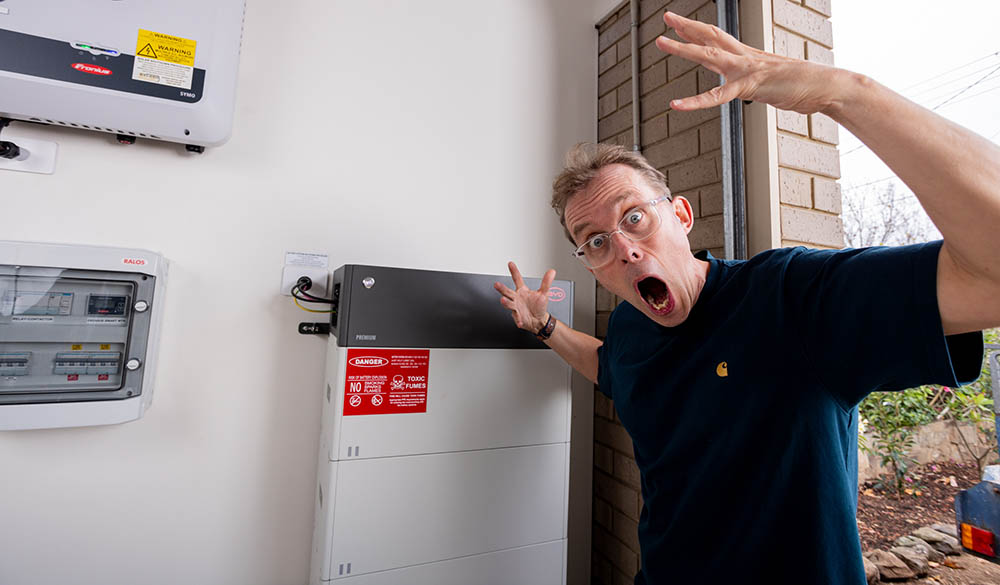
It’s easy to feel the pressure of “battery mania,” with 6-monthly rebate reductions and installers booking out months in advance.
If you’re feeling overwhelmed by the ads urging you to “Buy Now or Miss Out!“, or the technical jargon of kilowatts and kilowatt-hours, you’ve come to the right place to clear the air.
This guide replaces FOMO with facts. It breaks down whether you need a massive battery or if a smaller, cheaper system is the smarter move.
We’ll compare top brands and explain the difference between saving money and trading energy.
The result: you will be able to talk to a salesperson or installer with confidence and compare quotes like a pro.
Table Of Contents
- Why People Buy Batteries In 2026: Lowering Bills Vs Trading
- Which Solar Battery Is Best?
- What Size Battery Do I Need?
- How Much Does A Solar Battery Cost?
- How Much Can A Solar Battery Save Me?
- How Does My Electricity Plan Affect My Battery Savings?
- Am I Eligible For Battery Rebates?
- How Do I Scientifically Size My Battery?
- Does It Matter If My Home Has 3-Phase Power?
- Can I Keep My Inverter When Adding A Battery To My Existing Solar System? (AC-coupling vs DC-coupling)
- Does My Battery System Need Protection Against Blackouts?
- Do I Need To Replace My Solar To Add A Battery?
- What Does My Solar Battery Warranty Cover?
- What Will A Solar Battery Look Like On My Home?
- Where Should I Install My Solar Battery?
- Home Battery Apps & Configuration Basics
- How Does My Home Battery Work With An EV Charger?
- Does Where I Live Matter For A Home Battery?
- Useful Battery Tools
- Solar Batteries Compared
- Battery 101 Guides
- FAQs
- Glossary
- Home Battery Quotes
Why People Buy Batteries In 2026: Lowering Bills Vs Trading
Thanks to the federal battery rebate, solar batteries are cheaper than ever, but they still cost thousands. There are two ways you can recoup your investment:
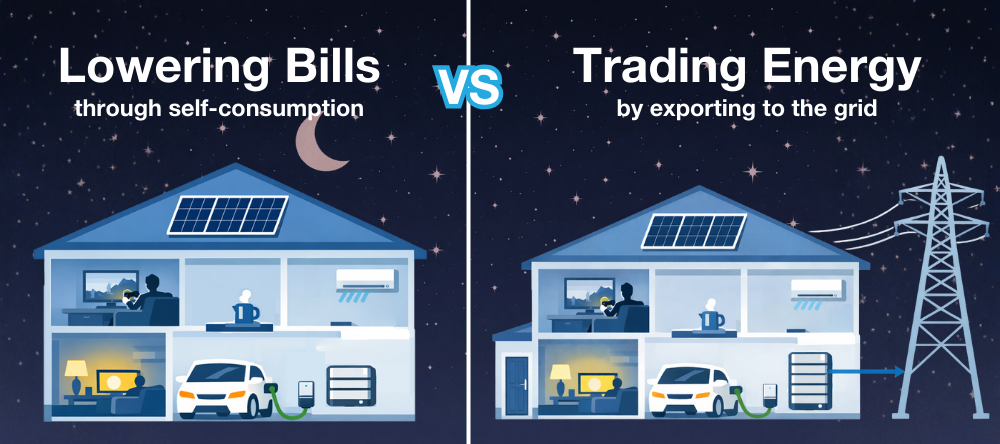
A household with a solar battery can save money through self-consumption, and make money by absorbing or exporting energy to the grid at different times.
Lowering Bills Through Self-Consumption (Saving Money)
Most Aussies get a home battery to reduce their electricity bills. By charging your battery when electricity is cheap (either through solar or free hours of grid electricity) and using that energy in the evening, you avoid importing electricity when it’s most expensive. This way you save money.
Trading Energy (Making Money)
An increasing minority uses their battery to make money by trading energy: charging your battery on the cheap and then exporting the energy you don’t need to the grid during peak periods.
Until 1 May 2026, the federal battery rebate encourages massive batteries two to three times bigger than most people need to power their homes overnight. Using the spare battery capacity to sell back into the grid can earn hundreds to thousands of dollars per year.
Note: If you are considering getting an oversized battery before May 1, know that all the good installers are completely booked out until then.
If you do happen to find an installer willing to install your big battery before May, make sure to do your homework! Check customer reviews to gauge their installation quality and after-sales support (will they help you when your battery won’t connect to Amber or other battery-specific retail plans?). Make sure they quote you an appropriately sized inverter to go along with that battery too.
Should Your Battery Only Save You Money Or Make You Money Too?
For most households, the smartest use of a battery is to cut power bills first. That means sizing it for overnight use, charging it with solar or cheap grid power, and avoiding peak rates. Done well, the savings are steady, low-stress and automatic.
Trading comes second. It can improve payback, but it also adds complexity, risk, and more battery wear.
It tends to suit people who:
- Have a large battery with spare capacity
- Are on (or willing to switch to) a special electricity plan
- Don’t mind tinkering with apps and settings, and dealing with tech support
- Are happy to keep a close eye on their bills
- Can handle bill volatility
You decide whether you’re a tinkerer who loves a bit of risk, or if you are after a set-and-forget system.
Other Reasons For Investing In A Battery
Aside from financial gain, you might also want a battery for:
- Protection from blackouts
- Being green (by supporting a more renewable grid)
- Revenge (you hate energy companies)
- Love (you love owning the latest tech)
Which Solar Battery Is Best?
That depends on who you are asking. To choose the right battery brand, consider the following opinions:
According To Homeowners
To find out which home battery brands Australian homeowners like, we continuously update the top 10 best solar battery brands according to Australian reviewers.
According To The Installers
Every year, we also ask our installers’ opinion on which battery brands they would install on their own homes. The following brands took the cake in 2025: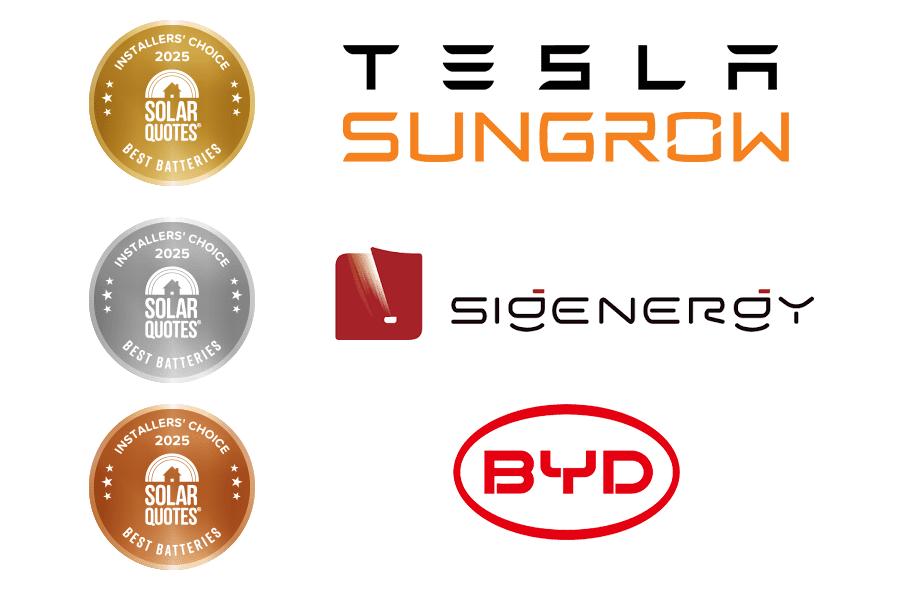
According to SolarQuotes
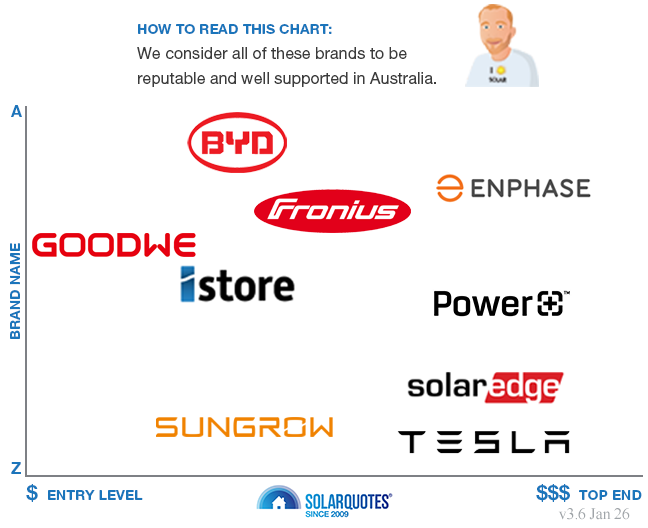
What Size Battery Do I Need?
Battery capacity is given in kilowatt-hours (kWh). The sweet spot for most homes who want to save money is 16-20 kWh.
If you want to also make money by trading, we recommend a 30-50 kWh battery.
How Much Does A Solar Battery Cost?
A 16 kWh battery of a brand we recommend starts at around $6,000 before installation. You can check pre-installation prices on our solar battery price grid, which lets you rearrange brands from our comparison table above by price (as well as rating, popularity, and name).
These prices include the federal battery rebate, which cuts the cost of installed batteries. To find out by how much, check out our federal battery rebate guide.
What Affects The Cost Of A Home Battery?
The price tag for a battery depends on:
- Home battery rebates (aside from the federal rebate, you may be eligible for an additional state rebate)
- Energy storage capacity (kilowatt-hours) – the bigger your battery, the higher the cost.
- The brand reputation – some well-known brands can cost more, even at similar capacity.
- Installation cost (batteries must be installed professionally. DIY electrical work is not allowed in Australia.)
What Is The Cheapest Battery Brand Available In Australia?
The cheapest battery brand we would comfortably recommend is GoodWe. You might have seen tempting deals on brands like Anker Solix or Fox ESS systems, but in our opinion, these brands have not been in Australia long enough for us to comfortably recommend them. GoodWe has.
Pro-tip: When considering cheaper brands, also make sure they are paired with an inverter that is big enough.
What Does A Battery Cost To Install?
A simple battery installation normally adds at least $3,000 to a quote. A complicated battery installation (longer cable run, bollards for a garage, fireproof backing, etc.) can be $4,000 or more.
Wondering if a battery is worth it? Check out the full battery cost analysis.
Don’t Match A Huge Battery With A Tiny Inverter
Cheap deals on giant 30-50 kWh batteries are everywhere now, thanks to the federal rebate. The sting in the tail is that many of them are paired with a tiny 5 kW inverter. That small inverter throttles how fast the battery can charge from solar and how much power it can supply at once.
A big battery with a small inverter is like having a giant water tank with a tiny tap. Lots of storage, but takes ages to empty or fill.
In the real world, that means you can be sitting on a massive battery, but can’t get the electricity out fast enough to power your home, forcing you to top up from the grid. Your savings will suffer. You’ll struggle to make money too, because you won’t be able to sell the electricity fast enough to take full advantage of price spikes.
If you’re looking at a “big battery, small inverter” quote, chuck it in the bin. It’s a waste of time.
Read our in-house installer Anthony’s full breakdown of this “big battery with a small inverter” trap.
How Much Can A Solar Battery Save Me?
A 16 kWh home battery can save around $1,500 per year in most states. However, battery payback varies depending on:
- Your solar array size,
- Your electricity usage,
- Your electricity tariff,
- What battery you buy and how it’s installed.
If you already have solar and want to know if adding a battery is worth it financially, our ‘add-a-battery calculator‘ is your go-to. Using your smart meter data, it’ll work out how much spare solar you have for charging and how much energy you use overnight to give you an accurate battery payback period.
We’ve written a detailed answer to ‘Are Solar Batteries Worth It?‘, which considers where you live, what tariff you are on, and what local VPPs are available to you.
How Does My Electricity Plan Affect My Battery Savings?
Your electricity plan plays a major part in determining battery savings. Nowadays, even on a flat rate, some batteries can pay themselves off in certain states before their warranty expires. However, a Time-of-Use (ToU) tariff is where it really starts looking like a good investment. Let’s break it down.
Flat Rate Tariffs’ Effect On Battery Savings (i.e. Lowering Bills)
In simple terms, a flat rate tariff means you’re charged the same price for electricity, no matter what time of day it is – usually around $0.35 for each unit of electricity (or kWh).
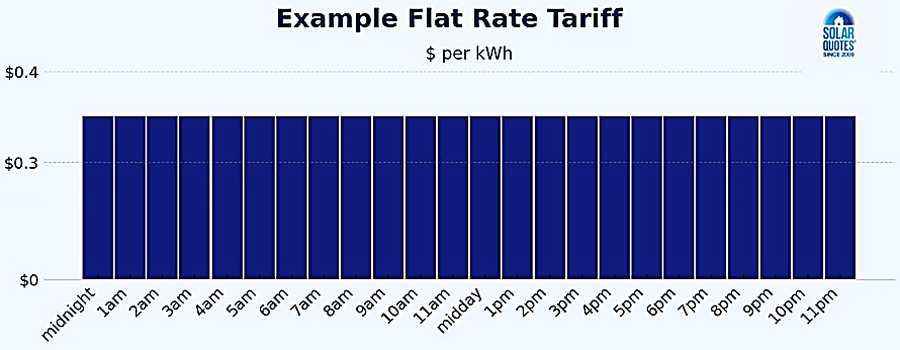
A flat rate tariff charges one rate all day, every day.
With a solar battery, you can store solar energy during the day and use it at night. Each unit of stored solar energy you use saves you the cost of buying that unit from the grid. Using your stored energy means you’re also missing out on the money you’d earn by sending that energy back to the grid – a.k.a. the feed-in tariff (FiT).
E.g.: if you pay $0.35 per kWh of grid electricity and your FiT is $0.03 per kWh, you save $0.32 per kWh of battery energy used at night.
Many people – and some dodgy sales folk – forget to subtract the foregone FiT when calculating their savings. Even as FiTs drop close to zero, its effect should still be taken into account.
Time-Of-Use-Tariffs’ Effect On Battery Savings (i.e. Lowering Bills)
Time-of-use (ToU) tariffs have two or more rates: the most expensive being in the morning and late afternoon to midnight. Most of your battery savings will come from charging when the sun’s out or when electricity’s cheap and avoiding the peak price period.
E.g.: if your ToU tariff charges you $0.55 per kWh during the peak and your solar FiT is $0.03, you effectively save $0.52 per kWh of battery energy used at night. This is a considerably higher saving than for flat rates.
With some ToU tariffs, late-night rates can be around 20 cents cheaper than in the morning. On these plans, you can top up your battery overnight to ride through the morning peak.
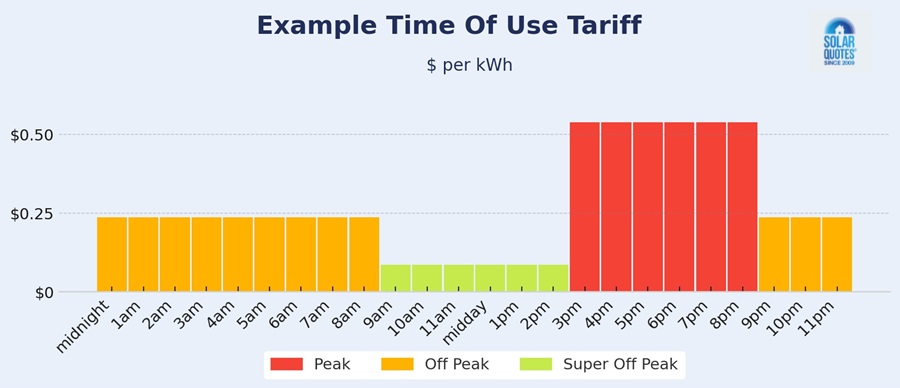
This particular ToU plan is Synergy’s Midday Saver, available in WA.
Some compellingly cheap time-of-use tariffs are only available to owners of specific brands. For example, Energy Locals’ Tesla Energy Plan is for Powerwall owners only.
Topping Up Your Battery With Three Free Hours Of Grid Electricity
In certain states, some retailers, like AGL and OVO Energy, have ToU plans that offer three free hours as their “super-off-peak” period. This way, you can top up your battery for free. This is handy when your solar cannot fully charge the battery. This could be due to cloud cover, to an oversized battery, or simply to the fact that you cannot fit an appropriately sized system on your roof.
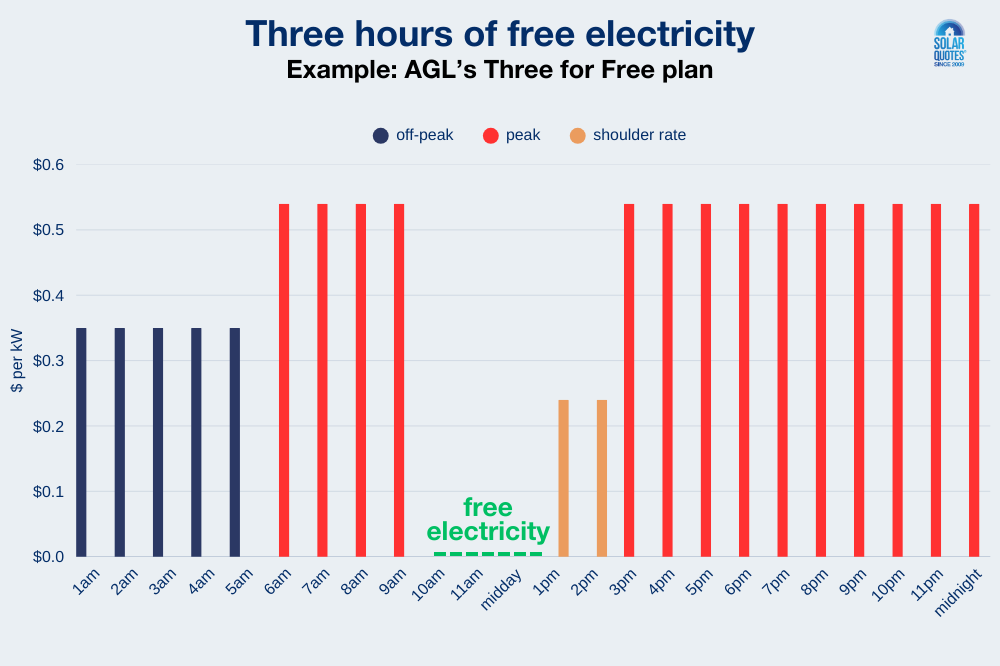
On this plan, you would try to fully charge your battery between 10am-1pm and discharge from 3pm on into the night.
The Government’s proposed Solar Sharer Offer (SSO) mandates that every electricity retailer must soon offer at least one opt-in plan with 3 free hours per day.
Note: If you think you don’t need solar and plan to charge your battery exclusively with a three free hours plan, keep in mind that having solar is a prerequisite for receiving the federal rebate. Additionally, the government is proposing a 24 kWh daily cap on the amount of free electricity such plans can offer.
Our advice would be to rely on it for top-ups only and let solar handle most of the charging.
Battery-specific Retail Plans (i.e. Trading)
More and more battery-specific plans are emerging, where energy retailers offer you a better price for exporting your excess stored energy from your battery to the grid during peak times. This “peak FiT” can boost the payback for an oversized battery system.
AGL’s Battery Rewards, Origin’s Battery Starter, and Flow Power’s Happy Hour are some examples of plans that in eligible states will offer you lucrative FiT rates for exporting energy during the peak window (depending on the plan). For more details, our VPP comparison table also compares battery-specific retail plans.
The difference between a VPP and a battery plan is that a VPP can pull your energy out of your battery when they want. With a battery retail plan, you choose when/if you want to export. If you are the type that hates relinquishing control of your battery, a battery plan is the way to go.
Playing The Wholesale Market (i.e. Trading)
One electricity retailer (Amber) exposes you to wholesale electricity pricing that varies every fifteen minutes. The price can go over $18 per kWh – which is terrible if you need to use grid electricity – but great for selling back to the grid.
On the flip side, prices can go so low they go negative, which means you get penalised for exporting energy and paid to use energy (a great time to charge a battery). It’s a high-stakes game for serious players only. But if you want to play it, some have made over $2,000 in one year using Amber tariffs.
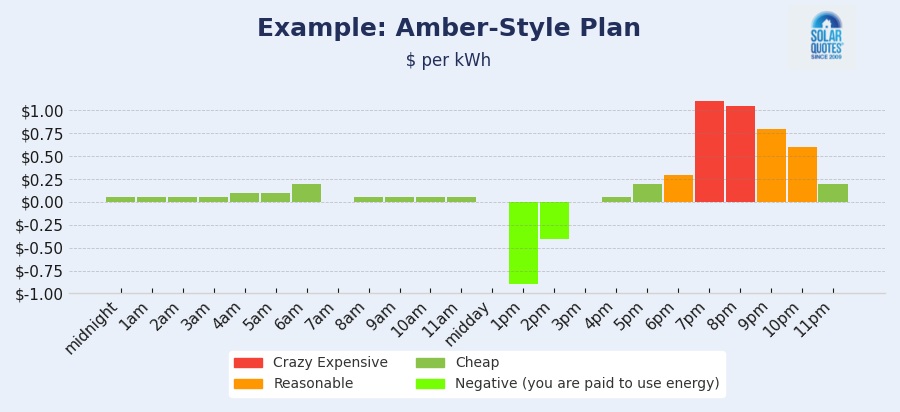
This is what your average hourly rate could be on a wholesale-exposed plan such as Amber Electric.
With the increase in oversized batteries, the interest in Amber skyrocketed, leaving their customer support staff flooded. While it can be great when you have zero issues, you are unlikely to get help quickly. You may want to consider this if you have your mind set on trading energy with your battery.
Am I Eligible For Battery Rebates?
It is likely you are eligible for some sort of battery rebate. In Australia, there is a federal rebate as well as state rebates and VPP rebates.
National Battery Rebates?
An Australia-wide federal battery rebate aims to lower home battery cost. The overwhelming popularity of the Cheaper Home Batteries Program threatened to deplete the allocated funding early. That is why the rebate has been adjusted, with restrictions on bigger-than-necessary batteries. In a nutshell:
- The rebate value drops faster: it now steps down twice a year (not yearly).
- Not only does the value drop, but big batteries get less support: the rebate becomes tiered, so larger capacities attract a much lower $/kWh subsidy, especially the 30–50 kWh “package deal” sizes.
- Caps still apply: systems can be 5–100 kWh nominal, but the rebate only applies to the first 50 kWh usable.
- Bottom line: normal household-sized batteries lose some value, but oversized batteries lose a lot more.
These changes aim to shift the market toward more “appropriately sized” batteries for average households, so that more households can enjoy bill savings rather than a few oversized battery owners trading excess energy.
State/Territory Rebates & Loans?
The federal battery rebate is compatible with state and territory rebates.
Find out which rebates and loans are currently available in each state in our in-depth battery rebates page.
VPP Rebates
A Virtual Power Plant (VPP) is a collection of internet-connected residential batteries controlled by an energy company. This army of batteries charge and discharge in unison to support the grid. They offer benefits for signing up your battery. Just like local governments, some virtual power plants also give you an upfront discount on a new battery. Find out more details on our VPP comparison table.
The downside is you lose control of your battery, and it is worked harder – which can shorten its lifespan (and void the warranty earlier). Read our blog on whether VPP payments are worth the wear on your battery.
Pro-Tip: The New South Wales Government has an additional VPP incentive of $55 per kWh of battery storage up to 10 kWh. This VPP incentive is what remains of the NSW battery rebate that got scrapped.
How Do I Scientifically Size My Battery?
The best approach to buying a battery is to start by taking measurements of your overnight usage. The right size depends on how much energy you use after sunset, how much spare solar you have, and whether you want blackout backup or to trade energy.
The honest truth: most Aussies can’t be arsed to do this. If that’s you, and you don’t use a crazy amount of electricity, get a 16-20 kWh battery (as recommended earlier) that can be expanded easily in the future by dropping more modules into a stack.
But if you’ve got the time to size your battery properly – here’s how to do it:
Step 1: Determine Your Night-Time Usage
A battery’s job is to replace grid electricity at night. So the number that matters most is how many kWh you use between sunset and sunrise. This is where hourly smart meter data comes in. Most electricity providers let you download this.
Step 2: Size The Battery So Your Solar Can Reliably Fill It
As a rough guide, many installers suggest sizing your battery at around double your solar system’s kW rating (provided you only charge with solar).
So 10 kW of solar → ~20 kWh of battery.
For the best battery payback, you need to reliably fill and discharge your battery every day. This may be a problem if:
- You got an oversized battery that is 3x, 4x, … the size of your solar
- It’s a cloudy winter’s day
- You’re in Tasmania, where you get less sun
- You run lots of big loads throughout the day, leaving less excess solar for your battery to fully charge.
Step 3: Decide On A Reserve Level (Optional)
You can dedicate a certain amount of your battery storage (reserve level) to guarantee blackout backup. This is usually anywhere between 10% and 30% of your battery capacity. E.g.: if you have a 15 kWh battery and a 20% reserve level, only 12 kWh is usable. That remaining 3 kWh remains inaccessible until a blackout happens.
Keep in mind that the more backup you want, the longer your payback will be. If you live rurally and your grid is unreliable, sacrificing a bit of your payback to ensure your battery provides backup can make sense. However, if you can’t remember the last time you had a blackout, you might not find it necessary.
Step 4: Allow A Reserve For Exporting (Optional)
If you are aiming to trade energy, you need to allow an extra portion on top of covering your household usage.
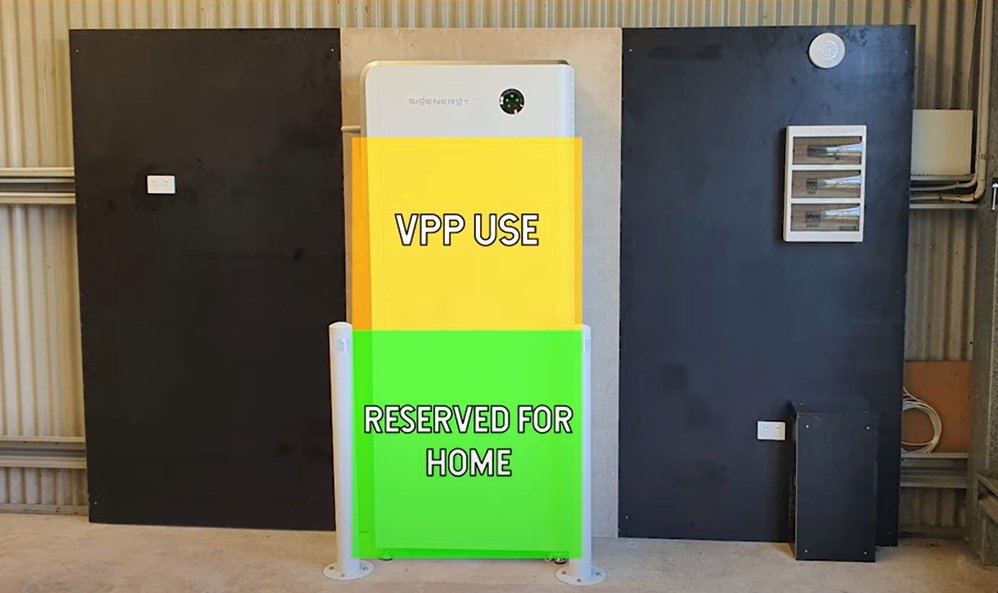
You can allocate a portion of your battery storage for exporting (e.g. to a VPP) aside from your home use.
Does It Matter If My Home Has 3-Phase Power?
Most homes in Australia have single-phase power, but newer and larger houses, especially those with big ducted air conditioning or big EV chargers, often have three-phase supply.
The good news is that you usually don’t need a special three-phase battery.
Many home batteries connect to one phase only but can still reduce your overall electricity bill because the system measures the total energy flowing through your meter.
However, the system must be configured correctly so the battery can “see” consumption across all phases. If it isn’t, the battery may only offset usage on a single phase, which can reduce the savings you expected. A good installer will make sure the battery monitoring and wiring are set up properly.
If you want the full explanation, read our detailed guide on home batteries & 3-phase power.
Pro-tip: If you have 3-phase power, it is even more important that you use a good installer who can explain your options for single- and three-phase batteries and their pros and cons for your situation – and then configure it properly across all 3 phases! Nothing catches out a cheap and nasty installer like a three-phase supply.
Can I Keep My Inverter When Adding A Battery To My Existing Solar System? (AC-coupling vs DC-coupling)
Yes. The technical term for keeping your old solar inverter and adding a separate battery inverter is “AC-coupling”.
Or you can choose to scrap your old solar inverter and wire the existing solar panels into your new ‘hybrid’ battery inverter. In the trade, this is called “DC-coupling”.
Neither AC- or DC-coupling is better than the other, they just serve different purposes.
Comparing AC-coupled vs. DC-coupled Systems
Here are some of the advantages of each system.
| Feature | DC-Coupled (Hybrid Inverter) | AC-Coupled (Separate Battery Inverter) |
|---|---|---|
| Inverter hardware cost (new installs) | ✅Can save money by sharing one hybrid inverter between solar and battery | ❌Requires a second inverter (battery inverter) |
| Efficiency | ✅Slightly more efficient (fewer conversion steps), though in real homes the difference is usually negligible | ❌Slightly less efficient due to the extra conversion step |
| Wall space & aesthetics | ✅Cleaner look with one integrated unit | ❌More wall space required (solar inverter + battery inverter) |
| Switchboard space | ✅Can reduce switchboard clutter in some installs | ❌May require more space in the switchboard |
| Works with existing systems | Best suited when replacing the inverter or installing new solar | ✅Works with almost any existing inverter, any age, any brand |
| Warranty simplicity (retrofit) | ❌May require inverter replacement, which increases upfront cost | ✅Keeps existing inverter untouched and avoids potential warranty issues |
| Redundancy | ❌One inverter does everything – single point of failure | ✅If the solar inverter fails, the battery may still operate (and vice versa) |
| Power bottlenecks | ❌Hybrid inverter can limit combined solar + battery output | ✅Solar and battery inverters operate independently, reducing bottlenecks |
| Flexibility for future expansion | ❌Expansion often tied to hybrid inverter limits | ✅Easier to expand battery capacity later without touching the solar inverter |
| Brand flexibility | ❌Usually ecosystem-based (hybrid + compatible battery) | ✅Easier to mix brands and retrofit into mixed systems (e.g. microinverters) |
| DNSP connection limits | ✅One inverter usually makes it easier to stay within DNSP connection limits | ❌Some DNSPs count the combined capacity of both inverters toward the connection limit (Your installer should know the local rules) |
Does My Battery System Need Protection Against Blackouts?
You might not deem it necessary to pay extra for backup if your grid feels reliable, but consider the cost of a blackout without backup:
- A freezer full of food gone to waste: A longer outage can mean hundreds of dollars in spoiled meat and groceries.
- No heating or cooling when you need it most: Blackouts often hit during heatwaves or storms. No air con in 40-degree heat, or no heating in winter, isn’t just uncomfortable, it can be dangerous.
- Working from home grinds to a halt: No power means no Wi-Fi, no laptop charging, no Zoom calls. That can mean lost income or burned annual leave.
- Medical equipment stops running: If someone relies on powered medical devices, even short outages can become serious.
- No internet, no phone charging: You’re cut off right when you might need updates about the outage or emergency situation.
- Garage doors won’t open: Many modern homes can’t get the car out without power.
A battery with backup can save you from all of that.

Finn’s house during a blackout
Battery Backup Basics: Ask The Right Questions
You’ll be surprised to learn that not all batteries come with backup, and not all backup is equal.
If you want backup, make sure to tell your installer this. If they try to convince you that backup isn’t necessary, they are trying to save themselves time at the expense of your system. Read about this and 3 other backup myths that need to die.
Here’s what you need to know if blackout protection is important to you…
Most solar batteries available in Australia promise to keep you powered up during a blackout. But not all are created equal. Here are the must-know features that could make or break your blackout resilience:
- Backup Current: Measures how many gadgets and appliances you can keep running simultaneously.
- Surge Current: Check if the battery can handle the initial power spike when you start up an appliance.
- Switchover Time: The momentary blackout you’ll experience when switching from grid to battery – this can range from milliseconds to a few minutes.
- Solar Charging Without the Grid: Some systems cut off your solar charging capabilities when the grid’s down – watch out for this.
- Failsafe Design: If the battery’s inverter goes kaput, will it mess with your regular grid supply?
An experienced installer is your best mate in navigating these intricacies. And remember, if you’re eyeing a budget battery, scrutinising these features is even more crucial. The most important questions to ask your installer are:
- If the grid goes down, does my battery provide backup?
- If the grid goes down, will my solar still charge the battery?
Pro-tip: Some cheaper battery systems can interrupt the grid power to your essential circuits if the inverter hardware fails. Always install a $100 battery bypass switch to override it and keep the lights on if there’s a problem.
Do I Need Whole Home Backup?
Buying a battery system to back up an entire Australian home costs big dollars. We recommend saving thousands by choosing only a handful of essential circuits and backing those up. For example:
- Fridge (no one likes spoiled food)
- Lights (for obvious reasons)
- A few sockets, including one for your internet router (stay connected)
- Small air conditioner (because our summers are no joke)
By zeroing in on these essentials, you’ll get the most bang for your buck and still keep things civilised when the grid goes down.
Do I Need 3-Phase Backup For My 3-Phase Home?
Unless you have a 3-phase solar inverter and are AC-coupling your battery, you don’t need 3-phase backup. Don’t be pressured into spending more than you have to.
If you have a massive battery and want to be able to run your 3-phase air conditioner or 3-phase EV charger to still run during a blackout, you might find it worth the money. But if you don’t have any 3-phase appliances you need during a blackout, it’s likely overkill.
Do I Need To Replace My Solar To Add A Battery?
If your solar is really old or of too small a size to reliably fill a battery, you might first need to consider new/more solar panels.
Not sure if you need to replace your existing solar system to add a battery? The flowchart below will help you quickly determine whether your current setup is ready or if you might need upgrades.

What Does My Solar Battery Warranty Cover?
Batteries are warranted for a certain period of time (years) and a certain amount of energy used (throughput).
Years
Most battery warranties are limited to 10 years. Exceptions are Enphase (15 years) and FranklinWH (12 years).
Throughput
In battery warranties, throughput is the total amount of energy that the manufacturer guarantees your battery will deliver over its lifetime. This is noted in megawatt-hours (MWh).
E.g.: If a battery warranty has a 10-year limit and states a throughput limit of 20.8 MWh, whatever happens first will end the warranty. If you reach 20.8 MWh of throughput after 8 years, that warranty expires. If you haven’t yet reached the 20.8 MWh mark after 10 years, that warranty also expires.
Pro-tip: If you intend to trade energy, it will add to your battery’s throughput, resulting in an early voided warranty.
Tesla even splits its warranty: if you use your Powerwall 3 only for self-consumption, there is no throughput limit, only a 10-year limit. However, if you export energy to the grid, you are also limited to a throughput of 37.8 MWh in those 10 years.
Cycles
You might still come across a battery warranty that mentions “cycles” rather than “throughput”. A cycle is simply the complete emptying of your battery (1 cycle ≈ 1 day of use). However, it’s rarely that simple in practice. Because most users don’t drain their battery to 0% every day, manufacturers typically calculate cycles cumulatively. For example, if you discharge 50% of your battery on Monday and 50% on Tuesday, that combined usage counts as one full cycle.
While cycles are easier for homeowners to visualise, they are becoming less common in technical contracts because they can be ambiguous regarding “micro-cycles” (small bursts of energy use). Consequently, many brands are transitioning to throughput to provide a more verifiable record of exactly how much “fuel” has been taken out of the tank.
Australian Consumer Law
Even after your written warranty ends, Australian Consumer Law (ACL) may still protect you if the battery fails earlier than a reasonable person would expect for such an expensive product. ACL requires products to be durable and fit for purpose, regardless of what the manufacturer’s warranty says. Your contract is with the installer or retailer, so they’re responsible for handling any remedy. However, ACL doesn’t cover normal battery ageing or gradual capacity loss that was clearly disclosed upfront.
What Will A Solar Battery Look Like On My Home?
Your solar battery’s aesthetics will depend on whether it is stackable and/or has the inverter included.
Non-stackable Battery Systems (Monolith)
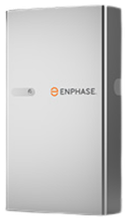
Monolithic batteries are single-unit batteries. They are large, and if you want to expand them, you have to buy a second one. Often simple and elegant but harder to expand to match your consumption, as you can only double, triple, etc. the storage capacity at a time. Well-known brands that have monolithic designs include Enphase and Tesla.
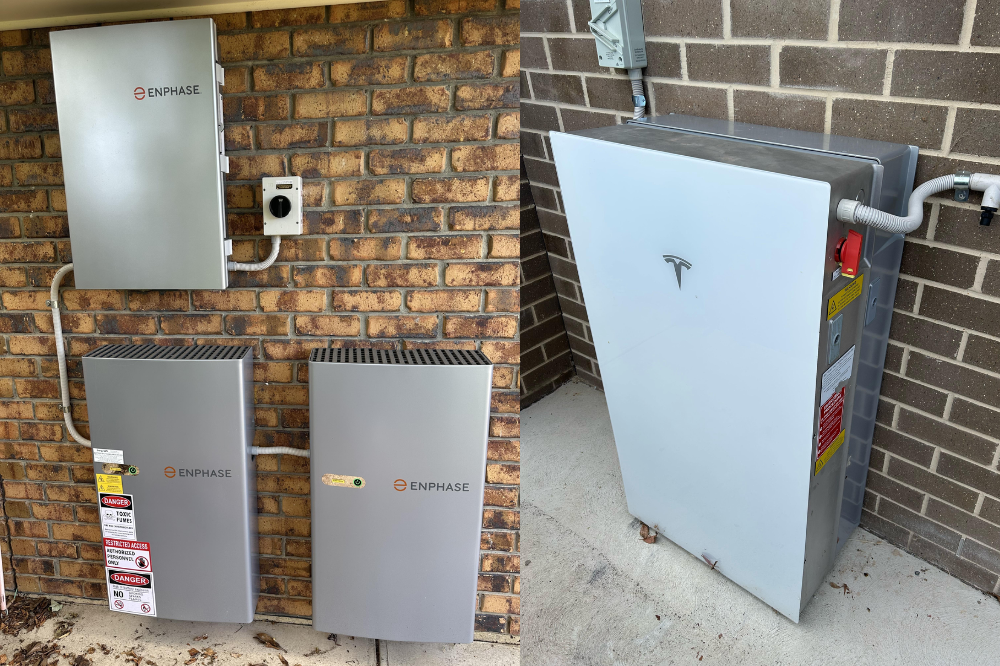
Monolithic batteries need a whole new unit when you expand their capacity. This often means placing the second unit adjacent to the first one. The Powerwall 3’s second unit is called an expansion pack and is the size and cost of another Powerwall (just minus another inverter). Contrary to the Enphase, you can stack the expansion unit horizontally alongside the first unit.
Update for existing Tesla owners: Tesla has enabled communication between Powerwall 3 and older Powerwall 2 systems. This means households with a Powerwall 2 may now be able to expand their storage using the newer Powerwall 3 expansion packs rather than replacing the entire system.
Stackable Battery Systems (Modular)
Modular batteries are stackable or connectable units that you can add to over time as your energy needs grow. Unlike monolithic systems which come in one fixed size, modular batteries are designed to be lightweight, compact, and easier to install.
Modular Batteries With An Inverter Module In The Stack
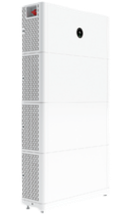
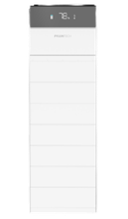
Sigenergy was the first brand to design their hybrid inverter so it fit right on top of the battery modules as another module. Other brands like GoodWe and Growatt have followed suit and copied the modular hybrid inverter formula.
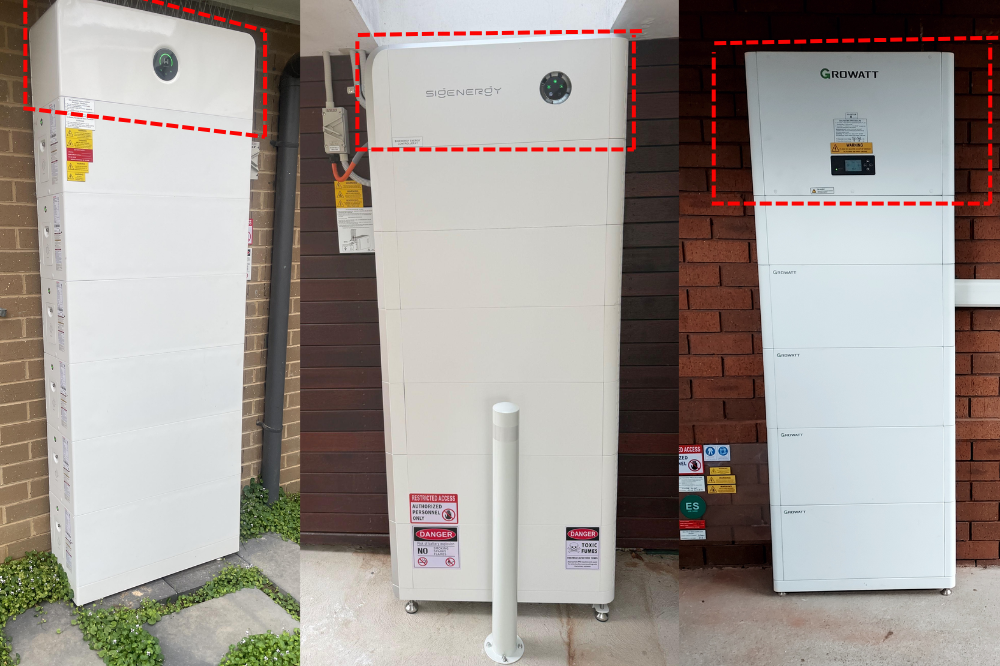
Brands like GoodWe, Sigenergy and Growatt add the inverter into the stack as a module. Depending on the size, this can make your system really tall so consider vertical clearance.
Modular Batteries With A Separate Battery & Inverter
A separate battery and battery inverter won’t look as tidy as a well-installed monolith, but a good installer can keep everything neat:
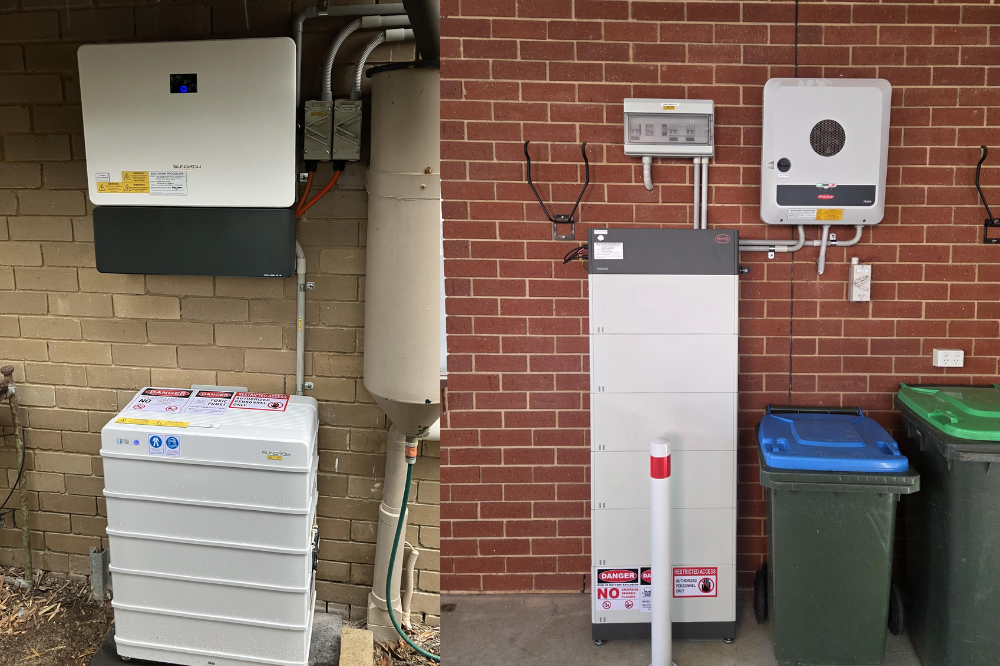
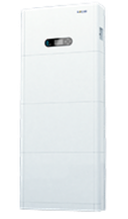
While stackable, brands like Sungrow and BYD have their inverters outside of the stack.
Where Should I Install My Solar Battery?
Australia has strict standards for solar battery installation – specifically, Australian Standard AS5139. You don’t need to understand the electrical details, that’s the sparky’s job – but you do need to know how it affects where you can put it.
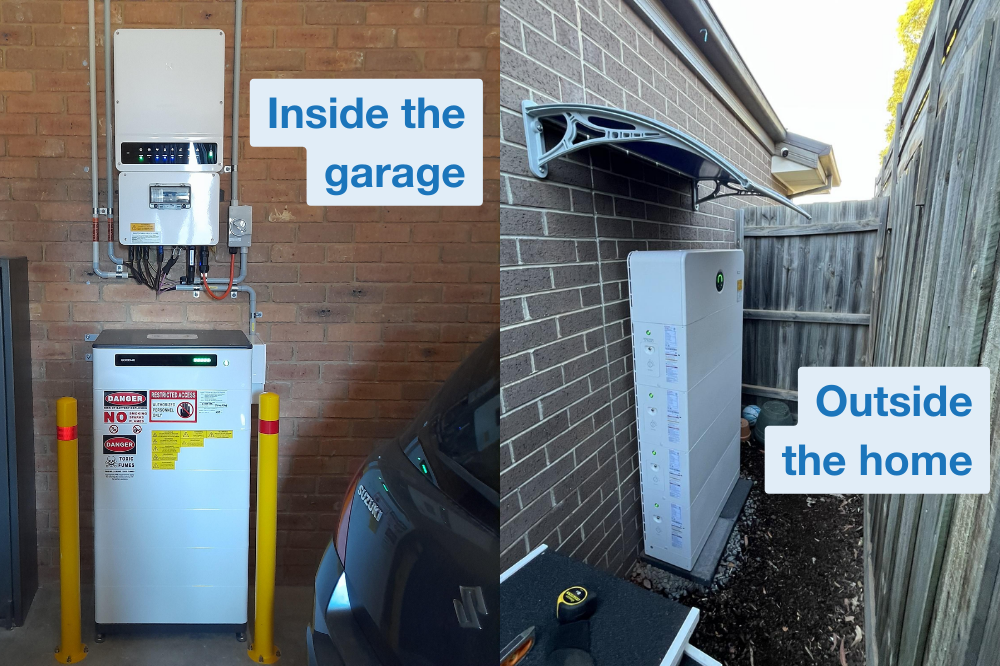
Most batteries are installed either inside a garage (left) or outside the home (right).
Inside The Garage
Here are some things to keep in mind when installing your battery inside the garage:
- Cooler is better (heat matters): Batteries hate heat. A garage is ideal if it stays reasonably cool, but some can turn into ovens in summer.
- Vehicle protection (bollards or barriers): If it’s near where you park, it may need protection from accidental bumps. A simple bollard can prevent an expensive mistake.
- Wall or floor mounting: Batteries can be wall-mounted or floor-mounted. The wall must be structurally sound and able to support the weight.
- Fire-rated backing (if required): If there’s a habitable room behind the wall, a fire-resistant sheet may be required under AS5139.
- Clear access and evacuation paths: The battery can’t block walkways or exits. Installers must maintain clearances for safety.
- Distance from the switchboard: Closer is usually cheaper due to shorter cable runs, but compliance rules and layout often dictate final placement.
- Solid, non-combustible base: Floor-mounted batteries should sit on a firm, sealed surface like concrete, not bare timber or uneven ground.
Outside
Consider the following things when installing your battery outside:
- Sun exposure and heat: Direct Australian sun will shorten battery life. Shading, covers or strategic placement are essential.
- Weather protection: Even weather-rated batteries benefit from protection against driving rain and extreme conditions.
- Wall vs freestanding install: External walls must meet clearance and fire separation rules. In some cases, spacing the battery off the wall can simplify compliance.
- Clearances and location rules (AS5139): There are minimum distances from doors, windows and vents. You don’t need to memorise them, but they may limit your options.
- Fire-resistant surfaces (if required): Some installs need fire-rated material behind or around the battery depending on what’s on the other side of the wall.
- Base requirements: Must be installed on a stable, non-combustible surface. No dirt patches or wobbly brackets.
- Cable run to switchboard: Longer distances mean higher install costs and more visible conduit. Planning the route early avoids messy results.
Want to see how it’s done? Watch the video below for a behind-the-scenes look at a professional installation, from setup to final handover.
Home Battery Apps & Configuration Basics
Most home batteries come with a companion app you can use to monitor how your solar panels and battery are performing in real time, get alerts, and check your state of charge – straight from your phone. These apps are usually provided by the inverter manufacturer and give you insight into generation, usage and alerts so you can spot issues early and maximise savings.
- Monitor performance from your phone: Apps let you track solar production, battery charge/discharge, and household usage so you can see what’s happening when you’re not at home.
- Useful alerts and fault notifications: Many apps can send notifications for faults or unusual behaviour so you don’t miss problems that might affect savings or warranty claims. Some manufacturers’ apps make setting these up easy.
- Data history helps optimise usage: Seeing how your battery performs over days and weeks helps you shift big loads to the best times and diagnose issues faster – especially if your tariff has time-of-use rates.
- Installer setup matters: To use the app, your battery or inverter must be connected to your home’s internet – the installer should set this up during commissioning. They’ll typically connect the inverter to the home Wi-Fi and associate it with your email/account so you can log in. If you want alerts, remote monitoring or plan to troubleshoot via the app later, tell your installer at the time of installation so they can configure it correctly.
Monitoring apps are something few people consider (but should) before they buy a battery. Find out which monitoring apps are good and which ones are bad.
How Does My Home Battery Work With an EV Charger?
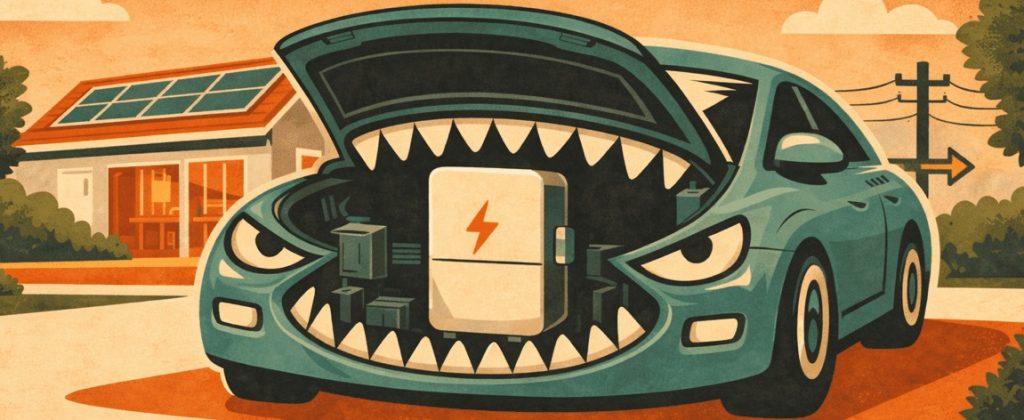
If you don’t intentionally design the EV-battery relationship, you may end up emptying an expensive home battery into a car battery, leaving your home to import expensive grid electricity. Unless you have a massive (40+ kWh) battery with the power output (kW) to charge both car and run the house, you want to avoid this from happening.
Even if you do not have an EV yet, it pays to consider how you would set up your battery if an EV charger is on the cards in the future. Let’s look at a few potential battery-EV integrations.
Wiring Your EV Charger Upstream from the Home Battery
If your EV charger is wired downstream (on the “battery/house loads” side), the battery may “see” the EV as just another load and dump energy into it: often the opposite of what you want. The simplest solution is wiring the EV charger upstream of the battery, so the EV can’t charge from the home battery and will only charge from cheap grid electricity or solar.
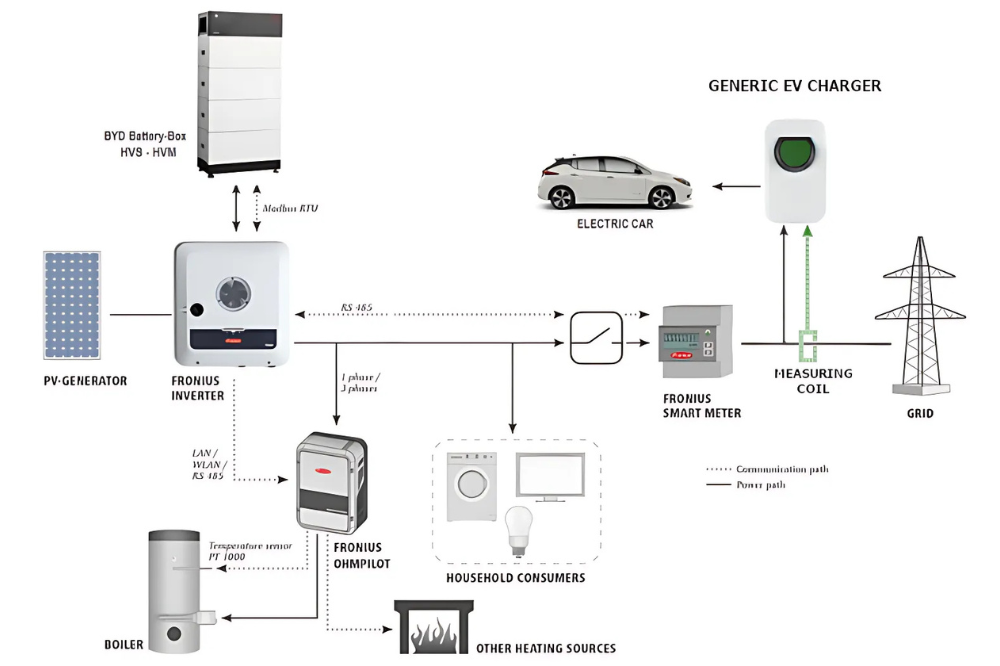
With the EV charger wired outside the solar consumption meter, the home battery remains isolated.
This is mostly about creating a pecking order: battery serves the home first; the EV takes what’s left (or uses scheduled cheap grid electricity like three free hours or solar sponge tariffs). Done right, it prevents “battery-to-battery” charging while still allowing solar-smart charging.
Match Brands so Your EV Charger and Home Battery Speak the Same Language
If you want something smarter – like “charge the EV from solar unless there’s cheap grid electricity, and only use the battery if I explicitly allow it” – you need communications between the charger and the battery/inverter/energy manager. The Open Charge Point Protocol (OCPP), which allows for these communications, can be a pain when you cross brands. That’s why you should check if the battery brand you’re considering has an OCPP-compatible EV charger. This means you can coordinate it all in the brand’s app.
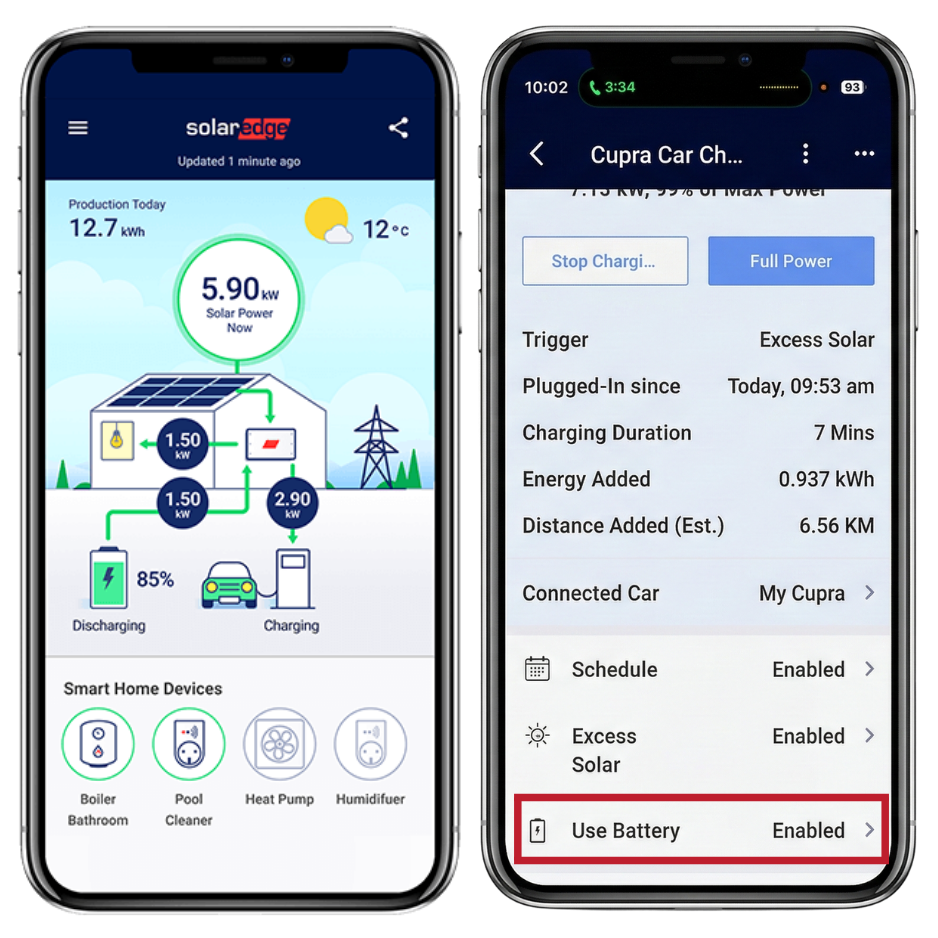
The mySolarEdge app controls both SolarEdge battery and SolarEdge EV charger from the same app.
Note: Tesla controls charging by commanding the car instead of their Wall Connector. While it allows for clever battery-EV integration, that cleverness can vanish if you buy a non‑Tesla car later.
EV Charging Integration As A Module In The Battery Stack (Sigenergy)
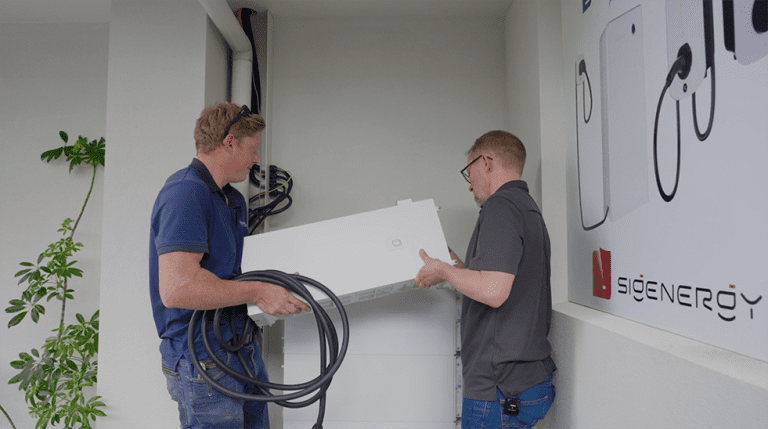
The DC EV charging module fits right on top of Sigenergy’s battery modules, allowing for a seamless battery-EV integration.
Sigenergy has pioneered a DC charging module that fits straight into the stack of their SigenStor battery system. Alongside being bi-directional-ready and being the only home charger module capable of DC charging, this also means that it is seamlessly integrated with the battery modules. Battery and EV charging are all managed from the Sigenergy app:
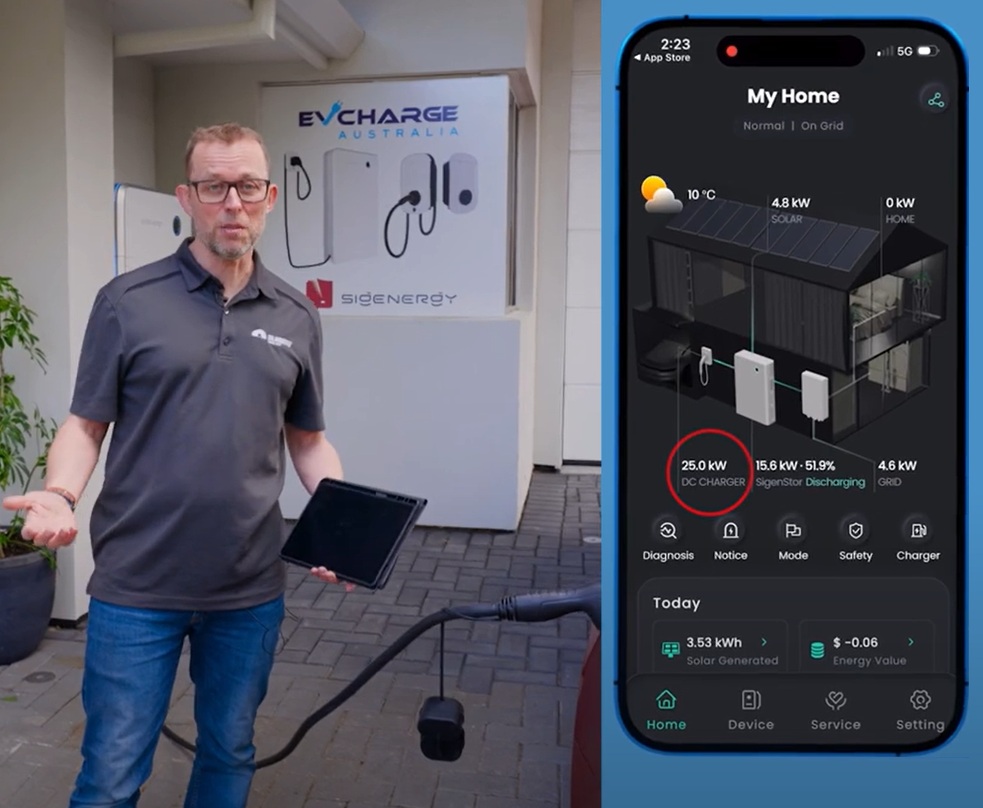
The mySigen app allows for smooth integration between both the DC charging module and the battery modules.
Vehicle-to-Battery: Backup Your Home Battery With Your EV (FranklinWH)
With the FranklinWH you can get an optional generator module that allows you to export energy from your EV’s battery into the Franklin battery via a V2L adapter during blackouts. So far, it is the only battery system that allows V2L-capable cars to function as a backup generator for the home battery.
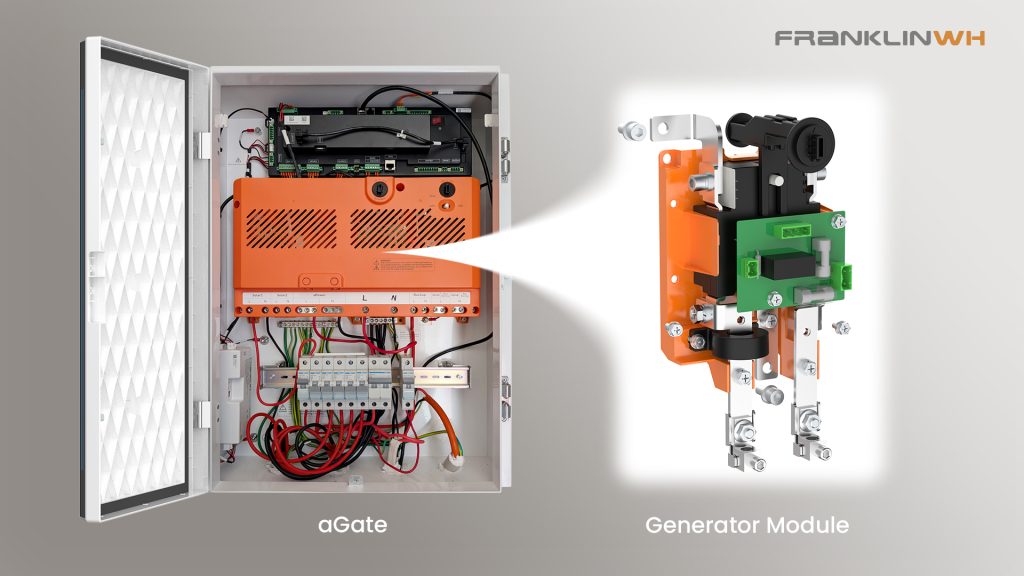
The generator module connects to the Franklin aGate, which allows you to charge the home battery with a generator (or an EV via a V2L adapter) during blackouts.
Does Where I Live Matter For A Home Battery?
Australia’s a big country, and where you live can factor into which battery is best for you…
Climate
The closer you live to Melbourne or Hobart, the lower your annual solar production, so you’ll need a larger solar system to reliably charge a battery all year.
At the other extreme, heat is the #1 thing that will shorten your battery’s life. So keep it cool if you live in a particularly sunburnt part of Australia, and check its ambient temperature range in the battery comparison table at the top of this page before buying.
Electricity Tariffs
Three free hour electricity plans, which can boost battery payback, and allow you to charge from the grid for free on low solar days, are currently only available in NSW, Vic, SA and SE Qld. Use our electricity tariff comparison tool to find a plan that works for you.
Rebates/Subsidies/VPPs
Certain government battery rebates, interest-free loans, or Virtual Power Plants are area-specific.
Grid Connection Rules Around Battery Inverters
Some local DNSPs (Distributed Network Service Providers), like Essential Energy, still make it hard to add a battery inverter if you already have a solar inverter. A good local installer will be all over these rules.
Solar Batteries Compared
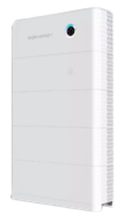
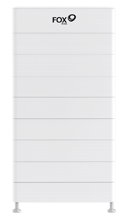
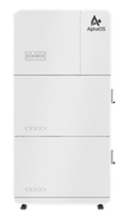
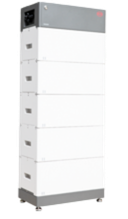
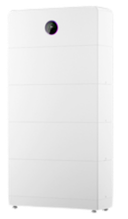
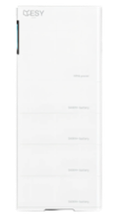
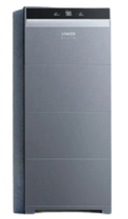
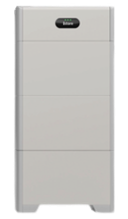
Here’s a table of all the major home batteries on the Australian market. As you can see, there’s a lot of choice. These brands are ordered according to popularity, the most popular first. Scroll left to right to see them all, then scroll past the table to learn more…
| Product Name |
Sungrow SBR HV 16 kWh
|
SigenStor Single-Phase (16 kWh)
|
Fox-ESS CQ6 11.98 kWh
|
AlphaESS Smile-M5 (10 kWh)
|
Tesla Powerwall 3 |
BYD Battery Box Premium HVM 16.6
|
Enphase IQ Battery 5P |
SolarEdge Home Battery
|
Neovolt 10 kWh
|
Growatt APX HV 10.0
|
Goodwe ESA 16 kWh
|
ESY Sunhome HM6-10
|
Anker SOLIX X1 15 kWh
|
iStore Smart Battery (10 kWh)
|
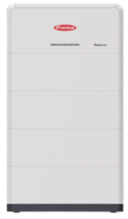
Fronius Reserva 12.6
|
Pylontech Force H3X Hybrid (10 kWh)
|
SOFAR PowerAll (10 kWh)
|
SolaX TSYS-HS51 10.2 kWh
|
Bluetti EP760 9.9 |
FranklinWH aPower X-01-AU (13.6 kWh)
|
PowerPlus Energy Whispr 12.7
|
sonnenBatterie Evo | LAVO Storage S2 |
|---|---|---|---|---|---|---|---|---|---|---|---|---|---|---|---|---|---|---|---|---|---|---|---|
| Manufacturer Logo |
 |
 |
 |
 |
 |
 |
 |
 |
 |
 |
 |
 |
 |
 |
 |
 |
 |
 |
 |
 |
 |
 |
 |
| Product Image |
 |
 |
 |
 |
 |
 |
 |
 |
 |
 |
 |
 |
 |
 |
 |
 |
 |
 |
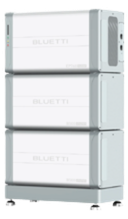 |
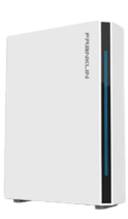 |
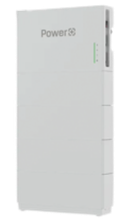 |
 |
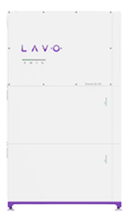 |
| Price incl. federal rebate, excl. installation (AUD RRP, incl. GST) | $7,000 | $6,800 | $1,500 | $3,700 | $10,000 (including Gateway) | $7,000 | $7,200 | $7,500 | $5,100 | $4,200 | $4,600 | $4,600 | $7,100 | $7,800 | $6,200 | $5,600 | $3,500 | $4,500 | $6,500 | $10,800 (including FranklinWH aGate) | $10,200 | $9,700 | $8,600 |
| In Depth Analysis | Yes, review here. | Yes, review here. | Not yet | Not yet | Yes, review here. | Not yet. | Not yet | Yes, review here. | Not yet | Not yet. | Not yet | Not yet | Not yet | Yes, review here. | Not yet | Not yet. | Not yet. | Not yet | Here. | Not yet | (Yes, here.) | Yes, review here. | Not yet |
| Battery Type | Lithium-ion (Lithium Iron Phosphate) | Lithium-ion (Lithium Iron Phosphate) | Lithium-ion (Lithium Iron Phosphate) | Lithium-ion (Lithium Iron Phosphate) | Lithium-ion (Lithium Iron Phosphate) | Lithium-ion (Lithium Iron Phosphate) | Lithium-ion (Lithium Iron Phosphate) | Lithium Ion (NMC) | Lithium-ion (Lithium Iron Phosphate) | Lithium-ion (Lithium Iron Phosphate) | Lithium-ion (Lithium Iron Phosphate) | Lithium-ion (Lithium Iron Phosphate) | Lithium-ion (Lithium Iron Phosphate) | Lithium-ion (Lithium Iron Phosphate) | Lithium-ion (Lithium Iron Phosphate) | Lithium-ion (Lithium Iron Phosphate) | Lithium-ion (Lithium Iron Phosphate) | Lithium-ion (Lithium Iron Phosphate) | Lithium-ion (Lithium Iron Phosphate) | Lithium-ion (Lithium Iron Phosphate) | Lithium-ion (Lithium Iron Phosphate) | Lithium-ion (Lithium Iron Phosphate) | Lithium-ion (Lithium Iron Phosphate) |
| All-In-One Unit? | No | Yes | No | Yes | Yes | No | No | No | Yes | No | Yes | Yes | Yes | No | No | Yes | Yes | No | Yes | Kind of. Includes AC battery inverter but requires solar inverter. | Yes | Kind of. Includes AC battery inverter but requires solar inverter. | Yes |
| Nominal Storage | 16 kWh | 16.12 kWh | 11.98 kWh | 10 kWh | 14 kWh | 16.56 kWh | 5.0 kWh | 10 kWh | 10.1 kWh | 10 kWh | 16.64 kWh | 10.24 kWh | 15 kWh | 10 kWh | 12.63 kWh | 10.24 kWh | 10.24 kWh | 10.2 kWh | 9.92 kWh | 15 kWh | 13.37 kWh | 11 kWh | 10.2 kWh |
| Usable Storage Capacity | 16 kWh | 15.6 kWh | 11.98 kWh | 10 kWh | 13.5 kWh | 16.56 kWh | 5.0 kWh | 9.7 kWh | 9.6 kWh | 9 kWh | 16 kWh | 9.73 kWh | 15 kWh | 10 kWh | 12.63 kWh | 9.73 kWh | 9.5 kWh | 10.2 kWh | 8.9 kWh | 13.6 kWh | 12.70 kWh | 10 kWh | 9.7 kWh |
| Features | Modular, expandable | Modular, scalable, optional DC EV charger module | Modular, expandable | UPS, fast response, modular | 3 MPPT's, higher output current | Expandable in increments of 2.76 kWh | Modular | Modular expansion up to 9 batteries on a system, 90kwh max | Modular, expandable | Modular | Modular, expandable | Modular, expandable | Modular, expandable | Modular - expandable | Modular, stackable | Modular | Modular, expandable, 10ms switchover in blackout | Modular, expandable | Modular | Multi-Source Orchestration, supports generator & V2L integration, reinforcing energy security and resiliency. Adaptive Load Control Reliable Black Start with Frequency shifting function enabled | Expandable up to 53.5kWh, true 3-phase backup. | Integrated backup, can charge batteries from solar when grid is down | Modular |
| Power | 9.6 kW | 5 kW | 6.72 kW | 5 kW | 5kW or 10kW (configurable) | 7.6 kW | 3.84 kW | 5kW steady, 7.5kW peak (10 seconds) | 5 kW | 5 kW | 5-10 kW | 6 kW | 6 kW (AC coupled/single phase) 12 kW (three phase) | 5 kW | 13 kW | 5 kW | 5 kW | 6.1 kW | 7.6 kW | 5kW steady, 10kW peak (10 seconds) | 7kW | 5kW steady , 5.3kW (for 30 min), 7kW peak (for 60 sec) | 5 kW |
| Weight | 180 kg | 150 kg | 122.5 kg | 118.5 kg | 130kg | 243 kg | 79 kg | 108 kg | 108 kg | 122 kg | 188 kg | 143 kg | 175.5 kg | 113.8 kg | 153 kg | 125 kg | 125.5 kg | 115 kg | 160 kg | 185 kg | 191kg | 163.5 kg | 122 kg |
| Dimensions (WHD) | 625 x 805 x 330 mm | 850 x 910 x 260 mm | 660 x 420 x 360 mm | 620 x 1,193 x 240 mm | 609 x 1105 x 193 mm | 1644 x 585 x 298 mm | 980 x 550 x 188 mm | 790 x 1179 x 250 mm | 1120 x 590 x 205 mm | 690 x 1000 x 185 mm | 800 x 952 x 270 mm | 600 x 305 x 998 mm | 670 × 1,485 × 150 mm | 670 x 150 x 960 mm | 1,390 x 772 x 176 | 550 x 1046 x 350 mm | 708 x 170 x 1310 mm | 600 × 621 × 376 mm | 636 x 325 x 1046 mm | 750 x 1150 x 290 mm | 1540 x 750 x 210 mm | 710mm x 1400mm x 427mm | 730 x 203 x 1270 mm |
| Off-grid Capable? | Yes | Yes | Yes | Yes | No | Yes | TBD | No | No | Yes | Yes | Yes | Yes | Yes | Yes | Yes | No | No | Yes | Yes | Yes | TBD | TBD |
| Can charge from the grid? | Yes, if paired with hybrid inverter | Yes | Yes | Yes | Yes | Yes, if paired with hybrid inverter | Yes | Yes | Yes | Yes | Yes | Yes | Yes | Yes | Yes | Yes | Yes | Yes | Yes | Yes | Yes | Yes | Yes |
| Designed for indoor or outdoor installation? (IP rating) | Indoor/outdoor (IP 55) | Indoor/ourdoor (IP 66) | Indoor/outdoor (IP 65) | Indoor/Outdoor (IP65) | Indoor/Outdoor (IP 67 for battery and electronics, IP55 for wiring) | Indoor/outdoor (IP 55) | Indoor/Outdoor (IP55) | Indoor/outdoor (IP 55) | Indoor/outdoor (IP 65) | Indoor/Outdoor (IP 66) | Indoor/outdoor (IP 66) | Indoor/outdoor (IP66) | Indoor/outdoor (IP 66) | Indoor/outdoor (IP 66) | Indoor/outdoor (IP 65) | Indoor/Outdoor (IP 65) | Indoor/outdoor (IP 65) | IP66 | Indoor/Outdoor (IP65) | Indoor/Outdoor (IP67 (Battery and power converter system), IP56 (Wiring compartment) | Indoor/outdoor (IP65) | Indoor/Outdoor (IP 56) | Indoor/Outdoor (IP 65) |
| Operating temperature range | -30°C to 50°C | -20 ~ 55 °C | -10 to +55°C | -10 to 50°C | -20°C to 50°C | -10 °C to +50°C | -20º C to 50º C | -10-℃~ + 50℃ | -20°C - 60°C | -10 to 50°C | -18 to +55°C | -25°C-60°C | -20°C to 55°C | -20-℃~ + 55℃ | -20 to +55 °C | -10 to 55°C | -10 °C to +50°C | -20 to +53°C | -20℃~50℃ | -20°C to 50°C | -20 to 55°C | -5 to 45 °C | -20°C ~ 54°C |
| Warranty | 10 years | 10 years | 10 years | 10 years | 10 years | 10 years | 15 years | 10 years (unlimited cycles) | 10 years | 10 years | 10 years | 10 years | 10 years | 10 years | 10 years | 10 years | 10 years | 10 years | 10 years | 12 years | 10 years | 10 years | 10 years |
| Battery capacity remaining at end of warranty | 70% | 70% | 70% | 70% | 70% | 70% | 70% after 10 years and 60% from 10-15 years | 70% | 70% | 50% | 70% | 60% | 70% | 70% | 70% | 60% | 70% | 70% | 70% | 70% | 70% | 80% | 60% assumed |
| Compatible hybrid inverter brands (If not an all-in-one unit) | Sungrow | N/A | Fox-ESS | N/A | N/A | Fronius | N/A | SolarEdge | N/A | Growatt | N/A | N/A | Anker SOLIX | iStore | Fronius | N/A | N/A | SolaX | N/A | N/A | N/A | N/A | N/A |
| Total warranted kWh (1 cycle per day) | 44,800 | 47,540 | 58,980 | 31,200 | Unlimited cycles for self consumption / Time based control / backup. 37,800 kWh for other uses | 51,230 | 27,375 | 35,405 | 38,380 | 27,000 | 48,000 | 35,514 | 42,000 | 32,900 | 39,140 | 35,500 | 36,500 | 31,800 | 36,500 | 43,000 | 35,560 | 36,500 | 35,405 |
| Warranted usable throughput per kWh | 2.8 MWh | 3.05 MWh | 4.22 MWh | 3.12 MWh | Unlimited (regular use) / 2.8 MWh (other use) | 3.1 MWh | 5.4 MWh | 3.65 MWh | 3.65 MWh | 3 MWh | 3 MWh | 4.42 MWh | 2.8 MWh | 3.3 MWh | 3.1 MWh | 3.65 MWh | 3.65 MWh | 3.1 MWh | 3.65 MWh | 3.1 MWh | 2.8 MWh | 4.1 MWh | 3.65 MWh |
| Datasheet Supplied? | Yes | Yes | Yes | Yes | Yes | Yes | Yes | Yes | Yes | Yes | Yes | Yes | Yes | Yes | Fronius Reserva datasheet | Yes | Yes | Yes | Yes | Yes | Yes | Yes | Yes |
| Warranty Supplied? | Yes | Yes | Yes | Yes | Yes | Yes | Yes | Yes | Yes | No | Yes | Yes | Yes | Yes | Fronius Reserva warranty | Yes | Yes | Yes | Yes | Yes | Yes | Yes | Yes |
| Cost per Total Warranted kWh (1 cycle per day) | $0.16 (+ inverter cost) | $0.14 | $0.03 (+ inverter cost) | $0.14 | $0.26 | $0.14 (+ inverter cost) | $0.26 | $0.23 (+ inverter cost) | $0.13 | $0.16 (+ inverter cost) | $0.10 | $0.13 | $0.17 | $0.24 (+ inverter cost) | $0.17 (+ inverter cost) | $0.16 | $0.10 | $0.14 (+ inverter cost) | $0.18 | $0.25 (+ inverter cost) | $0.29 | $0.25 | $0.24 |
| On our recommended chart? | Yes | No | No | No | Yes | Yes | Yes | Yes | No | No | Yes | No | No | Yes | Yes | No | No | No | No | No | Yes | No | No |
| Modern slavery statement or forced labour policies? |
Claims to have a plan to manage the risks, but details have not been provided. |
TBD |
Failed to respond |
TBD | TBD | TBD |
Yes, here (covered under Shell's). |
No response from manufacturer. |
|||||||||||||||
| More information on brand | Here | Here | Here | Here | Here | Here | Here | Here | Here | Here | Here | Here | Here | Here | Here | Here | Here | Here | Here | Here | Here | Here | Here |
See the glossary for an explanation of each row on the table.
Useful Battery Tools
Solar & Battery Calculator
Our solar & battery calculator estimates the savings and payback of solar and batteries for your situation. Crucially, it separates out the solar and the battery savings, so you can decide if home energy storage is worth the extra dollars.
Add a Battery Calculator
If you already own a solar panel system but want to calculate the potential savings of adding a battery, you can use our “Add a battery” calculator.
Battery Reviews
Read expert solar battery reviews and browse customer reviews for most battery brands sold in Australia.
Hybrid Inverter Comparison Table
Installing a hybrid inverter to control both your solar panels and your solar battery can save you money because you only need one expensive (~$2000) inverter. Here is a table comparing all hybrid inverters we know of available in Australia. If you choose one of these for your solar installation, adding batteries can be cheaper and easier in the future.
Battery 101 Guides
Understanding Batteries 101: This is a more in-depth guide aimed at technical understanding of home batteries, delving into how they work and comparing different technologies like lead-acid and lithium-ion. It also explains the difference between power and energy in the context of batteries and discusses integrating a battery with a solar system using AC or DC coupling.
Buying Batteries 101: If you are serious about buying a solar battery – you should read this guide (or watch the video) so you can go toe to toe with any salesperson and get the right battery system at the right price.
Owning Batteries 101: Once your solar battery is installed, here’s what you need to know for a decade or two of cheap, secure power.
FAQs
If you are too busy to read this full answer – get a 20kWh battery that can be expanded later.
Otherwise, read on… If you are on a single-rate tariff, you want enough capacity to get you from sunset to sunrise. If you are on a Time-Of-Use tariff, you must get through the evening peak – typically 4 pm – 10 pm. You can usually see your hourly usage through your electricity retailer’s online portal.
Remember that most battery owners keep a 20% ‘reserve margin’ on top of that in case of a blackout. So a 10 kWh battery would have 2 kWh reserved for blackouts and 8 kWh for powering your home.
Some prefer to maximise the financial return from their batteries by not setting a reserve. There will usually be some energy in the battery when a blackout occurs, but it runs the risk you’ll wind up sitting in the dark.
Smaller batteries cost more per kWh of usable storage. This means you may be better off getting a larger one despite your low electricity usage.
Here’s an even more detailed answer: How many solar batteries do you need?
If you have access to a grid connection, do not go off-grid. Grid-connected solar and battery systems start at around $6,000. Dependable off-grid systems for typical Australian homes start at around $60,000 and require regular checks, careful energy management, and generator backup.
The size of home batteries depends on their energy capacity and their ‘specific energy’, which measures how much capacity they can squeeze into a given volume. If space is an issue, Tesla and Sungrow make space-efficient batteries, whereas the Enphase solution is bloody huge. More details on battery dimensions here.
A study in the journal Energies says in moderate climates (20–32°C) with daily use, lithium batteries should last 14–16 years. In climates up to 40°C, expect 12–14 years. Warranties range from less than two years (if you read the small print on some cheap batteries) to 15 years for some NMC and LFP batteries and 20 years for more expensive LTO chemistry. More details on how long batteries last here.
Those who join the Tesla Energy Plan VPP and stick with it will have their Powerwall 2 warranty extended by 5 years. This suggests Tesla expects their home batteries to last at least 15 years.
Every year, we survey our network of ~600 installers and ask them. In 2025, Tesla and Sungrow tied for the best battery, followed by Sigenergy and BYD.
Yes. Home battery recycling is an emerging industry – because there are not many at the end of their life yet – but the technology exists to recycle over 90% of a home battery. When yours finally dies, contact your installer or the manufacturer for details.
Yes. Although extremely unlikely, we won’t lie: if a lithium-ion solar battery catches fire, it will burn ferociously and can release nasty gases, which may include phosphorus pentafluoride, phosphoryl fluoride and hydrofluoric acid vapours.
You do not want to breathe these in – so evacuate the area and contact emergency services. Remain upwind and notify those downwind. No one should go near a smoking or burning home battery without full protective equipment, including Self Contained Breathing Apparatus (SCBA).
We’ve written a whole page on home battery safety if you are concerned.
NO! A battery will only lose money if your feed-in tariff exceeds your usage tariff — provided the solar system is a reasonable size. If it’s only small, you can be better off with a large new solar system and a battery.
Yes. They usually go on your home insurance, not your contents insurance, because they are hardwired into your home. Just call your insurer and let them know you’ve added a home battery.
No. You can happily use a single-phase battery on one phase of a three-phase home, but there are some 3-phase battery details you should know.
A ‘battery-ready’ solar system is a grid-connected solar power system designed for easy future integration of batteries.
It depends entirely on the size of your house, how you condition the spaces, how you heat water, and how many residents. The best way to know is measure your existing overnight consumption either with a solar consumption meter, monitoring like CatchPower or data from your utility smart meter.
Sizing a battery to cover your average demand from around 3 pm to 9 am is the normal approach, but you must also ensure there is enough solar yield to power the daytime loads and enough surplus to fill the battery.
It’s especially critical to consider winter. When heating loads are high and solar generation is low you’ll want a lot more panels on the roof.
A battery under 10 kWh can suit households with low overnight electricity consumption or those who want the fastest payback period possible. But for most households, we recommend over 16 kWh because – so long as you have enough solar – it will minimise your grid electricity consumption and allow you to live through most blackouts with ease.
A solar battery is any battery designed to store energy from solar panels. That includes everything from small off-grid setups to large commercial and utility-scale systems. A home battery is simply a type of solar battery made for residential use. So, while all home batteries are solar batteries, not all solar batteries are home batteries. On SolarQuotes, when we talk about solar batteries, we’re almost always talking about home batteries: the kind you can install at your place to store excess solar and use it later.
Glossary
Battery Comparison Table Rows
Price: Our best retail price estimate includes GST and the federal battery rebate. For the required hardware only.
All-in-one-unit: See here for a pictorial explanation of the difference between an all-in-one, a separate battery and inverter and a Powerwall.
Nominal Storage: How many kWh a battery can store in theory. In practice, most won’t let you use all their energy capacity in order to prolong their lifespan.
Usable Storage Capacity: How many kWh you can store in a battery in practice.
Power (kW): The speed at which a battery can charge and discharge. Check yours doesn’t limit this in backup mode.
Round Trip Efficiency: When you put a kWh in, how much do you get back out? Typically 90%.
Off-grid capable: Does the manufacturer warrant the battery for off-grid?
IP Rating: How well sealed from the elements is the battery? Can it go outside?
Compatible Hybrid Inverters: A hybrid inverter is required for some battery systems – these are compatible ones. A hybrid inverter can also manage your solar panels – potentially saving a couple of thousand bucks.
Warranty: the headline warranty – before caveats. Sometimes this is shortened depending on how hard you work the battery.
Battery Capacity Remaining At End Of Warranty: This is how much of the original capacity you can pull from the battery under warranty. For example, a 10kWh battery that warrants 70% capacity at the end of 10 years would give you 7kWh.
Warranty Length (1 Cycle Per Day): How long is the warranty if you fully discharge the battery every day? Those on a flat tariff rarely cycle theirs more than once per day.
Modern Slavery/Forced Labour: Does the manufacturer have policies addressing modern slavery/forced labour risks.
Home Battery Quotes
If you’re ready to buy a solar battery, we can help you get quotes for quality home energy storage systems from pre-vetted installers quickly and easily: