
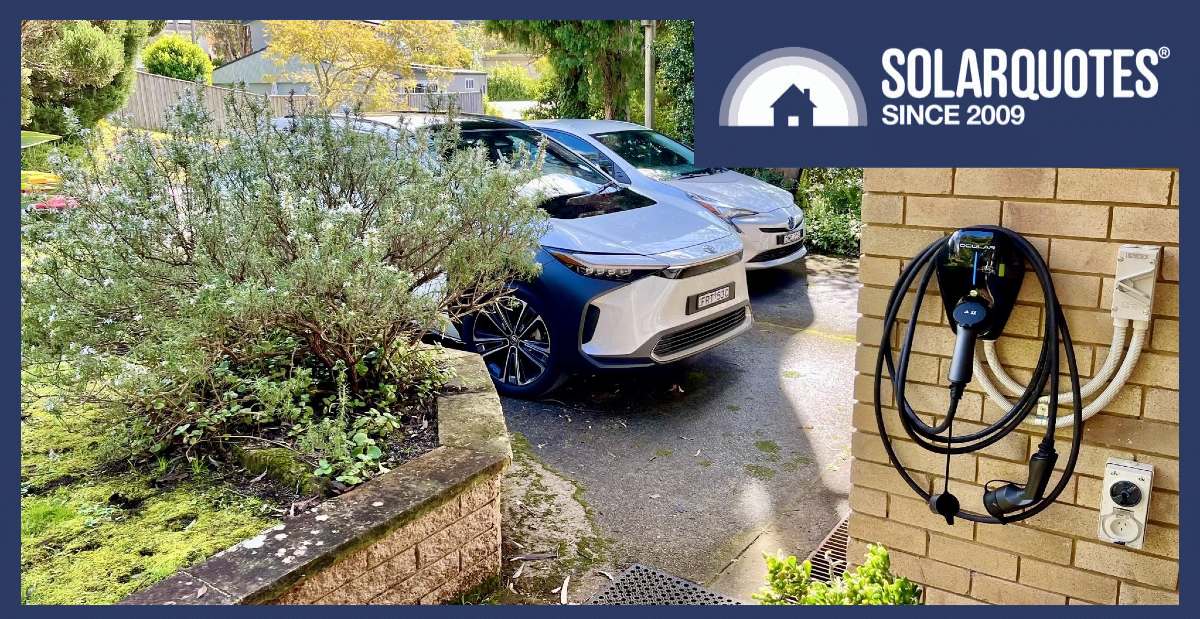
An Ocular home EV charger installed by Smooth Current Electrical Pty Ltd.
Thanks to the Iran war petrol prices just keep on rising, along with the number of petrol stations running out of fuel. The worsening fuel shortage has many Australians looking for the first time at making the switch over to an electric vehicle.
Aside from what car to buy, the other big decision prospective EV owners need to consider is whether to get a home charger: do they actually need the EV equivalent of a petrol station installed in their own driveway?
Do You Need A Home EV Charging Station?
The short answer is no: EVs can trickle charge from a regular power point, and there are public EV chargers you can visit when faster charging is needed.
The long answer is a bit more complicated – trickle charging takes much longer than a hard-wired home EV charger, and public EV chargers will cost you a lot more than charging at home, so the answer depends on your lifestyle (and your patience).
Take Trickle Charging For A Test Drive
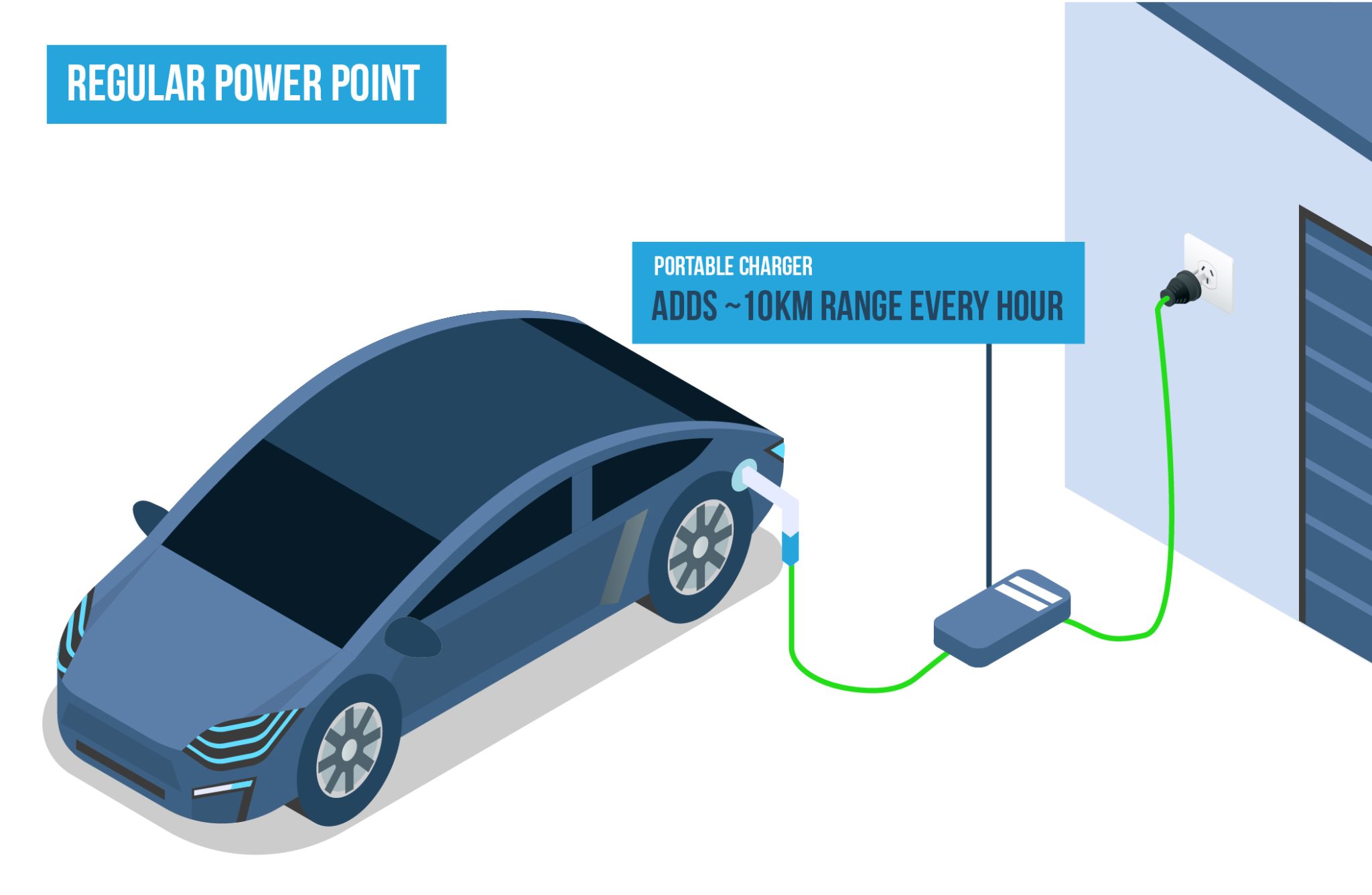
EVs usually come with a charging cable that can be plugged into a regular power socket. If you tick one of the following boxes, it might be worth trying out trickle charging to see how you find it, before committing to a hard-wired home EV charger:
- If you drive modest distances (under 50km per day): a standard socket might be able to keep up. Plug in overnight, and you’ll wake up with enough range for a modest commute. If you work from home a lot or your car is regularly left in the driveway during the day, you can take advantage of cheap daytime electricity rates.
- If you have an EV with limited range (under 250km): some EVs, particularly older secondhand models, simply don’t take as long to charge up to full as newer, long-range models. If your car only has less than 250km range fully charged, you might be able to get away with a standard power socket – although it will still be less convenient than a home EV charger.
- If you don’t have a driveway: lack off-street parking or don’t own your home? Getting a home EV charger is likely going to be complicated.
Do You Have A Need For Speed?
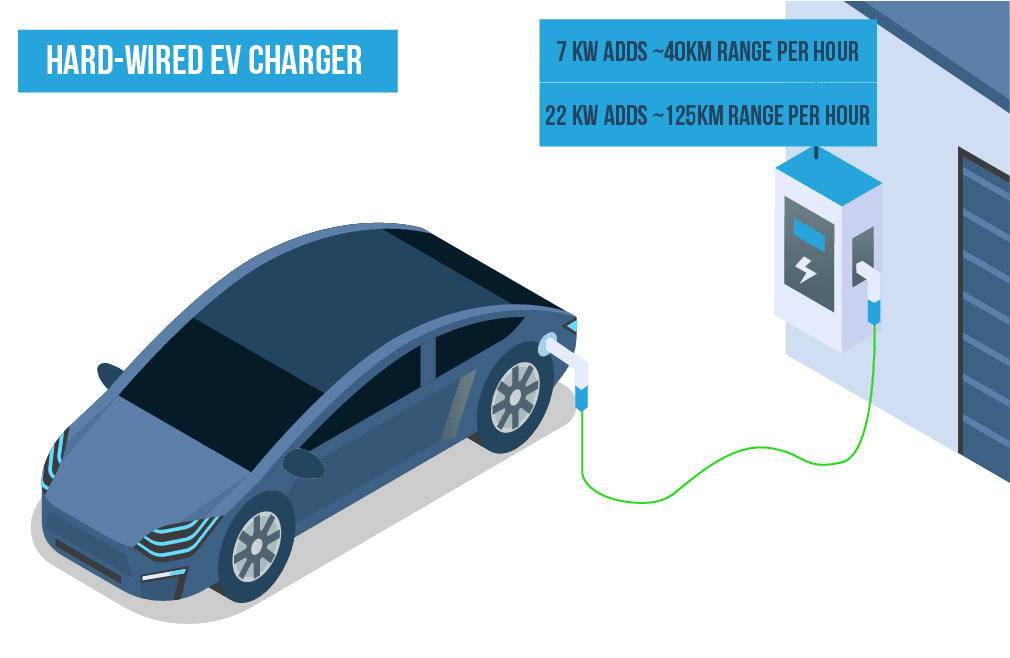
If any of the below points apply to you however, it’s probably worth just getting a home EV charger and not putting yourself through the headache of trickle charging:
- You drive a lot: A regular power point only adds around 10km of range per hour, so if your car spends a lot of time on the road (i.e. you have a long commute) a home EV charger is basically a must.
- You have a long-range EV: Many high-end new EVs boast in excess of 600km range, and even budget models feature 300km plus. The biggest-capacity EV batteries these days take literally days to fully charge from a regular power socket.
- Your car is rarely parked at home: even if you don’t cover a lot of distance in your car, you might be usually parked elsewhere – for instance usually parked at work or the shops. A dedicated home EV charger can add roughly 30–40 km of range per hour, meaning you can make the most of brief windows at home.
- You have solar: one benefit of a home EV charger is some models can be configured to only charge when you’ve got excess solar, allowing you to fill up for free – so if you’re looking to escape high fuel prices, a combo of solar & a home charger is the best way to cut fuel costs as close to zero as possible.
- You want the safest option: standard power points aren’t really designed for sustained, high-load use. EV charging can put stress on older wiring or poorly installed outlets, while a dedicated EV charger is installed on its own circuit, with proper protections in place.
How Much Does A Home EV Charger Cost?
Expect to pay $700-$1000 for a cheaper home EV charger, up to $1500 to $2000 for a higher-end model with more features.
That’s not including installation, which can be done on the cheap for under $500 for a simple single-phase charger right next to your switchboard, but can blow out to many thousands of dollars for more complicated installs (say if you need to run a lengthy power cable, dig trenches, or upgrade your switchboard).
In total, expect somewhere between $1200 to $3500 for the gear and the install.
I’m Glad I Made The Switch
I own a 2017 Nissan Leaf that in real-world driving conditions only offers me 200km range these days. I don’t do a lot of driving and regularly work from home, so I got away with trickle-charging from a regular power socket for years, although it did require forward planning for busy driving periods. Even though I tick all the trickle charging boxes, I’ve just graduated to a home EV charger a couple of weeks ago and still found it a huge improvement.
With my EV charger configured to run only off my excess solar, I no longer have to remember to unplug at night or when heavy clouds roll in. And I don’t need to be as on top of my schedule for the days ahead to ensure I’ve got plenty of time to charge up.
I’ve gone from roughly 10 hours to trickle charge 100km worth of range, all the way down to just a couple of hours with my hard-wired EV charger, which gives an incredible amount of added flexibility.
Which Home EV Charger Is Best?
There are a dazzling array of different EV charger brands, features and terminology. Our recommended brands include budget options from GoodWe right up to premium offerings from Fronius. To learn how to distinguish smart chargers from dumb, which plug type your charge needs, cable length options, which systems offer bidirectional charging, and other key questions, read our dedicated guide to home EV chargers.
 About Max Opray
 RSS - Posts






Speak Your Mind