
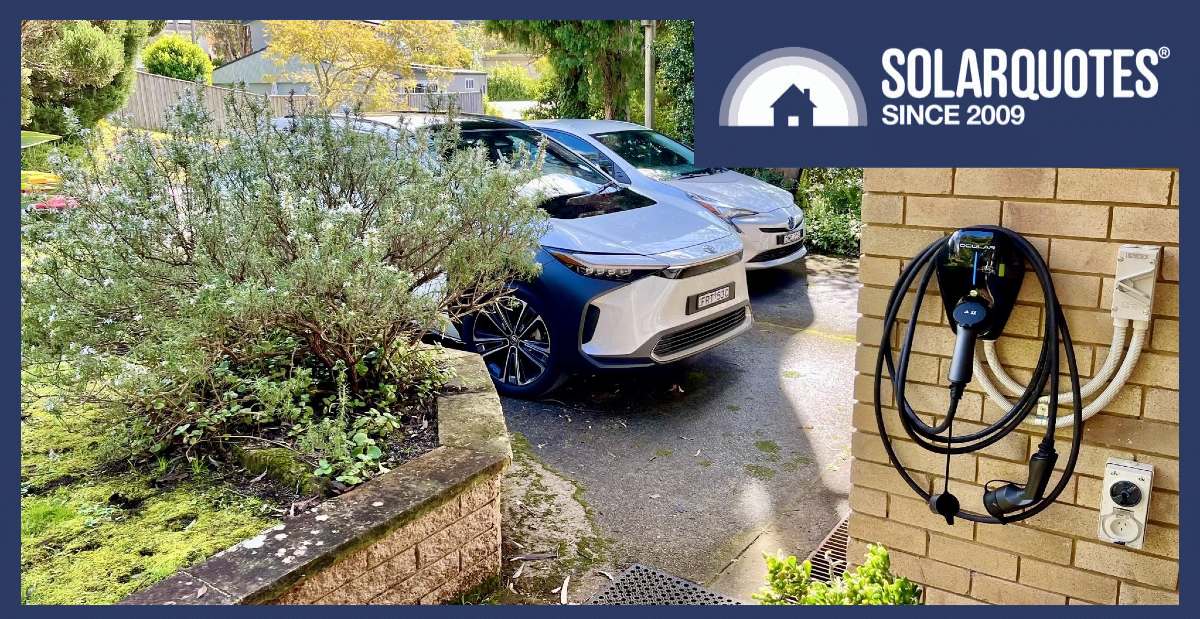
An Ocular home EV charger installed by Smooth Current Electrical Pty Ltd.
Thanks to the Iran war petrol prices just keep on rising, along with the number of petrol stations running out of fuel. The worsening fuel shortage has many Australians looking for the first time at making the switch over to an electric vehicle.
Aside from what car to buy, the other big decision prospective EV owners need to consider is whether to get a home charger: do they actually need the EV equivalent of a petrol station installed in their own driveway?
Do You Need A Home EV Charging Station?
The short answer is no: EVs can trickle charge from a regular power point, and there are public EV chargers you can visit when faster charging is needed.
The long answer is a bit more complicated – trickle charging takes much longer than a hard-wired home EV charger, and public EV chargers will cost you a lot more than charging at home, so the answer depends on your lifestyle (and your patience).
Take Trickle Charging For A Test Drive
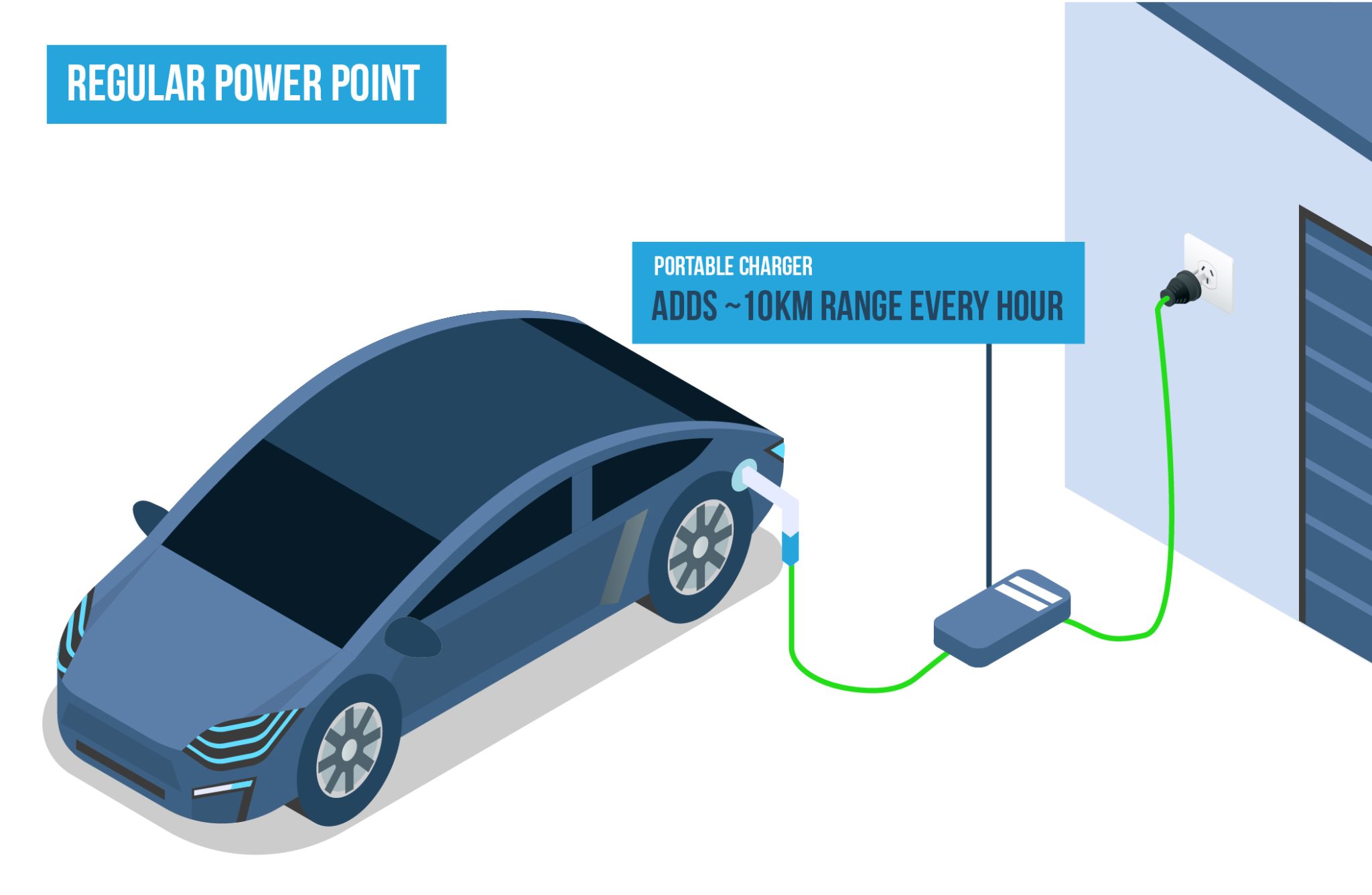
EVs usually come with a charging cable that can be plugged into a regular power socket. If you tick one of the following boxes, it might be worth trying out trickle charging to see how you find it, before committing to a hard-wired home EV charger:
- If you drive modest distances (under 50km per day): a standard socket might be able to keep up. Plug in overnight, and you’ll wake up with enough range for a modest commute. If you work from home a lot or your car is regularly left in the driveway during the day, you can take advantage of cheap daytime electricity rates.
- If you have an EV with limited range (under 250km): some EVs, particularly older secondhand models, simply don’t take as long to charge up to full as newer, long-range models. If your car only has less than 250km range fully charged, you might be able to get away with a standard power socket – although it will still be less convenient than a home EV charger.
- If you don’t have a driveway: lack off-street parking or don’t own your home? Getting a home EV charger is likely going to be complicated.
Do You Have A Need For Speed?
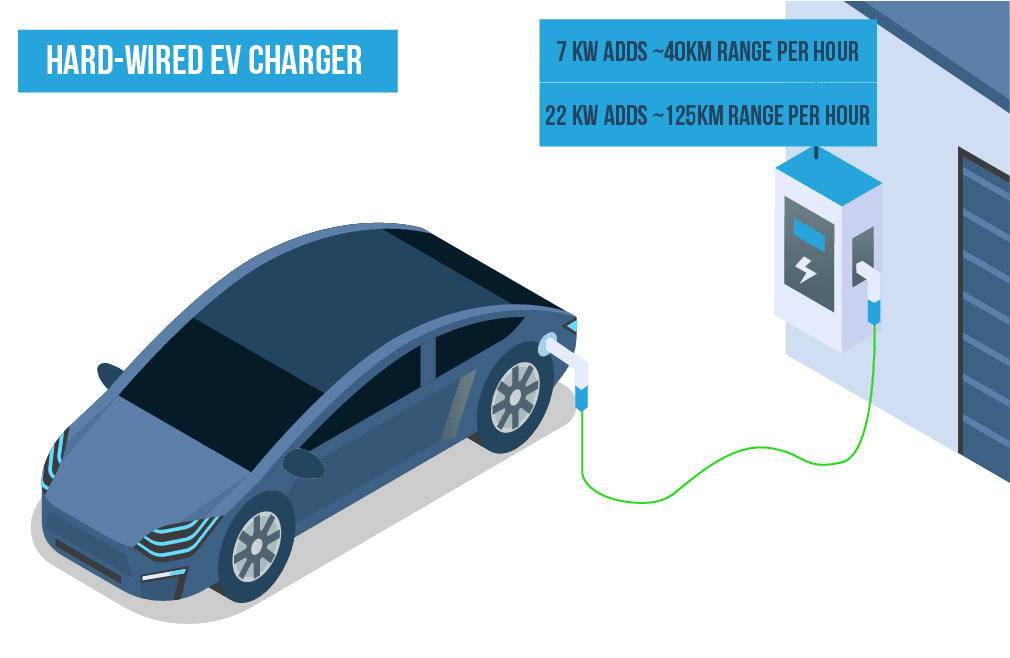
If any of the below points apply to you however, it’s probably worth just getting a home EV charger and not putting yourself through the headache of trickle charging:
- You drive a lot: A regular power point only adds around 10km of range per hour, so if your car spends a lot of time on the road (i.e. you have a long commute) a home EV charger is basically a must.
- You have a long-range EV: Many high-end new EVs boast in excess of 600km range, and even budget models feature 300km plus. The biggest-capacity EV batteries these days take literally days to fully charge from a regular power socket.
- Your car is rarely parked at home: even if you don’t cover a lot of distance in your car, you might be usually parked elsewhere – for instance usually parked at work or the shops. A dedicated home EV charger can add roughly 30–40 km of range per hour, meaning you can make the most of brief windows at home.
- You have solar: one benefit of a home EV charger is some models can be configured to only charge when you’ve got excess solar, allowing you to fill up for free – so if you’re looking to escape high fuel prices, a combo of solar & a home charger is the best way to cut fuel costs as close to zero as possible.
- You want the safest option: standard power points aren’t really designed for sustained, high-load use. EV charging can put stress on older wiring or poorly installed outlets, while a dedicated EV charger is installed on its own circuit, with proper protections in place.
How Much Does A Home EV Charger Cost?
Expect to pay $700-$1000 for a cheaper home EV charger, up to $1500 to $2000 for a higher-end model with more features.
That’s not including installation, which can be done on the cheap for under $500 for a simple single-phase charger right next to your switchboard, but can blow out to many thousands of dollars for more complicated installs (say if you need to run a lengthy power cable, dig trenches, or upgrade your switchboard).
In total, expect somewhere between $1200 to $3500 for the gear and the install.
I’m Glad I Made The Switch
I own a 2017 Nissan Leaf that in real-world driving conditions only offers me 200km range these days. I don’t do a lot of driving and regularly work from home, so I got away with trickle-charging from a regular power socket for years, although it did require forward planning for busy driving periods. Even though I tick all the trickle charging boxes, I’ve just graduated to a home EV charger a couple of weeks ago and still found it a huge improvement.
With my EV charger configured to run only off my excess solar, I no longer have to remember to unplug at night or when heavy clouds roll in. And I don’t need to be as on top of my schedule for the days ahead to ensure I’ve got plenty of time to charge up.
I’ve gone from roughly 10 hours to trickle charge 100km worth of range, all the way down to just a couple of hours with my hard-wired EV charger, which gives an incredible amount of added flexibility.
Which Home EV Charger Is Best?
There are a dazzling array of different EV charger brands, features and terminology. Our recommended brands include budget options from GoodWe right up to premium offerings from Fronius. To learn how to distinguish smart chargers from dumb, which plug type your charge needs, cable length options, which systems offer bidirectional charging, and other key questions, read our dedicated guide to home EV chargers.
 About Max Opray
 RSS - Posts






I’m home during the day most of the time. I found that a standard powerpoint still was too slow but I upgraded to a 15 Amp socket. This charges 50% faster and I find it makes a huge difference.
With my Tesla Model 3 it fills up at 6% per hour. That’s 3.5kW or 25.9km per hour to use your units. Your figure of 10km/hour is not based on something as energy efficient as the Model 3 but more an average value.
So overnight or all day on a sunny day, the car is generally full again after a trip unless I’ve run it right down.
I agree. I already had a 15 amp point in the shed where the car is parked and it is within 2 metres of the car charge point. Six hours at the EV overnight rate gives me 39% battery increase or 125km. I only charge two or three nights a week and have done so for nearly four years. Yearly distance travelled averages out at 17500km.
The key point is no-one charges from zero to 100%. What matters is how much charge you can put in overnight and whether that covers your daily commute. A dedicated hard wired charger is a nice to have, not a must have.
Why spend an extra $1500 minimum if it is not essential?
Same, I’ve found a 15A socket in my garage that charges from excess solar using ChargeHQ and the mobile Tesla charger has been fantastic for my goals of maximising solar self-consumption and minimising cost. I’m essentially driving for $7 per month. I am fortunate enough to work from home a few days per week, and appreciate not everyone is in this position.
I want to get the SigEnergy AC charger for neater cabling and a more integrated experience, but it’s hard to justify spending the money when the el cheapo equipment has worked so well over the last 18 months!
Nice to see people agreeing with me. I have made this point in the past and got little response. We have two EVs and had one before these and charge off solar as much as possible.
We’ve had two sunny days in a row and both cars got to 100%.
I did consider getting a Charger with my Battery system (and got quotes) when I had it installed last year but ended up deciding that it was not necessary.
Same for me. I was horrified by the quote for a ‘smart’ charger (2k) when I go the battery installed. As my aim was to try and only charge from excess solar (inverter tops out at 5.6 kWh) a 15 am plug would be close enough.
Working from home most of the time. So just plug in trickle charger and forget, with daily charging managed by Home Assistant SolarCharger open source software.
https://github.com/flashg1/SolarCharger
I have 15A outlet, M3 Tesla, Tesla PW3, 12 solar panels and OVO electricity supplier TOU plan with 3 hours per day free.
The car and PW3 are set to automatically charge only when electricity is free.
I get 25 km/hour added range, but this decreases as the battery nears capacity. The car has an LFP battery which is recommended to be charged to 100% at least once per week.
Could not be simpler from my POV.
A key issue is the amount of “excess” solar power available during the day. There is little point in charging with a dedicated charger if it needs to be throttled back (eg 15A instead of 30A) to avoid grid consumption. At this time of year we experience morning shade on our PV panels. I have found that charging with the “trickle” charger gives me the best flexibility. I know that it is best to turn it on when excess solar exceeds 2.4kW. I don’t mind occasionally having our Powerwall battery make up the difference if solar output drops or other appliances draw power – knowing that a sunny afternoon means the Powerwall will easily cope with our evening demand.
Having a dedicated EV charger available does give peace of mind for times when there is an urgent need for fully charging the vehicle but most of the time we a finding that a couple of hours trickle charging meets our needs.
I’d add two points:
1. Adding a charger to your home makes it part of your home. Now your home is more valuable. It’s not lost money; it’s a capital improvement that makes your house more attractive. There will only be more EVs in the future, not fewer, so it’s a safe bet.
(If you’re renting, try that argument with the landlord. I wish you luck…)
2. If you’re paying heaps of money on a fancy new EV, why not spend the little bit extra for the home charger if you can, for the improved experience. (If it’s not heaps of money for a less-than-fancy EV, well, why not do it anyway!)
Great points! Will also add if you have solar and Battery and your EV is at home in the day it is a best to use that excess solar to charge EV. Even if it is a couple of hours in the middle of the day you can maximize the charge and still be confident that the battery will have enough juice to power home for rest of day and next morning.
The EV charger is quite costly but it is an investment that has a great return on investment in terms of savings on electricity bills
There is also the cheap option I use of having a 15A outlet in the carport (in most cases simple and cheap to install if you don’t already have one) and charge the car with a cheap 15A EV charger from Bunnings or similar.
My MG4 reports a charge rate of 3.2kW using that which is double what you get from the supplied 10A granny charger.
That charge rate also fits well with the excess solar power I usually have available between 9am and 3pm daily so I recharge then if needed.
This has been working well for me for 18 months now.
That would have worked well for my MG4 too, with a 15A socket between the garage doors (for the welder), but a Level2 charger went in with the solar installation. Off-grid, there’s perceived benefit in making miles while the sun shines … but 3.2 kW wouldn’t be that hard to work with. (The 65 km shopping trip is only weekly)
And though there’s also a PHEV here for a few weeks, its smaller battery would top up OK on the second 15A socket, in parallel, for a 7 kW charge rate, with both on. I’m beginning to see what can be managed without the extra expense. (But when my sister visits, it’s good to be able to boost her BEV more rapidly for the long trip home.)
The middle path has a lot to recommend it, I now see.
Hi David. Are you using the Deta 15A charger from Bunnies and if so, is it okay?
I bought mine for about $150 on Ebay. Some unknown brand. Has most of the usual features including choice of charging rate from 8A to 16A and has worked perfectly for 18 months now. I wall mounted it near the 15A outlet and run it at 16A although it never reports using that, it always reads 15A and displays a charge rate of 3.6 kW while the car reports 3.2kW.
Timely article thank you. We are currently have 3 quotes to install an EV charger and one price was crazy …$2,500 – $3,000 for a Zappi and $4,900 for a WallBox, adjacent to the switchboard which has room so no upgrade required.
What we are struggling with though is that we want to use excess solar, (have an 11kw system) or be able to time the use of cheaper power overnight during the winter. After reading all the guidance from SolarQuotes we DO NOT want to have power come from the battery, yet two companies have said that can’t be avoided and we would have to set our battery back up level to 100% reserve, so battery won’t discharge to the car.
When I asked them if they could wire the charger upstream from the battery, they had not heard of it… (they were both electricians…I work in health…so I don’t understand in-depth, just from what I read)
Any suggestions on how we can avoid our Powerwall 2 battery being discharged to the car? (New car but non Tesla)
TIA 🙂
The installation in the heading photo is actually ours. I asked Smooth Current to set it up so we could take advantage of the OVO EV plan low/no cost power periods, which is exactly what they did.
The Ocular charger we had installed has the ability to use excess solar output if it is available and I can switch that feature on/off in the app interface for the charger. In practice, I just use the OVO no/low cost periods for BEV charging as that adequately serves our BEV use case.
Thanks Bill for the info, much appreciated.
I reckon upstream connection of the EV charger is best for your needs. This means the Powerwall does not see the EV charger load and so will not try to power it. The trick is to work out when export to the grid is sufficient to turn on the charger. This can be automatic, such as with the ChargeHQ app (subscription needed) or monitor yourself and turn the charger on/off. I use the latter but I have lamented the lack of notification from the Tesla/Powerwall app to let me know when there is a certain amount of excess solar going to the grid.
As I indicate above, I actually find trickle charging when the sun is out suits my needs better at this time of year (sun angle).
Thanks Michael for taking the time to respond, much appreciated. I have heard about the ChargeHQ App, so I will read more about it.
Ah read that it is not compatible alwith a Zappi charger, which is probably the charger I will go with.
Caz,
If a kWh into the BEV drives you 6 km, saving 0.6L of petrol, then it’s paying you over $1.50 now. The wear cost on my battery is 5.8 cents per kWh – there’s no profit margin one tenth as good on the planet. BEV FiT kills grid FiT stone dead, twenty times over.
Parking the BEV at home for midday solar charging is pointless if you have an ample battery – zoom about during the day, then charge it from the battery, if that suits. The battery wear is paid for 26 times over, for the love of Mike.
That does assume you’ve bought a battery fit for purpose, not one of those little 10 kWh tiddlers for folk with no BEV. My 46 kWh is just mid-range now, as prices drop – it’s enough to top up an MG4 from 55% to 100%, using 50% of its capacity. That’s an adequate proportionality, I’d suggest.
The Sigenergy DC charger has PV array connections, I understand from YT clips. It can BEV charge directly from solar, without drawing on the battery, they say. It sounds very nice to have.
I got the Sigenergy DC 12.5kW charger. It can charge with pv alone, pv+battery or pv+battery+grid. My ev is limited to 7 kW on AC, so got the DC charger for quicker charging. Typically getting 12 kWh. Can also set how much of the battery is used. Love it
Ah interesting, without divulging exact figures, are you willing to provide a ball park for supply and install?
Thanks Erik, did what I could afford at the time (and it was a stretch back then) ..i.e.so I am a 13kW tiddler…
You need to be check your maths. A standard socket adds waaaay more than 10km of range per hour, on all EVs. I think you’re out by a roughly a factor of 10.
A standard domestic GPO can deliver 2.4kW (maximum) of energy through a “granny charger”. How far an hour of charging will take you in actual driving is a bit variable, depending on the BEV concerned, but it is not going to be a significant number of kms.
As a generalisation, the number shown is realistic.
Dylan wrote: A standard socket adds waaaay more than 10km of range per hour, on all EVs. I think you’re out by a roughly a factor of 10.
No it doesn’t. Granny chargers generally deliver about 1.6kW into the car. In one hour that’s 1.6kWh, which will typically move a reasonably efficient EV about 10km, not 100km as you suggest.
Otherwise, a 60kWh battery would move a car by 60/1.6 X 100, which is over 3700km!
In 8 years of running EVs, we have never felt the need to charge faster. People new to EVs tend to do a simple calculation, with the result that charging a 60kWh battery at 10A will take more than a day, but in practice the battery is never flat when you start charging. Its not like going to a filling station only when the tank is getting nearly empty and filling it up; with an EV you fill up the tank every time you get home.
Another factor is how much solar is spare, which is probably less than 7kW.
Best plan is to take your new EV home and charge it on a 10A or 15A socket, and see that fits into your lifestyle.
I’m not even thinking in that direction at all! I will not even contemplate an EV until we have bidirectional charging! V2H can run the house and still be charged by solar.
Most home batteries are 10 to 30 kWh, whereas the EVs’ are double, if not more. The Europeans have been plugging their houses into their cars for years; why aren’t we doing it?
I was thinking along that line as well. Why pay $12k for a 24kwh battery when I’ve got a 65kw battery sitting in my garage. That was 3 years ago! I’ve given in waiting for Australia the Great heatsink of the world for regulations to be put in place so that our poor utility companies don’t go broke. Now I have 89kwk sitting in my garage 😡
Our home battery is always there, and will take advantage of either solar or free power during the day. On top of that it will cut in at any time our supply fails and run everything until power is restored.
For us, the battery is a home improvement, while the car is transport when we want it.
I upgraded from a 3.5Kw (15amp) home charger to a 7.0Kw 30amp as I can charge in the middle of the day off solar and the !6Kw battery without drawing on the grid and giving more flexibility. How long it takes to pay the $1000 is another thing but there are clear savings so it should pay for itself after a while.
Thanks for the article.
One comment: if you have a level 2 (fast) charger, you can make more use of the solar periods and, in particular, the forthcoming (already here) free electricity between 11am and 2pm. At least as twice the speed of just plugging it in to the wall.
I’d recommend people get the EV first, then try the trickle charge and see how they go.
I found that with a 10A outlet I’d have to charge overnight on occasion, which would drain my home battery first. With a 15A trickle charger ($220 if you have the outlet already) I find that I can keep the car over 40% SOC charging only between 10am and 4pm. This is when either my solar is producing or power (via Amber electricity) is very cheap (sometimes I even get paid to consume). The SOC goes down gradually over a few days and then back up. And I still have the option of charging overnight if I do get too far behind.
You have to develop a different mindset regarding charging to filling your tank. Just think about your likely journeys over the next week and plan accordingly.
At this stage I’m waiting for my vehicle to be approved for V2G and I’ll then buy a bi-directional charger to clean up on those rare but highly valuable wholesale electricity price spikes.
I’d imagine anything added to the house eg a car charger wouldn’t count towards pensioner assets in regards to the pension !!
The Goodwe chargers are not approved for installation in South Australia, even the Gen2, that is if there were any available to purchase. GoodWe CEO tells me that there will be a new Gen 3 model available later in the year that will meet the requirements for South Australia with OCPP capability. It is a shame as I would have preferred to link a GoodWe charger to my GoodWe ESA batteries.
Best thing we ever did was get a 7kw charger at home a week or three after the ev arrived.
And 24 kw of home battery storage a week or 4 later
Trickle charging was just too slow for our needs.
Yes a little pricey, but payback just rapidly improved with petrol at $2.50 plus per litre.
On most days,for the past12 months our home battery gets back to 100% charged by 1.30 pm.
18 solar panels around 8 years ago and another 20 panels around 12 months ago.
And we can charge the ev for 3 to 6 hours for close to a 90% ev battery.
With a bit of forward planning a second ev 6 months ago also gets to 95 to 100%(BYD)
All from solar and totally free.
My only regret has been that our first ev was a Volvo EX30,which has for the past 3 plus months been limited to 70%,of charge ,hence range promised at purchase not available and Volvo Australia has stopped responding to monthly emails requesting an update on when we will get what we paid for.
I would expect that the 70% limit is to protect the battery for warranty purposes. Likely NMC chemistry which degrades faster if charged to maximum.
Your BYD will have LFP chemistry which likes being fully charged, should last longer and less likely to catch fire.
There is a battery-related recall on the Volvo and owners need to limit the charge until the battery is replaced:
https://www.solarquotes.com.au/blog/volvo-ex30-recall-mb3357/
I bought a 7kw Zappi charger for my EV prior to installing a second lot of 13 panels. I put it to my installer that this would get him across the line if he hooked the charger up while doing the job. He agreed, and that probably saved me a grand. Very happy with the Zappi.
I have a Zappi EV charger and it enables me to take advantage of cheaper overnight rates and peak solar generation times. I could still do that by just plugging into a power point, but the time that it takes would mean that I would have to also pay regular electricity rates to get a full charge. The EV charger will therefore save money by making use of free or cheap electricity, and that may offset some of the cost of installing it, aside from the convenience factor.
I know this may sound a little obvious but if you are only using your car for say 5000-10,000 ks a year how do you justify the the outlay for a solar charging sytem? Apart from the environmental factor (i.e no ‘running’ emissions) where is the benefit?
Have you done the analysis where the vehicle has V2L functionality?
7 kw charger and BYD ATTO3. The car itself has smart charging and is set to charge between 10 am and 1:30 when power is cheapest (no free power here, but15c/kwh until about 4 pm) if needed. After 1:30 the battery has several hours to charge from the solar before nightfall.
Where the car is in control of time-based charging watch out for daylight saving issues – see the today’s blog on this.
Like a few other people with (luck) foresight I purchased my solar array just before the feed-in tariff dropped and so I still get 42c/kw. This means I prefer to let my solar feed in to the grid through the day and charge my EV during the cheap overnight period. When we eventually get the promised 3 hours of free power during the day I will charge then as well. I also have a home 7kw wall charger which ensures I can get the maximum charge from the minimum time. Works for me😁