
SolarQuotes is forever fielding questions from punters about quality of both hardware and installation, but recently we’ve seen a huge amount of interest in one fast-rising player.
So are Fox ESS batteries any good? I’ll give them a qualified yes and outline why in this article.
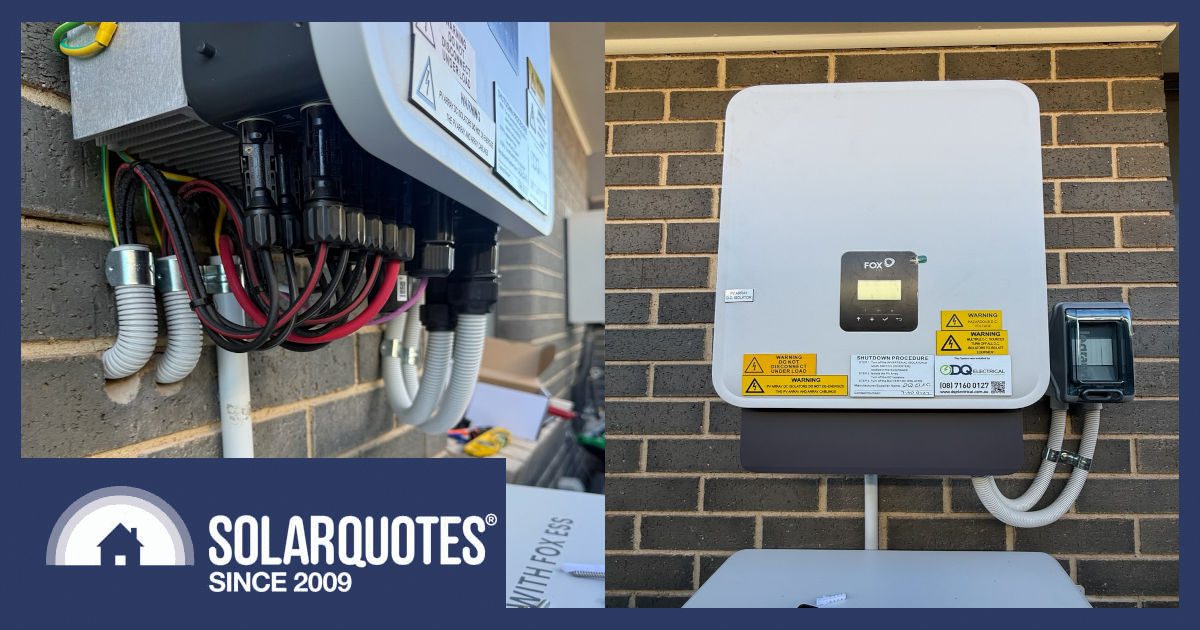
My first hand inspection of a Fox ESS install done by the quality team DQ Electrical is instructive. The hardware isn’t sleek glass but nor does it look unfinished. Without naming names, there are others out there that are obviously cheap by comparison.
This Fox installed by DQ Solar was well executed, despite the compromises you need to make when covering up all the holes left by a legacy system.
When I asked DQ founder Don Quattrocchi about Fox’s technical support, he said:
“Yeah, there’s a WhatsApp group and a phone number, but we haven’t needed it, they just work. In fact some of the boys say they commission easier than a Sungrow. We tried AlphaESS as a budget offering, but never again, way too many problems.”
Phil, the owner of this new Fox system, is a fairly savvy mechanical engineer, a bloke I know well enough to get an unvarnished opinion. He’s fairly new to solar but very pleased he didn’t get the Solax unit his Dad has ended up with. The people selling that solution were so cheap that they only used a 10kW 3-phase inverter. Sadly, that’s about 3.3kW of single-phase surge capacity, so it’s easily overwhelmed during an outage.
Whereas Phil likes his Fox because a competent retailer explained the limitations of a 15kW machine, and the Fox monitoring app offers a much better user interface.
So Lets Gather Some Thoughts
I’ve been keeping an ear out across the industry, and there are some interesting opinions.
On the plus side, I think these points augur well for the brand.
- Fox appears to be proactive and has been answering questions1
- They’re offering spare parts to improve compliance2
- They’ve partnered with Solar Juice, a very well-respected wholesaler
- They’re seeking to improve perception
- They’ve opened offices in Sydney and Melbourne
- Expanded installer training and resources are on offer
- Daily promotion of compliant installations on various communication platforms
- Recognition programs for reputable installers doing the right thing
- Joining associations like Solar Cutters and Solar Training Centre to support the industry and promote education
- Fox is white labelled by others who have obviously done some due diligence
- 1komma5 – big across Europe
- Energiser – hopefully better than the last line of junk they branded
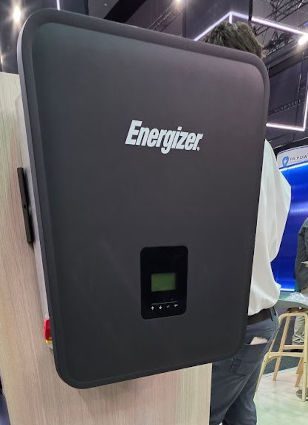
This trade show item looks pretty foxxy.
However There’s Some Cause For Concern
The unavoidable fact, however, is that low-priced equipment attracts low-class installation.
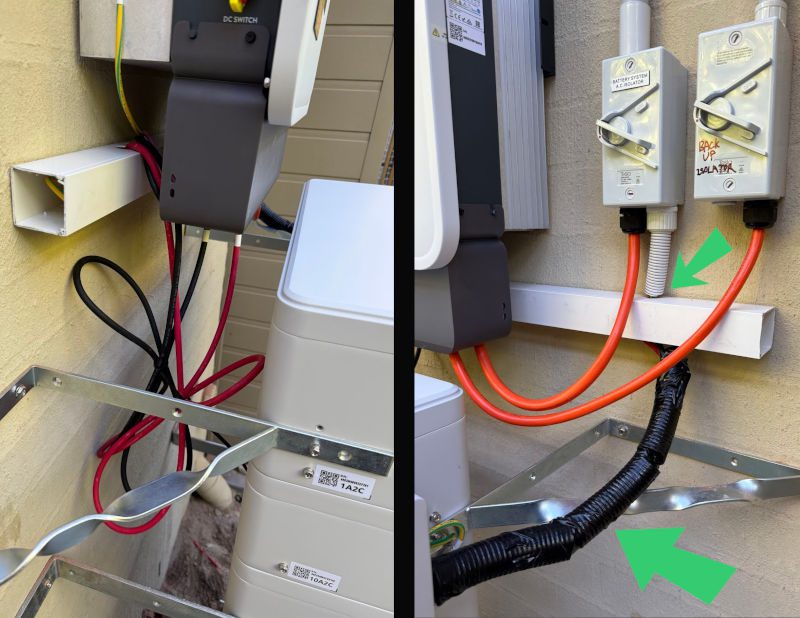
Excess cable just strewn behind the battery. Split plastic sleeve wrapped in tape. Conduit cut short. “Labels” are poorly drawn with a texta pen. This is a disaster, but apparently, the extended shelf brackets are a customer request.
Nowhere is this more evident than when you speak to people from the Office of the Technical Regulator. A frank conversation with a qualified electrician turned government inspector explains a couple of things. Firstly, there’s enough poorly executed general electrical work to make an inspector quite jaded. Secondly, at least one expert says Fox is junk.
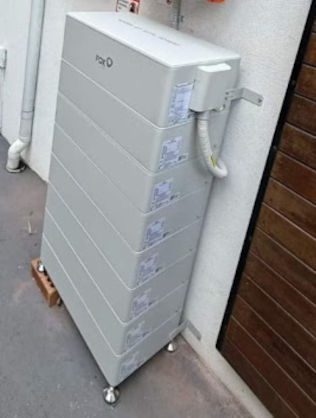
This installation looks ok until you notice it’s sitting on a house brick.
Speaking to a renewable specialist from the OTR, he was scathing about Fox. It’s an opinion I think carries some weight, but take it with a pinch of salt – the bloke in question couldn’t name a particular point of failure. So that could simply be an extension of the vicious circle, where poor-quality installs infer that nobody cares because the product is cheap.
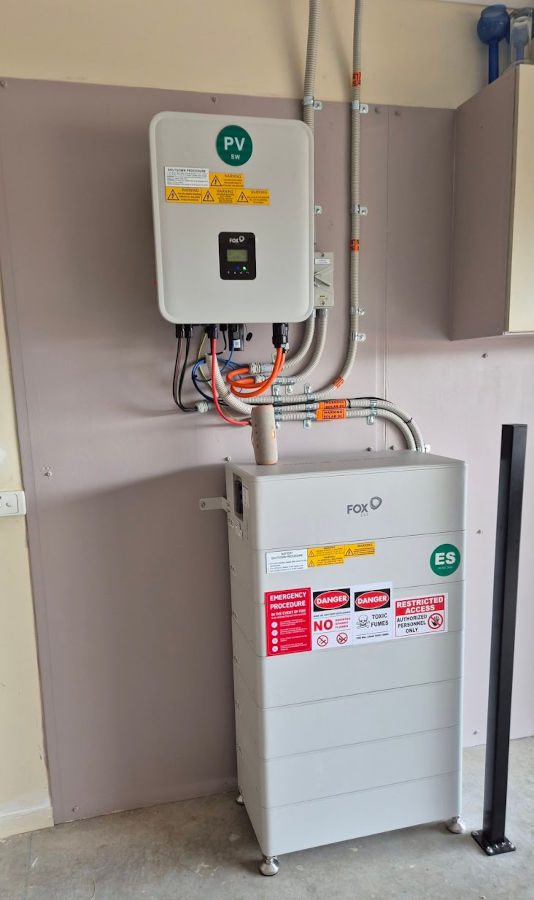
Another mess. Basically, all of these stickers belong on the wall, not on the equipment. However the battery wiring is mislabelled as solar and isn’t appropriately protected either.
Fox Is A Classic Case
Latest sales claims say Fox has been very successful, and that is no doubt because they’re competitively priced. I don’t know if they will be overly happy with our review here, but there’s simply no escaping the fact that when you target a low price point, you’ll get what you’re aiming for.
Fox appears to be doing the right things, so if I were in the market for a budget inverter, then I’d probably give them a go.
I’ve had experience with more established companies pushing junk in the past, and seen some terrible warranty battles, but so far, Fox doesn’t seem to be that kind of rubbish.
In fact, when SolarQuotes founder Finn Peacock called out Fox’s limited charging rates in cold weather, a Fox representative emailed me to explain that they now have a notification for it in their monitoring app. When the battery temperature is low, a snowflake icon appears. Tapping the icon triggers a pop‑up explanation outlining how low temperatures may temporarily affect charging performance.
This is honestly pretty transparent, it’s something that would save customers some angst, plus save me some time on the phone offering support to confused punters who think they have a warranty problem.
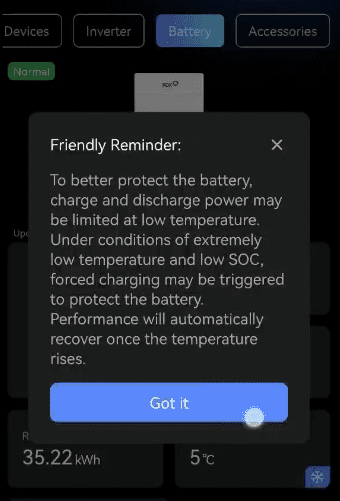
Friendly reminders in the app will save everyone a lot of hours writing support emails.
Going Under Cover
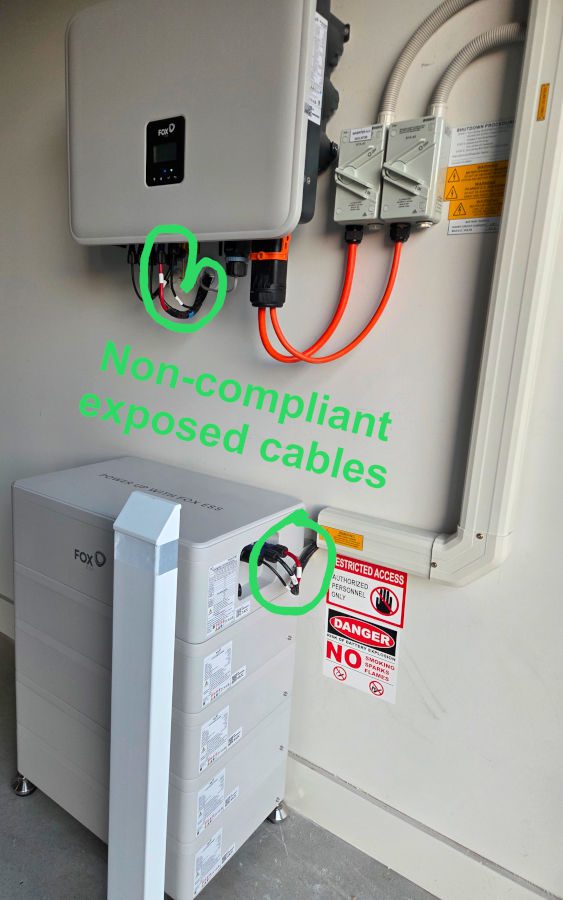
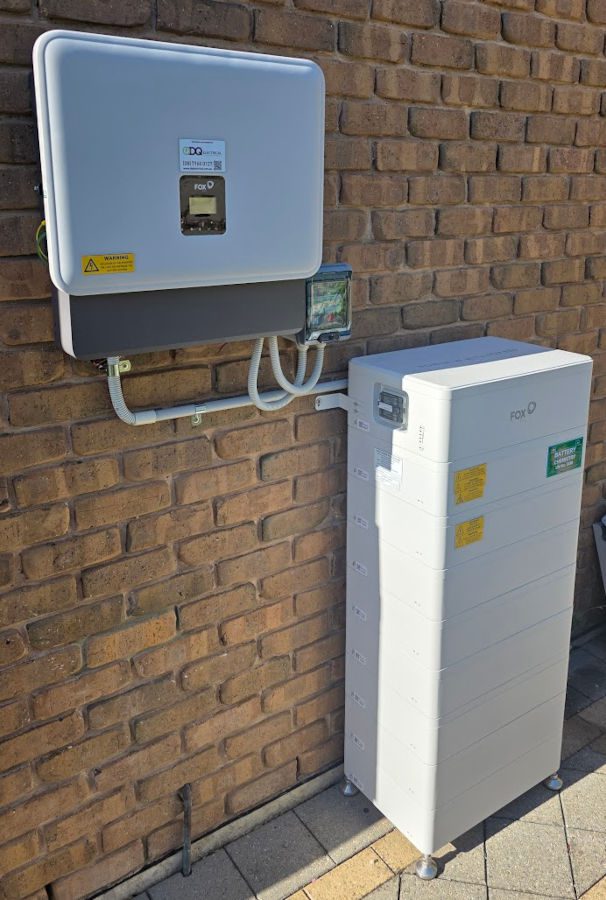
This looks like a nice, neat job, except for the battery cables, which have recently become a problem.
We’ve seen instances of Fox installs lacking mechanical protection (they aren’t alone in this, but as such a popular brand we do see a lot of examples).
Fox has again emailed us to explain that they’ve been taking action to rectify the issue and that they’ve been pretty responsive to other questions we’ve posed.
They advised us that for the EQ Series, cable covers began shipping via distributors in the second half of 2025 as separate packaged items, while for the CQ Series, cable covers are included by default inside the battery packaging.
All inverter models began shipping with mechanical covers to distributors in late 2025, in separate packages to the inverter itself.
Asked why there were so many examples of installs without appropriate covers, a representative of the company said:
“Because covers were initially shipped as separate packaged items, some installers may not have realised they were available or included. The shift to a 1:1 supply ratio is designed to eliminate this issue and ensure consistent use across all installations.”
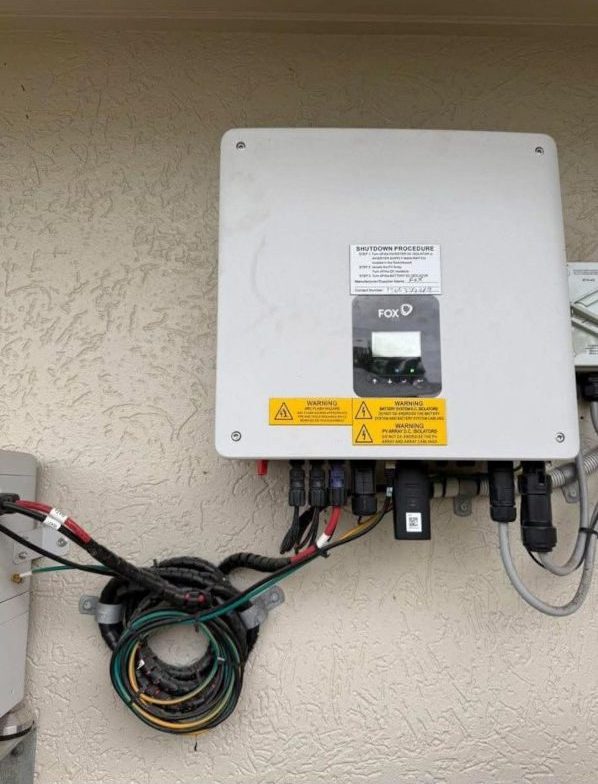
This is just what you get when you pay the lowest price. That coil of cable isn’t just ugly, it’s not properly supported, nor mechanically protected, simply non-compliant.
A Very Young Fox
Like the superannuation adverts say, past performance is no indication of future performance, so knowing that SMA and QCells left Australia abruptly, I hope Fox are successful going forward. However we have to remember that as a company Fox is only 7 years old, they entered the Australian market 2 years ago, and they’re offering 10 year warranties.
Fox appears to offer some reasonable gear at reasonable prices, but a quick survey of various solar socials shows there’s no shortage of poor installations. If you have a Fox system installed, then please click here and leave a review, not just for the hardware, but for the salespeople as well.
I have to reiterate we aren’t targeting them for criticism (as the devotees in the comments section will insist) but when you claim #1 status, the success cuts both ways.
They seem genuine about improving the delivery of compliant equipment but we’ll have to see just how they can make sales companies care. Perhaps they need to incentivise customers to leave feedback for their installer?
 About Anthony Bennett
 RSS - Posts





I have a foxess cq and seems to be working well.
Cabling done is neat and in conduits
Can you post some pictures of the cable covers mentioned in your article.
Hi Mark,
The title image shows the same inverter with neat wiring shown off & then cover installed.
I found with my DSW Energy Fox install that:
1: The inverter settings for import/export werent set up properly or explained. I did a lot of trial and error to get it to work with Globird ZeroHero.
2: SAPN Capability test wasnt completed which affected export limit (limited to 1500w). I only found this out when I queried SAPN Customer Service.
3: My HWS was left on Controlled Load which they came back in about 5 days and installed a rotary timer to “solve” the problem – it didnt and HWS still heats up when it feels like it. One day I will get another sparky to fix.
4. I had to request a COQ .
The overall install seems neat enough and finally it is working ok.
Still happy I stuck with Tesla. Better the devil you know, and the gear has been pretty much flawless and integrates beautifully with my Tesla EV as well. I’d pay extra just for that integration.
And Penrith Solar do great installs (plug).
100% this!
Seriously couldn’t be much happier with our Tesla system, and the software and system that operates it.
A mate has just had a system installed (unfortunately I’m not CERTAIN of the details and brand yet), and it’s been a nightmare. His installer has been professional and helpful but between the two of them they still can’t sort out the software – it’s often grid charging when
it shouldn’t be and exporting power when it shouldn’t be (with the battery at a low state of charge).
Hopefully they will get it sorted eventually but compared to our Tesla power wall it’s cheese and chalk.
Cheers
Update to my previous- just spoke again with my friend.
His system is Sungrow, and he’s still having major issues. His installer hasn’t been able to sort it out.
Hopefully the installer can get on top of it.
I have friends who won’t buy Tesla because ‘Elon’. I do try to warn them that they may end up in a world of pain if that’s their sole criterion for choosing a system. Fools and their money.
I had a quote organsied for neighbours from auspwr here in Adelaide, for new solar and Fox ESS battery.
They had an old 2kw solar system, the inverter died god knows how many years ago, though the owner said they are on 40c odd something FIT !! ha.
Good crew, sales and install, follow up etc.
Ended up with 19 or so kw solar, 22 or 23kwh battery stack.
Their $1200 quarterly bill has turned into a credit each month so far, but with mostly end of last autumn, summer, and spring under the belt.
They know winter will be harder, although they have a big wood heater, and for summer hit the 8kw ducted air cond hard.
Seems good value done with a good crew, that’s the harder bit, finding the right people.
If only 1% of the over allegedly 50,000 installed units in Australia in the past 9 months, we should be reading over 5,000 reviews be it good or bad.
I’m not able to review FoxESS but I can say they were my first choice back in 2021, that’s when I requested a quote for their system.. then the government changed some legislation, I believe it was to do with being able t9 limit flow to the grid. The installers didn’t get my quoted system installed in time, so my second choice was AlphaESS.. my first inverter was replaced under warranty, my installer didn’t respond so Alpha picked up the call for help and organised a local installer to do the change over. Touch wood, I’ve had very few app problems since and twice asked for information on an error message. All fixed remotely.
I wish I’d gone with a bigger system as updates to AlphaESS batteries don’t tie in with older systems. I have a 10.1kW battery with 5kWh inverter linked through my Goodwe 5kWh inverter installed with my 5.6kW solar panels. The good news for me is that I haven’t had the battery rebate, my whole system has paid for itself.
“In fact, when SolarQuotes founder Finn Peacock called out Fox’s limited charging rates in cold weather, a Fox representative emailed me to explain that they now have a notification for it in their monitoring app. When the battery temperature is low, a snowflake icon appears. Tapping the icon triggers a pop‑up explanation outlining how low temperatures may temporarily affect charging performance.”
So they don’t work properly in cold weather, but they tell you that to save you a phone call?
And that is seen as a good thing.
I would suggest, a better thing, would be a battery that works in the cold.
Are they telling people this before purchasing it or is it only after spending the money you get to find out?
I’d actually suggest this is a massive flaw given the “cold” weather is in May…. how does it go when it is actually cold?
Hi Bob,
Market leaders like Fronius, BYD, Sungrow & GoodWe will all suffer the same issue.
If cold performance is critical then some other brands offer heating elements as standard, or optional, but at the end of the day it’s not not like Australia is terribly snowy.
Sigenergy has built in heating system if cold weather is an issue in deciidng on a battery brand to choose.
Tesla PW3 has internal heating as standard.
GoodWe has optional heating for ESA versions in Europe but I’m not sure they’re available here yet?
Both offer much better support than Sigenergy in my experience.
I just got the CQ7 installed. 42kw battery. Apparently the new Foxess stuff comes with self heating in the battery to avoid charging issues. I’m not too exposed either way as I wouldn’t get below 7 degrees most days of the year.
Also isn’t that the CQ7 battery now comes with a little heater when it gets too cold?
There’s no such thing as a free lunch. So…
If I’ll be housing my battery stack in a less hostile environment, like my insulated garage, whey pay for battery heating that I don’t need?
Sure, a FoxESS battery may not be the best choice for an outside install in Hobart 😉
Not an engineer or electrician, but heavily involved in capability and sustainment issues across a range of platforms. Early adopter with small solar system (190w panels) in 2012, incl extra install of micro system. Not a lot of info back then, price Vs quality was always an issue. Both installer and hardware no longer in Oz, with one company doing a “Phoenix “ 3 x times it appears. 2023 found a local electrician who assisted with new options as 1 x string of panels not performing. Replaced all panels with new Jinko and took ‘risk’ – very happy. I had specific requirements, including house back up. Considered a gas generator for whole of house, about same price as 15Kw battery (cheaper types), went with SOFAR Powerall battery, again not a lot of info, but seemed to meet our needs. Too many installers were vague, promising the world – Tesla only had V2 release and no compatible hardware to use with new release. Forced to talk with Tesla engineering in SA to get real answers.
Part 2. Missed Federal rebate, replaced gas ducted heat and evaporation cooling with ducted ActronAir. Summer/Winter electricity use extreme, but panels and battery worked, upped battery to 30kW max to try and cope, 24kW effective access. 3 years later technology has developed greatly. Looking to vary SOFAR single ph replacing 6kW inverter with 10-12kW inverter when released. Used same installer – New sky Energy Solutions in Melbourne metro area. Dedicated team of workers. Have used NewSky to install Fox 42kW at daughters and 3 x other friends. I would not risk my reputation with flimsy recommendations. So 4 x Fox units running as designed with quality installs by dedicated team and 1 x SOFAR. Anything longer than 10 year warranty with technology advancement now irrelevant. It will be cheaper to junk systems every 12-15 years. Govt policy and Electric distributor costs and policy with dictate these shifts. Over capacity is eaten way once you use, so go big with panels and battery.
My ex husband has installed same Fox system. I’d be happy with half that battery, but had 10.1 from Alpha. I’d love to expand but not sure about how an added system would work with what I have. My 8 year old Goodwe inverter is possibly getting close to end o& life, warranty runs out at 10 years.. hoping it will go longer.
Not sure what installers to go through as so many up and disappear. If I replace the Alpha system I won’t need more wiring, it has a EPS connected.
I am happy with my foxess batteries but the installer (Shark Solar) shorted out many thousands of dollars worth of appliances. Washing machine, NBN, Sensor convection microwave, cpap machine, plus many other minor things like charges and smart lightglobes. I would not mind so much and am prepared to research and then spen the time to replace the items, but they have ghosted me and have not provided insurer details meaning I would have been much better off paying the extra for a more reputable installer.
Seems to be FoxESS bashing season at Solarquotes. At least this article is caveated with the wrongdoing of installers unlike the last one.
I got a 48kWh and 15kW inverter before the rebate ended. It did require some cabling remediation but all is working well. Haven’t had a single day with net costs even accounting for the daily fee. Happy to say when that changes but at this point I don’t see why I would’ve paid $10k more for another battery option when I got the full thing installed for $10.5k.
The next steps will be electrifying the rest of the house so I can cycle my battery more often and axe the gas/petrol related costs.
FoxESS battery user – very happy – working great – loving giving the middle finger to those greedy power companies
Your Green Planet installer (Sydney): equally happy with the battery installation – professional team
They already installed our panels 3 years ago and I was happy with that installation so I just called them to give me some battery options and went with the FoxESS option. I didn’t even speak to other installers this time round as I knew I could trust them.
Friend of mine has just had FoxESS H3 15kW and 42kWh of battery installed.
Can’t really fault the hardware and the the software is pretty slick and feature rich.
The retailer kinda stuffed up and didn’t get all the install details correct. Installer came prepared only for basic AC connected solar (using existing 15kW SMA inverter), no EPS and no switchboard upgrades. Rather than sending him away he settled for such basic install. Not that pretty either, but is compliant and works.
There’s two basic schools of thought with connection design. FoxESS has gone “plug’n’play”. All connections use plug connectors. Which does mean they can maintain enclosure sealing, and it’s easier to swap out units if necessary. However, it’s actually more work for installers. Damn fiddly terminating cables into the connectors. And some of them are huge, extending down a fair way that is hard to fully cover.
The other is to have a separate terminal compartment with simple screw terminals. Cables directly attached to proper screw terminals and conduits/glands attached to the housing. Secure wiring connections, just as easy to service and a neater finish.
Pretty happy with our Fox ESS 42kWh/10kWh 3 phase AC coupled setup. Installers did a good job as far as I can tell, fairly neat with conduits. Went a bit overboard with warning stickers, but that’s the regulations.
Hopefully the support is there if/when needed. Feels like a lot of the bad press comes from installers/manufacturers struggling to compete and therefore attacking the competition.
The Sunny Boy six 1.44kW panels were down to less than 60% output after 15 years. Should have checked earlier. So got a dozen quotes, went for cheapest with Zip installers who put in 20 JA panels, a 10kW Fox inverter and a 9 cell 42kWh Fox battery. Done by end of Feb like they said. Alas, #3 cell has a flashing red light but app says battery is 41.93kW which is 9 x 4.66kW so seems OK. Panels on a flat roof with only 2 degree slope so water pools on some panels. They need tilting. Fox app shows power increase inside 5 seconds if I put the jug on. Good.
Went from Red to Amber. Red got final bill wrong by $80 of solar but this was fixed in a few days. On a learning curve with Amber. If I import from grid then this adds to solar and charges battery. Good. But if I export the solar is shut off and only battery power is sent out. Bad. In 3 months have done 11 battery cycles -supposed to be good for 6,000. That’s 150 years. We shall see LOL Red light problem unfixed after 13 weeks.
If I’m not wrong. Foxess have entered the Australian market at 2020. And quit two times, this time is the third time come back to Australia. I trust it is a good products but as the history, it makes me a little concerned.
FoxESS removed their product in 2021/22 as the federal government changed legislation around some minor part in the inverter. I can’t say with 100% surity, it I think it was to do with with feeding back into the grid.
I wanted to have one of their systems but was over waiting, for the rebate, so went with AlphaEss, I haven’t been disappointed, the app changeover though.. it leaves a bit to be desired.
Had a Fox ESS 42kWh/15kWh 3 phase battery/hybrid inverter installed December 2025 and AC coupled to an existing 10kW PV array.
The gear is placed in a subfloor area with a concrete floor & stable temperature (22 + or – 7 degrees) I managed to have a personally recommended installer accepted to do the job on behalf of a ‘high sales volume installer’. I did a lot of my own research and concluded that the battery’s ‘low cost’ was justified by the plunge in global wholesale cost of battery modules but not reflected in ‘name’ brands. This together with the endorsement of a deeper European market where Fox ESS is a leading brand reassured me to take a punt and I couldn’t be happier.
The system has hummed like a dream machine and hasn’t missed a beat. The associated app although feature rich could do with some tweaking but hopefully that should come in time. I should stop here otherwise I run the risk of being perceived as a salesman 🙂