
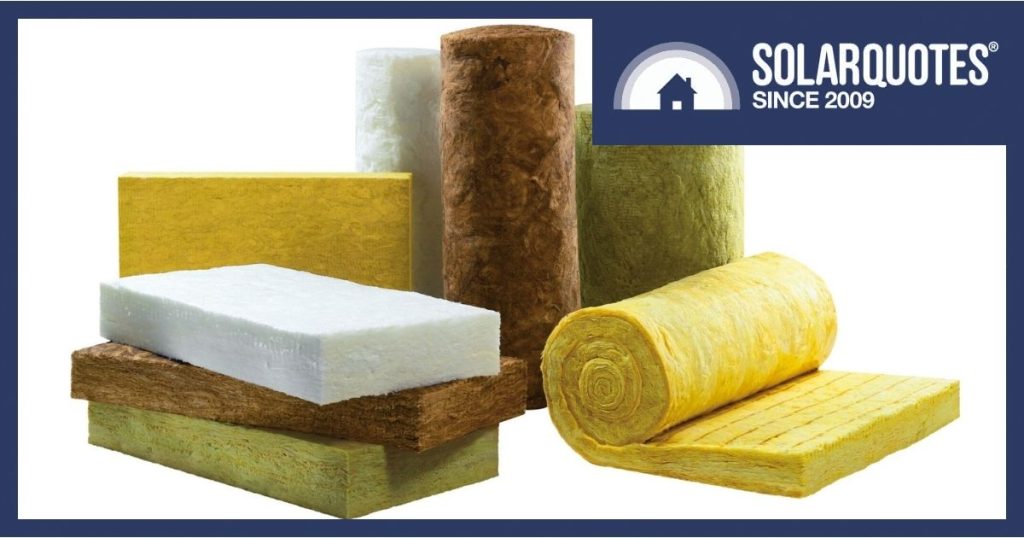
The parts of your apartment you can insulate depend on four main factors:
- Whether you own or rent
- Whether the work affects common property
- Whether it changes the building’s outside look
- Which state you live in
These points will help you figure out what you can do right away, what needs approval, and what isn’t allowed at all.
Many Apartments Lack Good Insulation
Check what insulation your apartment already has before making any changes.
Australia’s National Construction Code (NCC) has set minimum insulation requirements for apartment buildings since 2005. It sounds reassuring until you learn how much requirements have shifted since then, and how many states quietly went years without any minimum wall insulation rule at all.
New South Wales and Victoria, for example, both had periods of a decade or more during which an apartment’s energy efficiency was assessed using a whole-building energy rating rather than a guaranteed insulation level for any single unit.
So the year your apartment was built tells you surprisingly little. Two units built five years apart in the same city can have completely different wall insulation, or none at all, depending on which code happened to be in force the week the walls went up. To find out where you stand:
- Ask your owners’ corporation or strata manager whether your building has a NatHERS (Nationwide House Energy Rating Scheme) certificate.
- Check CSIRO’s data for your state and building year.
What You Can Do Today, No Approval Needed
Some upgrades don’t touch common property, which means you’re free to do them whether you own or rent, without asking a single soul for permission. Nobody gets a vote except you.
Secondary glazing is a good option (and honestly, the one I’d start with). Add another pane, usually acrylic or glass, inside your window frame to create a sealed air gap, similar to double glazing. Because it stays inside the window and never touches the outside of the building, strata usually has no idea it’s happening, and no reason to care.
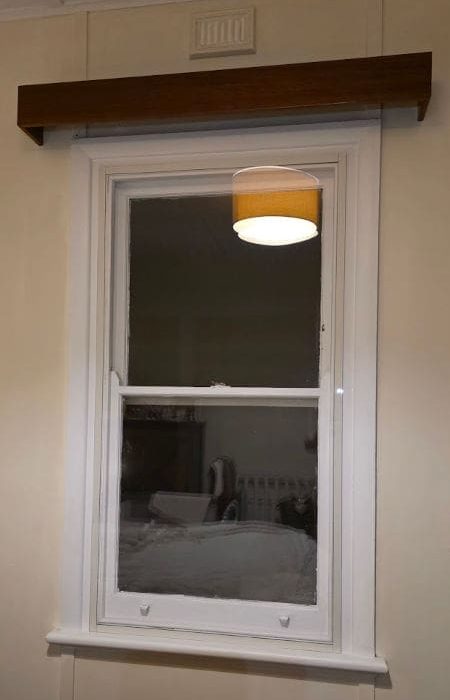
It’s difficult to make out, but I assure you this is an image of secondary glazing. Look at the reflection.
Windows are worth the effort. A single pane of bare glass can gain or lose up to 10 times more heat than the same-sized area of uninsulated wall. In a typical home, glass accounts for around 40% of the heat lost in winter and around 87% of the heat gained on a hot day. Your windows, without malice, are the least loyal part of your apartment.
Secondary glazing also works for sliding balcony doors and French doors, which are often the largest glass surfaces in an apartment. You can add an internal secondary panel or hang a heavy curtain.
Other options in the no permission needed category include window film, thermal or heavy blockout curtains, and basic door seals. Here are a few more worth knowing about:
- Honeycomb (cellular) blinds trap air in sealed pockets instead of a single flat panel. This gives them an advantage over standard blinds because trapped air resists heat flow, just like double glazing.
- If you already have curtains but they aren’t thermal, you can add an inexpensive thermal lining to the back instead of replacing them. Your curtains won’t know the difference, but your heating bill will.
- A pelmet or curtain box above your curtain rod closes the gap at the top, where warm air escapes or cold air enters. It attaches only to the wall inside your unit.
- Mounting a tension rod inside the window recess, rather than using brackets outside, lets the curtain sit right against the frame with no gaps. This traps a layer of still air between the glass and the fabric, using the same principle as double glazing to winter-proof your home.
- Static-cling window film is a no-drill, renter-friendly option that cuts glare and some heat gain, and it won’t leave marks when you remove it. Your bond will be safe.
- An insert, such as cardboard cut to size, can help, though it may look a little janky from outside. If you place the cardboard on the window with an air gap of about 20 millimetres instead of placing it right against the glass, you’ll get better results. Without the air gap, it’s just a piece of cardboard.
Draught-proofing is especially cost-effective. Sealing gaps around doors and windows can cut heat loss by 15 to 25%.
A few specific draught points are easy to miss:
- A door snake or draft stopper is portable and doesn’t need any installation, which is ideal if you can’t use adhesive seals. Again, your bond will be safe.
- Exhaust fans and range hood ducts are often overlooked sources of draughts in apartments, letting outside air in when the fan isn’t running. Fitting a self-closing backdraft damper to the duct lets the fan work as usual but seals the duct when the fan is off.
- A rug or heavy floor covering is the simplest option if you can’t install underlay, since it counts as furniture, not a fixed installation. It won’t work as well as an underlay, but it’s the only floor option for renters and is inexpensive.
Be careful when making your apartment more airtight, as less air movement can increase the risk of condensation and mould. This is especially true in bathrooms and kitchens with limited ventilation. Seal gaps that let heat out, but keep exhaust fans and wall vents clear and working. Don’t seal everything shut.
What Needs A Strata Vote, But Is Worth Doing
The next level covers work that affects common property, usually the external wall, but doesn’t change the building’s outside appearance. This is the tier of “ask nicely first,” and the work usually needs a general meeting vote.
This category includes:
- Relining internal walls with insulation batts, which involves removing the plasterboard, adding batts, and putting the wall back together (preferably in that order).
- Cavity or injected wall insulation: a less disruptive option in which a specialist adds insulation through small holes or existing gaps without opening up the whole wall.
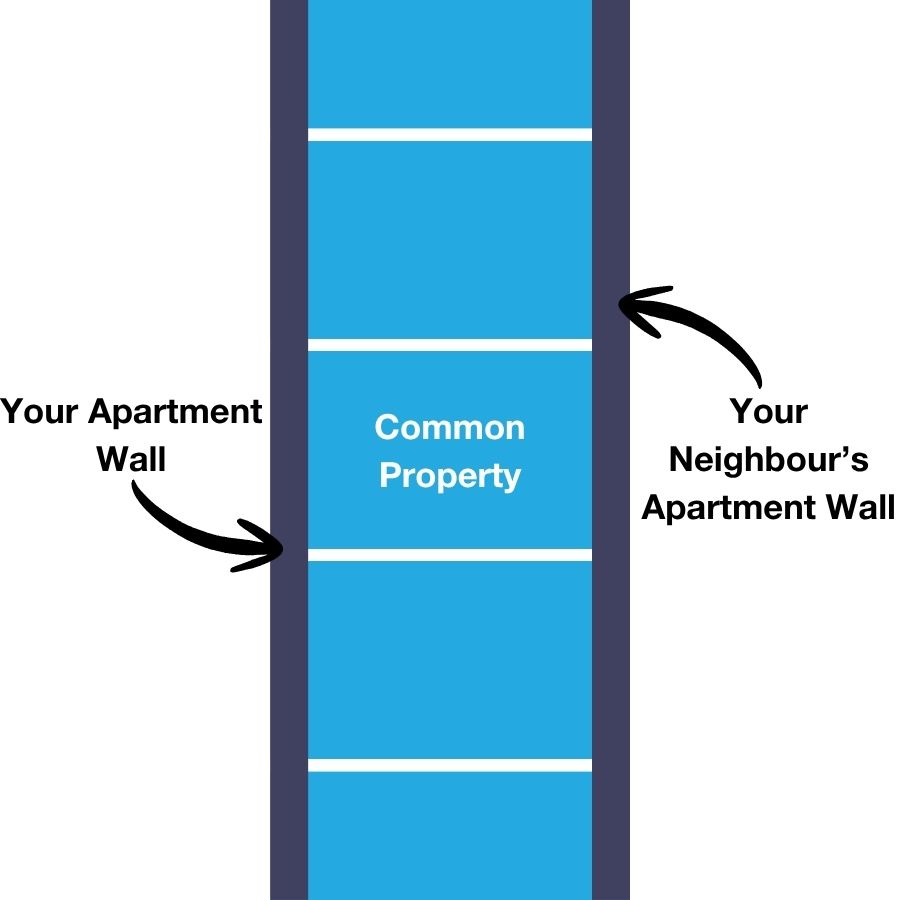
The main question is: who owns the wall? In most states, external walls are common property, even though the plasterboard is part of your unit. This is why relining or adding insulation inside the wall needs approval, but painting the wall does not.
Neighbouring units are sometimes considered common property. You might need to talk to your neighbour as well as the owners’ corporation before you do any work.
There are two things to check before you put in a request:
- Who pays is not always clear. Usually, the owners’ corporation covers common property work through everyone’s levies, but sometimes you get exclusive use of the area through a special by-law, which means you pay. Check which rule applies before getting a quote.
- In older buildings, especially those built before the 1990s, drilling into common-property walls can disturb asbestos or affect fire barriers between units. This is a major reason committees are cautious, even if there’s no legal reason to refuse. And we all agree, I’m sure, that caution is a good thing when it comes to safety.
Hiring a licensed installer, providing compliance certificates, and agreeing to fix any damage can help your request get approved.
What Most Committees Will Knock Back
The next level involves work that changes the building’s outside appearance or affects its structure. This needs a special resolution, which is the hardest approval to get under most strata rules. It’s difficult, but not impossible.
This category includes:
- Full double glazing means replacing the whole window or balcony door rather than just adding a secondary pane.
- External wall insulation.
- Any changes to cladding or the facade.
- Ceiling and roof insulation for top-floor units can be tricky because the roof cavity above the top floor is often common property, not part of your lot. This means you don’t have the same freedom as a homeowner.
What’s Not Possible In An Apartment
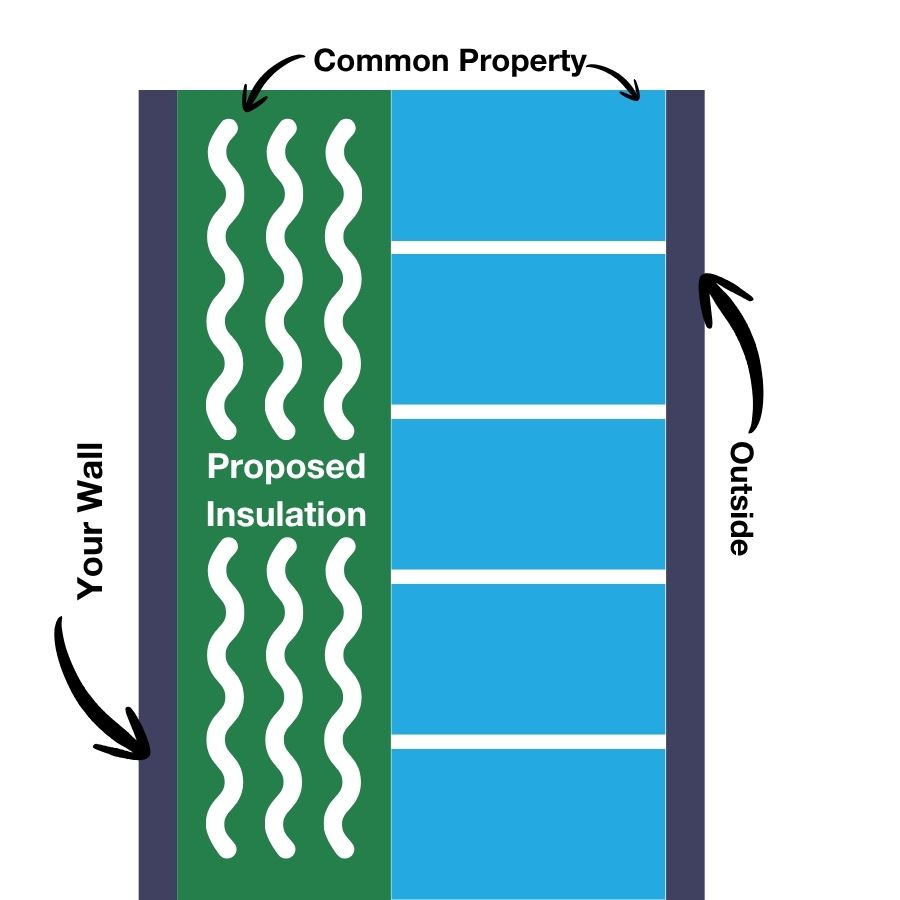
No matter how helpful your strata committee is, these two upgrades aren’t possible because the building’s structure makes them impossible, even before you consider approval:
- Full underfloor insulation. Most apartments sit on a shared concrete slab, with no space underneath for insulation.
- Insulating a wall or ceiling you share with another heated or cooled unit. If your neighbour’s living room is on the other side, there’s simply nothing to insulate against.
Rebates And Low-Interest Loans That Can Help
Some government programs help cover the cost of these upgrades, but details can change, so it’s best to check the latest information yourself. As of now:
- NSW’s Home Energy Saver program offers eligible households zero-interest loans of up to $15,000, repayable over 10 years, plus discounts for eligible lower-income households, covering insulation, solar, batteries, and other upgrades. Strata properties can apply, but generally need approval from the owners’ corporation or strata manager first, in addition to the program’s own eligibility rules.
- Victoria’s Energy Upgrades program offers insulation discounts for eligible households.
- The ACT’s Home Energy Support program covers up to 50% of the cost of a ceiling insulation upgrade, reverse-cycle heating and cooling, a hot water heat pump, or an induction stove upgrade.
There’s a catch (there’s always a catch): several of these programs, especially the ACT one, focus on ceiling insulation, which is exactly the thing apartment owners usually can’t touch without a major work approval.
Always check the fine print to see what the program covers before assuming it applies to your unit. Confirm the latest details for your state, since funding and eligibility can change.
Strata Rules, State By State
There’s no single national answer here, since each state and territory runs its own legislation:
- New South Wales: Strata Schemes Management Act
- Victoria: Owners Corporations Act
- Queensland: Body Corporate and Community Management Act
- Western Australia: Strata Titles Act
- South Australia: Strata Titles Act and Community Titles Act
- Australian Capital Territory: Unit Titles (Management) Act
- Tasmania: Strata Titles Act
Even though laws differ in each state, the approval process is mostly the same everywhere.
The fastest way to find out what’s allowed is to check your own bylaws. Most strata managers will give you a copy if you ask. In many states, you can order an official strata records search if your managing agent is slow to respond.
Quick Reference And Review
| Option | Tier | Typical approval |
|---|---|---|
| Draught seals, thermal curtains, window film | No approval needed | None |
| Secondary glazing (window or balcony door) | No approval needed | None, doesn’t touch the facade |
| Internal wall relining with batts | Usually needs approval | General meeting, minor renovation |
| Cavity or injected wall insulation | Usually needs approval | General meeting, minor renovation |
| Acoustic underlay under new flooring | Usually needs approval | General meeting, plus compliance certificate |
| Full double glazing/window or balcony door replacement | Rarely approved | Special resolution |
| Ceiling/roof insulation (top floor) | Rarely approved | Special resolution, often common property |
| External wall insulation or facade change | Rarely approved | Special resolution |
| Full underfloor insulation | Not possible | Blocked by a shared slab |
| Insulating a wall or ceiling shared with a conditioned unit | Not needed | N/A |
Where To Start
Begin with the free options. Draught sealing and thermal curtains are inexpensive, don’t need approval, and work in every apartment, no matter how it’s built.
If you’re an owner considering anything that affects a common-property wall, check your by-laws and talk to your strata manager before assuming the answer is no. This is especially important in NSW if the upgrade counts as sustainability infrastructure. Also, ask early who would pay for it if it’s approved. Nobody enjoys finding out after the fact.
None of this replaces good heating and cooling; it just means whatever system you already run has less work to do (and a lower bill to show for it). For more on what to do about thermal comfort beyond insulation, read our guide on reverse-cycle air conditioning for cooling and heating.
And for another way to cut energy bills, check out our guide to solar and batteries in apartments.
 About Jacob Boyd
 RSS - Posts





Speak Your Mind