
EV charging, heating, and cooling are usually the biggest electrical loads you can shift. We’ve already talked about heating and cooling in another part of this series, and we’ve also covered EVs. After those, hot water and the pool pump are usually next. But not all appliances can be shifted. Here’s how to figure out which ones you can move, and how to do it.
How Do You Make The Most Of Free Daytime Electricity?
Since 1 July, eligible households in New South Wales, South Australia and South East Queensland (SEQ) have had access to three hours of free electricity in the middle of the day through the Solar Sharer Offer (SSO). Victoria is getting its own version in October.
In our video explainer, SolarQuotes founder Finn Peacock says you need to move about 6 kilowatt-hours (kWh) of electricity use into the free window each day just to break even.
Rates are higher outside those hours. The tips below will help you hit or even beat that 6 kWh target.
What Appliances Should I Shift With Solar Sharer?
If you already use your heating and cooling during the Solar Sharer window, the next thing to check is which of the below appliances in your home are worth shifting:
- Hot water system
- Washing machine
- Clothes dryer
- Dishwasher
- Pool pump
Not all of these use the same amount of electricity. As SolarQuotes’ heat pump expert Tim Johnston puts it:
“Hot water – if it’s electric storage – and pool pumps are genuinely big loads. The washing machine and dishwasher don’t use much energy at all, but they’re some of the easiest appliances to shift, so you should still move them. It’s a low-effort, easy win.”
If you can run enough of these appliances during the free window, the Solar Sharer Offer can help you lower your bill.
However, some hot water systems and pool pumps are wired differently from the rest of your house, which affects whether they can use the free window. If you get this wrong, using a timer won’t help.
Solar Sharer And Hot Water
If your hot water system is on a general supply rather than a controlled load (more about this later), the calculation depends on the type of system you have.
A standard resistive electric hot water system uses a lot of power, often around 10 kilowatt-hours (kWh) a day for a household of three to four people. This is usually expensive, but during a free window, it doesn’t matter because the electricity is all yours to use.
If your system can finish heating within the 3-hour window, the usual inefficiency that makes resistive hot water expensive doesn’t matter for usage during that time.
Which Hot Water System Is Best For Solar Sharer?
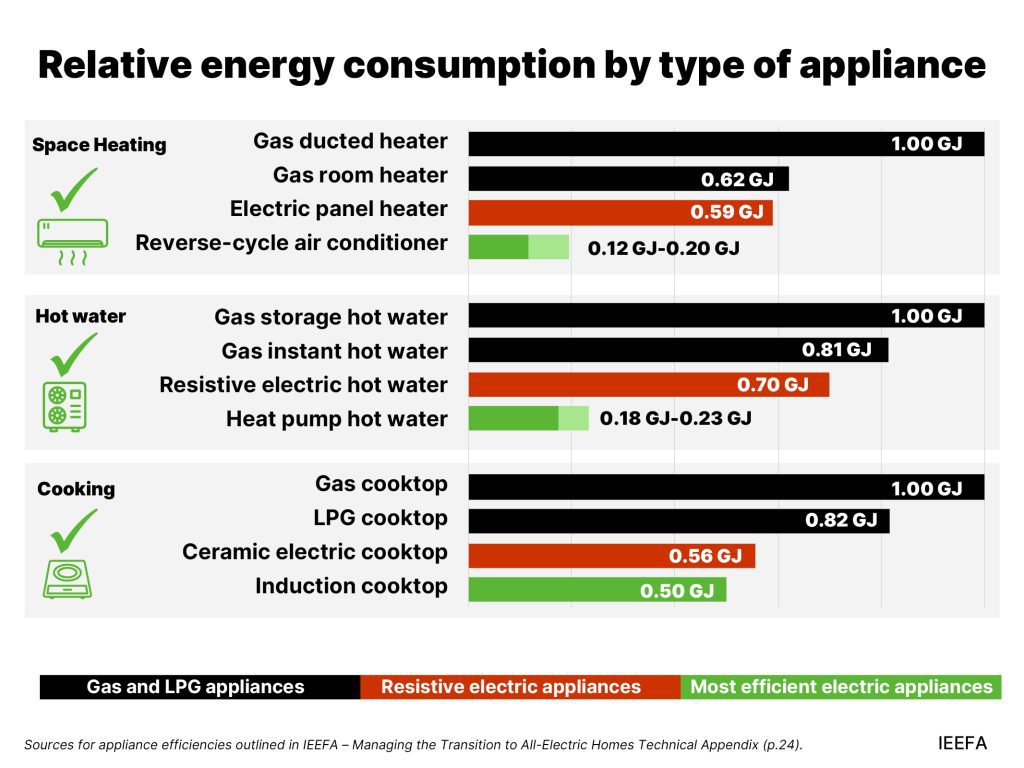
When it comes to the best option for hot water systems, we typically recommend heat pumps over resistive electric due to their sheer efficiency.
Efficiency doesn’t matter quite as much if the appliance is taking advantage of free electricity periods – but it is still relevant if you’re also trying to charge an EV, or run a dishwasher, washing machine, clothes dryer, or pool pump within Solar Sharer’s 24 kWh limit.
A heat pump leaves more of your daily budget available for other things running during the same window.
There isn’t a single best option. It depends on what else you want to run during your three free hours. If you’re only running hot water, a resistive electric system’s higher power use is fine.
If you want to run several appliances at once, a heat pump’s lower energy use lets you fit more into the free window.
Compare heat pump hot water systems here if you’re thinking of switching.
How To Set A Heat Pump Hot Water System To Run In The Free Window
Now that we’ve talked about heat pumps, let’s look at how to program them to make the most of your savings.
If your hot water system is on a general supply, you can run it during the free window using one of the three heat pump timing options:
- An internal timer. Many heat pump hot water systems have scheduling built in, from a simple on/off dial to full app control. If yours has this, set the heating window to sit between 11 am and 2 pm (NSW, SEQ) or 12 pm and 3 pm (SA).
- An external timer. If your system doesn’t have a built-in schedule, you can add a timer at the switchboard to do the same job. This is a simple and often affordable upgrade.
- A controlled load circuit. As covered below, this is the only option that falls entirely outside the Solar Sharer’s free window. If this is your setup, a timer changes when you draw controlled-load power, but not whether the Solar Sharer’s free hours apply. They don’t.
No matter which setup you use, try to give your heat pump as much of the free window as possible, but don’t expect the whole cycle to fit inside three hours.
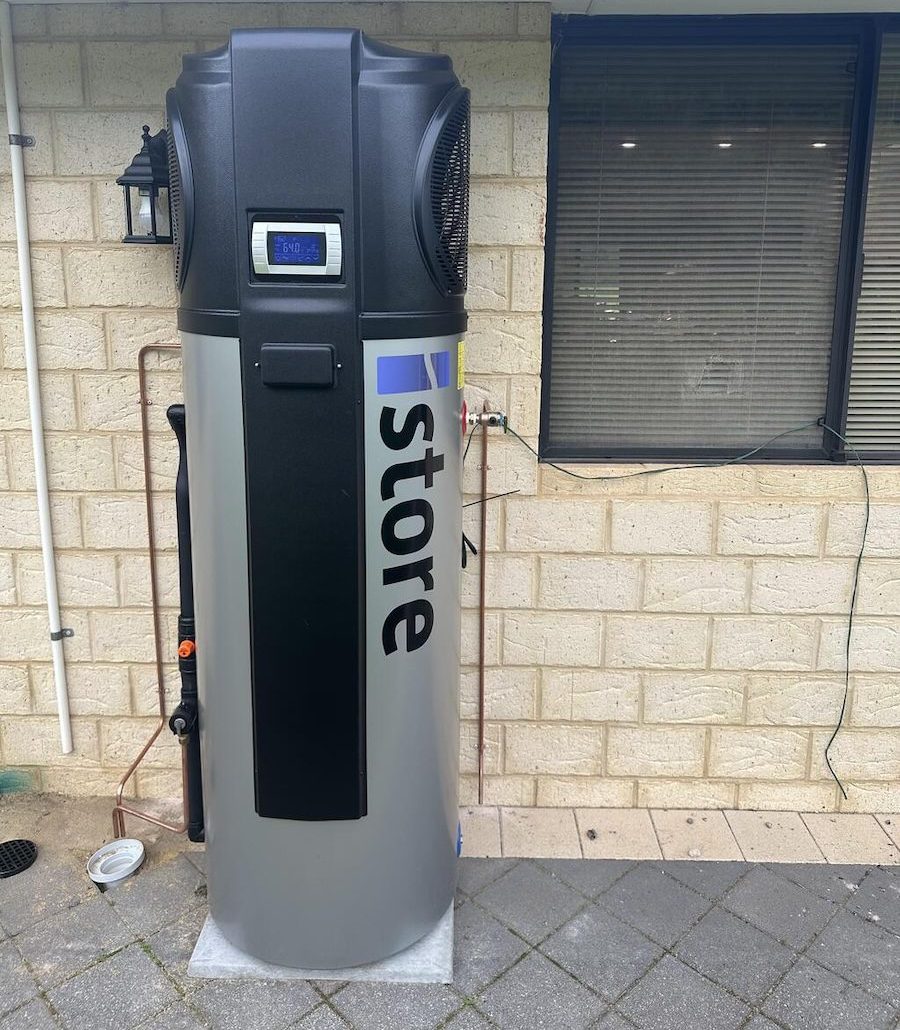
An iStore hot water heat pump installed by Positive Energy Solutions Pty Ltd.
Here’s another insight from Tim:
“Australian standards for heat pump hot water are quite conservative on Legionella prevention. Most systems need to periodically heat the water to 60°C to eliminate any risk. Depending on how much hot water your household uses, that can take anywhere from 1 to 5 hours. In most cases, including my own heat pump, it needs longer than three hours.”
In winter, when the tank starts out colder, you probably won’t get the whole cycle inside the free window. But you can still get most of the heating done, which is where most of the savings come from. You don’t want to run out of hot water or pay full price to heat what’s left.
Solar Sharer And Pool Pumps
Pool pumps are often wired like hot water systems, on a separate circuit from your main supply. So check your bill or ask your retailer before assuming you can move it into the free window.
If your pool pump is on general supply, you can usually reprogram its timer or controller to run the daily filtration cycle during the free window instead of overnight. You might also consider running your pool on solar energy.
The Controlled Load Problem For Solar Sharer
This part is important because it determines whether the advice below will work for you.
Many hot water systems and pool pumps aren’t connected to your home’s main electricity supply. Instead, they use what’s called a controlled load. This is a separate circuit with its own meter and tariff.
Controlled load circuits were commonly installed in days of yore to heat water overnight when electricity was cheaper and demand was lower. Here’s some more from Tim:
“That goes back to when the grid ran mostly on baseload coal. Overnight demand was low, so overnight power was cheap, and controlled load tariffs were built around that. Times have changed. With so much rooftop solar now, the middle of the day is often the cheapest time instead, which is the whole reason the Solar Sharer Offer exists.”
A controlled load isn’t part of your general usage. Appliances on a controlled load tariff are billed separately. For example, Red Energy’s plan states that controlled load charges still apply during the free window.
If your hot water system or pool pump is on a controlled load, Solar Sharer’s free three hours won’t apply to it. No timer, app, or schedule can change that. It’s just wired differently.
Before changing any settings, check your most recent electricity bill for a separate line labelled “controlled load” or “off-peak.”
If you’re not sure, call your retailer or an electrician to find out which circuit your hot water system and pool pump use. This quick call will tell you if the rest of this article applies to those appliances, or just to your washing machine, clothes dryer, and dishwasher.
Tim also points out that you don’t have to rely only on your bill:
“A lot of network operators [Distribution Network Service Providers] let you log into a portal and see your electricity use hour by hour. It’s probably more detail than some people want, but it’s a genuinely good way to see how you actually use energy, rather than guess.”
Washing Machines And Dishwashers In The Free Window
Washing machines and dishwashers are the easiest to shift because almost every model sold in the last ten years has a delay-start feature.
Set the dishwasher to start after breakfast with a 2-hour delay, and the cycle will run during the free window instead of after dinner.
Do the same with a load of washing before you leave for the day. A single wash or dishwasher cycle usually uses 0.5 to 2 kWh, which might not sound like much. But it adds up quickly if you run it along with a hot water heater and a pool pump during the same three hours.
Clothes Dryers And Solar Sharer
Don’t forget the clothes dryer. It’s often the most power-hungry appliance in the laundry room, using 3 to 5 kWh per cycle. That’s more than a dishwasher or a washing machine.
Clothes dryers usually don’t have a delay-start function. Someone needs to take the clothes out of the washer and put them in the dryer. If you’re home, just run it manually as close to midday as you can.
And if the sun is out, skip the dryer altogether. Line drying costs nothing and doesn’t use up your 24 kWh limit, leaving more room for other appliances.
If you’re shopping for a new dryer, consider a heat pump dryer. Like a heat pump hot water system, it uses much less energy than a standard dryer to do the same job. It also uses less of your daily limit when you run it with other appliances.
A heat pump dryer is very energy-efficient. It recycles air through a closed-loop system instead of venting hot air into the laundry. These dryers use about 50% less energy than vented clothes dryers.
Unfortunately, they cost a bit more (for now), so you’ll need to weigh the energy savings against the upfront costs. The Solar Sharer will also affect that calculation.
Solar Sharer And Your Energy Bill
Retailers are required to offer Solar Sharer, but they recover the cost elsewhere on the same plan, usually through higher rates outside the free window or a higher daily supply charge. We hate this.
This isn’t hypothetical. When Solar Sharer plans went live on 1 July, Finn watched the reaction to the new daily supply charges that came with them.
“Retailers don’t hand out free power out of the goodness of their hearts. They claw it back somewhere.”
Several retailers raised their daily supply charges sharply the same week the free window arrived.
Some households might pay more at other times because of higher charges or lower solar feed-in tariffs. If you switch to a Solar Sharer plan but don’t move enough usage into the free window, you’ll probably end up paying more overall.
The solution is simple: estimate how much electricity you can move into the free window. If you’re close to Finn’s 6 kWh benchmark or higher, the offer is probably worth it. If you can only shift a load of washing, it’s probably not worth your time.
What To Do Next
Start by checking your electricity bill, not your appliances. Whether your hot water system and pool pump are on a controlled load will determine how much of this article applies to you.
From there, set delay timers on whatever you can: hot water if it’s on general supply, the washing machine, the dishwasher, and the pool pump. Then estimate how much usage you’re moving into the free window.
If you can move a good amount of your daily electricity use into the free window, you’ll see real savings. If not, it might be better to stick with your current plan.
Compare plans using the SolarQuotes electricity plan comparison tool.
 About Jacob Boyd
 RSS - Posts





I’ve just taken over managing the electricity bills at our place and have found that AGL automatically changed our charges on 1st July. What you have warned of in terms of the “payback” for the free period being higher peak period rates and supply charges, has appeared on our bills from that date. We went from a flat rate of 25c/kWh and 0.78c daily supply charge to a peak/shoulder/ off peak variable rate AND supply charge is now $1.18.
So peak (4 – 8pm) is 39c
Shoulder (10-2) is 10c
Rest is 30c
FiT remained the same
What are AGL up to here?
They’ve just changed our plan and hiked those charges without the offer of a “free period”. Is that lawful? (Not that the free period is of interest to us. Its just the principal here…)
Yes a resistive with a 3.6 kw element would work out good nearly 11 kw in the 3 hours 👍
Great article thanks,
I need some advice though.
I’m considering the Solar Share offer with 3 hours of free power.
I have 12.5kW of solar, a Sungrow 9.99kW inverter with Sungrow 16kWh HV batteries and an EV which (when at home) we charge from 50% to 70%, using a 15amp power point, the EV is charged every couple of days, the hot water system is electric (1.8kW) it takes 1.5hrs until it shuts off it ia on a catchall relay/timer
We also are exporting power to a max of 5kWh.
We are on Ergon East, tariff 11 at the moment.
I assume that I can’t export while on free power?
Is it worthwhile for me to change tariffs?
Easy to have a sparky take your HWS off the CL and put onto the main circuit.
A Hager timer works great for whatever free or low cost tariff you choose.
We eventually did this after a year or so of getting solar, and do the 3.6kw resistive HWS off the EV 8c rate.
It used to be $1.40 on CL, now about 40c (or free if I bother to override it in summer etc).
The CL meter just sits in the meter box now, no recordings but takes up room, can stay there as I think it will costs to have it taken out by the DNSP.
Les, I repeat (ad infinitum!) be careful with timers that have contacts: these need to switch a contactor: HWS loads are reactive enough to weld relay contacts. Electronic switches if rated properly are OK.
A resistive HWS for an average family uses abt 7>10Kw/day, so easy in ´free´. One thing to be aware of is Daylight saving does not apply, so either set appliances to Eastern Standard time, or REMEMBER to check the appliances have not switched time in summer.
In my opinion, these ´free´ retail plans can cost one more if the battery system hiccups. This is one reason why the Energy Wholesaler fixed cost should be passed through with a markup so plans are easier to compare. Then, it would be easier to compare plans on power cost alone.
My mechanical HWS timer switch recently failed after about 15 years of faithful service, but I may have accelerated its demise after playing around with the time settings on a pretty frequent basis.
Since the new one was installed I have adopted the set and forget approach. I picked the preferred on/off times (11am to 4pm) by looking at my PV output curve in winter, figuring that this would be fine in summer as well.
We don’t have 3 for free in WA yet but if it does show up I would likely synchronise the start time. That’s if I take the offer up at all… with a biggish PV system I have a feeling I might not need it anyway.
Have been doing all the above plus ev charging, dehumidifier etc for over 12 months with Ovo. Saved over $500 according to them.
About to instal AC coupled 28kw battery to also use the free window ( we were early adopters and don’t have the 24kw cap that’s now common on most plans).
Milk it for all it’s worth!
We have our resistave hot water now connected to a Catch Controll Relay & connected to the solar & 20kwh battery system. We have been heating our water from 11am to 1pm using the 3 free hours. The last hour charges the battery to 100%. Surprisingly, the water is hot enough, even in winter (SE Queensland though). Our battery/inverter is Alpha Smile, & Alpha has advised to use “Time Based Controll” setting to charge during the free power window.
The beauty of the Catch Controll is that, if I feel I need to top up the hot water, it can be easily done via their app. It also can be turned on/off remotely, if Im away, back on before I come home.
It’s great to watch the Free power running the house, charging the battery & heating the hot water simultaneously.