Rooftop solar generates around 14% of Australia’s electricity demand, as more than one in three freestanding households own a system. Our electricity system operator needs an emergency plan for the rare occasions when multiple things go wrong, and uncontrolled rooftop solar generation threatens system security. NSW is set to be the latest Australian state to introduce an Emergency Backstop Mechanism – here’s what it all means.
Why Does The Grid Need An Emergency Brake For Solar?
Australia’s rooftop solar is a global success story of the clean energy transition. But a success story at this scale also changes how the electricity network is operated and introduces new challenges.
Unlike more conventional generators such as coal and gas, rooftop solar is not easily turned on or off or adjusted. It also depends on weather conditions (sun, temperature, cloud cover, etc.). During the middle of the day, as millions of systems generate their peak power output, the electricity network experiences its minimum demand, which is low demand from the grid. In states like South Australia, demand can even go negative when rooftop solar can generate more than the entire state’s electricity demand.
This is exactly where the Emergency Backstop Mechanism (EBM) comes in, which could be thought of as emergency brakes on a train. It is not used under normal conditions, but when an unusual combination of events creates a genuine safety risk, operators need to know that the brake is available and will temporarily stop rooftop solar generation.
How Does Rooftop Solar Threaten Grid Security?
The electricity system must continuously balance supply and demand. Rooftop solar first supplies the home or business where it is installed. This reduces the amount of electricity customers draw from the main grid. However, under sunny conditions with low energy demand in the home, a large proportion of rooftop solar generation is exported to the grid. Sunny conditions or low demand do not, by default, threaten the grid. However, challenges may arise when high rooftop solar exports coincide with other problems, such as a large-scale generator trip, a transmission-line outage, or a region or state becoming separated from the rest of the electricity grid.
Some of the larger-scale grid equipment and generators need to remain online to provide essential services such as system strength and inertia, voltage regulation, and frequency support. If demand falls too far due to rooftop solar exports, there may not be enough ‘room’ to keep the required equipment online while accounting for potential network contingencies and failures.
A mild-temperature, clear spring Sunday with lower demand and high solar exports is a likely candidate for the backstop to intervene. However, on a hot or cold weekday, when heating or cooling demand is higher, solar exports are absorbed by the network. On days with higher solar exports, a network outage and/or equipment failure can quickly narrow power system security headroom, increasing the risk for power system security.
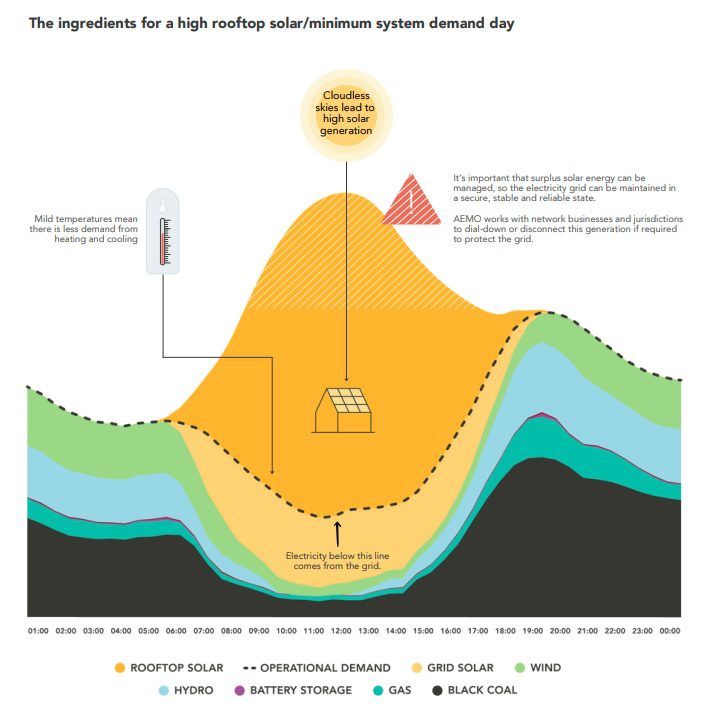
Figure 1 Example conditions for Emergency Backstop Mechanism (source: AEMO rooftop solar fact sheet)
To reiterate, the problem is not simply ‘too much solar exports’, but rather the rare combination of high exports, low operational demand, and another significant power-system issue. Australian Energy Market Operator (AEMO) notes that these conditions are rare. The backstop remains the last resort to implement before trying other solutions. One example is constraining and directing non-essential grid-scale generation and increasing electricity demand by directing large consumers to absorb excess solar exports.
What Does The Backstop Mean For Solar And Battery Owners?
For most customers, a backstop activation should not interrupt the grid supply to the property. It may, however, temporarily reduce solar exports or stop generation entirely. As a result, the home will draw more electricity from the grid or its battery during this period. The customer may lose some solar production, battery charge or feed-in-tariff revenue during the event; however, these events have been rare and short-lived. A research project is currently quantifying the implications for solar and battery owners, as well as Virtual Power Plant participants.
Whether your rooftop solar can continue serving the home or charging a battery depends on the backstop instruction and the system design. A zero-export instruction may still allow solar to supply household loads and charge a battery. A zero-generation or inverter-disconnection instruction may not.
Hybrid inverters, AC-coupled batteries, and backup circuits can also respond differently. In Queensland, for example, a Generation Signalling Device (GSD), which is used to implement EBM, usually disconnects the affected inverter and stops generation. This includes generation for self-consumption. Similarly, when Enhanced Voltage Management is activated, which is another method to implement EBM, both the solar and battery inverters can trip. Activating a backstop through CSIP-Aus provides the most refined control, as it can allow zero export without affecting self-consumption or battery charging.
Which States Have An Emergency Backstop Mechanism?
AEMO identified the emerging minimum-system-load risk and recommended that governments and distribution networks develop emergency capabilities. South Australia was the first NEM jurisdiction to act through its Smarter Homes regulations, which took effect on 28 September 2020.
AEMO subsequently introduced its coordinated Minimum System Load framework in 2021. Other jurisdictions followed with their own arrangements.
Queensland‘s requirements commenced on 6 February 2023 for applicable new, upgraded, and replacement inverter energy systems with a capacity of 10 kVA or more. Victoria introduced its mechanism for larger systems above 200 kW in October 2023, and for smaller rooftop systems from 1 October 2024. NSW is progressively introducing requirements for new and upgraded rooftop solar systems up to 200 kW from mid-November (SolarQuotes will produce a dedicated explainer on the NSW in the coming weeks).
How Does The Backstop Work?
In simple terms, AEMO determines when the wider power system needs a backstop, while state governments and distribution network service providers (DNSPs) establish the mechanisms that can deliver it. Different DNSPs use different tools, and several methods may operate together.
Internet-Based Inverter Control
A DNSP can send an instruction from its utility server using the Common Smart Inverter Profile – Australia, or CSIP-AUS. The instruction may reach the inverter directly, through the inverter manufacturer’s cloud platform, through an aggregator, or through a gateway installed at the property.
Depending on the jurisdiction and the type of emergency instruction, the system may be directed to reduce exports, set exports to zero, reduce generation, or temporarily stop generating, as shown in previous emergency backstop implementations.
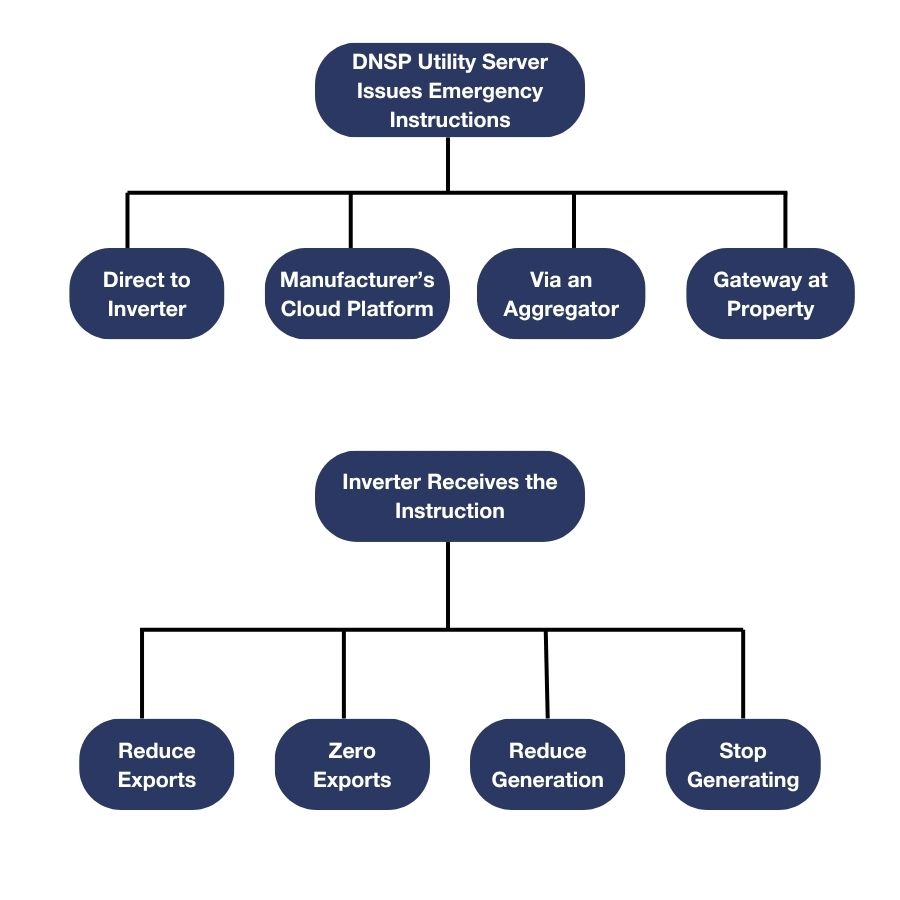
How a CSIP-AUS emergency instruction reaches your inverter.
This approach can be targeted and measurable, but it depends on the communications capability and compatible inverters. Considering most of our rooftop solar fleet is not CSIP-Aus-capable, this method may have limited capacity. Moreover, a compatible inverter may be incorrectly registered, the internet connection may fail, or the manufacturer may no longer support its cloud service.
Enhanced Voltage Management (EVM)
Given that most of our rooftop solar fleet is not CSIP-Aus compatible, the backstop has been implemented using a more contentious method known as Enhanced Voltage Management (EVM).
EVM deliberately increases distribution network voltages to high levels (above 258V) to trigger inverter grid protection settings. This is done in accordance with the Australian grid connection standard AS/NZS 4777.2.2020. This creates limits for sustained operation and anti-islanding. These settings in return trip inverters and cease generation.
One reason this method is controversial is that high voltages not only trip inverters but also damage certain appliances. So far, no clear data shows the extent of appliance malfunction or damage when an EVM is applied. Still, all appliances and the distribution network should keep voltages within their safe operational limits. The recommendation is within +10% (253V) and – %6 (216V) of the nominal 230 V.
Generation Signalling Devices
Queensland is the only state that continues to use Audio Frequency Load Control (AFLC) to manage rooftop solar. A Generation Signalling Device, or GSD, receives an AFLC signal sent through the electricity network and activates a standard demand-response mode in the inverter.
It does not rely on the customer’s home internet, but the device must be correctly selected, installed, wired and commissioned.
Under Queensland’s GSD arrangement, the signal can disconnect the inverter, stopping generation. When the emergency ends, another signal allows the inverter to reconnect, with a fail-safe reset also built into the arrangement. Queensland now allows either GSD or CSIP-AUS pathways for applicable connections, subject to network requirements.
Direct Control Of Larger Systems
Many large commercial solar systems above 200 kW communicate with the network via a supervisory control and data acquisition (SCADA) system. This provides the network with a more direct and visible way to monitor and reduce the system’s output when needed.
South Australia Power Networks (SAPN) has used SCADA control of larger distributed solar systems during actual minimum-demand events.
Higher Impact Measures
As an absolute last resort, if sufficient headroom can’t be achieved through the methods discussed above during a network emergency, AEMO and DNSPs may need to disconnect entire distribution feeders with high solar exports, which carry power from households towards the transmission network.
This broader measure can have a significant impact on customers and equipment. Disconnecting an entire feeder can interrupt the electricity supply to many customers, rather than reducing their solar output, as the previous method did.
That is why the control and management of rooftop solar are critical, and a reliable, targeted backstop is preferable to relying on these higher-impact measures. This high-impact measure hasn’t been implemented to date and is only required as an absolute last resort.
Backstops Differ From Everyday Export Limits
These concepts can be easily confused because they may use the same inverter, internet connection and CSIP-AUS communication standard.
A static export limit is a fixed export limit that doesn’t vary over time. For example, new residential systems in South Australia that don’t want CSIP-Aus communication will be capped at 1.5 kW export.
The dynamic operating envelope (DOE), or flexible export limit, varies with the available capacity in the local network. This is like ramp signals regulating how many cars can enter a busy motorway. CSIP-Aus is the most common method for implementing DOE or flexible exports.
The Emergency Backstop Mechanism is more like closing the motorway after a serious accident. It is a temporary system-security action used after other practical options have been exhausted. A backstop instruction also takes priority over ordinary dynamic export instructions.
Has The Backstop Ever Been Used?
South Australia provides the clearest published examples because it has a very high proportion of rooftop solar and reaches minimum-demand conditions that threaten system security. A summary of the events is provided in the following table.
| Date | What happened | Emergency Backstop measures |
|---|---|---|
| 14 March 2021 (AEMO incident report) |
A planned transmission outage in western Victoria placed South Australia at credible risk of separating from the rest of the NEM. | SA Power Networks coordinated approximately 71 MW of distributed solar curtailment:
|
| 13-17 November 2022 (AEMO event summary) |
A more severe event occurred when storm damage brought down a transmission tower, leaving most of South Australia operating as an electrical island for about a week. | Both residential and commercial rooftop solar were controlled via EVM, relevant agents and CSIP-Aus. Curtailment reached a maximum of approximately 410 MW and reduced the largest credible contingency to within a secure operating limit. |
| 15 February 2024 (AEMO event summary) |
Transmission damage again left South Australia at credible risk of separation. | SA Power Networks reported 51 MW of distributed solar curtailment: 46 MW from larger systems controlled through SCADA and 5 MW from smaller systems managed through the Smarter Homes framework. |
Table 1: Summary of Emergency Backstop Events in Australia
Apart from these actual backstop events in South Australia, it has not been required in any other states to date. However, most DNSPs run ‘fire-drill’ tests to monitor and check the capability of backstop measures.
What Does The Backstop Mean For Installers?
For installers, correctly setting up CSIP-Aus and ensuring emergency backstop compliance is critical. When more systems can be controlled via CSIP-Aus during these emergency events, it will reduce the requirement for EVM or feeder shedding, which has more significant implications for customers and home appliances. A compliant inverter that was never registered, linked to the correct utility server or configured for the required response is like a smoke alarm without a battery. It may appear complete but fail to operate when it is needed.
Installers should:
- Confirm the current distribution network requirements.
- Select approved inverters, gateways and signalling devices.
- Complete network, utility-server and manufacturer registration.
- Set the correct country and regional code/setting for the inverter.
- Test internet communication or GSD signalling.
- Record the commissioning result.
- Explain the arrangement and its effect on the customer.
Setting up internet connectivity, ensuring DNSP portal registration, performing firmware updates, and securing long-term manufacturer cloud support are now part of a good system handover. Installers should communicate relevant challenges (if any) related to these steps so that inverter original equipment manufacturers (OEMs) and regulators can take the necessary steps to ensure smoother installation processes.
Industry reports highlight that proper installer training and education are critical to ensure compliance. If network operators overestimate compliance and the number of systems that will respond during an emergency, they may need to use broader measures with greater customer impact.
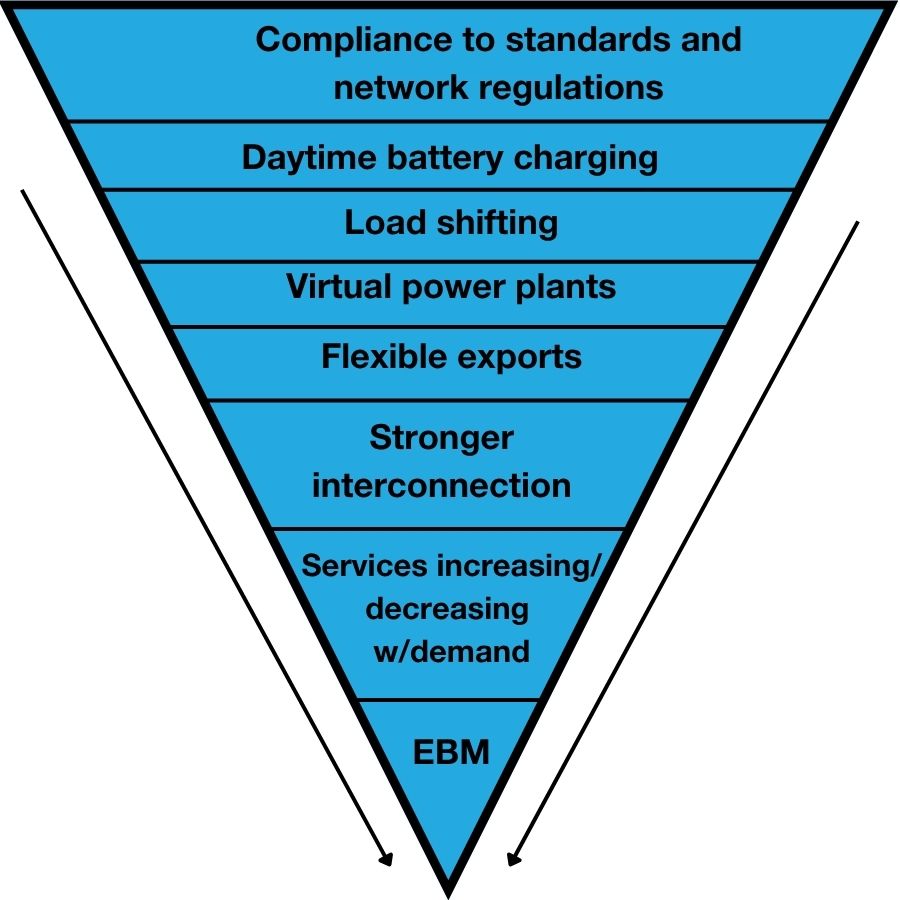
If we have these measures in place and implemented well, then the likelihood of needing a backstop will reduce.
A Backstop Is Not A Long-Term Fix
Supporting an emergency backstop does not mean accepting routine or unlimited intervention. It must not replace the hard work of effectively integrating various consumer energy resources (CER). An emergency backstop can be reduced with:
- Daytime battery charging.
- Flexible hot-water and electric-vehicle loads and load shifting to soak up solar exports.
- Virtual power plants.
- Dynamic operating envelopes and flexible exports.
- Stronger interconnection.
- Market services that reward customers for increasing/reducing demand at the right time.
These measures should form the backbone of our future grid with high CER penetration, and a backstop should be used only in emergencies.
Moreover, in July 2026, the Australian Energy Market Commission (AEMC) opened a consultation on a proposed Minimum System Load governance framework. It’s a possible reserve service through which responsive loads, including large batteries, pumped hydro, and behind-the-meter resources, could be paid to increase demand during forecast periods of minimum load. This would reduce the number of instances and the relevant network security risks associated with the minimum system demand.
Regulation should ensure that an emergency backstop activation:
- Follows a genuine AEMO system-security need.
- Occurs only after all other practical actions have been taken.
- Curtails no more generation than required.
- Ends promptly once the emergency has passed.
- Includes confirmation that affected systems have returned to normal.
Backstop activations should also be reported transparently. This includes the reason for the event, its duration, the estimated amount of solar curtailed, and any problems with restoring systems. Cybersecurity, privacy, customer communication, equipment support, and responsibility when systems fail also need clear ownership. AEMO’s implementation review identifies governance gaps in consumer protections, large-scale testing, ongoing communications, and responsibility for returning systems to service.
Key Takeaways For Solar Owners And Installers
For system owners, the emergency backstop should mean rare and temporary reductions in generation, not routine interference with a solar investment. Ongoing research aims to quantify the impact of existing backstop events; however, according to previous AEMO reports, this impact appears to be minimal.
As a system owner, you should ask your installer how the proposed system responds to zero-export and zero-generation instructions, particularly where a battery or backup circuit is included.
For installers, communications, registration and commissioning are becoming as important as correct electrical installation. A system is not truly backstop-ready until the full signal path has been tested.
The emergency backstop is not an argument against rooftop solar. It recognises that millions of small systems now collectively form a very large power station, and that such a power station needs an emergency operating plan. On the other hand, for governments, networks and AEMO, the social license for remote control depends on restraint, transparency and continued investment in better alternatives.
SolarQuotes will be covering the kickoff of the NSW Emergency Backstop Mechanism in coming weeks – sign up to our free weekly newsletter to get all our coverage.
 About Baran Yildiz
 RSS - Posts





Speak Your Mind