
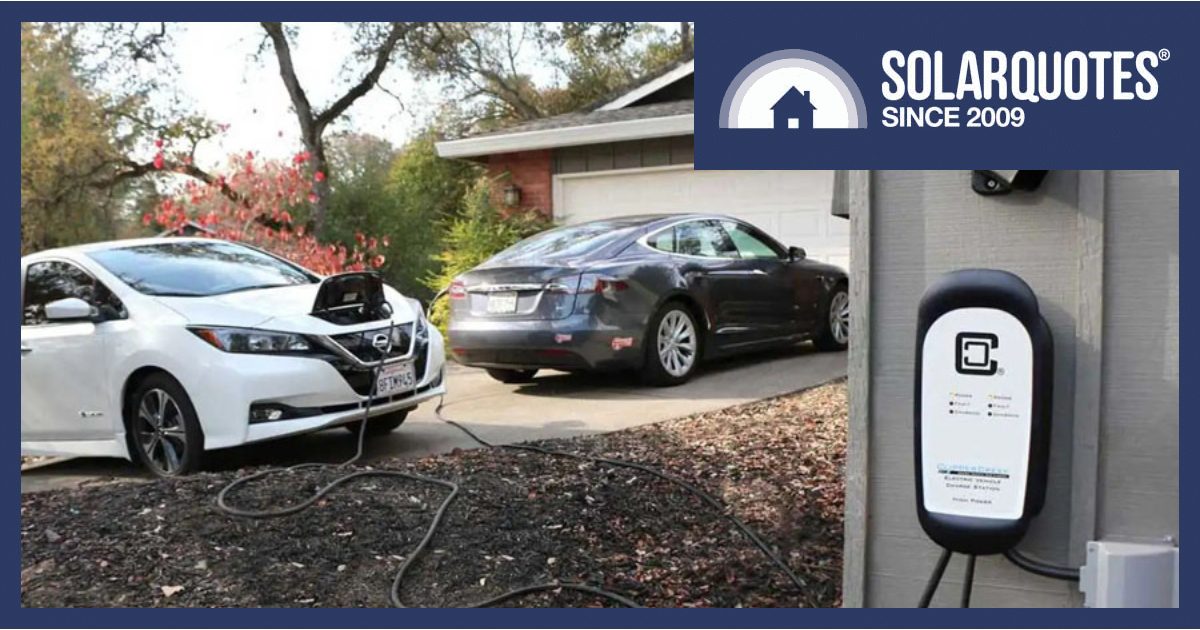
Solar Sharer plans featuring free daytime electricity can be great value for EV owners – but there’s a catch. To make the most of the offer, you need a dedicated home charger set to run during the free hours. If you use a regular wall socket and try to guess the timing, you’ll barely cover your commute, and your bill will stay about the same. Here’s how to get it right.
Why Does A Home EV Charger Work Well With Solar Sharer?
The Solar Sharer Offer requires participating energy retailers to give customers 3 hours of free power a day, capped at 24 kWh. Most households would find it hard to use 24 kWh of free power at once. An EV is one of the few things that can actually use that much energy in a short time – provided you have a home charger.
A standard wall socket delivers about 2 kW of power. Using it to charge your car is called Level 1 charging. It adds around 10 km of driving range per hour, so in a 3-hour window, you get about 30 km.
It’s painfully slow. A wall plug alone won’t cover the distance during the free window. That’s when you need to look at a Level 2 charger.
A dedicated Level 2 home charger makes a big difference. A 7 kW single-phase charger adds about 40 km of range per hour, so you get about 120 km in the 3-hour window. With a three-phase charger and a compatible car, you can extend that driving radius even more.
How To Charge Your EV During The Free Window
This is the most important part. If your charger is even slightly out of sync with the free hours, you’ll be charged full price as soon as the window ends. We hate this.
There are a few ways to schedule it:
- Doing it manually. Most home chargers can do the job in hardware, but you need to monitor them with a timer. Handy if you run more than one EV off the same charger, but it carries the same catch: nothing updates itself if your plan or window changes.
- Your car’s scheduling menu. Many EVs let you set start and stop times from the dashboard or the manufacturer’s app, as you might with a Tesla. If you switch retailers, it’s daylight savings time, or your state’s free window differs from the one you’ve set (NSW and Queensland run 11 am to 2 pm, South Australia runs 12 pm to 3 pm), the car will happily keep following the old times, costing you your hard-earned dollars.
- A smart EV charger removes the guesswork, but you’ll need one compatible with your EV’s smart charging app. Apps like this help you schedule directly to your retailer’s exact free window and cut power the moment it ends.
No matter which method you choose, don’t rely on your memory for timing.
 Don’t Stack Too Many Big Loads At Once
 Don’t Stack Too Many Big Loads At Once
The official advice from the federal government is to shift as much as possible into the free window: heating or cooling, the dryer, the dishwasher, and the EV charger, all at once. In practice, your home’s electrical supply has a limit.
An EV charger already pulls hour after hour of full-rated power, unlike most appliances that cycle on and off. The steady, ongoing power draw doesn’t always leave room for a dryer or a reverse-cycle air conditioner to run at the same time.
Running too many big loads at once risks tripping your main breaker rather than saving you money. Before you plan to run everything during the free hours, check with a licensed electrician or your installer to see if your switchboard and mains supply can handle it.
Get Your Switchboard Checked First
Putting in an EV charger is more complicated than just adding a plug. The wiring rules treat it as new electrical work. Under AS/NZS 3000, you might have to update your switchboard’s safety switches to meet current standards.
This happens often, and it’s not something you can skip. Rebuilding a switchboard usually starts at around $1,000. Many people are surprised by this extra cost if it isn’t included in the first quote.
Space is another issue. Older or crowded boards might not have enough room. In that case, you may need a full rebuild or a separate sub-board near the charger, as explained in this guide to sizing a bigger switchboard.
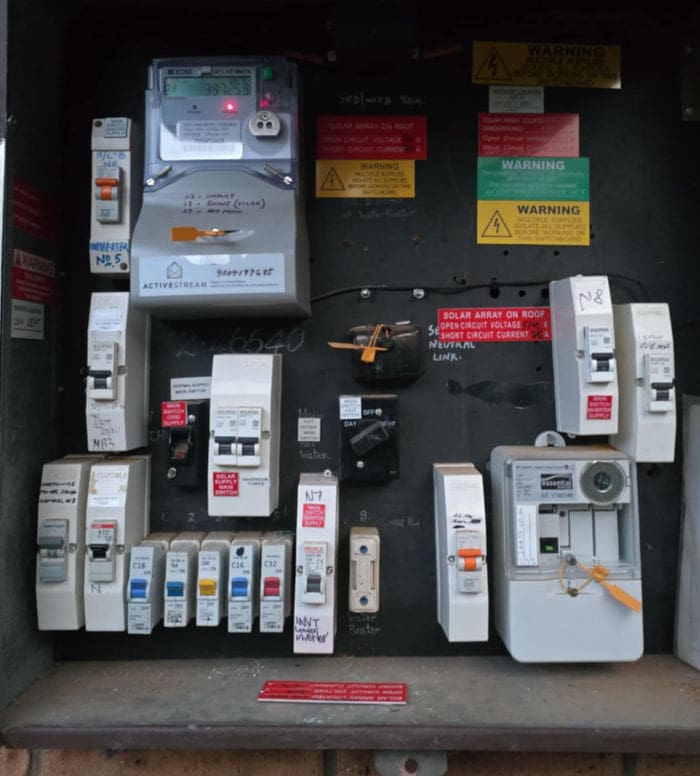
Homes over 30 years old usually need more than a simple upgrade, especially if they still have ceramic fuses, asbestos fuse panels, or old rubber-insulated wiring. Our pictorial guide to switchboard upgrades shows what these older boards look like.
Be sure to get a thorough site inspection before you accept a quote. That way, you won’t be surprised by a switchboard upgrade when installation day comes.
How Much Power Is Available?
SolarQuotes’ in-house installer and electrician, Anthony Bennett, says:
“The thing you need to understand is this: Around 80% of East Coast properties have single-phase connections. Some vintage timber cottages might be 32 A and an EV charger will use the whole supply. Some flats or units, especially in Victoria, where they have had gas heating, will only have 40A available (9.2kW), while others have 50A (11.5kW). The default house these days has 63A (14.5kW), but you may still need to share that capacity, so intelligent EV charging that throttles down during high-demand periods is essential. It’s the main reason we recommend you get your solar, battery & EV charger from the same brand ecosystem, so they all play nicely.”
That’s why smart, load-aware charging is more important than just picking the charger with the highest kW rating. A charger, battery, or whole-home system that can automatically slow down during high demand is often better than one that only charges as fast as possible.
When these systems are made to work together, they do a much better job of sharing your home’s available power without causing issues.
If You Have Solar Panels, Why Bother With Solar Sharer?
Great question. If you already have solar panels, you usually get free power during the day, but only when the sun is shining.
Using your own solar power doesn’t cost extra, as long as your panels make more electricity than your home uses. But on cloudy days, in winter, or if your system is small, extra power can run out quickly. This is especially true when your EV charger draws a lot of energy.
Solar Sharer works regardless of what your solar panels are doing. Your retailer guarantees the free window, whether it’s sunny or raining. For homes with solar, this offer is a backup for days when your panels don’t produce enough.
On sunny days when the solar is pumping, there’s an extra benefit. Charge your car with free grid power during the window, and let your rooftop solar keep doing its normal job, whether that’s powering the house or charging a battery. You’re not forced to choose between the two, and you can usually set the priority in your energy monitoring app.
What If You Have A Home Battery Too?
If you have a home battery, there’s one more thing to watch out for. Make sure the battery doesn’t discharge during the free window to power your EV.
A home battery is much smaller than an EV’s battery. If you drain a 13 kWh home battery into a car with a 79 kWh battery, you’ve only added about 16% charge and used up the power your household needed that evening.
Many smart systems use the battery first unless you change the settings. It’s a good idea to check your settings instead of assuming they’re already correct.
The goal is to charge your car directly from the grid for free and save your battery’s stored solar energy for after the free window ends.
Is Solar Sharer The Right Plan For You?
Solar Sharer is best for EV owners who can be home and charge in the middle of the day. It’s a great fit for remote workers and retirees.
If you’re at work during the free window and only charge your car overnight, a dedicated EV plan or a time-of-use tariff with cheaper off-peak rates will suit you better.
Rates and plans change often, so it’s smart to compare your options instead of assuming Solar Sharer is always the best choice.
Weighing It Up: Pros And Cons
Here’s a quick review of charging your EV during the Solar Sharer window.
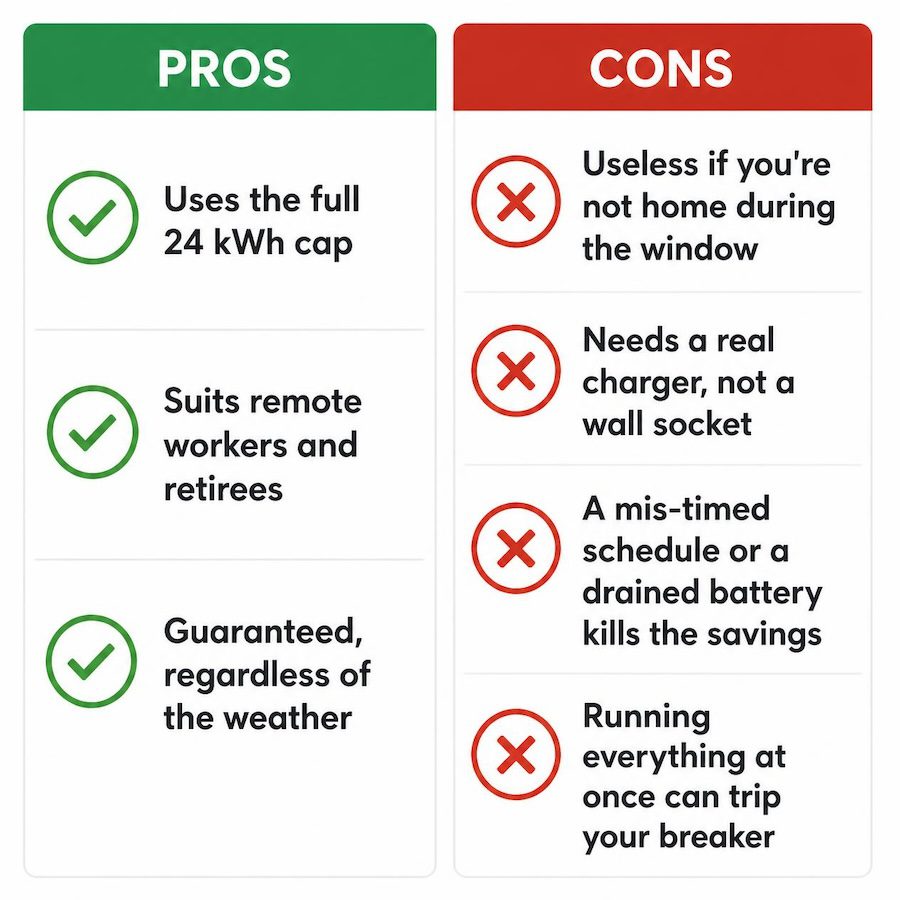
Can you charge an EV during Solar Sharer’s free electricity periods? Yes, if you have the right charger and a reliable schedule. Check out our home EV charger guide to make sure you get the right gear for your needs.
If you think Solar Sharer could work for your household, check what’s available in your area with our electricity plan comparison tool.
 About Jacob Boyd
 RSS - Posts






My 2c worth: Our family has 2 of EVs, a 15a Granny charger & a 7Kw OCPP smart charger. We charge based on needs: Usually during the day, off the Granny mostly. Our family does a lot of K´s, 35K+ Kms/yr over the 2 cars.
I have found I need to charge to 100% if I intend to travel, so I either charge over a few days, or as occasionally happens, I need a fast charge, I usually plan that overnight. The 3 ´free´ hours would not help then anyway. So, my Retail energy plan is chosen to be the most economical for daily charge & off-peak rate. (Currently 1st Energy).
I have a big battery, & good solar, so use that resource when available. I feel it is important to use the excess PV, because to draw off the battery to charge an EV adds at least 5% to the cost on round-trip efficiency due to losses. Most of our bill is for off-peak usage anyway, so in my case I feel the additional charges to go to ´free´ power plan would not be worthwhile.
It is only if the home battery is too small that it isn’t *Great* for time-shifting 3-free-hrs until the BEV is home from work. My (barely average-sized) 46 kWh home battery is about the same as the 51 kWh MG4 BEV, and even off-grid I sometimes finish off BEV charging after sunset, entirely battery powered.
The 5% battery cycle loss is piffle-before-the-wind, folks – you’re getting $1/kWh FiT-on-wheels in the BEV – for FREE energy. (Own solar or 3-free-hrs) There is no better return on battery cycle wear – in this life or the next.
Power your car with a star!!
OK, rapidly falling wholesale battery costs need a couple of years for everyone to be able to have 100 kWh home battery, but it’ll soon be bog normal. It is the very best way to go. Then even a granny charger can use lots of the 3-free-hrs, right through the night. I do at level2. You can too.
The sun wantonly spills as much energy into space in a second as all nations
combined produce in 650 millennia. Let’s use it.
P.S.
Let’s not forget; putting the HWS on a midday timer could grab a good 10 kWh of 3-free-hrs – just as much energy storage as a toe-in-the-water tiny battery, previously flogged when they were more expensive. (Technology advances. Keeping up costs, but at decreasing prices.)
May the blessings of Ra keep you warm these frosty nights. (My RCAC has run 24/7 as I get over the flu. It’s entirely battery powered at night. Carting wood to stoke a fire when you’re crook is no fun. Getting lazy here, on the other side of 70, with the mod cons.)
Erik, perhaps I did not make the economics clear: Paying an extra $20/month approx, then higher Kwh costs compared to finding the cheapest retail off that makes sense means it is worth occasionally paying abt 21c/kwh to charge my car overnight. Really, unless you can use the 24Kwh/day ´free’ power, I feel it is just not economic sense.
I was with Gbird, until 1Jul26, when they upped everything by abt 30%. I was on an old TOU plan that had all w/e at o/p rates. I feel they upped the charge to move people off the old TOU plan (unfortunately, no-one to complain too!). The plan I moved to on my best estimate of cost will cost me abt what I was paying Gbird. I know you are off grid, but for gridders, definitely worth moving for a better deal!
I have 62Kw of bats, & we consume in winter abt 25Kwh/day, hence my reluctance to charge off my battery. We generate abt 40Kwh av in winter.
Been runnning the RCAC all winter. We buy power off peak and use the battery during peak times since trees that the local council have planted in the park next door shade our panels (25kW) during June and July. Today was the first day that we’ve been able to get to 100% (48kWh) in the battery and charge the car for five hours (15A cable) since May.
Not sure about the three free hours though. With a fully electric house, largish battery and two electric cars the 24kWh cap may not cut it. Depends on what the off peak power cost is. I’m in Victoria so I’ll see what plans are around when October comes.
What is to stop anybody getting a suitably qualified electrician to add a single new circuit (if circuit board has the space & available free Amps) with a 40amp capacity and a suitable high amp rated power point (not costing that much more really)?
Must use much larger diameter copper wire (personally I’d ask to over-rate the wire by 50% to ensure even lower temperature operation) than normally seen in most houses – but for hopefully no more than 5 to 15 metre length it is a small cost for something that should last longer than the user.
With a 40 amp circuit, operated at a max of 30 amps – then that would provide between 6.6kWs to 7.2kWs depending on your real operating voltage.
Surely a much cheaper solution than a brand name fixed wall charger and you can operate it with your mobile charger kit (provided it provides both low & high rated plugs)?
I run my 7Kw EV charger off a 32A power outlet. It is still controlled by software. The reality is the installation cost is about the same as a permanent install. One disadvantage is the EV charger could be stolen! (Mine is in the garage).
Any plugged-in EV charger must be checked because connection points can overheat if not clean. Less problem with Industrial power outlets, but definitely for 10A or 15A outlets. Also ensure the weight of cables & any dongle is supported. If using a Granny charger on an unknown outlet, check for warming after 30 minutes at the power outlet.
The other considerations beside the total power load mentioned, is that on the East Coast, Power is timed in Eastern Standard time, not daylight saving time. Very important if your inverter is time synchronised, or controlled by Home Assistant for instance.
Re EST vs DST.
I found this out a while ago when I was comparing power plans.
I worked it out from the bill (and retailer’s website) that ACTEWAGL used EST all year round.
An email to the retailer confirmed my finding.
A trap for the unwary!
This 3hrs free is all good in concept, however the federal governments intent is blown away by the retailers just clawing it all back and more with outlandish rates for the other 21 hours of the day … no more genuine off peak rates , high or no shoulder rates and extreme peak rates.
With the EV using the free 24kwhrs Unless you have enough batteries and solar to run the house for those 21 hours you will pay more.
And rainy days… no more low rates to top up the batteries ever , not even at midnight.
Done the math , if you don’t have the solar / battery capacity to be virtually of grid 21 hours a day stick to an 7 or 8c EV plan
I would love some advice on the free three hours. I am with Origin on a 10cFIT but I don’t get the three hours free. Now while in winter I am not filling my battery but I want to. If I filled during the 3 hours free it would be full. But then back in summer I would only get 8c feed in because the tariff on the current plan I am on has changed. Thoughts on who I should try
If you full batteries and any solar you generate outside the 3 hours is enough to get you to the next 3 hour charge window.. all good,
Be aware all 3 hr free plans have obscene rates for the other 21 hours to claw back the $$$
You don’t want to be using any power from grid for those 21 hours
Just a point not directly mentioned:
Find out how much electricity will cost if (when…) the 24kWh limit is exceeded.
Some I have checked charge the rate that would be in effect if you didn’t opt in for the scheme. Some default to the maximum rate. Some (may) have a penalty rate.
Add to Jethro that some plans have a demand charge as well (I suggested SQ add Demand charge to a searchable field on the ´Compare Energy Plans´ to ensure users know to check the costs).
On the plan I am on, to charge my EV after 10PM, I would be up for abt $8 (40Kw@21cKwh), so if only on a few occasions a month, definitely not worth the inflated alternative retail plans.
One concern I have is if the battery is unavailable for some reason (cb trip, not charged due to weather, or other failure) if one is on a high cost plan, the peak charges might be unpleasant!