
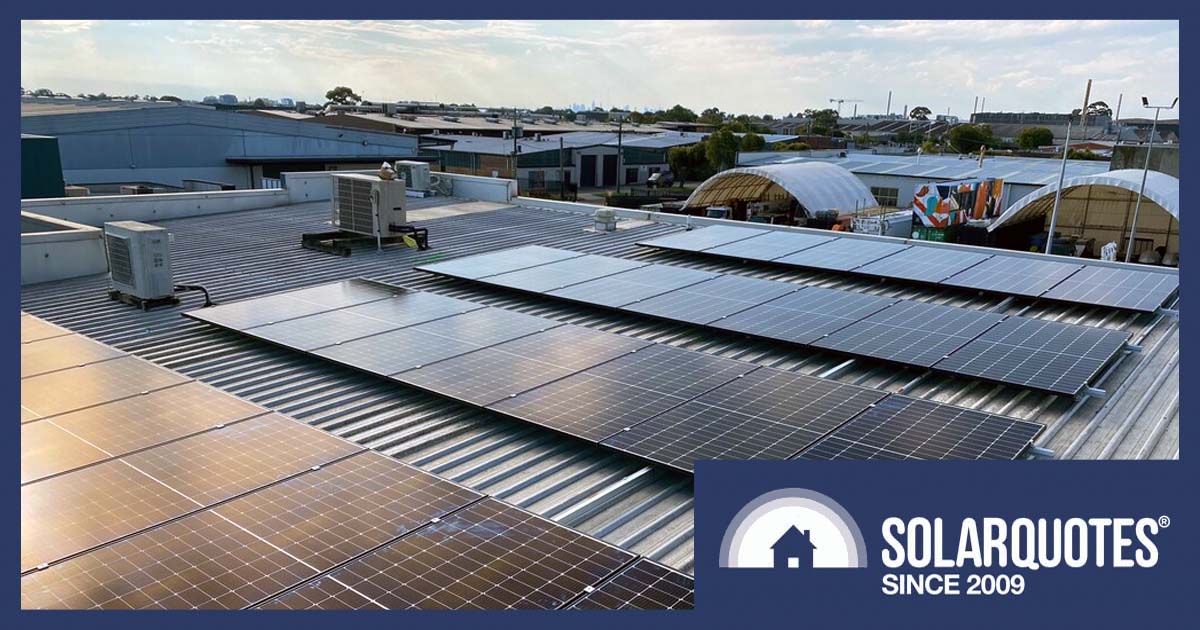
The federal government has announced a major expansion of Australia’s Small-scale Renewable Energy Scheme (SRES), opening the door for much larger commercial rooftop solar systems to receive the same type of upfront incentive that helped drive Australia’s household solar boom.
Under the proposal, the SRES threshold would increase tenfold from 100 kilowatts to 1 megawatt, allowing many medium-sized businesses, farms and community organisations to access an upfront discount on the cost of installing rooftop solar.
Announcing the plan, Climate Change and Energy Minister Chris Bowen noted that larger energy users had previously been locked out of the scheme.
“One in three Australian homes have rooftop solar, but larger energy users have been locked out because the existing solar rebate only supports systems up to 100 kW,” Bowen said.
The government says the change could reduce installation costs by around 20 per cent while helping unlock more commercial rooftop solar across Australia.
Why Commercial Rooftops?
While more than one in three Australian homes now have rooftop solar, commercial and industrial buildings have been much slower to adopt the technology.
The government describes medium-sized commercial rooftop solar as the “missing middle” — projects that have largely missed out on the incentives that helped make Australia a world leader in household solar.
Johanna Bowyer, Lead Analyst for Australian Electricity at the Institute for Energy Economics and Financial Analysis (IEEFA), said commercial buildings were particularly well suited to rooftop solar because their electricity demand generally aligned with when solar systems generated the most power.
“Many businesses and community facilities, such as offices, shopping centres, farms, hospitals and schools, tend to use more energy during the day, in typical working hours, which lines up well with when solar systems generate power.”
Bowyer said Australia had lagged well behind households on commercial rooftop solar despite businesses consuming far more electricity.
She said lowering the upfront cost would help solar projects compete with other investment priorities.
Rewiring Australia CEO Francis Vierboom said the reform would unlock more local electricity generation.
“Every community has enormous roofs sitting above warehouses and shopping centres that could be producing cheap electricity. That power can be used locally to run machinery and refrigeration, electric vehicle chargers or other equipment … the Illawarra offers an early example of what this could look like, with work underway to establish an urban renewable energy zone linking local rooftop generation with nearby businesses and communities. Now the scheme is expanding, communities across Australia will be able to generate more affordable energy close to where it is needed and reduce their reliance on distant generation and costly new infrastructure,” Vierboom said.
Faster Connections Also Planned
The announcement is not just about expanding rebates.
The federal government has also asked the Australian Energy Market Commission to develop reforms aimed at making grid connection approvals for medium-sized commercial solar systems faster and more consistent.
Bowyer said slow and unpredictable approval processes remained a significant barrier to investment.
“The process for getting a medium-sized solar project’s grid connection application approved can be slow and unpredictable, and that can discourage investment,” she said.
Industry Says More Barriers Remain
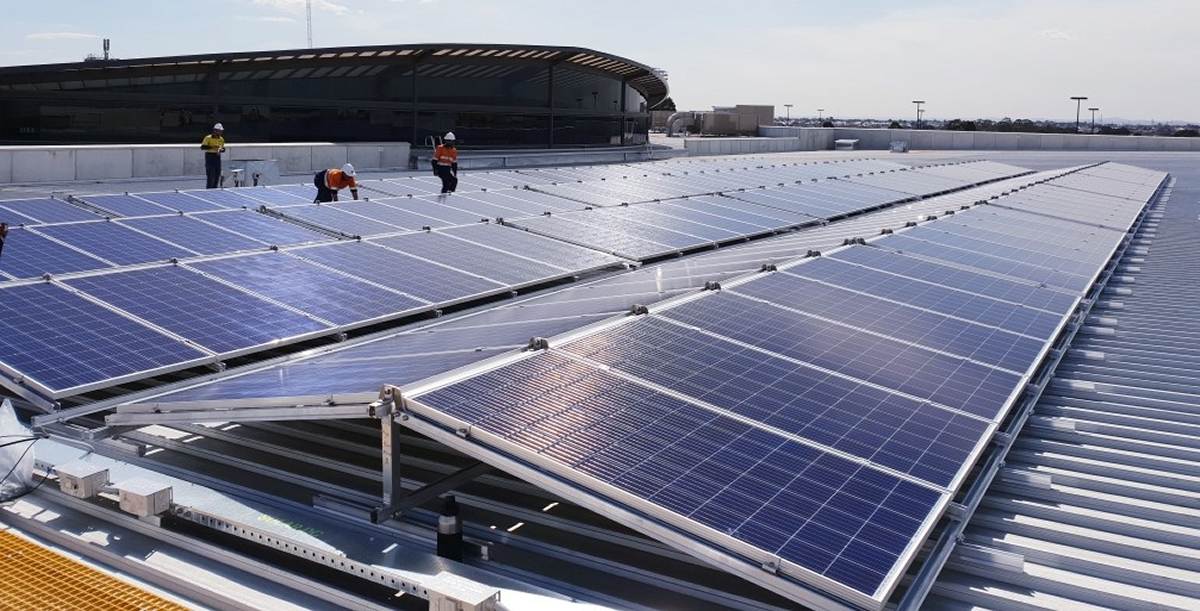
The announcement follows a new report from the Smart Energy Council, which estimates Australia’s commercial and industrial rooftops could generate enough electricity to match the output of 10 of the nation’s largest coal-fired power stations.
Its report argues other barriers beyond expanding the SRES remain, including landlord and tenant arrangements, network pricing and planning requirements.
For many businesses, the rebate expansion could be enough to tip the economics in favour of rooftop solar. Whether that translates into a wave of new installations may also depend on how quickly the remaining barriers are addressed.
If you’re considering commercial rooftop solar for your business, our Commercial Solar Guide explains how larger systems work, what they cost, how they’re designed and what to look for before signing a contract.
 About Kim Wainwright
 RSS - Posts






Dumb idea – Bowen’s latest plan – subsidising massive rooftop solar on factories and warehouses – is trying to solve yesterday’s problem and making today’s one worse.
We already see wholesale prices crash to zero or below in the middle of the day as rooftop solar floods the grid, forcing big generators and solar farms to switch off because they’d otherwise have to pay to produce. Throwing more subsidised business rooftop solar into the same midday “solar traffic jam” without first fixing storage, demand shifting and grid constraints isn’t smart climate policy – it’s doubling down on a system that’s already signalling “too much at the wrong time” through record negative prices and curtailment.
Hi Tony. It’s true that negative wholesale prices and curtailment are real issues, but commercial rooftop solar isn’t the same as utility-scale solar. Many businesses consume much of the electricity they generate during the day, reducing the amount exported to the grid.
On storage, it’s not really an either/or proposition. Governments are already investing in batteries and other storage while also expanding rooftop solar. Australia’s electricity demand is also expected to grow as more transport, heating and industry electrify. The aim isn’t just to meet today’s demand, but tomorrow’s as well.
I feel this is good.
This is what we need, more smaller – medium scale rooftop generation *and storage* across residential and the larger commercial / industrial sector.
Keep the power in local grids where it’s needed, and not have to be sent many hundreds of km.
The larger solar and wind only puts huge profits and taxpayer subsidies into corporate hands, with massive waste, executive salaries, share price pressure / profit focus, then add the huge environmental disaster many of these projects are causing with both size of projects, and massive transmission costs to where the power is needed, with even further damage to the land and peoples livelihoods.
Govco have at least got some things right . . . solar, battery and now more of the right project focus, but I expect the big corporate influence will still be kept $$$.
Needs to be tied to battery storage somehow though, for some real grid benefit.
I’d rather see taxpayer $ going into this sort of renewables.
One side-effect of commercial building solar is EV charging.
Business owners won’t usually pay fringe benefits for staff, but if they have enough solar to easily cover internal building usage, the extra can top-up staff EVs?
Better for commuting staff to charge in the middle of the day at work than overnight from coal/gas!
(and the car to roof area ratio of factories or warehouses is much better than for shopping centres, which have too many cars and not enough roof)