
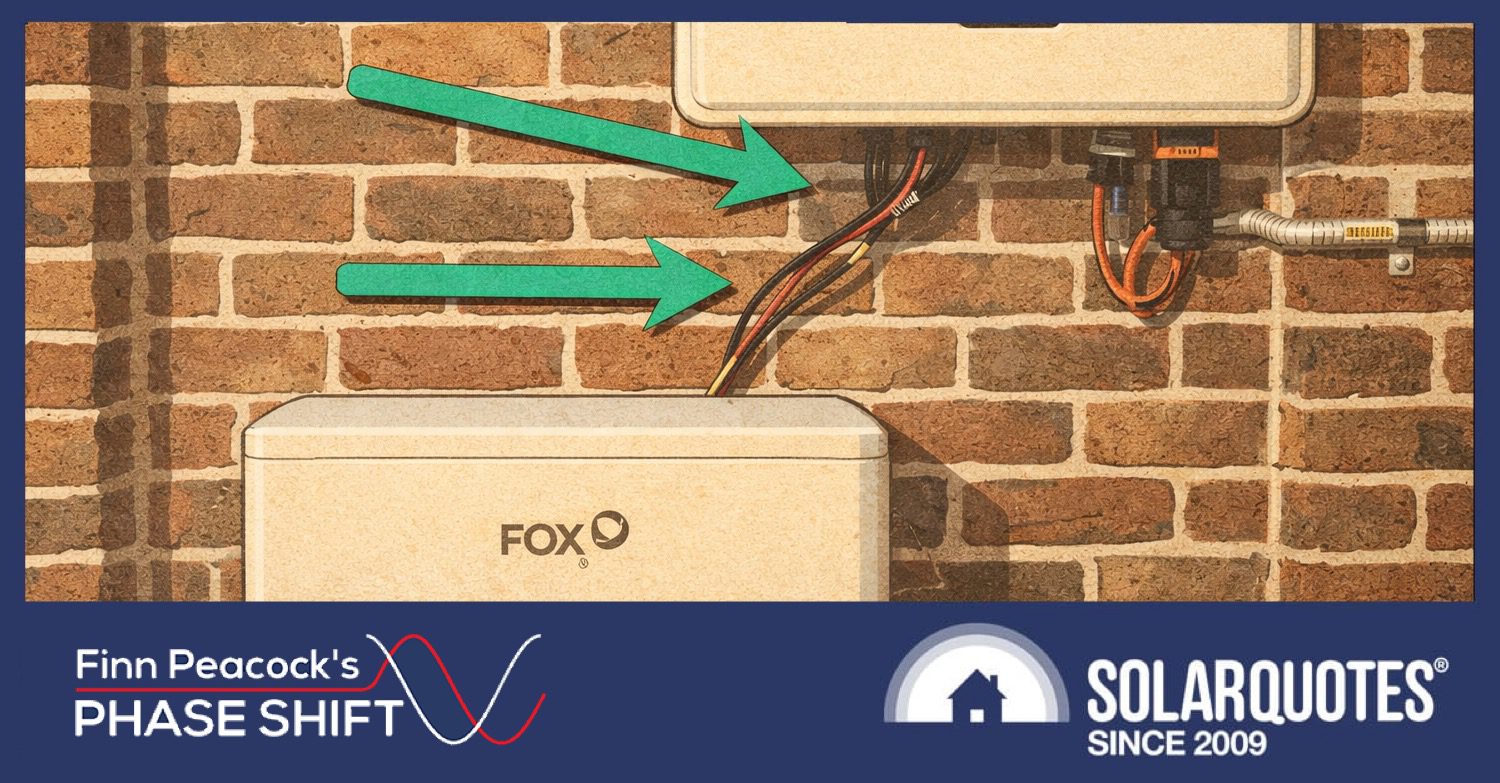
 If you’ve got a high-voltage stackable battery system and the DC cables between the battery and inverter don’t have mechanical protection, you’re not compliant with Australian standards and your systems could be classed as unsafe – and shut down.
This column explains why, and what the standard requires.
A Quick Word On Voltage Categories
The ‘home battery standard’ AS/NZS 5139:2019 classifies DC voltages into three tiers:
- DVC-A (up to 60 V DC),
- DVC-B (60–120 V DC), and
- DVC-C (above 120 V DC).
Every mainstream high-voltage stackable battery sold in Australia today operates well above DVC-C.
What The Standard Says
Clause 5.3.1.4.3 of AS/NZS 5139:2019:
“For battery systems operating at DVC-B or DVC-C, the cable between the overcurrent protection device and the PCE shall have mechanical protection.”
The PCE is the inverter. In most modern HV stackable systems, the overcurrent protection device is built into the top (Master) battery module. So the protected run is from the battery stack’s DC output terminals to the inverter’s BAT input. For DVC-C systems, that entire run requires mechanical protection.
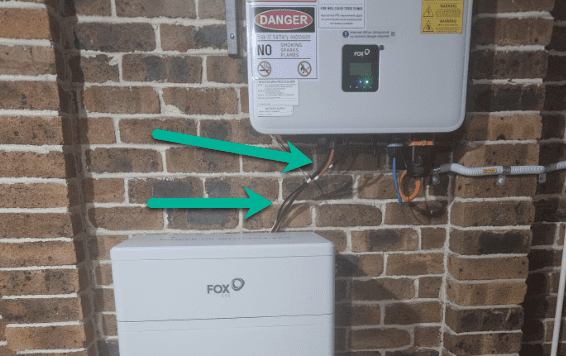
Unprotected battery cables from the battery to the inverter. Not even close to compliant.
There Is No 300mm Allowance
Many installers apply a 300mm exposed cable allowance at the inverter end – a habit carried over from the solar panel installation standard AS/NZS 5033, which does permit a short exposed section of solar DC cable at the inverter connection point.
That allowance exists in AS5033. It does not exist in AS5139. Glen Morris – Standards Australia committee member and principal of Smart Energy Lab – confirmed this to me explicitly: there is no exception for mechanically unprotected DVC-B or DVC-C battery cables in AS/NZS 5139, unlike the 300mm allowance in AS/NZS 5033 for PV array cable at the inverter.
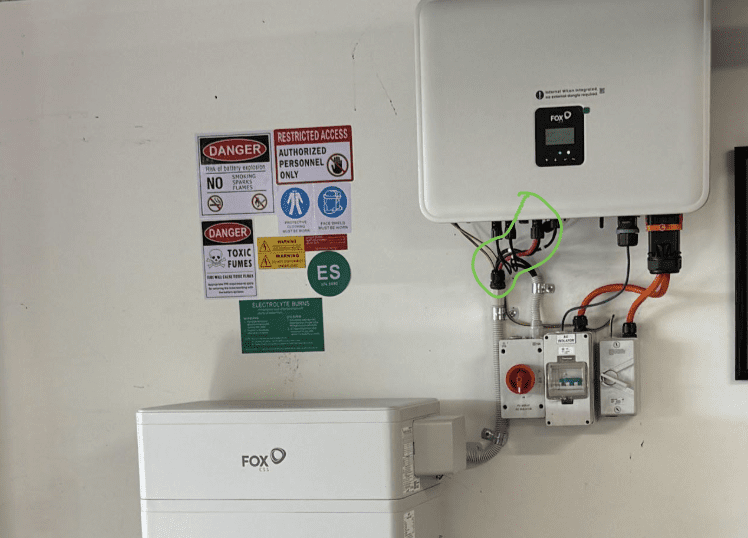
Not compliant – battery DC cable is visible. Unlike solar DC no exposed battery DC cable is allowed. Don’t get me started on the stickers…
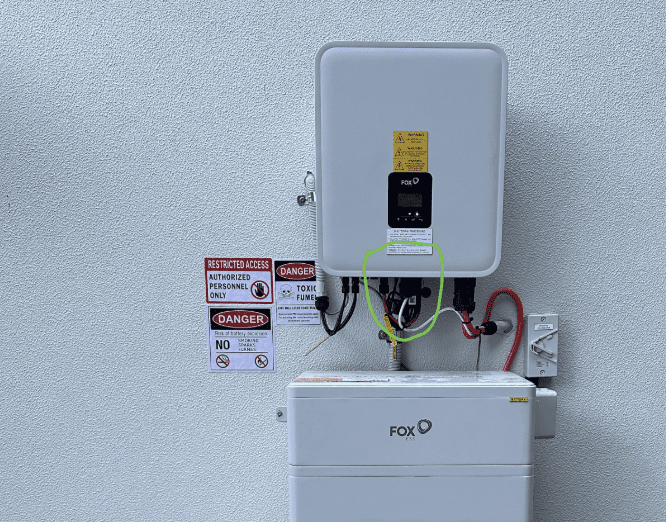
Does not comply.
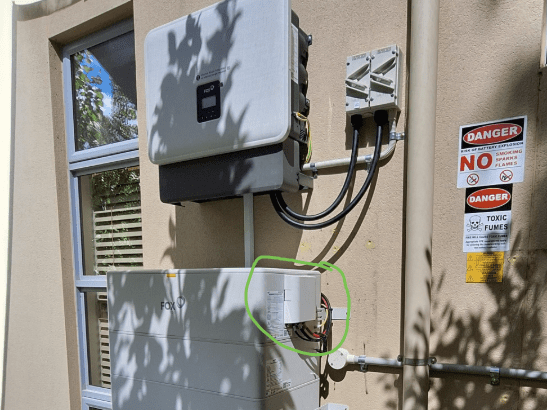
Inverter looks good: shame about the exposed DC at the battery.
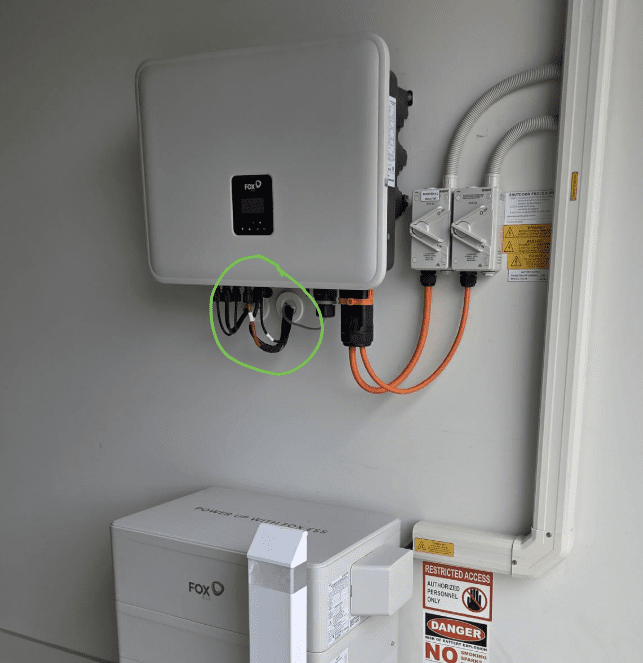
Nice and neat. Not compliant.
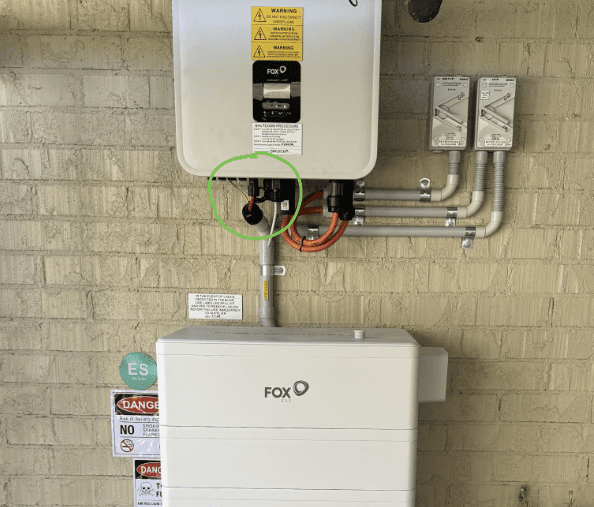
Close – but no cigar.
Why Battery DC Is More Dangerous Than Solar DC
A high-voltage battery stack is a voltage source with very low internal impedance. Drop a tool across unprotected battery DC cables, or rub insulation against a sharp edge until conductors touch, and the available fault current is in the thousands of amps. The arc that forms is violent and sustained. It will keep going until the overcurrent device trips, and in the time between fault initiation and trip, enormous energy is released at the fault point.
What Protection Is Actually Required
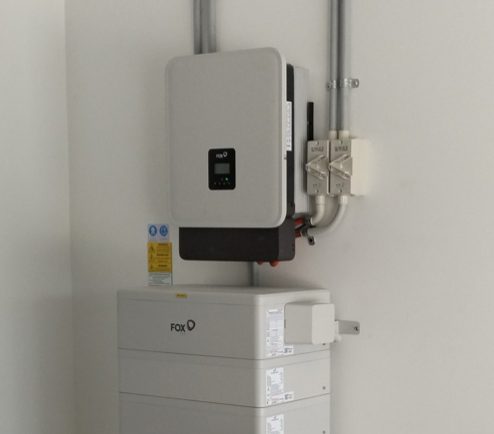
An example of battery cables with proper protection.
AS/NZS 5139 references AS/NZS 3000:2018 Clause H4 for mechanical protection requirements. For most domestic battery installations, WSX1 classification applies. AS/NZS 3000 Clause H5.2 lists what satisfies WSX1:
- Light or medium duty conduit (AS/NZS 2053 or AS/NZS 61386)
- PVC duct with clip-on covers
- Small sheet-metal ducts with clip-on covers
- A sheathed cable immediately adjacent to a projecting timber batten or masonry corner¹
- The protection needs to cover the full run from the battery DC output to the inverter BAT input. There is no permitted exposed tail at either end.
The Enforcement Reality
This requirement has been mandatory across Australian jurisdictions since around 2021. Glen Morris (who helps write the standards) told me he comments on dozens of Facebook posts every week, pointing out non-compliant installations, and only about 10% of installers appear to be getting this right.
That’s a systemic problem that makes home batteries less safe, and it’s about to become more costly. Clean Energy Regulator inspectors can and will shut down non-compliant systems. They are going to be busy…
Phase Shift is a weekly opinion column by SolarQuotes founder Finn Peacock. Subscribe to SolarQuotes’ free newsletter to get it emailed to your inbox each week along with our other home electrification coverage.
 About Finn Peacock
 RSS - Posts





A quick look at the CER site shows the following…
if they inspect and deem the system unsafe, they will shut it down.
But it also says
“Participation is voluntary and the inspection can only go ahead with your written consent. ”
So that means If you agree to an inspection there is the possibility they will turn your system off and leave you to sort it out.
If I got selected for inspection I think i would rather say no, then pay an independent person to inspect it for me – and actually fix any issues found then and there, rather than risk letting this lot shut down my system, then have to find someone to fix it and go through he rigmarole of getting it reconnected.
Thanks Finn for such a clear and concise explanation of the problem.