
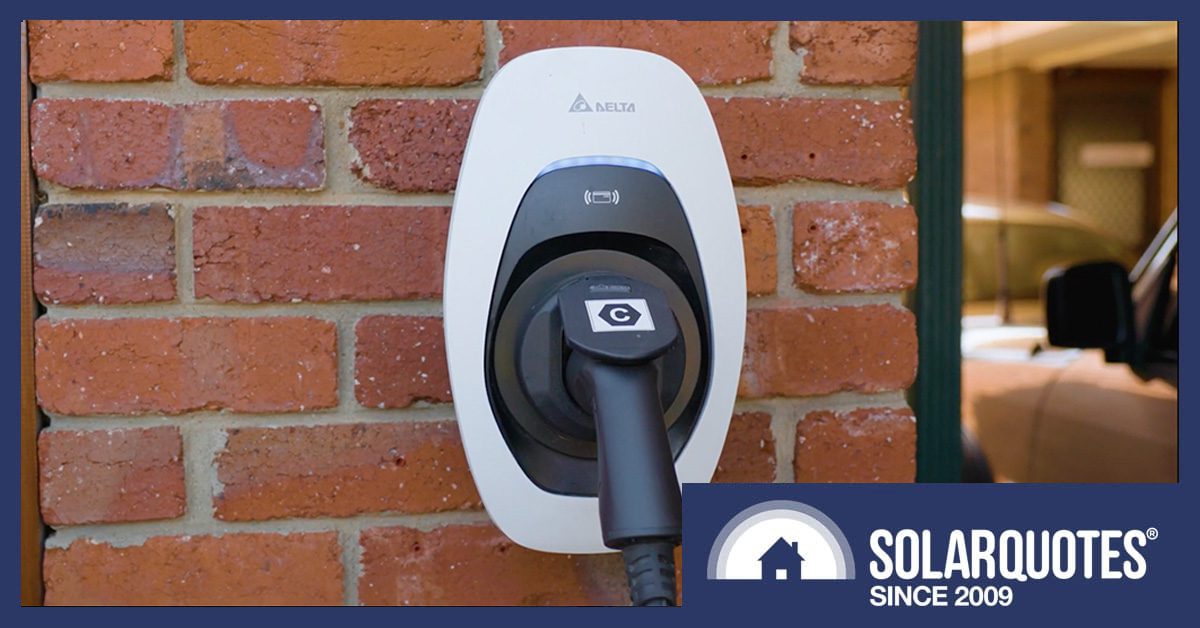
As Australians switch over to electric vehicles amid the petrol price surge, they might not just save money on fuel – they could share the use of their EV charger for profit.
A handful of apps are promising to enable just that, allowing drivers in need to pay to tap into networks of private EV chargers installed at homes the same way you might book an Airbnb, at a time when Australians need more charging options than ever.
Are There Enough Public EV Chargers In Australia?
There are nearly half a million EVs on Australian roads, but as of October last year there were only 1272 fast charging locations for Australian motorists, featuring just over 4000 high-powered public charging plugs.
How Can Community Charging Help?
Most EV users typically charge their vehicles at home, either via a standard electrical socket or a dedicated EV charging system.
A handful of companies are endeavouring to unlock these private chargers for public use through sharing economy apps that connect drivers and hosts. Known as community or peer-to-peer charging networks, some even allow hosts to share the use of regular power sockets with drivers patient enough to trickle charge their way through a roadtrip.
Here’s some of the community charging apps currently available in Australia:
ChargeAway – Available in NSW, SA and Victoria, this peer-to-peer charging model offers a community focused approach to letting users list their own charger for public usage. It features user reviews and booking in advance options, similar to other sharing economy models.
Chargehound – An extension of the Parkhound service which allows users to book private parking spaces, Chargehound goes a step further to offer parking spaces with EV charging facilities. Of particular use in Australian CBDs and suburban areas, the app allows private homes and businesses to lease the spots via an airbnb style system.
Ivygo – Covering Sydney, Brisbane, Melbourne & regional areas, Ivygo allows hosts to charge a recommended per-hour price or set their own, and enables drivers to book a charging session in advance.
WeVolt – With a growing national network, this Perth-based company offers a pay-as-you-go service for private, strata and commercial charging. It offers users accurate, real-time availability listings and transparent payment options. Users can list their charger for free on the app to monetise its use.
PlugShare – Australia’s most comprehensive map of public EV chargers also includes a toggleable feature to highlight nearby residential EV charging options.
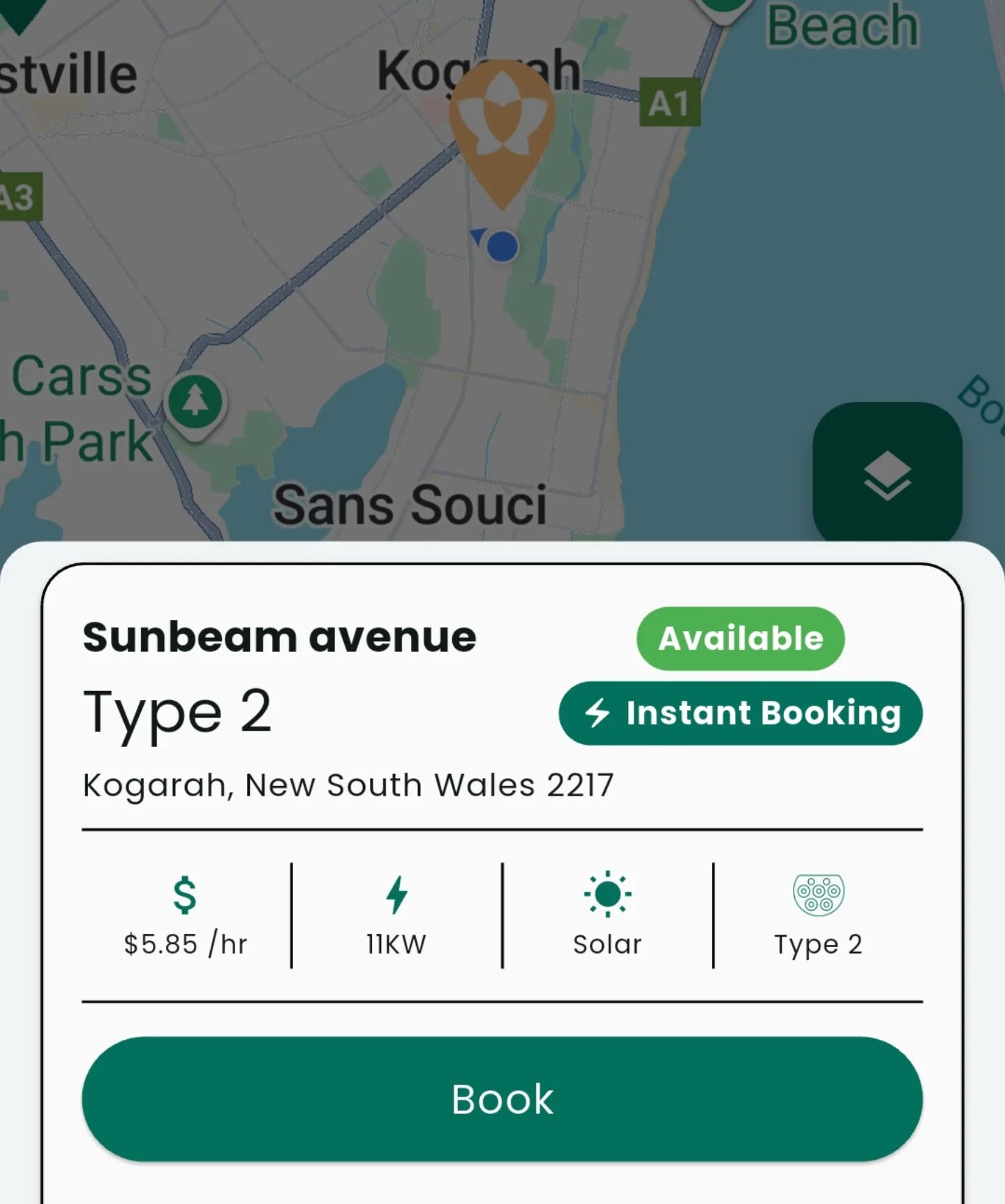
A screenshot of the Ivygo EV charging app.
How Big Are The Charging Networks?
Most of the above peer-to-peer charging networks are still small compared to the major public EV charging apps, so might be just one option at an EV driver’s disposal rather than a complete replacement for a big public charger app like Chargefox or Jolt.
Hosting could be of particular interest to people with decent-sized solar power systems and home EV chargers who aren’t at home during the day, as it will put their solar and EV charger to work earning a passive income rather than sitting idle.
With Australia’s EV usage expected to increase to around 2.5 million on the roads by 2030, our charging infrastructure will require rapid expansion to keep up.
Just as Australian homes are already doing the heavy lifting on solar and battery storage, time will tell if they can take the lead on ending EV range anxiety as well.
For more on EV charging, read SolarQuotes’ guide to home EV chargers.
 RSS - Posts






Solar, batteries, and BEV charging are, in my view, and should remain tax-free home improvements rather than business opportunities.
The current loss of tax revenue [GST and Corporate Tax] for the Government, given the value of production for self-consumption behind the meter and the value of exports, has become a material loss of revenue.
Back in the 2000’s, wi-fi was new. There were some community projects to map out “free wi-fi hotspots” and for community members to share their wi-fi with each other.
This didn’t get critical mass and it fizzled out and has been forgotten.
The reason is because free wi-fi is now everywhere and ubiquitous. You can show up anywhere and expect it. It’s part of commerce. And even if it’s not there (or is terrible) you have mobile data access on your devices. We stopped thinking of this as an issue ages ago.
With this community EV charging, I reckon it will go the same way.
It will fail to get critical mass and will fizzle out.
And it won’t matter, because the commercial world will (eventually! after many years…) provide so many charging points that you won’t even have to look for them on a map. You just drive up and expect it. And if it’s not there (or is terrible) you’ll have so many options that it wouldn’t even occur to you to worry.
I thought you has to have a licence to sell electricity? Years ago when I lived on a boat, there was a hughr kerfuffle about marinas charging more for electricity than it cost them. Most got around it by charging an access fee.
Hi Bruce,
Marinas, caravan parks, landlords of different types are obliged to pass through electricity at cost because they’re dealing with a “captive” customer. Becoming an electrcity retailer is pretty onerous because you need to have an ombudsman, a hardship policy, a translation service & a dozen other things to tick all the boxes.
Offering a service, be it charging up your car or your caffine delivery system, is a different thing.
I am one of the early EV vehicle owners. One of the problems I always face is, if I am traveling over 300KM (Max capacity my EV) I have to Pre-plan the trip well in advance, as EV charging stations are not that may in any major Free ways|Motor Way\Highways.
As we all know, in all major Freeways\Motorways\Highways there are large signs indicating Service (rest) Centers. These Signs indicate the type of services available such as Petrol\catering\Toilet Facilities etc. But they do not indicate whether there is EV Charging Facilities available. You will not know whether EV Charging available at the center ONLY after you pull into the center! And it’s a waste of time. Of course these signs were put up long before EV came into existence.
Please UPDATE The SIGNS to indicate if EV Charging available.
Also If Respective Charging Service Providers Should Publish Comprehensive Lists and Maps Showing their Charging Stations.
They should realize this is one way attracting Customer Loyalty
>Charging Service Providers Should Publish Comprehensive Lists and Maps Showing their Charging Stations.
They all have maps in their apps.
Plugshare also shows them all.
There are also government maps of chargers, although for the NSW one there are plenty of missing details and some errors.
I have been an early solar adopter and gone nearly fully electric since October 2025. It makes perfect sense to switch, and better still now. We have a lot if redundant power on a sunny day and adequate solar power in any day. Sharing the excess via a community scheme through EV charging is a great idea. Making sure you have adequate parking, nearby areas for a quiet walk, and may be a place for a cuppa might make the experience waiting for a charge a little more pleasant. I would do it.
I have been with IVYGO for over a year, in regional NSW. Have not been used at all.