
Water and electricity don’t mix, but puddles are appearing in all sorts of places right now.
Can we keep rainwater out of EV charging plugs? Yes, but not without some attention to detail.
Is It A Problem If Home EV Chargers Get Wet?
It would be nice if car charging equipment was better designed to deal with winter. It would save the support calls that lead to this article, and the worry from end users which brought them on.
I should preface this article by saying there’s not much material here for EV danger clickbait or (f)right wing outrage. EV charging is pretty damn safe because it’s been designed that way from the outset.
What we’re covering here is water getting into plugs and causing corrosion that will shorten the life of components and eventually cause failures, which are quite preventable if you follow a few simple steps to begin with.
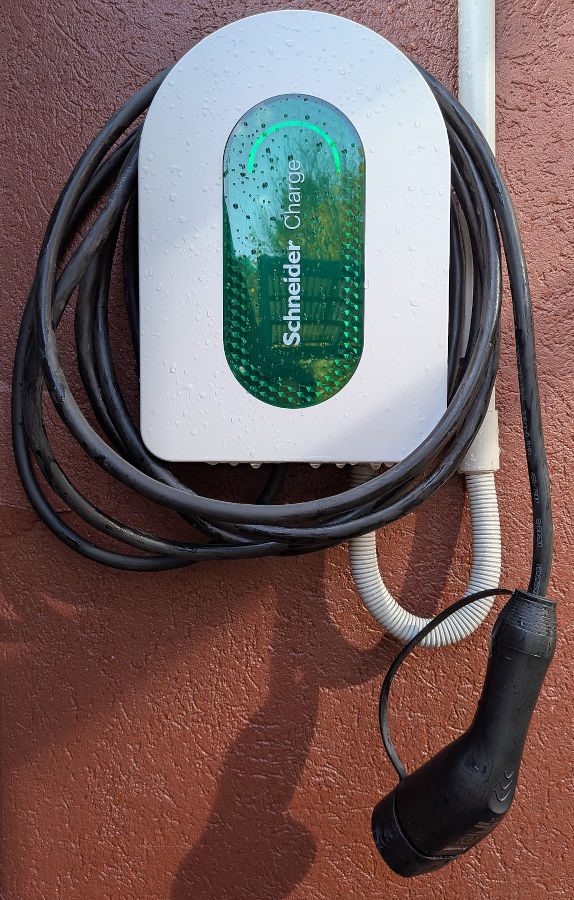
This is the first winter SolarQuotes Editor Max Opray has had a charger installed. Notice the plug hanging down with an external rubber cap.
EV Charger Corrosion Is The Enemy
Whether it’s a lead hanging unused or a protective cap dangling from a plug-in service, rainwater is a common enemy that soaks into all sorts of places. Problem is that it causes corrosion and poor connections which can eventually become overheated pins and melted plugs.
At Solar Quotes, our intrepid editor Max Opray has set about doing some first-hand research in chemistry and applied industrial design, and we can report the results with his Schneider charger have been a little underwhelming.
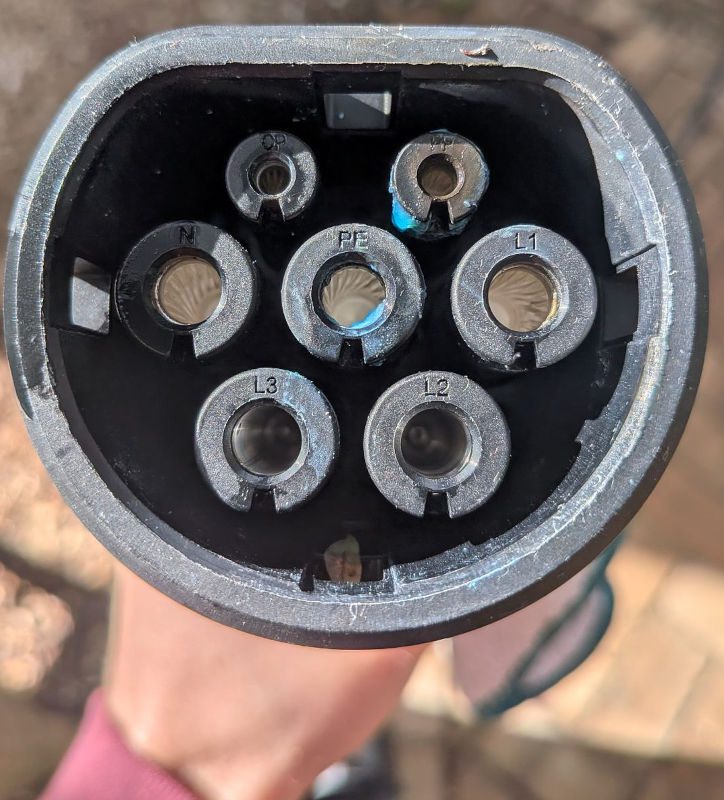
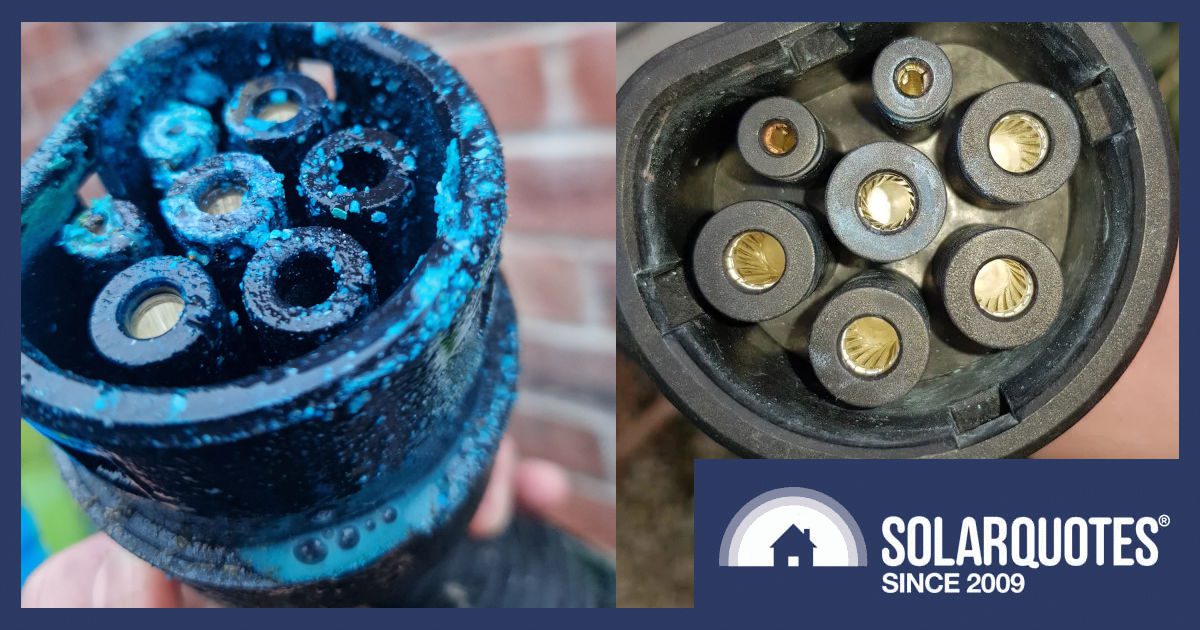
The blue residue here in Max’s charger is corrosion brought about by the pins being submerged in water.
The key problem here is the protective rubber cap – it keeps the critters out of the business end of the charging lead, but it is not protective against liquids – in fact, it actually traps water unless the plug hangs facing up. It’s not a problem exclusive to Schneider either – we’ve seen examples of other chargers suffering the same issue.
Max had his home EV charger put in earlier this year by MAC Trade Services as part of the Energy Masters flexible demand trial – due to the layout of the house, the installer settled on a position exposed to rain and was confident that would be fine. While that is true in a sense, you need to take a couple of additional protective measures to ensure the system stays in good shape.
How To Clean A Home EV Charger
Ideally, you want to keep these things out of the rain, but don’t be afraid to use them. When coupled together, AC plugs for EV chargers are IP44 rated, not suitable for immersion or pressure washing, but safe from splashes in any direction.
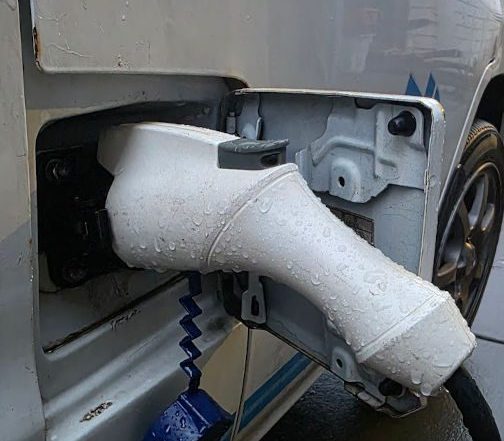
This type 1 AC charging plug (J1772) has been out in the rain for days, but note the jaunty angle the blue rubber boot is hanging.
However you don’t want to store water inside your plugs. If they do get wet it’s worth getting a pressure pack of water dispersant. Your WD40 type stuff would do at a pinch but both my locksmith and I recommend Inox MX3. Real electrical nerds will tell you to hunt up some DeoxIT D5.
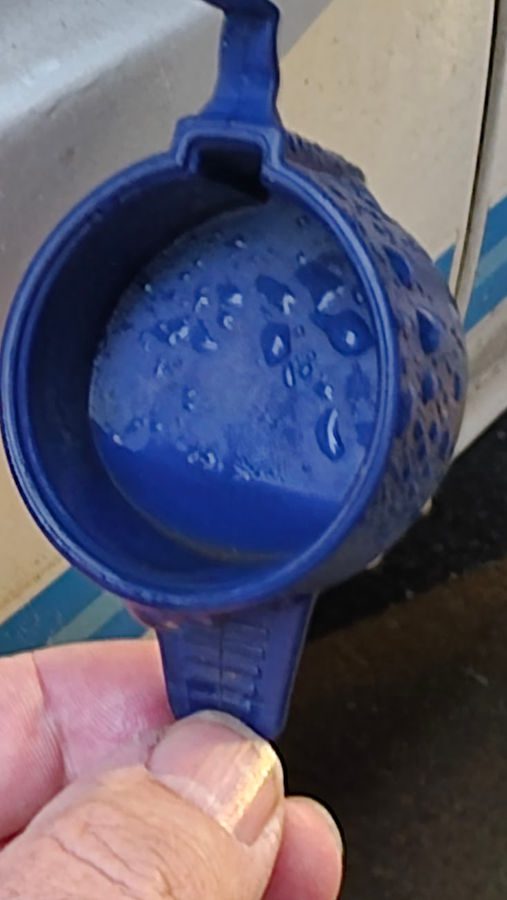
If only it hung downward and didn’t fill with water and dirt.
Substantial Preservatives
When installing MC4 solar plugs and heavy bolted battery connections I like to use Lanox MX4 as a preservative that’ll stick around, something with a bit more guts to it.
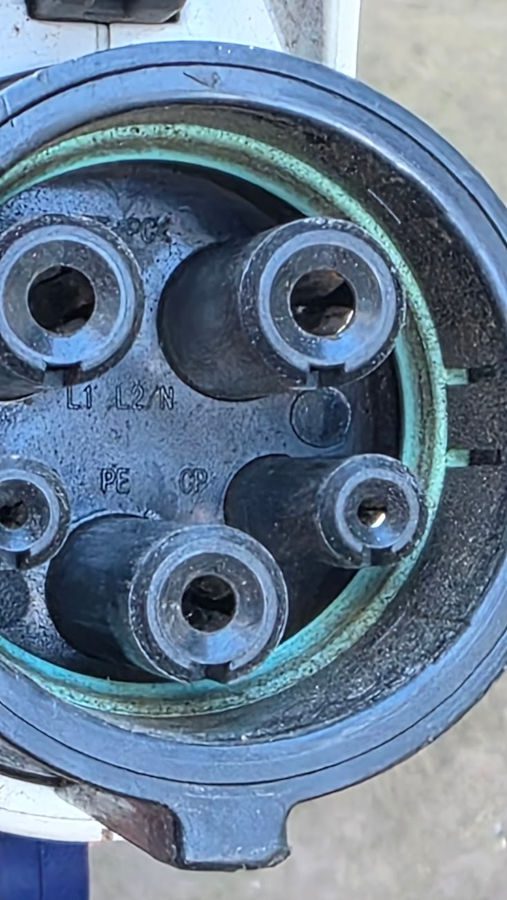
Now I look at it, this plug could use a bit of a clean. The important part of this old J1772 plug is the green seal that keeps the water out.
For really arduous conditions, electrical connectors are often filled with a preservative grease that has the consistency of vaseline, or a white heat-conductive paste that’s not dissimilar to the zinc cream smeared on a cricketer’s nose.
As much as they’re great preservatives, being quite sticky means they’ll collect dirt, dust & wildlife, things you really don’t need in a plug that’s regularly opened to the elements. It’s better to use a dose of Inox to hose out the dross periodically.
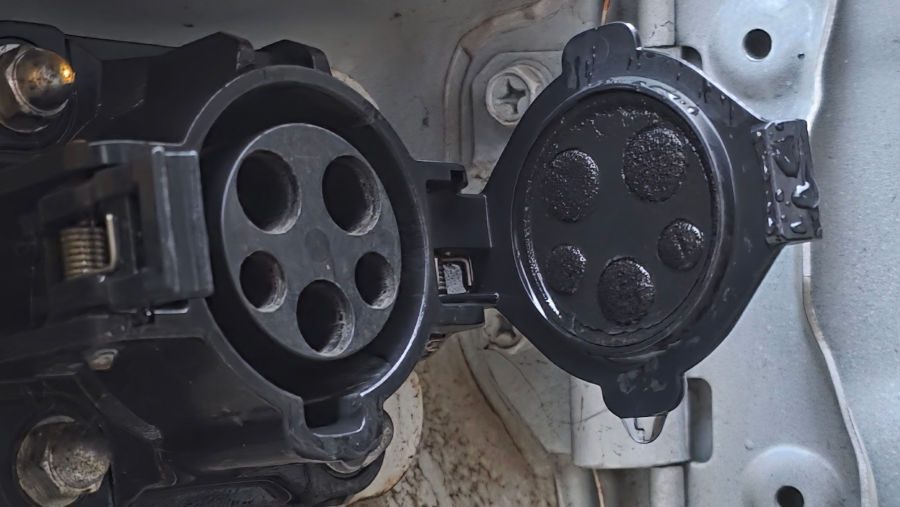
The open cover is wet, but after removing the plug, the socket is dry inside.
Public Service Announcement
EV enthusiasts have been known to carry a can of DeoxIT and some cotton buds in their tool kit. When EVs were quite uncommon, some charging stations didn’t get much use, so giving the plug a quick once-over was a service for what used to be a small community. Looking after the equipment, shooing away the little spiders, reporting in to Plugshare, it was a show of camaraderie.
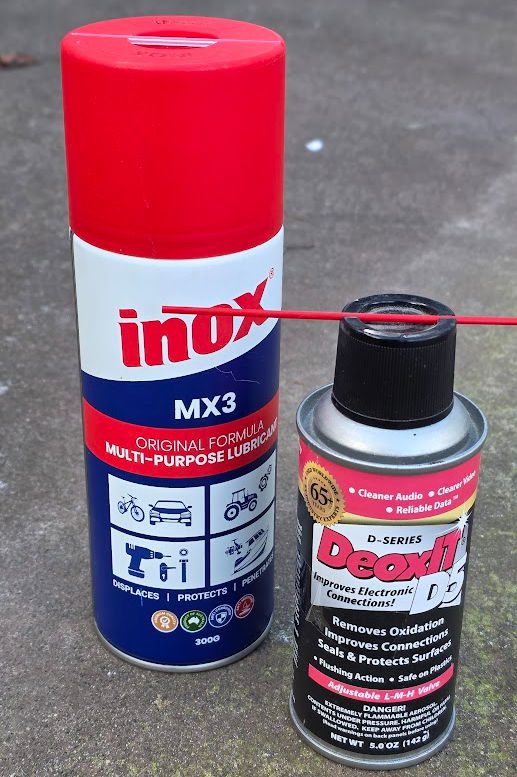
You can rationalise Deoxit at double the price, but when the tin shows up, and it’s half the size, you realise why the nerds love the unique low delivery nozzle.
What’s Going On
When you plug your EV into the wall at home, or at a medium-speed destination charger at the shops, what you’re really doing is plugging a glorified extension cord into your car. There’s some smarts involved but you’re just introducing an AC supply from the mains, to power the vehicle’s onboard battery charger with 230V single phase or 400V 3 phase.
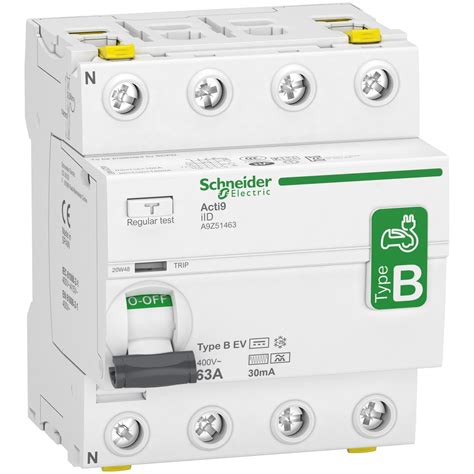
Type B safety switch especially for EV circuits.
There are RCD safety switches in the supply wiring which are specifically designed to sense any electrical shock risk, be it AC from the mains or DC from the battery. The idea is simple enough – measure current supplied from the wall & make sure the same amount comes back on the return circuit.
If the sums don’t balance, then the circuit has leakage, and it could be lethal if that stray current crosses your heart.
30 milliAmps missing from the AC side, or just 6 milliAmps DC is enough to trip the safety switch.
To put that into context, a standard Australian wall plug will draw about 175 milliAmps to charge your phone.
Assuming 40 Watts, this phone charger below might pull 400 milliAmps in Japan. Using 230V in Australia, the input current would be much lower. Output is a very benign 5.35 Volts at 2 Amps.
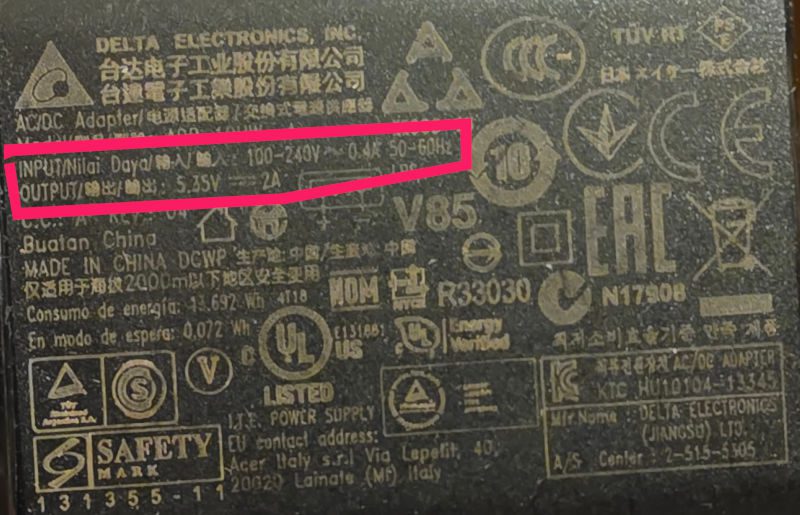
Input figures are 100 – 240V (AC wave) 0.4A, and Output 5.35V (DC symbol) 2A, but good luck reading it without your phone as a microscope.
Just remember, kids, people have been killed by bargain bin phone chargers. A cheap piece of junk might short the 230V input to the 5 Volt output, and if we use a water analogy, that’s enough electrical pressure to make your sweaty skin conduct electricity.
Mechanical Protection
If you can keep your car, charger and cables out of the weather, that’s obviously the best solution, but not everyone has a garage available.
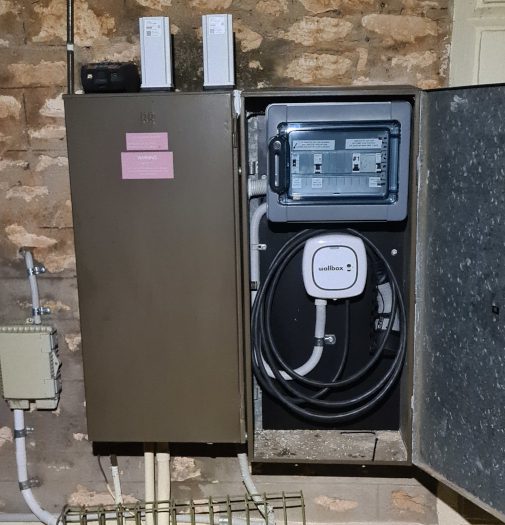
This heritage-listed house didn’t have enough meterbox space, so we grabbed a second one from the salvage yard and gutted it to house the new electrical gear and the charger itself.
However, the next best step might be to forget about the protective boot and install a blank socket or holster, fixed to the wall, which accepts your charging plug when it’s not in use (some EV charger brands come with in-built holsters).
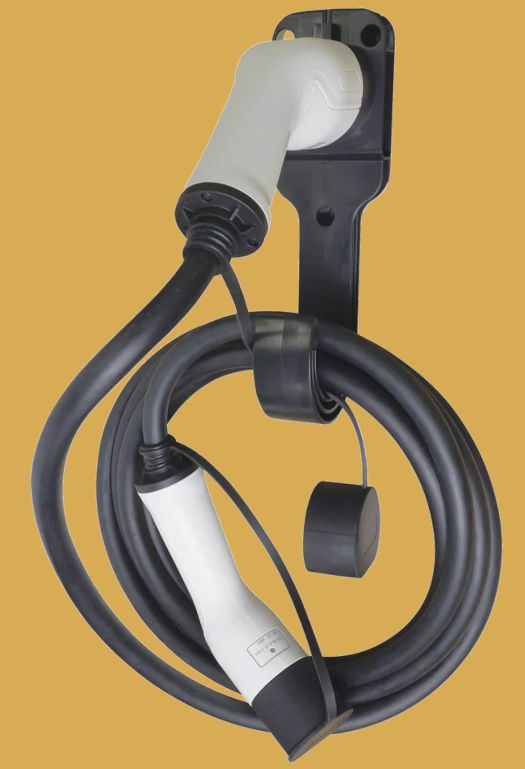
This accessory hook could help keep the weather out of your charging lead
For my part I’m going to add some Inox to one of my old type 1 charger plugs, and Lanox to the other, and we’ll report back on how they compare.
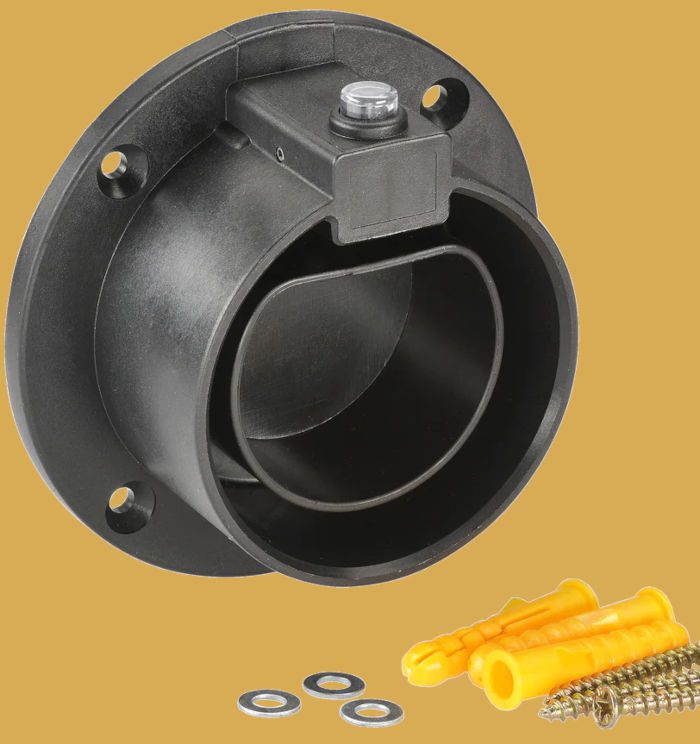
This holster might benefit from being mounted so that your angled charger handle means the lead hangs down perfectly vertical
If you’re thinking of flicking the switch to an electric car, read up on our guide to home EV charging. Or for more on problems that can crop up, read our guide to the biggest mistakes in home EV charger installations.
 About Anthony Bennett
 RSS - Posts





For what it’s worth, despite the name, Schneider Electric are actually French, not German…
Finn…. Nice photos in those articles re charger protectiom, but what about naming the product in the text if no brand is showing in the photos. …even to gettng a simple hood bent up at the local tinsmiths to protecrt this expensive gear! . Bill Brady
Thanks for catching that – we’ve removed that reference.
Thank you. Very relevant article, especially in wet Victoria. I bought an Arlec Heavy Duty EV cable (plug) holder from Bunnings and the plug has now remained dry after days of heavy rain (previously had the same problem with water in cap and corrosion). The plug is tilted slightly downwards so water does not run inside. Probably still a good idea to spray pins with anti corrosive as the air is very moist.
Thank you for clarifying where to spray the lubricant/water repellant. That was the detail I wanted and couldn’t find in the article (as someone with very limited electrical knowledge).