
“After installation, we have found out the battery will not power the aircon after dark…”
This is a direct quote from the My Efficient Electric Home (MEEH) Facebook group. Tim Forcey suggested it deserved an article. I agree, because there’s a limitation of three-phase battery systems you need to understand before buying.
An MEEH member claimed they bought a FoxESS 41 kWh battery with a 3-phase 15 kW inverter, sold on the promise it would power his entire house through a blackout.
But after installation, the owner discovered the air conditioner shuts off after dark with no solar available to help power it. The installer’s alleged fix? Switch the battery system off and run the aircon on grid power only.
A disclaimer before we go further: everything above comes from one side of the story, posted on Facebook. I haven’t verified the install, seen the quote, or heard from the supplier, who I’m deliberately not naming. There may be facts that change the picture. What follows is the physics and the law that apply to any system sold this way – whatever turns out to be true in this particular case.
Your Options When Installing A Battery
- Whole home backup. When the grid is connected, the battery is powerful enough to power everything in your home that would normally be switched on at any given time. When the grid is not connected, it can still power everything.
- Partial home backup – with every circuit downstream of the battery power sensor. The battery only backs up ‘essential circuits’ when the grid is down. But when the grid is connected, it can ‘see’ all the circuits in the home and will cover self-consumption of every circuit in the home – up to its total max power output (kW – across all phases if you have 3-phase). Note: this latter part is misunderstood by crap installers, many non-solar sparkies, untrained salespeople, and idiot support staff from cheap battery companies, who I see telling consumers that – when the grid is up – batteries can only provide power to circuits that are on the backed up circuits. This is incorrect.
- Partial home backup – with some circuits wired upstream of the battery – so they are invisible to the battery’s power sensor and will never be powered by the battery – with or without the grid. These circuits are forced to use the grid all the time. The most common circuit to treat this way is your EV charging circuit. If you can get free or very cheap electricity from the grid – it is rational to force that energy to come from the grid, not drain your home battery.
- No home backup whatsoever. Some cheap and nasty retailers appear to think battery backup is too hard and now only sell home batteries with no backup whatsoever, so they’ve got one less thing to fuck up.1
The customer in this instance asked for option 1, and claims he was told that – not only was his air conditioner not backed up – but it couldn’t even be powered by his 15 kW battery system with the grid connected.
Let me explain how a battery system ends up in that sorry situation.
The Power Limit Is Per Phase, Not Total
A “15 kW” three-phase inverter does not have 15 kW available on any phase you want it. It has 5 kW available on each of three phases.2.
So a 6+ kW single-phase aircon meets an inverter port that can only provide 5kW on the same phase, and one of them loses3. The inverter trips, or the air conditioner gives up, or both.
For the aircon to work under normal grid-connected conditions, the inverter 4, must have enough “pass-through” current rating to handle the entire house load, and this can be model-specific.
For example, the Solax 3-phase 15 kW G4 will only pass through 32 A, whereas the Solax 15 kW Ultra model will handle 80 A. During a grid outage, neither will support a large 7kW single-phase load, such as an EV charger, floor heating, or a large aircon but the Ultra will work fine if the grid is connected – simply passing through up to 83 A (~19 kW). But even with the Ultra, you won’t be able to use your aircon without the grid, as the inverter simply can’t output more than 5 kW from the battery on a single phase.
So while specifying the Ultra still won’t give you whole-home backup, it makes the installation cheaper, because it avoids the need to divide your switchboard into essential and non-essential circuits.
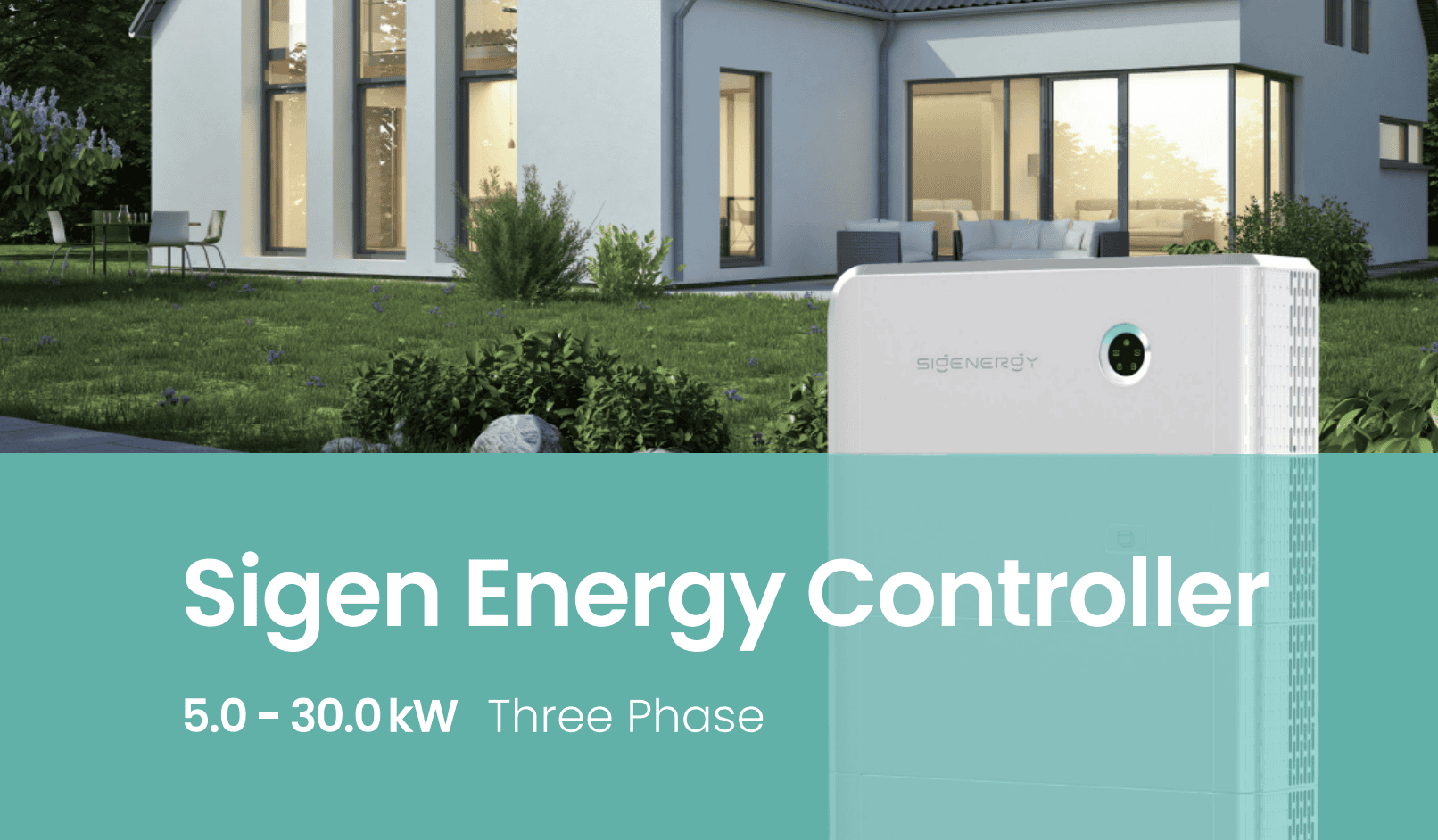
To honour a “whole house backup” promise from the salesperson, everything has to be wired behind the inverter’s backup port, and the inverter needs to be capable of not just passing through the maximum expected current, but outputting it from the battery alone. For most Australian homes, that requires a really beefy inverter. Sigenergy realised this before anyone else, and that’s one reason their 30 kW, three-phase unit is so popular – it will back up most Aussie homes without worrying about essential circuits.
Proper Design Without A Giant Inverter
A proper design doesn’t put the oversized aircon on the inverter’s backup port – but still puts it where the battery can see it5. Then – while the grid is connected – the battery can still power the aircon by using all three phases to discharge, netting your bill out at your meter6.
But with this design, during a blackout, the aircon is off.
If whole-house backup is non-negotiable, then the designer must specify an inverter that can handle the single-phase loads7 or design a transfer switch system.
What should never happen is a salesperson saying “powers the entire house” about hardware that physically cannot.
None Of This Is Exotic Knowledge.
Per-phase limits are on page two of every datasheet. Any installer who has commissioned a three-phase hybrid knows them cold. If your salesperson is also the installer, there is no excuse for getting this wrong.
If you are dealing with a salesperson who is not an installer, then ask them if they have SAA design accreditation – you don’t need to be an electrician or engineer to get it. If they don’t have it – move on.
Already Been Burned? The Law Is On Your Side
All of this is great to know before you buy. But what if you’ve already been promised whole-home backup and sold a system that physically can’t deliver it?
Simple. Under Australian Consumer Law, what the installer promised you is enforceable. Even verbally.
A salesperson saying “this will power your entire house when the grid goes down” creates an express warranty. It doesn’t need to be in the contract. It doesn’t need to be in writing at all. If the promise helped convince you to buy, it counts. On top of that, if you told them what you wanted the system to do and they sold it to you anyway, the system has to be fit for that purpose.
A system that cannot do the very thing it was sold to do is a major failure, and for a major failure you choose the remedy, not the installer. Your options:
- A refund. Full removal, money back.
- A replacement or modification that delivers the promise. A bigger inverter, a rewire, whatever it takes, at their cost.
What the installer cannot do is shrug and tell you to switch the battery off when you want to use the aircon. That’s asking you to live with the failure, which is precisely what the law says you don’t have to do.
Phase Shift is a weekly opinion column by SolarQuotes founder Finn Peacock. Subscribe to SolarQuotes’ free newsletter to get it emailed to your inbox each week along with our other home electrification coverage.
Footnotes
- Don’t even think about trying to explain to these guys the concept of certain circuits being upstream/downstream of the battery power sensor; it will blow their minds. ↩
- I haven’t verified which inverter or aircon is behind this particular install, so treat the exact numbers as illustrative. But the pattern holds across most budget three-phase hybrids on the Australian market. ↩
- The reason it only happens after dark is that there is no solar behind the meter to reduce the grid draw ↩
- Technically, I should say **series-connected** inverter ↩
- i.e. through the batteries CT ↩
- Say your aircon pulls 8kW on phase one at night. The 3-phase inverter puts about 2.7kW (8kW divided by 3 phases = ~2.7kW) onto each of the three phases to cover it. Phase one still imports 5.3kW from the grid to supply a total 8kW on that phase. Phases two and three export 2.7kW each. Your meter sums all three phases before determining whether you’re importing or exporting. Net result: zero. You pay nothing, the battery covers the lot, and the aircon never knows the difference. ↩
- They also need to consider the inrush current, but that’s a whole other blog post ↩
 About Finn Peacock
 RSS - Posts





Australian Consumer Law…yes, but some suppliers and manufacturers don’t respond to even threats of that. Sungrow is still advertising and stating on it datasheet that its SBR battery is 100% usable and 100 % depth of discharge, which it isnt unless the consumer gets into the installer configuration and reduce the hidden reserve to zero% and void their warranty. Sungrow and my installer are disinterested in rectifying that.
Whole home backup is possible with SIG three phase. Just don’t get talked down by your installer to a budget system. Make sure you get a big SIG battery and a large SIG inverter. My system (48kWh & 30kW) happily runs the ducted air con during grid outage. However, the SIG AI is the real winner in the SIG family.