
 Is your battery warm and cosy this winter? Yes, it probably is.
This means it could be a very attractive house for a mouse, so be warned – rodents are terrible for electrical installations, and a mouse plague is currently chewing its way through Australia.
As a farmer, I’ve always despised rats & mice, but this was a difficult thing to express to my brother’s former girlfriend and the pet rat she kept for a couple of years, mainly on her person.
In younger days our family had a menagerie of rabbits, chooks, pigeons and a duck, so there was always a battle to keep them fed without creating a welcoming home for rodents. A wine bottle laid over a bucket was a good trap for mice, but we found the most reliable way to end a big fat rat was actually using a rabbit trap.
Do Rats Damage Home Batteries?
All kinds of life will seek out a warm spot in winter, and rodents are famous for nesting in roof spaces, car engine bays, and anywhere else they can chew their way into.
Where this matters for solar and battery systems is wiring, because PCV insulation is no match for sharp teeth, and the critters have no respect for electricity.
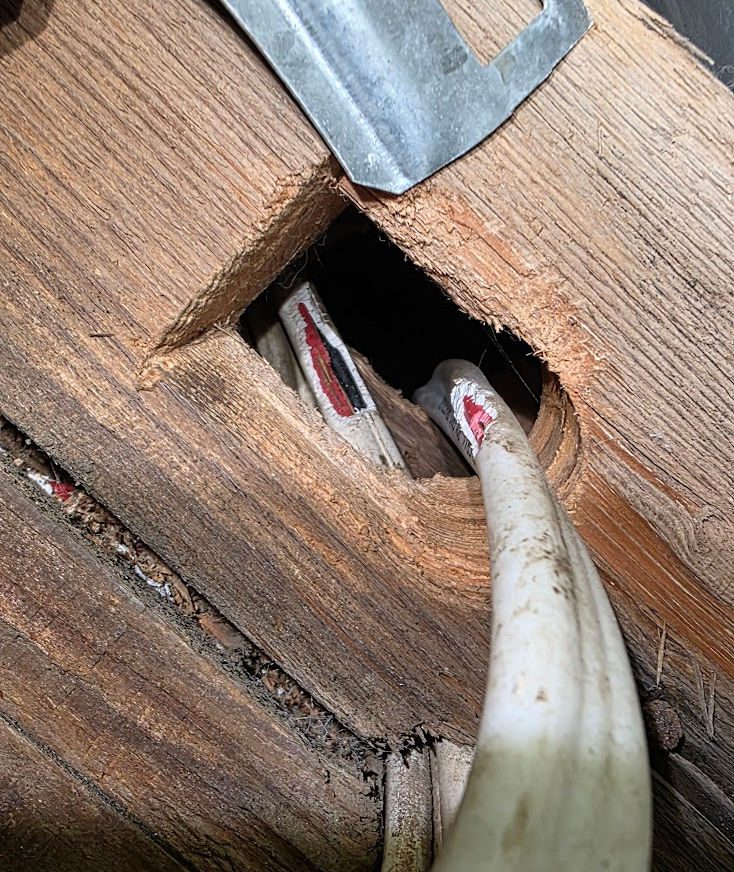
Here we see the rats have helpfully rounded off the edges of the timber, but probably got an uncomfortable tingle from chewing through the red wire.
When modern battery solar hybrids are wired for “whole home” backup, the mains cables that power your entire house can be fed through the inverter in some instances. The ordinary loads of household consumption will warm this wiring up and additional energy for things like EV charging, solar generation or “free hours” battery charging only adds to the temperature.
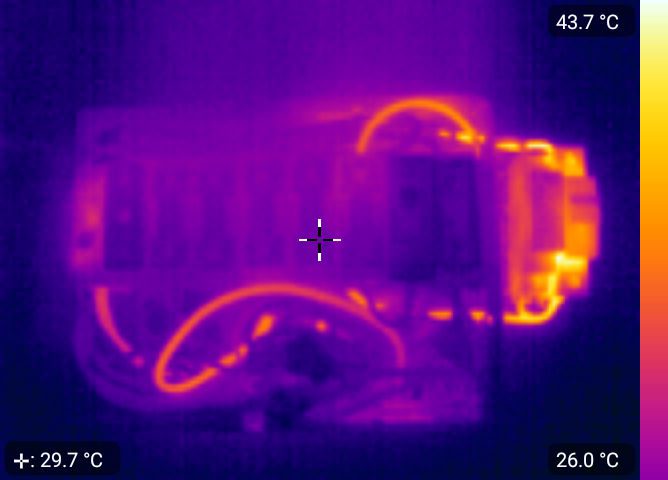
Here we see behind the switchboard, a hard-working solar inverter heating the supply wire & breaker on the RHS, while the main switch on the LHS is also sweating a little under the load.
Keep Rodents Out Of Switchboards
A well-executed switchboard will have pretty neatly fitted wiring, so if there are any gaps bigger than the diameter of a pencil, legally, they should be caulked with intumescent sealant.
Out in the real world, many switchboards have gaping holes through which mice will waltz on their way to a nice warm abode. Some of them will even piss into the safety switches and randomly trip your circuits.
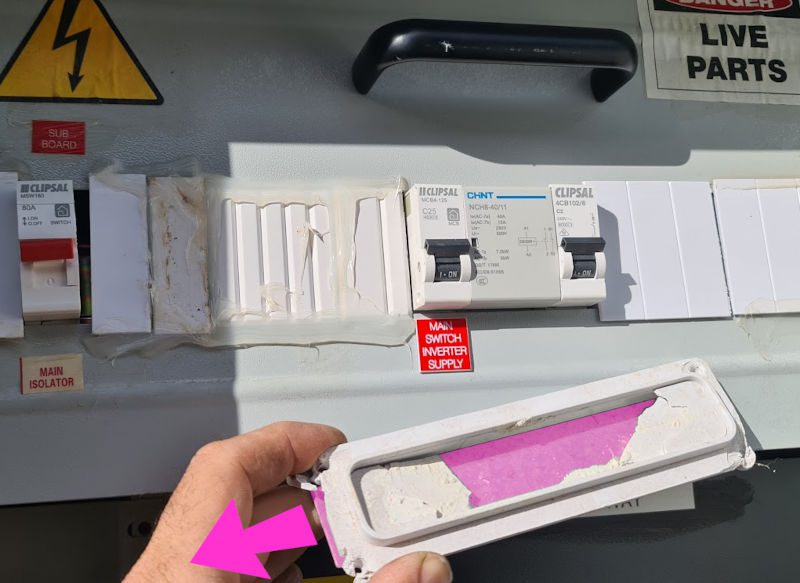
Shaded in pink, we see the shutter you slide across to accommodate large bunches of cables. It should be behind the “live parts” label. However, the vandal who wired this board simply punched the entire assembly out of the enclosure, leaving a gaping hole for mice and sharp edges for the cables to pass through.
It can be difficult for a homeowner to check inside a switchboard, as (for good reason) you’re not legally allowed to remove the escutcheon or open the meter panel. However, mouse droppings or smell are a warning that should be heeded.
Where solar and battery installations sometimes fall victim is nicely fitted ducts for wiring are also nice secure homes for mice, with access holes to the wall cavity or ceiling space; and an electric blanket to nest with.
Issues arise when the mice decide to do some renovations, and they chew up the wiring inside the enclosure to create some extra space.
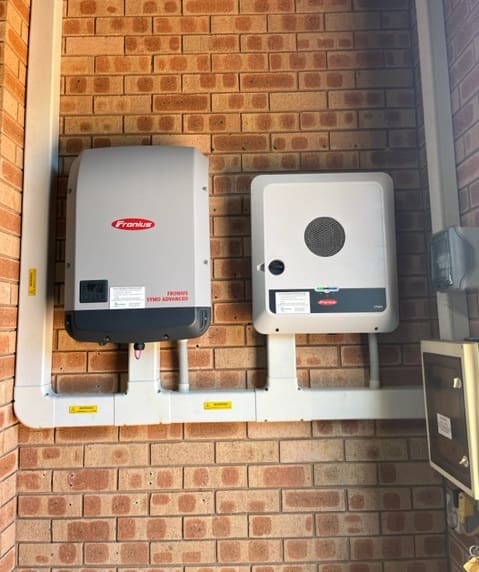
These lovely cable ducts can hide furry little surprises.
The Best Laid Plans For Mice & Batteries
Well-executed wiring is the only way to really combat rodents. Making sure the buggers can’t get into switchboards and enclosures is essential.
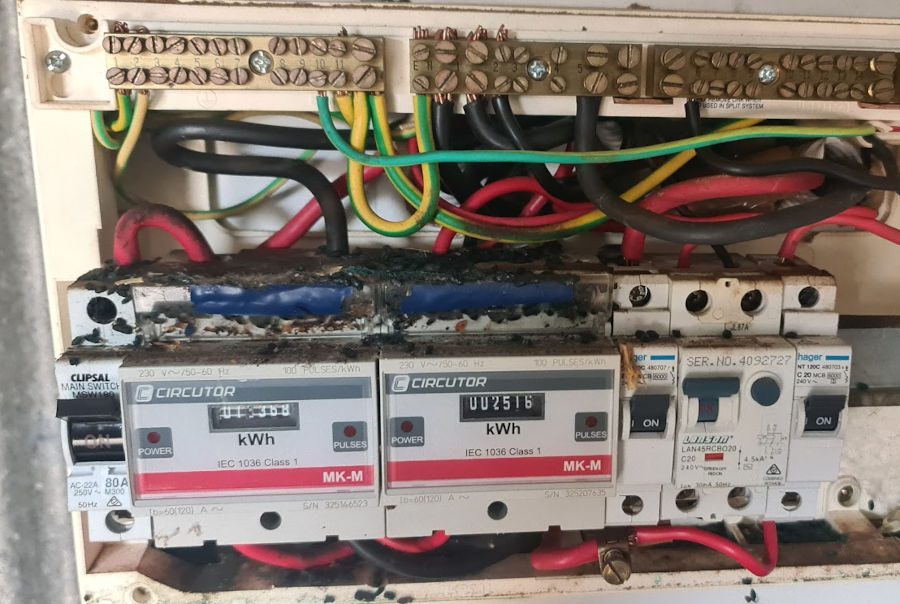
Nice warm switchboard full of mouse s#it. Yuck.
Many don’t realise that unless it’s shiny smooth metal, almost any surface will give a mouse enough purchase to climb walls with tiny sharp claws. I’ve watched them go straight up a brick chimney or timber doorframe, so electrical cable tray is a funpark and soft PVC insulation isn’t much different to a rope ladder.
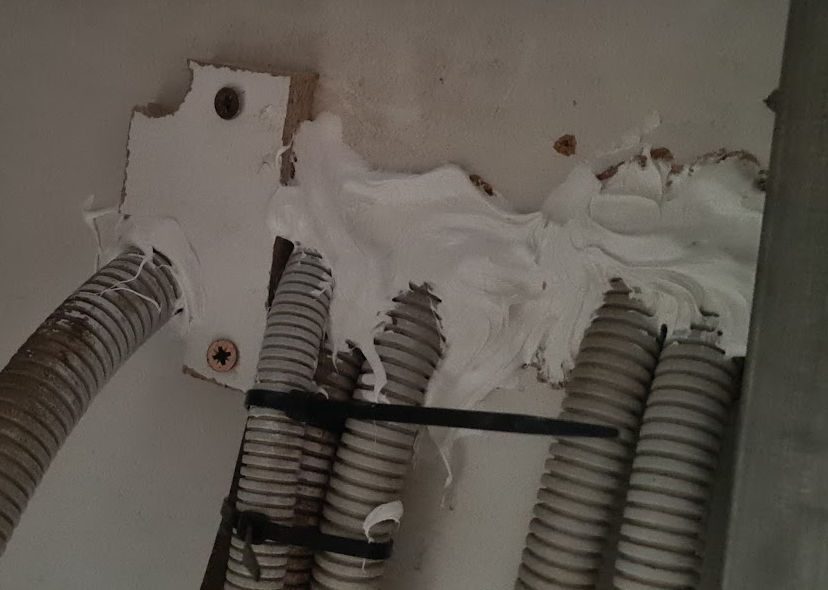
From the off-grid system above, you have to work with what you’ve got. Luckily, this half-arsed electrician was typically averse to cleaning up, so I found scraps of switchboard material left over to screw back over the gaping holes and caulked the rest to exclude the mice.
Bait Is Bad
Please be aware that while poisons can be an essential tool for controlling pests, mice are at the bottom of the food chain. When they’re eaten by owls & raptors, these birds can fall prey to the same anticoagulant rodenticides building up in their system.
Look at the label.
First generation anticoagulants include warfarin, coumatetralyl, and diphacinone. They typically require multiple feeds to deliver a lethal dose and pose a lower risk to wildlife.
Second-generation anticoagulants include brodifacoum, bromadiolone, difenacoum, difethialone, and flocoumafen. Often lethal after a single dose, these poisons persist longer in the environment, which increases the risk of secondary poisoning to wildlife.
For more on how to protect your home energy gear from unwelcome visitors, read about how to stop solar inverters from becoming a bird nest.
 About Anthony Bennett
 RSS - Posts





Something also worth mentioning is that pretty much every household insurance policy has a clause which makes your insurance worthless to fix rodent damage.
Insurance companies are great at taking your premiums, not so much at paying out claims.
Whether its simple wiring damage, a replacement battery or a house fire – if they can prove it’s caused by rodents they will refuse to pay any claim.
Rats and mice increasing in numbers is becoming apparent at Penneshaw now that the Cat fence has divided this town from the rest of Kangaroo Island (with the purpose to eradicate wild cats), and domestic cats are to stay indoors.)
Clearly cats do eat some wildlife,… but so much more damage to small nestlings etc is caused by rats and mice, not to mention the wiring as you describe.
There is nothing quite as costly as dismantling a new car or tractor to find where the rats have chewed the wiring also.
Cats were kept to protect assets from rodent damage, but now so many people have forgotten that History shows that the result of “no cats” is worse: Search Maquarie Island and costs to remove rats and rabbits,.. and the Bubonic Plague /Black death
There are some new traps that self lure and reset after catching the rats or mice, and do not pose a poison risk to higher order predators, and the tilt top bucket traps work great too. (block the holes if possible too with plaster).
Yes I agree that now the greenies have got the cats locked up, the mice are running riot.
yeah ok cats sometimes chomp the head off something they shouldn’t, but they are a more natural and more importantly 100% chemical free. Id rather a cat or two about the house than traps and nasty chemicals.
Hi Ryan,
Cats kill things for fun.
As a kid who’s lost pets to them, a farmer who’s shot huge feral cats and landowner who’s seen annual surveys of lizards & reptiles… I’d rather have native Australian Quolls to eat mice.
My mother’s excessive number of farm cats were a menace to wildlife, but she valued the absence of rodents and snakes, with a lot of small children about.
Feline killing skill struck me when walking home uphill half a century ago, and overtaking a mother cat dragging a rabbit bigger than herself. Changing sides, presumably to relieve the strain in her neck, her legs didn’t reach the ground as she did so. (Her grip on the neck of the rabbit didn’t slacken one iota during the manoeuvre.)
To restore the fox population, in an attempt to dent the booming rabbit population here, I’ve paused the predations of my old bowhunting schoolmate. (He’s dynamite.) If quolls could do that job, it’d be a delight. (The cost of the course required to be able to put out poisoned carrots isn’t too bad, I suppose.)
Anthony,
The chipboard plug and caulking goop look mouse-proof, but their more muscly cousins are something else. Back around 1956, cement quality in Denmark was still suffering post-war supply difficulties, and rats were digging their way through the concrete floor in indoor farm pigpens. Our solution was to mix in broken glass. (Farming has always required resourcefulness.)
Here, we have them in the roofspace of the old house, and there’s cabling up there for them to chew on. I’ve decided I’m too old to go up there now. (Would definitely throw the main switch on the subboard there first, if reconsidering.)
The article makes me even more glad to have the MPPTs, inverters, and batteries indoors. It’s quiet here in the country – I’d hear rats chewing through the wall top-plate to follow wiring down. (If they’re up there in the extension..) The rat bait I put out 2 years ago is untouched, so good so far.
The wombat’s 60 cm diameter hole under the slab was no wiring threat.
If you haven’t got your lifetime supply of 2nd generation rat poison yet, you are probably out of luck. They are not allowed to be sold after the 1st of July, and most places have already sold out of existing stock.
1st generation poisons are not worth using, as rats will not take a second feed of something that makes them feel sick – they are a smart animal.
The only other real option apart from trapping now, is zinc phosphide – it creates phosphine gas in the rodents intestines, very lethal, single dose (as little as 1 grain of dosed grain will kill a rodent). But not available for the general public, only to farmers.
Thanks so much for the interesting article, and for the warning on the danger of second-generation anticoagulants to wildlife. I appreciate that.