

Rising petrol prices, driven by escalating tensions in the Middle East, are hitting Australians hard at the petrol pump and renewing concerns about the country’s reliance on imported fossil fuels.
Can EVs Protect Australians From Petrol Price Spikes?
Industry bodies including the Electric Vehicle Council have renewed calls for stronger support for electric vehicles, pointing to the federal electric car discount — a scheme that helps reduce the upfront cost of new EVs — as a key way to shield motorists from volatile fuel prices.
“Retaining the Electric Car Discount is more important than ever. The policy, which is under review, is helping Australians switch to EVs, giving them more control over their household budgets. EVs are cheaper to run and don’t face the same exposure to global oil shocks. Their “fuel” is electricity – often cheaper off-peak and free for households with rooftop solar. Add lower servicing costs and EVs protect families from the rollercoaster of global petrol prices,” Julie Delvecchio, CEO of the Electric Vehicle Council, recently said.
Rewiring Australia CEO Francis Vierboom late last week also called for the federal government to retain the discount on salary packaging EVs:
“Battery-powered EVs can run on electricity we make in Australia, including ultra-cheap rooftop solar, while the energy in our fossil-fueled cars is imported from one of the world’s least stable regions,” he said.
Meanwhile, Australians are starting to vote with their wallets. February saw record EV sales, with battery-electric vehicles taking an 11.8% share of new car sales — up from about 8.4% in January.
Online listings platform Carsales last week reported a 76.7% spike in searches for EVs after the outbreak of the war in Iran.
How Vulnerable Is Australia’s Fuel Supply?
The price spike also brings fuel security into focus. The federal government has reassured motorists there is no immediate shortage, but Parliament has been told Australia currently holds roughly 36 days of petrol, 34 days of diesel and 32 days of jet fuel if imports were disrupted.
That’s higher than in previous years, but still well short of the 90-day International Energy Agency benchmark many countries use to buffer against global supply shocks.
In recent days, the government has released portions of its emergency reserves and eased some fuel quality rules to boost supply amid the Middle East conflict.
It’s a reminder that everyday fuel costs are tied to bigger energy security issues, and reliance on imported oil leaves Australia exposed whenever global tensions spike.
Electrification: A Long-Term Solution
EVs are just one piece of the puzzle. Shifting energy use in transport, homes and industry to electricity gradually reduces reliance on imported fuel — especially as Australia continues to expand rooftop solar and large-scale renewables.
Historically, major oil shocks have pushed countries to think beyond short-term fixes. Back in the 1970s, many European nations began restructuring their energy systems, investing in renewables, efficiency, and alternative energy sources — changes that now shield them from short-term oil price spikes.
Today’s disruptions could do the same for Australia, giving electrification a chance to strengthen energy resilience while letting households take more control over their energy use.
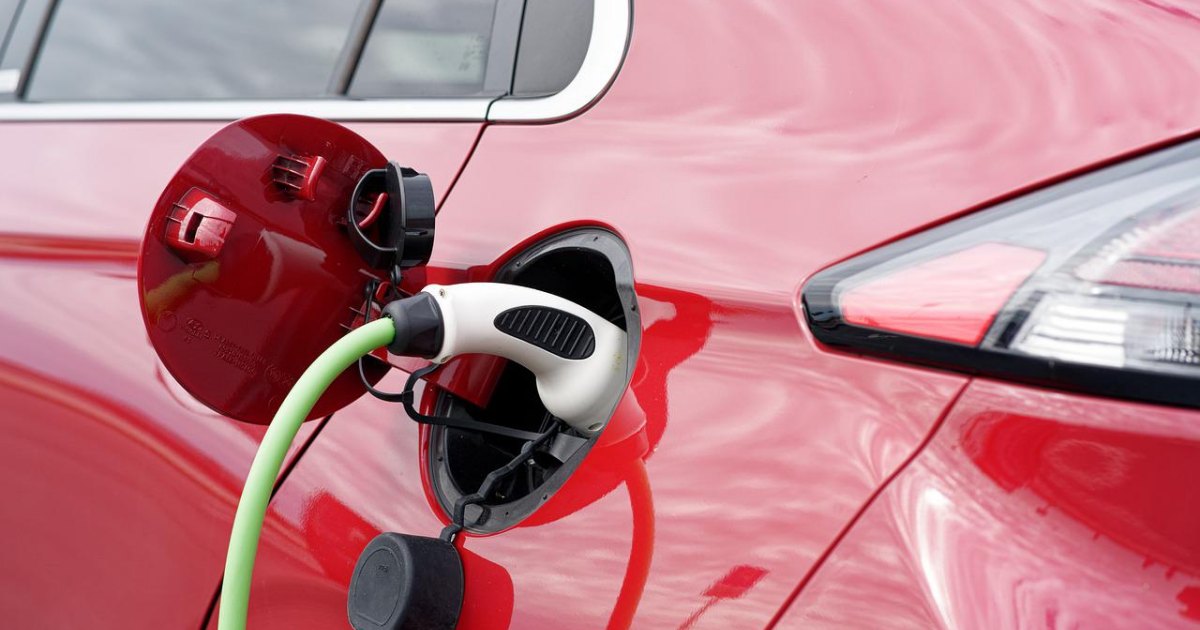
A shift to EVs is just one of the ways Australia can reduce its reliance on imported oil.
Fuel Excise and the Budget
Fuel excise currently generates tens of billions of dollars each year to fund roads and transport infrastructure, but as more vehicles switch to electricity, governments will eventually need new ways to pay for road networks.
This is a politically tricky issue and one that many EV owners find unpalatable. But analysts say the sooner a solution is found — whether through EV road-user charges or reallocating existing revenue streams — the smoother the transition will be.
What It Means for Australians
For motorists, the spike at the pump is immediate and noticeable. For policymakers, it highlights how tied Australia still is to global oil markets. Electrification — from EVs to rooftop solar — may not fix prices overnight, but it’s a strategy that gradually moves control back into local hands and strengthens long-term energy security, while also giving households more options to manage their own energy use.
For more on how to electrify your transport, read our deep dive guide to home EV charging.
 About Kim Wainwright
 RSS - Posts






I can see this new EV craze creating a lot of potential problems. If you buy a fully electric vehicle, you’ll need to set up your home—assuming you’re lucky enough to have one suitable—to charge it. Charging on single-phase 240 volts is slow and inefficient, so the obvious thought is to install three-phase power. But for many households that simply isn’t practical, so you’re left hoping an overnight charge will be enough.
If you go with a hybrid, you’ll still need petrol, although careful use could make it work quite well.
We saw something similar during the last big fuel price spike, when many motorists rushed into LPG conversions without doing much research. LPG was—and still is—cheap, but if your car was set up for dual fuel you still had to keep at least half a tank of petrol on board and use some of it occasionally. The fuel pump and injectors still operate while the car is running on LPG; the petrol simply gets redirected back into the tank.
7-11kw charger on single phase is more than adequate for most people. Even a 10-15amp granny charger is fine for many.
Can’t do it on single phase?
What utter rubbish.
In 6.5 of Tesla ownership we have never had a problem.
Neither have either of our sons who also have Tesla’s and are also in older houses with single phase power.
Are you also going to say that our 6.5 year old Tesla must be on its second or third battery?
Sorry to disappoint, but it has under 10% degradation.
Definitely not true Eric and I don’t think you have any experience with EVs if you think this is the case.
My unit has 32A TOTAL grid connection. A far cry from the 3-phase you seem to think is required. I have been absolutely fine for almost 3 years now on a 15A connection using the portable charger.
I am not saying EVs are perfectly suited to everyone, but most people, even renters, can make it work.
Two of my mates have EVs and can’t charge at home. There are so many public chargers now in urban areas it’s easy to plug in the car while you go the shops. Regional areas may have further to go, but typically people have off-street parking there so it’s a non-issue (towing excepted!)
We’ve had an EV for 2 years. Only ever charged from the supplied slow charger ( about 2 kw/h per hour) Not a problem, unless you forget to plug in, which I never have. ( covering about 2000km a month)
A.B.C. …….. Always be charging.
ABC80 is a good rule, level 1 chargers will probably be there in that sort of range anyway, nice and slow too.
Level 2 is great though, can put in 43kwh or so overnight in the 6 hours for 8c, about $1.60 per 100km, and still not too fast to degrade anything.
2nd hand tesla charger was $500 (4 or 5 years ago) and $300 to install.
Charging on 7kw Single Phase takes 9-10 hours from empty to max. (on a BYD Atto 3). Hardly an inconvenience. Also we rarely ever do a 10% – 100% charge as its just a constant top up once or twice a week.
Easier than going to the petrol station.
We have used the little 10A wall trickle charger for the last 15 months in a rental without fuss at all, just plug it in twice a week and it maintains a full charge.
Eric, Australian light vehicle fleet does less than 15,000 km/year on average per vehicle. This works out to be an average of ~7 kWh of charging a day.
Even low power plug-in EV supply equipment (“granny chargers”) can do that easily over 4-5 hours during off-peak periods.
It’s a complete non-issue if you have ability to park near a power supply.
The vast majority can readily manage with a dedicated 15 A outlet, while more powerful EV charge stations make it super easy and have other smart options like schedules, consuming excess solar PV etc.
3-phase is nice but unnecessary (and a lot of EVs don’t have on board 3-phase chargers anyway, many are only single phase).
A standard single phase charge station is going to add ~40+ km of driving range per hour. It would be an unusual scenario for that to be insufficient.
You probably have never owned an EV. I own an Atto 3 for 3 years now, according to ChargeHQ I have used about 7MWh to charge it at home on top of occasional Fast Charging. I also have 32kWh Sigenergy home battery since July last year that I charge along side the EV during FREE hours, OVO and now Globird, especially relying on grid when there’s no solar in Winter or overcast days. All on single phase, 230V, 63A. Oh and my house is all electric, has always been.
Also with a PLUG IN hybrid, you almost only use petrol for day trips/long distance travel. Most people would be fine driving on EV mode for daily commute.
>Charging on single-phase 240 volts is slow and inefficient
Comparatively slow, yes, but you have all night, but no it isn’t inefficient, it’s more efficient than very fast charging, which uses energy for battery coolant circulation pumps
Eric,
Those of us who have had an EV for a number of years can only call “Fossil FUD” on the false claim that domestic BEV charging is difficult or necessarily slow.
Yes, BEV drivers can charge slowly with the free granny charger usually provided, but also more quickly top up with a 7.2 kW Level2 charger while watching a footy match on TV. However, even *off-grid* it’s dead easy to do a 65 km shopping trip in the morning, and have that recharged in 90 min – half done by the time the shopping and a couple of lunch sangas have been put away. It. Is. Not. Waiting. Time.
My 2+ yrs of BEV driving is *entirely* off-grid rooftop solar powered – zero grid energy – car powered by a star. Just drive into my garage, and plug it it if needed. (It does over four 65 km shopping trips on a charge, so not needed every time.)
BEVs = super convenient mobility security & economy.
No petrol queues, no petrol range anxiety, just ideal mobility security relying only the sun shining now & then.
Classic FUDdite/Luddite stuff.
My fully electrified house+EV has given me zero ACTUAL problems and a total bill of $120 for the last SIX months (i.e. $20/month) for ALL my driving & house-powering (includes hot water, aircon etc). And I have total confidence that, if anything, I’ll have a chance to MAKE money off the electricity price spikes that may be coming while having no worries about petrol shortages or price spikes. Laughing all the way to the bank.
The real risk is that farmers and transport companies that have foolishly neglected to de-risk their operations from fossil fuels will push up costs for everybody else.
Check our “Electric Cherries” in Otago, NZ for a good example of an agri-business that has de-risked and boosted their business through electrification.
I’m sooooooooooo sick of this ignorant FUD. It’s damaging everyone.
Hi Eric.
EVs are the way to go. I have had one since late 2024. Will never go back. Charging from a single 10 A outlet is fine and is still very efficient. I rarely use a DC fast charger. You only need it for long trips. Overnight charging is fine. It is easy to install a 10 A charger in apartments as well. My partner has an EV as well and she charges about every 7 to 10 days depending on how much running around she does. If we go on a long trip, fast chargers are available on all major highways, N, S and W. I live off-grid near Lithgow and charge from my solar. Rarely have a problem. Large Electric Transport trucks are now hitting the road. The operators are saving literally thousands of dollars a month. They are looking at 2 to 4 years payback, then its savings all the way.
Just ask Lindsay Fox.
https://www.volvotrucks.com.au/en-au/news/press-releases/2025/may/first-australian-made-heavy-duty-electric.html
I am a retired Electrical Engineer and have taught solar for many years.
Fascinating re the Volvo trucks Garry, very cool, potential to transform trucking and long term ease the oil dependence in our food chain. Woolies have started using electric trucks for their CBD delivery, so weird/cool to see them driving about so quietly with no diesel fumes.
I actually live in Wacol where Volvo are building them. Small world 🙂
In practice, if you have enough solar capacity, you barely need the grid at all for day‑to‑day driving. We’ve had an EV for about eighteen months and the only time we’ve charged from the grid is during long trips. The rest of the time we just use “charge on excess solar” during the day — a couple of sessions a week is plenty.
Admittedly we have a reasonably large solar system and live in a sunny part of Australia, but the result is simple: no petrol, almost no grid energy, and a car powered almost entirely by our own rooftop. For many households with decent solar, home charging on single‑phase isn’t a limitation — it’s actually the easiest and cheapest fuel you’ll ever use.
Ooops!!!! WRONG site to spew mis and disinformation Eric Ozgo.
Although my home has 3 phase power, my EV is charged via SINGLE PHASE @ up to 7kW, which for my requirements is perfectly fine.
BUT, one friend and his partner each have an EV and charge up to 11kW from their SINGLE PHASE powered home. They had their sparky add a separate circuit for their EV charging. No problems at all.
So, where did you get your disinformation from? Why did you blindly believe and trust your source? Why didn’t you check & verify it? No one will take what you post on this site seriously. I certainly don’t.
Mind you, it was good to have a great laugh at the content your post.
bUt oUtBack/lOng Hall cAn’t rUn on ElecTricity
Sure, but converting urban commute’s to EV free’s up diesel/petrol for those that can’t easily be made into EV’s
If urban EV recharging crashes the grid’s capacity, is it urban areas that blackout, or outback\regional\country areas that get switched off to free up power?
There’s a city-country divide at the best of times so anything that further disadvantages country folk to provide privileges to city dwellers won’t go down well.
The current situation of keeping cities supplied with fuel while country areas run out is already causing problems. If that extends to power …
Yup, lets make up a scenario to fit your agenda.
The main issue the grid has at the moment is an oversupply of solar. An uptick of people home charging is not going to make a dint in that.
Sorry Lindsay but I didn’t twig to the fact your “outback\long haul” was a transportation reference rather than a regional reference so was thinking city v country, electricity v petrol.
Not so much me making up a scenario, and me misunderstanding your scenario.
Not really. The so called oversupply of solar if a noon bubble. An uptick of home charging won’t make an ounce of difference to that as recharging is most likely to be done overnight when coal plants provide most of the power, and most of those are slated for decommissioning!
Odds are it’ll be a problem for the future, and is years in the making, but …
John Alba: – “If urban EV recharging crashes the grid’s capacity, is it urban areas that blackout, or outback\regional\country areas that get switched off to free up power?”
What evidence/data do you have that indicates EVs would crash the grid, John? Currently, the proportion of BEVs in the Australian vehicle fleet is relatively miniscule.
Per BITRE’s Road vehicles Australia January 2025, as at 31 Jan 2025, 259,690 registered battery & fuel-cell electric vehicles (BEVs & FCEVs), including circa 249,430 BEV & FCEV passenger cars (1.6% share of registered passenger vehicles).
https://www.solarquotes.com.au/blog/new-vehicle-emissions-data-ev-shift-means-for-solar/#comment-1733023
Meanwhile, Australia has a rapidly worsening fuel security situation. I’d suggest everyone should hear former Air Vice-Marshal John Blackburn at: https://www.youtube.com/watch?v=d842ZTqm78Y
I’d suggest Australia’s current fuel crisis was decades in the making. We’re reaping the whirlwind!
Absolutely right.
I always find it amusing how “country folk” tend to be conservative and anti socialism – until it comes to getting handouts, additional infrastructure, subsidies or just plain preferential treatment for the “country folk” because they see themselves as “disadvantaged”.
Maybe an EV expert can give us advice on choosing, buying and using one? It can’t be just put it in “D”!
The internet is full of advice about buying and using an EV. It depends very much on your own needs, interests and capabilities for charging.
Just search. And be aware that information from other countries may not be relevant to here eg from Scandinavian countries where they are dealing with -10 to -30° C but also have excellent charging facilities everywhere. And some commentators are heavily biased either for or against EVs.
The NRMA or local equivalents have good advice too.
Eric,
It is as easy as “put it in D”.
Encourage you to try it
You’ll never go back.
Why not have some fun? Test drive a couple – just to see if they’re any damn good – and what suits. (It is just like driving an automatic, but zippier.)
If a really cheap Atto1 is too small, the MG4 handles very nicely indeed, and I very promptly left an ICE 4WD with trailer at the lights while towing half a tonne in my trailer. MG also have a BEV SUV, but I don’t like the body roll on the higher vehicle in a tight roundabout.
BYD has a new Atto3 coming out, with a bunch of improvements on the old one – maybe worth a spin? (More range than my base model MG4.) The Teslas are a bit rich for my car budget, but more money does buy more range. (I just don’t think a commuter or shopping wagon needs more than 300 km on a charge – it’s not that far to the shops, usually, and the thing charges by itself while sitting in your garage.)
And I can confirm: It’d be a right pain to have to go back.
(Even if the Dear Leader can find a way to end his hobby war in a few months.)
AEVA has a good report on buying & using an EV. (Australian EV Assoc).
From my point of view, we have owned EVs since 2013 :an Imiev, abt 100 Km range that my wife drove to work & back every day, then we charged on a 10A pp overnight. She put up 140000Km in the time we owned it.
We now own a 6yo Kona EV, 170000Kms, & a BYD Atto3 (65000Kms). Yes, just hit D & go! (just remember to charge when needed). Tyres are abt the same as Ice, but maintenance is MUCH less (40>60% less than similar ICE vehicles).
I suggest you hire one for a week, because I feel you would not go back. 10A charger adds abt 15Km/hour, sufficient for most use. 7.2Kw charger is abt 40Km/hr. Charging at home & paying for energy is abt 50% of ICE car, off PV is a lot less. Fast chargers are more expensive, but still cheaper (only used on a trip usually)
Hope that helps!
Only very few countries have moved towards oil independence in transport to a meaningful level, Norway and China to name the most prominent. Let’s not forget that oil is not the enemy, burning it is. Nearly everything else in our lives are derived from oil to some degree.
Electrification of transport would be a great step forward to disconnection from overseas weak supply chains.
> Let’s not forget that oil is not the enemy, burning it is.
Some might say converting it into plastic isn’t such a good idea either, we are drowning in the stuff!
Amen to using our own renewable energy to power our vehicles and ideally most things. We need to wean ourselves off reliance on dirty oil from the other side of the world, coming through one tiny passage of water that can be blocked by one unstable country with a few weapons.
John,
Are you referring to Iran? The US has invaded at least 25 countries since 1945. Iran has only invaded one country in the same time frame. (Iraq when they had to defend themselves.)
The US and it’s boss Israel are the unstable countries in that area. I have been to Iran and I recommend all people visit it if the chance ever arises again.
Apart from that I agree with what you say. That’s why I have 28 panels on my roof.
The point I was making is there are a number of countries in that region (even a small armed group) that could block it and hoping that they remain stable and don’t isn’t a good strategy.
On 16 Mar 2026, during an interview with Sarah Ferguson broadcast on ABC TV’s 7:30 program, Energy Minister Chris Bowen said:
“In Australia, we have 2.7 billion litres of diesel, one and a half billion litres of petrol, and we have that in Australia at the moment. What we do have is a 100% increase in demand in just a few days.”
https://youtu.be/5a4SW2wMJbQ?t=163
Per Australian Petroleum Statistics, Australia’s year-2025 DAILY sales:
Automotive gasoline: _ 44.2 to 45.5 ML
Diesel oil: _ _ _ _ _ _ _ 90.0 to 98.9 ML
2,700 ML of diesel represents circa 27.3 to 30 days of in-country stock holdings at year-2025 average consumption rate.
2,500 ML of petrol represents 56.6 days.
But panic buying has doubled demand.
Sydney airport was reported as already down to 25 days of jet fuel left, below the 27 days regulations require. CCP China now supplies a third of Australian jet fuel and has reportedly ended exports to Australia. Other Asian exporters are reportedly reviewing their exports as domestic concerns trump Australian needs. Without imports Australian planes stay grounded.
Stories of 1,000L tanks on trailers pulling up and emptying out petrol stations aside, city supplies are fine. The issue is rural regions. Towns have already run out, farmers are short on fuel, and regional transporters are reporting they cannot get the fuel they need to supply.
The problem is thus not that panic buying has increased demand, though that’s an issue, but that without fuel, food and transport stops. Where will cities buy food when the country ceases supply because they can’t work the land, harvest the crops, or transport it to market?
John Alba: – “Sydney airport was reported as already down to 25 days of jet fuel left, below the 27 days regulations require.”
Per Australian Petroleum Statistics, Days of Consumption Cover, Jan-Dec 2025:
Crude oil & feedstocks: 38
LPG: _ _ _ _ _ _ _ _ _ _88
Automotive gasoline: _ 29
Aviation gasoline: _ _ 137
Aviation turbine: _ _ _ _21
Diesel oil: _ _ _ _ _ _ _ 25
Fuel oil: _ _ _ _ _ _ _ _ 77
https://www.energy.gov.au/energy-data/australian-petroleum-statistics
Jan 2026 consumption cover for jet fuel was down to 19 days.
John Alba: – “CCP China now supplies a third of Australian jet fuel and has reportedly ended exports to Australia.”
China supplied 28% of total jet fuel imports since July 2023.
https://crudeoilpeak.info/china-fuel-exports-suspension-australia-will-have-to-replace-28-of-its-jet-fuel-imports-from-other-countries
Are you taking notice now, John?
https://www.solarquotes.com.au/blog/ev-ruc-australia-mb3264/#comment-1727847
Absolutely right.
Last week during Question Time, Climate Change & Energy Minister Chris Bowen said:
“In the last 10 days, Mr. Speaker, fuel supplies have arrived in Australia: in Townsville, in Brisbane, in Cairns, in Broome, in Geelong, Gore Bay, Kwinana, Gladstone, and Mackay. Mr. Speaker, those fuel supplies have been coming in as expected. At least 16 vessels have already arrived this month and there are many more on the way with 25 to 30 more vessels expected this month and the chief executives I’ve spoken to today have told me that there are no indications that that fuel won’t arrive.”
https://youtu.be/hztdvir-_-o?t=62
But what if some (or perhaps many?) of those oil/fuel tankers stop coming next month (i.e. Apr 2026)?
China & Thailand have now suspended fuel exports. Who’s next?
The other aspect that appears not to be gaining attention is that shutting in oil wells risks oil reservoir damage that might be difficult or even impossible to fix. JP Morgan’s recent analysis shows many Middle Eastern oil producers are approaching a full storage situation. Hear Nate Hagens discuss this issue at: https://youtu.be/vveYYZN_p48?t=812
The longer crude oil and gas wells in Iraq, Kuwait, UAE, Qatar and Saudi Arabia are ‘shut-in’ the risks increase that they may never recover to pre-conflict production rates.
That’s another very good reason for Australia to rapidly reduce its petroleum dependency ASAP.
yeah the whole question about a potential road user tax is why my purchase of an EV is on hold – until you know if they will introduce one, (more than likely) how much it will be and how they will collect it, you just cant crunch numbers to see if it is worthwhile. I’ll just be keeping the 15 year old ice car a bit longer.
Andrew: – “I’ll just be keeping the 15 year old ice car a bit longer.”
Will it still be worthwhile if severe fuel rationing is implemented in Australia?
https://www.youtube.com/watch?v=X7OeW0-44qQ
Former senator for South Australia Rex Patrick secured the Exercise Catalyst Report 2019, about that year’s exercise, under Freedom of Information. With detailed realism, it described a mock scenario in which shipping through the Strait of Hormuz in the Middle East came to a halt. Many Asian refineries, including those in Singapore, Japan, and South Korea, which supply most of Australia’s refined fuel, shut down because they were unable to source crude. Crude and refined fuel imports in Australia reduced to just 35% and the Liquid Fuel Emergency Act was activated, meaning petrol, diesel, and jet fuel were rationed.
https://www.abc.net.au/news/2025-01-07/australia-fuel-security-falling-short-foi-war-game-report/104745210
Also perhaps $3/litre fuel soon?
Quite likely, but being retired i dont even do 10,000k a year, and if scenario that happened i could do even less without to much trouble.
It is quite likely the old falcon could see me out if the numbers dont ever add up for an EV, but i would like a new car, but not going to commit until i know what it is going to cost me.
A sensible RUC will charge ALL vehicles, based upon some simple and technically valid metric (such as mass). The corresponding excise on petrol/diesel attributed to roading infrastructure could be rolled back accordingly.
i.e. It shouldn’t be the case that EVs suddenly get slugged with a new tax, and ICE drivers continue on just as they are. The new tax should be applied across the board.
There should still be additional charges on ICE related to the environmental damage they case (C02 and air polution).
The cost of fueling and running an EV will still be significantly less than an ICE
Sounds eminently sensible !! Perhaps an approach to developing a universal replacement of the fuel excise with a a road usage charge might be based on the total amount of fuel excise currently collected (or an average over a statistically valid period) and then working out how much each class/category of (every type of) vehicle should pay in road usage charges so that the government – ie. us taxpayers – are not worse off in order to replace the existing fuel excise. There must surely be more than enough information and very smart policy people around to be able to devise a system that’s fair all round and (almost) nobody is worse off (or at least not too much worse off).
I like your suggestion of a continuing (smallish but not too smallish ?) impost on ICE vehicles because of their environmental impacts and, I’d also add, to incentivise their owners to switch to non-ICE vehicles.
“The corresponding excise on petrol/diesel attributed to roading infrastructure could be rolled back accordingly.”
…and then…
“There should still be additional charges on ICE related to the environmental damage they case (C02 and air polution).”
The excise on petrol/diesel are about the same as the health effects on people, let alone the effect on climate change.
Excise should be really higher if you really want a user pays system.
Agreed. The extra ICE tax on fuel should cover the attributable respiratory health costs, unfunded decommissioning of oil/gas platforms, mandatory installation of filters on tunnels etc.
The weight to power of 4 is the civil-engineering formula for road damage, so trucks, big SUVs and big EVs will cop the worst of it.
Chance of getting politicians of any persuasion to do this logical thing?
Nada.
Just my forever comment that the weight distribution on ICEV* vs EV (60/40 vs 50/50) means an EV can be up to 20% heavier and still have the same max weight loading (so all four wheels have the same loading as the front wheels of an ICEV).
*Some ICEV are mid engine (e.g. Toyota MR2) but there numbers are so limited as to not be relevant.
My next car will be a ev v2g capable, love the idea of house backup,surely they’ll get v2g sorted out soon !!
The Magic Petrol Fairy
I’ve a fairy in my garden
She really is alive
She lives behind the chimney
Halfway up my drive
There is no other fairy
Who ever could be sweeter
She fills my car with magic fuel
At fifty cents a litre
She makes the fuel up on the roof
Just above my yard
No risk of drones or privateers
Or US Coastal Guard
The magic fuel protects my car
And stops all engine wear
The garage scarcely sees me
I’m hardly ever there
The motor gives off lots of power
Thanks to the fairy’s spells
My car drives quietly down the road
And never, ever smells
There is no need to feel glum
There is no need to grouse
You too can have your own fairee
Living at your house.
You do not need a magic chant
Just do the same as me
When you go to buy your car
Just shout out loud, “EV”!
Feels like Groundhog Day to me. I recall when I was at Uni during the early seventies (and yes, studying chemistry) when there was an oil/fuel crisis triggered by the Yom Kippur War – yeh fuel went from 10c to 15c per litre between 1973 and 1974!
At that time, we students thought a transport system based on Solar/Hydrogen was the solution – still is (not sure about wind farms).
OK we’ve come a little way in 50 years with Solar for our city dwellers and EV drivers. But heavy vehicle/long haul transport in Australia – surely it has to be H2. The cleanest and cleanest fuel.
As they say, the only thing we learn from history is that ”we don’t learn from history”.
Rob – I don’t understand why you think heavy vehicle/long haul can’t be done by electric trucks. Have a look at Europe, the US and China where that is already being done with local heavy haul and long distance haul. I recently watched a video done by a truck owner hauling a 20 tonne load from Germany to Turkey a 1600km trip each way. He sold his diesel truck for a Mercedes Benz eAcros. He drove fully charged from home across Germany, topped up at the factory where he picked up the load and topped up at dedicated EV truck charging facilities on the way to Turkey – except for one generic charge place in Turkey. Charging was done while he was taking mandatory breaks.
He topped up at the factory dropoff while unloading took place and picked up another load for return to Germany, repeating the process. He said the EV truck was faster long distance as the superior torque meant he was able to maintain speeds much better uphill than a diesel truck and was cheaper to run.
Agree on electric trucks, have a Google for Janus Trucks
There was a similar test of an EV converted semi trailer in Australia https://www.facebook.com/share/p/1DZiaTXS76/
A new dedicated EV truck (the few that are available, either rigid cab/chassis or prime mover is around double the price of it’s diesel equivalent, so cost prohibitive to a lot of people and companies. Hopefully the price of EV heavy vehicles will come down in a similar way that EV cars have and then the takeup will increase.
I have long wondered why electric semis etc don’t have the main battery under the trailer… That way the prime mover doesn’t need a huge battery, and the trailer can be collected from the depot already charged. The batteries could easily be big enough to complete the journey, and recharged while loading, well before the prime mover comes to collect it.
On that, how’s this:
We see many off-road camper-trailers with big battery systems to provide appliance power while camping.
How easy would it be to have two motors that directly drive each wheel (on the camper-trailer). Very handy for assisting the 4WD ute getting out of bogs and sticky situations. And very easy to implement and control. And while on-road, the motors can be used for recharging the batteries regeneratively, instead of trailer brakes (or as well as).
Hi Jeff
I believe there are trailers with assistance EV drive on the market in small numbers. One of the issues with heavy vehicles is the axle loads, any increase in battery capacity reduces payload. Until recently EV prime movers had a problem with overloading the front axle, but rules have been adjusted I believe.
Hydrogen could work, but has many shortcomings. Why use an energy-intensive process to produce it when you can just put that energy in a battery?
Exactly, its why fortescue has swung to batteries instead of hydrogen
Sorry, Rob, but EV has eaten hydrogen’s lunch. China sells 18,000 BEV trucks domestically each month, 45,000 in December, due to an EOY pull-forward. Windrose competes with Tesla, offering a semi with 400 km range hauling 49 tonnes, and the one with 600 km range has 729 kWh of battery. A standard 2 MW truck charger quickly tops that up. They kill ICE, up a hill.(All without the hydrogen explosions/fires recently experienced here and there, at filling stations.)
I’m pretty sure it is too late to invent a road hydrogen economy after BEV has industrial momentum, rapidly ramping economy of scale, and market penetration in advanced countries. It also seems more than slightly loony to hang onto engine wear when there’s no longer any need for that relic of the steam era?
But, please, do the efficiency sums. Hydrogen is horrendous – a disaster on wheels. Distribution is a nightmare. Even used at the generation site, efficiency is poor, but in cars? No go.
All but dead in the USA, early adopters.
From a year ago . . .
https://www.youtube.com/watch?v=Mc9XaeEyZ8M
Might help if we didn’t export our oils and gas?
David Goff: – “Might help if we didn’t export our oils and gas?”
I’d suggest you should hear former Air Vice-Marshal John Blackburn, who said:
“…we’re down to two refineries and the contracts to keep those last two alive, run out in 2027. Hopefully, the government’s going to extend those. But two refineries; they’re too small to compete economically with the Asian refineries. They’re small. And the other slight problem is this: West Australia has the most oil resources in our country, on the Northwest Shelf. They no longer have a refinery. You can’t move it without foreign shipping, and that light sweet crude can’t be processed through our two remaining refineries. They’re designed for a heavier crude.”
https://youtu.be/d842ZTqm78Y?t=744
How does fossil methane gas supplies help with vehicles that need diesel or petrol fuels to function? Gas-to-Liquids (GTL) technology fuels are generally more expensive to produce than conventional petroleum fuels.
Fair point, that’s the problem with outsourcing – makes everyone look good on the cost savings initially and then you become beholden to forces beyond your control. Making Australia great again is going to take more pain than most are willing to stomach.
The article seems to talk around the real issues. Is RUC actually relevant to our new mobility and food security risks? What fraction of that tax income ever makes it back out of consolidated revenue to road funding? Is it a con? Or just a carbon tax?
The current fuel supply risks are paralysed mobility, and food insecurity, both due to dated reliance on costly obsolete road transport. If fuel flow stops, we can’t be sure we can eat – at least enough to stave off substantial hunger.
If we were now installing 2 MW BEV truck chargers, and importing thousands of BEV semis, then national food distribution security could quickly be built up. And if more motorists can muster the finances to bring forward a swap to just one BEV per household, then there might be enough fuel for farm tractors – handy for those who need to eat.
1177 BC = global Bronze Age collapse. (Check YT)
For better survival, build internal supply resilience. We fail to adapt, at least so far. Why?
Unfortunately EV contribute about the same level of pollution than diesel due to the heavy weight of batteries and the tyres pollution. What do they do with the old batteries. At the moment there doesn’t seem to be a recycling industry for them. I guess landfill and the potential pollution. Hybrids are possibly a better solution to minimise pollution
Hi Norman,
With all due respect, that’s poppycock. I’d suggest you interrogate your information sources more carefully, the kind of fear & disinformation you’re repeating is often paid for by the fossil industry.
EVs aren’t significantly heavier (and their weight pales in comparison to heavy vehicles) plus they release orders of magnitude less brake dust too.
Batteries are recycled in Australia and the minerals are recovered.
Sorry but you are wrong, wrong, wrong. Absolutely. You are just repeating the propaganda of the fossil fuel industry and those other groups who are opposed to the transition away from fossil fuels for various, misguided reasons.
Please, please read up on credible science and evidence based sources before repeating such misinformation. It does you no credit.
Norman,
Slow learning is gloriously low effort, and delaying adaptation is sleepy stagnation. But denialism is now isolated ignorance, not communal – too many have woken up to reality. Now ICE suffers range anxiety, while BEV = mobility *security* at much lower running cost!
Pilot plants, including in Australia, show 95% yield in battery recycling, leaving a bit of useless plastic. As the scrap lithium & copper in an EV battery pack is worth about $2,000, they’ll take yours for free. (Special offer for denialists.)
At first service (2 yrs), my MG4’s brake pads were rated “as new … you have the regen braking up, don’t you?” And powering the car with a star is cost free, CO₂-free, and fossil-fuel-fear free. Invidious, innit?
An Atto1 BEV weighs around 1.3t, my MG4 is 1.6t; a lumbering ICE Toyota Landcruiser is 2.2 to 2.6 tonnes of polluting overweight – but probably off the road due to petrol cost/scarcity. It won’t tow a caravan when that fuel use is banned, for food supply.
According to this report Britain now has more public EV chargers than fuel pumps:
https://www.fleetnews.co.uk/news/dft-suggests-uk-has-more-ev-public-chargers-than-fuel-pumps
Add to that the EVs being mostly charged at home and it looks like “range anxiety” is no longer an issue there.
A subsidy for public EV chargers would work wonders here, but fossil pushers would object. The energy transition is easier on a modest scale – Samsø island has been carbon neutral for a quarter of a century:
https://www.youtube.com/watch?v=J6j7_AcmqMA
(Energy exports negate any fossil fuels used in any remaining ICE vehicles – not least tractors. And look at their biomass community heating setup.)
Observing how tropical Sydney is becoming, and massively inceased overcast and mugginess all the way down here in Gippsland, I’m feeling that the speed of global temperature increase has jumped from +0.18°C/decade to +.34°C/decade now, and heating faster every year – heading through +2°C by 2037.
Molslinjen has two of Incat Tasmania’s massive high speed electric catamaran ferries, with three more hitting production now. Now we just need “Star of the South” to go up down here, to also get with the wind power transition. Faster folks, faster, to cut our inevitable losses.
With nearly 4 years of EV driving, we have never had a problem with charging from home.
We use a 15 Amp socket, giving 25km range per hour, and with 3 hours free power per day (from OVO), we set the vehicle and home battery to charge between 11 am and 2 pm, and always have enough battery and solar to export some during fine weather and see us through the day.
So far this month our net usage bill is less than $1 (connection is nearly $1 per day) so we really could not be happier.
$1 per day?
Where are you?
Not ACT nor NSW I’ll bet!
Alexis (post above) is possibly in SA, where it is around $1 supply.
But if so, I bet NSW or ACT peak TOU tariff is not near 54c though, and that is for 13 hours a day !! 0600 – 12000 and 1500 – 0000.
No, that’s why I asked. Needed to do numbers!
Thanks