
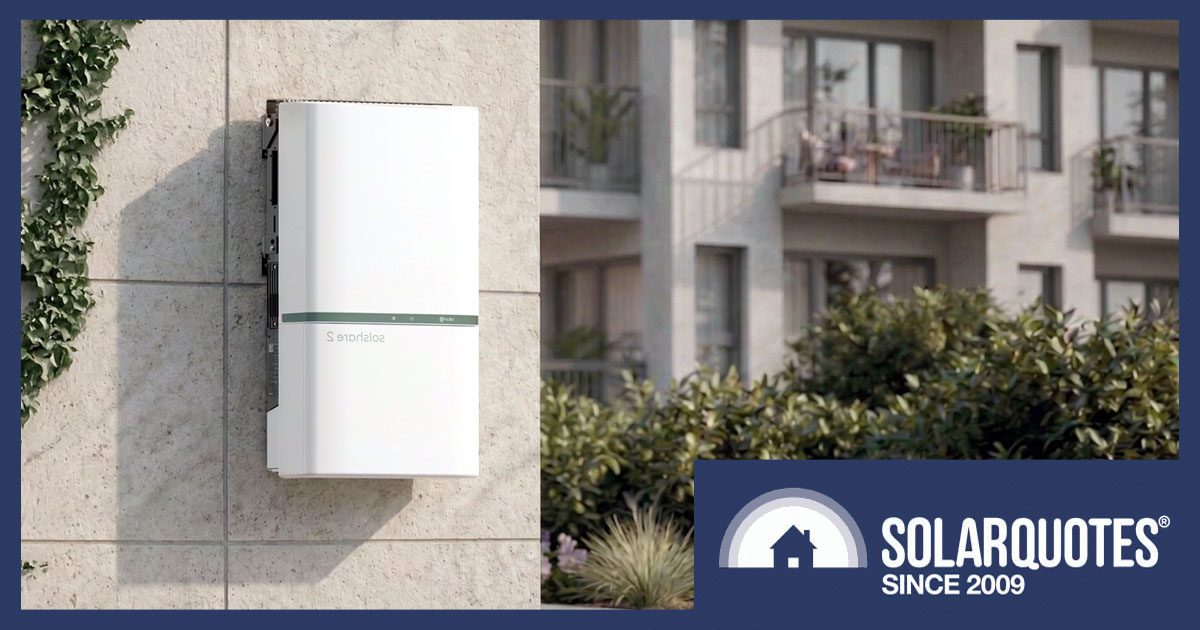
 Shared batteries could play a bigger role in apartment solar, with Melbourne-based Allume Energy launching SolShare 2, a new version of its solar-sharing technology that allows multi-residential buildings to combine shared rooftop solar with battery storage.
How Can Apartments Get Solar Batteries?
Allume launched the original SolShare in 2019, allowing electricity from a single rooftop solar system to be shared across multiple apartments.
The company says more than 11,000 apartments worldwide now use the technology, including 6,654 in Australia.
The most significant change in SolShare 2 is support for a shared battery system. Allume says this allows excess solar energy generated during the day to be stored and used later when solar production falls.
The new version also increases solar-sharing capacity from 22kW to 30kW — a 36 per cent increase over the original system.
“SolShare 2 has been re-designed with batteries in mind, meaning that apartment residents can now tap into battery storage in ways that were not possible previously,” said Allume Head of Operations Mio Dart.
Allume also says the updated hardware can be assembled and installed more quickly than the previous version.
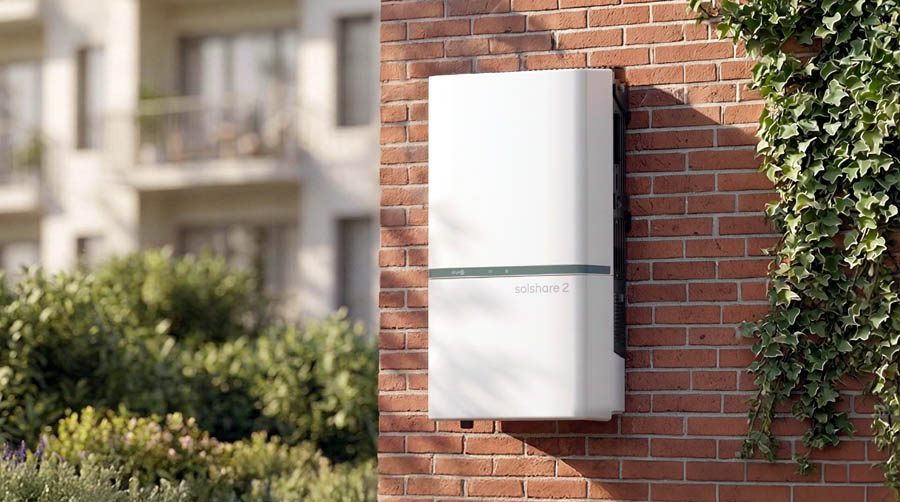
SolShare 2. Image: Allume Energy.
Batteries Add Value To Apartment Solar
For many apartment buildings, the challenge is no longer simply getting solar onto the roof. It’s getting more value from the energy those panels produce.
A shared battery offers one way to do that, allowing more solar energy to be used within the building rather than exported to the grid during the day.
According to Allume, SolShare 1 has delivered average annual electricity bill savings of $381 per resident. The company estimates that combining shared solar with battery storage could potentially lift average savings to around $756 per year.
Those figures are based on a number of assumptions, including building energy consumption, solar generation, battery size and electricity tariffs, so actual savings are likely to vary from one installation to another.
Apartment Solar Continues To Evolve
Getting solar onto strata buildings is often more complicated than installing it on a detached home. Limited roof space, strata approvals and the challenge of fairly distributing solar energy between residents are just some of the hurdles.
Even so, apartment solar appears to be gaining traction. Victoria recently extended its Solar For Apartments program, while NSW continues to back installations through its Solar For Apartment Residents (SOAR) scheme.
Allume says 91 per cent of NSW SOAR grant recipients and 75 per cent of Victorian Solar For Apartments grant recipients have installed a SolShare system.
Whether shared batteries become commonplace remains to be seen, but the launch of SolShare 2 suggests attention is beginning to shift from simply installing more solar to making better use of the energy already being generated.
For owners and strata committees exploring the possibilities, our guide to home batteries is a good starting point, while our guide to apartment solar is also worth checking out.
 About Kim Wainwright
 RSS - Posts






Let’s be proud of a World-First Australian product!
We’ve installed Solshare in 3 strata buildings in NSW and the results are great. The Solshare 2 should deliver even better efficiency with better battery management and I can’t wait to install our first next week!
If you live in an apartment building, the NSW grant is still opened until December, so you aren’t too late to the party!
How does this work for individual unit owners?
(I have a sister who’s moving in to a new unit in a few months, and there’s talk of something like this.)
TIA
A few steps:
1) Submit an expression of interest on the Grant website: https://www.nsw.gov.au/grants-and-funding/solar-for-apartment-residents-soar-grant-program#toc-start-the-application
2) Get 2 quotes from installers.
3) Vote for the solar system at an AGM (only 50% YES of voting participants required, no quorum required).
4) Submit your final application on the Grant website.
5) Wait for the government to approve the grant.
6) Get very small electricity bills for the foreseeable future!
Elephant in the room?
EVERYONE needs to be concerned about this. It will destroy your estimates on solar & battery payback periods. It will also destroy incentives to actually fit solar and batteries.
Our daily access charges here have just SHOT upwards from $1.40 a day to $1.92!
Is this just the tip of the iceberg?
There are indications that the “powers that be” (pun intended) want to see $5 a day! That will be $150 a month before you consume even a single kWh!
Folks, write to your M.P.’s about this. It’s really serious stuff!
Yes, just got my notification from Origin. Supply charge going up on July 1st from 80c per day to $1.60. That is a 100% increase!
I there a reason why batteries are tagged with solar. Why carn’t people just have a plug in battery that charges off peak and discharged during peak and maybe shoulder. This way there should be a very low peak which is where less efficient power plants are used. Additionally power plants can be run contiuously but at lower rate which reduce wear and tare. I am sure this will not suit the power generators but I think this is at the root of all the battles.