

There’s never a dull moment in the solarcoaster, but a GroWatt manager took things up a notch last week by getting themselves arrested after a dalliance with the Clean Energy Council (CEC).
What Did The GroWatt Manager Offer The CEC?
The reports are that the CEC was allegedly gifted a bag of green tea, but eyebrows were raised when they found the leaves were rectangular, plastic and featured an image of Nellie Melba.
Guoxin Zhu, a manager at Growatt, allegedly offered $20,000 hidden inside a bag of tea during a meeting with a CEC official in Brisbane. The official reported the apparent attempt at a bribe, and Zhu was arrested at Sydney airport as he was on the way out of the country, before getting extradited to Queensland.
Why on earth would someone working for a reputable company allegedly take this risk?
It’s not like the CEC aren’t keen to take anyone’s money when it’s done legally. Product approval is expensive, and top-tier sponsorship is over a hundred grand. The NETCC racket demands fees from installers based on company turnover and as an industry sage explained to me, that tick of approval required nothing from him other than passing the CEC’s stringent cheques.
It could be that complying with a new raft of battery rules, unique to Australia, is proving difficult. However, there’s another potential reason – it is a very long wait to get approved.
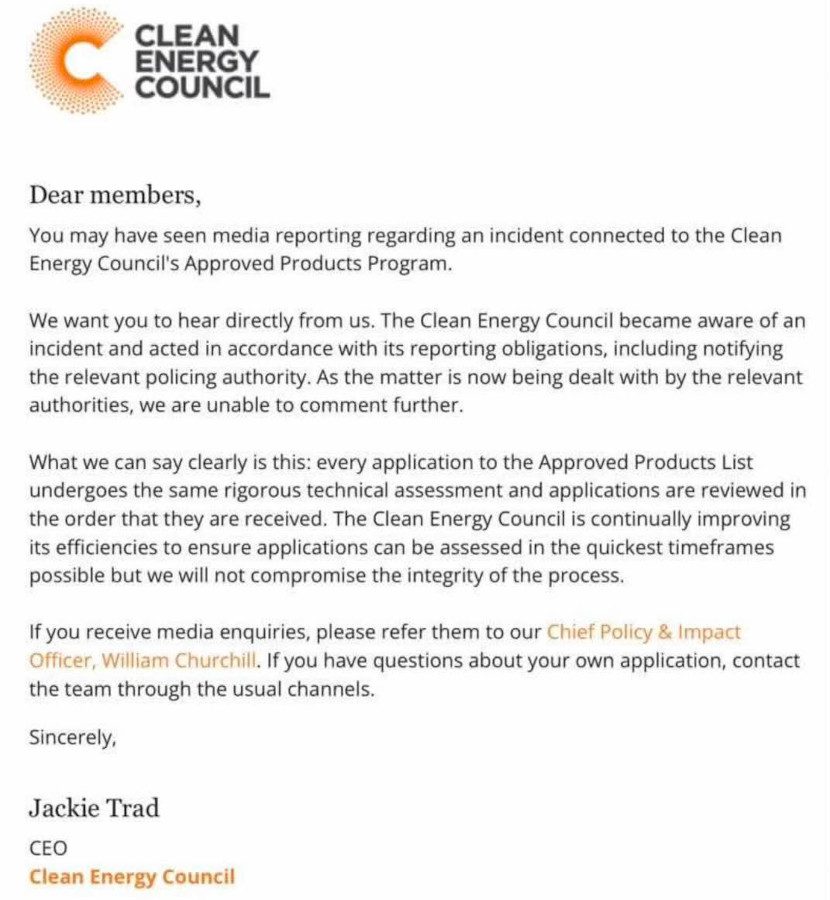
The CEC “will not compromise on integrity” but in my experience they won’t comment when it’s questioned either.
Approval Takes Forever
The CEC demands manufacturers supply documents from other laboratories, and then do a desktop review before products go on the approved list and are eligible for STC credits. This takes a long, long time.
Manufacturers wear a tight-lipped smile when you ask them about the process in public. Nobody complains because nobody wants to find themselves on the bottom of the pile, however every single time I’ve quizzed a supplier over a beer, they’ve just about cried into it.
When SAPN can hang a machine on their own laboratory wall, connect and run it through its paces in a week flat, nobody can tell me how the CEC can take so long to do so little.
The CEC Approved List Is A Farce
The trouble is, this long wait doesn’t seem to filter out the problems. We know the CEC desktop review is flawed when a FoxESS hybrid inverter recently came to market without mechanical protection for battery cables.
There’s probably a dozen other approved but not compliant examples on the market right now.
CEC approval does little but raise costs, significantly delay products coming to market, and worse still, cause gratuitous e-waste.
Adding more gear requires a new connection approval. Though they could grandfather equipment, DNSPs use the CEC list as a default connection standard. Yet adding a battery means existing inverters are going in the bin, because approvals expire every 3 years, for no other reason than the CEC can charge money for renewed paperwork.
Your top quality, sustainably designed Fronius inverter for example – it’s technically compliant, any of the last decade’s production will take a firmware update to meet current rules.
Same goes for a Tesla Powerwall 2. It might be under warranty, ideal to move to your Mum’s place when you expand your own solar, but Tesla hasn’t paid the rent seekers, so it’s not on the list and could cost $7/kilo to dispose of.
GroWatt Has Been In The Headlines Before
The allegations against the executive are still to be tested in court, but in any case I’ve always had a relatively poor opinion of GroWatt products. Whether it was management failing to own the failure of their legacy support partners, or a wholesaler who uses sock puppet Facebook accounts to offer fake testimonials, I found the people promoting them, to put it nicely, lack credibility.
It’s worth noting GroWatt’s latest marketing about longevity – that’s factual. 15 years is a long time in solar, so arguably they’re doing something right, but they also have two ACCC recalls and the most dangerous one still isn’t listed on their own website.
The CEC Approves Defective Products
After Energy Safe Victoria found GroWatt were selling hybrid inverters that had exposed live parts, the ACCC set a recall in motion in November 2023. GroWatt decided there was nothing to see here, sent some emails, called it a “soft recall”.
Some jargon makes your eye twitch but I can’t overstress the gravity of the situation. Perhaps if we said crazed axe murderer, or Bradley John Murdoch, it would give you the same chill that exposed live parts gives an electrician.
In January 2024 I set about trying to find some answers. Just how was this fundamentally dangerous thing on the market for 27 months, when the Clean Energy Council had inspected and approved it? And how does the manufacturer’s response tally with the CEC’s policy on corporate responsibility?
But as I found out, it wasn’t just approvals that the CEC takes forever – the same goes for getting a substantive response.
A Whole Year Of Obfuscation
I wrote a thousand words, cited the CEC’s own website and asked over a dozen specific questions. Six weeks later, I got an untitled Word document, with no letterhead, no author and no answers. It simply parroted the same points back and raised more questions.
So I pulled a couple of strings to find more direct CEC email addresses, and got crickets. I even rang the front desk, forwarded them the missive, made sure they could read it while I was still on the phone and was assured it would get through, but there was nothing doing.
The CEC staff at their “member mixer” event didn’t want to sell me a ticket in Adelaide, so I collared a CEC rep on their stand at All Energy conference in Melbourne instead. While they didn’t have answers, I finally got some context. Apparently SolarQuotes had written some mean things about the CEC years prior to my tenure, so they simply ignored any questions coming from us.
Enter The Clean Energy Regulator
The Renewable Energy Target (ie the STC rebate) is managed by a Commonwealth statutory authority – the CER.
Who in turn handed responsibility for product suitability (and installer accreditation at the time) to the private not-for-profit industry body, the CEC. This outfit is run by a board, who are elected by members, with voting rights dependent on how much money you put up.
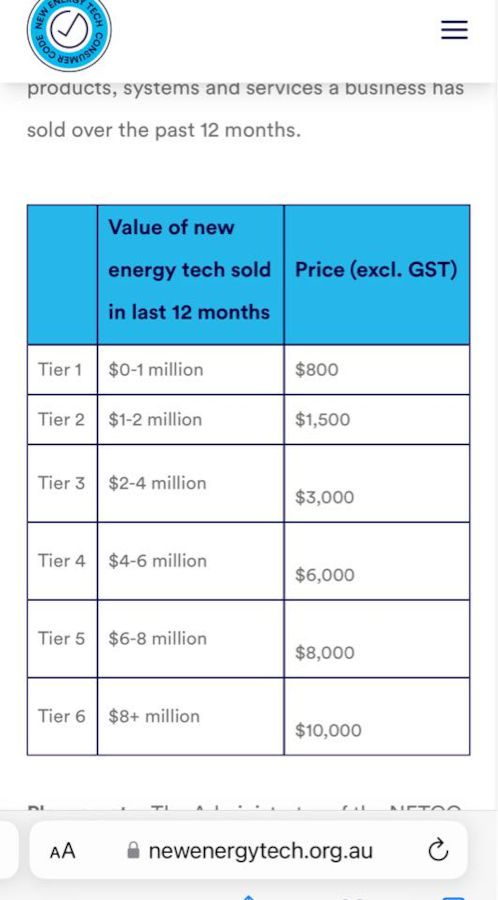
The CEC aren’t a charity – and they’ll charge plenty for the NETCC tick of approval too.
I wanted to know how these organisations were held to account. While the CER could arguably be forced to cough up answers through freedom of information, they’d handed technical oversight over to the CEC, who don’t have any FOI obligations, so they’re free to ignore awkward inquiries.
The questions I was asking went to the integrity of the RET – surely the CER was more interested than just saying “it’s a matter for the CEC”.
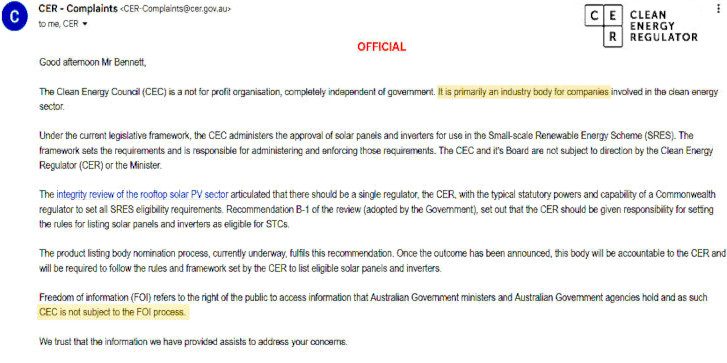
The CEC is not subject to the FOI process
So I began ringing the CER. Every month, fortnight, then week, I was cordially reminding them, and was on first-name terms (Hi Shane!) by the time I simply demanded something be done today, because they’d failed the same promise to get back to me so many times.
Finally, The Response
While we didn’t get what I’d call a fulsome explanation, it did come from the CEO himself. It should honestly have been the first reply, but after a whole year of obfuscation, evasion, ghosting, and simple stonewalling, my patience was spent.
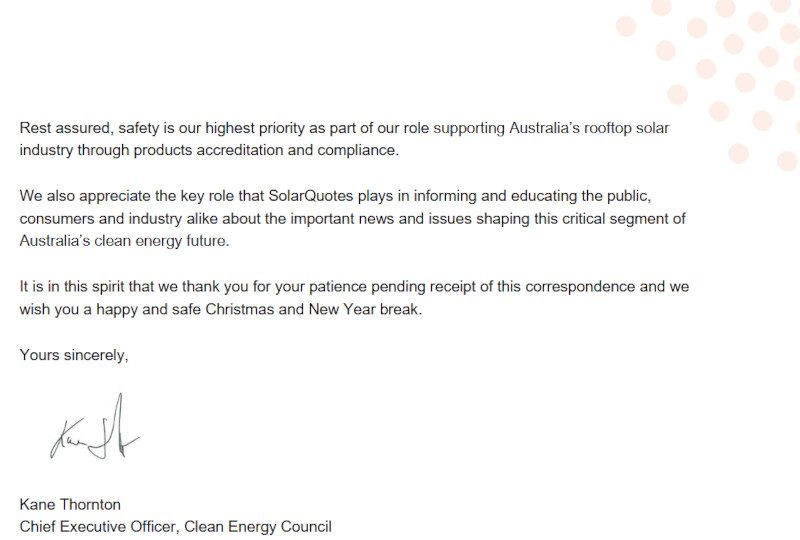
The CEC “…appreciate the key role SolarQuotes plays in informing and educating the public…”
Maybe It’s Not All Bad
Even if the media liaison I’ve dealt with had to be hounded, or an email goes unanswered, or the only phone that picks up is the front desk, we have to remember there are some really talented people working under the auspices of the CEC, obviously trying to do the right thing.
I really applaud the latest CEC initiative to help build trust in large-scale renewable projects and deliver consistent royalties to the people hosting them in regional Australia. Though you’d be forgiven in being cynical when you realise it’s a decade late.
I know other industry legends have quit their CEC advisory role in disgust as wait times for approvals just ramble on.
GroWatt Can Get In The Bin
If the allegations against the GroWatt manager are proven in court, not only will it further trash the reputation of the company, but it will also cook up some profound international diplomacy implications with our largest solar supplier and trading partner.
Perhaps unforgivably, this has also gifted ammunition to the energy regressives – a massive fumble that tarnishes the entire renewable sector.
To learn about which companies to trust, read our guides to solar inverter brands and solar battery brands.
 About Anthony Bennett
 RSS - Posts






Speak Your Mind