
 With the recent rises in fixed daily charges, the retail price of electricity means a lot of people are going off.
I understand the anger – I’m paying it too – but I have to reiterate the answer isn’t going off grid.
For everyone who’s invested in solar, and now batteries, hoping to effectively prepay their electricity bill for years to come and insulate themselves from future price rises, the 30, 50 or 100% lift in daily supply charges many are copping is a bitter pill that blows out payback times and applies higher ongoing costs.
Free Hours Don’t Directly Cause Price Rises
The launch of free daytime electricity plans has been described by some as a transformational gift, while others call it industry grift, blaming it for the rise in daily supply charges.
But perhaps we should point out the AEMC began a pricing review two years ago, well before the free hours of power program was announced last November. The electricity industry is looking to rearrange the way it charges for energy and there were two rounds of 49 submissions made before a draft proposal dropped.
2724 submissions came back in response, so you can guess not everyone was happy about what the industry had planned for us.
SolarQuotes, the Smart Energy Council and thousands of others were railing against it. Happily it seems we’ve been heard as the changes were slated to be much worse.
I won’t argue that our electricity market is fit for purpose, but it’s what we have to work with at the moment, so we’d better get on with it.
As for plans offering 3 hours of free power, they serve as the perfect backup for solar and batteries – a luxury you lose if you go off-grid.
Going Off Grid
I’ve spent 15+ years installing remote area power systems and the simple rule is this: you need backup, especially through winter.
As an off-grid electrician, my wry observation is this: a generator’s main purpose is to make my phone ring. Battery charging is just a byproduct, but without it your battery warranty is toast.
Generators are both essential, and unreliable compared to sunrise, plus your neighbours won’t want to hear one wailing all night.
The only off-grid customers I’ve encountered without a generator are very modest users, with an efficient house, a huge solar power system and some additional energy sources like a wood fire, mains gas or perhaps an EV with V2L.
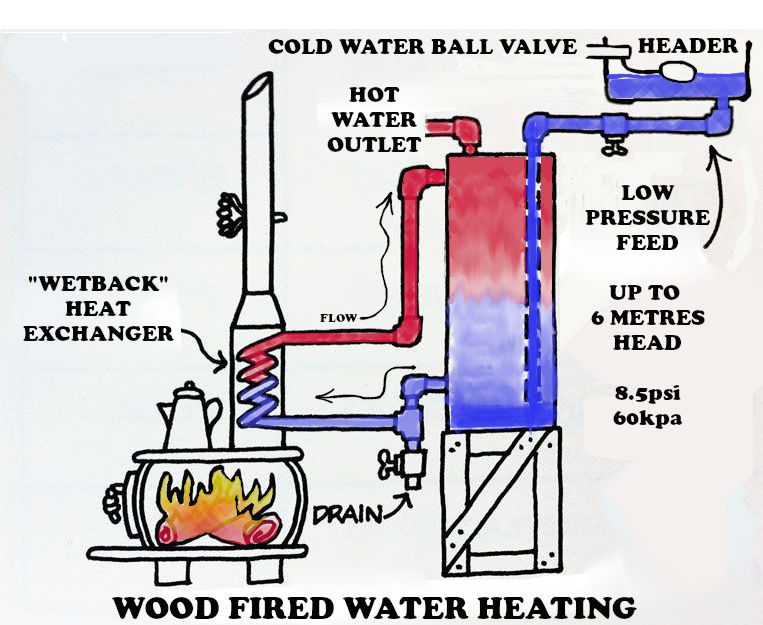
Hot water can be 30% of your energy consumption so having a cooking range, space heater and water heating combined makes sense, in winter at least. Urban air quality would be horrendous if Australian cities were full of these.
Speaking Of EVs
Roughly speaking your electricity consumption will double when you get an EV, which is great because electricity is cheap compared to petrol, so you’re going to save heaps of money and stop sponsoring extremist theocracies in the Middle East.
Meeting that extra demand with your own rooftop solar will be a challenge – made easier by free hours of power from the grid, if you don’t disconnect!
Free electricity might just save the grid, and all the taxpayers who paid to build it, from a very expensive death spiral.
Going off grid in the suburbs sounds superficially attractive, but really it’s freedumb.
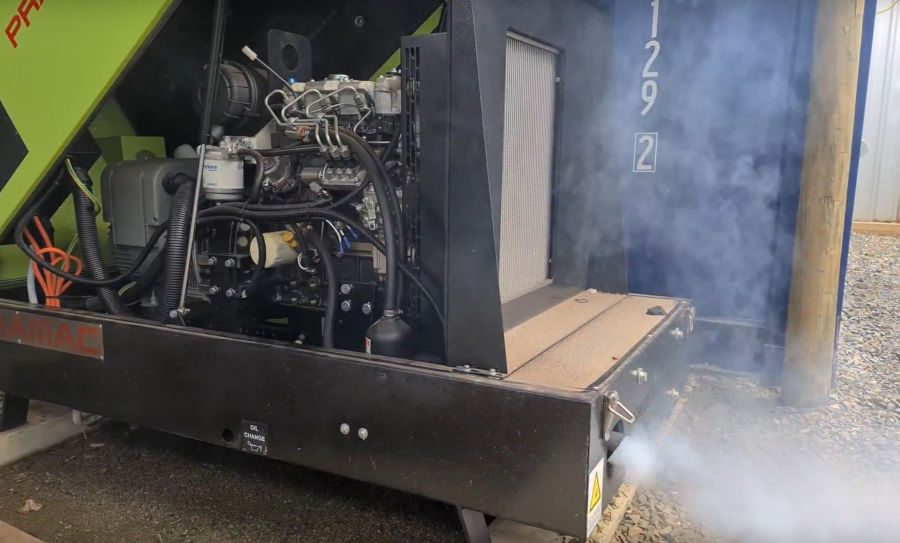
A diesel genset like this doesn’t have the particulate filter & emission control gear a modern car engine does. They’re filthy.
The Disconnect
The energy transition hasn’t been well explained but the core promise of significantly lower bills hasn’t broadly materialised yet, which erodes public support for the work needed and emboldens the NIMBYs who don’t like the look of transmission towers and renewable generation. Sadly the examples, like $156 million saved in two years, don’t sell clicks in the (f)right wing media.
Fun Fact – privately built, Australia’s newest coal generator is about old enough to drink, but has already gone broke. Like a drunk midnight eBay purchase, the now foreign owners have also written off the billion-dollar asset, while the adjacent coal mine survives on millions of dollars of state government subsidy. The whole thing is slated for closure by 2030.
Frankly, a lot of people aren’t doing solar and batteries for the warm and fuzzy feelings – it’s a grudge buy with a silver lining of a single finger salute to the power companies.
Unavoidable price rises are a political disaster, because power bills are now front and centre for punters who’ve paid up front to make them go away, and they’re pernicious for renters without roofs.
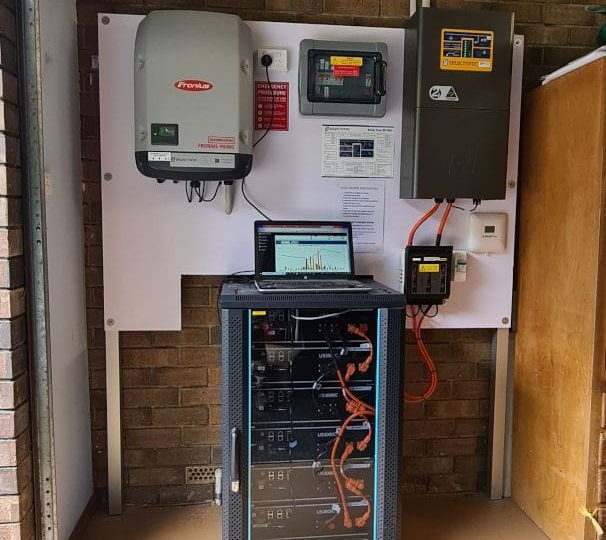
If you want to treat the grid with contempt then what you need is a gutsy remote area system with grid compatibility, not a lightweight hybrid pretending it’s capable. There’s roughly $30,000 pictured here, not including solar and installation.
Bringing Us To Batteries
To some extent, batteries make things simple, but I’m absolutely sure a lot of people have some buyer’s remorse about them.
For years customers have been lashing out a lot of money on solar and laughing about how much they’ve saved at the power company’s expense.
However, as the rates have risen, feed-in tariffs fell, and the bills have come back, punters ring their favourite electrician to ask – Why are my costs rising? The solar must have malfunctioned!? When it turns out nothing is wrong, they often leap into buying the next gadget, because if it’s expensive, it must be worthwhile, right..?
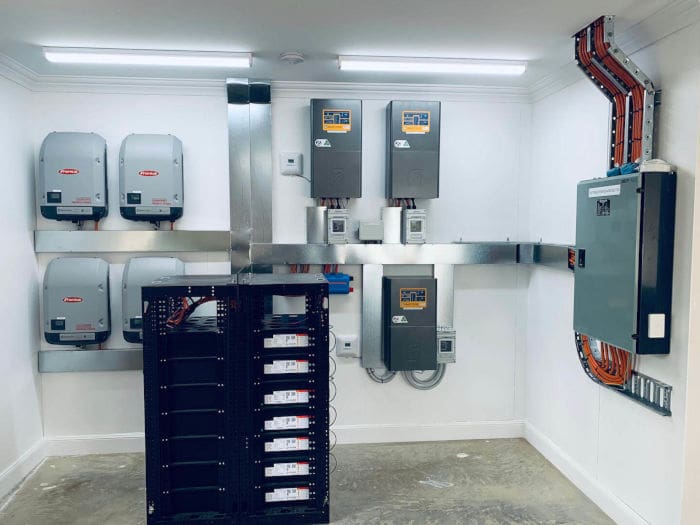
This is a grid hybrid system with 36kW of surge capacity, 40kW of solar and 42kWh of storage for the princely sum of $150,000 installed.
Are Batteries a No-Brainer?
The simple luxury with batteries is you’ve stored some free sunshine for later. You don’t have to think much about when you use power.
It’s a crutch for convenience and old habits, but that doesn’t mean we shouldn’t think before flicking the switch. There’s no arguing you want to run your dishwasher overnight so you have clean cups for breakfast, but maybe a two-drawer machine gives you flexibility to wash during the day, without cycling the battery?
The complexity is that batteries themselves aren’t cheap. You have to realise the warranted delivery of energy from them is a helluva lot more expensive than free hours of power, or solar straight from your roof.
Efficiency Is Always King
If you can generate your own power and use it yourself behind the meter, that’s perfect.
What’s better than perfect? Not needing the energy in the first place. Stopping drafts, insulating your house, shading walls & windows, using a better showerhead for fewer minutes. It’s hard to put a price on comfort, but having a home that’s inherently comfortable is priceless.
These are all such simple and effective measures that you think they’d be law. Except the law is heavily influenced by the building industry, which cares about short-term profit at your ongoing expense.
Perhaps the best we can work toward is making frugality fashionable. It’ll be a tough nut to crack, what with the consumer capitalist psyop we are living in. Billions in advertising budgets are aimed at getting you to consume more, more, more! So the most revolutionary thing you can do is just stop buying.
So Stop Buying Electricity?
Free hours of power has at least one really important feature. We’ll explain it better in a new article, but for people with systems that don’t reach 100% charge for months on end – a forced charge of free grid power will save your batteries from an early death.
When you get an EV, the extra storage you can trickle charge into will be a boon, but being able to pull bulk energy from the grid quickly becomes important too, even if it’s not free.
Mains power is the strong, stable, clean, reliable and quiet backup you’ll need for a long week of overcast conditions.
More importantly, it’s a first-world asset we need to look after. My local shops don’t have enough roof to run all the fridges that keep my groceries cold, but the collective suburb has solar all over it. Just like the sewer, water mains, rubbish collection and the roads that bring all these luxuries to us, the electricity grid is a public good that keeps us healthy.
I’m pretty sure we need an honest conversation about who owns what, and how we collectively pay for the public good, because it’s the community, not corporations, that makes this country great.
However if you reckon I’m alright Jack and it’s your right to take your publicly subsidised solar and battery system, and go off grid just to spite the power company, maybe start by handing in your Medicare card.
But for most, going off grid isn’t a sensible answer – if you’ve been stung by supply charge rises, search around and find a better electricity plan instead.
 About Anthony Bennett
 RSS - Posts





Re the wood fire water heater. At a farm we have been running a standard 3.6kw 240 volt 80 litre electric hot water tank off 4 200 watt solar panels for a few years now. You need a temp controller to cut off the solar power at 60 C as it will get over 100 C. Does at least 3 quick showers plus washup duties and still warm in the morning when its zero outside
HWS thermostat contacts can weld closed when it’s run on DC. The standard steam-bomb avoidance measure is to vent such a contraption to atmosphere. A solid-state power switch, in an added temperature cut-out, would need to be a power FET or IGBT device, as an ordinary SSR uses a triac, which will latch on permanently when DC-powered. If it has contacts, then it is also liable to fail. So the HWS must be vented.
A woodheater HWS booster is also an uncontrolled heat source, so mine is vented. There’s a number of Mythbusters episodes to choose from for displays of the explosive energy of a HWS rupture. It’s not recommended indoors … or anywhere, for that matter.
In Melbourne those 4 solar panels will make 1.3x 200X4 x 60 days in June and July.
That’s not covering the daily losses on the tank let alone showering
Fun fact…is not quiet right. Bluewater coal fired power station in WA has gone broke technically as the mine supplier has gone broke. A foreign company bought the local mine at absurd prices mid 2000s and with near exhausted barely reasonable quality coal reserves, the writing was on the wall. Its in recievership proped up by state govt coffers until the station is not needed around 2030 maybe even 2035. By then its been in service for 25yrs due for mid life refurbishment which will not happen as even the only other coal miner is also on death row. WA coal is very poor quality and cost of extraction escalates year by year as quality reserves are exhausted.
3 for free isn’t as good for most battery owners, unless they have say 10kw inverter on single phase, that will get you the 24kwh free power and keep your home trickle through middle day running costs like the grill, kettle, etc.
Many now don’t have that, so it is only going to help those that got relatively larger batteries with larger inverter.
8c plans abound now, and even lower some DNSPs have seen 4.5c around.
Some are midnight to 0600, some are 1000-1600, whatever suits your needs best.
Filling up a battery with no restrictions and low cost is going to be far better for many, especially when you consider all power into the home can be had for the same low cost, hot water, anything you want to run through that tariff time.
One plan in SA has 8c for 1000-1600, and FIT of 30c for 3 hours 1800-2100, where if you can drop near 30kwh your have $3 to put up against your $1.65 DSC.
You just need to avoid the 4 hours peak tariff 85c 1700-2100, and the -2c negative FIT 1000-1600.
Most people with a battery will have at least a 10kW inverter. There are 3 free plans that have higher limits like Globird Zerohero which is 1,400kWh over the 28 day billing cycle. Existing customers are unlimited.
8c plans are still a good option for EV owners who can only charge outside of the 3 free hours though.
I’m on 3 phase with a 20kW inverter and typically average 30-40kWh a day imported free from the grid (in winter) depending on the weather.
Typical supply charge here for plans with free energy is ~$2.80-3.20 / day. IOW $1k/year. Without a battery these plans are an impractical option as the peak period charges are also very high.
A typical EV would use ~7kWh/day (15,000 km/year) which would not be close to doubling a household’s consumption. Certainly not an all-electric household.
As yo the sentiment of “community good”, that applies far more strongly when the services are community owned. By and large they are not and for profit industry has no loyalty other than to its shareholders.
I’m at 82kWh / day June and July running 3 x EVs of that I can generate 33kWh myself.
Three free hours absolutely doesn’t need a battery – it just needs you to heat the house, the water and the cars in the free window.
Winter peak use ~5kWh a day summer peak use 1kWh a day is an average of 3kWh a day for anyone who was using their solar system to get things done during hours of sunshine. Battery allows people to not care about when they use energy as they have already paid for a decade worth of peak rate power up front. Folk that bought a massive one paying for peak rate all night…..
We don’t need to heat the home during the day, only at night, which is why the battery is so good.
And no chance our battery cost 10 years worth of energy. Three years worth is about right.
We already charge both our cars and do water heater boosting (if needed) during the free period. Plus ensure our battery is full by end of day.
Hi Anthony, I agree with your assessment, I do not think that the solution is to go off grid. In my view the problem is the AEMC. Firstly I think the submission that Finn send in was spot on but the AEMC is looking after the retailers. Do not know why??? Any price structure should address the issues individually, you cannot have the daily charge is used to cover their income because people with solar do not use their power. They do not use their power because we invested in solar and batteries. The daily rate should be to cover their cost that is fixed to do business, include the share of the grid cost as this is fix. And the price per kWh should be related to what it cost them. Surely if the AEMC SHOULD know this. We should start mobilising to get someone with brains and a sense of fairness at the AEMC. The retailers must make money but they cannot be allowed to change things to how they want it. Keep in mind the tax payers pay the salaries of the AEMC.
Plus one from me!
It seems the ultimate goal is to make solar etc worthless, by constantly increasing the daily supply charge until it’s a major part of your bill.
Meanwhile the FIT is (IS!) being reduced to zero. That means the “worthless” solar systems are being used to supply the grid FOR NOTHING. Ie , us solar owners are DONATING our power to the grid.
In any business, that business charges for it’s input. Why is it our so-called benevolent power retailers (and suppliers) don’t pay for the input?
So, what’s the endpoint?
The worthless solar systems will die of old age. They wont be replaced because it’s not worth it.
Then what?
An opening for a “reliable” renewable, centrally located mains power source.
Kinda paves the way for nuclear doesn’t it.
Jethro: – “Kinda paves the way for nuclear doesn’t it.”
Nope. Civil nuclear power technologies are DEMONSTRABLY FAR TOO SLOW to deploy from scratch to full commercial operations. The global average time to deploy from scratch (including planning, design, licensing, approvals, financing, procurements, site preparation, construction, fuel loading, grid connection, commissioning, etc.) to full commercial operations is about 1½ decades (for the period 2015-2024). The longer-term perspective confirms that short project deployment times remain the exceptions. Nuclear technologies cannot save us!
Many coastal civil nuclear power generator units are at risk of inundation due to rising sea level. For example, the UAE’s 4 new nuclear power generator units at Barakah, are at risk of inundation at only 1-2 m of local sea level rise, per Climate Central’s Coastal Risk Screening Tool. I think 1 m of sea level rise is plausible sometime in the 2060s. Who’s planning for that?
Jethro,
Geoff has clearly set out the deep impracticality of nuclear, without rubbing our noses in the fact that here it would take 20+ years. (Or finish when Snowy 2.0 does, worst case.) But you have yourself shown us all why nuclear can’t work here: “worthless solar” = worthless nuclear. There’s no net payback! Nuclear can only go broke with its mad high costs. It’s known.
Solar is so cheap because fuel cost = $0.00. Nuclear fuels costs a mozza, both to buy *and* to sweep under the carpet for a million years afterwards. The daily charge for that is a nightmare for the suckers who buy into the radioactive delusion.
But go ahead, sign up for an artificial scarcity rort – pay through the nose for rationed energy. The sun wantonly spills as much energy into space in a second as all nations combined produce in 650 millennia. It’s all free, mate, higher grade FUSION energy, delivered to your door for free, if you have the nouse to grab it. And $1/kWh FiT into any clever learner’s BEV.
As ever, solar power is in fact nuclear, at a safe distance.
Steam engines haven’t fallen in price by 99% recently, as solar and then batteries did since 2010.
It took the world 70+ years to deploy 420GW of nuclear plants, the oldest is 55yo and last year there was a huge 33% annual uptick in new capacity of 7GW
Since invention, it’s taken 67 years to deploy the first Terrawatt of solar, the next Terrawatt took 2 years, the third Terrawatt took 18 months?
3 Terrawatts yields more than 420GW even considering capacity factor.
Anthony, how do we keep the lights on in winter in Australia without a large amount of standby capacity of some type. If you look at the AMEO website the ugly truth is right there.
https://explore.openelectricity.org.au/energy/au/?range=7d&interval=30m&view=discrete-time&group=Detailed
if not nuclear how are you going to replace all that coal plus the gas as well?
The amount of storage required would be massive and the additional solar PV panels required would be immense.
I am no fan of coal but how do you see the solution looking at the data on the link above?
This is a problem for AEMO to solve. They have a detailed plan that they regularly update.
Here’s their explainer. The visualisation on pg 4 is their answer.
https://www.aemo.com.au/-/media/files/major-publications/isp/2026/aemo-2026-isp-explainer.pdf
Ian: “how do we keep the lights on in winter in Australia”
I’m sure you’ll pick up on reality much faster than the slow learners, so just the summary here:
The sun wantonly spills as much energy into space in a second as all nations
combined produce in 650 millennia.
Three minutes of sunlight on Australia can power the grid for a year, according to a Renew Economy podcast.
Just add batteries, chemical and thermal … and a lot of money.
Google “S-curve dynamics”, check the 4 stages.
The renewables/battery grid is achievable, given a few years and much money – cheaper than the alternative. Installing $1T of batteries is cheap compared to coming costs – but, in contrast, is an investment in a fix, not just moving climate refugees to uphill camps.
Only 1/3 of current energy input is needed – burning stuff spews 2/3 up the chimney. We have Fusion energy now, rooftop delivered for free. (Off-grid mid-winter 47.4 kWh here today – enough for lights for many nights. Get with it?)
Erik, I hope you are correct. We have a modest PV system 6kW of panels and one Powerwall 2 and heating aside we are independent as regards electric power for over 95% of the time. However to cover that 5% without a fuel powered generator would mean at least triple the invest in batteries and panels.
This point has been made eloquently by lots of smart people associated with this blog. So assuming every home PV system is oversized to make them independent we have solved nothing.
We will have plenty of spare power when conditions are good but there will be no spare power when we get 3 to 5 days of cloudy conditions.
The question gets down to how do industry and all the government provided services get by during this power.
You propose a Trillion dollars worth of batteries and panels and I confess that that sort of number is almost incomprehensible at least to me. The same issue arises and we will still need three times the storage required for normal operations to cover a cloudy day??
I agree totally with what you are saying. What madness have we come to.when we design a system around the extremes of a 3 day event.
The world will never get to net zero. We have to turn on low emissions power generation. Batteries need something to charge them when the sun don’t shine & the wind don’t blow.
I have 5kw of solar and 27kWH of batteries. Now the government is allowing companies who are sitting back and doing nothing to screw me over with daily costs and low feed in tariffs. My neighbour would gladly pay for my excess solar but the supply companies are standing in the way.
If ever there was a need for a class action this would be the best.
Ian: – “…we will still need three times the storage required for normal operations to cover a cloudy day??”
Find a way to make it work ASAP, or reap the consequences of a planet becoming incompatible for human civilisation well before the end of this century.
The 3-year running mean for the GMSAT anomaly is now at +1.54 °C.
https://bsky.app/profile/climatecasino.net/post/3mrwwxozf3s2q
James Hansen & colleagues warned since Apr 2026 that:
http://www.columbia.edu/~jeh1/mailings/2026/2026GlobalTemperature.2026.04.30.pdf
Hansen may end up being right about 2026.
https://www.theclimatebrink.com/p/why-hansen-may-end-up-being-right
Australian summers are likely to experience more 50+ °C days.
https://www.abc.net.au/news/2026-02-01/heatwave-50-degrees-hot-extreme-weather/106282460
Ian,
Just one trillion dollars is a modest investment for us. There’s at least $4.5T socked away in Aussie superannuation, apparently. A fat bunch of 12% of everyone’s wages goes into the stock market, but part is invested in socially useful infrastructure, as they warble about @ 3:00 in:
https://www.youtube.com/watch?v=rVuqXJWsUEY
So moving the grid into the 21st century, to save $1B per week in avoided fuel imports, and kill coal, using a $1T investment would just be a modest smart superannuation investment, with the profits paying for your retirement. If it takes $2T, then it’ll also take longer to build, providing more jobs. Real infrastucture investment gives tangible benefits over and above paper gains, I figure.
So long as it’s built on high ground, it’ll serve us well.
Geoff has his finger on the pulse with his James Hansen observations.
But it’s 2027 which worries me more than 2026. The sting in the tail of this El Niño risks outdoing 1877, and that’s really not good. A Niño 3.4 temperature over +2°C presages a super El Niño, but we’re on the way to nearly doubling that:
https://www.youtube.com/watch?v=dBSLgefwcto
Britain imports 40% of its food, and crops are failing there and in Europe. We may fare no better in a few months, as the IOD has gone positive. It’s not great in USA, either.
We should be prepared for global food shortages in 2027, the first of serious ongoing accelerating negative climate impacts. Hopefully there will be respite between El Niños. We’ll need it.
The pain might be enough to move us out of first gear (low ratio) on our emissions reduction efforts. Ditch oil and we can spend $1B per week on it, without feeling a thing, just in saved fuel bills.
It is experiential (slow) learners who are badly burnt. That’s us now.
Don’ forget that your hot water drawing detail needs a vent from the top of tank to above the full header tank level to release the pressure caused by uncontrolled heating.
Good point Tim,
Thanks for making it.
I would argue for a step down from fully off-grid plan to have the grid be the backup and your system being “technically” capable of off-grid.
That way if the daily fees keep going up you have an upgrade path for actually going off-grid.
I don’t actually consider the feed-in anymore as its so low and not guaranteed to not drop.
And I believe Ergon has stated they want the daily fees to eventually be at least 4X the current one.
Anthony, interesting but the underlying problem of poor thermal engineering in almost all our existing stock of residential housing is the elephant in the room.
We have a home built in 1988 and have double glazed it, reinstated the roof cavity to a much higher standard, had wall insulation fitted and largely closed off air leaks where possible. However the underlying problem of heating a slab on grade construction house remains.
If anyone knows of a solution let’s hear it. We have natural gas and a substantial PV system and a battery all good. I have pondered installing a natural gas backup alternator as they are widely used in the USA however I have not seen them in Australia. They seem to be very quiet and quite reliable and are generally oversized.
This would leave us with a lower daily supply charge from one vendor only and as a significant amount of electric power in WA is produced using natural gas the total CO 2 produced would be lower?
Has anyone done this?
Hi Ian,
I’ve seen LPG generators which are more reliable than petrol ones, and LPG itself has a miniscule GWP if you ignore the drilling/refining/transport.
Natural gas is a marketing term but you can run reciprocating engines on fossil methane, AGL have replaced a lot of the Torrens Island A power station capacity with industrial reciprocating engines as fast start peaking plants… however it’s still burning stuff.
Besides which the people at WAGov are currently spending millions per year subsidising the Bluewaters coal burner. They’ve made the solar connection rules quite liberal because they want your solar capacity to help prop up the system which will see the coal plant shut by 2030.
As for insulating the slab, nothing is impossible but you’d probably have to take a DIY approach.
One only needs to insulate the slab edge. But usually using rigid foam can cause issues with white ants. Possible to get around but be aware.
New homes have ant protection designed in, so not an issue.
Under the slab, if dry (as it should be) is not a problem in Australia requiring insulation.
Our floor temperature ranges from 16 to 17.5C across the year. Sadly we have substantial concreted and paved areas abutting the perimeter walls which along with the termites makes insulating the edges of the slab more difficult and expensive.
The new slab-on-ground extension here in Gippsland, at 38°S, level with Melbourne, has been warm enough through two winters so far, and now the third. That’s with 6-stars insulation, double glazing, and running a little 3.5 kW aircon in 72 m² living area, all day in winter. On a 0°C night, keeping 24°C needs the wood heater for boost.
I’ve taking to running the 1 kW of bathroom heat lamps on any sunny day, to push a little heat into the slab. It does make the 2mm PVC flooring, directly on the slab, comfy in the middle of the night, through retained heat.
Even double glazed, windows are only 11% of floor area here, close to minimum allowed. That helps. Mostly N-facing, porch-screened in summer, they capture solar heat here in winter – sometimes 24°C without heating, in June.
Lowest morning temp, no post-10 pm heating, frost outside all night, was 17.6°C. That’s not hard to bring back up in the morning.
Generator -> 25% -> heatpump, but 75% waste heat is lost! = max CO₂ ?
Precisely my point. New construction is the answer but replacing all the legacy residential stock of dwellings with new builds would take a lifetime.
I sadly do not have all the answers but it seems to me that there could usefully be much more research done to seek novel and cost effective ways to upgrade existing housing stock.
Until this problem is reduced a non carbon emitting economy remains a pipe or possibly nuclear dream. I hope Ronald is not following this thread.
Re the slab, I agree. My slab sits around 12 to 14 degrees (C) over winter.
Luckily, its only the garage (under the house) and rumpus room.
Well carpetted and underlaid is probably the only solution. Maybe a thick underlay and some sort of false floor?
Jethro, good points. We have over 250sqm of slab on grade with 180sqm being tiled and of course the stupid minimum ceiling heights which were prevalent at the time the house was built.
I am thinking about some resistance heating under the one large carpeted room floor and using a diverted to avoid exports. As the house is 2 storey there is a significant mass of concrete in a central stair well.
I have noticed that by the end of April this is up to about 18 to 19°C so am now building a sand heat storage under the stairs which I will try to charge during late summer and autumn to try to both warm up the entire structure and to store additional heat..
Being in WA there is no free solar power in any plans which would make things better but I doubt that the free solar power will continue in the east as the huge numbers of batteries and EVs around d will be able to soak up the excess.
Thanks for your response.
Ian,
If more panels, even on a garage or (new) carport, are not an option, what do you think of a big heat pump? A x4 thermal boost on solar power, to go into that optimally sited sand battery, might be what’s needed? OK, COP reduces as output temperature increases, so you might have to do some sums. Use a phase-change material instead of sand, to max low-temp heat capacity? Which one?
I’d be sorely tempted to carpet over the tiles, with thick underlay, where possible. Acoustics are better too, then. (Here I have carpet and strawboard ceiling to make things more anechoic.)
Maybe “free hrs” will eventually become intermittent, only on days that are sunny somewhere on the NEM? Even widely distributed, solar needs to be x3 to x5 overdimensioned (cheap enough to do), so there’ll be excess here and there up to 98% of the time? Then it’ll be battery owners who benefit most, perhaps. Then it’s down to operator cost recovery needs, how long it stays.
Given the lack of choice here for plans in WA that is very much where I am.
Mains has been off for 5 months, but still connected atm.
No feed in tariff available for me as greater than 5kW inverter.
However I’m a low power user, aware enough of system capacity not to overload. Grid is still there as a backup and if need to run something high power. Its that last 1% to be comfortable disconnecting that currently doesn’t have a viable payback.
Can’t meet winter demands in Syd Melb Adelaide cities as simply don’t have enough roof. Yield in Melb winter June and July is 1.3kWh/kWp installed. With EVs it’s impossible without starting with a 10 star home with an all north roof at 40deg pitch and 40kW on it. That’s just not realistic
A large family + established home with fashionably fragmented roof – ‘orrible triangular planes, hipped all over the place, are not very solar compatible. I designed my current abode 25m E-W x 9m N-S, with just 11 kW of PV (26 panels) on the 40° tilted winter-optimised N roof. That’s this minute yielding 9.3 times as much as a similar S-facing array tilted 17°. Max winter yield: 61.7 kWh on July 9th, 34 kWh so far today, so easily 50 kWh by tonight, if I have enough load.
(Also at 38°S here) A 40° W-facing 3.6 kW array grabs late sun, giving good battery support.
A big carport or garage, with a winter-optimised roof, supplemented with a 50 kWh battery, or bigger, would improve off-grid viability. But especially with BEV(s), the grid is a cheaper battery, and $1/kWh BEV FiT-on-wheels covers grid cost handily?
Off-grid makes sense here, because there is no grid. In town, get a BEV, and fuel saving pay grid costs + all the ice-cream you can eat. $2.50/L in August?
Easily done, the PV Hot water. It is easier to add a few panels to the normal PV system, then heat off AC. The problem is a DC contactor is required to switch the DC from the panels (or an electronic solution).
I have just been looking at retail power offerings after Globird upped my pricing by 30%. I used the Solarquotes listing of offers, picked a few & re-ran my last bill to get an idea of the ´best´ current offer. I found that for the NSW Essential Energy area, the 3 ´free´ hour plans were overall more expensive. I have a huge battery, & 15Kw of old PV. Also 2 of EVs. With the offer I took up, the TOU times have changed, so the next bill will show how it went. I tickle the Battery, & charge the EVs at night 12>7 atm in winter. In summer I have no trouble balancing usage.
btw, on my Wet collector HWS, I boost in winter. I run the HWS off a batt-backed clock timer, with a second one-shot timer set for 30 mins currently. Uses abt 7Kw/day if water does not heat by panel.
V2G with the bigger batteries will mean a lot of people can hunt around for the lowest daily charge, especially if they’ve got heaps of solar !!
If the 3-free-hrs 24 kWh go into a BEV, that’s $24 FiT-on-wheels for nothing – given 8 kW charging ability. That pays for lotsa daily connection fee. Play the game to win, or don’t complain?
Been off-grid for 62 years, so that’s not available here. The 27 kW of PV is enough, mostly, but I’ve had to raid the 46 kWh house battery to support 5 x 65 km trips to town in 5 days, with too much overcast. The $72k investment in solar just supports one old bloke, no teenagers. It also takes 6-stars insulation, double glazing, wood heater with in-flue water heat exchanger (quite slow, but doesn’t cool the fire in the Heat-n-Cook stove, so it can still bake in its oven.). That extension was another $250k or so, even done as an owner-builder to manages costs. Ran the fire last night for one hot shower this morning. Planning is not optional.
No generator starts in 2.5 years so far, but getting close now when the BEV makes unusual demands.
Off-grid = lifestyle constraint, unless fast-charging BEV
I have made this comment before: I feel the Daily charge should be the Wholesaler cost + markup. This would stop retailers varying the daily cost depending on the KWh rate. By having all suppliers in an area with basically the same fixed cost it would make it much easier to compare actual retail offerings.
I agree, but if you don’t have solar panels nor a battery (tenants?) then the higher price/kw needed to support this proposition would hurt, and screams of “ünfair” would be heard!
i run 2 x rented units (now for sale!) where I pay for the power. The plan I am on is the lowest rates, & reasonable daily charge. I budgeted $25pw per unit for power. works out abt right. More in winter, less in summer.
Its great that we can utilise renewable energy and batteries. It would be even better if we did not have small minorities killing the wind farms and companies milking government funded projects particularly Snowy 2.0.
I fail to see how QLD can justify raising the daily charge by more than twice inflation, 50% from my retailer It smacks of opportunism. Customers should not be funding capital investment. Its should be government funded like Snowy 2.0.
Battery vehicles may be cheaper to run but they are fueling manufacturing emissions in China which is one of the biggest emitters in the world. It looks to me like we have forgot the mission and just carrying on business as usual as we have done throughout the industrial revolution. Nothing has changed.
What has been created is a two tier system where people that can support large solar arrays and batteries can milk the system & pay for nothing and people who cannot have systems, or can only support small systems are going to be penalised.
Should the government means test profits from home energy production.
Should the service charge for people that are utilising the network more have an addition component. Should there be a second tier that kicks in when you export more than 12kWH per day? Or some other figure?
I would like to see the same daily charge for all retailers in my area and make them put operational cost into the rates. This would stop some of the gouging. My daily charge has risen from $1 to $1.50.when the published increase by the government was around 13 %. It’s ridiculous.
Wouldn’t the header tank be naturally already vented so that pressure generated in the heat exchanger pushes back through the cold water supply?
I’m running a header tank-fed resistive element HWS using V2L.👍
That makes sense, but in the old days an extra vent pipe went up through the roof, and was bent over to piddle on the roof if venting occurred. Here, in addition to the cold feed from the (vented) header tank, there’s a vent pipe up over the header tank, instead of through the roof. We’re on tank water here, so waste not, want not.
Either way, it looks like the plumbers are avoiding the single point of failure that arises if the feed pipe corrodes closed, and there’s no additional vent pipe..
Only light cloud here today, supplying 15 kW peak demand (more available), 7 kW into the BEV, to bring its range back up from 35%, not very comforting when a shopping trip is 65 km. Off-grid works lots better when x4 over-dimensioned, to grab energy while the sun shines even a bit. A big house battery allows time-shifted BEV charging, but charging both now is much better, as both will be at 100% before day’s end. Off-grid also has range limits, but 46 kWh is good enough here, so far.
“in the old days an extra vent pipe went up through the roof, and was bent over to piddle on the roof if venting occurred”
I recall from my childhood visiting farms in WA. Many relied on ‘chip heaters’ for hot water, often perched over the end of the one-and-only bath.
The vent pipe was called a shepherd’s crook due to its shape. Some four metres above the peak of the roof, stayed with wires back to the gutters.
The cold water supply should have a check valve so that ‘contaminated’ water from the HWS cannot feed back into the mains supply.
The biggest fallacy is expecting $0 if goes with big battery and solar system. Especially comes from social media marketing and installers. Therefore, people get upset when they spent $50k setup and still end up with $20/month bill. They should bring their anger/grudges to those who sold them a system expecting $0 energy bill, 2 years payback, free from energy overload, etc
Can’t wait for the article that addresses this and why isn’t it common knowledge (or is it):
“Free hours of power has at least one really important feature. We’ll explain it better in a new article, but for people with systems that don’t reach 100% charge for months on end – a forced charge of free grid power will save your batteries from an early death.”
It’s common knowledge for anyone familiar with lithium batteries.
Keeping it simple the cells can drift out of balance over time due to slightly different internal resistance etc. The flat voltage curve also makes it difficult for systems to identify state of charge, ie approaching flat.
Battery management systems at 99-100% taper off the charge and rebalance the cells so they are all at same state.
Which prevent a situation where one cell can be fully discharged and the others still well above.
Good BMS do have high and low voltage monitoring for every cell, but there are many that don’t. What a particular manufacturer has is often unknown for pre-packaged systems.
While it galls – as you say is correct Anthony, going off grid in the suburbs still doesnt make sense, hopefully one day it will, and when it does i will be gone.
But at this point i have a long and vindictive memory and I wont forget getting screwed over by a government that promised me that my solar and battery were going to be the bees knees and save me oodles of money, or by the industry that has leapt at an opportunity to charge us upwards of a 1000 dollars a year before we even draw 1 kWh of power from the grid, a grid mind you that I paid to build as a taxpayer, that where i live is still owned by the government, that all they have to do is maintain.
Thank you for your insights Andrew.
You are wrong about Off Grid Solutions in the suburbs not being practical.
First. Off Grid by definition means just that. A complete electrical disconnection of overhead service lines, or if underground mains a disconnection at the pillar.
An ASP Electrician deals with disconnections. After that your electricity account can be closed.
No more bills.
I think what you are really saying is the you are not an Off Grid Solutions design engineer Andrew and are relying on comments from similar unaware people.
Dig deeper. Search and you will find.
Lawrence Coomber
correct, i have no ideas what you are talking about Lawrence, and I suspect you dont know what i was talking about – perhaps I am using the wrong words for those more savvy about the electrical system.
But I do know that if i rang my retailer and told them i want my power account cancelled as i am going to leave to house empty for months or am moving out, they stop billing me, i switch off the mains at my switch board, and i am what i consider to be off grid and would be unreachable for network connection tariffs as i no longer have a retailer to charge them, so in my vernacular – off grid… Which as Anthony said – is not currently viable with a lightweight hybrid inverter system with no backup – yet.
I wish not all the advice wasn’t focused so exclusively on what is happening on the Eastern states. In WA, we have access to gas, only two electricity providers, 3 plans for residential customers and much less complications to deal with. I am not looking forward to the day when competition for what is a common good will reach Perth.
What I don’t quite understand is why our bills don’t match Synergy’s tariffs. We are paying about 3 cents less/kWh and 10 cents less for the daily charge than adveritsed on the Synergy website. Anyone with the same ‘problem’?
We have 3-phase, new built house, solar/battery system. I don’t see that explains us getting lower tariffs than advertised.
GST?
Face palm.🤦♀️
Coupla things:
Re the “so the next bill will show how it went.” Can’t you check via the retailer’s website, your consumption as you go?
My retailer has my stats from the pervious day and any time period previously.
So I can see, the next day, how effective my plan is.
Re hot water, your 7kW/h figure is about spot on the mine. A simple 3500Watt heated 250 litre tank (installed indoors).
I have a settable timer (from an app) that I set to power up at 11:30AM. It usually takes around 45 to 90 minutes to recover from 2 showers and a clothes wash. So the timer turns of at 1:30PM.
I cose 11:30AM because that gives the battery a head start in case the solar output is flakey. I also check thre BOM daily for if and when solar will peak.
Of course on a sunny day the solar will more than cope with the HWS and some left over to charge the battery.
Just a warning that relay contacts can weld from the circuit reactance. (This is the arc when the relay switches). I am in favor of using a contactor to switch HWS, controlled by a timer or controller. I even did this for 2.4Kw elements.
A timely reminder for system designers Doug.
Even better, and can easily incorporate “low cost smart control functionality – low power bluetooth for example” is using an SSR.
Lawrence Coomber
In the Diagram of wood fired heat –the valve under the header tank could be a three way –while isolating the header it automatically vents the heater -avoiding a problem of accidental misuse
Patriotism Means Moving the Country You Love in the Right Direction
And on that note – thank you for your insights, Jethro.
You are perceptive and entirely correct, but more importantly commenting in the correct forum; whose general readership has little or no knowledge of; interest in; or understanding about, what you are predicting. That’s the perfect audience, and;
They end up the best students over time, is my long engineering experience globally working, boots on the ground, in this space.
From 2017, but originally 1979!
https://www.2greenenergy.com/2017/11/17/paris-climate-accord-2/
Keep up your influential and informative work Jethro.
Lawrence Coomber
Ian you made an important point – and put a straightforward and simple question to Anthony, and by extension other interested commentators in this blog to offer an answer.
Here again is your question: “Anthony, how do we keep the lights on in winter in Australia without a large amount of standby capacity of some type. If you look at the AMEO website the ugly truth is right there.?”
Ian: we are all judged (and rightly so) not only by the precision and forthrightness of our questions, but also our answers to questions. Your question is an excellent one: Anthony; any thoughts on Ian’s question please?.
Lawrence Coomber
Hi Lawrence,
Steam engines, nuclear or otherwise, aren’t as reliable as sunrise.
Nor have they ever fallen in price, let alone by 99%.
Solar took maybe 30 years. Lithium batteries took 10.
It took 67 years to deploy the first terrawatt of solar, two years for the next terrawatt, 18 months for the third terrawatt.
The nuclear fanbois are only creating doubt that allows the fossil industry to carry on with business as usual until they fail like Calide & give us disorderly transition.
https://reneweconomy.com.au/near-100-pct-renewable-electricity-for-australias-main-grid-is-achievable-and-affordable-year-4-update/
Hi Lawrence,
Could you hunt up some figures on the last year of NEM history.
Which delivered more MWh to the grid, open cycle gas turbines peaking plants, or grid scale batteries?
The SA details are very interesting as you can see how they have achieved 73% renewables which is commendable but they also import 12% of their power read dirty old coal. Their total gas generation is currently 17%.
Of course these graphs average things. Check the last 3 days and you see just how important baseload or very significant standby power is. You can clearly see the huge amount of fossil fuel required to keep the lights on in SA in the last week.
This is what I have been banging on about. long time span renewable performance numbers look great but averages will not cover a period as shown in the link below.
https://explore.openelectricity.org.au/energy/sa1/?range=3d&interval=30m&view=discrete-time&group=Detailed
Not Lawrence but I have attached a link to a screen shot showing the total energy production in areas covered by the NEM in the last 12 months hope it is what you are looking for.
https://explore.openelectricity.org.au/energy/au/?range=1y&interval=1w&view=discrete-time&group=Detailed
Hi Ian,
This is the point I was trying to make. If we look at the two most inefficient/expensive peaking plants, Open Cycle Gas Turbine and Distillate, they’re no longer setting the extortionate price all the time. More kWhs are now delivered from grid scale batteries, and there are now more home batteries distributed behind the meter than there is grid scale storage capacity.
https://explore.openelectricity.org.au/energy/sa1/?range=1y&interval=1w&view=discrete-time&group=Detailed&hide=battery_charging,exports,imports,gas_steam,gas_ccgt,gas_recip,wind,solar_utility,solar_rooftop
Anthony, Ian Geoff and others.
It is well worth revisiting this 2022 Solar Quotes Blog subject for more context. The same circular debates cannot continue ad infinitum (or maybe they should)?
https://www.solarquotes.com.au/blog/electrify-road-transport-australia/
Lawrence Coomber
EV sales share; 2% in 2022, 49% in Q2 2026 (24% BEV). Not 95% by 2037 as predicted, it’ll be by 2030, latest. (Denmark: 97% now) We’ll have 95% EV truck sales well before 2037, and thirsty diesels are increasingly being converted to electric at 5 yr major service, e.g. by Janus. Go electric or go broke – do the maths!
If only 46% more generation than in 2022 is needed, then we can do it walking backwards. (As denialists so want to do.)
Renew Economy: 3 minutes of sunlight on Australia can power the grid for a year. OK, now it’ll be 4.5 minutes / % area covered. But there’s half a million minutes in a year, so panel one decent desert corner, and it’s done.
Each truck charging station is already starting with a 50 MWh battery, to ease grid load. It’s so easy, Na+ has x2 cycle life!
Farms: On-site solar + swap batteries. Or oil-crop diesel, on-farm milled & filtered. Zero fossils harmed. No big deal – just a good bit slower.
Slow learners can just watch those profitably doing it!
Erik, matching average generation capacity against average consumption will not work. Ok do not believe me but the folks at Solar Quotes have long and correctly pointed out that going off grid for most punters is economically not viable.
Your proposal is laudable but for most residential system owners it is also doubtful they would have the roof area.
I am all for solar but waving ones hands about espousing impractical solutions does not help the cause.
A significant national battery building capacity would be a good start in my opinion.
As for trucks I agree but they are better served by battery module changeout as rapid charging large batteries is hard on all the associated infrastructure.
Imagine 4 or 5 semi trailers attempting to fast charge at the same time the electrical infrastructure would be huge.
With a large array and a significant number of interchangeable battery modules these issues would be avoided.
So how do we keep the power on during long cloudy periods?
Ian,
I’ve addressed your lack of grasp of the practicalities of renewables transition options in other comments here.
Regarding the realities of going off-grid: Those who have done it know. Everyone else is guessing.The grid is a cheaper battery, PAYG instead of capex intensive, so easier on the pocket of average prosumers. Off-grid is also less than ideal for technophobes. But do please try to understand that my off-grid installation, at the cost of a car, is *cheaper* than going on-grid here. And $1/kWh FiT-on-wheels helps on long rural trips. Lived experience.
Opinions on truck battery swapping matter only if held by truckers. Europe is covered in truck charging stations, 100 kW to 330 kW, mostly, so far. Mandatory rest breaks are covering charge times, and free coffee at some, hot showers at others, make the lower capex pretty much kill off any chance of battery swapping complexity catching on. It is not there. In a maturing market. (So maybe more facts, less arm waving? 😉
Ian,
Ignorant FUD assertions on truck charging infrastructure do deserve factual correction, for general understanding.
Repeating (sigh): The initial NET in-house charging park, *going in NOW* in NSW, providing for not 5, but 12 truck chargers to begin with, is designed with only a 5 MW grid off-take – about a modest shopping centre’s worth.
How can it charge many trucks, without scary peak grid load? Simples. They start with a 50 MWh on-site private battery. OK, that’s of the order of A$7M or so, but if Na+, good for 30 years or so. Cheaper than diesel.
So: Yeah, Nah. There’s no huge electrical infrastructure – just a few $M, with good ROI, and higher profit long term. It doesn’t even make grid storage demands, for heaven’s sake – it grabs midday surplus, so it doesn’t compete with your evening cooking. Watch them proliferate in 2027.
DER is core to transitioning the grid, and truck charging is an easy part of that. Just add money. It is happening now. Done deal.
Erik, my feeling on Agriculture is that there is a need to replace the gigantic current Diesel powered tractors by much smaller, robot controlled tractors that can work 24/7 relatively silently with interleaved charging. AI can help too.
Australia has done some research in this field, but really the Govt should assist with far more research. Ideally, we need locally produced (or at least the control software) machinery that is not controlled by ANY overseas interests (inc good ole USA!). There needs to be local control & right to repair.
Twiggy has shown Mining can electrify, there is now a need for Agriculture to do the same.
Hi Doug,
Agree with you. Australia should focus on Agri Tech, and specialise in this field. We have plenty of land and farmland. We need a smarter way to farm and increase agri productivity.
Equity Mate podcast recently release an episode on investment opportunities in agri tech. They recognise its an emerging trend but no much investment in this sector.
Except for a 40 sq km wheat paddock, modest electric tractors are good. A few big croppers need big rigs. High power electric motors are easy, but battery swapping is essential. On-farm solar and a 5 – 10 MWh buffer battery will be needed. Not hard, just capex. 20c on a loaf of bread can pay for it, gradually. Diesel shortage -> food shortage -> delayed action. (+panic)
A few Aussie companies want taxpayer subsidies to build out seed-oil diesel now. When fossil diesel price peaks, on-farm-milled oilseed diesel will be emissions free. No tractor replacement needed. A preemptive govt boost would improve national food security.
I’ll probably do an EV conversion on my old 75 hp John Deere when time permits. (A much bigger kit than my brother used on a side-by-side farm buggy. I’ll have to get back to Maggie, in China, to sort out details, especially HV battery pack BMS.)
The difference between theory and practice is much greater in practice than in theory.
Where will Australia’s affordable, reliable, sufficient-for-our-needs energy come from in the coming years/decades?
• Not from coal – 60% of the currently operating coal-fired generator units in the NEM are 40 years or older, & they won’t be operating by 2035;
• Not from gas – the Australian east coast gas 2P reserves-to-production is less than 17 years – see the AEMO’s Gas Statement of Opportunities – March 2025, Figure 27. Gas will only get scarcer & more expensive;
• Not from nuclear – any operating nuclear power generator unit is 20+ years away in Australia AFTER the nuclear bans are repealed! See my Submission (#066) at: https://www.aph.gov.au/nuclear
Burning more carbon-based substances is ‘civilisation suicide’!
https://www.ipcn.nsw.gov.au/sites/default/files/2026-02/Geoff_Miell-PresentationSlides-ChainValleyCollieryConsolidationProject%28SSD-17017460%29-20260216.pdf
Heat limits:
https://www.nature.com/articles/s41467-023-43121-5
Geoff,
Ok we all know what not to burn in the way of fossil fuels so what do you suggest as an alternative source of power?
You are an informed and passionate advocate against the main sources of global warming.
So it seems we have nuclear or other renewable. Are you suggesting that the future requirements of the Australian grid can be met by PV, battery storage and hydro plus a little wave energy.
What about letting us all in on what you see as the way forward?
Hi Ian,
Steam engines, nuclear or otherwise, aren’t as reliable as sunrise.
Nor have they ever fallen in price, let alone by 99%.
Solar took maybe 30 years. Lithium batteries took 10.
It took 67 years to deploy the first terrawatt of solar, two years for the next terrawatt, 18 months for the third terrawatt.
The technology is already here for a 98% renewable grid and this study based on rolling real world data for 4+ years explains how.
We just have to get on with it.
https://reneweconomy.com.au/near-100-pct-renewable-electricity-for-australias-main-grid-is-achievable-and-affordable-year-4-update/
Ian: – “Ok we all know what not to burn in the way of fossil fuels so what do you suggest as an alternative source of power?”
Clean and renewable energy sources replace fossil fuels. The main options include solar power, wind power, hydroelectric energy, & geothermal energy.
Find a way quickly or have a planet incompatible for civilisation. Choose carefully!
Nuclear fission technologies are neither renewable – relies on finite fuels – nor deployable fast enough.
Here’s a challenge for you: please name any FIRST-ON-SITE civil nuclear POWER generator unit that’s DEMONSTRATED it has been deployed from scratch to full commercial operations in less than one decade, since year-2010, & specify when the key project milestone dates occurred for:
* Commencement of initial planning;
* Approvals/FID;
* Appointment of prime contractor;
* Commencement of site preparation;
* First concrete pour of base of reactor;
* First grid connect;
* Commencement of full commercial ops.
As I have said I agree with your cost figures and comments about steam engines and gas open cycle plants etc.
At the end of your comments you highlight my point of interest. Rolling averages and 98% coverage for renewables.
I am sure you realise that to cover that 2% as a resultof a cloudy spell will require much more than 2% of the current grids capacity in standby.
If the proposal is that 2% rolling down time is acceptable in cloudy weather then it should be writ large in a prominent place. Failing that a sensible discussion about a way to address this issue.
Ignoring this matter does no credit to the renewable cause at all.
As clearly articulated by the Solar Quotes informed staff on numerous occasions building an off grid residence is simply not economically rational.
How then does it become rational to build immense overcapacity of renewables to get rid of fossil fuel.
Time to address the elephant in the room?
Ian, to add to the woes of any Steam driven generation (Nuclear, Coal, & even some sustainable options) these systems require access to a large water source because the steam requires cooling after use for recycling. With Climate change or current heat waves in Europe, the cooling water is now a real issue. Add to that there have been studies that say the temperature of a lake can increase with a large power station using the resource, then that can lead to environmental issues.
I understand your concern about the variability of renewable resources, but the answer is storage such as Snowy 2. There are numerous sites in Australia that potentially could be used for pumped hydro, such as old mining sites (one of the Unis identified 5000 potential sites of various sizes in Australia). Batteries are more short term storage atm, but there may be cheap flow batteries designed in the future, where charged electrolytes are stored out of the battery as a mid-solution.
It looks a bit like fossil fuel FUD to panic now over the last 2% in 2100? Gas peaker plants do handle it for now, obviously with eventual 98% emissions reduction. Higher precipitation greening of semi-arid regions can absorb 2% until final grid build-out . (+7% rain for each +1°C is physics. Desert solar panels now boost growth so much that you have to run sheep, for fire risk.)
I’ve gone off-grid for the cost of a car, and it has ROI, which a car does not. So it’s more economically rational than a car? The grid x100 more so.
It is cheaper than radioactives to install x5 solar capacity – it is normal. China’s 1.1 MV DC transmission network shunts tens of GW 3,000 km with minimal loss – it’s in use now. That can power Sydney with Perth sun, *without any storage* 3 hrs after sunset. Gridding broad geographic regions dodges clouds & doldrums, reducing storage needs.
It’s not hard, just expensive. But cheaper than *all* alternatives, especially not killing fossil fuel burning.
P.S.: Your overdimensioned elephant:
We burn $1B per week just in fossil cars & trucks – with zero ongoing benefit – we burn another $1B next week, if the fuel arrives. When fossil cars are mostly gone, in 2040?, we can spend $1B per week on a 1.1 MV DC line, Perth – Sydney, then $1B on 7 million kWh of batteries per week – all at zero cost over current expenditure. We won’t feel it!
The elephant in the room is that when it’s done, we have bought permanent benefit, and after ongoing maintenance, the rest of the $1B/wk can later be spent on ice-cream.
Why insist on paying foreign rent-seeking ruin-pushers $1B/wk as we do now?
I don’t. Modest 21,600 km 100% photon-powered motoring, HWS, heating, cooking, everything, so far. (Late starter. Sorry, kids.)
Electrical engineer here. When it’s done, we’ll groan at how dumb we were to pay rent-seekers for so long, with climate survivability within cheap reach. (A $trillion or two diverted from ruin-pushers – their cost, not ours.)
Dont be content to abandon the Australian scienctific community. Solar Quotes is not a scientific engineering blog. There are plenty of things happening worldwide. That is the nature of scientific progress.
SSG-1: A Modular Externally Excited
Plasma–Electromagnetic Energy Conversion
Platform
Lawrence Coomber
Aquila Power Systems
Executive Summary
The SSG-1 platform introduces a novel energy conversion architecture based on externally excited plasma–electromagnetic interactions. The system is modular, scalable, and designed for autonomous operation with integration into renewable energy systems.
1. Architectural Overview
The system comprises an external excitation system, plasma interaction chamber, conductive staged structures, magnetic field system, output extraction stage, and an autonomous control layer.
2. Physical Principle
The system operates on controlled interaction between an ionizable medium and electromagnetic fields. This enables energy transfer through structured …
I am not sure if I am reading it correctly but there is an assumption that electrification at any cost in monetary terms and to the environment will result in net zero. We need to cut consumption as well as decarbonising manufacturing.
So if we all go off grid from 11 to 16.00 we will soon see what will happens to the retail price of electricity. Additionally we are going to find out who’s going to pick up the slack. Perhaps this will get the government to respect home owners over rich corporations and donors.
This TED Talk alludes to the fact that renewables are no longer Alternative Energy – we are sliding into an age where they are THE energy backbone, with burning stuff dwindling to a legacy rump, then ending:
https://www.youtube.com/watch?v=9LTGzEzDat0
He also does due honour to Trump.
With California, the world’s 4th largest economy, yielding over 100% grid needs from renewables most days, all that’s needed is another mountain or two of batteries, and it’s done.
I think Geoff would probably agree with the speaker; we do not have 40 years to get the job done. The cost of delay is too high.
Erik Christiansen: – “…we do not have 40 years to get the job done. The cost of delay is too high.”
Indeed. Global warming is already disrupting ecosystems. It is disrupting human health & livelihoods, food security & our water supply. It is disrupting economic growth. https://www.youtube.com/watch?v=Su8GFyvAR8Q
Dr. Tim Lenton, professor & director of the Global Systems Institute in the UK explained in 2023:
“For every 0.1 °C of warming above present levels, about 140 million more people will be exposed to dangerous heat. This reveals both the scale of the problem and the importance of decisive action to reduce carbon emissions.
Limiting global warming to 1.5 °C rather than 2.7 °C would mean five times fewer people in 2100 being exposed to dangerous heat.”
https://www.isepglobal.org/articles/two-billion-people-face-exposure-to-dangerous-heat-by-2100-study-finds
+3.6 °C, or higher, means half of the world’s population may be exposed to dangerous heat.
Dammit, USA is ahead of us in on-grid low-cost energy, doing away with evening peak prices. OK, it’s subscription, but claimed 21c/kWH flat tariff, with 40 kWH or 78 kWh battery at your home, to provide that price isolation:
https://www.youtube.com/watch?v=WJrHpN1Fz98
They’ve installed 500 MWh in the first year. Ramp that up to a million homes, and it’s 40 to 78 GWh of DER and grid upgrade avoidance.
Forget about ToU complexity & demand tariff – the inverter is 20 kW, good enough for most home loads. (More than a lot of switchboards can handle.)
It eliminates the capex problem of a self-owned capacious installation, in favour of a daily fee. The grid needs mountains of batteries – this could be part of that.
The trend I see is innovation, more flexible competition, accelerating build-out of the storage required to make renewables dispatchable 24/365.
Denialist: It’ll never work … can’t be done.
Realist: Errr … it is happening, though. Faster than expected, slower than needed.