
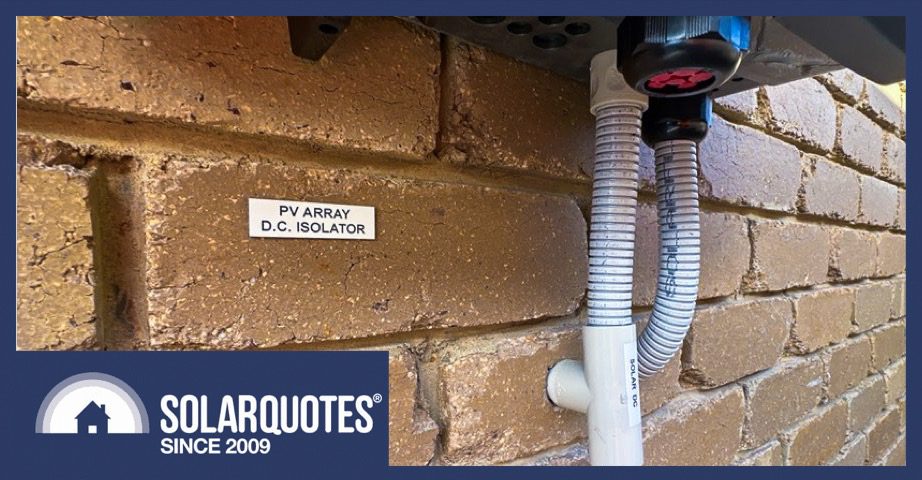
Conduit into inverter = path for water into power electronics.
DC cables need mechanical protection. That’s not up for debate. But the way some of the industry is achieving it, by plumbing conduit directly into inverters, is creating a new problem: water ingress.
Using plugs to create a hard barrier is how much of the industry has designed inverters to weatherproof the electronics. The box is sealed at the factory and field connections made outside, with wiring screwed or crimped into specialised connectors.
However brands like Enphase, Tesla Powerwall3, and Fronius Gen24 take a different approach, with a housing you can open, inviting the electrician inside to make terminations. This allows a tradesperson to run conduit as mechanical protection, plumbing it right into the inverter itself.
The problem with plumbing is that it carries water, which doesn’t mix well with electricity.
Drain Valves: A Bandaid, Not A Fix
The solar standards recognise this issue by insisting on a drain valve, so condensation can collect and run away before running inside the inverter. In the old days we just drilled weep holes so the water could get out of switches and enclosures and it worked well enough, provided the ants didn’t get in.
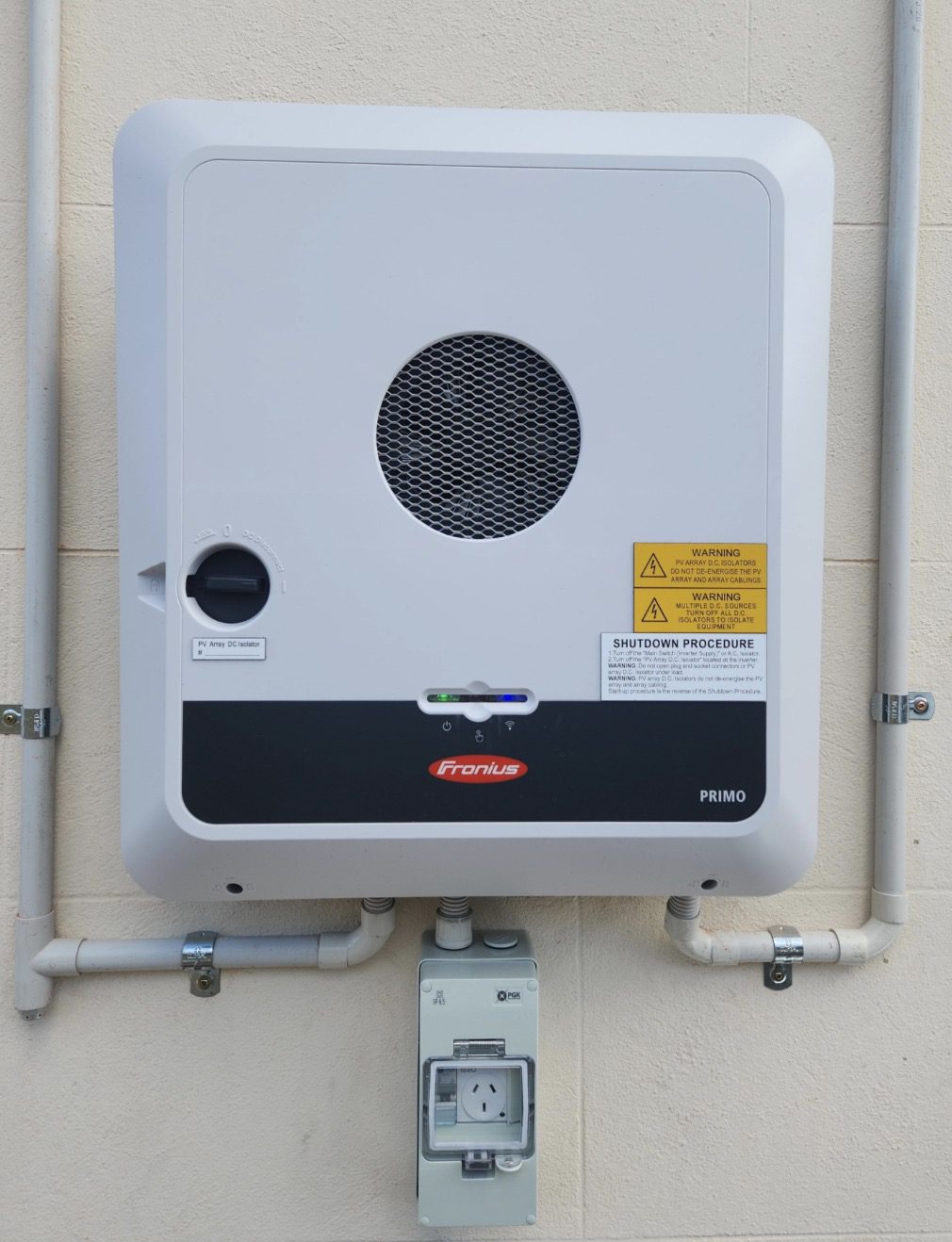
Fronius with drain valve bottom left.
But I must stress this point: despite being mandatory in certain situations, in my opinion, drain valves are a joke, a bandaid at best.
We aren’t sealing these wiring systems, pressurising them with nitrogen and installing desiccant filters. There will be air inside the conduit, air carries water and changes in temperature will deliver that water where it’s not wanted.
Good Engineering vs Hole Saws
Some manufacturers have invested serious time and money into cable entry design. Fronius spent a lot of time and money engineering a first class cable entry. It’s well executed and the last thing I want to see is a hole saw ploughed through it.
Yet that’s exactly what happens. Installers chop into carefully designed enclosures to plumb in conduit, and while the wiring system meets the rules for mechanical protection, the end result amounts to vandalism.
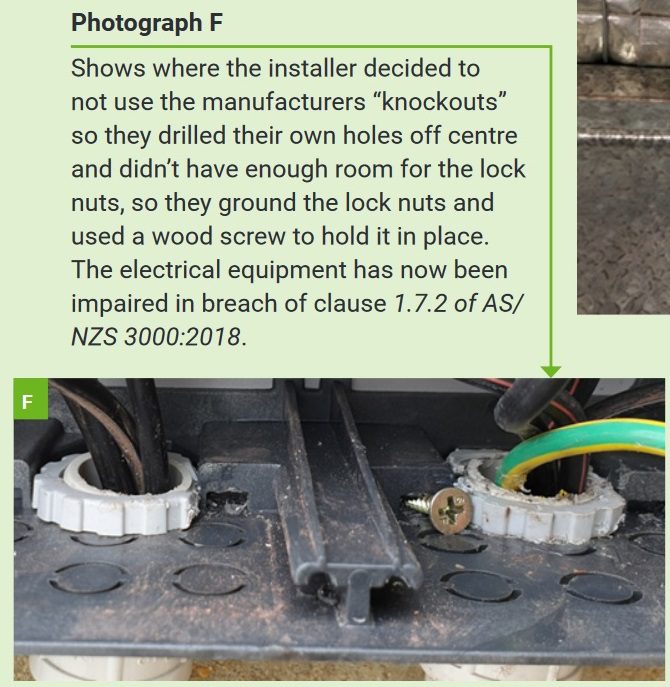
This might meet the rules for mechanical protection, but it’s just vandalism, as defected by a technical regulator inspection.
We simply shouldn’t be putting plumbing into electrical fixtures.
However there can be alternatives, when you find innovative installers who are willing to invest some extra time on a job they’re proud of, there are solutions like this image below. In order to make this Fronius Gen24 look really seamless, they ran the conduit inside the inverter with only the drain itself fitted from the outside.
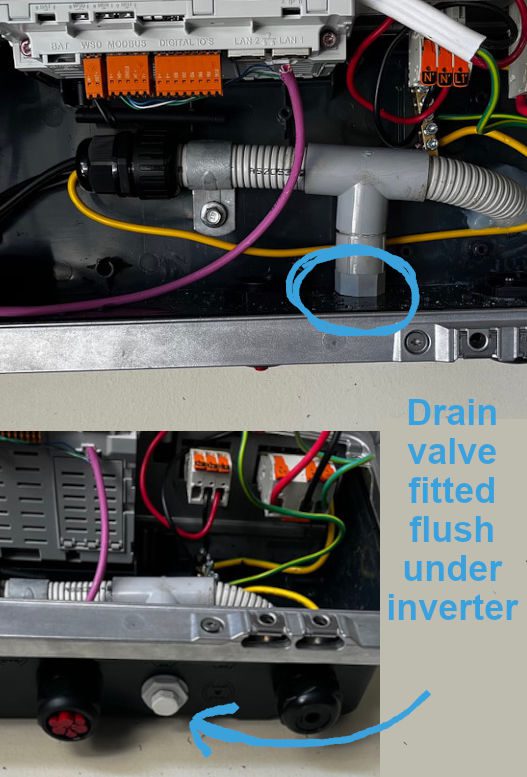
DC wiring inside flexible conduit has been brought through the back of this Gen24 inverter, with only the drain fitting itself showing outside.
So What’s The Alternative?
Good installers are finding ways to deliver mechanical protection without compromising the inverter’s ingress protection rating, or making other compromises to the design.
Well thought out air conditioning ducting is one way of offering protection as well as marshalling everything neatly:
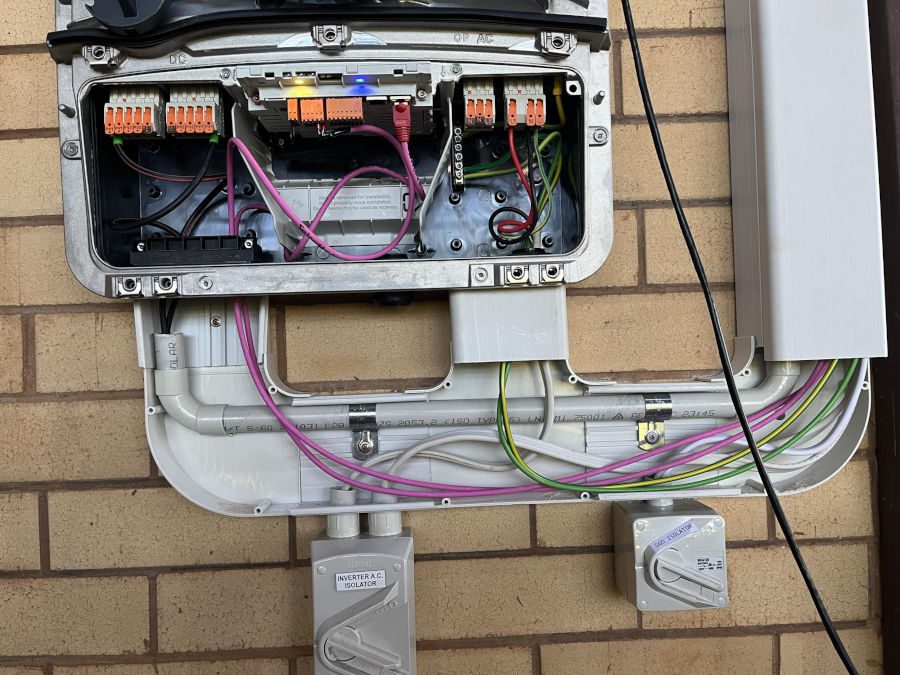
Credit goes to Pom Hibbert
My Favourite Solution
Cobalt Solar have come up with what I think is the real answer. Mechanical protection is mechanically fixed, it isn’t glued, but the wiring is sealed tight by a gland fitting.
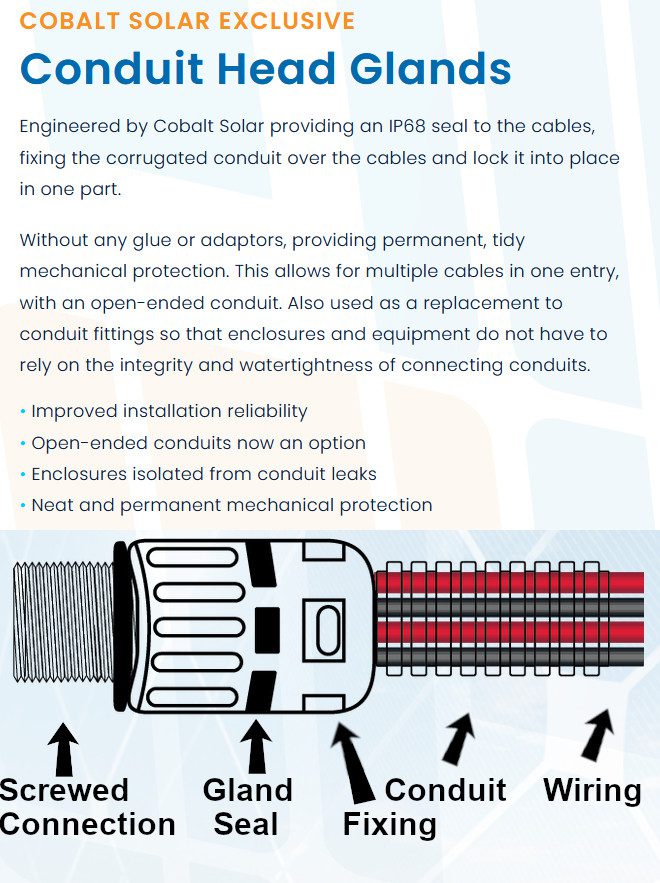
It’s a terrible image of an excellent product.
This approach keeps mechanical protection separate from weather sealing. The conduit does its job protecting cables from physical damage, and the gland fitting does its job keeping moisture out. No extra drill holes through engineered housings. No reliance on drain valves to save you from condensation.
The Bigger Picture
The standards require mechanical protection for battery wiring, and rightly so. But the industry needs to stop treating conduit into the appliance as the only answer, especially when it means compromising the weatherproofing that manufacturers have already engineered into their products.
Manufacturers who design inverters with plug-style connections are already solving the moisture problem. Those who invite electricians inside to terminate need to think harder about how conduit entry interacts with their IP rating.
And for installers: if your method of compliance with AS5139 involves a hole saw and a prayer that the drain valve works, it might be time to rethink.
 About Anthony Bennett
 RSS - Posts






My Fronius Gen 24 plus installation has 5 cables covered by corrugated conduit then conduit couplings over each of the 5 connections. There are no drain valves in each of the 5 lengths of corrugated conduit.
Far from ideal? Not compliant? Or?
Does look neat ….
From what I can tell, in NSW there is no systematic inspection of Battery installs and an adhoc inspection of Solar PV systems. The only “inspection” is by the installer themselves and the certificate of compliance that you may have to harass the installer for.
Do you think there may be a place for customers who use SQ to choose an installer, being able to submit images of key aspects of installs for checking if they have concerns?
Looking at just the cabling in customer photos in the equipment review sections there seem to be plenty of non compliant installs going on.
As a long time electrician and former solar installer after many service calls in my area to burnt out isolators, damaged inverters etc the number one cause of faults was water ingress, in pretty much every case water entered conduits due to incorrectly glued fittings or simply no glue applied to joints, from my perspective have been shown how to properly prepare and seal a pipe join, 1. Always use a primer fluid 2. Apply glue and rotate conduit so glue is distributed to all of the joint
The topic i would like to see address is tightening of glands. One inverter has glands included in the box and if used, rarely tightened. The manuals say to use and tighten them. Then when the BESS fills with water…. apparently its a warranty issue, despite the first rule “RTFM” not being followed! Anthony. You know me. Call me.
Thanks for the write-up, great insights on what should and should not be done when it comes to mechanical protection and prevention of water ingress for DC cable entry into inverters!
The biggest problem is still money, installers often get paid “per install”, and time is money, so is additional components from the van like drain valves. Even having to walk back to the van to fetch a tool you didn’t already have within arm’s reach is an extra minute you’d rather not spend if you can conjure an alternative to solve a problem – that hole saw lying on the ground that you just used to run the conduit thru the wall looks mighty useful all of a sudden. Naturally it very quickly turns into a race to bare minimums.
Some brands are taking note, they realise the quicker they can make the installation the more installers will promote them.
So those brands you mentioned, they’re the ones striving for desktop engineering perfection but not solving the field problem, so this is what end up happening when installers essentially work for STCs and they’re trying to fit 2 or even 3 jobs on a single day.