
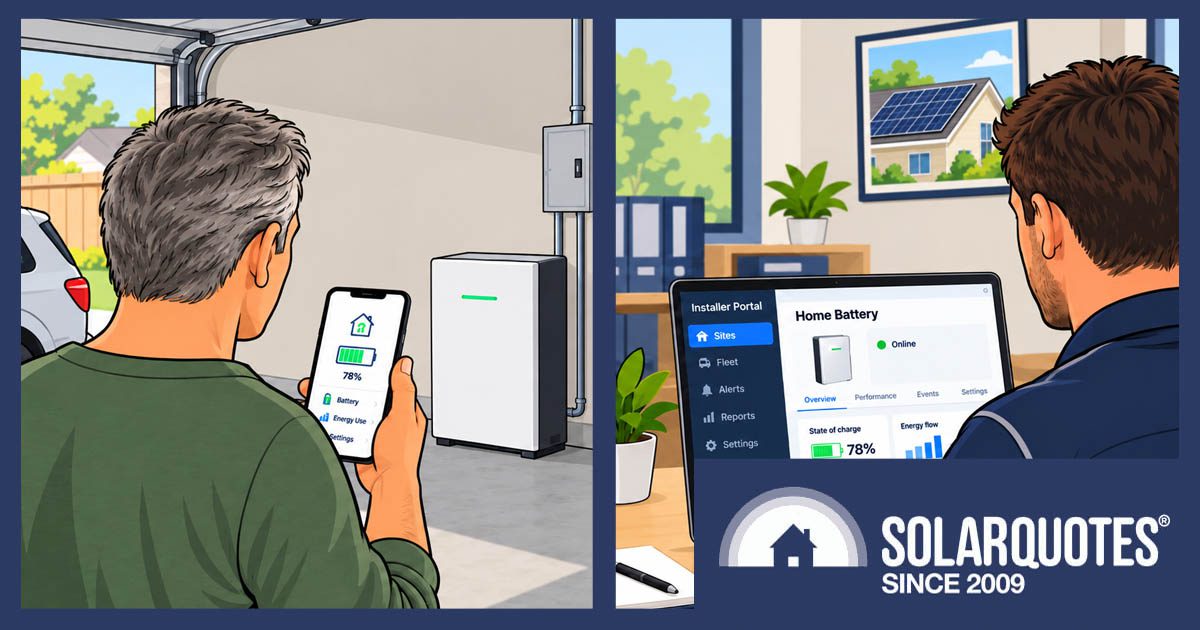
Buying a home battery isn’t quite like buying an electrical appliance and waving goodbye to the installer at the door.
Modern batteries are connected, software-driven systems. Depending on the brand, your installer may retain access long after commissioning to monitor, diagnose and sometimes change how the system operates.
That can be a real benefit. But exactly how that access is divided between homeowner and installer varies from brand to brand. So we looked at six major battery platforms widely sold in Australia to see how they handle it, and what that means for the installer you choose.
Why Does Your Installer Stay Connected?
Remote access can save everyone a lot of grief. Instead of sending an electrician to your house whenever something goes wrong, an installer may be able to investigate the problem and sort it out remotely.
That can mean faster fault-finding, fewer unnecessary site visits and easier ongoing support. It can also help as electricity tariffs, VPPs and network requirements change.
So ongoing access isn’t inherently a problem. It’s part of what can make a connected battery useful. But it does raise another question: once the battery is installed, who decides who continues to have access?
A Customer Dispute Raised The Question
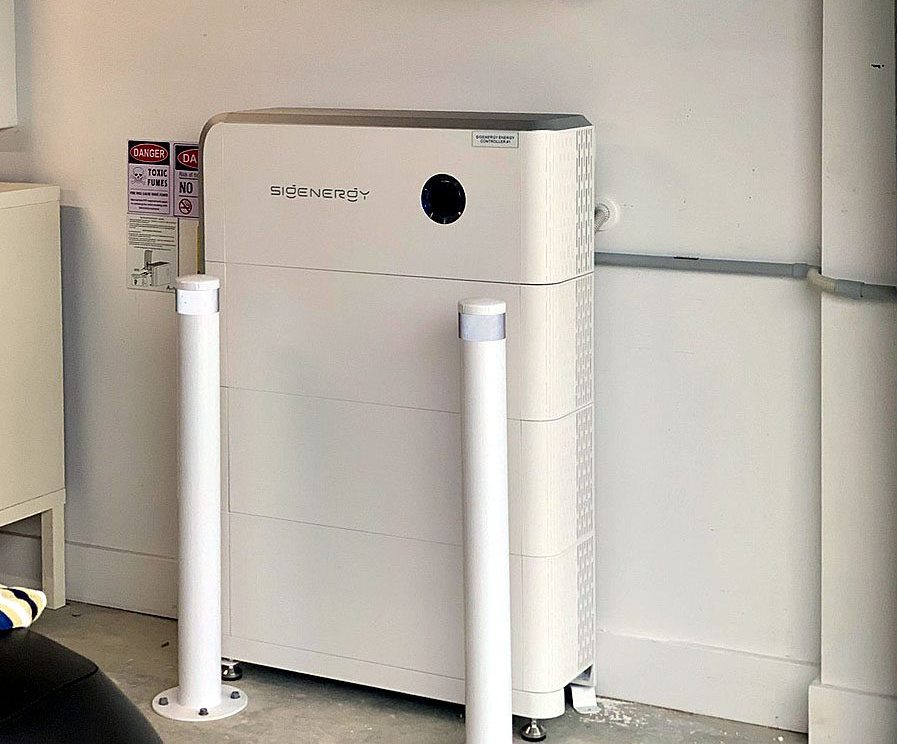
A Sigenergy Sigenstor
SolarQuotes started looking into this after hearing from a Sigenergy Sigenstor owner who was in dispute with his installer and wondered whether he could revoke the installer’s remote access.
There’s no suggestion the installer ever misused that access, and the original installation issue was subsequently resolved. But when the customer asked Sigenergy to remove the installer, he was told another installer would have to take over first.
We asked Sigenergy to confirm the arrangement. After checking internally, it told SolarQuotes:
“The current installer’s access cannot be removed before a new installer is appointed.”
Sigenergy also confirmed that after commissioning, the installer can remotely adjust applicable system operating settings.
That made us wonder how other major battery platforms handle the continuing relationship between homeowner, installer and manufacturer.
How Six Major Battery Brands Handle Access
Our sample was the five leading residential battery suppliers in Oceania by shipments in the first half of 2026, according to InfoLink, plus Tesla as a major established player in the Australian market.
There isn’t one standard approach to ongoing installer access. Manufacturers divide permissions between homeowners, installers, service teams and sometimes third parties in different ways. Their public documentation also varies considerably in how clearly it explains what happens after commissioning.
AlphaESS
AlphaESS makes continuing installer involvement fairly explicit. Its installer portal allows remote changes to settings including battery backup reserve and time-based charging and discharging.
AlphaESS warns that remote changes are pushed to the system in real time and can affect the owner’s day-to-day experience, recommending installers discuss significant changes with the owner first.
Homeowners also get substantial control, including backup reserve and operating modes. But AlphaESS says the advanced settings exposed to homeowners are only a subset of what installers can configure, with some settings hidden or read-only for safety or regulatory reasons.
What we couldn’t find in its current public owner documentation was a clear procedure for completely removing or replacing the original installer’s access.
Fox ESS
Fox ESS structures the relationship differently again. Its current FoxCloud manual says owners who create their own plant can choose to associate an installer with it for “after-sales support and ongoing plant management”. Installers can also create a plant themselves and invite the homeowner to it.
Fox also provides installers and distributors with a dedicated FoxCloud plant-management interface for operation, monitoring and maintenance.
Again, though, we couldn’t find a clear current public procedure explaining how an owner completely severs an existing installer relationship once that association has been made.
GoodWe
GoodWe gives homeowners some explicit control over who can see their system. Its SEMS+ platform supports remote monitoring and management, with different permissions for different account types. Administrator, technician and end-user accounts can all have remote-control functions, depending on the system and permissions involved.
For Australian and New Zealand users, GoodWe’s SEMS+ manual says Monitoring Auth is controlled by the end user. When enabled, accounts other than the owner and authorised visitors can’t monitor the power station. The app also has a separate Remote Control Auth section.
The documentation doesn’t explain clearly enough whether that remote-control authorisation can be used to completely remove an installer’s control privileges, so we won’t assume that it can.
Sigenergy
Sigenergy’s arrangement is the one we were able to confirm directly with the company. It told SolarQuotes the current installer cannot be removed until another installer is appointed. It also confirmed that after commissioning, the installer can remotely adjust applicable system operating settings.
That fits with Sigenergy’s installer documentation, which covers operating modes including time-based control, along with settings for grid charging, charging and discharging power and import/export limits.
That doesn’t make ongoing access inherently problematic. It does mean the installer relationship continues until another qualified installer takes over.
Sungrow
Sungrow’s iSolarCloud platform also builds an ongoing retailer or installer relationship into its account structure. Its May 2026 documentation says that when an account is linked using an upper-level retailer or installer code, that organisation can view and manage the plants under the account. Australian users operate through the Australian iSolarCloud server.
Sungrow’s Australian support material also provides dedicated remote-settings resources for installers.
What its current public documentation doesn’t make particularly clear is the narrower question we were interested in: exactly how a homeowner ends the original installer relationship altogether.
Tesla
Tesla draws a particularly clear line between having a service relationship and being allowed to remotely change settings.
Powerwall owners can enable Mobile Service Access through the Tesla app when Tesla or their installer needs remote access to the system. When enabled by the homeowner, Service Mode automatically switches off after 30 days and can also be turned off manually.
Remote Service Access is also enabled automatically for 90 days after initial setup, and an installer onsite can enable it for another 90-day period.
Tesla says support personnel can still access the Powerwall setup interface when Remote Service Access is disabled, but they can’t change settings.
So the service relationship remains, but Tesla puts a separate gate around permission to remotely alter the system.
Can Another Installer Take Over Ongoing Support?
That brings us back to the Sigenergy customer who prompted this article. He wondered whether another installer would even be willing to take over a system they hadn’t installed.
It can be done, but the options may be limited. Some solar and battery businesses will take over existing systems, particularly so-called “orphaned systems” where the original installer is no longer around or available to provide support.
But finding one may take some legwork, and a new installer may want to inspect the system first, which could come at a cost.
Your Installer Matters Long After The Job
That potential handover hassle is another reason the installer relationship matters beyond installation day.
SolarQuotes has been banging on for years about choosing a good installer. It’s easy to hear that advice and think mainly about workmanship: good system design, a neat and compliant installation, and someone who’ll answer the phone if something breaks.
But with a modern battery, you may also be relying on that installer for monitoring, configuration, fault-finding and support long after they’ve packed up and left the site.
So choosing a good battery installer isn’t only about who does the best job on installation day. It’s also about who you’re comfortable having as part of your home energy system for years to come.
You can compare installer reviews on SolarQuotes, or get up to three quotes from installers we’ve vetted.
 About Kim Wainwright
 RSS - Posts






Speak Your Mind