
Electric cars, home batteries and chargers are becoming familiar technology, but electricity is turning up in some unexpected places. How about robotic legs that help you walk, or a jet ski that might one day double as a home battery?
These are just some of the unusual ideas we spotted at Everything Electric Sydney recently – here’s a rundown on some of the energy tech spruiked by companies as the next big thing.
Are Robotic Legs A Step Too Far?
Strap on a Hypershell powered exoskeleton and you might find yourself walking with a little extra spring in your step.
Worn around the waist and thighs, the device uses sensors to detect your movements while two electric motors assist your legs. It doesn’t walk for you, but adds power to the movements you’re already making.
Hypershell claims its technology can reduce the effort required for activities such as walking uphill, hiking or climbing stairs. Prices range from around $1,800 to $4,000 in Australia, depending on the model.
There’s a serious purpose behind the unusual appearance. Powered walking assistance could potentially help older people or those with reduced strength stay active, although Hypershell’s consumer products aren’t approved medical mobility aids.
Finn takes the legs for a test drive in the video, complete with sound effects from ‘The Six Million Dollar Man.’

Hypershell’s powered exoskeleton gives your legs a helping hand.
A Hot Take On Thermal Storage
Australian company Thermal Dawn has developed a different approach to household energy storage.
Instead of storing electricity in a battery, its system uses a heat pump and insulated tank containing water and phase-change materials to store thermal energy for space heating, space cooling and domestic hot water.
The idea is to run the heat pump when rooftop solar is plentiful or grid electricity is cheap, then use the stored heating or cooling when it’s needed.
It can’t supply electricity to your appliances, but it could reduce the need to run heating and cooling equipment during expensive periods.
The company has reported encouraging early results, although longer-term savings will depend on installation costs, household needs and electricity tariffs.
A Mate That Pulls Its Weight
Then there’s the OZ eTrike, which looks like a motorcycle and a tip truck had a baby.
The Mate150 has a hydraulic tipping tray and a 300 kg payload, making it potentially useful for moving feed, manure, mulch or tools around horse properties, market gardens and small farms.
For some jobs, it could replace a quad bike or buggy towing a trailer, particularly when a tipping tray would save manual unloading. It’s not built for serious off-road driving, though.
At about $7,500, it can also be registered for the road, subject to state requirements.
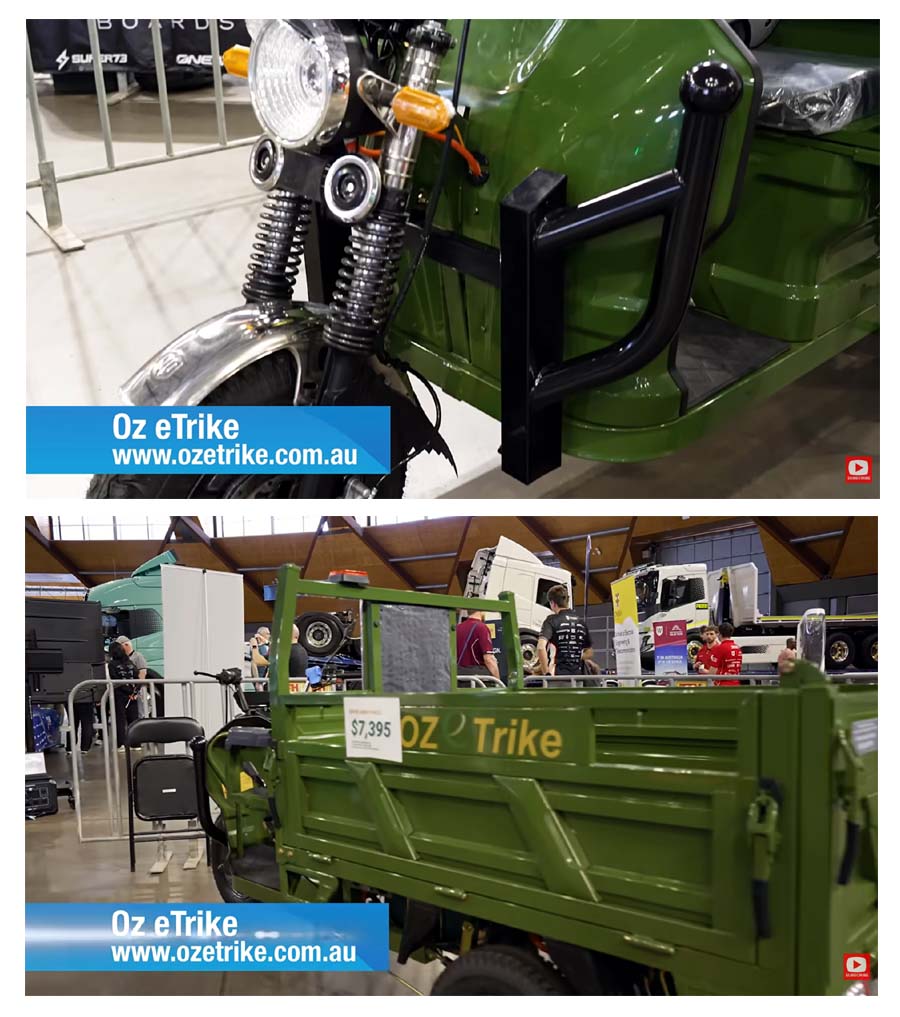
The OZ eTrike is a small electric utility vehicle with a hydraulic tipping tray.
Motoring Purists, Look Away Now
Classic Conversions
Australian conversion specialist Jaunt Motors has transformed a beautiful 1976 Porsche 911 Targa into a 370 kW electric sports car. Its original flat-six engine is gone, but the conversion is designed to be reversible.
Whether that’s an improvement or a terrible thing to do to a classic Porsche is something car enthusiasts can argue about.
Meanwhile, Electrogusto has given a vintage BSA Bantam motorcycle an electric drivetrain. It uses a hub motor and custom-built battery, with an estimated range of around 60 km.
The company is considering offering kits or courses where enthusiasts could build their own electric BSA.
When Truckies Try Electric
Volvo’s enormous electric prime mover packs 540 kWh of batteries and more than 700 horsepower.
When Finn asked Volvo representative Matt how drivers were responding to the trucks, he had this to say:
“No one wants to drive them and then when they do, they don’t want to stop driving them is usually how it works out.”
There’s more in the video, including electric utes, luxury SUVs and some remarkably efficient Australian solar racing cars.
Could A Jet Ski Double As A Home Battery?
Australian company EClass Outboards has built prototype electric jet skis and is developing a conversion kit for existing petrol models, retaining the original hull and jet pump. The proposed kit would use a motor rated at more than 40 kW and a battery of around 20 kWh.
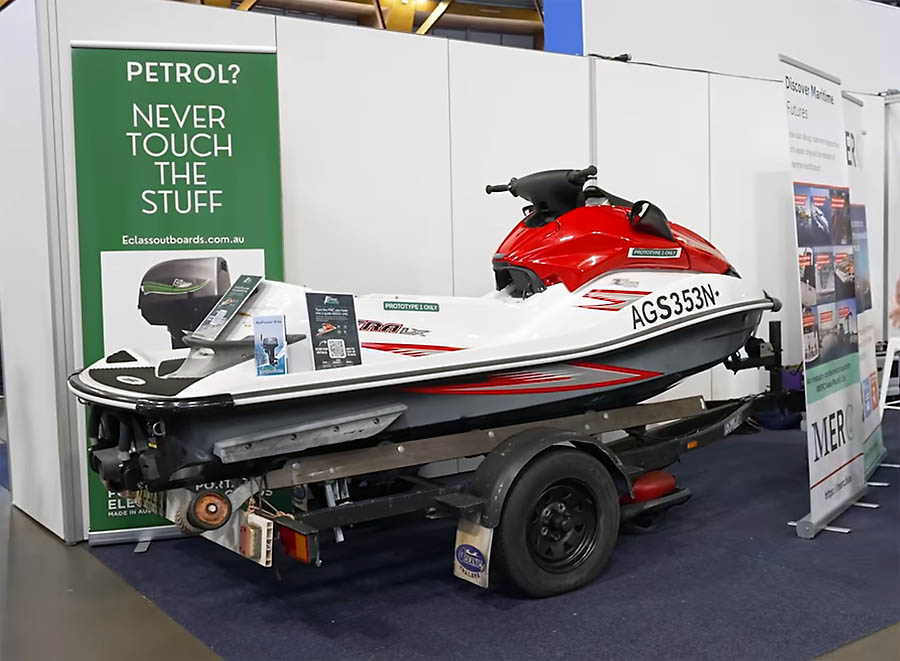
EClass is developing an electric conversion kit for existing petrol jet skis.
Unlike a car that’s driven to work every day, a jet ski might spend most of its life at home. Its battery could potentially store surplus rooftop solar during the day and supply the house during the evening peak, using vehicle-to-home (V2H) technology.
EClass is exploring that idea, calling it the “Fun Powerwall”. It’s not an available feature yet. Making it work would require bidirectional power electronics, compatible battery controls and a compliant connection to the home’s electrical system.
But one day, your favourite weekend toy might spend the rest of the week helping to pay for itself.
Thinking about storing more of your rooftop solar for use after dark? Our home battery guide explains battery costs, benefits and what to consider before buying.
 About Kim Wainwright
 RSS - Posts






Speak Your Mind