
If you search for “EV fire,” you might see blurry dashcam videos, dramatic headlines, and plenty of comments from people who think electric cars are just waiting to explode in driveways around Australia.
Charging an electric vehicle (EV) at home is actually very safe. Data from different countries and fire agencies all show the same thing. Let’s steer into some of the biggest EV safety myths and misunderstandings – plus one real issue that’s easy to avoid.
Myth: EVs Catch Fire All The Time
EV FireSafe is an organisation funded by the Australian Department of Defence to research EV battery fires and emergency response. Their team consists of firefighters and researchers, and their work is globally recognised.
EV FireSafe’s data puts Australia’s tally at 14 verified electric car battery fires since 2021 through to April 2026, against a fleet of more than 500,000 EVs on the road:
- Five followed a high-speed collision, including one caused by road debris.
- Three came from a fire in a building or garage that spread to the car.
- Two followed arson.
- Three have causes still under investigation.
- One followed bushfire damage.
One earlier incident, examined in EV FireSafe’s November 2024 report, involved a car connected to charging at the time. The investigation found the connection to charging was coincidental.
They admit these numbers are a minimum and its possible other EV fires have not been recorded as such.
A fact sheet from January 2025 by the Vehicle Emissions Star Rating program, using data from EV FireSafe and the NSW Government, cites a 2022 fire rate of 0.005% for EVs, compared to 0.03% for petrol and diesel vehicles with internal combustion engines.
Such a small number of fires spread across more than 500,000 EVs and hundreds of thousands of charging sessions each week is about as safe as it gets.
When EV Fires Do Happen, They’re Harder To Fight
Although EV fires are rarer than petrol vehicle fires, they are however harder to put out. When a lithium-ion battery overheats and goes into thermal runaway, the high temperature causes materials inside to release free oxygen. So, while foam or a fire blanket works for petrol fires, it doesn’t work the same way for EVs, as the fire can feed on its own oxygen.
Fire departments say it can take 25,000 to 50,000 litres of water to put out an EV battery fire, compared to just 2,000 to 4,000 litres for a petrol or diesel car fire. That’s a big difference. EV FireSafe found that about 10% of the EV battery fires they studied reignited, sometimes hours, days, or even weeks later.
Another important issue is the smoke. Lithium-ion battery fires can release hydrogen fluoride and other harmful gases. This is why firefighters and bystanders are told to stay further away from a burning EV than from a petrol car.
In short, EV fires are much less common, but when they do happen, they need more water and can take longer to put out.
The good news is fire services are adapting. The European Commission found that EV fires aren’t harder to control than petrol or diesel car fires if buildings have proper sprinkler and drencher systems. That’s why there are new car park rules in Australia.
Myth: You Can’t Charge An EV In The Rain
Yes, you can charge an EV in the rain. Leaving a charging connector out in bad weather isn’t like putting a toaster in the bath.
Home EV chargers sold in Australia are built to handle rain as a standard feature. Australian safety standards require outdoor chargers to have at least an IP44 weather rating, and many quality installations use IP65 or higher. This means the electrical parts are properly sealed against water. The car’s charging port and the plug are built the same way.
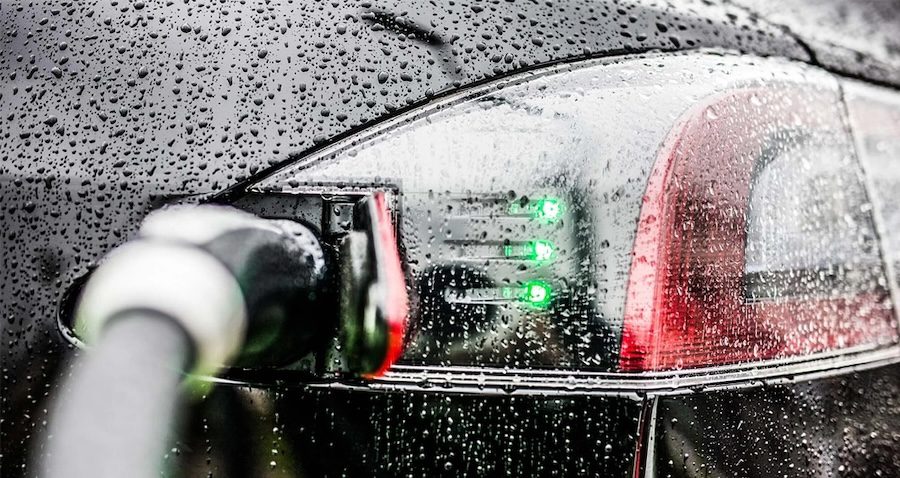
Source: Applegarth Electrical
The real risk isn’t rain. It’s using a damaged cable, a charger with a cracked case, or leaving the plug in a puddle instead of plugged into the car. If you notice damaged equipment, have it professionally inspected before using it.
Flooding is a different issue. EV FireSafe warns that lithium-ion batteries submerged in water, especially saltwater or after a storm surge, are a real fire risk that can take days to appear. If your EV has been through floodwater, don’t plug it in. Have it inspected first.
What About Home Insurance For EV Chargers?
One thing people often don’t mention is that insurance coverage for EV chargers is inconsistent, and this is an important detail to be aware of.
Some insurers now cover a fixed, professionally installed charger automatically under standard home insurance, alongside fire, storm, and theft cover for the rest of the property. RAA, the motoring and insurance group serving South Australia, is one example.
Others don’t mention EV chargers anywhere in their policy documents, which leaves a genuine grey area about whether a charger counts as a covered fixture.
The Insurance Council of Australia, which represents the insurance industry, published a paper in May 2024, looking at this kind of uncertainty as more people buy EVs.
Fire risk isn’t what’s making EV insurance more expensive. A 2026 industry analysis found that higher premiums for battery-electric vehicles are mostly due to the cost of repairs and parts rather than fire claims.
Myth: If Everyone Charges At Once, The Grid Will Fail
The Australian Energy Market Operator (AEMO), which runs the national grid, released a report in April 2025. It points out a real but smaller issue: if lots of EVs on the same street charge at full power at the same time, it can strain local transformers and equipment.
This can happen to any grid under heavy use. AEMO’s solution is to use better data and flexible charging times, since EV charging is one of the easiest loads to shift to off-peak hours.
The main advice, for both your home and the grid, is to charge your EV during off-peak times or on a set schedule, instead of plugging in right when you get home every night. This saves money on your electricity bill.
Getting Home Charging Right: The Five Things That Matter
Just because the risks of EV charging are exaggerated, it doesn’t mean you can be careless. Using a cheap charger, rushing the installation, or stacking double adapters can elevate the risk. Five simple things make your setup safe, and none are complicated:
- Hire the right electrician. Home EV chargers require their own circuit and safety switch, in accordance with Australia’s electrical wiring rules (AS/NZS 3000). Not every electrician has done this before, so ask about their EV charger experience, especially if you have solar or a battery. A general electrician might miss details needed for solar charging. A good electrician will check your switchboard, work with what you have, and guide you through any electrical upgrades. Get a good electrician.
- Get the location right. Outdoor chargers need proper weatherproofing, clearance from anything flammable, and a cable run that’s planned before installation day, not improvised on the day.
- Buy a certified charger. Avoid uncertified imports with no local support or warranty.
- Check your charging equipment regularly. Look at the cable, plug, and connector for cracks, fraying, or signs of heat damage, especially if your charger is older or a budget model. Because many problems start at the connection point, this is the most important habit to have.
- Change your charging habits. Many people ignore this, but it’s the main cause of fires. Using an indoor power point with an extension cord or several double adapters is a real fire risk, and it’s something you can control. Plug the charging cable directly into the power point, not through an extension cord or power board. Don’t take the risk.
The pins on a dedicated charging connector aren’t live like a regular power point. Charging cables use a handshake system (control and proximity signals, standard under IEC 61851/62196) that only powers the connector once it’s fully plugged in and locked to the car. You can’t get a shock from touching the pins before it’s connected properly.
The Real Risk In Your Driveway: Tripping
After all the myth-busting, the most common way an EV charger causes harm is by being a trip hazard.
A charging cable stretched across a driveway, footpath, or walkway is a clear trip hazard, especially at night or for visitors who aren’t expecting it. It’s easy to prevent.
- Position the charger as close as possible to where the car actually parks, so the cable doesn’t need to cross a walkway at all.
- Where a cable does have to cross a path, keep it flat and visible.
- Store the cable on a wall-mounted hook or reel between charges instead of leaving it coiled on the ground.
- Choose a tethered charger with a fixed cable over a portable ‘granny cable’ plugged into a wall socket. It removes the temptation to improvise with an extension cord.
- If you share a driveway or charge from the street, add a cable cover and check that the lighting is decent. It’s not just your household crossing that cable.
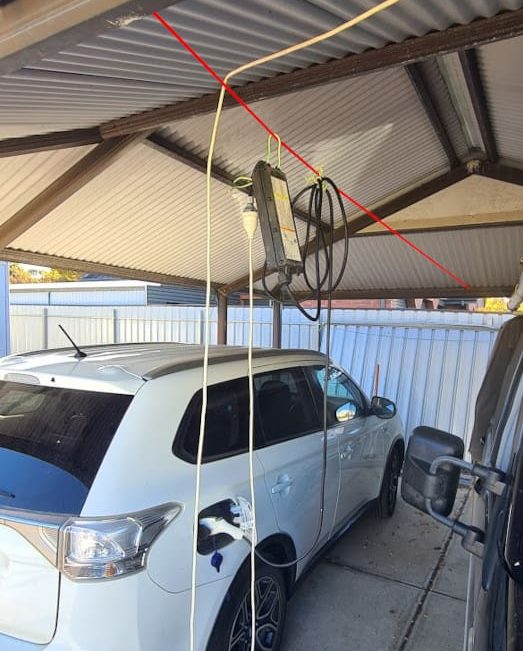
A creative effort to reduce the tripping risk of an EV charging cable.
What To Do Next
The fire risk from charging an EV at home is exceptionally low, well understood, and easy to manage with basic precautions. The myths about sudden fires, unsafe rain charging, and an overloaded grid don’t hold up when you look at the data.
The real risks, like a rushed installation, a loose charging connection, using too many double adapters, or leaving cables untidy, are simple and within your control.
If you’re still weighing up whether an EV is right for you, try our EV charging cost calculator to see how it compares to fuelling up a petrol car.
 About Jacob Boyd
 RSS - Posts





Speak Your Mind