
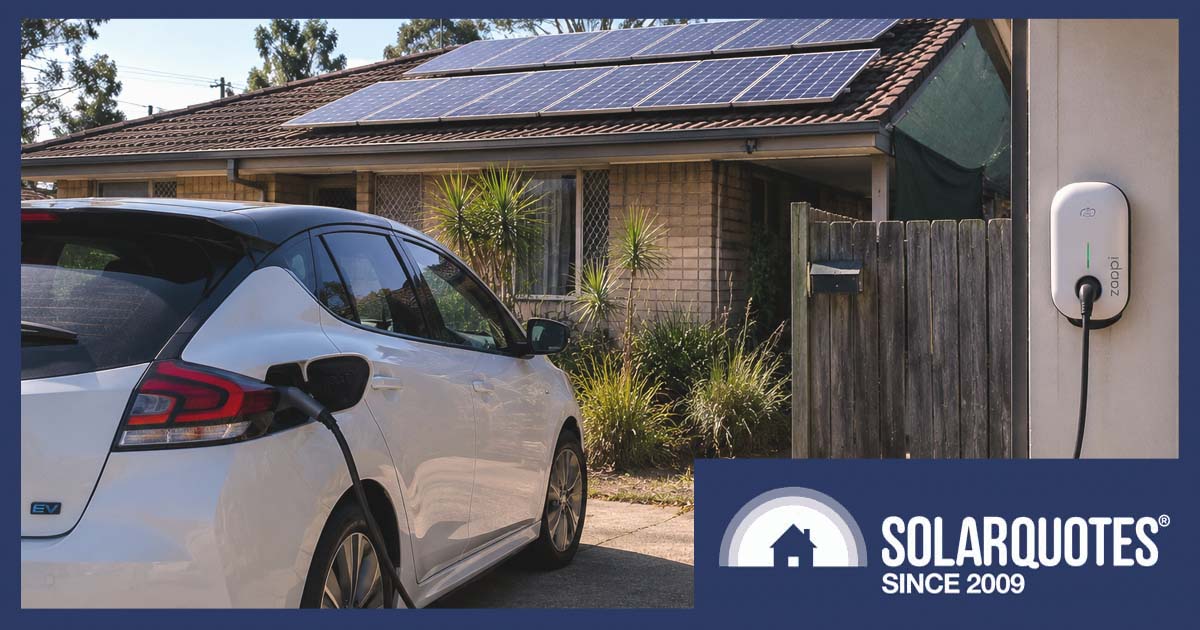
Carefully trickle-charging your EV with surplus solar instead of buying electricity from the grid sounds like the perfect way to charge. But there’s an uncomfortable truth: slow charging can waste considerably more energy than charging at higher power with a home charger.
Spoiler alert: that doesn’t mean you should stop charging from solar. Cheap electricity still trumps charging efficiency when it comes to your wallet.
Does Slow EV Charging Really Waste More Electricity?
Yes. German motoring organisation ADAC recently put five EVs through charging tests to find out how much electricity actually reaches the battery.
The cars were charged from a household socket at 2.3 kW, from a dedicated wall charger throttled down to 4.1 kW to simulate surplus solar charging, and from a dedicated wall charger at 11 kW. The Volvo EX30 was also tested at 22 kW.
The differences were substantial.
| EV | Socket 2.3 kW | Solar 4.1 kW | Charger 11 kW |
|---|---|---|---|
| Mercedes CLA 350 EQ | 24.2% | 12.8% | 6.9% |
| Renault R5 E-Tech | 13.7% | 8.0% | 5.1% |
| Tesla Model Y | 12.7% | 9.4% | 6.1% |
| Volvo EX30 | 14.2% | 9.1% | 7.0% |
| VW ID.7 | 15.3% | 10.6% | 6.9% |
In other words, plugging into an ordinary power point (commonly called granny charging) resulted in losses of around 13–24%. Charging at higher power from a wall charger cuts those numbers to around 5–7%. The simulated surplus-solar charging landed between the two, losing 8–13%.
The general trend was clear: the slower the AC charging, the more electricity was wasted.
Where The Missing Electricity Goes
Here’s the slightly confusing bit: much of the problem isn’t the charger hanging on your wall.
With AC charging, the real charger is inside the car. Its onboard charger converts the AC electricity supplied by your house into DC electricity that the battery can store. That conversion produces losses, but the car also needs to keep various electronics operating while it charges.
ADAC measured 100–300 watts being consumed by vehicle systems during EV battery charging.
At 11 kW, a couple of hundred watts isn’t much in percentage terms. At 2.3 kW, it becomes significant. Worse, putting the same amount of energy into the EV’s battery at 2.3 kW takes almost five times as long as at 11 kW, so those electronics stay awake much longer.
There are additional losses in cables and the battery itself, but ADAC says the onboard charger and vehicle electronics are the big ones.
And this isn’t just an ADAC curiosity. A separate 2023 study of onboard chargers across 38 EV models found that reducing charging current for smart charging could increase worldwide charging energy demand by around 1–10%.
So, Should I Stop Charging Slowly From Solar?
It depends. This is where energy efficiency and financial efficiency part company.
Imagine your EV charger is following your solar production, leaving only 2 or 3 kW to spare once your house has taken what it needs.
Throttling the EV down to match that surplus might mean you lose a higher share of the electricity during charging. But that lost electricity probably cost you next to nothing because it came from your own solar rather than the grid.
Compare that to the alternative: exporting that same solar for a small feed-in tariff instead. Losing a bit of extra energy while charging can still work out cheaper than charging more efficiently from the grid later, even at an overnight off-peak rate. That’s why charging an EV from surplus rooftop solar still makes sense.
Granny Charging From The Grid Is A Different Story
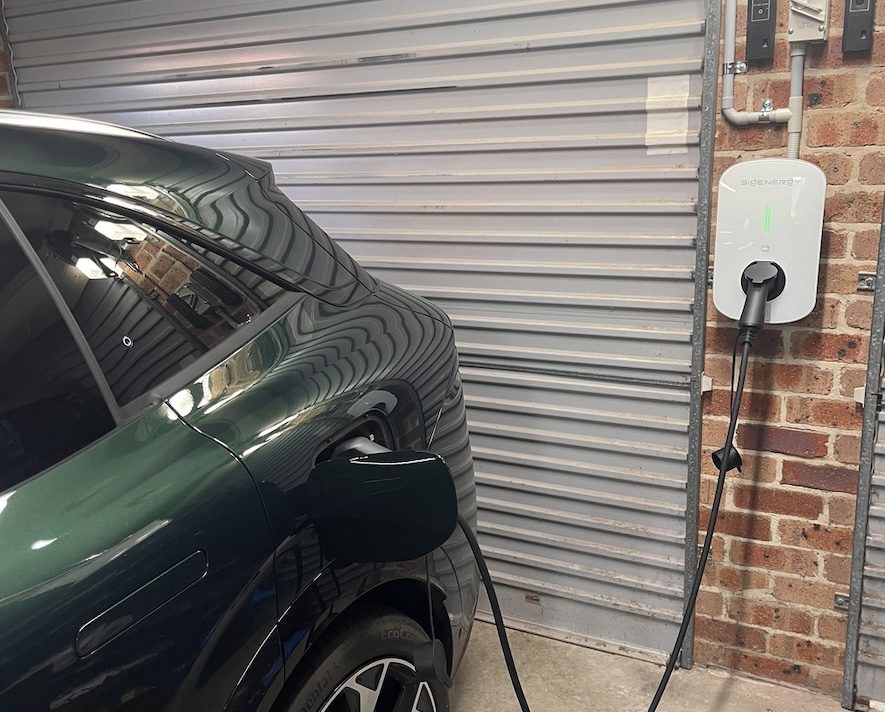
These loss percentages matter more once real money is on the line. If you’re granny charging from a standard power point and buying electricity at the grid’s full retail price, every kilowatt-hour lost to inefficiency is one you paid for and never got to use.
In ADAC’s test, the Tesla Model Y lost 12.7% of its charge at a 2.3 kW socket, compared with 6.1% at an 11 kW dedicated EV charger. The Mercedes was a more extreme case: 24.2% versus 6.9%.
That’s not an argument that an EV charger pays for itself overnight. Installation costs money, and the payback depends on how far you drive, your electricity tariff and your specific EV.
Those charging losses are a real cost worth factoring in when you’re deciding whether to keep granny charging or install a dedicated home charger.
Source: Summit and Shore Energy
Charging From Surplus Solar Gets Complicated
Real-world solar charging is messier than ADAC’s test, though.
ADAC measured losses at a fixed 4.1 kW, but a charger that actually tracks your solar output will ramp up and down throughout the day as generation changes. Different EVs behave differently, too, and some home chargers can run at much lower power or switch between single-phase and three-phase charging.
That makes ADAC’s 8.0-12.8% figure a snapshot, not a universal number. It confirms that lower charging power costs you some efficiency, but there’s no single percentage or perfect charging rate that applies to every EV and household.
Won’t Faster Charging Wear Out My Battery?
Not at the charging powers we’re talking about here.
Charging an EV at 7 or 11 kW AC at home is very different from plugging into a 150-, 250-, or 350-kW DC fast charger.
For perspective, even an 11 kW home charger is delivering only a fraction of the power an EV can receive from a 150–350 kW DC fast charger.
So concerns about repeated high-power DC fast charging shouldn’t be confused with running your home AC charger at its normal rated output.
The Best Way To Charge Your EV
There’s no universal answer, but there is a useful rule of thumb:
- First, choose the cheapest sensible time to charge.
- Then, within that window, charge as efficiently as possible.
This usually means investing in a home EV charger.
If you’re paying normal grid prices, charging painfully slowly can mean paying for considerably more electricity than actually reaches your battery.
And if you’ve got access to free or very cheap electricity at certain times of day, there may be little reason to deliberately throttle the charging rate to avoid importing from the grid.
If you’re considering moving beyond a granny charger, our EV Charger Guide explains home charging speeds, costs, solar integration and what to look for when choosing a charger.
 About Kim Wainwright
 RSS - Posts






How do standby loses factor into this? I’ve looked into an home changer (has to be capped at 4.6, yay qld) in slight part because of this exact issue. However, my car would obviously finish charging faster and be plugged in not charging for longer compared to the granny charger. Do these numbers matter? Of course I could unplug the car overnight/when it reaches 100% but I’m going to forget to do that.
Interesting information! The Article mentions efficiency losses for EVAC charging. However, it would be interesting to know the efficiency losses of EVDC chargers, such as the Sigenstore EVDC charger.
EVDC charging won’t incur on the board charger losses so will not be as high as EVAC.
But home DC charging may then require a higher level of BMS Thermal management (I. E liquid cooling of the battery using on board air conditioning/heat exchanger) depending on the DC charge rate if faster than AC charge rate. And length of time spent charging. And also when in the day/night the charging happens.
So there maybe trade offs here – you gain some on one hand and lose some on the other. How much of each is hard to say as a rule of thumb.
Presumably the Sigenstor can tell you how much energy is sent by it to the car (DC kWh) and the car can usually tell you much it energy in kWh it has put in the battery – so the difference between these is the overhead / charging losses.
I doubt home DC charging requires more on-board EV battery thermal management than is required for AC charging. Home DC charging is relatively low power with charge rates typically 10-25 kW vs the 11-22 kW common with 3-phase AC charging.
Both our cars and EVDC tell me how much energy each attains, however my experience is the numbers from the car are not sufficiently reliable to determine an efficiency loss number. Some days I get a value of ~4% but on other days the numbers say the car accepted more energy than the EVDC delivered, so I wouldn’t rely on it.
The main EVDC losses when charging from solar/battery are voltage conversions.
Of course if charging from the grid then the system has AC to DC rectification losses, which are just moved out of the car and into the Sigenergy stack.
Losses are not of concern since our cars are often at home during the day and:
i. solar FIT during the day is zero, so it’s worth nothing anyway.
ii. grid energy 11AM-2PM is free.
Sathish,
With EVDC charging, you avoid rectification losses, leaving only DC/DC voltage conversion losses. My guess is you’d drop from around 7% to 4-5% loss, approximately, depending on the hardware in the on-board charger. That’s based on a 7.2 kW Level-2 AC charger for comparison. Modern SiC devices might eke out another 1-2% over older Si devices. (Though I haven’t designed such equipment myself, so looking at it from a distance.)
Off-grid, I mostly charge at full 7.2 kW, letting the 46 kWh house battery fill cloud gaps, for efficient charging. On a string of overcast days I’ll drop to 4 or 5 kW fixed rate to drop battery draw. SQ’s “Don’t BEV charge from house battery” position is predicated on an inadequate 10 kWh house battery, I infer. But even that can cloud fill on most cloudy days, without excessive discharge, recouped after the car is charged. I.e. 5% battery loss on 20% clouds = 1% inefficiency = 3/5 of BA. Solar Surplus Only charging is then self-defeating effort?
Yes, I noticed this Granny charging our BYD.
My off grid battery setup was seeing 2kW output but the car was seeing 1.5kW. EEK! Then there would be losses inside the house battery.
Luckily our battery is full and spilling by midday during the sunnier Months.
When the SA PFiT ends in July 2028, I might consider an EV charger.
Rod,
As time passes, and BEVs begin to predominate, it’ll eventually be handy to have either 7.2 or 11 kW charging for when rellies drop in. An afternoon charge can save them stopping half way home. (My sister’s Atto3 can just make it here and back, a modest top-up is useful then.)
I hadn’t thought of the increased charging efficiency on a warm battery. If the vehicle battery heater draws a couple of kW, then Greg’s “charge on arrival home” should more than offset the loss of charging from my off-grid house battery – at least in winter. And the higher charging rate of a Level-2 charger has a better chance of keeping the battery warm through charging losses alone.
Charge at 7kW for 1 hour instead of 2.3kW for for 3 hours, for greater efficiency if you have a battery and are on the grid trying to use excess solar.
You’ve missed one of the main causes of inefficiency when slow charging – cold winter temperatures. In my experience, some vehicles can use over 2kW in battery heating on a frosty morning, so attempting to granny charge is a complete waste of time.
.
Correction – attempting a granny charge on a cold battery is a waste of time but if you charge it right after you arrive home (when battery still warm) – the granny charger will usually work fine.
I currently use a 15A charger at home. It can be set to charger at 6A, 8A, 10A, 13A alor 15A. It is manually solar only, in much the same way Ronalds hot water was or maybe still is. 🙂
Using the data on ATO 3 screen and charging rate the car shows there is an increase in efficiency as charge rate increases. Even though it is next to the meter box and a circuit with only this outlet on it, 15A is only used for short periods of time.
So even on this smaller scale there are benefits to understanding how your car and chargers efficiency changes.
I had wondered about our car’s BMS under reporting the amount of charge (kWh) taken on. Our VW ID.4 would take about 1.3kWh before the BMS would even record a charge, though the SoC would increase by a couple of percent. And there would be a difference of 10 to 20% between what the BMS recorded, and the granny charger’s energy meter log.
Now, fuel consumption is defined in terms of outputs and inputs, in this case, the output being kilometers and the inputs being kWh (or litres of diesel for the Ford Ranger)
In the real world, after 6 months and 11000 km of “around town” and Hume Highway travel, I see the VW ID.4 GTX average fuel consumption as 21kWh per 100km. A bit higher than the advertised Combined WLTP 16.7 to 18.7 kWh per 100km.
Since I’ve just had an EV charger installed, I will be interested in seeing better fuel economy using higher charge rates with the 3 phase charge mode.
Ian,
It’s equal to your worst case here, even with a Level-2 charger:
Energy supplied to the EV charger: 4929.05 kWh
Km driven: 21,600
=> kWh/km = 0.228
But the BEV typically reports under 0.18 kWh/km, so charging + battery efficiency is
.18/.228 = 79%
= 21% losses
I figure 3/4 of that is in the charger – not impressive at all.
The MG4 has an LFP battery, so that loss should be low.
However, it’s 100% photons off the roof, so zero fuel cost motoring, and zero CO₂ emissions – while an ICE ecosystem-destroyer is around 25% efficient, 75% losses, and robs following generations of *any* chance of the lifestyle we are about to lose. For several centuries at a minimum, even if they work their arses off, and pay through the nose, to fix it. And even then, it’ll doubtless take over a millenium for the oceans to come back down to today’s levels.
Homo Saps will be wiser then. (Even experiental learners can learn, studies show.)
I’m not doubting the research and it makes sense but one of my concerns is that “fast” EV charges are placing a huge demand on the grid and upon building and suburb infrastructure. I’m simply saying that we are under pressure to flatten demand and I worry many owners don’t plug in every trip and therefore, less regular high speed charging at night becomes a demand constraint. Obviously being able to hover up free excess production during the day is ideal but is that what most owners do?
“It’ll ride up with wear.” is my brother’s favourite saying in response to any suboptimal current state. That would seem to apply even here. Subsidies for the loss-making coal power plants will cease, even if only when they can no longer be sticky-taped back to any semblance of functionality. Lending to build another is not remotely repayable – the technology is dead.
Renewables deployment is exponential. All that is needed is for gridscale batteries to follow suit, despite high arbitrage profits now normalising. Na+ batteries already help there. Generation and intermittency issues will soon slip into the past.
Grid upgrades are not always popular, but the most essential will inevitably proceed. I’d underground, due to climate concerns, despite the cost. (Scrap ICE soon – $50B p.a. saved, pays for a good bit of undergrounding – and batteries after that.)
A few new suburban grid feeders are not 10% of the recent $15B underground rail merry-go-round. It’s a doddle.
This would only be of concern if charging occurs during periods of peak grid power demand. EV charging is a highly discretionary and controllable load – when and how fast a car charges can easily be managed by schedule.
Given energy prices are lowest when grid demand is also low, most EV owners actively seek to charge at times when prices and grid stress is lowest, indeed the grid welcomes the demand as it improves capacity utilisation.
So to clarify, the car uses more electricity when charging, or it is just that it takes longer, so the normal car usage makes it look less efficient?
Derek,
Some energy is lost as heat in the on-board charger, and another 5% in battery losses, also emitted as heat. Even the charging cable runs warm after a few hours.
But once on the road, the BEV’s electric motor is about 95% efficient, and the motor drive similar, so maybe 79% goes to vehicle propulsion. Compare ICE, where 75% foofs out the exhaust pipe, and 25% does any good.
So where rubber meets road, the BEV is over 300% more efficient, costs nothing to run if charged from your roof, and isn’t responsible for the coming fire season.
Good question Derek. The ADAC test doesn’t separate those two effects, so we can’t tell from its results how much is due to the charging process itself becoming less efficient at lower power, and how much is simply because the car’s electronics are running for longer. The other research link in the article suggests onboard-charger efficiency can also vary with charging power.
The car has a fixed overhead for firing up the on board charger and associated electrics, so the faster you charge the Lower that fixed overhead becomes.
Craig
I put in a 15 amp plug for 3.6 kw instead of 2.4 .
I often have excess 3.6 but not 7 good in-between that doesn’t cost much !!
How about you calculate the loss in kWh to talk actual waiste, but that tells a very different story.
I.e.. 24.2% loss of 2.4kW is 580W, where 6.9% of 11kW is 759W.
Meaning there are higher losses (in energy) when charging faster. More current means more heat.
Calculating losses in kWh instead of kW demonstrates the point even more. Yes the energy loss is higher per hour of charging at 11kW, but using your 24.2% loss figure (which is admittedly an extreme example) you need to charge for about 5.5X longer at 2.4kW to get the same amount of energy into the battery, and you end up losing about 3.2kWh of energy instead of 0.8kWh.
Very interesting so I did some calculations for my situation in tasmania
I use about 50% solar and 50% off peak. Factoring feed in 9c per kwh and off peak 19c per kwh it costs me 15c for slow charging. If faster was 10% more efficient I would save 1.5 c per kwh. Installing a charger would cost about $1500. I would need to save about $150 pa to make it worthwhile. Ie that would require use of 10000 kwh per year or driving about 60000 km. I do maybe 12000. In my situation where car does not get a lot of use and I have plenty of time for charging slow charging is good option. Well worth doing these calculations I think.
“As needs must” If the EV needs a charge, charge it.
Concerns about fast charging from the grid should not something to keep you up at night. Electricity supply authorities need to approve the addition of such loads to their networks. A fast charger site will be Load limited and you will see that when all charging bays are being used at the same time – a drop in the maximum charge rate.
As an owner, I have just installed an EV charger that can track my solar production. I only need to be home, with the sun shining and exporting more than about 5kW to make use of the 3 phase charger.
Thanks, I have always known this and actually think it was quite well written.
Yet …. Clearly going by some of the comments, there are still plenty of people around who don’t understand at all.
Going by the KISS principle, say the car uses 240w to “stay awake”, (which would be very close to average), then :
charging at minimum 5A, (1.2) kW, then 20% of your energy disappears. (Forever!)
charging at 10A, (2.4kW), 10% of your energy is disappearing when charging.
charging at 15A, (3.6kW), 6.6% of your energy is disappearing when charging.
charging at 32A, (7.6kW), 3.2% of your energy is disappearing when charging.
And finally, 3 phase charging at 16x3A (11kW), 2.2% of your energy disappears.
That’s energy (kWh) gone, (forever).
All pretty simple really. If it’s coming from your solar, you might not care.
If it’s coming from the grid- it might be a different story.
Slow, trickle charging is NOT efficient.
Simple.
Is this the “stay awake”, the car would be doing anyway, or is this the special “stay awake” that it has to do because electricity is being fed to it?
How much is the normal background usage, and how much extra usage occurs just for charging?
Almost all of it will be special “charging stay awake” usage.
So maybe EV manufacturers can look at specific “stay awake” settings for charging only. ( “dozing”)
Or is the general stay awake mostly for battery cooling or other necessary loads during charging?
I can charge at 8, 15, 20 or 24 A (~ 1.8, 3, 4, or 4.8 kW) and I also noticed the efficiency seemed better at higher rates. However for the majority of the year I have more than enough sun to fill the battery and export the mandatory limit of 1.5 kW so the lower efficiency at lower charge rates doesn’t bother me much.
Is there any reliable info on whether the lower charge rates are better for the EV battery though? I got the idea that in general batteries stayed healthier for longer when charged at lower rates but is that accurate?
It’s really just a matter of ultra fast charging vs “normal charging” it’s all about heat generated. Charging at speeds >100kw (or >2c) generate significant heat losses, thereby contributing to a higher rate of degridation. The difference in AC charging to the battery between 1.5 – 22kw is literally negligible as it’s barely any heat losses on the DC side of the battery to make a difference.
I still haven’t got my head around how smart chargers work and how they are sized or what you are allowed to connect.
Many older houses and most flats and units are not capable of delivering 11kw of power for a level 2 charger to be installed,
Can you get a level 2 charger that is able to be connected to a switchboard rated at 36 or 42 amps?
Andrew,
A standard Level-2 charger consumes 7.4 kW max, and is on at least a 32A circuit. That is about half of a typical 14.5 kW domestic switchboard capacity with a 63A main switch. I’ve heard of old homes with only 53A or so, but they’ll still have 5 kW spare for other loads.
To accommodate an EV, a granny flat or similar, if really on 36A, would need an upgrade, or you wouldn’t be able to make coffee while charging.
Sounds very suss when solar quotes is now owned by origin, just buy electricity from the grid instead of using your surplus solar!
C’mon, who cares about effeveienxy when it’s going to end up curtailed solar anyway!
I’ve noticed a serious drop in consumer benefit news since origin acquired solar quotes, go figure!
Hi Luke,
If you’ve been a long term follower of SolarQuotes then thanks for being interested.
You are perhaps one of the 40,000 people we know (via email reciept) open our newsletter every week.
However I should point out I don’t work for Origin, SolarQuotes is still a standalone business and Trev still does payroll as always.
Finn was in the office on Thursday, he still writes once a week.
If you perceive a difference in our coverage then perhaps you’ve notice the loss of Michael and the fact he wrote 10x as many articles in half as many years.
We’re doing our best to provide the coverage we always have but Origin have no editorial input.
They want electrification to happen, because Eraring won’t last forever and they know our network of installers does a better job than Origin Solar ever could.
I miss Michael.
Thanks Ian,
We all miss Michael, he was a good egg, with a very dry sense of humour.
Fair response, sorry to hear you lost a dear friend and co-worker. I would be curious on the future of the NEM structure as gentailers tend to hold an outsized piece of the power over prices which recently is being weaponised against consumers. it really seems consumers should have more involvement in enabling a decentralised power future with the benefits of decntralised renewable energy shared as a social construct rather than just benefit those of us who can afford a large solar/battery system.
Fortunately Im over here in the West, where our grid was never privatised and everything happens as it should.
Thanks Luke,
If I were king I’d re-nationalise the whole thing, because the retail industry offers no value I can see. It would be good to streamline all the DNSP rules and electrical worker licensing too.
Seems the West has realised the task at hand and they’ve gone from draconian restrictions to most liberal connection agreements, knowing rooftop solar is going to be a massive part of the solution and they can’t keep subsidising Bluewaters and Griffin to burn coal.