
I walked the floor last week at Australia’s biggest solar trade show, All Energy, to judge the best in each product category for our annual show roundup video (watch it above!).
The video gives a minute to each product – gotta cater to the short attention spans of YouTube – but this post will go into more detail on why I chose each one.
Best Stack: Clenergy Advance Series
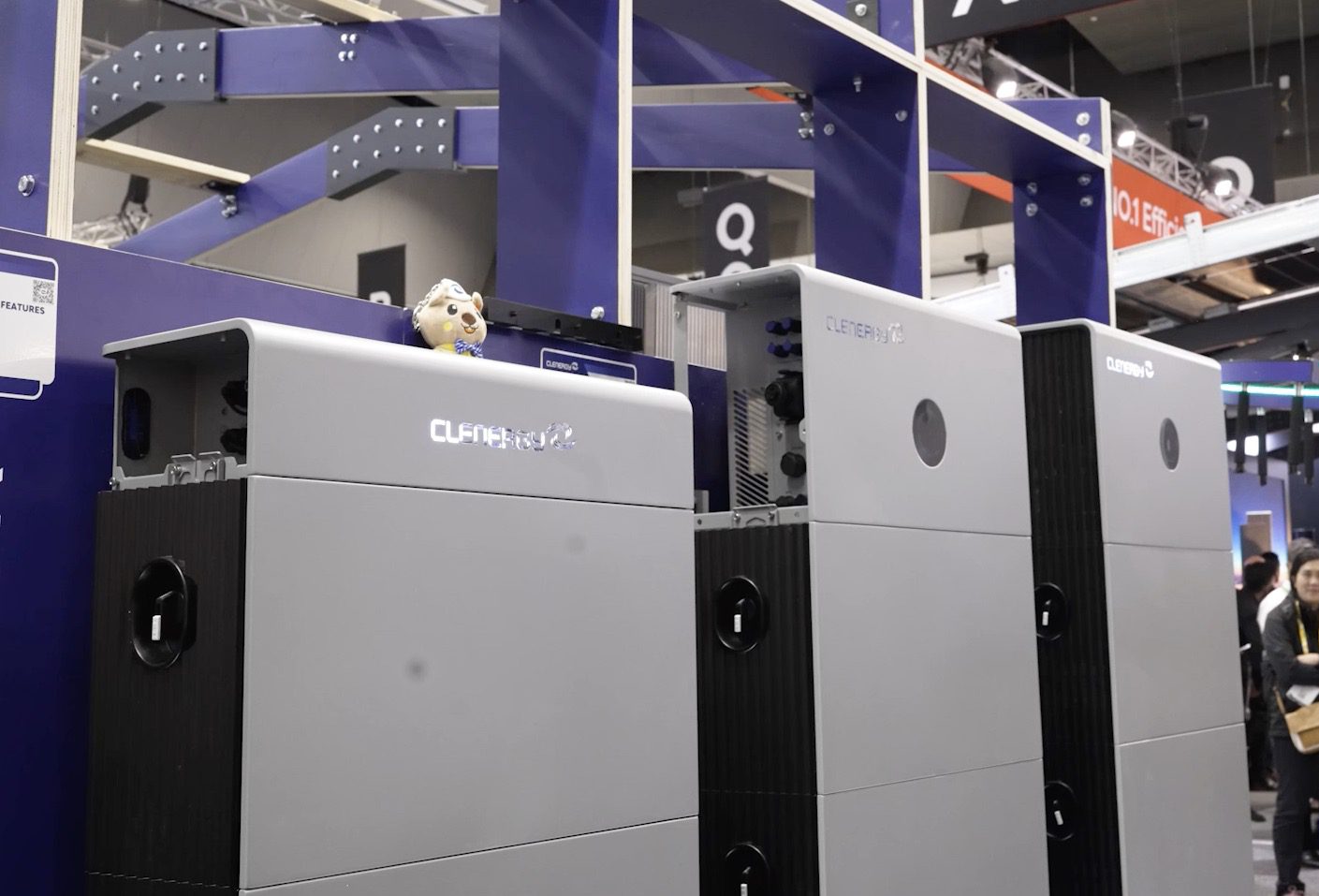
You’ve probably bought something from Clenergy without knowing it. The company started in Melbourne in 2006, set up manufacturing in Xiamen in 2007, launched here in 2008 and released its PV-ezRack mounting system in 2009. If you’ve got solar, there’s a fair chance your panels are bolted to Clenergy rails. Its Australian arm still runs out of Clayton in Melbourne’s south-east.
After almost 2 decades of selling and supporting some of the best racking systems in Australia, they’ve gone and launched the Advance Series, an all-in-one stack that pairs a single-phase 6kW hybrid inverter or 3-phase 12 kW inverter with one to eight 6 kWh, 7 kWh or 8 kWh LFP modules. So up to 64 kWh.
The inverter takes double its kW rating in solar. It switches to backup in ~10 milliseconds, with 150% surge for a minute.
The safety design is more industrial than most home stacks. Clenergy calls it three-tier protection: sensors on every cell, reinforced electrical and mechanical isolation, then aerogel insulation, explosion venting and aerosol fire suppression to stop thermal runaway in its tracks.
Good kit, but what got Clenergy my vote is where the data lives.
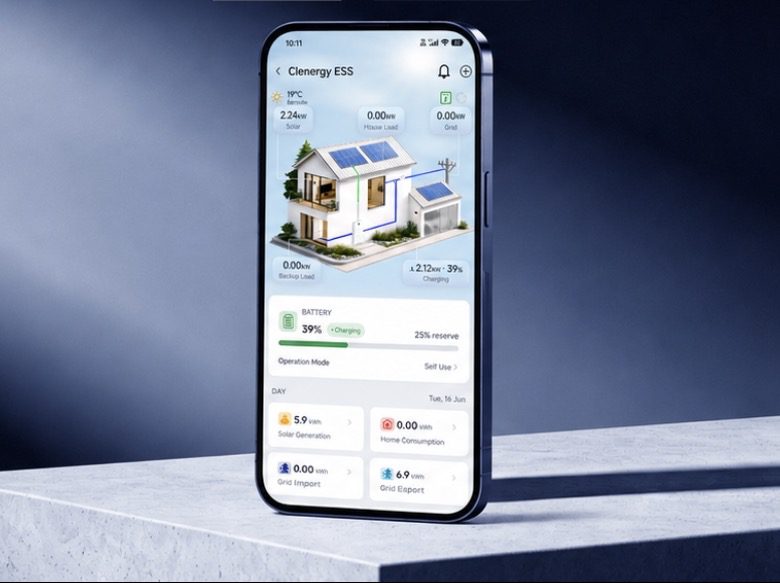
Clenergy promised me they run its platform on Australian servers. That puts your data under Australian law, keeps it accessible if international links or international relations go sideways, and gives you a local company to ring when it breaks down. The hardware is still made in China, like nearly everything on that floor. But the accountability is here, and it’s been here for 18 years.
Looks like a really nice app too.
Best Battery: FoxESS G-MAX Plus
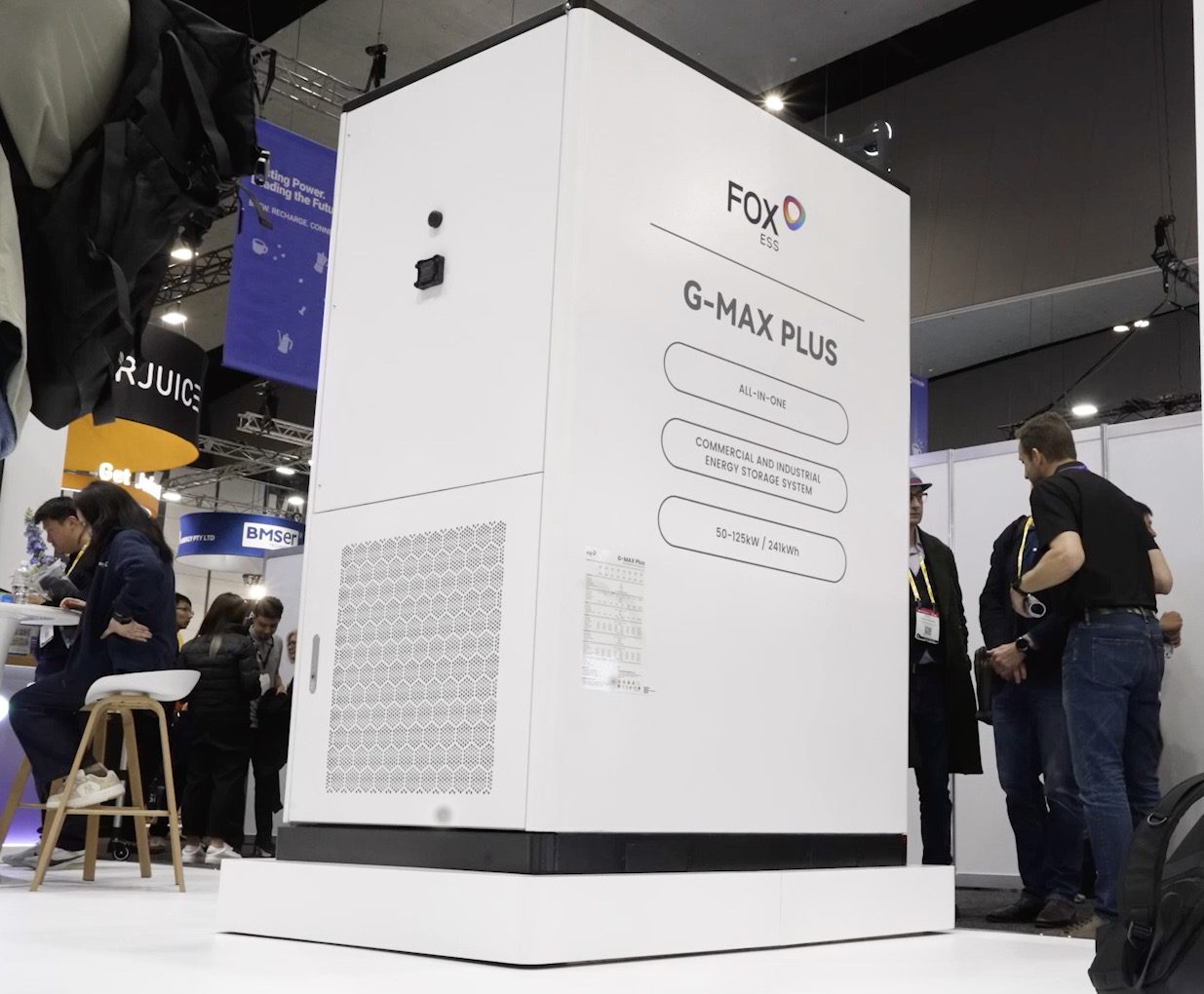
The G-MAX Plus is a 241 kWh industrial cabinet, 2.23 metres tall and 2.6 tonnes.
Four packs of 60.29 kWh each. FoxESS rates them for at least 8,000 cycles before they fade to 70% of original capacity. Cycle it once a day and that’s nearly 22 years.
Then the cooling. The G-MAX Plus is liquid-cooled, with 128 temperature sensors watching the cells. Most home stacks rely on passive cooling or a fan. That matters because the hottest cell in a pack ages fastest and drags its neighbours down with it. Liquid cooling keeps every cell at much the same temperature, from -25°C to 55°C ambient.
The fire safety is properly industrial. Smoke and heat detectors, an alarm sounder, aerosol fire suppression at both cabinet and pack level, and an explosion vent to send pressure somewhere safe if the worst happens. The packs are IP67, the cabinet IP55, and the corrosion rating is C4 as standard with C5 optional. C5 is what you want within sight of the ocean.
The inverter is built in, from 50 kW to 125 kW. The hybrid version takes solar directly, runs off-grid with a switchover under 10 milliseconds, and plays nicely with a diesel generator. FoxESS rates its backup output at double the grid-connected figure, up to 250 kVA on the 125 kW model, which helps when a big motor kicks in. You can parallel up to 25 cabinets on-grid (about 6 MWh) or 10 off-grid. The software handles peak shaving, load shedding and frequency regulation, and reports to the Fox cloud over Ethernet or 4G.
Why A Commercial Battery Wins
I gave the gong to a C&I cabinet because it’s the hard version of the problem. Getting liquid cooling, layered fire suppression and a 125 kW inverter into one cabinet that’s tested in the factory and plugged in on site proves a company can engineer and manufacture.
Best Solar Panel: Jinko Tiger Neo 5.0

I know solar panels mostly all look the same – but this 510 W, 48-cell panel measuring 1,762 × 1,134 mm is stunning in it’s obsidian-like blackness. It’s 25.5% efficiency, weighs 22 kg, and it’s dual-glass and monofacial, which makes sense for a roof where nothing useful is bouncing up from behind.
Then the warranty: 40 years on both product and linear power output. Jinko’s rooftop Tiger Neo carried a 20-year product warranty when it landed here in 2022, and 25 years by 2023. Going to 40 is a big public bet on dual glass and a better moisture seal around the edges.
A Warranty Needs A Local Company Behind It
A 40-year promise is worth whatever the company making it is worth in 2066. This is where Jinko earns the gong. It’s been supplying Aussie roofs for over a decade. It shipped its first Tiger Neo panels here in early 2022 and its one millionth 440 W Tiger panel by August 2023. It has a local subsidiary, distributors across the country, and Australian engineers who feed installer complaints back into the product. That’s the track record I want behind a warranty that will outlast most of us.
Best EV Charger: Sungrow PowerHarbour Pro
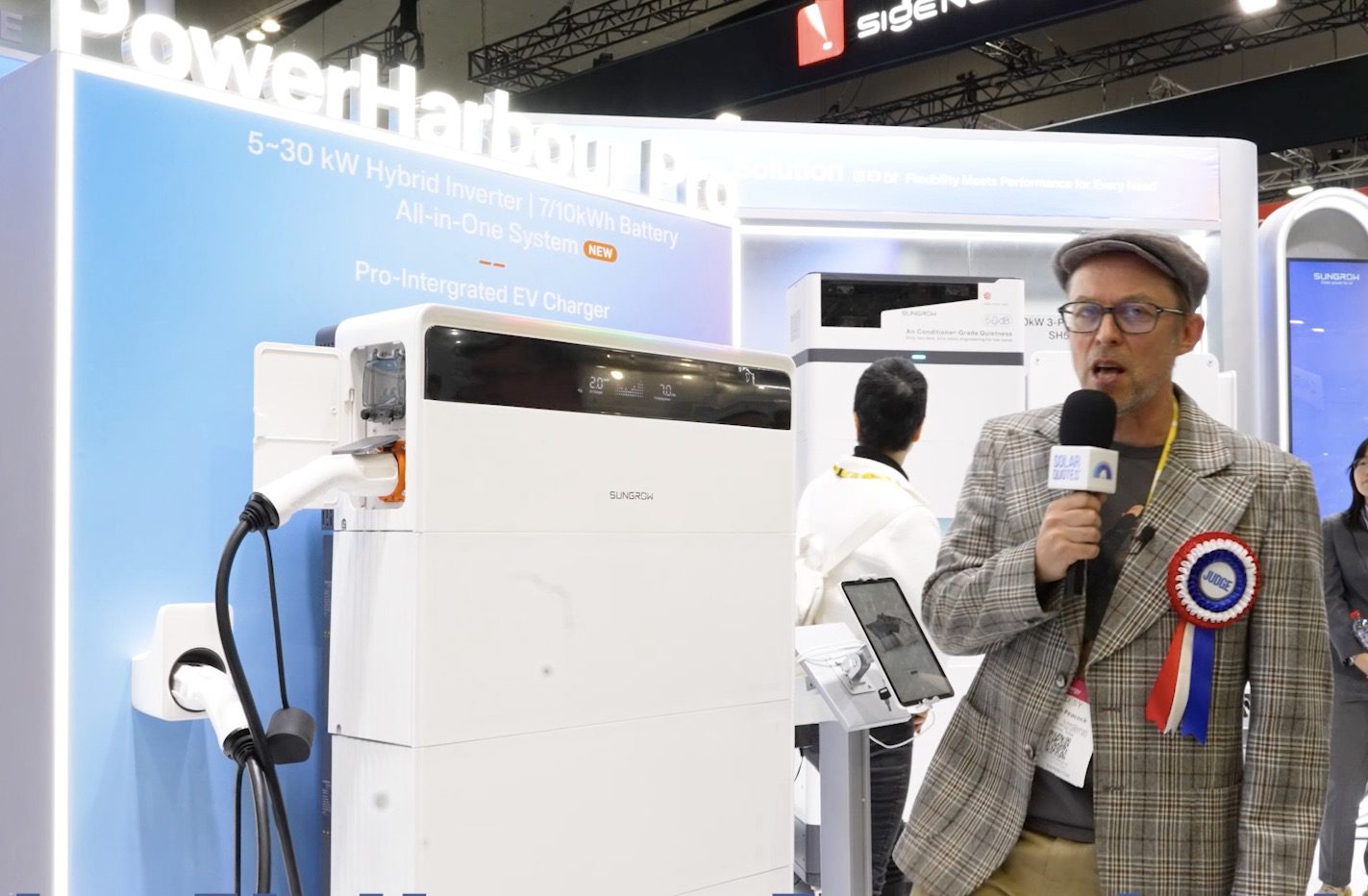
My pick for best EV charger doesn’t hang on the wall – it is built into the PowerHarbour Pro, Sungrow’s new all-in-one stack, launched in Australia at the show.
That’s the right idea. I keep telling people to ask “what do you already own?” before buying a charger or a battery, because three boxes from three brands with three apps is how solar owners end up charging the car from the grid at 6pm. A charger that lives inside the inverter, reading the same solar and battery data, removes a whole category of argument between boxes. It comes without a cable – so you can buy one long enough to reach your car. Sungrow says the Pro is designed with V2X in mind too, though I’ll believe bidirectional charging in Australia when I see it working on a driveway.
Why Sungrow? Track record. It’s been one of the most-installed inverter brands in Australia for years, it has local engineering and support teams, and installers keep choosing it. I own a Sungrow battery myself.
One Catch
I’ve recently discovered that Sungrow’s local Modbus control is unreliable.
That sounds like nerd stuff, but stick with me. Modbus is how a home energy manager, or a tinkerer running Home Assistant, talks to the inverter directly over your home network without a round trip through Sungrow’s cloud. It’s your fallback when the internet drops, when the cloud has a bad day, or when the company changes its policies. Remember the Clenergy argument about where your data lives? Local control is the strongest version of it. Data that never leaves your house can’t be switched off from somewhere else.
If Sungrow wants PowerHarbour to be the brain of the home, running your battery and your car, local control has to be rock solid.
Best Inverter: Enphase IQ9N
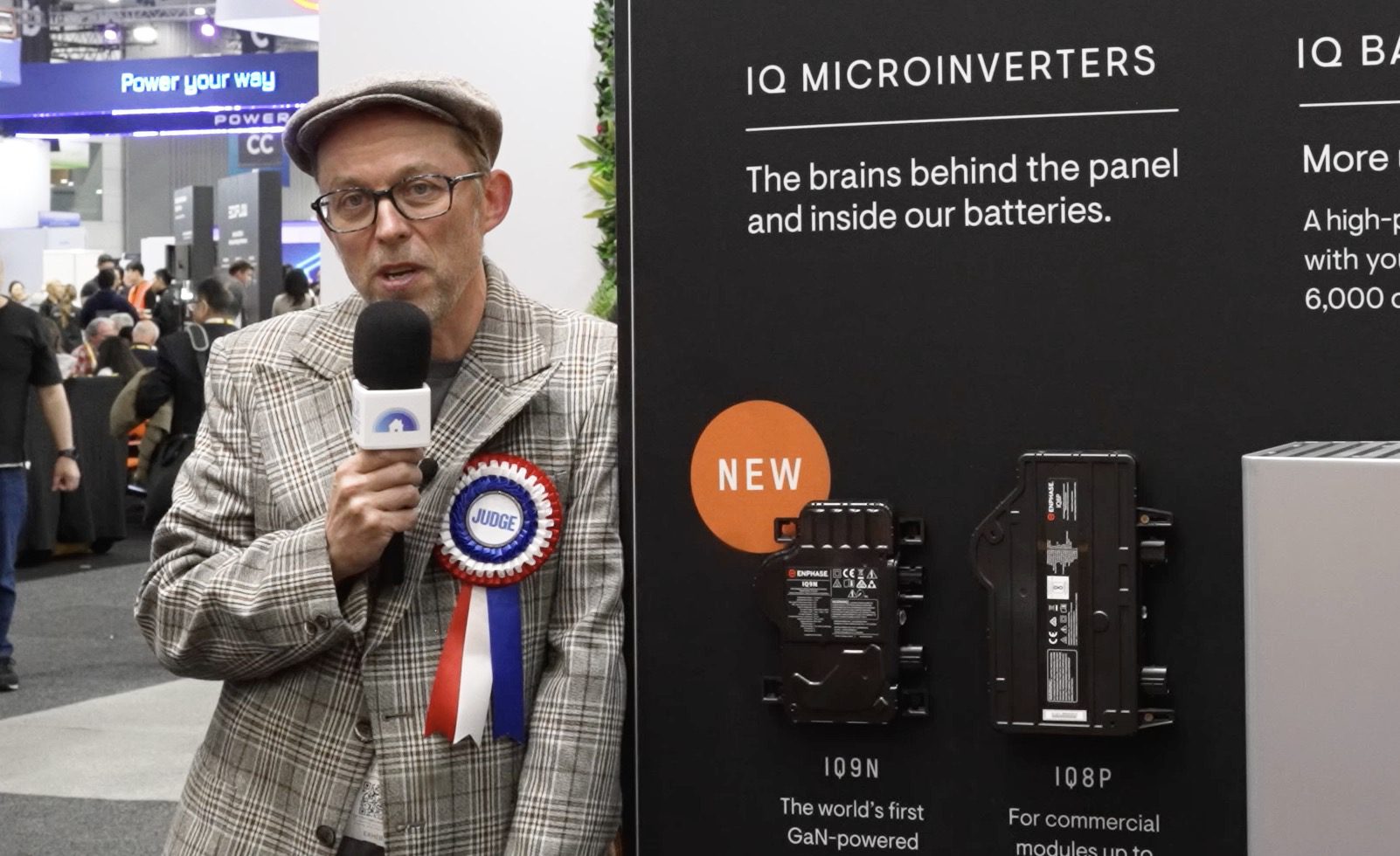
Enphase has spent two decades making the same product a bit better each time. IQ6, IQ7, IQ8, and now IQ9. More power, higher efficiency, grid-forming chips with the IQ8, and no lurch into a new business every 18 months. It’s shipped almost 88 million microinverters along the way. In an industry addicted to the next shiny thing, I respect a company that keeps grinding on one product until it’s excellent.
The IQ9N, launched here in July, is the latest grind. It swaps silicon transistors for gallium nitride (GaN), which switches faster and wastes less energy as heat. Heat is what kills electronics on a roof, so a cooler micro should be a longer-lived one.
Why I Still Rate Micros
The case for micros hasn’t changed in years, and it’s still under-sold.
There’s no high-voltage DC on your roof. A string system can run up to 1000 V DC across the roof and down the wall, while the IQ9N tops out at 60 V per panel. If a micro dies, you lose one panel, not the whole system. Panel-level monitoring tells you exactly which panel is sulking. Odd roof shapes and mixed orientations are no drama, and adding panels later is easy. And you get 25 years of warranty in a market where 10 or so is typical for a string inverter.
The downsides: micros cost more upfront, and replacing one means someone climbing on your roof.
Then there’s AC coupling, which is about as fashionable right now as Anthony Albanese. Everyone wants a hybrid inverter with a DC-coupled battery cuz skipping a conversion step increases efficiency by 2-3%.
But I’m still a fan of AC coupling. The solar and the battery are independent systems, so either can fail, be upgraded or be replaced without touching the other. You can bolt a battery onto almost any solar system years later. On a 25-year asset, that flexibility is worth more to me than a few per cent.
In a hall full of stacks fighting over price per kWh, Enphase still competes on engineering. It costs more, and I think it’s worth it.
Phase Shift is a weekly opinion column by SolarQuotes founder Finn Peacock. Subscribe to SolarQuotes’ free newsletter to get it emailed to your inbox each week along with our other home electrification coverage.
 About Finn Peacock
 RSS - Posts






Speak Your Mind