

Surging EV and home battery uptake has insulated many Australians from global oil and gas price shocks, but more can be done to maximise their benefit to the grid.
So heard attendees of All Energy Australia 2026, with the country’s largest clean energy conference converging on the Melbourne Convention and Exhibition Centre October 28-29 to chew over the big issues facing the power grid.
With war in the Middle East and Ukraine driving oil and gas prices higher, Energy Efficiency Council chief executive Luke Menzel said the work being done to electrify Australia could make this “the last fossil fuel crisis we ever need to experience”.
EV Shelter From Petrol Price Hikes
Electric Vehicle Council CEO Julie Delvecchio told the conference that more than 600,000 EVs are now being driven on Australian roads.
With sales doubling year-on-year, Delvecchio said that many Australians were already realising the savings, but that there needs to be better coordination between car manufacturers, energy retailers and networks to ensure EV uptake was a benefit rather than a burden on the grid.
“We know people are switching to EVs in large numbers, in part because they can save $3,000 a year. Once you add the additional savings that come potentially from V2G (Vehicle-to-Grid), when you add solar, the compounding effect is really significant,” she said.
V2G Uptake Tracking Slowly
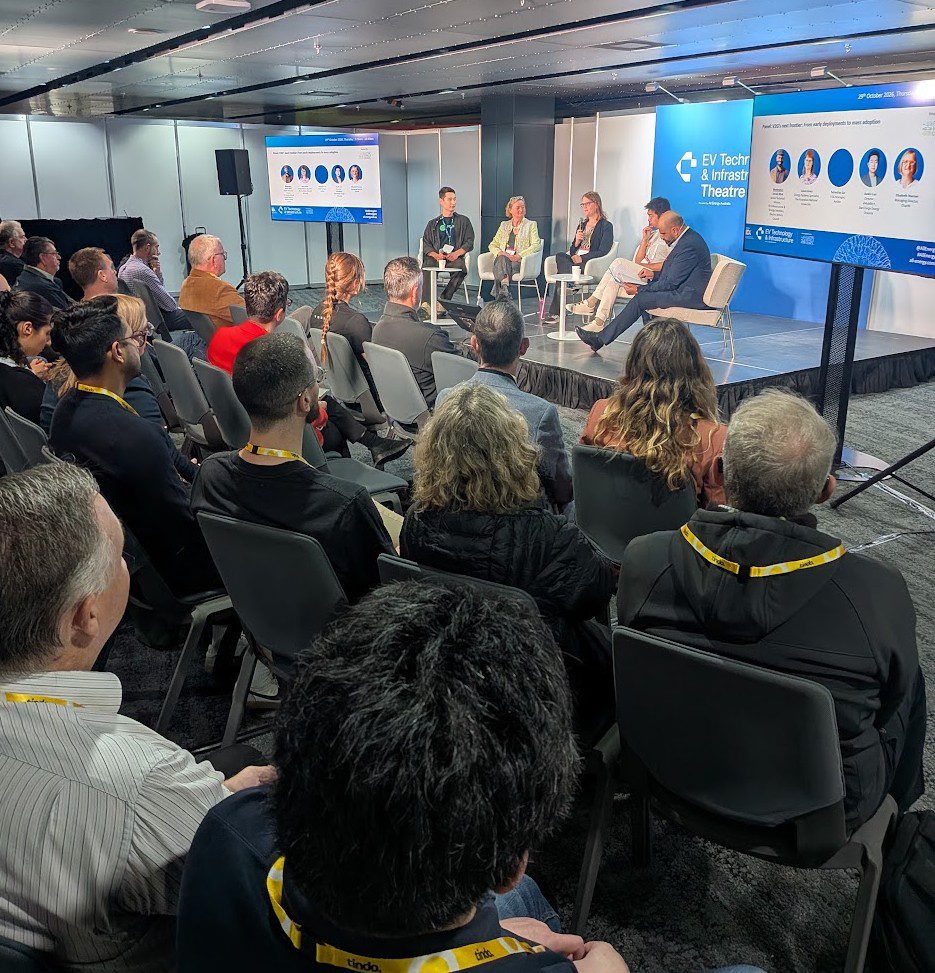
At a forum dedicated to the subject of EV owners to exporting energy stored in their car’s battery to the grid, Amber V2G manager Sebastian Lin said that during a recent NSW electricity price spike, 20 participants in the retailer’s V2G trial collectively earned around $1,300 by exporting energy stored in their car battery.
Lin observed however that of the broader trial so far, half the value observed to date actually came from participants using their EV to power their own home, rather than export to the grid.
StarCharge’s Austin Luo said that greater regulatory consistency was needed, as bidirectional charging equipment certification varied across Australia’s different jurisdictions.
Australian National University energy systems specialist Laura Jones added that V2G takeup was dampened by prospective early-adopters likely already owning a home battery – sales of which have been on a similar trajectory to EVs.
“The value proposition when you already have a home battery for a vehicle-to-grid is a little bit weaker particularly given that bidirectional charges are still relatively expensive,” she said.
Up To 400,000 Home Batteries Every Year
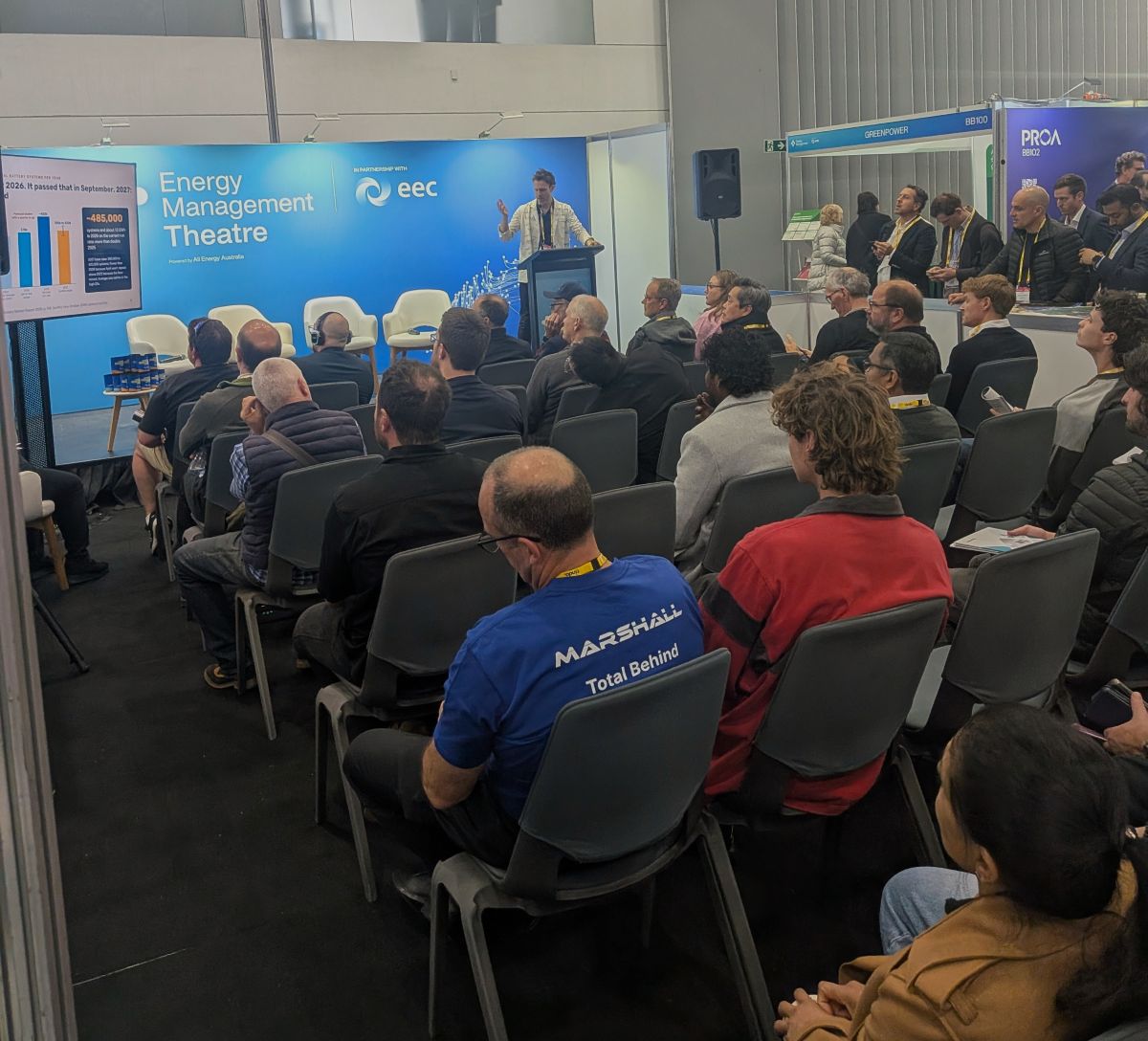
Speaking on a stage wedged in amidst the bustling exhibitor hall, SunWiz founder Warwick Johnston presented data on the “eye-watering” number of battery sales in recent times. Installs peaked at 89,000 in April alone ahead of the scaling back of the federal battery rebate in May, after which it eased off to 35,000 home battery systems a month.
“If you look at this when you annualise it out, we’re expecting there are going to be between 350,000 to 400,000 installations a year of home energy systems coming in,” Johnston said.
With four-and-a-half million rooftop solar systems across Australia and growing, Johnston said that “we have ten years of this current run rate before we run out of solar roofs”.
Before the rebate, about three-quarters of installations were solar-only, but that share has now fallen to around 10% as solar-plus-battery and battery retrofit installs take over.
After an uptick in May, battery prices have dropped to levels comparable to “the cheapest they’ve ever been”, Johnston said.
“What we’re seeing from the manufacturers out there on the trade show floor – how busy is it – it’s great. All of them have had products that have been waiting to be approved by the CEC that are finally coming through now… so there’s a lot more competition, and so that’s driving prices down,” Johnston added.
SA Power Networks industry development lead Liam Mallamo told the conference that homes with batteries are putting much less strain on the grid.
His network analysed around 1,600 customers who had added batteries to existing solar systems, comparing days with similar weather before and after installation.
“Adding a battery will reduce a customer’s peak demand on a hot summer’s day by about 40% on average,” Mallamo said.
Why Aren’t More Battery Owners Joining VPPs?
The battery boom’s benefits to the grid will be much more pronounced if owners participate in a virtual power plant (VPP), which coordinates batteries to support the electricity system, but few are opting to do so.
Energy Consumers Australia’s Dr Elham Hajhashemi said her research indicated that households were buying batteries to lower bills, become more self-sufficient and secure backup power. Handing control to a VPP operator can appear to conflict with the latter two goals.
Some battery owners didn’t understand VPP offers, others didn’t trust providers, and some hadn’t been offered a suitable product at all. Most Australians wanted simplicity in their electricity bill, so retailers and regulators should try to avoid complexity, she said.
Hajhashemi called for a consumer duty requiring providers to act in customers’ best interests, better pricing arrangements and scrutiny of whether households receive a fair share of the value their batteries create.
Apartment Residents Need A Way In
Another area of growth focused on at the conference was the exclusion of apartment dwellers from home electrification benefits so far.
Solar Victoria’s Solar for Apartments program manager Toni Shiels told attendees that more than 150 buildings had completed installations under the scheme. Nearly half of participating apartments were rentals, giving some residents access to solar savings they would otherwise struggle to obtain.
The program offers rebates of up to $2,800 per apartment, capped at $140,000 per building. Recent changes eased property value caps, allowed up to 20% of generation to go to common areas of buildings, and widened the exemption pathway for larger developments.
Shiels said a successful solar project often gave an apartment community confidence to consider batteries, EV charging and electric hot water next, but that residents needed to plan ahead as “existing switchboards, metering arrangements, and electrical capacity often become the next challenge”.
ACT Government executive branch manager Ros Malouf agreed, describing the territory’s own comparable solar program as the “gateway drug to electrification” for apartment dwellers.
Despite Australia embarking on a pathway to legalisation of plug-in solar and batteries that promises to hugely open up benefits to apartments, the technology was not mentioned by either in their presentation.
When SolarQuotes asked how balcony solar was being factored in, Malouf said she saw it as a federally led effort, and that “we’ll embrace and modify our program as we go through, so that we can add this on when it becomes available.”
Simplification Of Rules, Or More Red Tape?
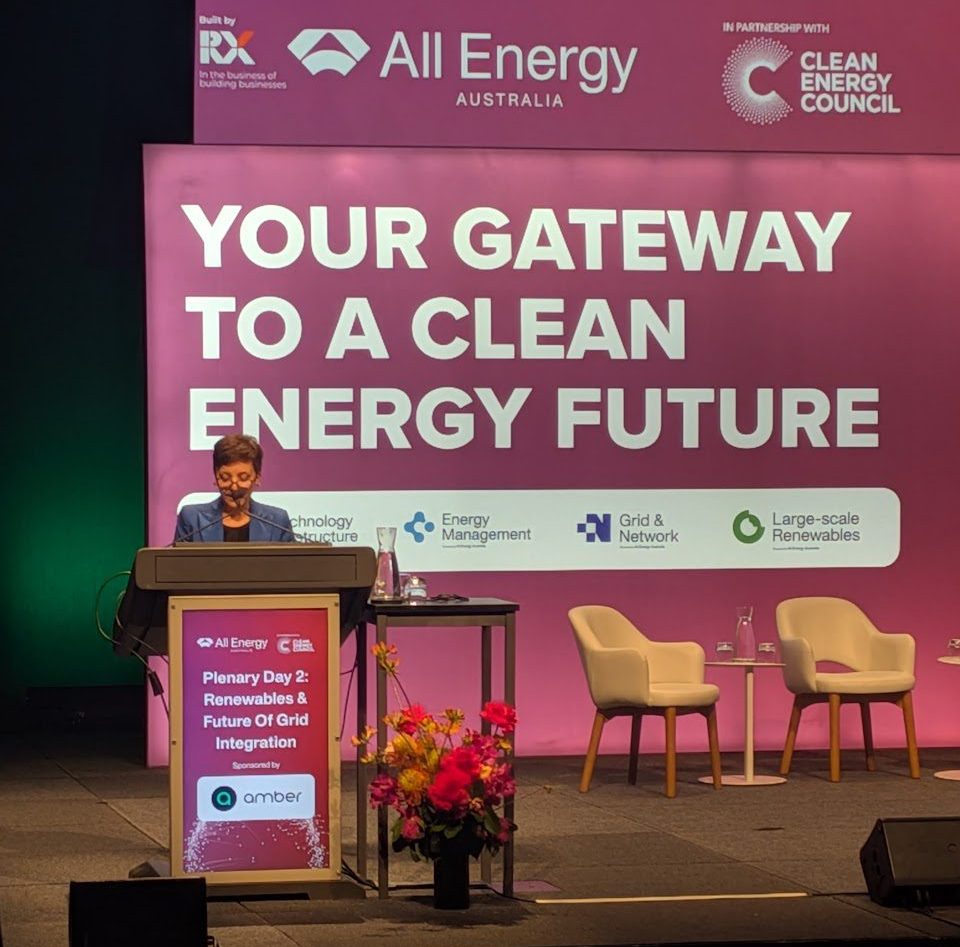
Fiona Schutt, COO of the Clean Energy Council, told conference attendees that energy ministers had agreed to deliver one national rulebook to replace the current patchwork of regulations preventing the benefits of electrification from being fully realised.
“There will be a single national code setting out what solar inverters, batteries, EV chargers and other devices need to actually be able to do. A new technical requirements office will write and maintain that code, and a new consumer energy national regulator sitting inside the Clean Energy Regulator will certify products, accredit installers and enforce compliance,” she said.
Clean Energy Regulator Executive General Manager Carl Binning said the legislation to achieve this is currently being drafted.
“Moving beyond a paradigm where we think about households as just consuming, but actually being a fundamental part of the engine – it’s really what this is all about,” he said.
For more of our coverage of All Energy Australia, including the new product lines shown off at the event, subscribe to our free weekly newsletter for a full rundown.
 About Max Opray
 RSS - Posts






Speak Your Mind