
Victoria’s Midday Power Saver offers three hours of free electricity from 1 October. The federal Solar Sharer initiative, already operating nationwide, has reportedly attracted only around 10,000 customers.
With Victoria’s tariffs now finalised, there’s an opportunity to see what the state is offering and whether its approach might prove more attractive to households.
What Exactly Is Victoria Offering?
Victoria’s Midday Power Saver is a regulated, opt-in electricity offer for eligible households with a smart meter. It provides up to 24 kWh of free electricity daily between 11 am and 2 pm. Retailers with at least 1,000 customers must offer the plan.
It’s a separate Victorian initiative along similar lines to the federal Solar Sharer scheme, which began on 1 July in NSW, South Australia and south-east Queensland. Both aim to encourage electricity use when solar generation is abundant.
SolarQuotes covered Victoria’s original announcement in March. Since then, the state’s tariffs have been finalised. Early figures from Solar Sharer suggest free electricity hasn’t been quite the customer magnet some might have expected.
So what’s holding people back, and has Victoria done anything differently?
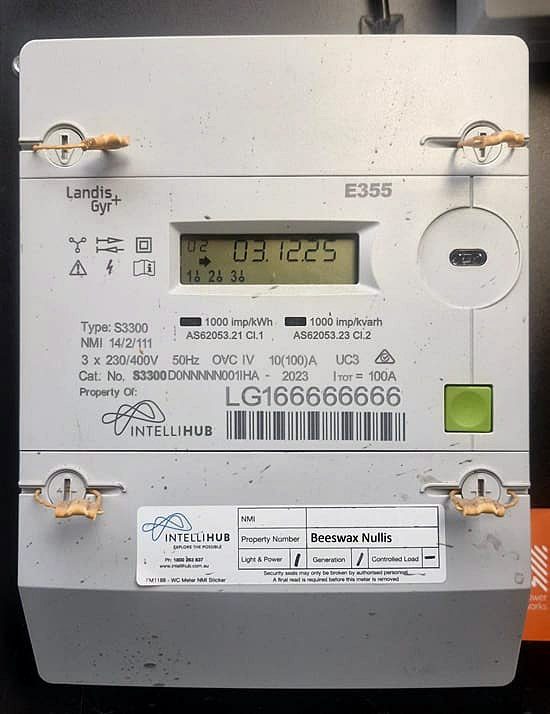
Households need a smart meter to access Victoria’s Midday Power Saver.
Solar Sharer’s Slow Start
The Early Numbers
The Australian Energy Council (AEC), which represents electricity retailers, published an analysis on 17 September estimating that around 10,000 customers had signed up to Solar Sharer across the three participating regions.
Most joined during July, with sign-ups slowing through August and early September. The figures come from the AEC’s informal analysis rather than an official national count.
The AEC also reports that only about half of the customers tracked by some retailers are better off with Solar Sharer than they would have been with those retailers’ best alternative offers.
That finding isn’t necessarily representative of all Solar Sharer customers, but it highlights an important issue: a regulated offer with free electricity isn’t automatically cheaper than other plans on the market.
The familiar trade-off is that higher charges outside the free window can offset the benefit, depending on a household’s consumption patterns.
Yet the financial returns may not be the whole explanation for the slow uptake.
Is Awareness Part Of The Problem?
A May survey of 1,210 Australians by Energy Consumers Australia found fewer than three in ten were aware of Solar Sharer, although 48% expressed some interest in joining.
While the survey predates the scheme’s launch, it suggests awareness may have been an early hurdle. The AEC also reports that retailers are finding complicated bill comparisons difficult to explain, with some customers losing interest during the process.
What’s Different About Victoria’s Scheme?
With some Solar Sharer customers reportedly no better off than they would be on alternative plans, Victoria’s pricing deserves a closer look.
The Victorian Government says its charges outside the free window will be 12% to 19% lower, on average, than equivalent regulated interstate offers. But that doesn’t establish whether Midday Power Saver will beat the competitive market plans Victorians are already using.
Here are the published maximum rates for households in Melbourne’s CitiPower distribution area, without controlled load.
| 9 pm – 11 am Off-peak |
23.22 c/kWh |
| 11 am – 2 pm Free period |
FREE* |
| 2 pm – 4 pm Solar soak |
18.64 c/kWh |
| 4 pm – 9 pm Peak |
40.36 c/kWh |
| Daily supply charge | $1.2114/day |
*First 24 kWh each day in the free period. Charges above that may be billed at the solar soak rate. Retailers can charge less, and rates vary by distribution area. Source: Essential Services Commission.
Before signing up customers, retailers must explain that:
- The plan may not suit everyone.
- They must provide information about the likely impact on the bill where possible.
- Identify other plans they reasonably believe are more suitable.
- Customers can leave the scheme without paying an exit fee.
These requirements could help address some of the difficulties retailers have reported with Solar Sharer. But consumer protections are only part of the equation.
3 + 21 = 24
Three free hours might grab attention, but the other 21 hours will have a big say in whether households actually sign up. At least Victorians now have the prices to judge the offer for themselves.
For households considering the offer, the SolarQuotes Electricity Plan Comparison Tool provides a starting point for comparing electricity plans, including those with free-power periods. Check the retailer’s final offer details before switching.
 About Kim Wainwright
 RSS - Posts




Ok. There’s one part of the bottom line 40.36c per kWh.
The other part is their feed in tariffs. They do still offer feed in tariffs don’t they?
More personally, AGL currently pays me about $15 per month. I wonder what it would be after the free electricity kicks in.
I’d bet my bottom dollar that the power companies have done their sums. And that the power company haven’t just calculated themselves out of any profits. Not only that but that 40.36 can be ratcheted up at a moment’s notice.
I’m on an EV plan, and with a 40kWh battery and solar panels we can survive on a combination of overnight charging (5c/kWh) and solar.
Given we have to charge our car as well (overnight) all of the “3 free hours” would cost us a lot more.
Maybe the explanation for slow uptake is that we the people are exhausted from years of battling through lies and half-truths from companies and governments and don’t wish to participate in a losing battle any more. We are tired. The whole deal of putting responsibility back on OUR shoulders sucks.
I’ve been on globird’s zerohero plan since late last year, which means I’ve had 3 hours free per day for 9 months. It’s an all electric house in Melbourne with solar, battery and EV. Of my grid usage, >90% has been in the free period. This goes to EV charging (the car is at home most days), hot water heating, and some battery charging when cloudy.
The 3 hours of free solar works well for us, but it wouldn’t if we didn’t have a battery. The other advantage of the plan is that avoiding use in the 6-8 pm window effectively reduces our daily supply charge to under 40 cents. But any grid use in the evening, especially in that time window, is expensive (43c/kWh, and effectively more if use is during 6-8 pm).
Sharing cheap solar during the day inevitably means that retailers will share the cost of more expensive electricity at other times. It is hard to see how that will make it cheaper for most people unless they have a battery.
I did consider moving to a solar saver plan when it became available in SE Qld – just so I had the option of charging my battery for free in the middle of the day if we had extended wet weather.
I haven’t used more than 10kWh of power in a month for the last 12 months, so the charges outside the free power window didn’t really concern me – what mattered was the additional 50c a day network fee they charge for their solar saver plan. And that was the same for all of the available suppliers.
So i have stayed on my fixed rate plan for now.