
Heat pump hot water systems continue to grow in popularity as more Australians look for ways to get off gas.
To find out which heat pump installers trust most in 2026, we asked Australian installers a simple question:
“Which heat pump hot water system would you choose for your own home?”
The result wasn’t even close.
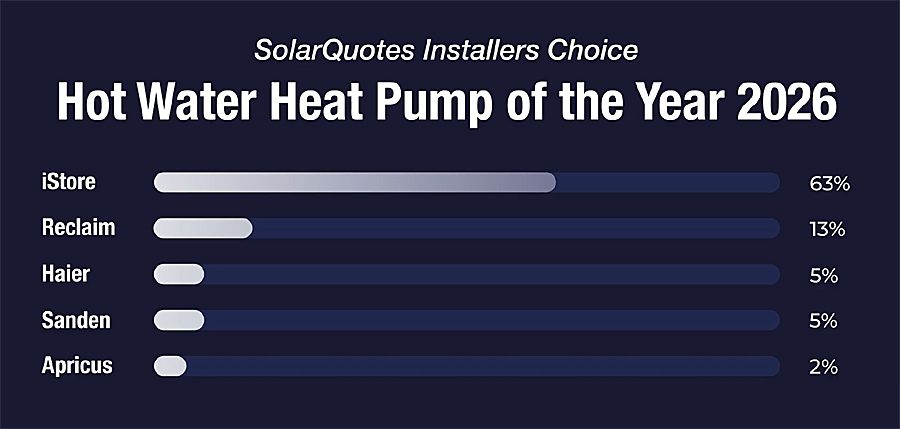
iStore received a whopping 63% of installer votes, finishing well clear of Reclaim on 13%. Haier and Sanden tied for third place with 5% each.
iStore Wins By A Landslide
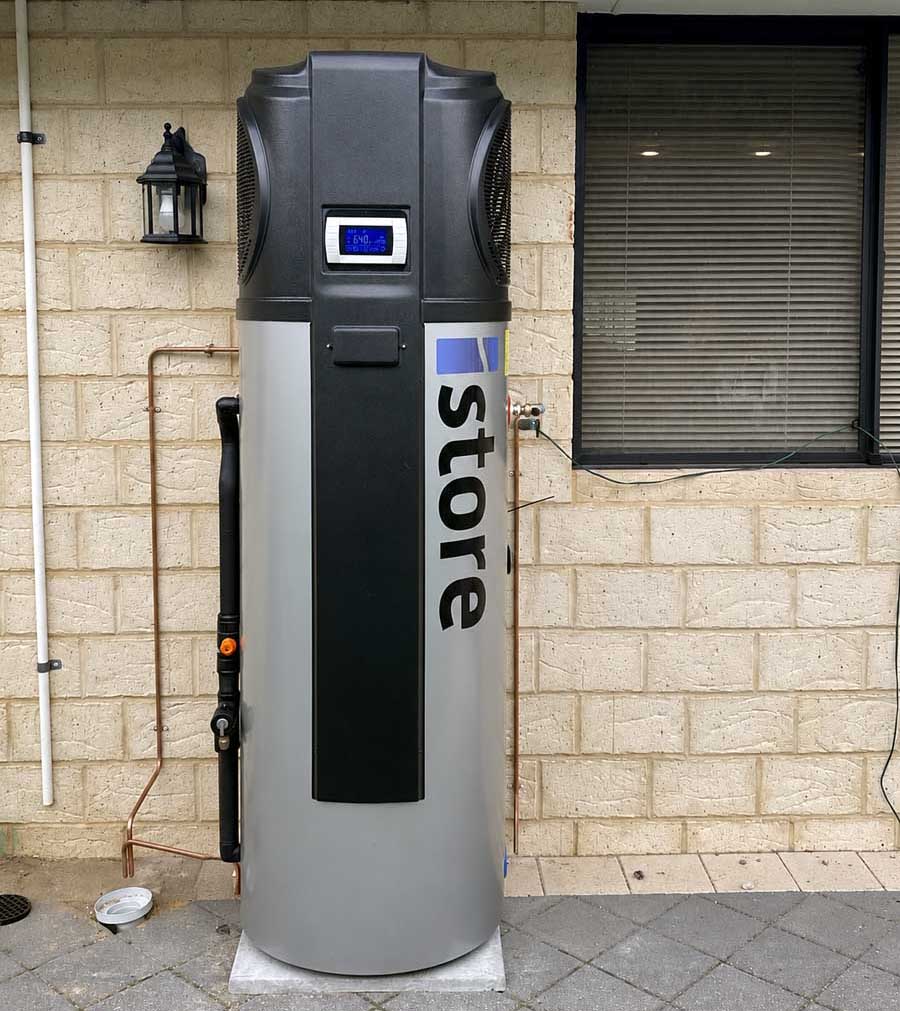
iStore heat pump installed by Positive Energy Solutions.
Winning an Installer’s Choice Award is one thing. Winning with nearly two-thirds of the vote is another.
I think iStore’s popularity is primarily due to value: after rebates, expect to pay $3,000 to $4,000 installed.
But value is nothing without performance and reliability. With 4kW of heating power, it is one of the fastest heating units on the market. And the units have proved reliable over the years in Australian conditions.
It helps that iStore is Australian-owned, by the people behind Solargain – one of the longest-standing solar installers in Australia. Systems are designed locally and manufactured in China.
Reclaim Takes Second Place
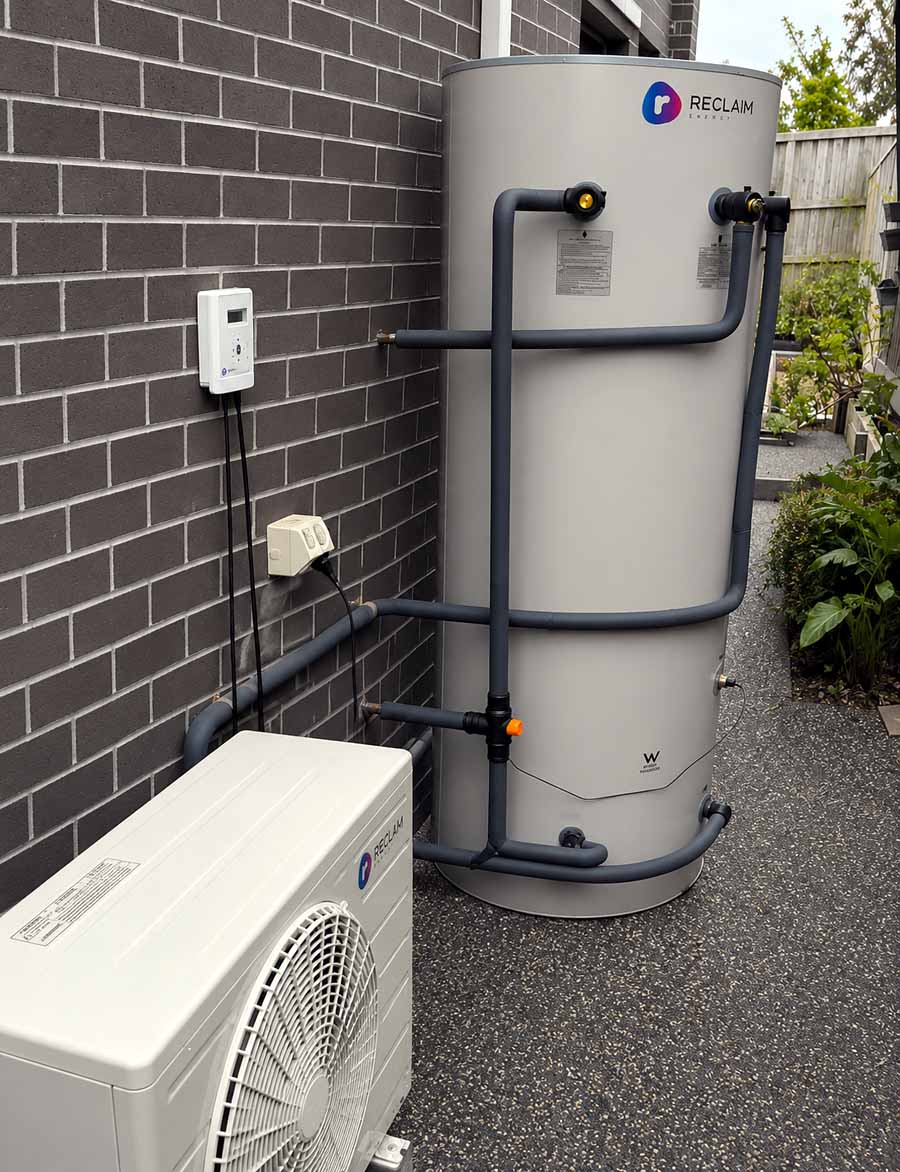
Reclaim heat pump installed by Brightworks Solar.
While iStore dominated the survey, Reclaim comfortably secured second place with 13% of installer votes.
Unlike iStore’s integrated design, Reclaim uses a more expensive split-system configuration with a separate compressor and storage tank. It also uses natural CO₂ refrigerant compared to iStore’s propane, and carries a 10-year warranty.
I’ve had a Reclaim on my house for about 4 years – and it hasn’t missed a beat.
Haier And Sanden Share Third Place
Haier and Sanden each received 5% of installer votes, tying for third place.
Haier
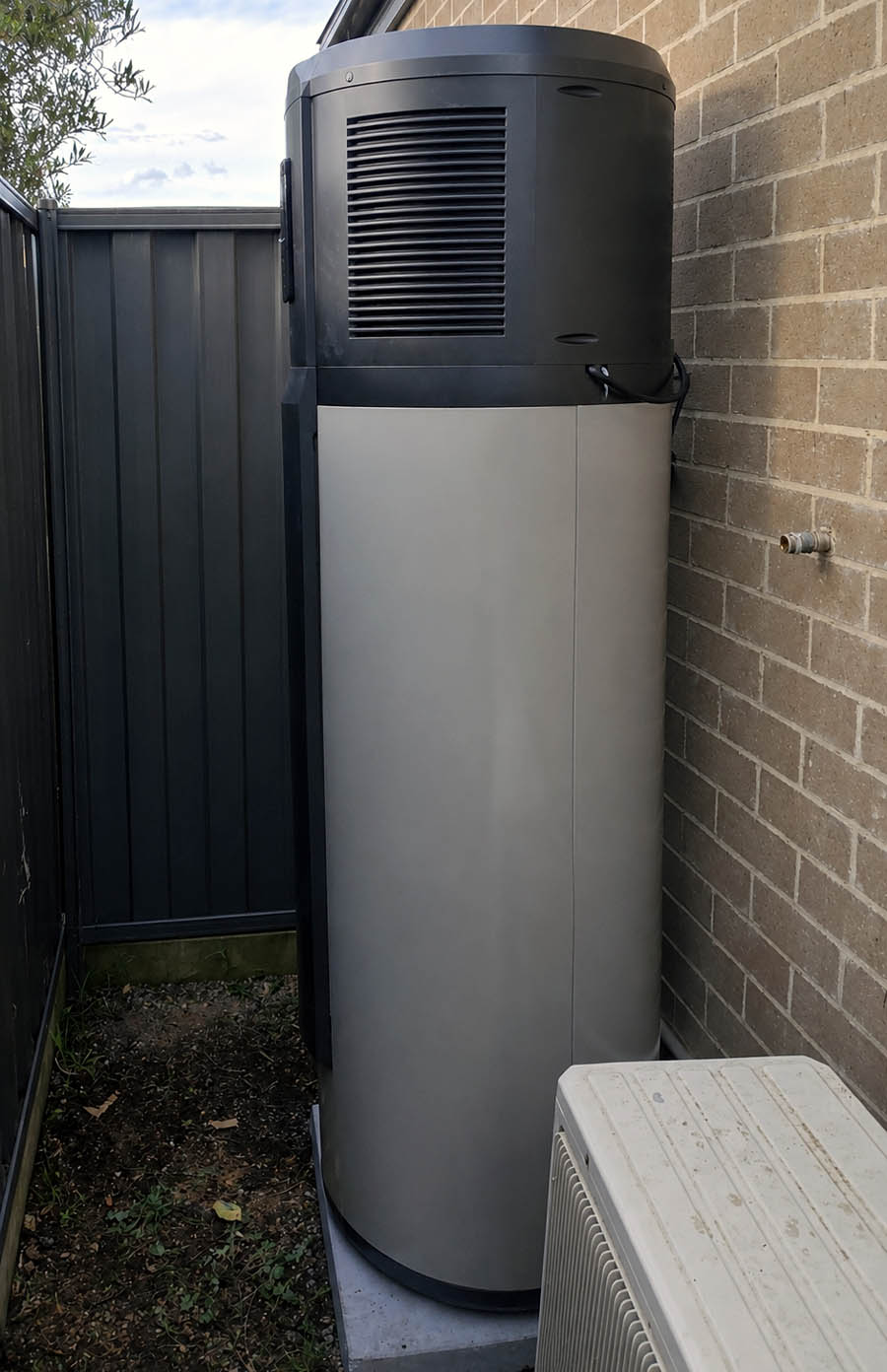
Haier heat pump installed by Powrhouse.
Better known for its household appliances, Haier also has a well-established heat pump range. The company is a large global manufacturer with an established Australian presence. It offers both split-system and all-in-one models, including a dedicated solar PV mode.
Sanden
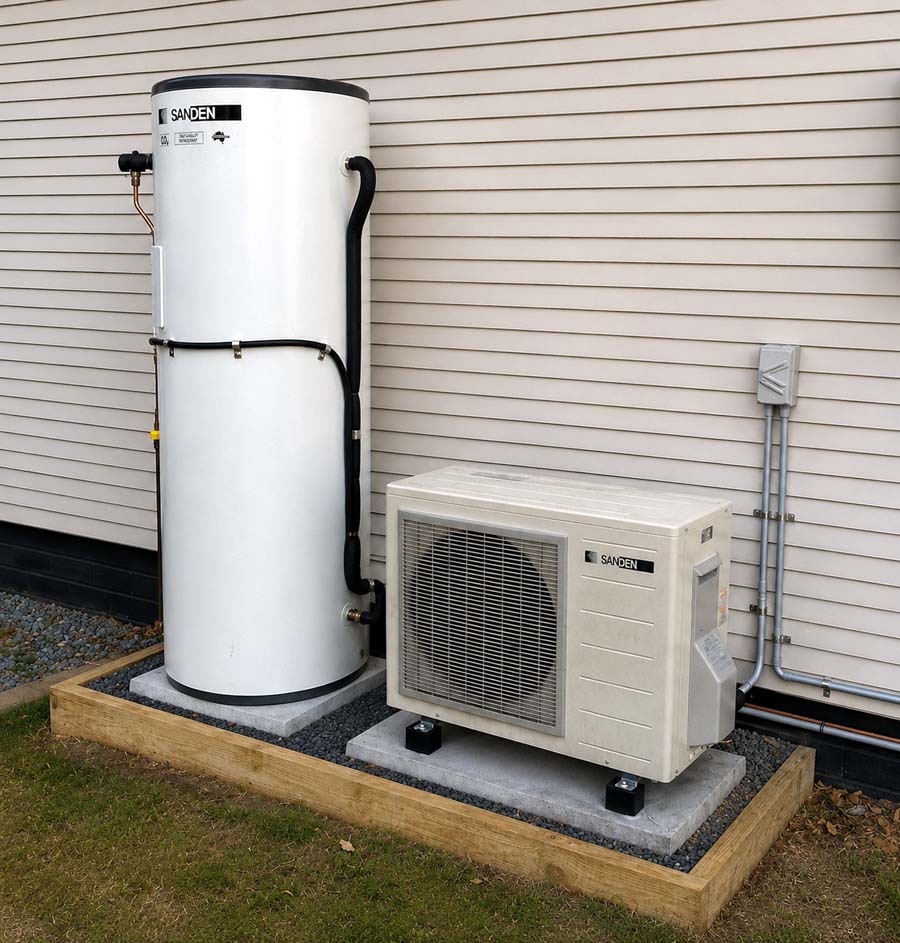
A Sanden split-system heat pump with its outdoor compressor and separate stainless steel storage tank.
Sanden is the OG hot water heat pump brand. They’ve been producing them since 2005. Its Japanese-made heat pump is paired with an Australian-made stainless steel tank. Top quality, and they cost even more than a Reclaim.
Which Heat Pump Is Right For You?
Installer opinion is a useful starting point because these are the people who fit, service and repair these systems year after year. They get to see which models are reliable, which are easy to install and which cause headaches. And believe me, lots of heat pump brands not on this list have been horribly unreliable in the past. That’s why many plumbers won’t touch any heatpump with a barge pole. They’ve been burned by crappy units back in the day.
But savvy installers know the brands on this list can be trusted to deliver hot water for years at a fraction of the energy cost of conventional electric units or gas.
If you’re considering making the switch, our Heat Pump Hot Water Guide explains how heat pumps work, typical costs, rebates and what to look for before buying. Once you’ve narrowed down your options, you can also browse our heat pump reviews to compare brands and see how they’re rated by Australian owners and installers.
And if you’re ready to replace your hot water system, you can also compare up to three quotes from trusted local installers through SolarQuotes. It’s a simple way to compare prices, brands and advice before making a decision.
 About Finn Peacock
 RSS - Posts






Thanks for an interesting review. a few months after our SigEnergy battery install, our gas HWS failed. Plumber recommended iStore and result is brilliant. Gas consumption now only in a gas cook top and a rarely-used central heating unit, almost all heating being spilt system aircon units. Coupled with GloBird gas & elec plans our investment in the subsidised solar cells, batteries and heat pump HWS we’re saving around $1900 a year for two of us in the home.
I just did a bit of research and comparison:
– standard electrical heater 250 L for 3 people, costs only $1100 from Bunnings + maybe $300 to install.
versus a 270 L ISTORE heat pump. here in Toowoomba, I received 2 quotes at $5000 for the ISTORE! I was attracted by the price of $3000 from the video , but then they add $2000 for installation! does not make sense to me. The STC rebate is maybe a few hundreds dollars but that it not shown on the quote they gave me and it seems to be these company take the STC rebate as an additional profit instead of decrease the cost for residential customer, it’s a rip off to me.
with a 9.6 KW solar system on my roof, the pay back period for the ISTORE goes to 13 to 22 years, does not make sense to me since a heat pump does not last so long. They can probably last 8-10 years because of the addded complexity of all the moving parts(fan, compressor, etc) compared to 10-15 years for a standard electrical heater. With a solar PV, the payback is too long
Antoine, wow! In Melbourne I paid $2700 total for a 270 litre iStore with the plumber taking the government handouts and whatever else. (I didn’t care). Only extra was a new circuit for the 15 amp GPO feeding it. at $340. Could have tapped into the laundry circuit for cheaper but I’m obsessive.
Interesting. I paid $3500 for a solarhart atmos heat pump (325L) 6 years ago (installation included), I am happy with it for now, . but when it dies I will probably buy a standard electric water heater because $5000 for a new heat pump is just too much for me. Since 2018, I was expecting the price of heatpumps to go down as the technology becomes more mature, but with heat pump it is the opposite. probably due to rising manufacturing costs everywhere.
Antoine: – “They can probably last 8-10 years because of the addded complexity of all the moving parts(fan, compressor, etc) compared to 10-15 years for a standard electrical heater.”
Do you have first-hand experience with any heat pump hot water systems, or are you just making baseless assertions?
My Sanden heat pump hot water system, with 250 litre stainless steel tank, was installed 11 years ago. It has already paid for itself, delivering ample hot water daily, even during the depths of freezing winters. The superior energy efficiency of the Sanden system, relative to immersion electric element hot water systems, is an ongoing bonus for me.
https://www.solarquotes.com.au/blog/heat-pumps-win-the-hot-water-efficiency-war/#comment-1727052
The refrigeration system of a Sanden heat pump hot water system is no more complex than a split system refrigeration type air conditioner. When was the last time you needed to fix your air con?
How much was the purchase price and did you include interest in your calculations?
Clearly an $1100 resistive HWS plus simple and easy location install that runs on free 3 hour electricity has a very low capital and nil running costs.
Can you compete on total cost with this? Can you itemise the numbers for us please?
I got a Hydrotherm Dynamic X8 installed for $699 in 2022. Couldn’t fathom paying almost $3k for an iStore or over $5k for a Sanden. Zero issues after 4 years, running on solar/free hour so zero cost, also happily integrated into Home Assistant now.
Chau; The current price for the Hydrotherm Dynamic X8 is $3000 plus install, so your cheap price was subsidied from the greater communities taxes.
While good for you these subsidies distort good economics, and if we want to be practical about efficiencies and costs we need to consider the real costs not subsidised fairy floss
Tim Chirgwin: – “How much was the purchase price…”
I paid AU$4,504 for:
* Removal/disposal of existing flued gas tank hot water system
* Cap gas supply pipe
* Supply/Install 2x 20 A C/Bs in meter box
* S/I 15 A GPO in meter box
* S/I 3-core cable/conduit/fixings, meter box to h/p unit (~30 m)
* S/I 15 A GPO near h/p outdoor unit
* S/I 250 L stainless tank (in sunroom corner)
* S/I concrete plinth for h/p outdoor unit
* S/I Sanden h/p outdoor unit
* S/I water pressure reducing/shut-off valve;
* S/I water tempering valve
* S/I water PTR valve
* S/I tank port fittings, copper piping, pipe joiners, port/pipe insulation, valve cosies, etc.
* System assembly, fill & commissioning
* Client instruction
* Labour: 1x plumber/gas fitter, 1x electrician + apprentice
$1100 resistive HWS would be unit supply only, like-for-like, no new valves/piping/insulation/wiring. Install extra.
“free 3 hour electricity” wasn’t available before 1 Jul 2026. Will it last? Nothing’s free!
So in todays money at 3% inflation your HP job could be over $6000.00 (plus subsidies) vs the $1100 resistive plus install (without subsidy).
Free electricity when surplus renewable energy is available, and the cheap install still beats your system on economics,..and environmental grounds.
it is well known that they are more complex and they have less warranty attached to it . from the manual I read, some components have less than 5 years warranty. This was also explained by the installer when I got mine installed 6 years ago. It is still working fine but I had the following issues:
– computer box faulty, complete replacement by solarhart
– tank temperature sensor faulty, replaced by soalhart.
-compressor temperature sensor faulty, replaced by solarhart.
– there are 3 tiny temperture sensor for the tank, compressor and evaporator. These were damaged/chewed by mice/rats and i had to fix that myself. Without these sensors, you get a red light on the front cover indicating a fault but you may not notice for a few months as you still get hot water as it uses the booster mode as a back up… so not baseless assertions but facts gathered from personal communications with vendor, solarhart manual, payback calculations , personal and practical experience by fixing it myself.
I agree 100% and my resistive is paired to a green catch diverter which sends power to the hot water instead of back to the grid hence nearly free hot water and I’ve got 10kw solar inverter 13+ kw panels !!
We had an istore installed. Unfortunately they were lazy with routing the piping and it blocks access to the anode. Straight forward fix, but easier if it had been done correctly.
Check your water quality, you may have to pull the annode out yearly
Heat pumps ARE more electricity efficient, but are they the best long term financial decision when you can heat during “3 hours free” or large solar on your roof?
I noticed that the favourite in your installers stable has some weaknesses in the long run and a little misleading in their blurb of their power use comparisons.
The Istore website boasts 4x less energy, or the big glossy picture boasts $42/year running costs for their HP and $1344 for resistive? WHAT!!!
Is it true that the resistive HWS costs 32 times as much to run as their heat pump, if comparing the same input costs and temperatures, or have they used very low FIT to cost their heat pump usage and used high price mains for the resistive HWS usage?
What are the real costs?
Instructions also say to check the sacrificial anode every year and to replace it every 2 years to maintain a warranty when using water over 600ppm, This likely adds $200 running costs per year, is this a little annual bonus for installers?
Followed you for a while Finn, but no decision re panels , battery and with a gas hws of 13 years old continue to be hesitant. Help to decide please as cost is the weighing factor.
Ronald C.
Hi Ronald. This might help you out with some of those decisions.
Hi, do you have any recommendations for an instantaneous electric water heater? I have no spare room outside our house for a heat pump. I have an instantaneous gas water heater I would like to replace soon and the electric one could possibly fit in the same recess. I currently have a 5.5kw solar system that I am going to replace in 2028 when the 46c rebate stops. I am planning to get 15kw panels and a 30kwh battery.
Hi Gary,
Instantaneous units are available, but I would recommend you have 3 phase power to run it because the load is VERY high. It’s not unusual for a single phase instant unit to draw 40A in my experience, so that’s 60% of your average grid connection used.
Hey Anthony.
Even 3-Phase instantaneous systems are insanely power hungry. Mine is rated at 13.5kw which at 415V is still 32A! Before the power meter was changed I was watching the old ‘record player’ meter go from barely moving to going flat out 45rpm when the hot water heater kicked in LOL!
Looking forward to the Istore heat pump being installed along with a full solar/battery and EV charger for connectivity compatibility!
July 2000, I have a Dux Aeroheat 260Litre heatpump hotwater installed, still going strong. Installed cost was $4675.00, that was a complex installation. The solar panels have done all the water heating since installation, I couldn’t be happier.🤗
Hope I’m not jinxing myself here, but I have a still-going-strong, Stiebel Eltron unit that I installed ~15 years ago. Amazingly, I purchased it second hand for $50, from a building materials reuse/recycling yard! It’s size, weight and top heavy nature made it a bit of a bugger to install, but it only required plugging in to a standard GPO, unlike the hard-wired, resistance heating unit it replaced.
With water heating being our household’s major source of energy consumption and the heat pump using perhaps only 1/3 of the energy of resistance heating, that $50 has probably been the best investment I ever made.
Thanks!