
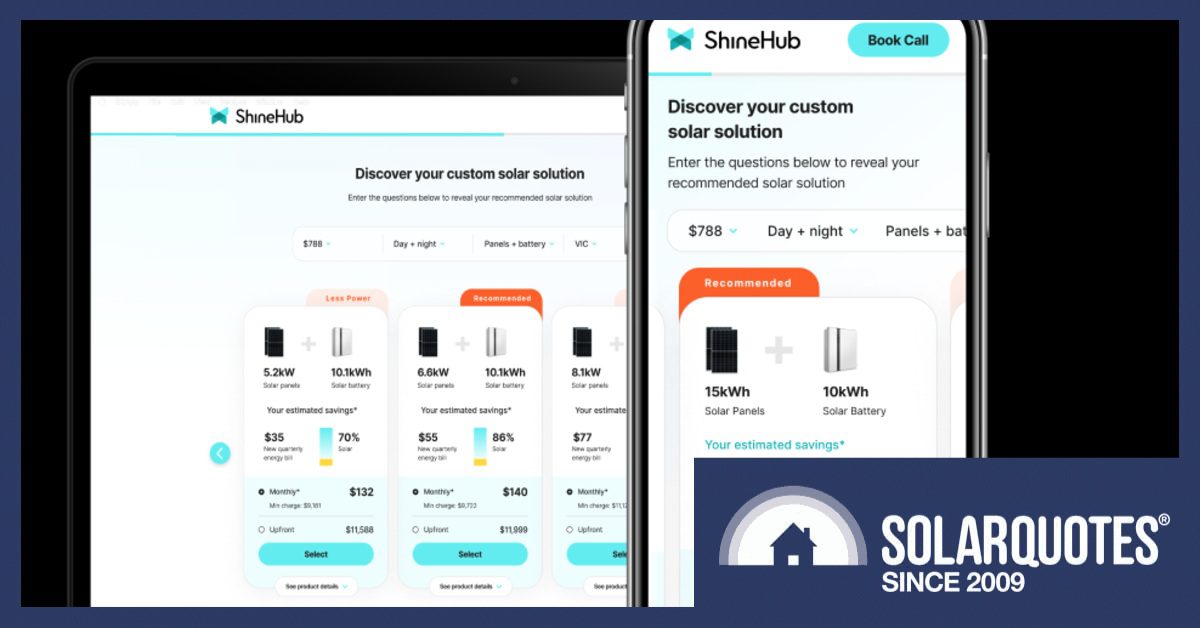
 A Queensland homeowner got a solar-battery system under a Power Purchase Agreement (PPA) through ShineHub, expecting it could be expanded later. Just a couple of years into a 10 year contract, the homeowner says he was told to throw away his battery and inverter and start again if he wanted more capacity — even though the system still worked.
This highlights a growing problem in home battery uptake: marketing, product discontinuation, and contract structures can collide in ways that frustrate consumers — and create unnecessary stress and expense.
A Modular Battery That Can’t Be Upgraded
The homeowner, who we will call Glen (not his real name), entered a 10-year Power Purchase Agreement in February 2023 for a solar and battery system supplied via ShineHub, using an AlphaESS battery system. Glen said the system was pitched as modular and upgradeable — a key factor in his decision to sign the contract — but two years in he was told there was no longer stock available for an upgrade and that adding capacity would require replacing both the battery and inverter.
For Glen, the appeal of an expandable system was central to his decision, and he felt the system was meant to be future-proofed, letting him start with what he needed and have the freedom to add more storage later. But with additional battery modules no longer available, that plan was no longer possible.
ShineHub Deploys The Lawyers
Glen says he first reached out about an upgrade in 2024, before raising a Notice of Dispute in September 2025. He exchanged messages with ShineHub for several months but got nowhere, so pursued a case with Queensland’s Civil and Administrative Tribunal (QCAT) – the state body that handles consumer and contract disputes.
Glen also approached SolarQuotes about this issue and provided an interview and documentation backing up his claims. When SolarQuotes reached out to ShineHub ahead of publication to get their side of the story, we were instead issued a legal threat not to publish.
Shortly after we sent our questions through, ShineHub reached out to Glen and the matter was settled on confidential terms, with the QCAT case withdrawn.
When we approached ShineHub a second time to provide them another opportunity to state their case, lawyers representing the company issued a denial of “each and every allegation and statement” made by Glen:
“As you are aware, the parties have resolved their dispute privately on a without admission basis. For the avoidance of doubt, Shine Hub and Powow Energy do not admit any of the allegations or statements made against them,” the letter read.
The letter continued that SolarQuotes may be exposed to “serious legal consequences” from publishing this story.
After this agreement was reached, Glen requested that his comments made to us be retracted. As we could not secure assurances from ShineHub that the issues raised in this article have been resolved in a systemic way for other customers, SolarQuotes has opted to go ahead with publication, although we have removed direct quotes from Glen along with his real name.
SolarQuotes is not claiming that ShineHub or Powow Energy did anything illegal – we are simply raising awareness that consumers should bear in mind the potential challenges of upgrading a modular battery on lease if the model is out of stock or discontinued.
The Upgrade Gap
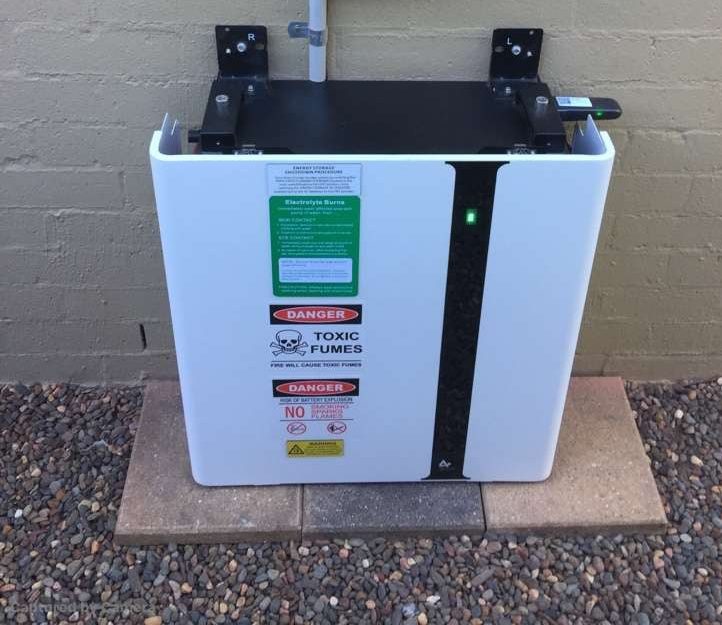
An example of an Alpha-ESS battery offered by ShineHub.
Batteries are often marketed as modular, upgradeable, or future-proof. For households, those claims shape decisions: why pay for a bigger system upfront if you can expand later?
The reality, however, is that “upgradeable” usually depends on a short set of conditions:
- The battery model must still be manufactured;
- The inverter must support expansion;
- The manufacturer must continue the product line.
When any of these break — as often happens in fast-moving technology — the upgrade path can disappear, even if the battery and inverter themselves remain fully functional.
Why PPAs Can Be More Restrictive
Even homeowners who own their batteries outright can hit limits when trying to expand. For those in leases or PPAs, the problem is more restrictive: you often can’t simply swap in a different inverter or battery brand, and you may continue paying for a system that can’t grow as expected.
The structure of a PPA ties the customer to the provider’s hardware and contract terms, which can make navigating upgrades, repairs, or compatibility issues more complex than with an owned system.
Consumer Protection Questions
In Australia, leased batteries are still covered by basic consumer guarantees: they must be of acceptable quality and fit for their stated purpose. Manufacturers and suppliers are also required to make spare parts and repairs available for a reasonable time, but there is no fixed minimum period, and companies can lawfully limit availability if they disclose this upfront.
In practice, this means there is no guarantee that systems marketed as “upgradeable” will remain so indefinitely.
Under Australian consumer law, claims made by a salesperson or in marketing material can create implied representations. If a company says a battery is “upgradeable,” that statement may form part of the sale even if it isn’t in the contract — giving homeowners some potential standing if the product cannot be expanded as suggested, but there is ambiguity around this.
Relying solely on this is a long and uncertain path, reinforcing the importance of checking guarantees in writing and understanding product limitations upfront.
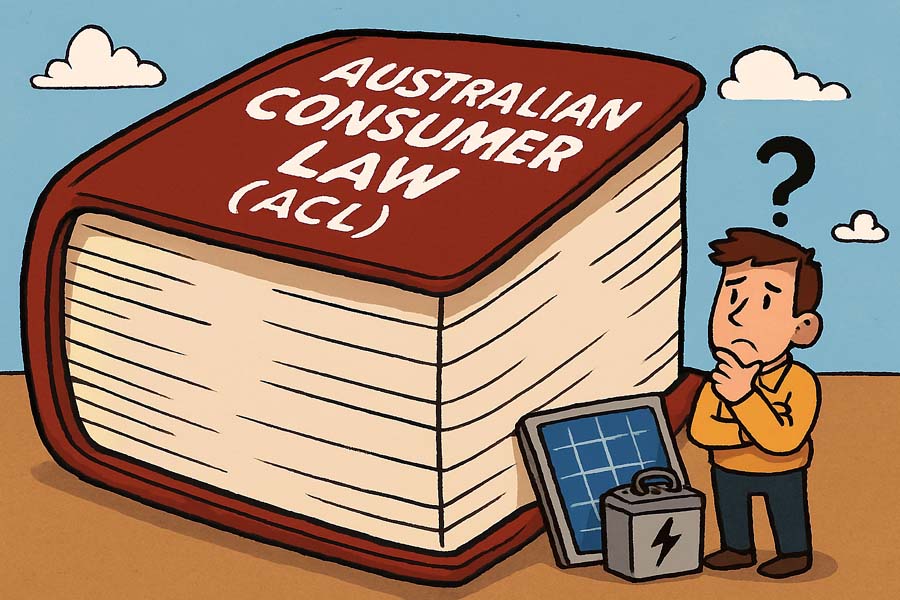
Choose wisely – you don’t want to spend half your life sifting through legal documents.
Rip And Replace Mentality
In Glen’s situation, he initially faced the prospect that adding capacity would have required replacing both battery and inverter, with only the solar panels remaining in place, highlighting the significant e-waste issues around perfectly functional systems being thrown out because they can no longer be upgraded.
Takeaway For Buyers
For anyone considering a battery system today, the key lesson is to be informed and cautious. Understand what “expandable” really means and check what is guaranteed in writing. Being informed can help households avoid frustration, unexpected costs, and the headache of a system that can’t grow as planned.
The safest bet is to invest from the beginning in the capacity of solar and battery system that factors in your future energy needs: if you’re planning to have kids, get an EV, or electrify your heating or hot water, you might be better served by going for a larger system than meets your current energy consumption. That’s the case whether you buy your own battery or join a PPA.
An additional consideration is the federal battery rebate – it can only be claimed once, so if instead of incremental upgrades you get the right-sized battery from the start you’ll get more of the cost covered by the Cheaper Home Batteries Program.
For more on how to size your battery appropriately, read our deep dive explainer.
 About Max Opray
 RSS - Posts






Max, there are 2 other issues, I feel.
Inverter Size: One needs an inverter large enough to cover most of the Max demand, which can be drawn from the grid. Now we are in the era of EVs & Air Conditioners, it is fairly easy to get above the max draw per phase. A larger inverter assists with this maximum demand reduction at times such as the Induction cooktop starting. Many small systems only have 5Kw inverters.
Space restraints: When a system upgrade is planned, sometimes there is not enough physical area to contain a battery upgrade. Newer systems can be more energy dense.
On Marketplace, I am seeing many s/h battery systems & a few inverters where owners have replaced complete systems. The issue with s/h systems is warranty transfer, & economically getting them installed. Installers want to sell a new system, not install used. There are also standards compliance issues too.
Were the PPAs sold off to a third party or encumbered as security for any commercial arrangement?