
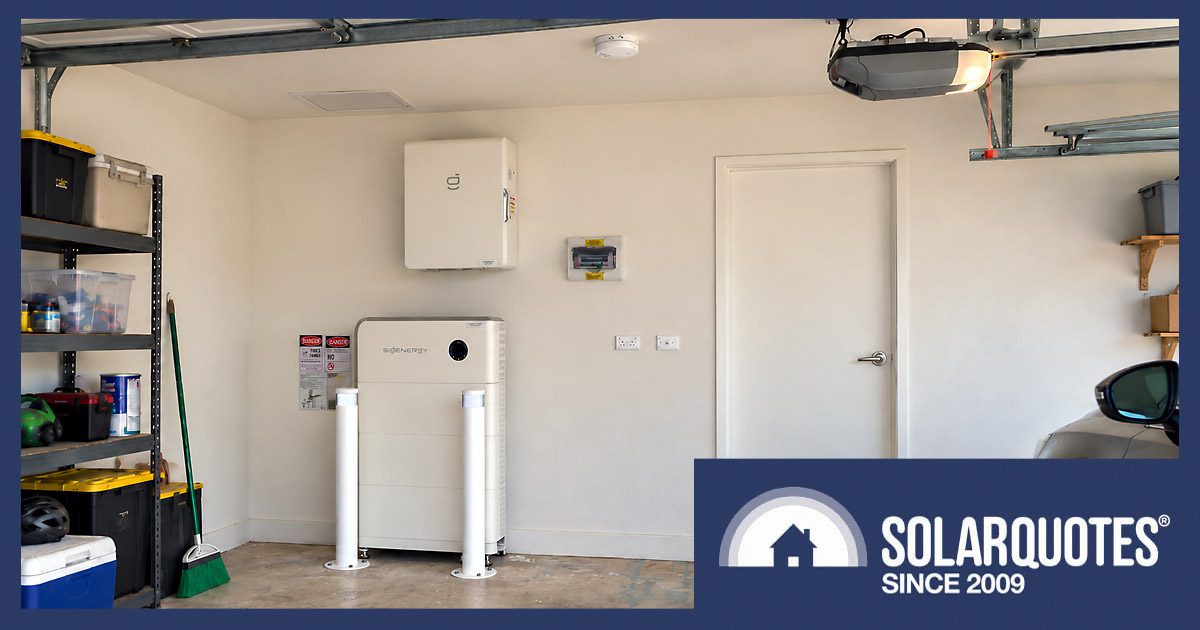
A smoke alarm near your home battery might seem like a sensible precaution, but is it actually compulsory? The answer depends on where you live, where your battery is installed and, in some cases, whether you’ve claimed a government incentive. We look at the different rules and recommendations across Australia.
Why Have A Smoke Alarm Near Your Battery?
In September, SolarQuotes’ general manager, Trevor Glen experienced a fire near his home battery and inverter. The battery wasn’t identified as the cause. Instead, the fire appeared to originate around nearby electrical protection equipment, although the precise cause wasn’t established.
Fortunately, his wife was home when the fire started. She realised something was wrong when the power went out and acted quickly. Afterwards, Trevor wondered whether an interconnected smoke alarm in the garage might have provided an earlier warning.
And batteries aren’t the only electrical equipment worth keeping an eye on. SolarQuotes’ electrician Anthony Bennett has also written about overheating mains connections and the potential fire hazards posed by ageing or loose connections under sustained loads.
An alarm beside a battery won’t necessarily detect a problem elsewhere in the electrical installation, but it can provide warning of smoke from nearby equipment, even when the battery itself isn’t involved.
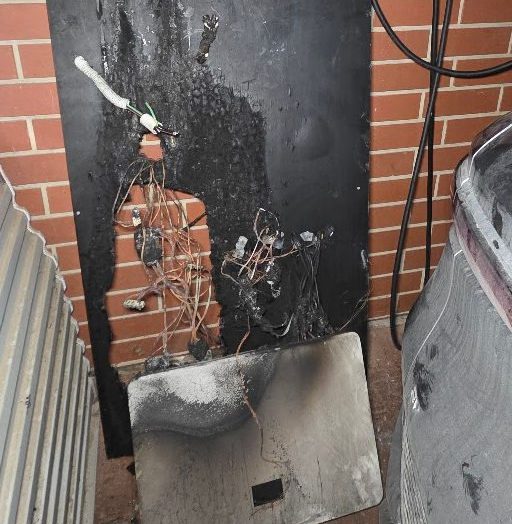
Fire damage alongside Trevor’s solar and battery equipment. The fire didn’t reach the batteries.
What Do The Battery Installation Rules Say?
Australian Standard AS/NZS 5139, Electrical installations — Safety of battery systems for use with power conversion equipment, recommends installing smoke alarms in rooms containing indoor battery systems.
The standard uses the word “should” rather than “shall”. In Australian Standards, “shall” indicates a requirement that must be followed, while “should” indicates a recommendation. So, under this particular provision, installing a smoke alarm is recommended rather than compulsory.
However, the rules vary across Australia. State and territory regulations, building requirements and government incentive conditions can impose additional obligations, while fire authorities provide their own safety advice.
Smoke Alarm Rules Around Australia
Northern Territory
Since 1 July 2026, smoke alarms have been mandatory for newly installed energy storage systems located inside a residence and under the same roof as a habitable room, including attached garages that meet those conditions.
The alarm must be above or close to the battery and integrated with the building’s other smoke alarms.
The requirement applies to installations from that date, rather than automatically requiring existing batteries to be fitted with alarms.
Australian Capital Territory
The ACT has had smoke detection requirements for indoor batteries in its electrical inspection guidance for several years.
Access Canberra’s guidance specifies a mains-powered smoke detector for batteries installed in attached garages or storage areas under the same roof as the home.
However, it says a detector can be omitted where the battery is on an external wall, in a detached shed or garage, or in an open carport.
If the home’s existing mains-powered smoke alarms are interconnected, the battery-area detector must join them. Otherwise, interconnection is recommended.
New South Wales
NSW has a smoke-alarm requirement for indoor batteries installed under its Peak Demand Reduction Scheme. These installations must have a working smoke alarm meeting AS 3786 in the immediate vicinity of the battery.
The requirement is a condition of the state’s BESS1 incentive, which is now restricted to government-owned and managed sites and installations through approved programs. It doesn’t apply automatically to every home battery installation in NSW.
For other homeowners, the NSW Government recommends installing smoke detection near the battery.
Victoria
Victoria doesn’t have a blanket compulsory smoke-alarm requirement specifically for installing a home battery.
However, the Country Fire Authority (CFA) recommends installing an interconnected smoke alarm in garages attached to homes, whether or not they contain batteries.
Victoria’s former Solar Victoria battery-loan program also required smoke detection in rooms containing batteries. That program ended in 2025, so the condition no longer applies to new battery installations.
South Australia
South Australia doesn’t require smoke alarms specifically for home battery installations, but its fire service recommends additional protection.
The SA Metropolitan Fire Service suggests considering a heat detector on the ceiling where a battery is installed in a garage or carport, interconnected with the home’s smoke alarms.
Western Australia
WA’s Department of Fire and Emergency Services (DFES) recommends installing a smoke or heat alarm in garages and utility rooms containing home battery systems, with interconnection wherever possible.
DFES also recommends heat alarms in garages where dust or fumes could cause unwanted smoke alarms. These are fire-service recommendations rather than a separate compulsory requirement triggered by installing a home battery.
Queensland
Queensland’s fire-service advice on lithium-ion batteries deals with portable rechargeable devices rather than smoke detection for installed home battery systems.
The state does, however, have separate smoke-alarm requirements for homes. By 1 January 2027, all existing private homes in Queensland must have interconnected photoelectric smoke alarms, including in bedrooms and the hallways connecting them. This applies regardless of whether the home has a battery.
Tasmania
The Tasmania Fire Service recommends smoke alarms in garages and interconnecting alarms throughout the home.
Its lithium-ion battery safety advice also recommends working smoke alarms wherever batteries are charged or stored. However, this advice concerns rechargeable devices and light electric vehicles rather than specifically addressing installed home battery systems.
Smoke Alarm Or Heat Detector?
There’s also the question of whether a smoke alarm or heat detector is better suited to the location.
Unlike smoke alarms, heat detectors respond to rising temperatures rather than smoke. They take longer to detect fires, but they’re less prone to false alarms caused by dust or fumes. That’s why some fire authorities recommend them for garages, including those containing home batteries.
However, a heat detector isn’t necessarily an acceptable substitute where the rules specifically require a smoke alarm.
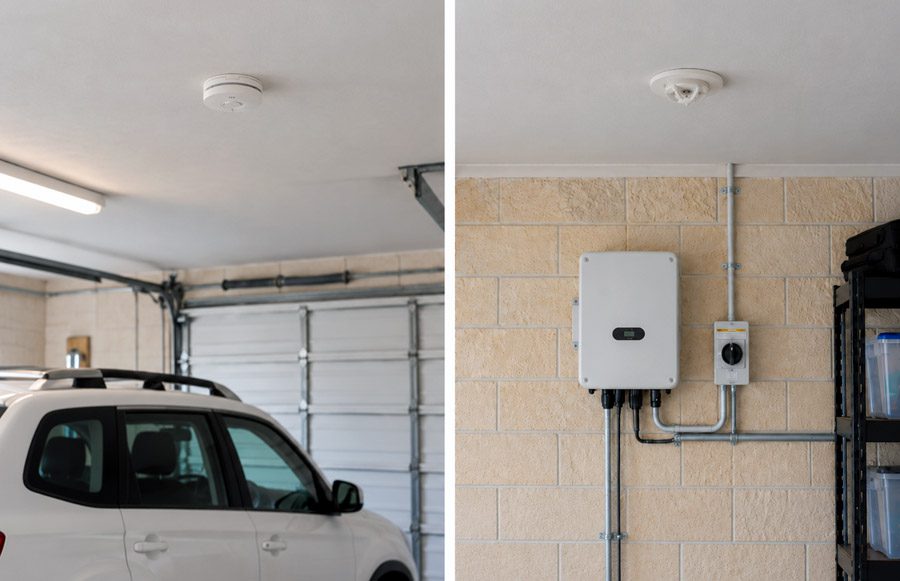
Smoke alarm (left) and heat detector (right) installed in separate garages.
Interconnection is another consideration. An alarm sounding in a closed garage isn’t much help if nobody inside the house can hear it. With interconnected alarms, a fire detected in the garage can trigger the alarms throughout the house, including where people are sleeping.
Smoke alarms can be mains-powered or battery-powered, and some models can be interconnected wirelessly. Mains-powered alarms require a licensed electrician to install, and whichever type is chosen must meet the requirements in your state or territory.
What If Your Battery Is Already Installed?
New installation rules don’t necessarily mean smoke alarms must be retrofitted to existing battery installations. But even where they’re not compulsory, there’s still a case for having one.
Trevor’s experience raises the question of whether an alarm near his battery could have provided an earlier warning, even though the battery itself wasn’t involved in the fire.
For more on reducing the risks and preparing for an emergency, see our earlier article, Should You Have A Home Battery Safety Plan?
If you’re considering a home battery, our Buying Batteries Guide covers choosing suitable equipment and finding a good installer.
 About Kim Wainwright
 RSS - Posts






Speak Your Mind