
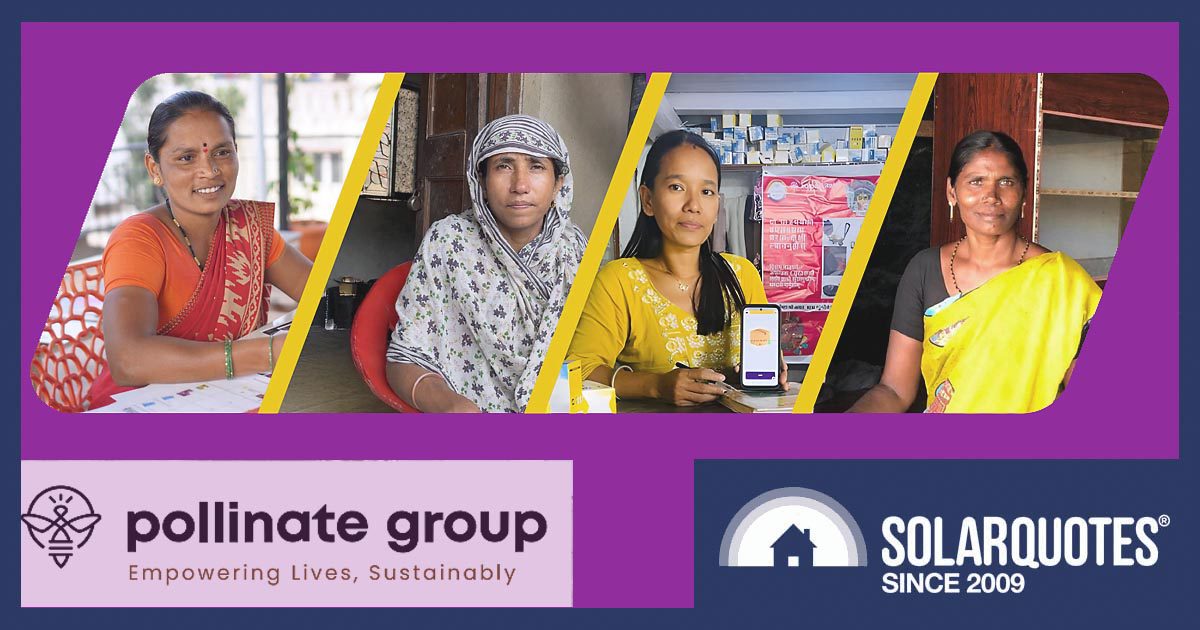
A new report from Pollinate Group shows that “energy access” isn’t always about big infrastructure. In many communities across India and Nepal, it still comes down to small, practical products — delivered by local entrepreneurs who are building incomes at the same time.
SolarQuotes has been supporting Pollinate Group for nearly seven years, and we check in from time to time to see how that support is translating on the ground. Each genuine quote request contributes $1, helping fund Pollinate’s work in off-grid communities.
What Does Pollinate Group Actually Do?
Pollinate Group runs a grassroots distribution model built around local entrepreneurs — mainly women — who sell clean energy and essential household products in their own communities.
These “Pollinators” are trained, supported, and supplied with products that address basic needs such as lighting, cooking, and household safety.
Rather than a traditional aid model, the focus is on income generation and local ownership. This approach allows communities to access useful technologies while also creating reliable small business opportunities for the entrepreneurs involved.
It’s a simple structure: products are sourced centrally, but delivered locally by people who understand the needs of their own communities.
Small Solar Products Still Play A Big Role
For Australian readers, solar usually means rooftop systems and batteries. But in many parts of South Asia, even a basic solar light can make a noticeable difference.
Around 59% of surveyed communities still lack electricity. As a result, many households rely on kerosene lamps — expensive to run, harmful indoors, and unreliable.
Switching to solar lighting brings immediate benefits: lower ongoing costs, safer homes, and more time for children to study or adults to work after dark.
In 2025 alone, Pollinate reached around 23,000 people and distributed more than 12,000 products, showing the scale of these practical interventions.
Growing Businesses, Growing Product Range
A consistent theme in the 2025 report is the expansion of Pollinate’s entrepreneur network, with 557 women engaged and 469 actively running businesses.
The product range is also gradually expanding beyond solar lighting. Clean cookstoves, water filters, and basic household items are now part of the mix — all aimed at reducing daily costs or improving health.
Cookstoves reduce fuel use and indoor smoke. Water filters address basic health risks. These additions build on the existing solar range rather than replacing it, using the same trusted local networks to deliver more useful products.
That trust is reflected in how customers are reached — around 75% come through word of mouth.
From Income Uncertainty To A Small, Steady Business
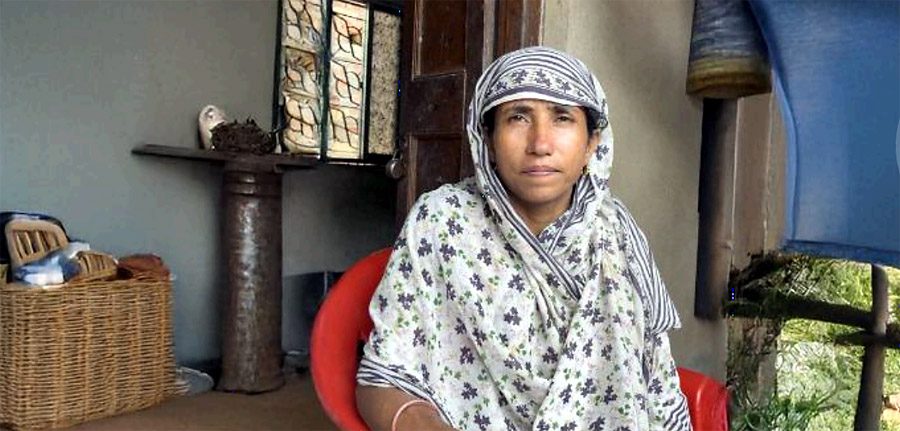
Hamida, a micro-entrepreneur in Hogla, West Bengal, now earns a steady income selling clean energy and household products in her community.
Hamida lives in the Hogla community in West Bengal, where steady work for women is rare. Before joining Pollinate, she had no reliable income. After becoming a micro-entrepreneur, she began selling solar lamps and fans to households in her area.
The change wasn’t dramatic, but it was steady. She now earns enough to contribute more consistently to household expenses and support her daughters’ education. With training and ongoing support, she’s grown in confidence and is now thinking about helping other women in her community start similar work.
A Model That Holds Up In Tough Conditions
The model continues to work even in difficult conditions. Despite higher costs and supply chain pressures, demand remains steady because the products address immediate, everyday needs rather than non-essential ones.
They also save time — more than 82,000 hours in 2025 — and reduce emissions by nearly 4,000 tonnes of CO₂.
Just as importantly, the structure itself is resilient. Because distribution relies on local entrepreneurs rather than external sales teams, it continues to function in areas where infrastructure is limited or inconsistent.
Building Stability Through Two Small Businesses
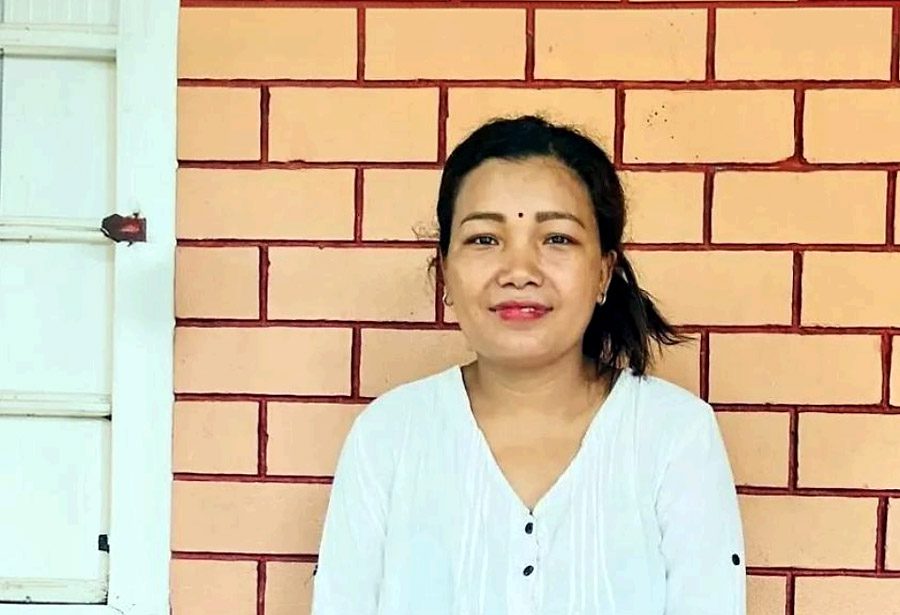
Manu runs a meat shop and grocery store in Milijule Tole, Nepal, alongside a small clean energy and household product business.
Manu lives in Milijule Tole in Nepal. She previously ran a small meat shop that provided only a modest and unstable income. After joining Pollinate Group in 2019, she received training, mentorship, and digital support that helped her expand her work.
She now runs two small businesses — a meat shop and a grocery store — and sells essentials like sanitary pads and LED bulbs.
Together, these income streams have created something she didn’t have before: stability. She’s now a trusted local source for affordable household goods and a clear example of how small changes can build real stability over time.
A Small Action That Adds Up
If you use SolarQuotes, you’re already part of this.
Every genuine quote request automatically contributes $1 to Pollinate Group. It’s a small amount, but across thousands of households it adds up to steady support for training, products, and expansion into new communities.
If you’re considering solar, it’s another good reason to get three quotes and compare your options properly.
Alternatively, if you want to donate a larger amount directly, go to Pollinate’s donation page.
 About Kim Wainwright
 RSS - Posts





Thank you Kim for this article, and to SolarQuotes for supporting this initiative in India and Nepal.
There is a big gap which no one is stepping into in regards to quality inverters not being re-used for poor 3rd world countries.
I look at my recent Sigenergy battery install, in my case I kept my Fronius inverter and AC coupled it but could of DC coupled my existing solar panels. If I chose to do that my 10kW 3 year old Gen24 inverter is basically worthless as no installer will take it and reinstall elsewhere in Aus due to warranty etc.
These re-installs of either inverters and/or solar panels should go to 3rd world countries.
I saw a youtube of an solar electrician that gave his time for free to a Fiji school/hospital and thought surely our inverters could be re-used.